Is Vinegar Safe for Lawns? Before You Spray
Is vinegar safe for lawns? Learn how acetic acid affects turf, why household and horticultural vinegar differ, and safer ways to control weeds.
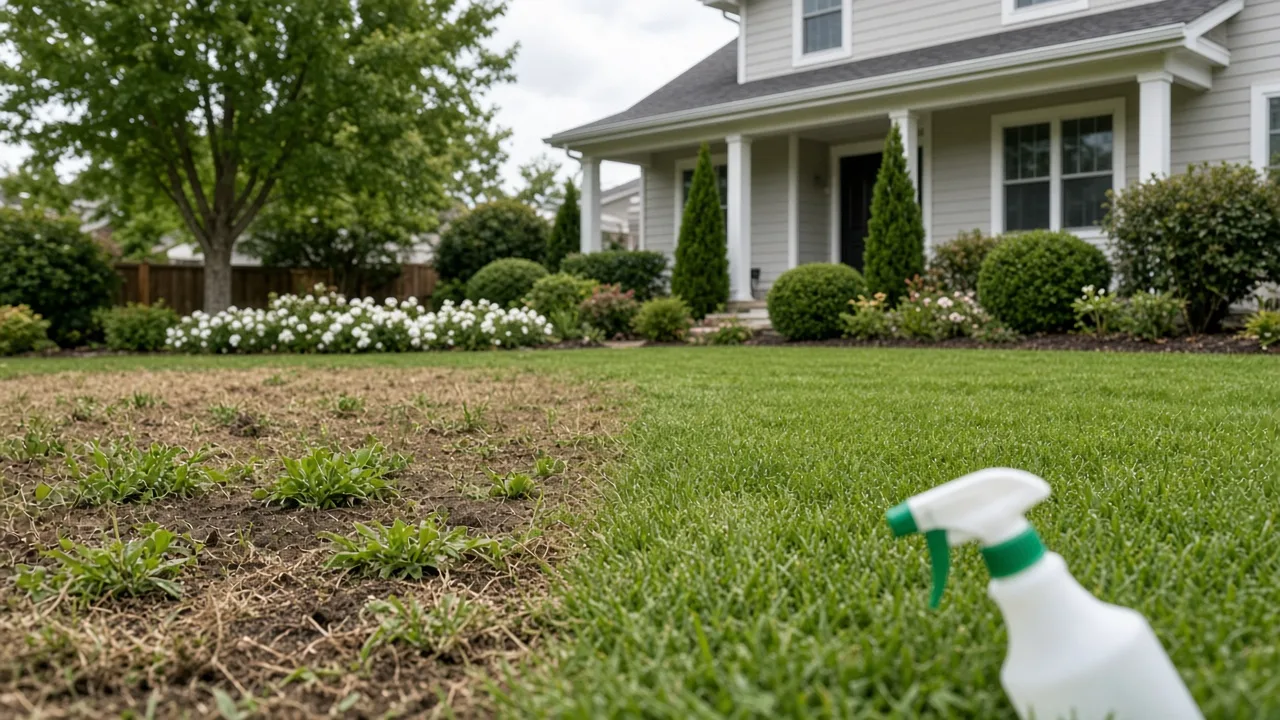
If you are trying to remove weeds from a lawn, vinegar is a risky shortcut. Vinegar is a non-selective contact herbicide, so it can injure any green tissue it wets—including the turf you are trying to keep. A small splash may brown a few blades and leave the crown alive; a concentrated product, repeated treatment, or spray that lands on the growing point can leave a thin or dead patch.
That does not make vinegar useless everywhere. It can be a practical spot treatment for weeds in a driveway crack or other place where no desirable plant is growing. It is simply a poor fit for a mixed lawn, where the weed and grass share the same small target area. If preserving turf is the priority, identify the weed first and choose the least damaging method that can actually reach it.
Quick answer: vinegar is not lawn-safe weed control
For a lawn, “safe” means more than whether a product is natural or whether the grass looks fine immediately after spraying. It means the treatment can suppress the target weed at a useful rate while leaving the turf species, soil, nearby plants, people, pets, and beneficial insects within an acceptable risk range. Vinegar does not provide that selectivity.
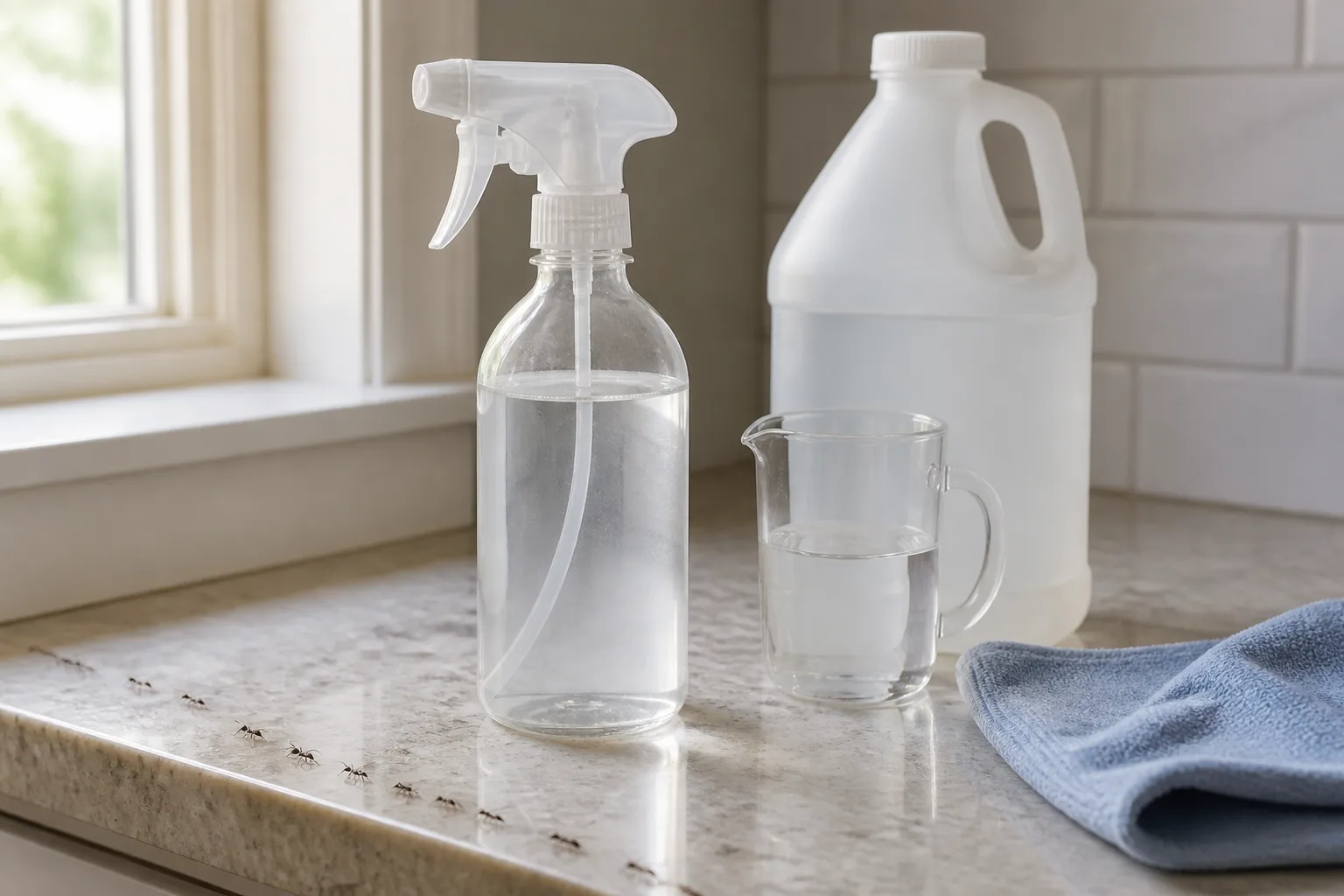
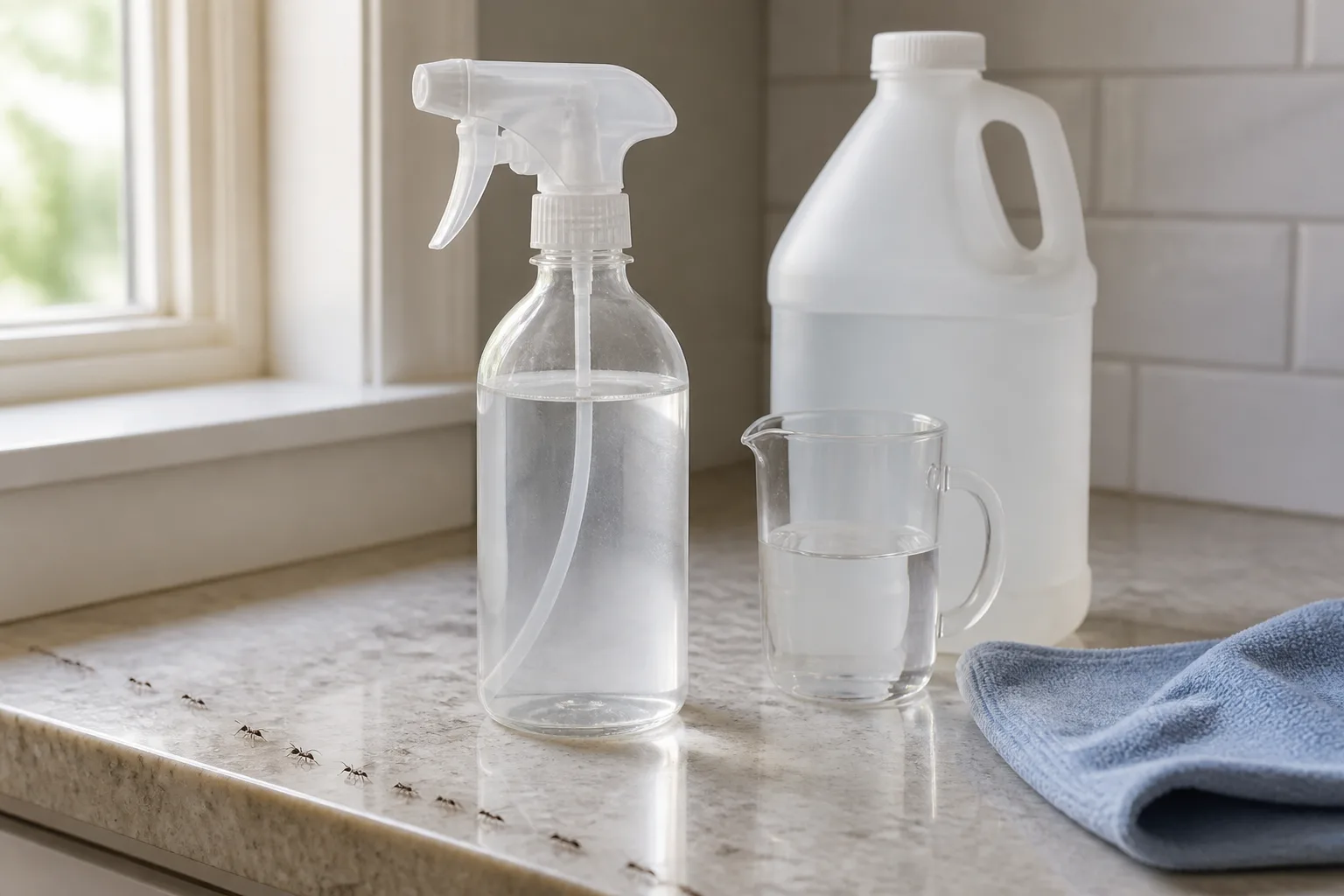
The active ingredient is acetic acid, dissolved in water. The National Pesticide Information Center explains that acetic acid herbicides are non-selective and work only where the spray touches plant tissue. That is why the same quality that makes vinegar burn a young weed can also burn a grass blade beside it.
Household white vinegar is usually around 4–6 percent acetic acid, while products sold as horticultural vinegar generally contain 20 percent or more. The weaker liquid may cause visible leaf injury without reliably killing an established weed, but “weaker” does not mean lawn-safe. The stronger liquid is more hazardous to handle and more likely to cause severe injury wherever it lands.
How vinegar damages grass and weeds
Vinegar is best understood as a burndown, not a magic root killer. That distinction explains both the brown grass people notice after an accident and the weeds that return after a seemingly successful spray.

Contact action, not root kill
Acetic acid disrupts cells in the foliage it wets. Plant tissue loses water, becomes scorched or desiccated, and may collapse quickly. The University of Illinois IPM newsletter describes the action as non-selective and fast, with visible damage possible within hours when coverage is good.
The chemical does not move through the plant like a systemic herbicide. Untouched leaves, protected growing points, crowns, and roots may continue to function, depending on the weed and how much tissue was covered. A young seedling with little stored energy may fail after its foliage is burned; a mature dandelion with a substantial taproot can replace the leaves.
For grass, the practical question is not only “Did the blades turn brown?” It is “Was the turf crown or growing point injured, and was enough leaf area lost to stop recovery?” A light mist that catches the tips of a vigorous, well-watered lawn may grow out. A concentrated spray that wets the crown or covers a broad strip can produce a lasting bare patch.
Vinegar also has no dependable residual barrier against the next generation of weeds. The National Pesticide Information Center notes that acetic acid breaks down rapidly in the environment and does not leave residual activity. That is useful when you do not want a long-lived soil chemical, but it also means a spray cannot prevent new seeds from germinating.
What the percentage means
The number on the bottle is a risk and performance clue, not a recommendation to increase the strength yourself. Product formulation, use site, application volume, surfactants, and label directions all matter. Never assume that a recipe written for a patio crack is suitable for a lawn.
| Liquid | What it usually means | Likely lawn consequence |
|---|---|---|
| Food or household vinegar, about 4–6% acetic acid | A diluted household product; may burn tender foliage | Can brown grass and may only knock back established weeds |
| Herbicidal or horticultural vinegar, often 20% or higher | A concentrated acetic-acid pesticide product | More rapid foliage injury, much higher skin and eye hazard, and greater risk to turf |
| “Cleaning vinegar” or an unlabeled concentrate | Strength and permitted use vary by product | Treat as a chemical requiring label review; do not assume it belongs on turf |
Research and extension summaries show why the result is not a simple strength contest. NC State Extension’s acetic-acid overview points to studies in which higher-concentration products can work, while also noting that greater concentration is not automatically better in every weed situation. The Cornell report on acetic-acid herbicides in turfgrass and weed control evaluated several formulations in a turf and landscape-renovation context; it is evidence that performance depends on the tested product and use case, not a blanket endorsement of spraying kitchen vinegar through a lawn.
Concentration also changes human exposure. NPIC warns that concentrated acetic acid can irritate or corrode skin and eyes, and that registered herbicide products carry signal words, precautions, first aid, and personal-protection instructions. Natural origin does not remove the need to read the label.
Why lawns are a bad target
A lawn is a deliberately mixed planting: desirable grass is interwoven with the weed, often only inches apart. A spray that is safe for a bare driveway crack has no margin for error once the target is surrounded by living turf.
Grass versus broadleaf weeds
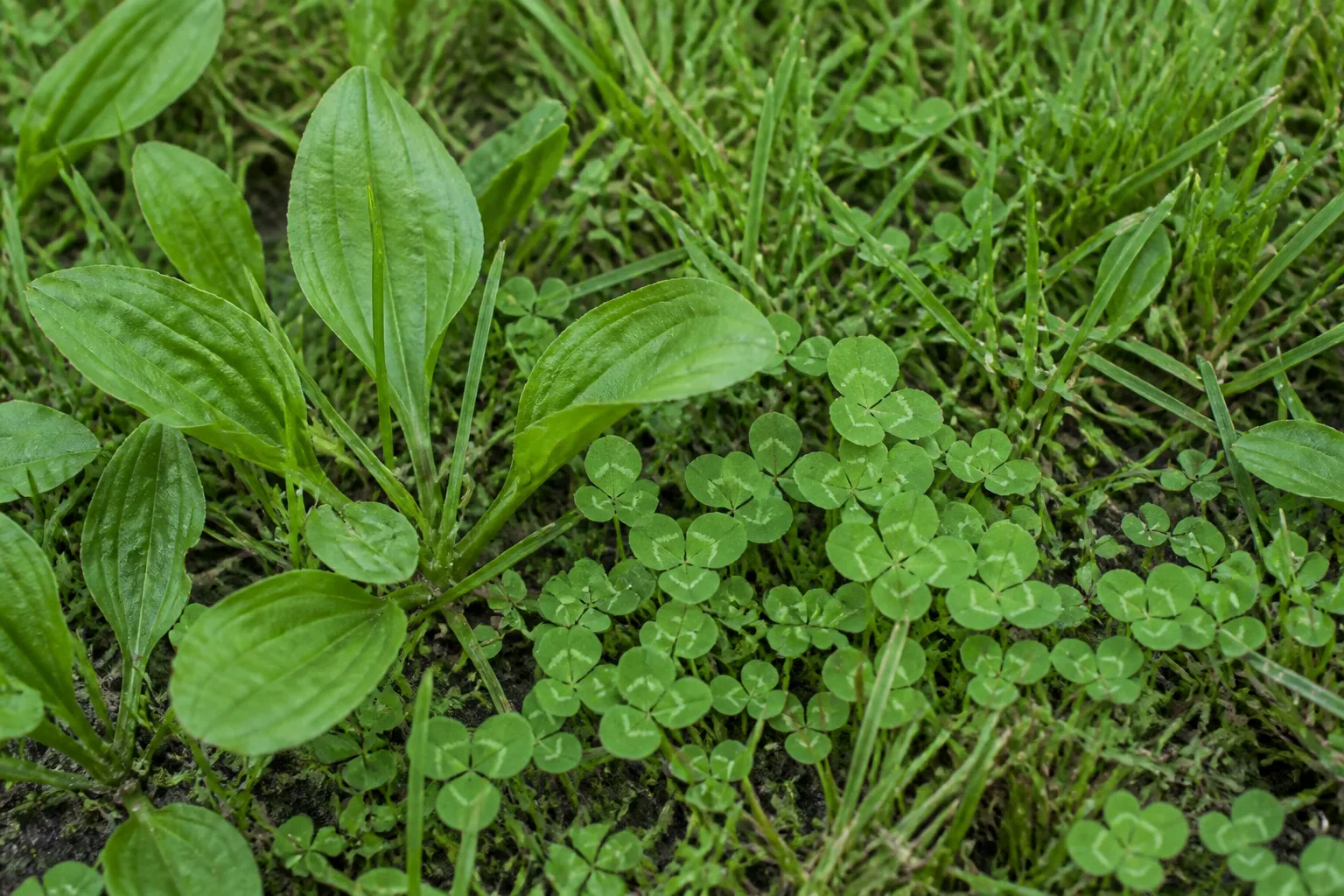
Vinegar can injure both grasses and broadleaf plants, but they may not respond equally. The Illinois source notes that broadleaf weeds often show greater susceptibility than grasses, in part because many grasses protect their growing point low in the plant while broadleaf weeds expose theirs above ground. A waxy leaf surface can also reduce wetting and require more complete coverage.
That difference can create a misleading result. You may see a dandelion wilt while nearby grass shows only scattered browning, then conclude that vinegar is selective. It is not. The apparent selectivity comes from differences in weed age, leaf shape, waxiness, growth point location, spray coverage, and recovery—not from a built-in ability to distinguish dandelion from turf.
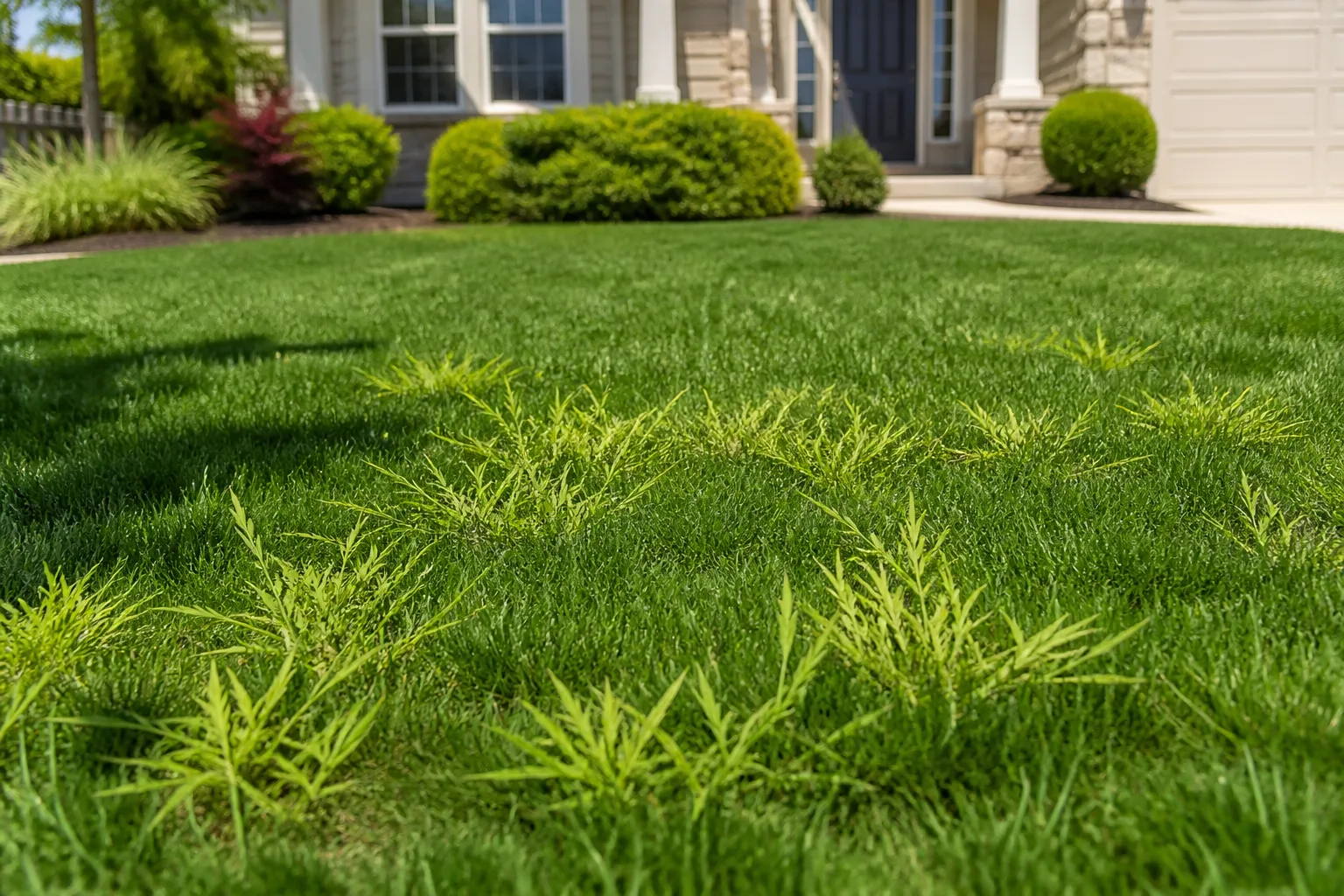
Grassy weeds are especially awkward targets in a grass lawn because the unwanted plant and the desirable plant may share similar leaf structure. Vinegar cannot recognize crabgrass, annual bluegrass, or a young turf seedling; if the spray hits both, both are exposed. Mechanical removal or a properly labeled product designed for that turf-and-weed combination is usually more realistic.
Young annuals versus perennials
Vinegar performs best on small, actively growing annual weeds with tender foliage. They have less stored energy and fewer protected growing points, so a thorough contact treatment can stop them more easily than it can stop a mature perennial.
Perennial weeds are a different negotiation. Dandelions, plantain, thistle, and creeping weeds can rebuild from crowns, taproots, stolons, rhizomes, or other belowground reserves. Even if the leaves disappear, the plant may return from tissue the spray never touched. Repeatedly spraying the same lawn spot can then injure turf while the weed persists.
Timing matters as much as weed identity. A tiny seedling after a warm stretch is a different target from a drought-stressed perennial with a thick, waxy leaf. The BBC Gardeners’ World Magazine review of homemade weed killers emphasizes that homemade treatments are weaker and may require repeated applications, while dry conditions help prevent rain from washing them away. In a lawn, each repeat application increases the chance that grass, clover, ornamental edges, or pollinator plants receive the same treatment.
When vinegar is the wrong tool
Skip vinegar when the weed is embedded in valuable turf, when wind can move the droplets, when children or pets may enter before the label allows, or when the product is a high-concentration acid that you cannot handle with the required protection. Also skip it when the lawn is already drought-stressed, heat-stressed, newly seeded, recently sodded, thin, or recovering from another injury. A stressed lawn has less room to replace damaged leaf area.

Do not add salt because a recipe promises a stronger result. Salt can persist in the root zone and make it harder for grass or replacement plants to grow. BHG’s guidance on vinegar weed killer specifically cautions against salt in lawns and planted areas, and Gardeners’ World likewise limits salt-based remedies to hard surfaces where the solution will not leach into soil.
Vinegar is a better fit for a weed growing alone in a paving seam, gravel edge, or driveway crack, where the goal is to remove all vegetation from a small area. Even there, protect adjacent lawn and beds, avoid runoff, and use a product whose label permits the site. The existing weeds-in-pavement problem is visually different from lawn weed control for a reason: the hardscape gives you a target with more separation from plants you want to keep.
If spray reaches turf
Accidental contact does not automatically mean the entire lawn is lost. Stop the treatment, mark the area, and watch the pattern over the next several days. The shape of the injury can tell you whether you are seeing a few scorched blades, a spray plume, a concentrated puddle, or a broader problem that needs a different diagnosis.

Protect the lawn from drift
If you still decide to use an acetic-acid product near turf, treat application control as the main safety measure:
- Identify the exact target first. Do not spray an unknown green patch simply because it looks weedy.
- Choose a calm, dry window. Wind carries droplets; rain can dilute or move the treatment before it works. Avoid hot conditions that increase evaporation and vapor movement.
- Work close to the target. Use the lowest practical spray angle and a coarse, controlled stream rather than a fine mist.
- Shield the grass. A piece of cardboard or a physical barrier can separate an isolated weed from the turf. Remove temporary covers promptly so grass is not smothered.
- Paint rather than broadcast when the patch is tiny. A disposable brush or sponge can put liquid on the weed leaf without creating a cloud of droplets.
- Keep the treatment out of drains and water. Do not turn a spot treatment into runoff down a slope or across a gutter.
These steps reduce exposure; they do not make vinegar selective. BHG recommends close-range application, calm weather, temporary shielding, and painting for small targets, while Gardeners’ World’s practical weed-control guidance supports choosing the method and timing to match the weed rather than reaching for a spray automatically.
Follow the label and PPE
A bottle intended for cooking is not automatically a registered herbicide, and a concentrated product sold online is not automatically legal or appropriate for your lawn. In the United States, NPIC explains that registered acetic-acid herbicides carry an EPA registration number, signal word, use directions, precautions, and first aid information. The label is the operating limit: it determines the permitted site, rate, protective equipment, re-entry instructions, and disposal guidance.
Wear the protection the label requires. For concentrated acetic acid, that commonly includes chemical-resistant gloves, eye protection, covered skin, socks, and closed shoes; never improvise a weaker safety standard because the ingredient is familiar from the kitchen. Keep people and pets away as directed, store the product in its original labeled container, and never pour leftovers into an unmarked bottle.
Do not confuse “organic,” “natural,” or “pet-friendly” marketing with a guarantee that a wet spray cannot injure living tissue. The acid can damage eyes and skin, and the spray can harm non-target plants and insects. A lawn application deserves the same careful reading as any other pesticide use.
Better ways to control lawn weeds
The best lawn weed program usually combines several small advantages: reduce openings in the turf, remove isolated weeds before they seed, and use a targeted product only when the weed and grass justify it. This is more durable than trying to burn every visible leaf.
Hand-pull and dig
Hand removal is often the safest answer for a handful of weeds. Pull annual seedlings while the soil is moist, grip low on the stem, and lift slowly so the root comes with the plant. For a dandelion or other taprooted weed, use a narrow weeder or trowel to loosen the soil deep enough to remove the crown and as much root as practical.
The Gardeners’ World guide to removing weeds distinguishes shallow annuals from perennials that regrow from small root pieces. That distinction helps you decide whether a quick pull is enough or whether the job needs digging and follow-up. Remove flower heads before they set seed, and do not leave uprooted weeds where mature seed can spill back into the lawn.
For a large infestation, hand pulling may be slow, but it gives you information. As you work, note whether the weeds are broadleaf or grassy, whether the soil is compacted, whether one area is thin, and whether the same species returns after mowing. Those observations make the next control choice more accurate.
Mow, feed, water, and thicken turf
Healthy turf is not weed-proof, but dense turf leaves fewer open spaces for weed seedlings. Mow often enough that you remove no more than one-third of the leaf height at a time, keep blades sharp, and avoid scalping. Cutting too short can expose soil and stress grass; mowing too infrequently can remove too much leaf at once.
Mowing height is species- and climate-specific. As one regional example, UGA Extension describes warm-season lawns at roughly 1–2 inches and cool-season lawns at roughly 2–3 inches, with a higher setting during hot, dry weather. Use your local extension recommendation for the exact turf in your yard rather than copying a single number from a different grass and climate.
The UGA Extension lawn-weed guide also ties weed pressure to cultural care: soil testing, appropriate fertility, mowing, and irrigation help desirable grass grow vigorously. Water deeply enough for the turf and site, correct chronic compaction or drainage problems, and overseed or repair thin areas at the season appropriate for your grass. Fertilizer cannot compensate for a wrong mowing height, poor light, or a compacted root zone.
Use a grass-compatible selective herbicide
When weeds are numerous enough that digging is impractical, a selective herbicide may solve the actual lawn problem more precisely than vinegar. “Selective” does not mean harmless; it means the formulation and rate are intended to affect some plants more than others when used on the labeled turf. The match must include the grass species, weed species, growth stage, site, and weather.
Start by identifying the weed. A broadleaf post-emergent product may be appropriate for a labeled turf when the target is dandelion, plantain, or another broadleaf, while a grassy weed may require a different active ingredient—or may be difficult to remove without injuring the lawn. For annual weeds, a pre-emergent can prevent germination if applied at the right time, but it can also interfere with grass seed, so the label and seeding plan matter.
Use the smallest labeled area and rate that addresses the problem, avoid blanket spraying when spot treatment will work, and follow the product’s re-entry, watering, mowing, and PPE instructions. UGA Extension describes pre-emergence products as a before-the-season tool and broadleaf post-emergence products as spot treatments, while also warning that herbicides control only certain species. That is a better decision framework than choosing a product because its label says “natural.”
A simple decision plan for your yard
Use this sequence before you pick up any bottle:
- Ask where the weed is growing. If it is in a lawn, the target is mixed with plants you want to keep. If it is in a bare crack, a non-selective contact treatment may be more reasonable.
- Identify the weed and the grass. Separate broadleaf weeds from grassy weeds, and note whether the weed is a young annual or an established perennial.
- Count the problem. One dandelion and a lawn-wide infestation need different tools. Digging is often safer for a few; a prevention or selective-treatment plan is more efficient for many.
- Check lawn condition. Delay aggressive treatment on heat-, drought-, disease-, traffic-, or establishment-stressed turf. Fix the condition that is creating bare space.
- Choose the least risky effective method. Pull, dig, mow correctly, improve density, or use a lawn-labeled selective product. Do not use vinegar simply because it is already in the pantry.
- If using any pesticide, read the entire label. Confirm the site, turf, target weed, rate, weather limits, protective equipment, re-entry period, and disposal instructions.
- Monitor instead of escalating blindly. Photograph the area before treatment and check it after several days and again after the expected recovery window. A returning perennial weed needs a different plan; more spray is not automatically the answer.
For weeds in pavement or gravel, keep the treatment physically separated from turf and ornamental beds. For weeds in the lawn itself, the safest default is to avoid vinegar and put the effort into identification, mechanical removal, turf density, and a properly labeled selective option when necessary.
Conclusion
Is vinegar safe for lawns? Not as a lawn-selective weed killer. Household vinegar can scorch grass without reliably killing a mature weed, while horticultural vinegar is strong enough to create a much more serious eye, skin, and plant-injury hazard. Both are non-selective, and neither provides the root-and-seed prevention that a persistent lawn weed problem may require.
Reserve acetic-acid products for carefully controlled, label-approved situations where all vegetation can be sacrificed, such as an isolated hardscape crack. In turf, start with the weed and grass, remove small plants by hand, improve the conditions that leave soil exposed, and use a selective herbicide only when its label fits the exact lawn. That approach may take more thought than a pantry spray, but it protects the lawn you are trying to save.