Dryer Sheets for Ants: Do They Work?
Do dryer sheets repel ants? Learn what the scent can and cannot do, how to erase trails, place bait safely, seal entry points, and know when to call a pro.
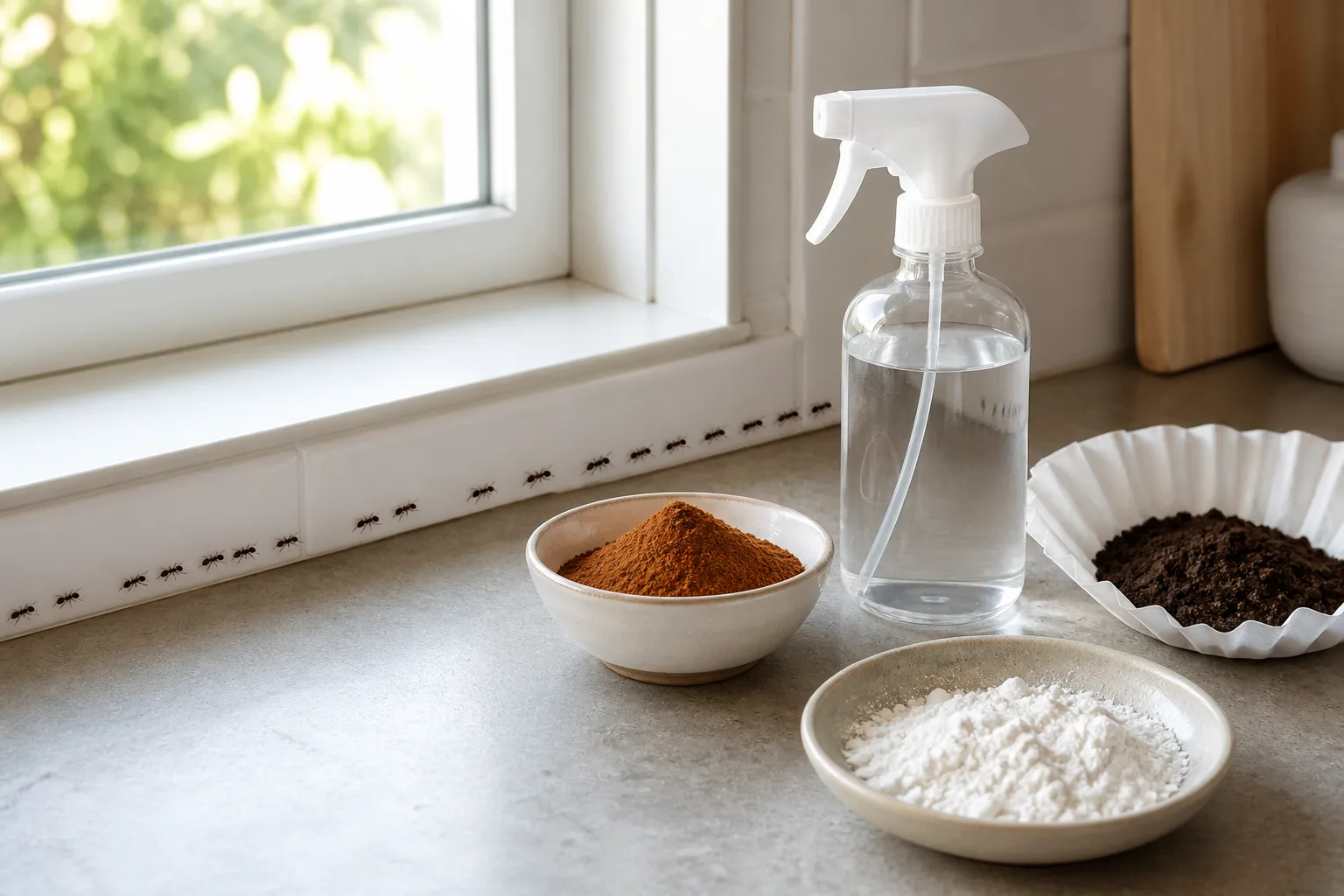
If you put a scented dryer sheet beside an ant trail and the ants vanish, it is tempting to call the hack a success. The more accurate answer is maybe for the moment, but not as a dependable ant treatment. A strong fragrance may make one route less appealing or interfere with the trail temporarily, yet an ordinary dryer sheet does not locate the nest, feed a slow-acting bait to the colony, or seal the gap the ants used to get inside.
That distinction is the key to solving a kitchen ant problem. If you only want ants off one counter for the next hour, remove the food, wipe the trail, and block the route. If ants keep returning, treat the dryer sheet as a short-lived experiment at most and switch to sanitation, exclusion, and properly placed bait. Those steps address the reason the ants are there rather than just changing where they walk.
The short answer: a dryer sheet may disrupt a trail, not solve an infestation
Dryer sheets do not reliably repel or kill household ants. They are scented laundry products, not standardized ant baits, and their formulas vary by brand. There is no good reason to assume that a sheet that smells strong to you will create a lasting barrier to every ant species, especially when a colony has found sugar, grease, moisture, or shelter inside a building.
Ants navigate with chemical information. Foragers that find food can leave a trail that helps other workers travel the same route, so a new smell, cleaning product, or physical disturbance can make the visible line break or move. That is a plausible explanation for a short-term result; it is not proof that the colony has been repelled. UC Integrated Pest Management guidance on ants recommends removing food sources, wiping trails with soapy water, sealing entry points, and using bait when necessary because those actions work on the conditions that sustain an invasion.
The practical verdict is simple: use a dryer sheet only if you like the scent and need a temporary visual barrier, but do not count it as the treatment. Do not wedge sheets into a food cabinet, place them on food-preparation surfaces, or leave them where a child or pet can chew them. You can get the same short-term route disruption more cleanly by removing the attractant and washing away the trail.
Why the hack can look successful for a few hours
When ants disappear after you add a dryer sheet, at least four things may have happened. The fragrance may have changed the route; the sheet may have physically covered the crack they were using; you may have wiped away crumbs while placing it; or the ants may simply have shifted their activity to another time or location. None of those observations tells you whether the nest is gone.
This is why scent hacks are so persuasive. They are placed at the exact spot where ants are visible, and the visible line often changes quickly. But a worker ant is only one member of a much larger system. If the food or water remains available, the building still has an entry gap, and the colony is not exposed to a colony-targeted treatment, the route can reopen or appear in the next room.
The same logic applies to many strong household smells: the fact that a scent changes ant behavior does not make it a pesticide. A fragrance can be a route-management tool for a short period, but a route-management tool is different from a nest treatment. If the ant activity returns after the sheet loses its smell, that is not a mysterious failure; it is what you should expect from a temporary barrier.
What a dryer sheet cannot do to an ant colony
A dryer sheet cannot kill a queen, reach a wall void, remove a nest beneath a slab, or carry an active ingredient back to the colony. It also cannot tell you whether the ants are nesting indoors, coming from a damp foundation, following a pipe, or farming aphids on a plant outside. The sheet has no feedback mechanism: it cannot show whether the colony is shrinking.
Colony control usually depends on the behavior of worker ants. A slow-acting bait combines a food attractant with an insecticide that gives workers time to carry it back and share it within the nest. A scented fabric sheet does not perform that job. If a product is sold or labeled for a different purpose, do not turn an ingredient mentioned in a marketing claim into a homemade pesticide treatment.
There is another limitation: repellents can sometimes make the map harder to read. If you scent one doorway, the ants may use a baseboard, wall cavity, or adjacent room instead. That can make the original counter look clean while the underlying entry problem continues. For persistent activity, the useful question is not “What smell do ants hate?” but “What are they following, where are they entering, and which treatment can reach the colony without making the situation harder to monitor?”
Identify the ant problem before choosing a fix
You do not need to identify every ant to wipe a counter and remove crumbs. You do need to slow down before using insecticide, drilling into a wall, or assuming that every small black ant is the same species. Different ants favor different foods and nesting sites, and the wrong treatment can waste time or disturb a colony into new voids.
Start with a close look using a phone camera or flashlight. Note the approximate size, color, whether the ants are all similar, where the trail starts and ends, and whether you see them near a sink, pantry, pet bowl, window, baseboard, or houseplant. If you can safely collect one specimen on clear tape for identification, that is more useful than guessing from a blurry photograph.
Clues that point to ordinary kitchen foraging
Tiny to small brown or black ants moving in a neat line toward sugar, fruit, syrup, grease, or a damp sink are often foragers exploiting a repeatable resource. That does not identify the species, but it tells you where to begin: remove the resource, wash the route, trace the entry, and monitor before escalating.
Odorous house ants are one example. UW–Madison Extension’s identification and management notes describe them as small, dark ants that favor sugary foods, follow established trails, and often nest in moist sites or near plumbing. They may also have interconnected nests and multiple queens, which helps explain why treating one visible patch or chasing individual workers can disappoint.
Do not crush ants on purpose to identify them by smell, and do not assume that a sweet-food preference means a specific species. Use the clue to choose the next inspection point, not to make a confident species diagnosis from one trait.
When large, winged, or stinging ants change the plan
Large ants deserve more attention than a temporary scent barrier. Carpenter ants are often noticeably bigger than common kitchen foragers and may be associated with damp or damaged wood, window frames, door frames, crawl spaces, or wall voids. UC IPM describes carpenter workers as roughly one-quarter to one-half inch long and notes that they may leave sawdust-like frass outside a nest. Repeated large ants, coarse sawdust, or moisture damage are reasons to investigate the building and consider a professional inspection.
Winged insects indoors also deserve a pause. Ants have a pinched waist and unequal wing sizes; termites have a broader waist and wings that are more alike. If you are unsure, save a specimen and ask an extension office or pest professional rather than spraying an unknown insect through the room.
If the ants sting, bite aggressively, appear in large mounds near living areas, or are associated with a vulnerable person or pet, skip household scent experiments. Fire ants and other stinging species need species-appropriate advice, and a professional can reduce the chance of spreading or mishandling the problem.
The first 15-minute response to ants in the kitchen
When ants appear, move in an order that preserves information and removes the reward:
- Protect the food. Put away fruit, sugar, honey, bread, pet food, and anything sticky. Wipe the outside of containers, not just the inside of the cabinet.
- Photograph the route. Take one quick picture before you clean so you can remember where the trail started and where it crossed the room.
- Remove the ants and the trail. Vacuum the visible line or wipe it with soapy water, then clean the surface with a suitable kitchen cleaner.
- Trace the edges. Follow the baseboard, window frame, pipe, wire, or cabinet seam toward the entry point.
- Decide whether to monitor or bait. A few stragglers after cleanup may be a watch-and-seal problem; a steady trail that returns needs a more deliberate plan.
This order is more useful than immediately killing every visible worker. A dead worker does not tell you where the colony is, while a brief observation can reveal a gap under the sink, a route behind the dishwasher, or a food residue beneath a small appliance.
Erase the trail without scattering the ants
Soapy water is a practical first response because it removes the chemical trail from the surface as you clean away the ants. UC IPM also lists vacuuming and wiping with soapy water as ways to handle an indoor ant emergency. Use enough cleaner to reach the edge of the route, especially along the counter-to-wall seam, backsplash, baseboard, and the underside of the cabinet lip.
Avoid using a strongly scented cleaner and a bait at the same time in the same small area. The goal while cleaning is to remove the trail; the goal while baiting is to let workers accept and carry the bait. Adding a dryer sheet, essential oil, or spray beside the bait can make the test less informative and the bait less attractive.
If ants reappear, do not keep wiping the same two inches of counter while ignoring the wall behind it. Clean the route, then inspect the structure and the attractants. A trail that moves after cleaning is a clue to keep following it, not evidence that you need a stronger fragrance.
Trace the route to food, water, and an entry point
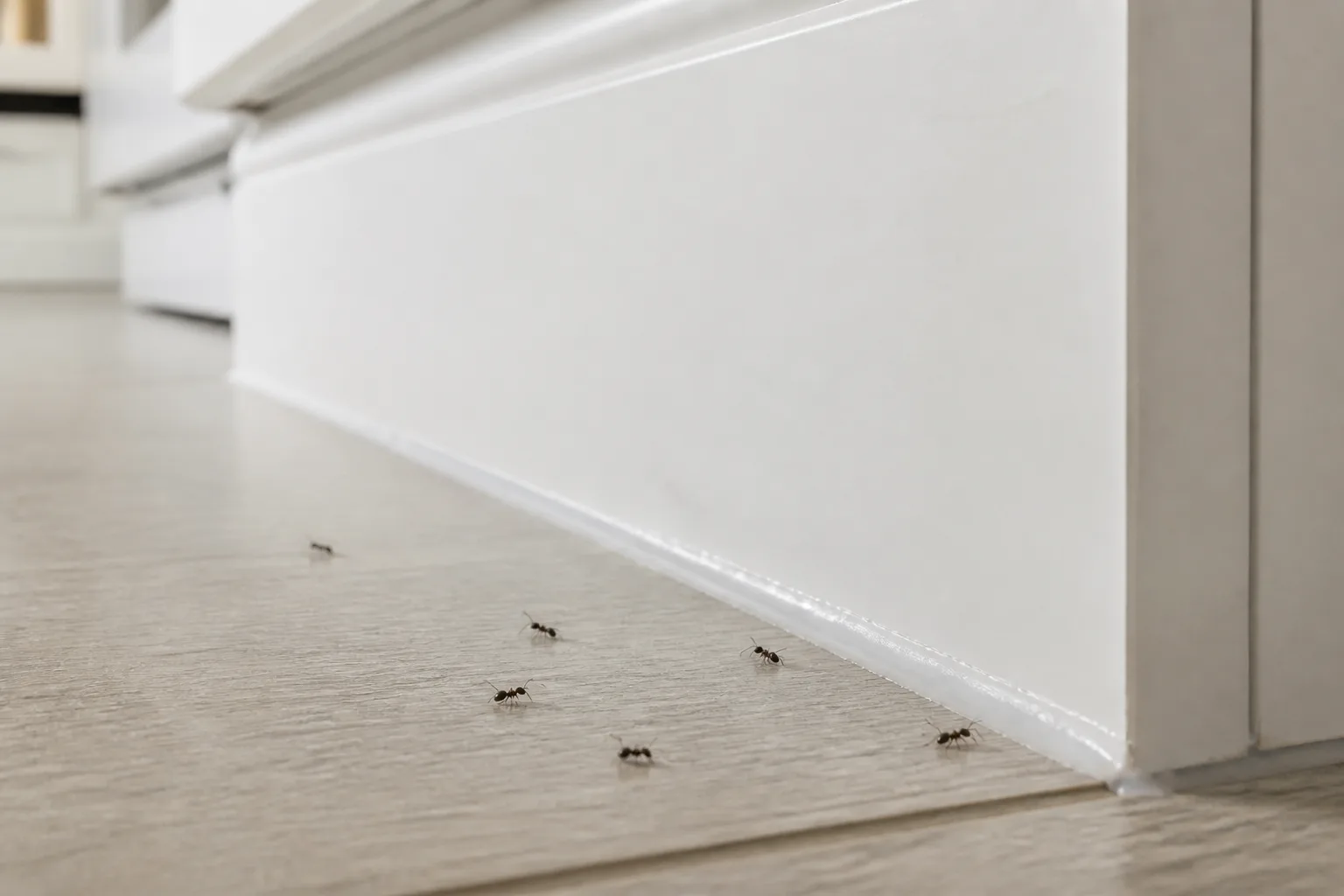
Ants commonly travel along edges and structural lines because those paths are protected. Check where pipes pass through the cabinet, around the dishwasher and refrigerator, beneath the sink, at window corners, along door thresholds, and where the countertop meets the wall. Look for condensation, a slow drip, damp wood, a wet sponge, or a plant pot that stays moist.
Outside the kitchen, inspect the matching wall and foundation. A crack that looks too small to matter to you can be a usable ant passage. If you find the entry, mark it with removable tape and monitor it for a day rather than sealing blindly while ants are still moving through it. You want to know whether the route is active and whether the gap is the actual source.
Seal the route and remove what keeps attracting ants
The most durable ant prevention is rarely one product. It is a chain: remove what ants want, erase the trail, close the route, and reduce the nearby outdoor conditions that support repeat entry. UC IPM recommends combining sanitation and exclusion with baiting when needed instead of relying on indoor sprays.
A kitchen checklist that closes the loop
Work through the easy sources first:
- Wipe crumbs, grease, syrup, and juice from counters, cabinet shelves, appliance edges, and floors.
- Store sugar, cereal, pet food, and other attractive foods in clean containers with tight-fitting lids.
- Rinse sticky recycling and remove food waste regularly.
- Dry the sink area, replace damp sponges, and repair drips under the sink or at the refrigerator water line.
- Empty pet bowls overnight if ants are visiting them, and clean the floor below them.
- Check houseplant saucers and pot rims for spilled fertilizer, honeydew, or ants using the plant as a bridge.
Once the surface is clean and dry, seal a confirmed crack with an appropriate caulk or patching material. Add weatherstripping or a door sweep where a door gap connects indoor food areas to the outside. Do not seal a wall void with an unknown colony inside if doing so could push ants into another room; if the activity is heavy or the entry is inaccessible, get advice before closing the only visible opening.
Outdoor sources that can feed an indoor trail
Outdoor ants are not automatically a pest that must be eliminated. The Royal Horticultural Society explains that ants are important parts of garden biodiversity, can prey on other invertebrates, disturb soil, and collect honeydew from aphids. Birds & Blooms’ practical garden guidance likewise notes that some ants are useful and recommends identifying the species or asking a local extension service when control is necessary.
The goal around a kitchen is to reduce the bridge into the home, not sterilize the whole yard. Trim branches that touch the building, keep dense mulch and plant debris from pressing against the foundation, manage leaking outdoor faucets or sprinkler heads, and inspect plants near windows for aphids, scale, or sticky honeydew. Ripening fruit, trash, and sweet spills near a door can also reward foragers.
If outdoor nests are spread across a large area, do not scatter contact insecticide around the foundation just because indoor ants are annoying. UC IPM cautions that sprays may kill foragers without controlling queens, can be less effective than baits, and can create environmental risks. Focus on exclusion and targeted, label-compliant control where the ants are actually causing a problem.
When ant bait is the better tool
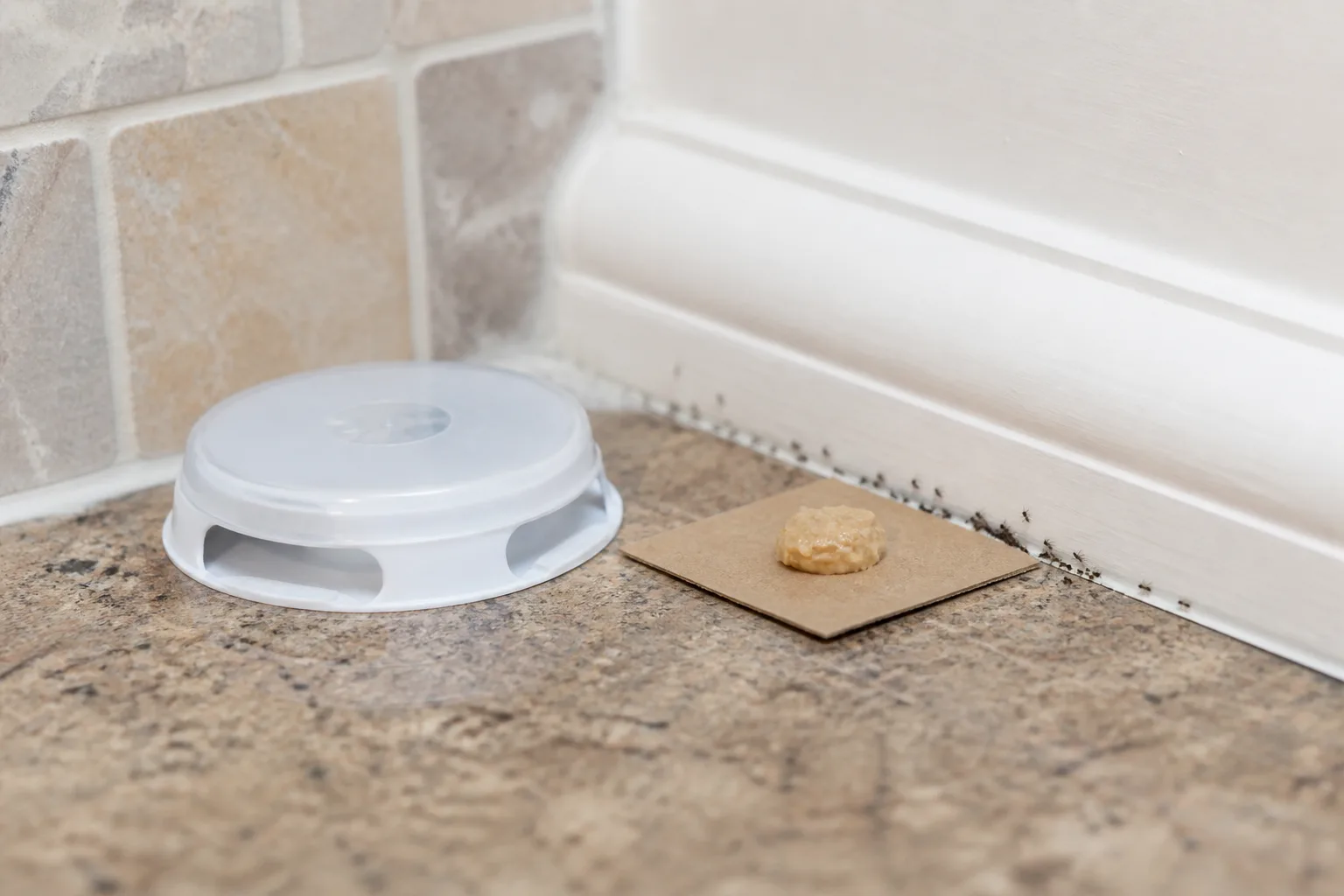
Bait becomes the better choice when the trail returns after food and moisture are corrected, when ants are emerging from an inaccessible void, or when you need to reach more of the colony than a cloth or scent can reach. A bait is not an instant-kill product. Its value is that workers treat it as food and transport the active ingredient back to the nest.
The trade-off is patience. UC IPM says it can take about five to ten days to see fewer ants in some situations, while control of a larger or interconnected colony can take longer. UW–Madison Extension also warns that activity may increase after sugar bait is placed because more workers are recruited to collect it. That temporary increase does not automatically mean the bait is failing.
Choose bait by what the ants are eating
Ant preferences change by species and season. Some household ants prefer sweet liquid baits; others are more interested in protein or greasy foods. If workers ignore one bait, do not flood the area with more of the same product. Check the label, offer only products that are legal and labeled for your situation, and observe what the ants accept without contaminating the test with sprays or strong scents.
For a kitchen, a prepackaged, tamper-resistant bait station is usually easier to control than loose homemade bait. Keep it away from food-contact surfaces, children, pets, and areas where it can be spilled. Read the full label before placement, including the directions for indoor use and any warnings about ventilation, cleanup, or storage.
Do not make a homemade borax or boric-acid recipe just because a blog gives a ratio. Concentration, species, placement, local rules, and exposure risk matter, and a loose sweet bait can be accessible to a child, dog, cat, or beneficial insect. A commercial station with clear instructions gives you a more defensible starting point.
Place bait so workers can carry it home
Put bait beside an active trail or near the entry route, not in the middle of a clean counter and not on top of a food surface. The station should be easy for ants to find but inaccessible to children and pets. If ants walk past it, reposition it according to the label or try a different labeled bait type rather than spraying the trail.
Once ants begin feeding, leave the station undisturbed. Do not wipe the workers away, surround the bait with dryer sheets, spray insecticide across the route, or add vinegar and essential oils nearby. Those actions can prevent workers from carrying the bait where it needs to go.
Check the station on the schedule the label recommends. Replace bait that is empty, dried out, contaminated, or no longer attractive. Keep cleaning crumbs and fixing leaks while bait works, but avoid cleaning directly over the bait or changing the route every few hours. You are trying to reduce competing food while preserving access to the treatment.
Why spraying can backfire
Contact spray feels decisive because it produces dead ants immediately. It often does not solve the colony. UC IPM explains that indoor sprays are usually unnecessary when trails can be washed away and entry points excluded, and that sprays can kill foragers without preventing more ants from entering.
Spraying around an active bait can be especially counterproductive. The spray may kill the workers before they return to the nest, repel them from the bait, or push them into a different crack. You may see fewer ants in the original spot while losing the trail that would have led you to the entry point or carried bait to the colony.
If you use any pesticide, follow the product label exactly and never mix products or apply them to food-preparation surfaces unless the label specifically permits it. Keep people and pets out of the treatment area as directed. For many ordinary kitchen trails, the safer sequence is clean first, seal second, bait only when the pattern says it is needed, and monitor the result.
When to stop DIY treatment and call a professional
Get help when the ants keep returning after a complete food, moisture, trail, and entry-point review; when activity is coming from wall voids or inaccessible structural areas; or when you cannot identify what you are seeing. A professional with ant-management experience can inspect the building, identify likely species, and choose a treatment that does not simply scatter the colony.
Call sooner for large carpenter-like ants with frass or moisture damage, repeated winged insects indoors, stinging ants, activity in multiple rooms or units, or a trail that involves a child, pet, food-service area, or someone who cannot safely handle pesticides. If you rent or share walls, report persistent activity to the property manager because the source may not be limited to your kitchen.
Before hiring someone, ask whether the plan uses inspection, baiting, targeted spot treatment, and exclusion rather than an automatic monthly perimeter spray. Ask what product will be used, where it will go, how long people and pets must stay away, and what follow-up is included. Good ant control is a process of diagnosis and monitoring, not just a stronger smell or a wider spray band.
Conclusion: skip the dryer sheet as a cure and solve the route
Dryer sheets for ants are a weak, temporary experiment. A scent may interrupt a visible trail, but it does not remove the food or moisture that attracted the ants, close the entry gap, or deliver a slow-acting treatment to the colony. If the ants return, the sheet has answered the wrong question.
Start with the route: secure food, dry the sink, wipe the trail with soapy water, trace the baseboard or pipe, and seal the confirmed opening. If activity persists, use a labeled bait station where ants can reach it but children and pets cannot, leave sprays and strong scents away from it, and give the bait time to work. Escalate when the ants are large, winged, stinging, structurally associated, or simply persistent after a careful plan. That approach takes a little more attention than tucking a dryer sheet beside the counter, but it gives you a real chance of stopping the next trail too.