5 Fall Lawn Care Mistakes That Damage Grass
Avoid five fall lawn care mistakes with grass-type timing, leaf-mulching limits, mowing-height guidance, and a practical repair order before winter.
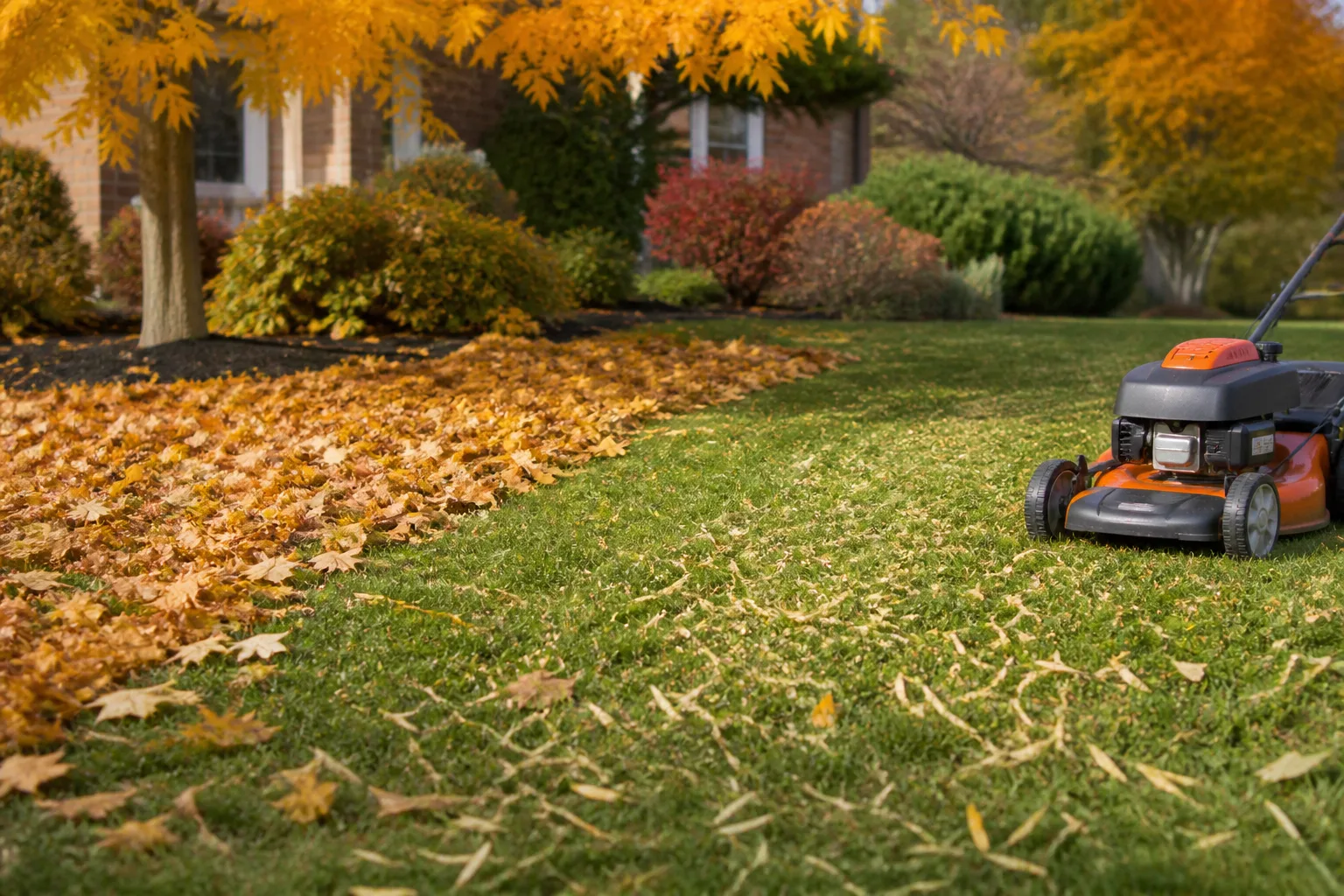
Fall lawn care is less about completing every seasonal chore and more about avoiding a few badly timed ones. A soggy leaf mat, an unchanged summer irrigation schedule, or a last mow that removes half the blade can leave damage that is easy to miss until spring.
The right move depends on grass type, growth, soil moisture, and the weather ahead. Use the five warnings below as a decision guide, then follow the repair order at the end instead of trying to do every lawn project at once.
Fall care is controlled by grass type and weather
Grass does not read a calendar. Cool-season turf such as Kentucky bluegrass, tall fescue, perennial ryegrass, and fine fescue generally keeps growing as air temperatures cool, while warm-season turf such as Bermudagrass, zoysiagrass, St. Augustinegrass, and centipedegrass gradually slows and enters dormancy as soil temperatures fall.
That distinction changes nearly every fall recommendation. Penn State Extension notes that mowing should continue while grass is growing, that fall is a useful window for cool-season renovation, and that fertilizer and lime should be guided by the lawn’s actual needs rather than applied by habit (Penn State Extension).
Weather can override a normal schedule. Do not aerate saturated soil, mow when the ground is soft or frozen, seed when there is not enough establishment time left, or apply fertilizer to drought-stressed turf simply because the bag says “fall.”
Use the first killing frost as a planning anchor, not as a guarantee. The date is an estimate, and a warm autumn may keep grass growing after a light frost while an early cold snap can close the window sooner than expected. If a job needs several weeks of recovery, count backward from the earliest likely damaging cold in your area and leave a buffer for rain.
The lawn itself is often a better clock than the month. New growth that is still emerging, footprints that spring back slowly, standing water after a normal shower, and leaves that remain wet overnight all tell you more about whether a task is ready than a generic fall checklist does. Take a quick walk before starting equipment: note the sunny and shady zones, the places where water pools, and the areas that receive the most traffic. That small inspection can keep you from applying a whole-lawn fix to a problem that is confined to one strip.
Find your grass type before you act
If you do not know the grass, look at how it behaves before choosing a treatment. Turf that stays green and grows during cool autumn weather is likely cool-season; turf that slows sharply and turns tan after cool nights is more likely warm-season, although drought, shade, disease, and traffic can mimic dormancy.
Your local county extension office, a garden center with turf expertise, or a small sample compared with regional lawn guides can help confirm it. When in doubt, identify the grass before buying seed or herbicide, because a product or seed mix that suits one turf type may be a poor fit for another.
1. Leaving a thick layer of leaves
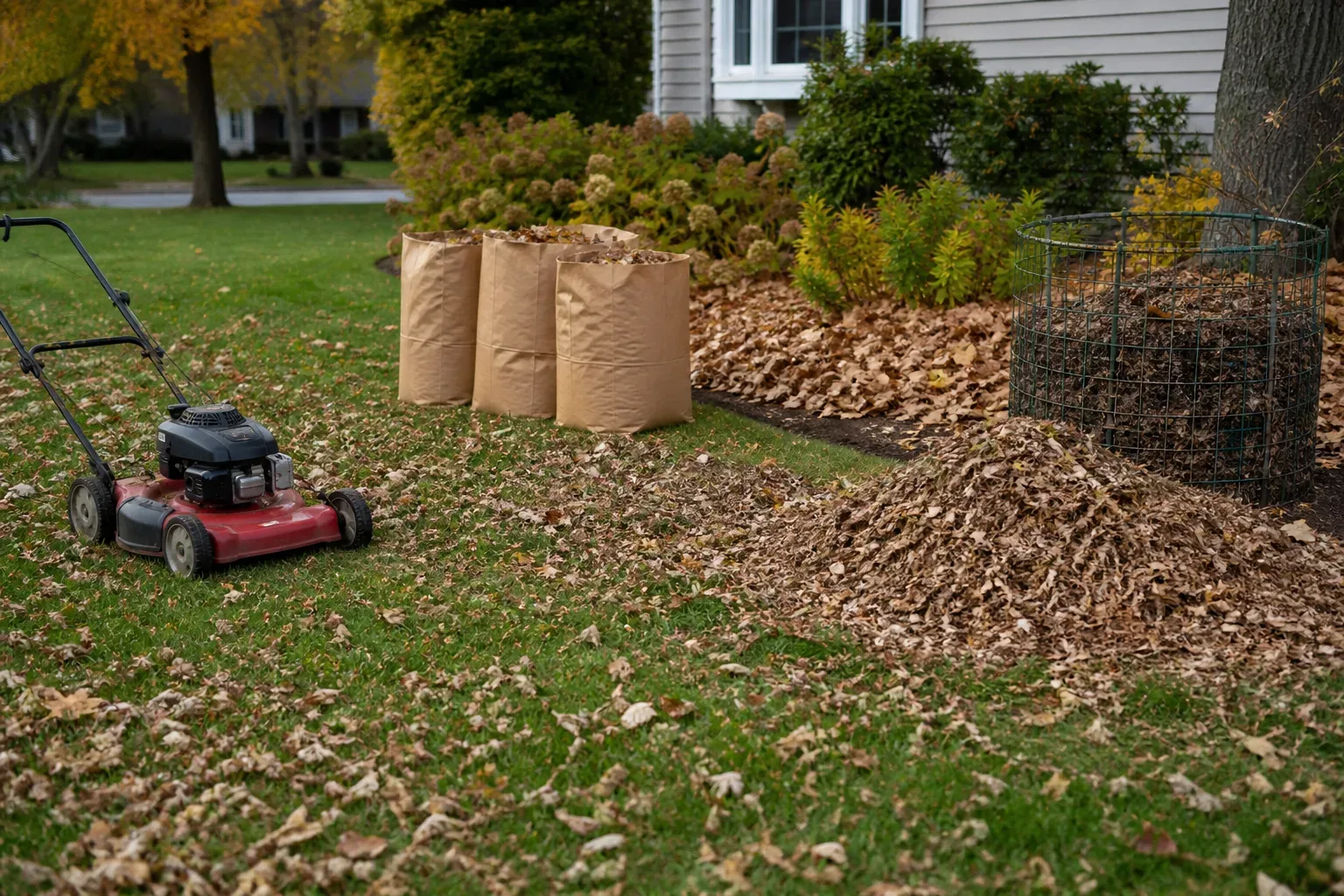
A few dry leaves scattered across healthy grass are not an emergency. A continuous layer that hides the turf is different: it blocks light, holds moisture against the crown, reduces air movement, and can create thin or dead patches beneath it.
The problem is not that leaves are inherently bad. Finely chopped leaves can return organic matter to the soil, but the pieces need to settle between blades instead of forming a blanket. BHG recommends keeping shredded leaf cover to roughly a thin half-inch layer; the useful visual rule is simpler: you should still be able to see the grass canopy through it.
Leaf removal is especially important in low spots, shaded areas, and places where leaves collect against a fence or curb. Those areas dry slowly, so the same amount of leaf material creates more disease pressure than it would on a sunny, well-drained slope.
Mulch, rake, or bag?
Choose the method by leaf depth and condition, not by loyalty to one lawn-care philosophy. Mulch a light layer when the leaves are dry enough to shred and the cut pieces disappear into the turf; rake or vacuum when the layer is thick, wet, matted, or mixed with diseased foliage.
If you mulch, make several light passes rather than forcing a deep layer through the mower in one pass. If the mower leaves visible clumps, the deck is clogged, or the grass disappears beneath the fragments, stop mulching and collect the excess for compost or use in a bed where it will not smother turf.
Do not pile collected leaves on the lawn’s edge. A heap can trap moisture, stain the turf, and shed leaves back onto the area you just cleared. Move them to a compost system, a designated leaf-mold area, or a permitted municipal collection site.
2. Mulching wet leaves into the lawn
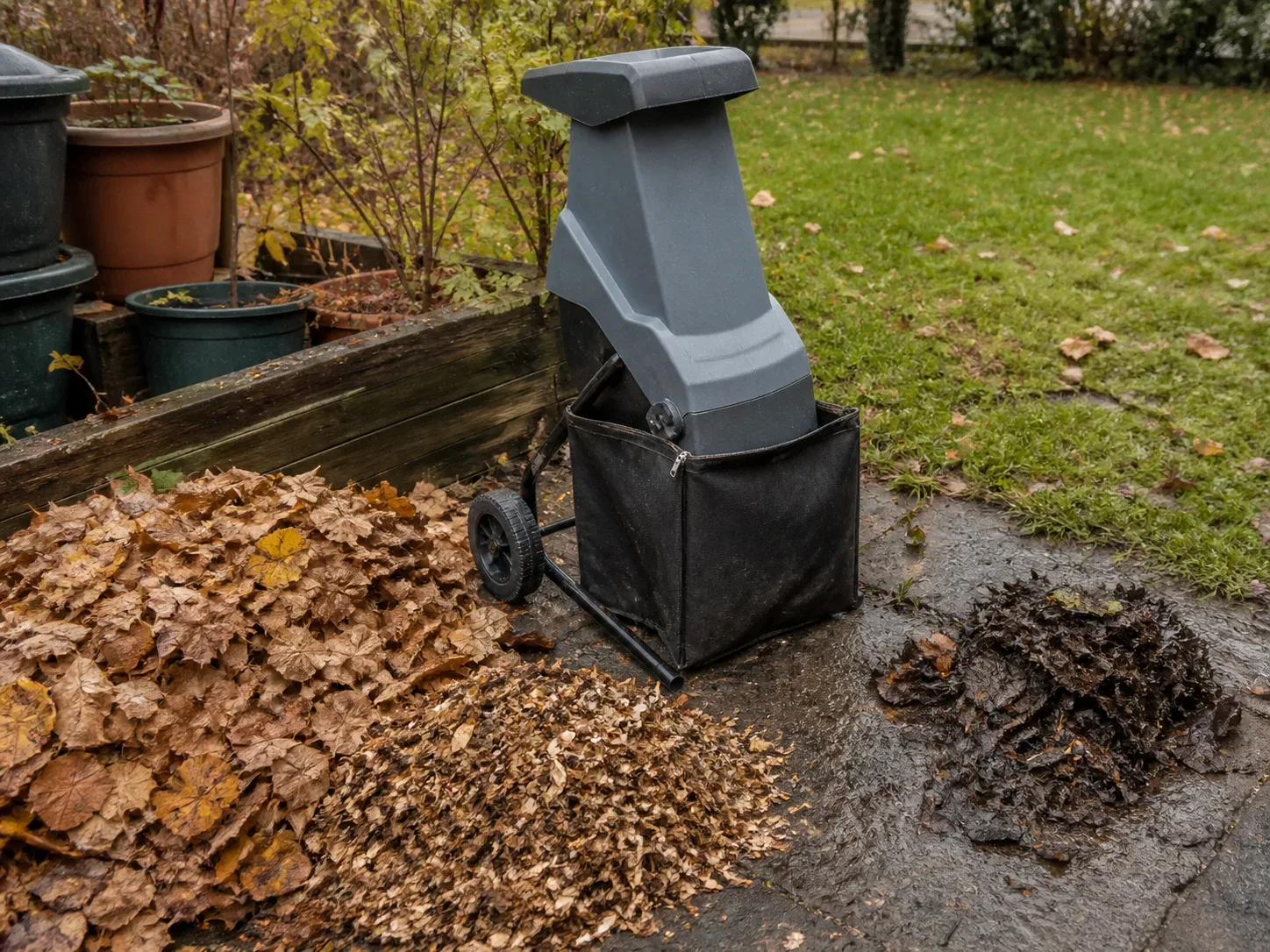
Wet leaves are a separate mistake from simply leaving leaves in place. They cling together, resist fine shredding, bridge across the mower deck, and land as dense pieces that mat down after the next rain. The result is closer to a temporary roof over the turf than to a thin organic amendment.
The risk is highest when several inches of rain have fallen, the leaves have begun to decay, or the lawn is already soft. Driving a mower over those conditions can also press the tires into the soil and create ruts that hold even more water.
This does not mean you must wait for a perfectly dry autumn. A light, recently fallen layer can often be handled when the surface is dry enough for the mower wheels to roll without sinking and the leaves crumble rather than smear.
The dry-leaf test for safe mulching
Pick up a handful of leaves from the lawn. If they separate easily, feel papery or lightly flexible, and break into small pieces under the mower, a shallow mulching pass may work. If they stick together, feel slick, or leave a wet film on your glove, rake or blow them off first and wait for a drier window.
Before mowing, walk the area and remove branches, stones, toys, and other debris. Set the mower high enough to avoid scalping uneven ground, keep the blade sharp, and make a test pass over a small section. The finished surface should show grass between evenly distributed fragments, not a continuous brown layer.
Skip diseased or moldy leaves as a lawn amendment unless you know the disease and composting process will destroy it. Bag them according to local guidance, clean mower surfaces after handling them, and avoid spreading suspicious material to other beds.
3. Overfertilizing or feeding at the wrong time
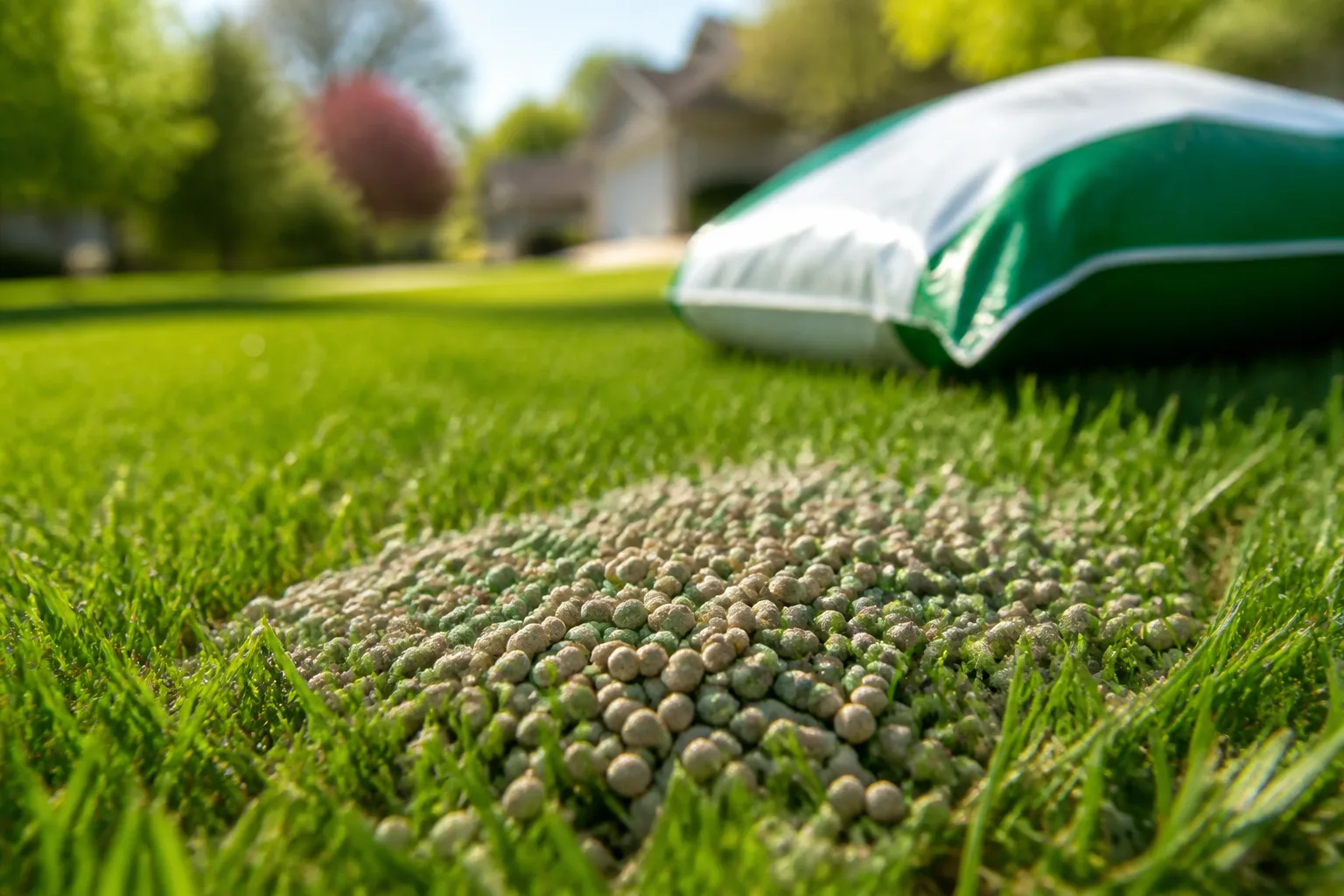
Fall fertilizer can be useful for actively growing cool-season turf, but “more green” is not the same as “better prepared.” Excess nitrogen may push soft leaf growth when the lawn should be shifting energy toward roots and storage, and fertilizer left on a dormant or frozen lawn is more likely to be wasted or carried away.
Penn State Extension recommends using a soil test to determine phosphorus and potassium needs and following the product label for nitrogen. The same guidance says most turf prefers a soil pH around 6.0 to 7.0, but lime is not a universal lawn tonic; apply it when a test supports the need (Penn State Extension).
Overapplication can also burn grass, especially when granules overlap at spreader turns or land on dry blades. Sweep fertilizer off sidewalks and driveways, keep it away from drains and water, and never increase the rate to compensate for a lawn that is thin because of shade, compaction, pests, or poor drainage.
When fall fertilizer helps
Feed cool-season grass only while it is actively growing, adequately watered, and not under heat or drought stress. Early fall is usually the most forgiving window; a later application may still make sense in a region where growth continues, but it should not be treated as a race to the first frost.
Warm-season lawns need a different approach. They are preparing for dormancy rather than building a long cool-season root-growth period, so a late nitrogen push can encourage growth that is poorly timed for cold weather. Follow local extension recommendations and the label for your grass type instead of copying a northern “winterizer” schedule.
If the lawn is healthy and the soil test shows no clear deficiency, skipping a routine feed may be the better environmental choice. The RHS advises feeding only when a lawn needs a boost, using an autumn formulation at the minimum effective rate, and not feeding areas where the goal is to encourage a more diverse meadow (RHS autumn lawn care).
4. Cutting too short—or stopping too early
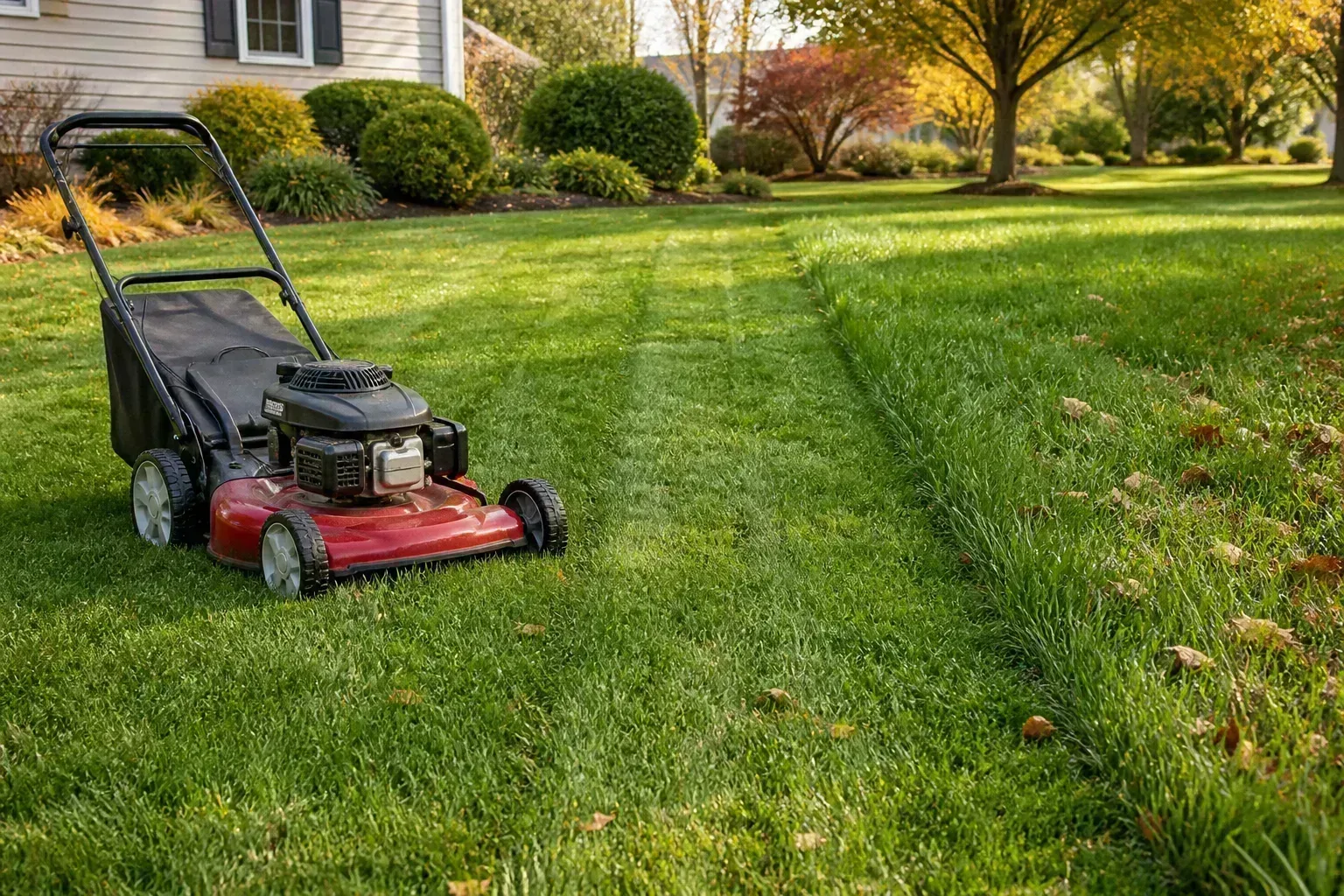
Scalping is the classic last-mow mistake. Removing too much leaf tissue exposes the crown, reduces the plant’s ability to photosynthesize and store energy, and leaves bare soil where weeds or winter injury can take hold. Leaving a tall, floppy canopy is not a good solution either: it can mat under snow or prolonged wet weather and create a humid layer at the soil surface.
The target is a moderate, even height, not the shortest possible lawn. The RHS mowing guide recommends removing no more than one-third of the blade at a time and notes that close mowing weakens grass, promotes shallow rooting, and makes turf more vulnerable to drought, weeds, and moss (RHS lawn mowing guide).
Keep mowing while the grass is growing, even if that means the final cut comes later than expected. Reduce frequency as growth slows, but do not put the mower away just because the trees have changed color or the first light frost has arrived.
Choose a final mowing height
For many ordinary cool-season home lawns, a final height around 2.5 to 3 inches is a reasonable starting point, provided that range matches the turf and the mower is not removing more than one-third of the blade. Some fine lawns are maintained shorter, while shaded or drought-prone grass benefits from more leaf area; the condition of the lawn matters as much as the number on the mower dial.
Warm-season lawns should not automatically be lowered for winter. In areas where they go dormant, leaving the canopy at its normal healthy height—or making only a modest adjustment recommended for the specific grass—can provide better crown protection than a dramatic final cut.
Mow only when the grass and soil surface are dry enough to support the machine. The RHS specifically warns against mowing wet or frosty grass because it can damage turf and compact soil. Sharpen the blade before the final mowing sequence, change direction between cuts to reduce ruts, and clean the deck before storing the equipment.
5. Watering by the summer schedule
An irrigation timer cannot see rainfall, soil texture, shade, slope, or the grass’s growth stage. Leaving a summer schedule untouched as temperatures fall can keep the surface wet for too long, encourage fungal problems, and waste water; shutting irrigation off abruptly during a dry, actively growing autumn can leave roots stressed before winter.
The goal is not a fixed number of minutes. BHG uses about 1 inch of water per week, including rainfall, as a broad lawn benchmark, but the useful amount varies with soil, exposure, grass type, and weather. A clay lawn on a shaded lot may need less frequent irrigation than sandy turf in full sun.
Use rainfall and soil, not the timer
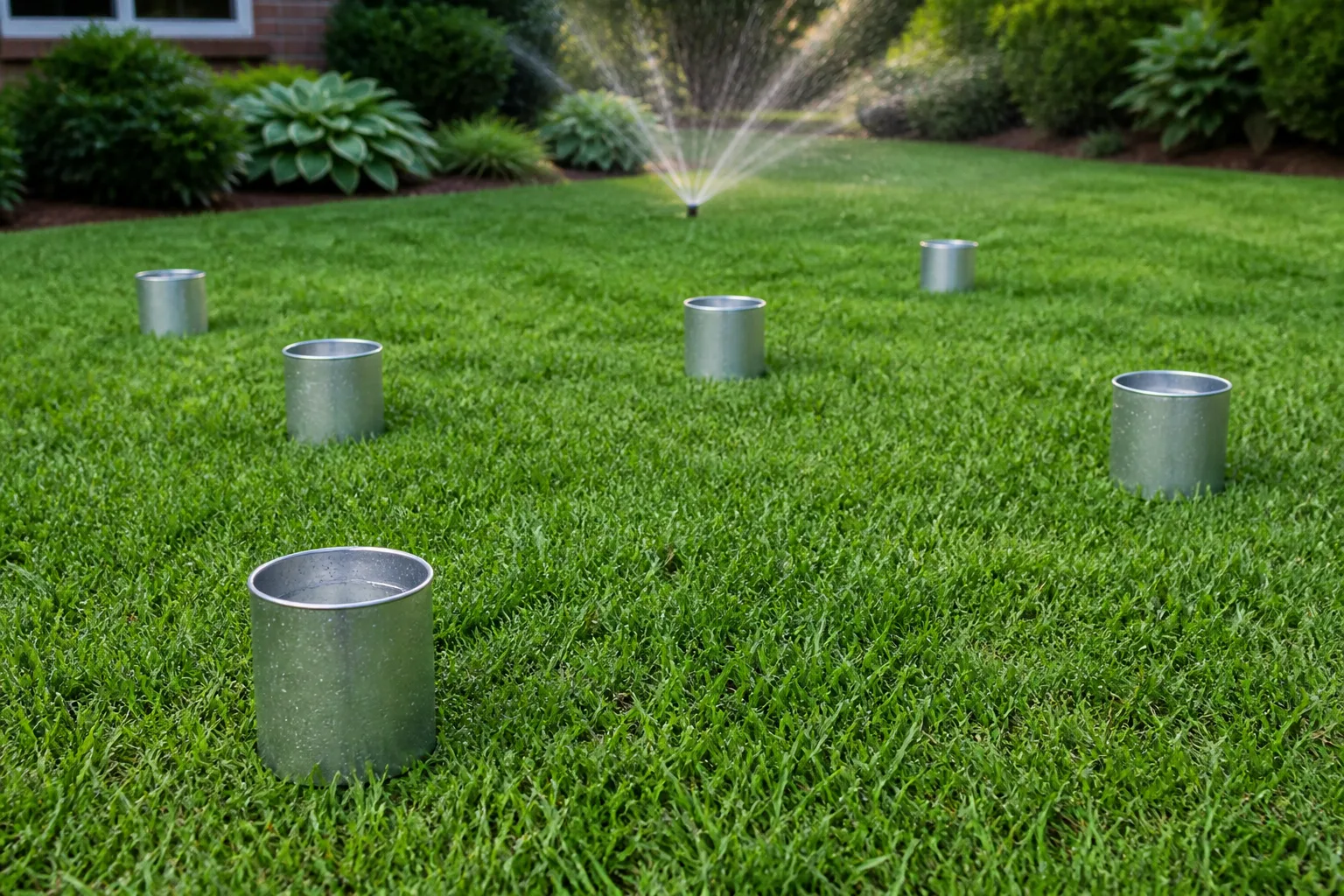
Place straight-sided catch cans or empty tuna cans in the sprinkler zone and run the system long enough to measure what it actually applies. Then adjust the schedule so irrigation supplements rainfall instead of duplicating it. Water in the morning when possible, give the soil time to absorb the water, and avoid short daily sprinkles that wet only the surface.
Check the soil several inches down with a screwdriver or hand trowel. If the soil is dry and the grass is still actively growing, water deeply enough to moisten the root zone; if it is cool and damp, skip the cycle. If water stands after ordinary rain, solve the drainage or compaction problem rather than adding more irrigation.
As dormancy becomes obvious, watering needs decline. Do not water frozen ground, and do not keep an irrigation system running through freezing conditions without following local winterization guidance. In drought-prone regions, dormant warm-season grass may still need occasional moisture according to local recommendations, but the decision should be based on the turf and soil—not a summer preset.
The repair order if you already made a mistake
If the lawn already has leaf mats, ruts, brown patches, or a fertilizer spill, resist the urge to aerate, dethatch, seed, feed, and water all in one weekend. Several aggressive jobs in wet or stressed turf can compound the original damage.
Start with the least invasive action that removes the immediate threat. Clear thick leaves, stop unnecessary irrigation, sweep up visible fertilizer granules, and wait for a dry period before driving equipment across the lawn. If the grass was scalped, leave it alone to recover; do not compensate with heavy fertilizer or constant watering.
What to do before the ground freezes
Use this order when the weather still allows work:
- Remove smothering material. Rake or collect thick leaf mats and wet clumps so air and light can reach the canopy.
- Correct water timing. Check rainfall and soil moisture, then reduce or pause irrigation as conditions dictate.
- Mow carefully. Keep growing turf at an even height and never remove more than one-third at once.
- Test before feeding. Apply only the labeled rate of a suitable product to actively growing grass that needs it.
- Repair or renovate selectively. Aerate, dethatch, or overseed only if the soil, thatch layer, and remaining weather window justify it.
If the soil is frozen, persistently waterlogged, or too close to a damaging weather event, stop after cleanup and defer renovation. A postponed job is usually easier to do well than a rushed one that creates compaction or kills new seedlings.
Fall tasks that help instead
Good fall lawn care is targeted. Penn State Extension, the RHS, and practical fall turf guidance all point to the same underlying rule: improve access to air, water, nutrients, and light only when the lawn can recover from the work.
Aerate only compacted soil
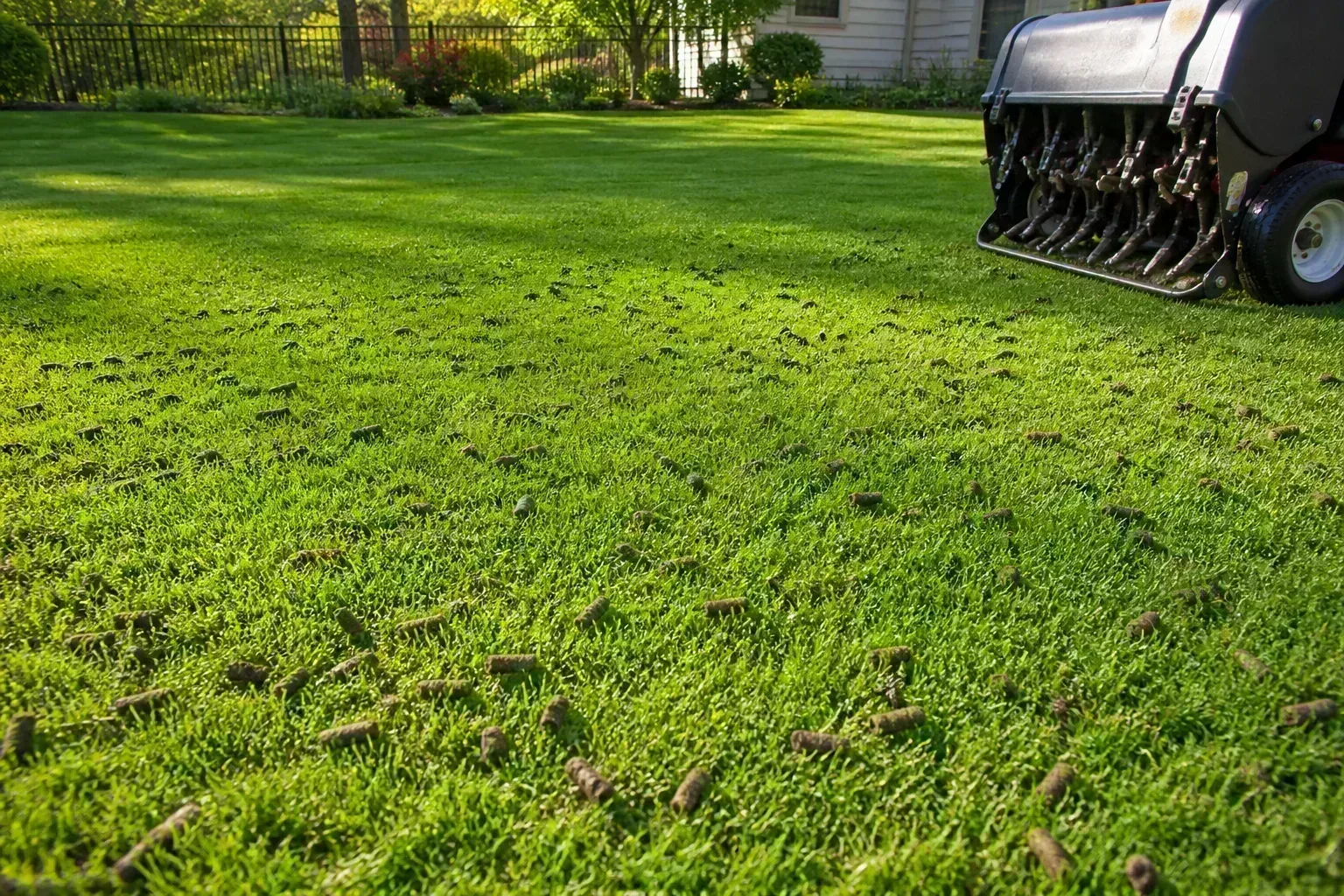
Aeration helps where foot traffic, vehicles, clay soil, construction, or repeated mowing has compressed the root zone. Test first by pushing a screwdriver into moist—not saturated—soil. If it enters easily, aeration may add little; if it stops near the surface in a heavily used area, core aeration may be worthwhile.
Use a hollow-tine or core aerator when possible, and work when the soil is moist enough for the tines to penetrate but not so wet that the machine smears and compacts the soil. Penn State Extension describes useful core depths around 2.5 to 4 inches and cautions that very dry or very wet conditions reduce the quality of the operation.
Leave the pulled plugs on the surface to dry and break apart naturally. Aerate before overseeding so seed can settle into openings, but do not turn a small compacted walkway into a whole-lawn renovation if only one zone has a problem.
Dethatch only when there is a real thatch layer
Thatch is a tightly interwoven layer of partly decomposed stems and roots between green foliage and soil. It is not the same thing as autumn leaves, and a thin layer can be normal; removing it every year can stress turf unnecessarily.
Cut a small plug at the lawn edge and measure the spongy layer above the soil. Penn State Extension recommends mechanical removal when thatch is about 1 inch or more, while other turf guides use lower thresholds for particular lawns; the important point is to measure rather than guess. Do not dethatch drought-stressed, heat-stressed, waterlogged, or late-fall turf that will not have time to recover.
Rake out only what is necessary, collect the debris, and let the lawn recover before adding more stress. If thatch keeps building, look for the underlying cause—overfertilization, poor drainage, compacted soil, or an unsuitable grass mix—rather than repeating the same cleanup forever.
Overseed while the seed can establish
Overseeding is useful for thin cool-season turf when soil is still warm, the seed has good contact with soil, and several weeks of favorable growth remain. Penn State Extension notes that late summer to early fall is generally the strongest window in its region because seedlings can establish before their first major heat stress; local timing can be earlier in cold climates and later in mild ones.
Prepare the surface without burying seed deeply. After spreading the correct species for the site, lightly rake or roll for contact, then keep the seedbed consistently moist through germination. Frequent light irrigation is appropriate for new seed; it is different from keeping an established lawn wet all season.
If the local establishment window has closed, do not scatter seed into a cold, leaf-covered lawn and expect a spring miracle. In some climates, dormant seeding is a deliberate option, but it requires local timing, good soil contact, and acceptance that germination waits for spring. Warm-season lawns generally need their main renovation window when the grass is actively growing, not as winter approaches.
Seed choice matters just as much as timing. A bargain blend may contain species that cannot tolerate your shade, heat, traffic, or soil moisture, so it can fail even when the work was done correctly. Match the seed to the existing turf and local growing conditions, and read the label for pure live seed, weed-seed content, and the recommended rate. If a bare area is caused by deep shade, repeated foot traffic, drainage, or a pest problem, seed is only a surface repair; correct that cause or the same patch will return.
Conclusion
The five damaging fall habits are easy to summarize: leaving a thick leaf blanket, mulching wet leaves, overfeeding, mowing too short or too late, and watering by a summer timer. The fix is not to work harder at every chore; it is to watch the turf and make one well-timed correction at a time.
Clear leaves when they mat, let wet ground dry, mow conservatively while grass grows, adjust irrigation to rainfall and soil, and fertilize only when the grass and soil support it. Then reserve aeration, dethatching, and overseeding for lawns that need them and windows that leave enough time for recovery.