How to Grow and Care for Corkscrew Willow
Learn corkscrew willow care, including sun, soil, watering, pruning, mature size, roots, weak wood, lifespan, pests, and storm safety.

Corkscrew willow is the landscape tree people buy for winter stems that twist like rope—and then discover, a few years later, that those same stems snap in ice storms and the roots have been hunting the sewer line. Sold as Salix matsudana ‘Tortuosa’, curly willow, contorted willow, or dragon’s claw willow, it is a fast-growing deciduous tree from China, Japan, and Korea whose branches, shoots, and even leaves curl instead of growing straight.
That contortion is the whole point. In summer the canopy looks like a fairly ordinary willow with narrow, slightly wavy leaves. After leaf drop, the silhouette becomes sculptural—no two trees quite alike. Catkins appear in early spring, but most gardeners grow corkscrew willow for bare-branch winter interest, dried arrangements, and quick shade near a pond or rain garden.
The catch is structural. Corkscrew willow grows quickly, lives relatively briefly, and produces soft wood that breaks under snow load. Its roots aggressively seek moisture and can damage pipes, septic fields, and pavement. Choose the site before you buy the sapling, not after the first storm takes out a major limb.
Know the trade-off before you plant
Think of corkscrew willow as a planned ornamental tree, not a century shade legacy. NC State Extension describes it as fast-growing and short-lived, with contortion that increases with vigor. Oregon State University’s Landscape Plants database notes the same pattern: impressive growth speed paired with a comparatively brief garden life.
Botanical naming has shifted over time. You may see labels reading Salix matsudana ‘Tortuosa’, Salix babylonica f. tortuosa, or simply “corkscrew willow.” Retailers still use the older S. matsudana name most often; NC State now treats the contorted form under Salix babylonica. For practical care, the important point is cultivar identity—twisted habit—not which synonym is on the tag.
Taxonomy aside, the tree’s behavior is consistent. It wants sun, steady moisture, and room. It does not want to live beside your foundation, under power lines you cannot move, or in a hot, humid climate where willows often struggle. If you need a small, durable tree for a tight urban strip, this is the wrong plant. If you have an open lawn, a low wet spot, or a rain-garden edge where winter sculpture matters, it can be a striking choice—as long as you accept maintenance and eventual replacement.
Corkscrew willow at a glance
| Detail | What to expect |
|---|---|
| Common names | Corkscrew willow, curly willow, contorted willow, dragon’s claw willow, rattlesnake willow |
| Botanical name | Salix matsudana ‘Tortuosa’ (also sold as Salix babylonica f. tortuosa) |
| Plant type | Deciduous tree |
| Mature size | About 20–30 ft tall and 10–15 ft wide (NC State); some references list up to 40 ft in ideal moisture |
| Habit | Upright to rounded crown with weeping, contorted branches—not a classic weeping willow silhouette |
| Hardiness | USDA zones 4–8; Oregon State lists Zone 4; NC State lists zones 5a–8b |
| Light | Full sun preferred; tolerates light shade |
| Soil | Moist to wet sites; tolerates clay, loam, and sand if moisture is steady |
| Soil pH | Roughly acidic to alkaline (about 5.6–7.8) |
| Bloom | Insignificant yellow-green catkins in spring |
| Lifespan | Often 15–20 years; up to ~30 in ideal conditions |
| Main risks | Aggressive roots, weak wood, storm breakage, short life, litter from catkins and twigs |
| Best uses | Specimen tree, rain garden, pond margin, winter garden, cut stems for arrangements |
The Missouri Botanical Garden and NC State both emphasize moist sites and full sun. Neither source recommends planting willows where roots can reach water or sewer infrastructure—and that warning applies doubly here because of the tree’s growth rate.
Is corkscrew willow right for your yard?
Before you dig, run a honest site audit. Corkscrew willow is not difficult to grow; it is difficult to place correctly and to keep safe as it matures.
Where it shines in the landscape
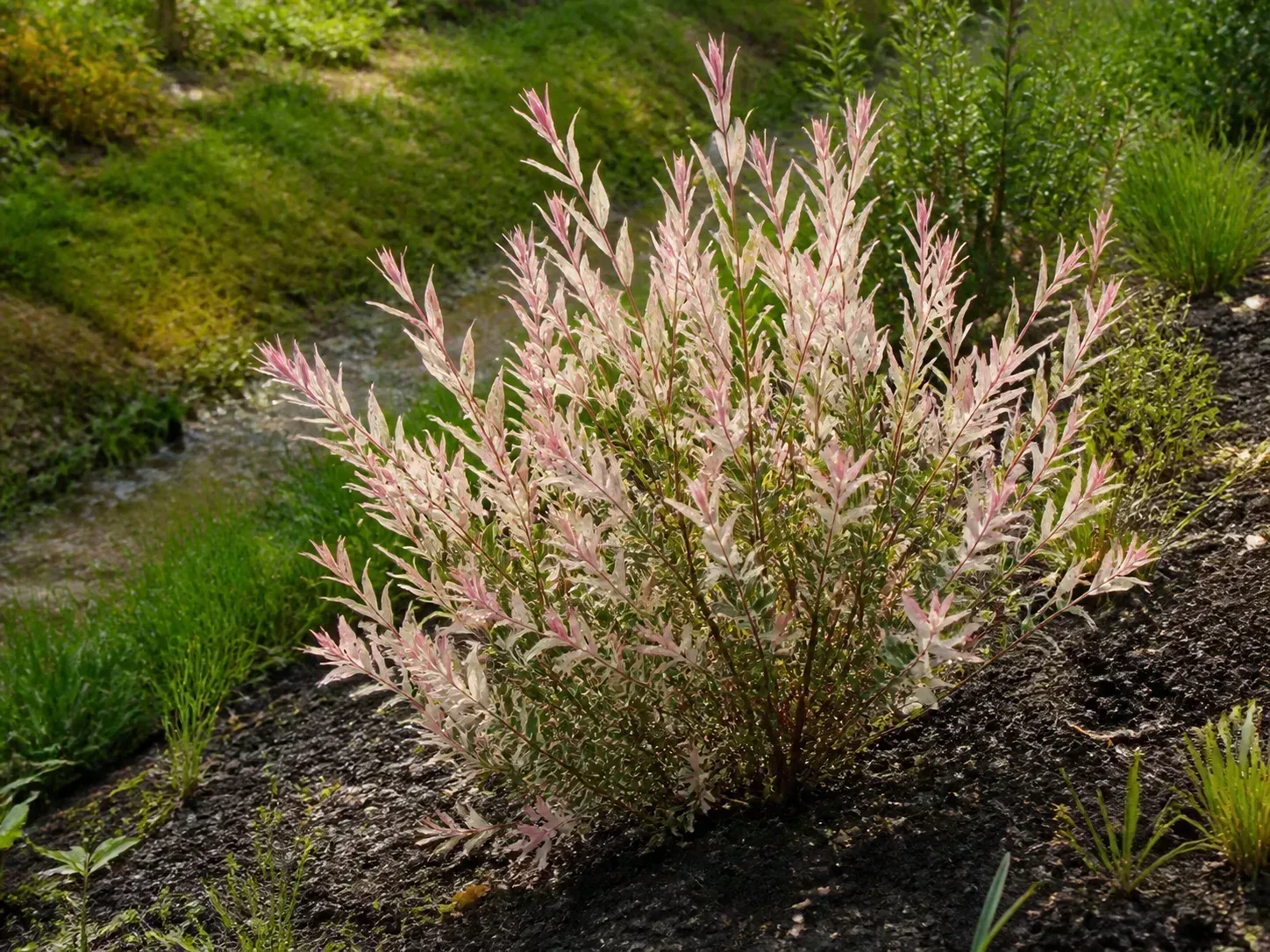
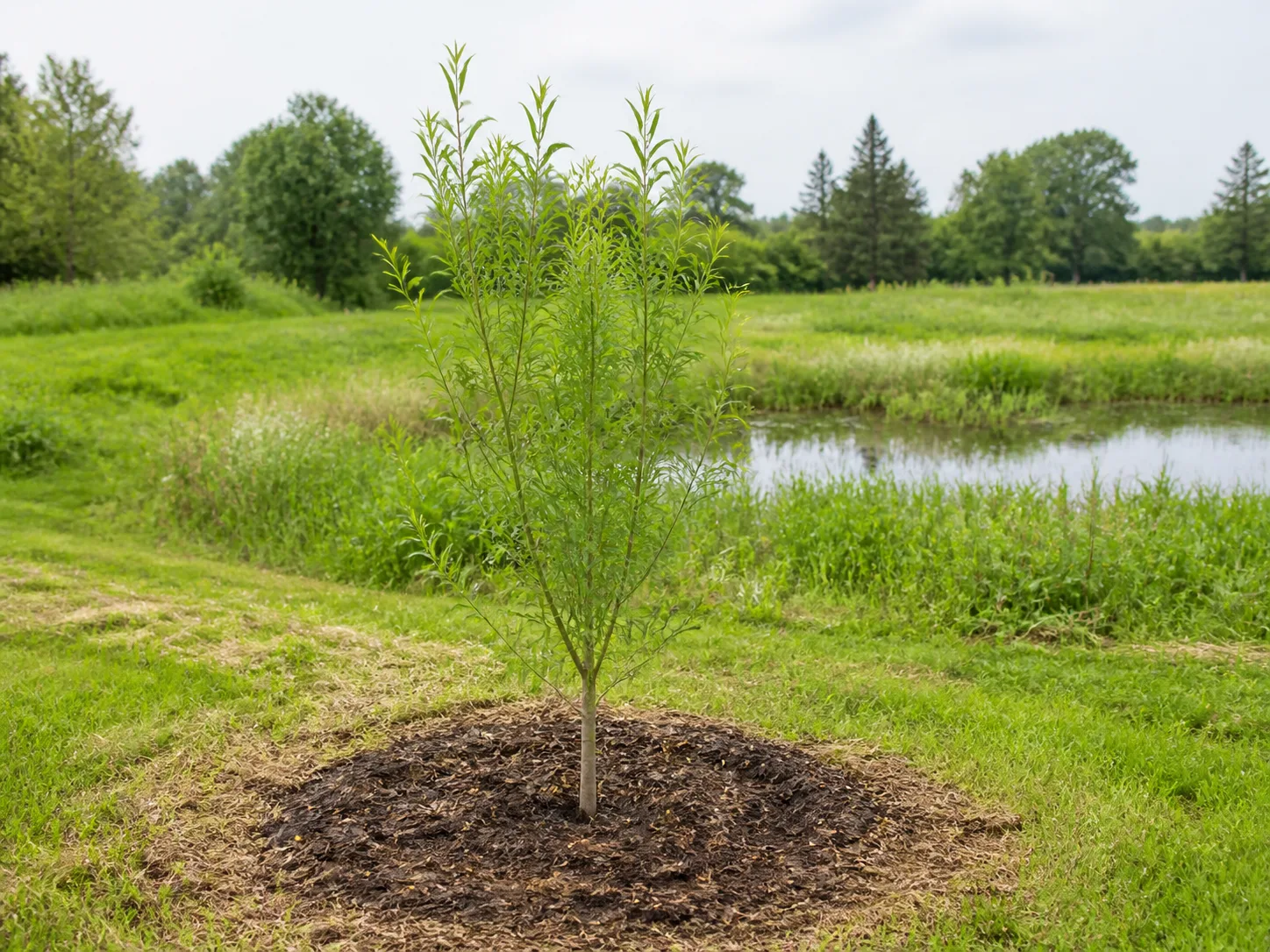
This tree earns its space when winter structure matters and moisture is naturally available. NC State recommends it as a specimen in a lawn, near a pond, or in a riparian planting where the contorted branches show after leaf fall. Rain gardens and winter-interest beds are natural fits because the roots tolerate wet soil better than many landscape trees.
A single specimen on an open lawn can anchor a view from a window or patio. Near water—pond edge, stream bank, or a low area that collects runoff—the tree gets the moisture it craves without constant irrigation. Pollarding or periodic hard pruning can exaggerate the corkscrew effect on young shoots, which is why some growers treat it almost like a large shrub on a short trunk.
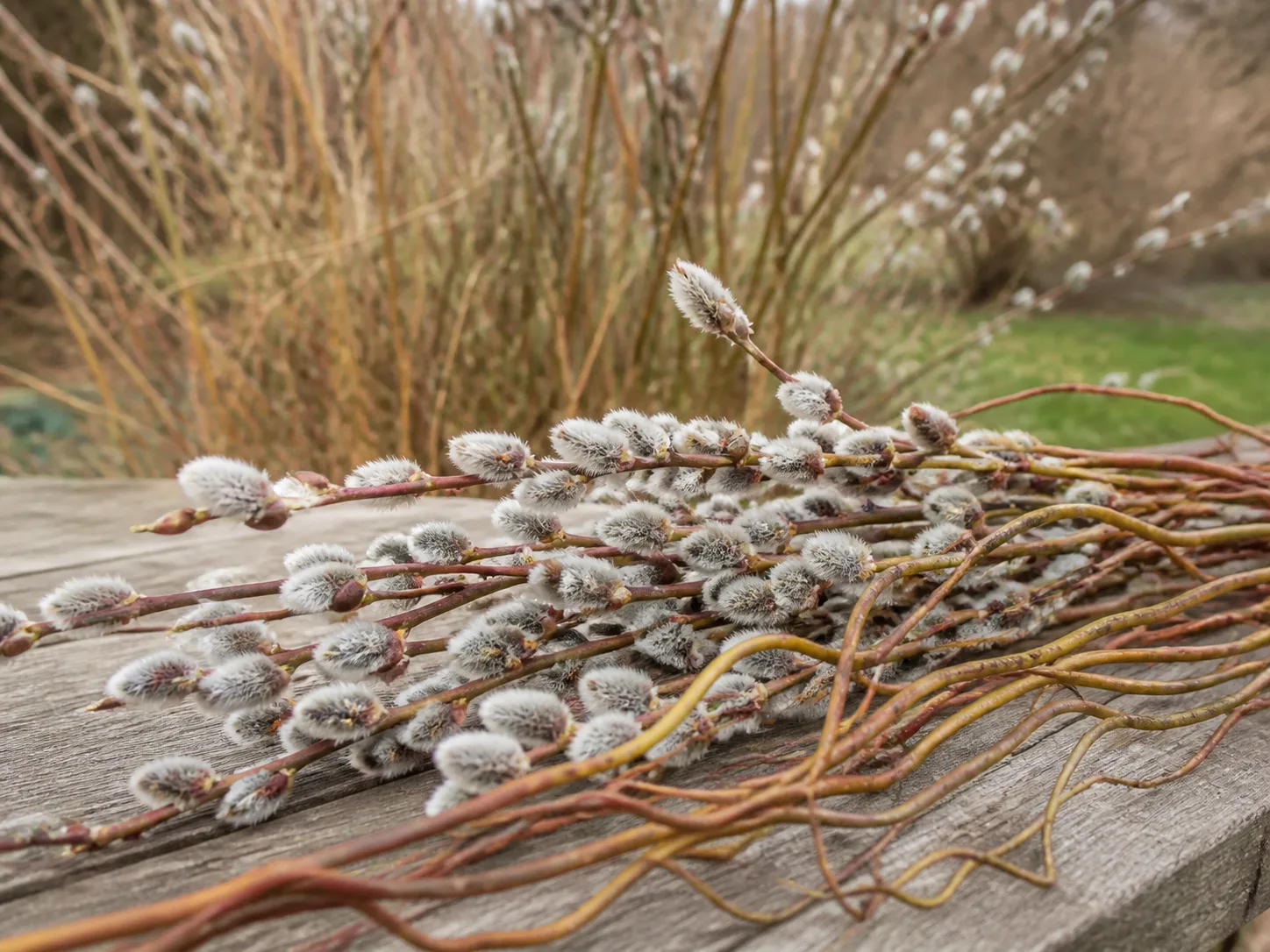
Cut stems are a legitimate secondary crop. Fresh or dried curly branches work in vases and wreaths. Selective harvest of young wood is fine; stripping the canopy or making large decorative cuts is not.
Wildlife value is real but modest. Willows support pollinators when catkins open and serve as larval host plants for viceroy butterflies, according to NC State’s profile of related willow species. Birds use the canopy for nesting and insect foraging. Do not plant solely for wildlife if the site cannot handle the root spread.
Where you should not plant it
NC State is blunt: willows are notorious for aggressive root systems that can invade wells, septic tanks, and other structures. Keep corkscrew willow well away from:
- House foundations and retaining walls
- Driveways, sidewalks, and patios
- Water lines, sewer pipes, and septic drain fields
- Overhead utility lines unless you have a long-term pruning plan—and even then, weak wood makes topping a bad idea
- Narrow planting strips between pavement and buildings
- Hot, humid regions where willows often decline (many references caution against the Deep South’s muggy summers)
Also skip this tree if you hate yard cleanup. Spring catkins, summer twig drop, and autumn leaves all add litter. Broken branches after storms are common enough that you should plan for annual debris pickup, not treat it as a surprise.
Light, soil, and water needs
Corkscrew willow is adaptable about soil texture and pH but not about moisture and sun. Get those two right and most other care falls into place.
Sun, heat, and seasonal growth
Plant in full sun for the strongest growth and best branch color. Oregon State recommends sun; NC State lists full sun (six or more hours of direct light) as ideal. Light dappled shade is tolerated, but shade weakens the contorted silhouette and encourages looser, less dramatic stems.
In cool temperate climates the tree leafs out early and drops late, giving a long season of foliage. Fall color is often yellow before the leaves go. Winter is when the plant repays the placement decision: contorted twigs against sky or snow are the main event.
Heat and humidity are the limiting factor in marginal climates. If your summers are long, hot, and muggy, expect more stress, disease pressure, and dieback than a gardener in the upper Midwest or Pacific Northwest would see. That does not mean automatic failure in Zone 8, but it does mean extra attention to air movement, soil moisture consistency, and realistic expectations.
Moisture without waterlogging
“Moisture-loving” is not the same as “plant in a swamp.” Willows tolerate wet soil and occasional standing water better than oaks or maples, but roots still need oxygen. NC State lists good drainage alongside frequent standing water and moist conditions—meaning the species handles a range of wet sites, not permanently anaerobic mud.
For new plantings, choose soil that holds moisture between rains yet drains enough that the root zone does not smell sour or stay submerged for days. A low lawn pocket, rain-garden berm, or pond margin often works. A raised dry bank above a parking lot usually does not.
Watering plan:
- Year one: Water deeply one to two times per week during dry spells so the root ball and surrounding soil stay evenly moist. A slow soak beats a daily sprinkle.
- Established trees: Supplement during drought, especially if turf or pavement sheds rainfall away from the root zone. Let the surface begin to dry between deep waterings rather than keeping mud at the trunk.
- Mulch: Apply 2–3 inches of organic mulch over the root zone, keeping it a few inches clear of the trunk. Mulch reduces evaporation and mower damage—both important because the bark is easily nicked.
If the soil is naturally dry, forcing a willow to live there means lifelong irrigation and still mediocre performance. Plant something else, or change the site with a swale or rain capture that delivers consistent moisture.
Planting and first-season establishment
Spring planting is ideal in cold climates so roots establish before summer heat. In mild regions, early fall can also work if the tree has time to settle in before hard frost.
Steps:
- Call before you dig to locate underground utilities. Willow roots will eventually travel; starting on top of a line is asking for trouble.
- Dig a wide hole—about three times the width of the root ball and only as deep as the root mass. Wide holes encourage lateral root growth; deep holes invite settling.
- Set the tree so the root flare sits at or slightly above grade. Do not bury the trunk.
- Tease circling roots on container stock outward. Spread bare-root limbs naturally without folding them back on themselves.
- Backfill with native soil unless drainage is truly awful. Amending only the hole can create a “bathtub” that holds water.
- Water thoroughly at planting and whenever the root zone begins to dry during the first growing season.
Stake only if the site is windy and the root ball moves. Remove stakes after one season so the trunk develops taper. A corkscrew willow that rocks in the wind can develop a weak attachment at the base—exactly where you do not want failure later.
First-year success is mostly about even moisture and protection from mechanical damage. Keep mowers and string trimmers away from the trunk. A mulch ring doubles as a visual buffer so equipment operators see the tree before they scar the bark.
Mature size, roots, and spacing math
Use mature dimensions when you choose the spot, not the size of the nursery pot. NC State lists 20–30 feet tall and 10–15 feet wide. Oregon State gives a similar 20–30 ft range with an oval-rounded crown. Epic Gardening and some growers cite up to 40 feet in rich, wet soil. Plan for the upper end if your site is moist and sunny; you can always prune for size, but you cannot shrink aggressive roots retroactively.
Spacing guidelines:
- From structures: Stay at least 30–50 feet from foundations, septic fields, and water lines. Farther is better if your soil is sandy and roots travel easily.
- From pavement: Allow room for the canopy plus falling twigs. Surface roots can lift sidewalks over time.
- Between trees: If planting more than one, space at least 20 feet on center unless you intend to manage them as a managed copse with regular pruning.
- Overhead wires: Avoid planting under lines you cannot raise. Do not “solve” clearance by topping.
Roots are shallow and fibrous. They follow moisture gradients—toward ponds, downspout outlets, leaking pipes, and lawn irrigation. That is useful in a rain garden and disastrous beside a septic tank. If your only open space is next to infrastructure, choose a different tree with a narrower, slower root system.
Feeding and mulch
Corkscrew willow rarely needs heavy feeding. In fertile lawn soil or a compost-amended bed, extra fertilizer often produces soft, fast shoots that snap more easily in wind and ice.
Feed only when a soil test or clear symptoms suggest a deficiency—pale new growth across the whole canopy, not just normal spring yellowing. If needed, apply a balanced slow-release fertilizer in early spring at the labeled rate. Skip late-season nitrogen in cold climates where new wood may not harden before frost.
Organic mulch is the better default. A yearly top-dressing of compost or shredded bark feeds soil biology slowly, conserves moisture, and protects roots from temperature swings. Keep mulch off the trunk to reduce bark rot and rodent hiding spots.
Pruning curly branches for structure and winter display
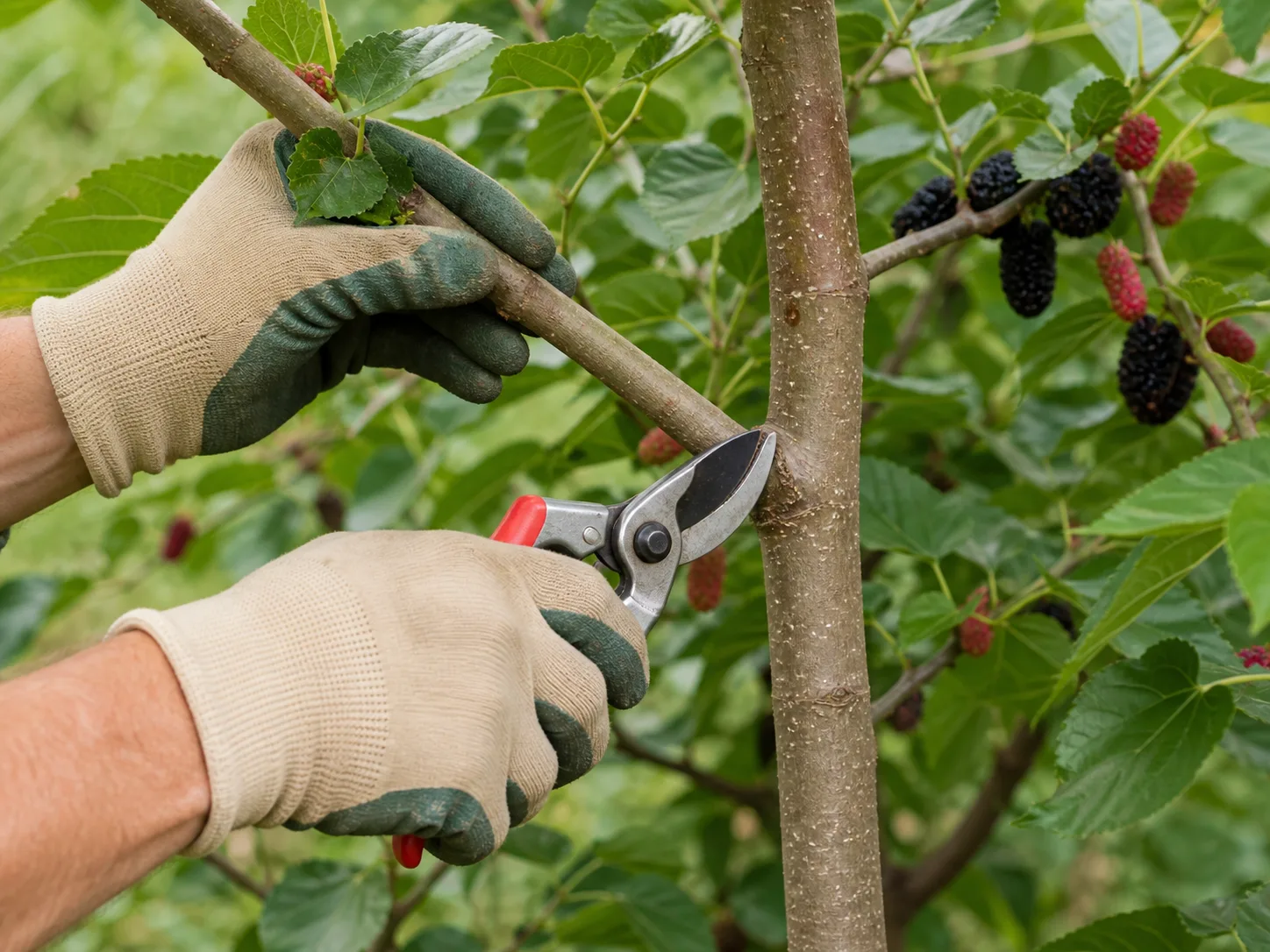
Prune for safety and structure first, winter beauty second. The best window is late winter to early spring while the tree is dormant and branch architecture is visible. Remove dead, broken, rubbing, and inward-crossing wood back to a healthy branch collar. Do not leave long stubs; they die back and invite decay.
Young trees benefit from a central leader and a few well-spaced scaffold branches. Older trees need thinning in the crown so wind passes through instead of catching a solid sail of twigs. After storms, inspect immediately for hanging or cracked limbs and remove hazards before they fall on their own.
Never top a corkscrew willow—or any willow—to reduce height. Topping creates a cluster of weak shoots from large wounds and starts a cycle of breakage and re-topping. If the tree is too tall or too close to a target, hire a certified arborist for reduction pruning or removal.
Pollarding and arrangement harvests
Contortion increases with vigor, according to both NC State and Oregon State. Pollarding—cutting back to the same head height each dormant season—can produce a dense mass of curly young shoots at eye level. That is a legitimate style for specimen trees in open lawns where you want maximum winter twist without a 30-foot canopy.
Pollarding is a commitment. Once started, the tree expects renewal cuts every year or two. Letting a pollarded head grow out unchecked produces weak, crowded regrowth. If you are not willing to maintain that schedule, use lighter thinning instead.
For cut stems, harvest pencil-thick one-year wood in late winter before buds swell. Take a few branches per year from different sides of the tree so you do not strip one quadrant bare. Disinfect pruners between cuts if you are removing diseased wood.
Related curly willow cultivars to know
The contorted habit appears in several named selections. Verify the label if stem color matters for your design.
‘Tortuosa’ — The classic corkscrew willow: upright habit, strongly twisted branches, green leaves with a slight curl. Oregon State notes it is a female clone introduced to North America in the 1920s.
‘Golden Curls’ — A hybrid involving S. alba ‘Tristis’ and S. matsudana ‘Tortuosa’, with weeping golden twigs. Winter stems read yellow to golden brown; summer contrast between green leaves and yellow wood is strong.
‘Scarlet Curls’ — Trademarked selection with golden twisted twigs that turn scarlet in winter, plus curly leaves. More ornamental stem color than straight ‘Tortuosa’, with similar site demands.
Do not confuse corkscrew willow with a weeping willow (Salix babylonica and its weeping forms). Weeping willows have long, pendulous straight branches that sweep downward. Corkscrew willow is generally upright with twisted wood; it may look slightly weeping on some branches but not like a curtain of foliage to the ground.
Propagation from hardwood cuttings
Willows are among the easiest trees to propagate— which is both convenient and a reason to think twice before giving away rooted cuttings without a site warning. Seed is unreliable for cultivars; seedlings will not match the parent’s contorted habit.
Hardwood cutting method (dormant season):
- In late fall or winter after leaf drop, take cuttings from healthy one-year wood at the base of a mature tree.
- Choose hardwood segments at least 18–24 inches long with no soft green tips.
- Make a straight cut at the base below a bud and an angled cut at the top above a bud so you can plant orientation correctly.
- Plant base-end down 4–6 inches deep in moist garden soil or pots of potting mix. Willow often roots without hormone, though rooting powder can speed the process.
- Keep the medium evenly moist through winter. Shoots should appear in spring.
- Let cuttings grow a full season before transplanting so roots strengthen. A rooted cutting becomes a full-size tree with the same root ambitions as its parent.
Label every pot. “Curly willow” sounds charming until the recipient plants it beside a garage slab.
Pests, diseases, and weak wood
Corkscrew willow shares the pest and disease profile of willows generally. Most issues are manageable; weak wood is the chronic structural problem.
Insects: Aphids, scale, borers, lace bugs, caterpillars, and willow leaf beetles can appear. Willow leaf beetles—metallic blue adults and black larvae—skeletonize leaves but rarely kill a healthy tree. Aphids produce honeydew on lower leaves. Lace bugs cause early yellowing of foliage undersides. Control starts with cultural care: avoid excess nitrogen, thin crowded branches for airflow, and wash off minor infestations with a strong hose spray. Escalate to labeled treatments only after identification; many willow pests have natural predators.
Diseases: Powdery mildew, leaf spots, cankers, willow scab, and rust all occur. Rake and remove fallen leaves to break disease cycles. Prune out infected branches during dry weather and disinfect tools between cuts. Chronic cankers on major limbs may mean removal is safer than repeated surgery.
Weak wood and storm damage: Fast growth produces soft wood that cracks under ice and wind. Expect some branch litter every year and serious damage after major storms. After weather events, look for splits at forks, hanging branches, and leaning trunks. Keep people and cars clear until hazards are removed. Call a certified arborist if the trunk is compromised or the tree leans toward a target.
Branch dieback: Sudden dead tips can follow drought, root injury from construction, girdling roots at planting, or canker fungi. Scratch small twigs to check for green cambium. If dieback climbs from the tips inward over multiple seasons, have the tree assessed—replacement may be more cost-effective than repeated rescue pruning.
Conclusion: treat it as a planned short-term tree
Corkscrew willow rewards gardeners who want fast winter drama and have the space, moisture, and maintenance bandwidth to manage it. Plant in full sun on a moist but breathable site, far from pipes and pavement. Water deeply while young, mulch without piling against the trunk, and prune for structure rather than height control.
Accept the lifespan honestly. A 20-year run of spectacular curly branches may be a success—not a failure—if you planned for replacement from the start. If your yard is small, dry, or crowded with infrastructure, admire corkscrew willow in someone else’s rain garden and choose a slower, stronger tree for your own soil.
Used with clear eyes, Salix matsudana ‘Tortuosa’ is one of the few trees that looks better after the leaves fall. Used without a site plan, it becomes the tree that cracks the sidewalk and blocks the plumber. Decide which story you want before you plant.