15 Garden Hose Storage Ideas for Every Yard
Compare 15 garden hose storage ideas, from wall reels and hose pots to shed setups, with practical advice on fit, mounting, sun, and winter care.
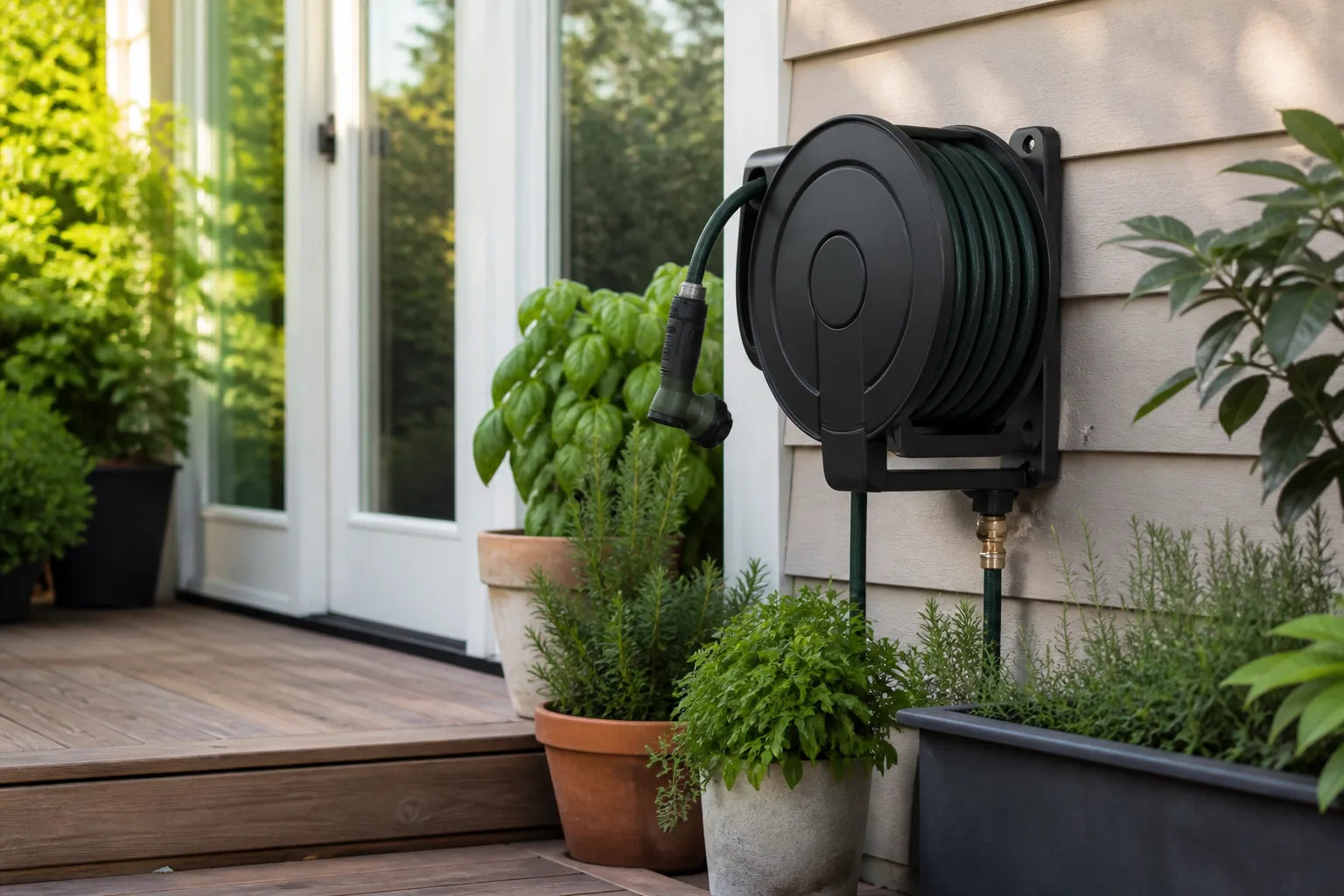
The best garden hose storage is close to the place you water, sized for the hose you own, and easy enough to use that you put the hose away after each job. A wall reel can be excellent beside a patio spigot, while a lightweight hanger or a hose pot may make more sense for a small courtyard. For a long hose that serves several beds, a wheeled cart can save repeated dragging.
Before picking a container or mount, look at the hose’s length and diameter, the width of the loops it needs, the surface you can attach to, and how exposed the spot is to sun and winter cold. Those practical details separate a tidy setup from a box that will not close, a reel that tips when pulled, or a hose that stays kinked.
Choose a storage method for your hose and yard
Start by measuring the route from the spigot to the farthest plant or outdoor task. A hose that barely reaches is difficult to use and can pull on its fitting; an unnecessarily long one needs more reel or container capacity. If a reel is labeled for a particular length, check the hose diameter listed with that capacity too. A thick hose takes more room than a narrow one, so do not assume a rating for one diameter fits another.
Next, decide how you want to handle it. A hanger, pot, or open coil has a low purchase cost and few parts, but you must do the winding by hand. A manual reel makes winding more repeatable; an enclosed retractable reel is faster to put away but costs more and needs a stable mounting surface. A cart moves between beds, yet it occupies floor space and can be awkward on steps. a hands-on reel comparison compares products by design, ease of use, portability, and durability—useful criteria when you weigh a reel’s convenience against its footprint and upkeep.
Think about the support and environment before buying. A full hose can pull sharply when you tug it, so a wall-mounted reel needs the fasteners and backing specified by its maker; siding alone is not a structural anchor. A hose stored outdoors benefits from shade and room to drain. For a pot or cabinet, make sure the hose can form a broad loop and that trapped water or damp air can escape. Keep the hose accessible enough that you can check for leaks, clean the area, and disconnect it before a freeze.
15 garden hose storage ideas
1. Hang a short hose on a broad wall-mounted holder
A simple hose hanger is one of the least expensive ways to get a short hose off the ground. Choose a holder with a broad, rounded cradle rather than a narrow peg; a tight bend at the first loop can flatten the hose or make the coil spring loose. Leave enough space below the hanger for the full coil to hang without touching sharp corners, soil, or equipment.
Mount the holder beside the outdoor faucet but far enough away that the hose does not press against the spigot when you wind it up. Use screws into a wall stud or use fasteners rated for the type of masonry or mounting surface, following the holder’s directions. If drilling is not allowed, use a freestanding pot or cart instead of trusting a light adhesive hook with a heavy coil.
2. Mount a manual hose reel near the spigot
A wall-mounted manual reel keeps a long hose contained and lets you unwind only the length you need. It works well on a garage wall, fence post, or sturdy exterior wall where the hose can travel to the garden without crossing a door or walkway. Look for a reel with a smooth winding handle and a guide that feeds the hose evenly across the drum; a guide can reduce the pile-up that makes winding frustrating.
Check the reel’s capacity against both hose length and diameter, and consider the small leader hose that connects the reel to the faucet. Pull the hose out while watching the mount: the anchor must resist the sideways tug of use, not merely hold the empty reel. Keep the inlet and connection accessible for seasonal disconnection rather than sealing the entire reel behind decorative trim.
3. Use an enclosed retractable reel for a small patio
An enclosed reel stores the coil inside a case and draws the hose back with a spring or controlled rewind. It is a tidy choice beside a compact deck or paved courtyard where a loose coil would occupy the walking path. A swiveling model may let you water around corners without dragging the hose across pots or furniture.
This convenience depends on correct mounting and gentle use. Follow the manufacturer’s instructions for the bracket and anchors, pull the hose at the intended angle, and do not let it snap back uncontrolled if the model calls for guided retraction. If your wall is fragile, uneven, or not suited to the required fasteners, a portable reel is a safer choice. An enclosed case hides the hose, but it does not eliminate the need to drain it or follow its cold-weather instructions.
4. Roll a hose reel cart between watering zones
A wheeled reel cart suits larger yards where one hose serves a front garden, vegetable beds, and a wash-down area. Instead of mounting equipment at every spigot, roll the cart to the zone in use and wind the hose back before moving it. Large wheels help on grass and gravel; a stable base and a handle at a comfortable height make a loaded cart easier to steer.
The trade-off is that the cart itself must live somewhere. Park it on a level, shaded patch where it will not block a gate or become a trip hazard. If the garden has steps or narrow paths, a cart may be less convenient than a fixed reel even if it holds more hose. Before buying, check the listed capacity for your hose size and whether the cart includes a leader connection long enough to reach the faucet.
5. Coil the hose in a draining decorative pot
A hose pot hides a neatly coiled hose in a flower bed or beside a patio. Choose a container with a wide opening and enough internal space for relaxed loops; if the hose must be forced around a small circle, it will be difficult to pull out and put away. A side opening near the base can let the hose exit without passing over the rim, while drainage holes keep rainwater from collecting in the bottom.
Place the pot where you can reach the faucet connection and lift the hose out without stepping into a planting bed. The pot is best for a manageable hose and for people who do not mind coiling by hand. It is less suited to very long or thick hoses, which can become heavy and difficult to pack into a compact vessel. Avoid sharp edges around the exit hole; a smooth grommet or rounded opening helps prevent abrasion.
6. Choose a freestanding hideaway reel
A freestanding hideaway reel combines an open reel with a cabinet-like shell. It provides more protection and visual concealment than a simple hanger without requiring permanent wall installation. Set it on a firm, level surface near the faucet, and ensure the inlet tube can reach without pulling the reel toward the wall.
The housing must be roomy enough for your specific hose; rated capacity varies with hose diameter and how the hose is wound. Check that the winding guide does not bunch the hose at one edge and that you can access the faucet connector and drain any water that enters the case. A hideaway unit still sits outdoors, so check its material and care instructions for your climate, and do not treat a closed shell as winter protection if water remains in the hose.
7. Add a hose bay to a storage bench
A patio bench with a separate storage compartment can make a hose disappear while adding useful seating. The idea works best when the compartment is designed for outdoor storage and has enough width for broad coils. Put a washable tray or removable liner beneath the hose if the bench material could be stained by dirt or moisture, and leave ventilation so a damp coil is not shut into a sealed box.
Keep the hose separate from cushions, fabric, and anything you want to stay dry. If the compartment is narrow, forcing the hose into it can undo the convenience: choose an open wall reel instead. small-garden design guidance notes that storage seating can save space in a small garden; a hose bay can use that same dual-purpose principle, provided the hose is fully drained and the lid remains easy to open.
8. Keep the hose in a ventilated outdoor cabinet
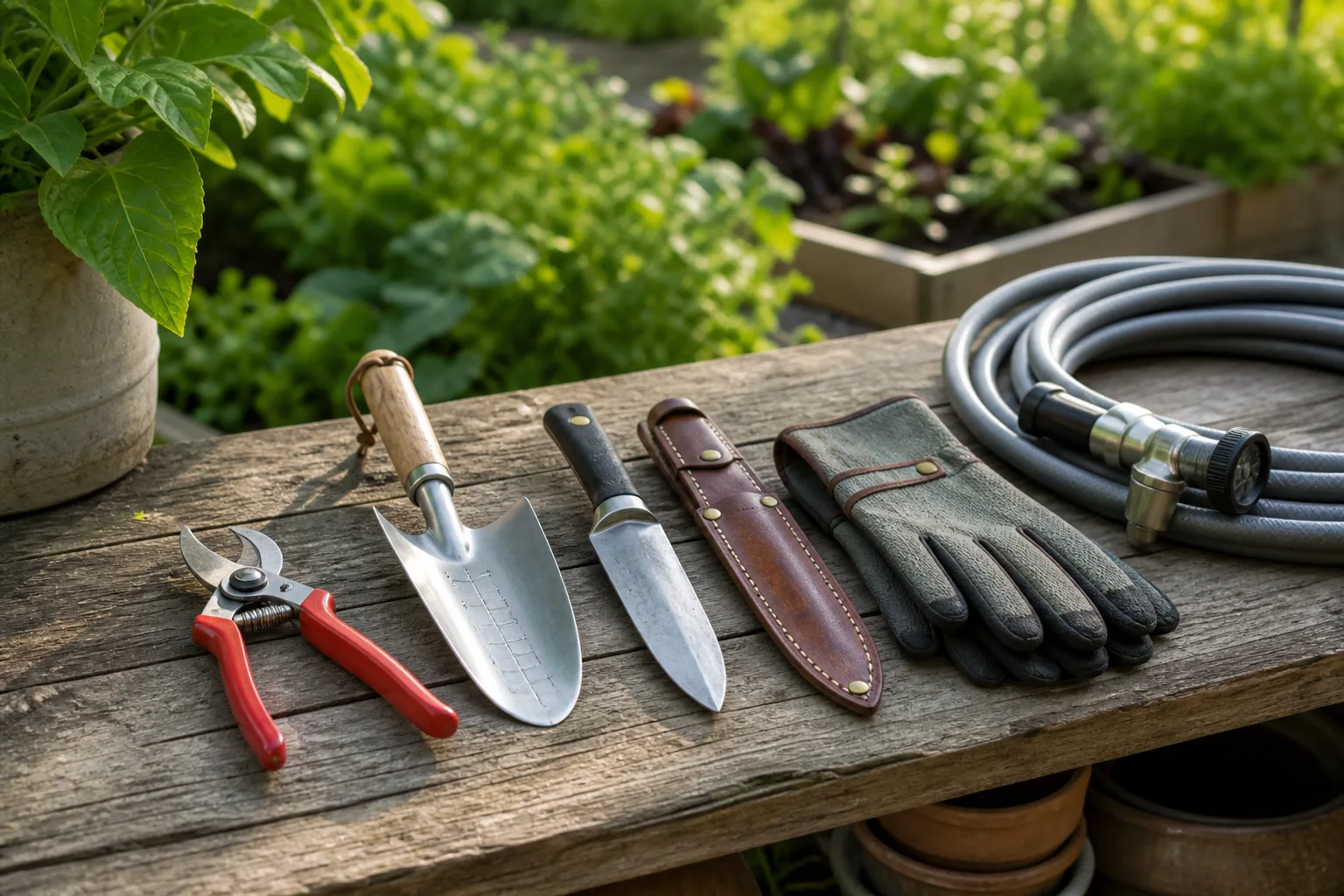
An outdoor cabinet is useful when you want to store the hose with a nozzle, watering wand, gloves, or small tools. Put a sturdy hook or reel inside rather than dropping the hose in a heap on the floor. The cabinet should stand on a stable base, have a door that opens without hitting the hose, and include ventilation or drainage so wet equipment does not stay damp.
This is a good option on a deck or patio where a cabinet already belongs in the layout. Check the inside dimensions against the hose’s coil diameter before committing, and keep heavy items from crushing the hose. If the cabinet is weatherproof but tightly sealed, dry the hose before closing it and inspect the space regularly for moisture. For a long hose, an internal reel or wide hook is more usable than a deep, crowded bin.
9. Make a shed wall into a watering station
A shed can hold a reel or hanger, watering cans, a nozzle, and the accessories you reach for together. Mount the hose support near the door so the hose is quick to retrieve without weaving past a mower or stacked bags. A manual reel is useful if the shed wall has a suitable stud; a broad hanger keeps the setup inexpensive and simple.
Give the hose its own area rather than hanging it over sharp tool handles or leaning it on a shovel blade. Leave room for a full loop and a clear path through the doorway. If the shed is unheated and the hose will stay there over winter, disconnect it from the outdoor faucet, drain it, and store it with the ends open so residual water can run out. Check the shed for leaks and pests before leaving the hose there for a long off-season.
10. Give the hose a winter home in the garage
A garage is a sensible seasonal location when you want to bring a hose out of weather during a long dormant period. Install a broad wall hanger or reel in a corner where the coil will not be struck by a car door, bicycle, or snow shovel. Keep the hose clear of fuel, fertilizers, and sharp tools, and do not store it where a vehicle tire can roll over it.
Before putting it away, disconnect both ends, drain it by stretching it downhill, and coil it loosely. Follow the hose maker’s temperature guidance; an unheated garage can still freeze. A garage location is not a substitute for winterizing the outdoor faucet or its supply line, especially if the house has a separate shutoff for the spigot. Keep the hose’s couplings visible so you can inspect the washers and threads before spring use.
11. Use a heavy-duty slatwall or utility rail
A slatwall panel or heavy-duty utility rail can organize several garden tools on one garage or shed wall. Pair it with a broad hose hook or a reel attachment intended for that system, then keep the hose at a height that allows an easy lift without scraping your knuckles on adjacent tools. A panel also makes it simple to shift the hook if you change the layout.
Do not assume every rail is designed for the pull and weight of a wet hose. Follow the system’s load rating, attach the panel to framing as directed, and use a hook with a cradle wide enough for broad loops. If you have only lightweight pegboard, use it for nozzles and hand tools, not as the sole support for a heavy coil. A dedicated mount prevents the hose from bowing the panel or falling when pulled down.
12. Hang the hose on the inside of a shed door
The inside face of a shed or garage door can hold a hose when wall space is scarce. Install a broad, secure hanger where the hose will not interfere with hinges, latches, a door closer, or stored equipment. Open and close the door slowly with the coil in place to check for swinging, pinching, or contact with the frame.
This solution suits a lighter hose and a sturdy door, not an oversized coil that could strain the door or fasteners. If the door is thin, hollow, or exposed to weather from the other side, choose another support. Keep the hose low enough to lift down comfortably but high enough to remain clear of the floor. A door-mounted hook is a clever space saver only if it does not make the entrance harder to use.
13. Slide a broad coil under a potting bench
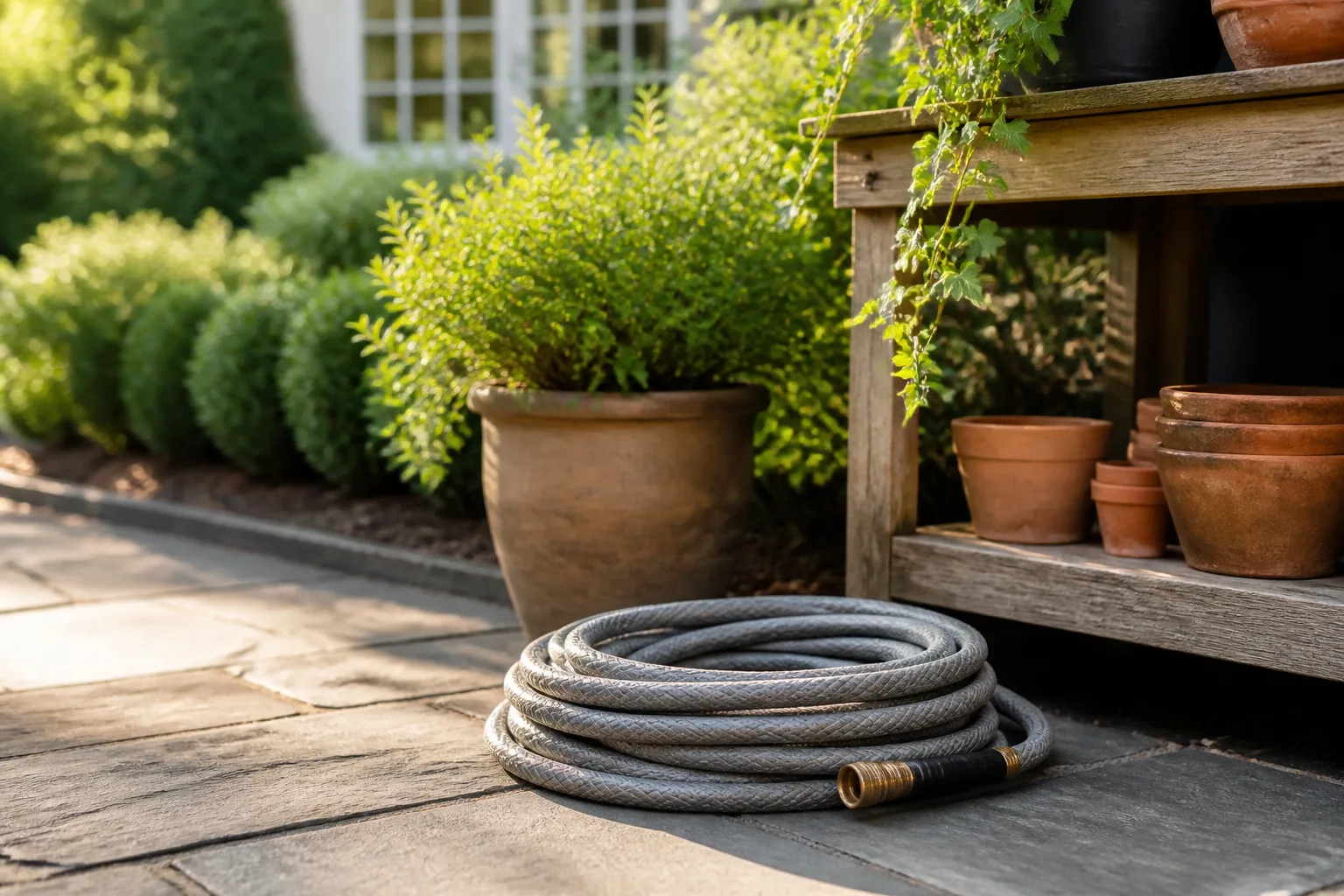
If you already have a potting bench, the open space underneath can hold a hose without adding another garden fixture. Use a low, broad hook or cradle on a bench leg, or coil the hose on a removable tray that slides out. Keep the loops large, secure them with a reusable strap that is not cinched tight, and position the nozzle so it does not drag in soil.
This is an easy option for a short or medium hose that you use often. Do not push the coil into the back of a crowded bench where you must move heavy pots to reach it, and avoid storing it directly on damp ground. Keep the coil where you can unwind it without snagging a bench leg or pulling tools off a shelf.
14. Tuck a reel into a screened garden nook
A low fence panel, lattice screen, or planted corner can hide a reel from the main patio view while leaving it outdoors and accessible. Put a compact reel behind the screen, not in a sealed pocket of foliage, and leave enough clearance for the handle or hose to move. The path from spigot to storage should be short and direct so the hose does not wrap around a post or scrape across a sharp edge.
Use a fixed screen only if it does not block a gate, airflow, or maintenance access. Keep the reel out of dense irrigation spray and trim plants away from the mechanism. Shade can make this a more comfortable location for a hose than an exposed wall, but the screen should not trap wet leaves or prevent you from disconnecting the hose before a freeze. For a narrow garden, a shallow wall reel can tuck into the same nook more neatly than a bulky box.
15. Install a freestanding hose post by the beds
A hose post gives you a support where there is no convenient wall or fence. Set a purpose-made post into stable ground or install a solid post with a hose hanger or reel attached, following the product’s instructions. Position it close enough to the beds that the hose does not drag through flowers, but not so close that it blocks planting or a mower route.
The post must remain steady when the hose is pulled sideways. If the soil is loose or the hose is long, a shallow stake may tilt; use an appropriately rated base or anchor it securely. Keep the hose connection from rubbing against the post’s edge and orient the storage so the hose unwinds toward the watering area. A post is especially useful beside raised beds or at the end of a long garden, where it can create a convenient second storage point without taking up a wall.
Prepare the hose and faucet for winter
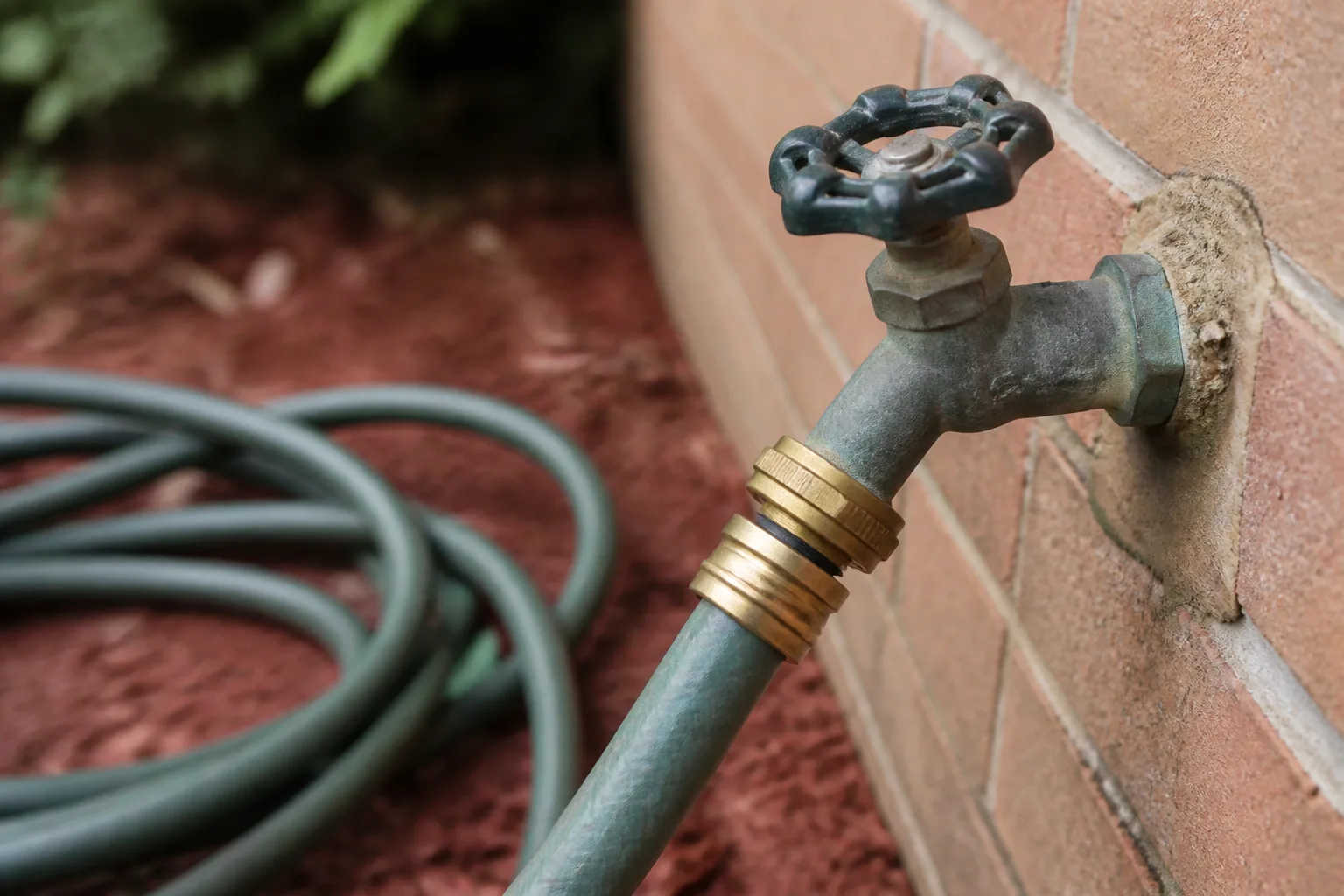
In freezing climates, make winter storage part of the last watering rather than an afterthought on the first hard-freeze night. Turn off the water, disconnect the hose from the outdoor faucet, remove the nozzle or splitter if it can hold water, and drain the hose completely before coiling it. Store it on a hanger or reel in a protected location, following the hose and reel manufacturers’ temperature guidance.
Disconnecting matters because a hose left attached can prevent an outdoor faucet from draining as intended. The City of Oklahoma City advises disconnecting hoses before covering an outdoor spigot and notes that a separate indoor shutoff may need to be closed before draining the faucet. NOLA Ready likewise tells residents to disconnect outdoor hoses during a hard freeze. If you are unsure whether your faucet is frost-free or how to operate an indoor shutoff, check your home instructions or ask a licensed plumber rather than assuming a cover alone is sufficient.
Before spring, inspect the hose along its length for splits, bulges, soft spots, or flattened sections. Check couplings for cracks and replace worn washers before reconnecting. If a coil has developed a persistent kink, straighten it gently in warm weather rather than pulling hard against a faucet. A few minutes of draining and inspection can prevent a small leak from becoming a frustrating first-day watering problem.
Conclusion
Choose garden hose storage around the way you water: a broad hanger for a manageable coil, a reel for frequent winding, a cart for multiple zones, or a ventilated box or bench when concealment matters. Confirm the hose fits, anchor mounted hardware into a suitable support, and keep the connection and path accessible. Drain the hose after use and disconnect it before freezing weather; the simplest reliable setup is the one you will actually use every time.