Best Grass Seed to Plant in Fall: 5 Lawn Options
Compare tall fescue, Kentucky bluegrass, perennial ryegrass, Bermuda, and zoysia for fall planting, plus timing, seeding, watering, and mowing tips.
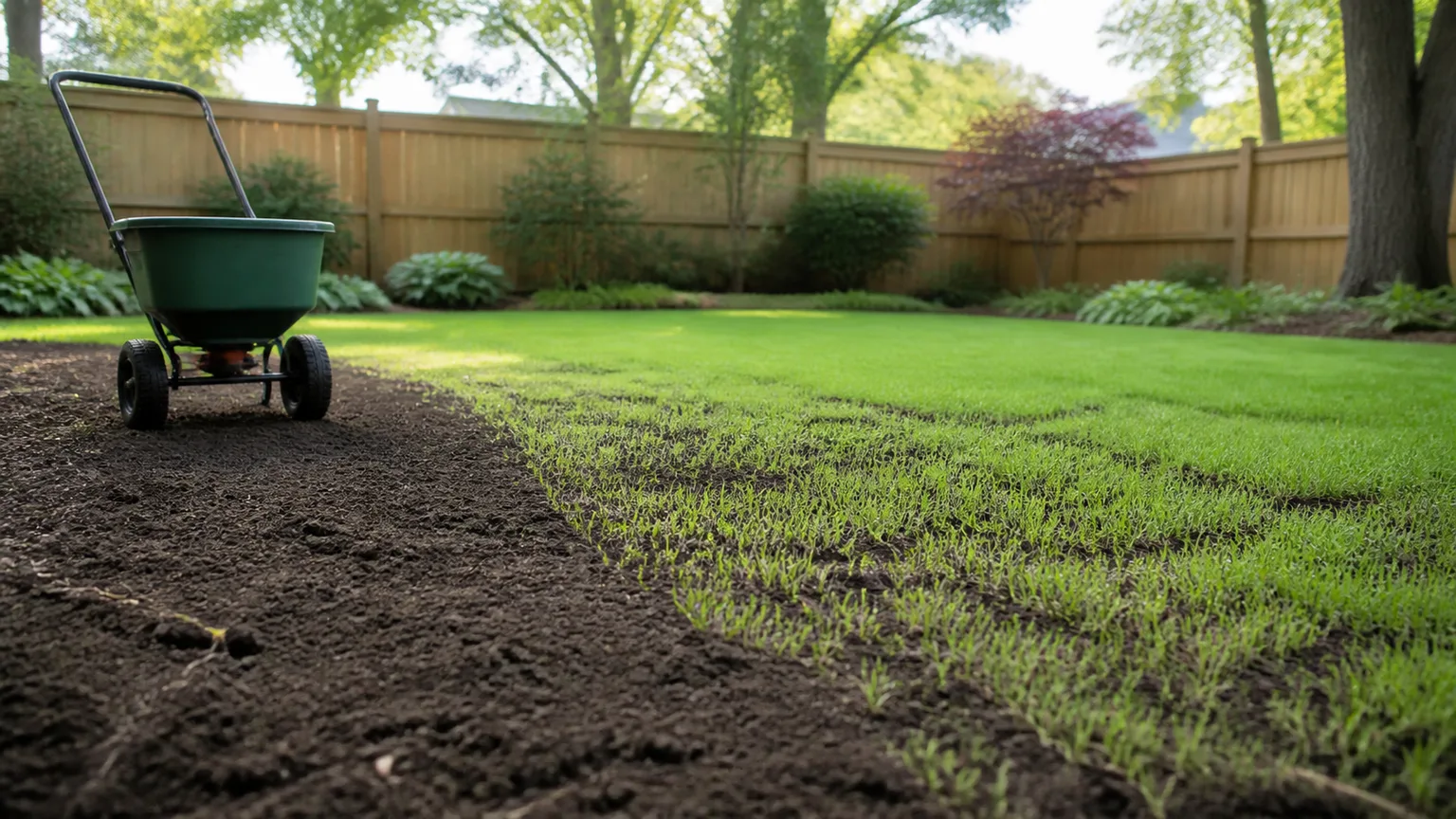
If your lawn thinned out during summer, fall can be the best time to rebuild it—but only if you choose a grass that matches your climate and still has enough growing weather left. The most important split is not “which grass looks nicest.” It is whether your lawn is cool-season or warm-season turf.
For most northern and transition-zone yards, the best grass seed to plant in fall is a cool-season species: tall fescue, perennial ryegrass, or Kentucky bluegrass. These grasses can use warm soil and cool air to establish roots before winter. Bermuda and zoysia belong on the list for a different reason: they are useful warm-season grasses in the South, but a cooling fall is not automatically the right time to seed them.
The five choices below are not interchangeable. Use the timing test first, then choose by sunlight, traffic, drought, and how quickly you need coverage. A perfect seed planted at the wrong time will perform worse than a good blend planted into a prepared, consistently moist seedbed.
Why fall is good for some grass—and not others
Late summer and early fall give cool-season grass seed a useful combination: the soil can still be warm enough for germination while air temperatures are easing away from summer heat. That reduces stress on young shoots and gives roots time to develop before freezing weather. Virginia Cooperative Extension identifies late summer through mid-fall as the strongest establishment window for tall fescue, Kentucky bluegrass, fine fescues, and perennial ryegrass. (Virginia Cooperative Extension’s fall lawn guidance)
Spring can work, but spring-seeded grass has to mature while heat, drought, and weed pressure are building. Penn State Extension makes the practical point that late summer to early fall is ideal for cool-season lawns because regular irrigation is easier to maintain before new seedlings face hot summer days. (Penn State Extension)
Warm-season grasses follow another calendar. Bermuda and zoysia grow best when soil and air stay warm; they slow as fall advances and may go dormant after frost. In much of the South, an early-season warm-weather planting can succeed, but a late-fall seeding that leaves seedlings exposed to cold is a gamble. In a climate where warm-season turf is already established, fall may be the right time to feed, repair, or lay sod—not necessarily to start a new stand from seed.
Decide by grass season, not by month
Use your local weather and the grass already growing in the yard as the starting point. A calendar label such as “September” can mean ideal seeding weather in one region and an approaching freeze in another. The same month can also be too cool for Bermuda but perfect for tall fescue.
Use soil temperature and the first-frost deadline
Cool-season seed needs moisture, oxygen, and a favorable temperature range. Penn State turfgrass guidance lists optimum germination ranges that vary by species, while cool-season root growth is strongest in soil around 50 to 65°F. That is why a mild day is not enough by itself: warm air over cold soil can produce slow or uneven emergence.
A useful fall test is:
- Check the soil temperature at the seed depth for several mornings, not just the afternoon air temperature.
- Look up the average first frost for your location and count backward at least 45 days for a cool-season seeding when possible.
- Ask whether you can keep the top layer of soil evenly moist for the first few weeks.
- If the answer to any of those is no, use sod for immediate coverage, wait for a better spring window, or consider dormant seeding as a separate strategy.
For warm-season seed, the question is reversed: is the soil still reliably warm—roughly 65 to 70°F for many warm-season situations—and will the seedlings have a long, frost-free period to establish? If the forecast is already trending cool or dry, do not treat a warm-season grass like a cool-season fall seed.
Five fall-grass options at a glance
| Grass | Best fit | Main advantage | Main limitation |
|---|---|---|---|
| Tall fescue | Transition zones, mixed sun, moderate traffic | Broad adaptability and useful drought tolerance | Clumps rather than spreading aggressively; thin spots may need reseeding |
| Perennial ryegrass | Quick cover, mild climates, blends | Fast germination and early green color | Weak in deep shade and prolonged heat; can look patchy alone |
| Kentucky bluegrass | Cool climates, sunny lawns, high recovery needs | Rhizomes help the lawn knit back after damage | Slower to emerge and less forgiving of summer heat and drought |
| Bermuda grass | Hot southern yards in full sun | Heat, drought, and wear tolerance | Poor shade tolerance; fall seed needs continuing warmth |
| Zoysia grass | Warm climates wanting dense turf | Dense growth and good drought tolerance after establishment | Slow to establish and not a safe late-fall seed choice in cool weather |
The table is a starting point, not a seed label. Cultivars differ within each species, and a regional blend may outperform a single grass. Read the label for the species, cultivar, purity, germination rate, and recommended use rather than buying a bag based only on a familiar name.
Tall fescue: the flexible default
Tall fescue is often the most practical choice when a yard sits between cool and warm climates or has several competing conditions. It handles more heat and drought than Kentucky bluegrass, tolerates some shade, and can take regular foot traffic. Those traits make it a reasonable first look for a family lawn that is not uniformly sunny, especially where summers are hot but winters still get cold.
Its fall advantage is timing. Tall fescue germinates and roots while temperatures are easing downward, and a well-timed planting can develop a useful root system before winter. Virginia Cooperative Extension includes tall fescue among the cool-season grasses favored by warm days and cool nights in late summer and fall.
Choose a turf-type tall fescue blend when you want a finer, more lawn-like texture and resilience across a mixed site. Several cultivars can spread risk across slightly different tolerances, but a blend cannot overcome deep shade, compacted soil, or a watering plan that never reaches the seedbed. If the yard is mostly deep shade, fine fescue may be worth comparing; if it is full sun with extreme summer heat, check whether your region is actually better suited to warm-season turf.
The trade-off is that tall fescue is a bunch-forming grass. It does not send the same underground runners as Kentucky bluegrass or the aggressive spreading stems associated with warm-season grasses. Thin patches can fill as neighboring plants thicken, but a badly damaged area usually needs another targeted seeding rather than waiting for the lawn to knit itself closed.
Perennial ryegrass: the fastest early cover
Perennial ryegrass is the speed choice. It can provide a green, established-looking surface sooner than slower grasses, which is useful for a small bare patch, a renovation project with limited fall weather, or a blend that needs quick early cover. Epic Gardening describes it as a fast-growing cool-season grass used in mild climates and overseeding situations. (Epic Gardening’s grass-seed guide)
That speed does not make perennial ryegrass the universal winner. It is less comfortable in deep shade, prolonged summer heat, and drought than a carefully selected tall-fescue blend. It may also look uneven if planted alone on a site where its growth slows while another grass continues. That is why ryegrass is often used with compatible cool-season species rather than as a one-grass solution.
Be careful with the word ryegrass on the bag. Annual ryegrass is a short-lived cover crop or temporary green cover; perennial ryegrass is the lawn species intended to return. They are not a simple annual-versus-perennial version of the same lawn performance. If you want a permanent lawn, confirm that the label says perennial ryegrass and check what other species are included in the blend.
Perennial ryegrass is a good answer when your priority is fast emergence and early color, your site is sunny to lightly shaded, and you can maintain moisture while it establishes. It is a weaker answer when your lawn routinely bakes in summer or sits beneath dense tree shade.
Kentucky bluegrass: dense, blue-green, and self-repairing
Kentucky bluegrass earns its place through appearance and recovery. Its blue-green color and fine-to-medium texture can create a plush lawn, and its rhizomes allow established plants to send new shoots into thin areas after moderate traffic or damage. Penn State explains that rhizomes help Kentucky bluegrass knit and hold together, which is one reason it has long been valued for sod and athletic-field surfaces. (Penn State’s cool-season turfgrass reference)
The price of that recovery potential is patience. Kentucky bluegrass is slower to germinate than perennial ryegrass, so it needs a dependable fall window and careful irrigation. A reader who wants a green lawn next week may be disappointed by a seed mix in which Kentucky bluegrass is still emerging while faster species are already visible.
It also needs a better summer plan than its reputation sometimes suggests. Kentucky bluegrass is not the first choice for a dry, hot yard that receives little irrigation. It performs best when the lawn has enough sun, moisture, and fertility to support a dense stand. In a cool climate with a well-prepared seedbed and regular care, it can be an excellent long-term component; in a drought-prone site, tall fescue or a regionally recommended blend may be more forgiving.
Do not confuse shade tolerance with shade preference. Kentucky bluegrass can handle some partial shade, but a lawn beneath dense tree canopy may still thin because the problem is not only grass species—it is reduced light, root competition, dry soil, and leaf litter together.
Bermuda grass: a full-sun warm-season choice
Bermuda grass is the warm-season option for hot, sunny regions. It is valued for heat, drought, and wear tolerance and can form a dense, fine-textured turf when it receives enough light. Epic Gardening notes that Bermuda is a strong choice for high-traffic southern sites but degrades in shade. (Epic Gardening)
The catch is timing. If you live where Bermuda is the normal lawn, sowing belongs in a warm growing window—not simply “fall” because the calendar says so. Common Bermuda can be established from seed, while many hybrid types are established vegetatively with sod, plugs, or sprigs. University of Georgia Extension also emphasizes that lawn timing varies by grass and location: the right schedule for a Georgia warm-season lawn should not be copied into a northern cool-season lawn. (University of Georgia Extension)
Bermuda is a poor fit for a shady yard or a lawn that needs to stay green through a cool winter. It is also a poor late-season choice if germination will run into frost. In those cases, either repair the existing Bermuda during its active season, install sod early enough for rooting, or use the region’s accepted winter overseeding approach with full knowledge that the temporary cool-season grass can compete during spring transition.
Zoysia grass: dense and drought-tolerant once established
Zoysia is another warm-season grass, but it brings a different balance. It can form dense turf, has useful drought tolerance after establishment, and is generally more cold-tolerant than many other warm-season grasses. It is attractive for a homeowner who wants a tight lawn in a hot region and can wait for it to fill.
Zoysia is slow enough that impatience becomes a real planting risk. Seed may take longer to produce a complete surface, and cultivar availability matters. Some zoysias are commonly installed as sod or plugs rather than started from seed, so check the specific cultivar and local recommendations instead of assuming every zoysia product behaves the same way.
In early warm weather, a zoysia planting can make sense where the soil will stay warm and irrigation is reliable. In a cool late fall, it does not have the same advantage that cool-season seed has. A warm-season lawn that is already established may benefit from fall preparation and appropriate nutrient management, but new zoysia seed needs enough active growth left to build roots before cold weather.
Choose zoysia when dense turf and warm-climate performance matter more than quick establishment. Do not choose it for a site where you need a finished lawn before winter or where the yard is too shady for warm-season growth.
Use this decision rule for your yard
Start with three questions: What season does my lawn grow in? How much sun reaches the soil? How much establishment care can I provide? Those questions eliminate more bad choices than a long list of grass features.
Match the seed to sun, traffic, and water
For a mixed-sun yard in a cool or transition climate, begin with tall fescue. For a sunny cool-climate lawn where recovery and a plush blue-green finish matter, consider Kentucky bluegrass, often in a blend. For fast early cover on a sunny site, perennial ryegrass can earn a place, especially when the label and local recommendations support a blend.
For a hot southern yard in full sun, compare Bermuda and zoysia. Bermuda is the better fit when heat, drought, and traffic tolerance are the priority. Zoysia is appealing when dense turf and a little more shade tolerance are worth accepting slower establishment. Neither is a magic solution for deep shade, and both need a warm planting window.
Foot traffic also changes the answer. A grass can tolerate traffic once mature and still fail if people walk across it during germination. Mark new seedings, keep pets off them, and provide a temporary path around the work. The first few weeks are about protecting roots, not testing the finished lawn.
Match the seed to the project: new lawn, patch, or overseed
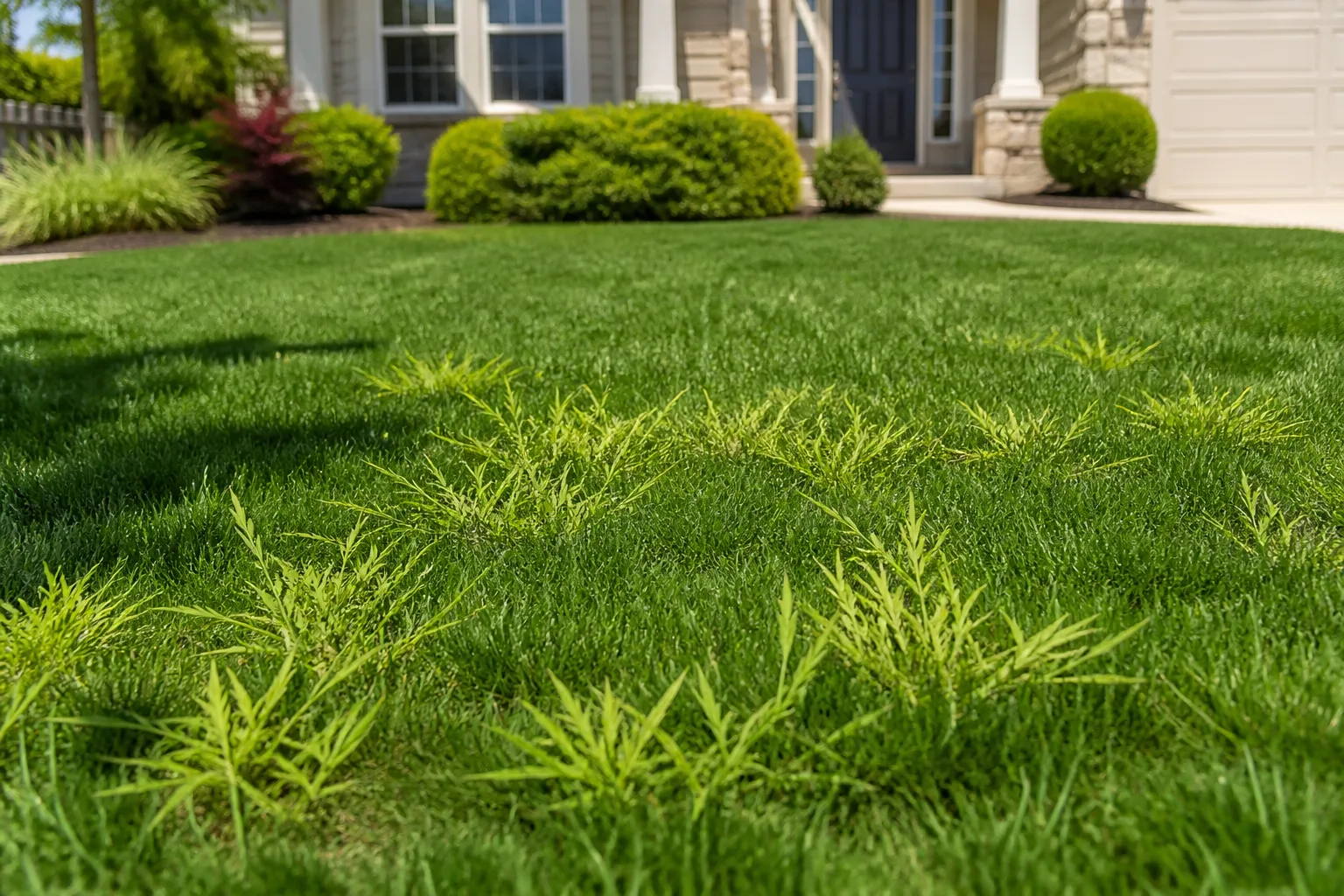
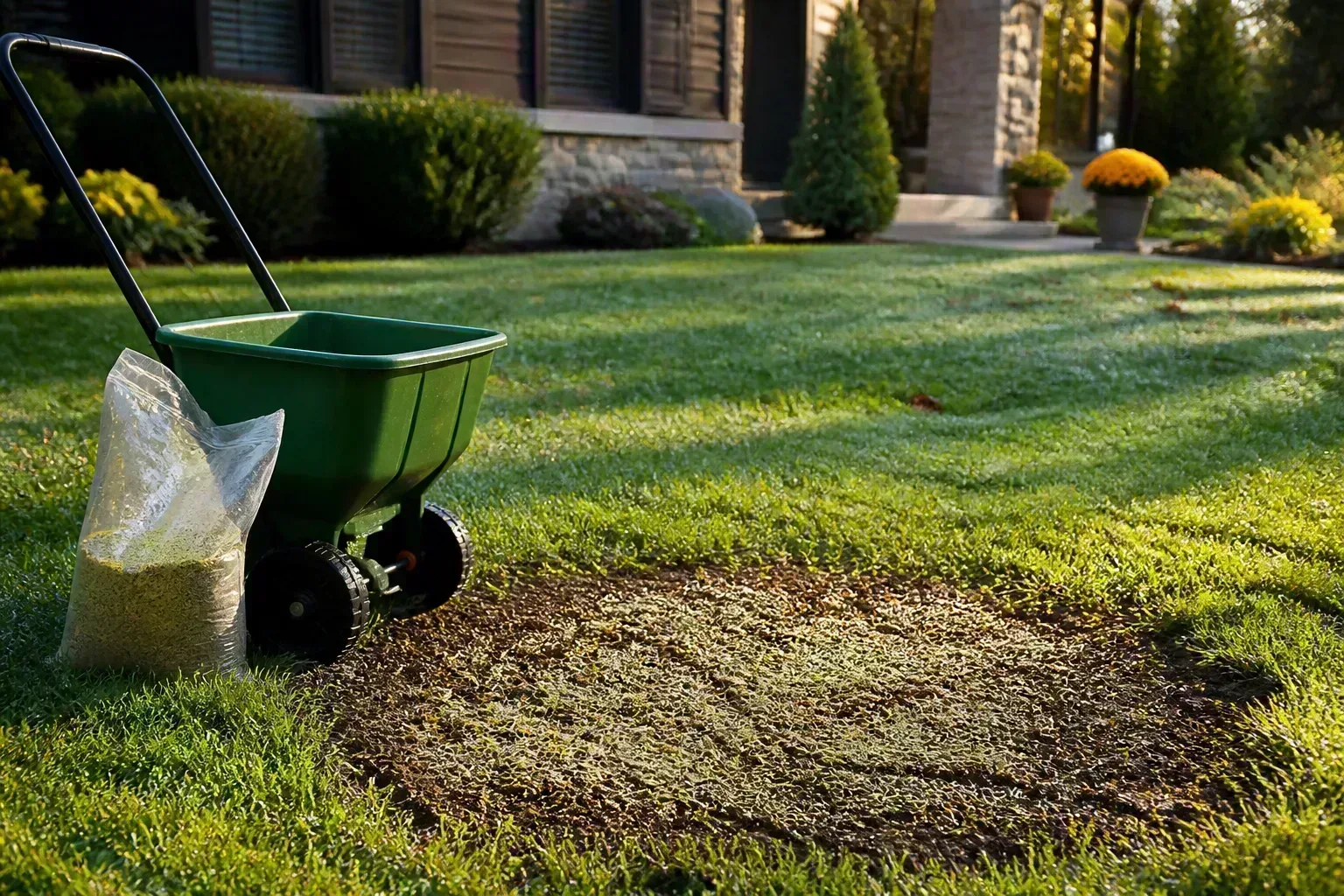
A new lawn needs full soil preparation because every weakness in the site becomes a future lawn problem. A few bare patches need less work, but the seed still needs exposed soil and contact; scattering it over dense thatch or a tight canopy mostly feeds birds.
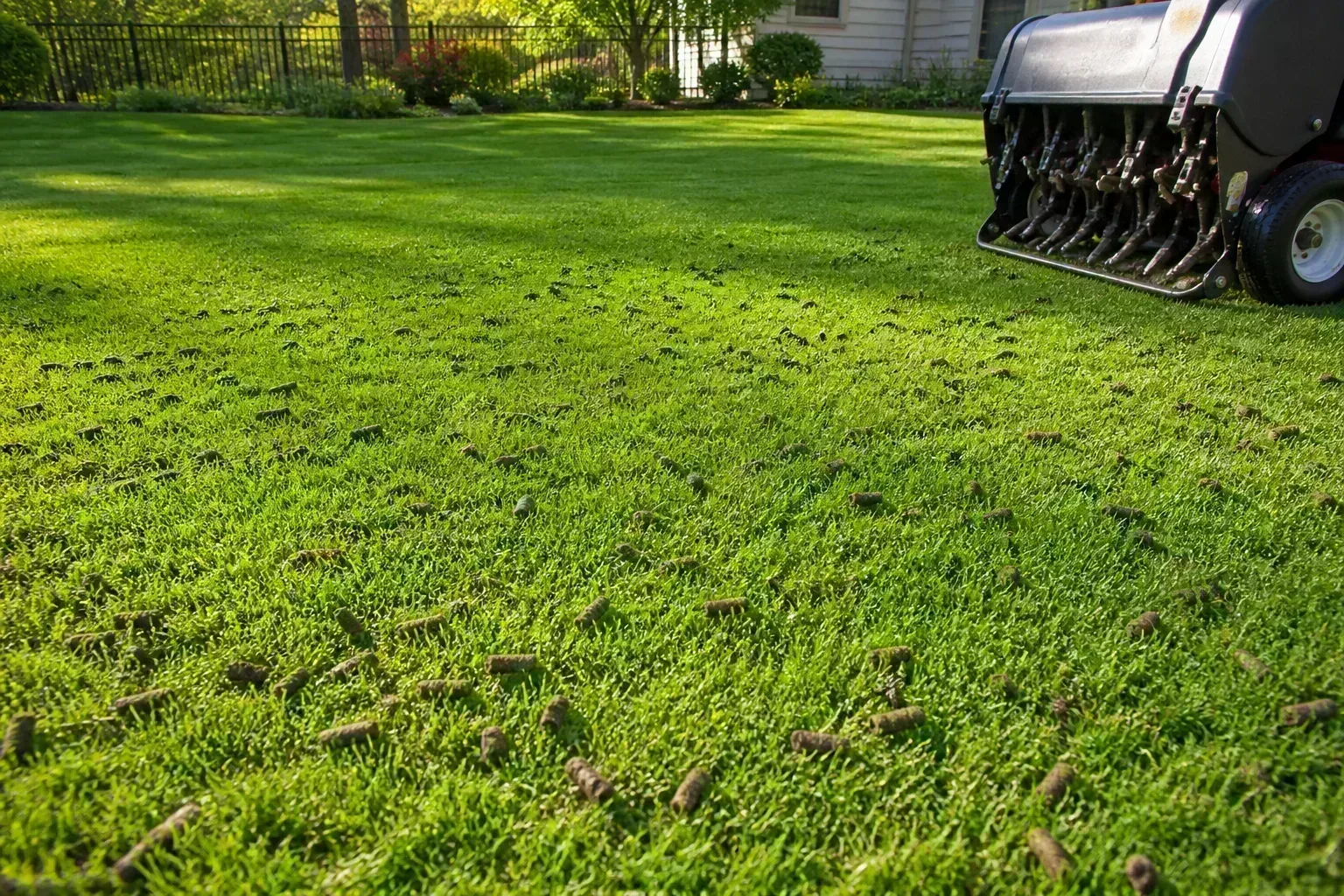
Overseeding works best when the existing lawn is fundamentally the right grass for the site and is merely thin after summer. Mow a little lower than usual, remove clippings and debris, address heavy thatch, and use core aeration where compaction limits seed-to-soil contact. Do not overseed a lawn that is failing because of permanent shade, poor drainage, or the wrong grass type without fixing the underlying constraint.
If the existing lawn is warm-season and dormant while you are considering perennial ryegrass for winter color, treat that as a deliberate overseeding project, not a permanent species change. Rye may require continued mowing and can complicate spring transition. If you want the same warm-season lawn next year, confirm that the practice fits your local extension calendar and maintenance capacity.
A practical fall-seeding sequence
The species decision matters, but execution determines whether the seed survives. The following sequence works for a cool-season fall seeding and can be adapted for warm-season planting only while the local weather still supports active growth.
1. Test and prepare the soil
Start with a soil test when the lawn has a history of weak growth, unusual color, poor drainage, or repeated failure. Virginia Cooperative Extension calls soil testing the first step in correcting an existing lawn or establishing new turf because pH and nutrient problems can make a good seed choice look bad.
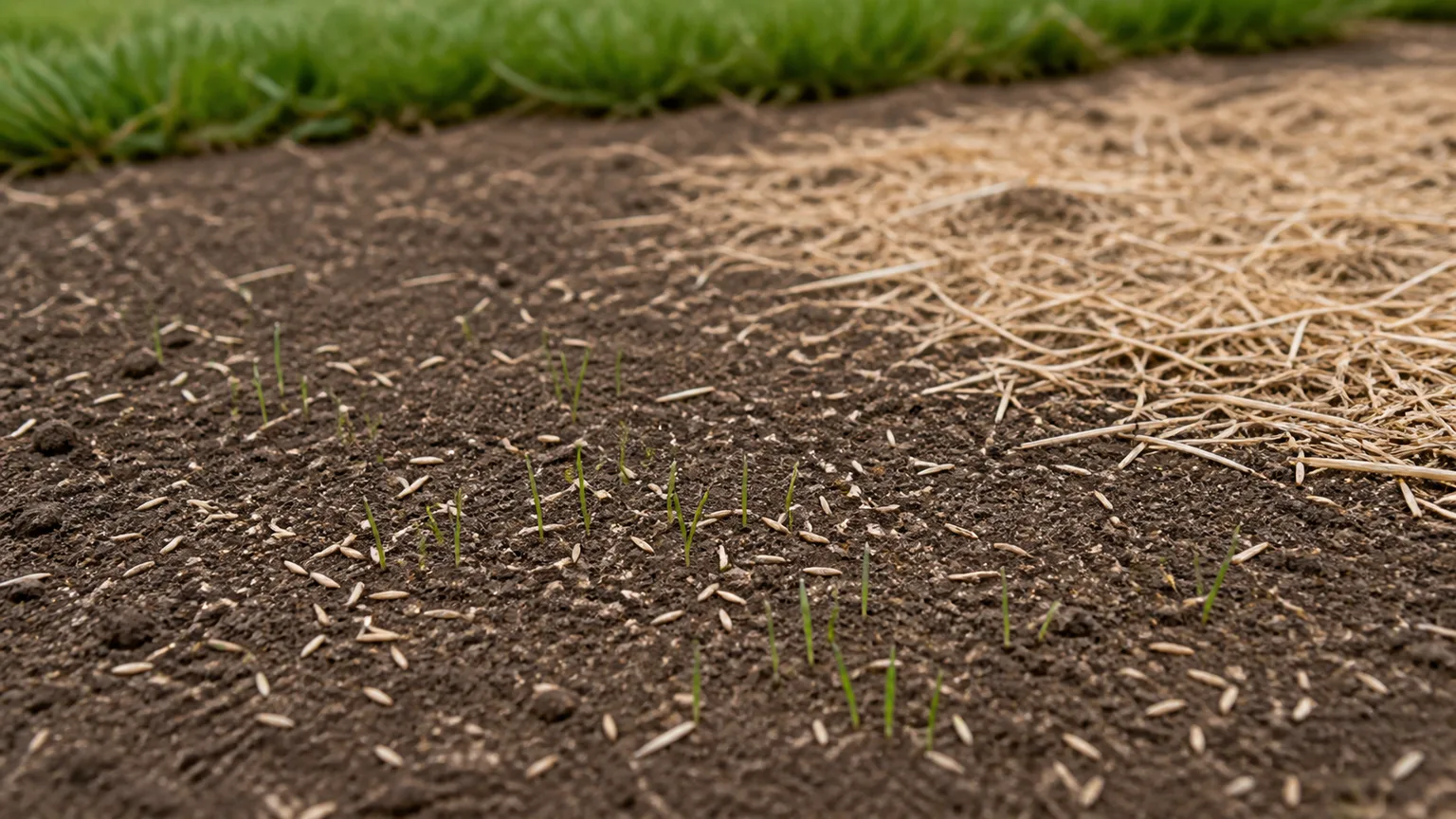
Clear rocks, sticks, weeds, dead turf, and thick thatch. For a new lawn, loosen and grade the top several inches so the surface is smooth and water will not collect in low pockets. Virginia’s fall lawn guidance recommends meaningful soil preparation for new plantings and some surface preparation even when overseeding; simply sprinkling seed on top of an existing canopy often produces little.
Do not automatically add lime, phosphorus, or a “starter” product. Use the soil test and product label. Excess fertilizer can burn emerging roots, and unnecessary phosphorus can move into waterways. If compaction is the issue, core aeration creates channels for air, water, and roots; it is not a substitute for fixing a severely compacted or poorly drained site.
2. Spread seed in two directions and cover lightly
Set the spreader to the label rate and divide the seed into two portions. Apply half while walking north to south and the other half east to west. This crisscross pattern is a simple way to reduce the stripes and missed areas that happen when a homeowner makes one pass.
Rake the seed just enough to nestle it into the surface. Grass seed should be near the top of the soil, not buried under a deep layer of soil. A light, clean, weed-free straw cover can slow drying and reduce seed movement, but heavy cover blocks light and traps too much moisture. Savvy Gardening recommends keeping the cover thin—about one-quarter inch—and warns against treating more mulch as automatically better. (Savvy Gardening)
If you are filling a small patch, press the seedbed gently so the seed contacts moist soil. If you are renovating a large area, a properly used roller can improve contact without compacting the ground into a hard surface. The goal is firm contact, not a sealed crust.
3. Keep the seed zone moist, not soaked
Before germination, water lightly enough to moisten the top layer without creating runoff or puddles. On a hot, windy site, that may mean short watering cycles more than once a day. On a cool, naturally damp site, it may mean fewer cycles. Watch the soil rather than obeying a clock.
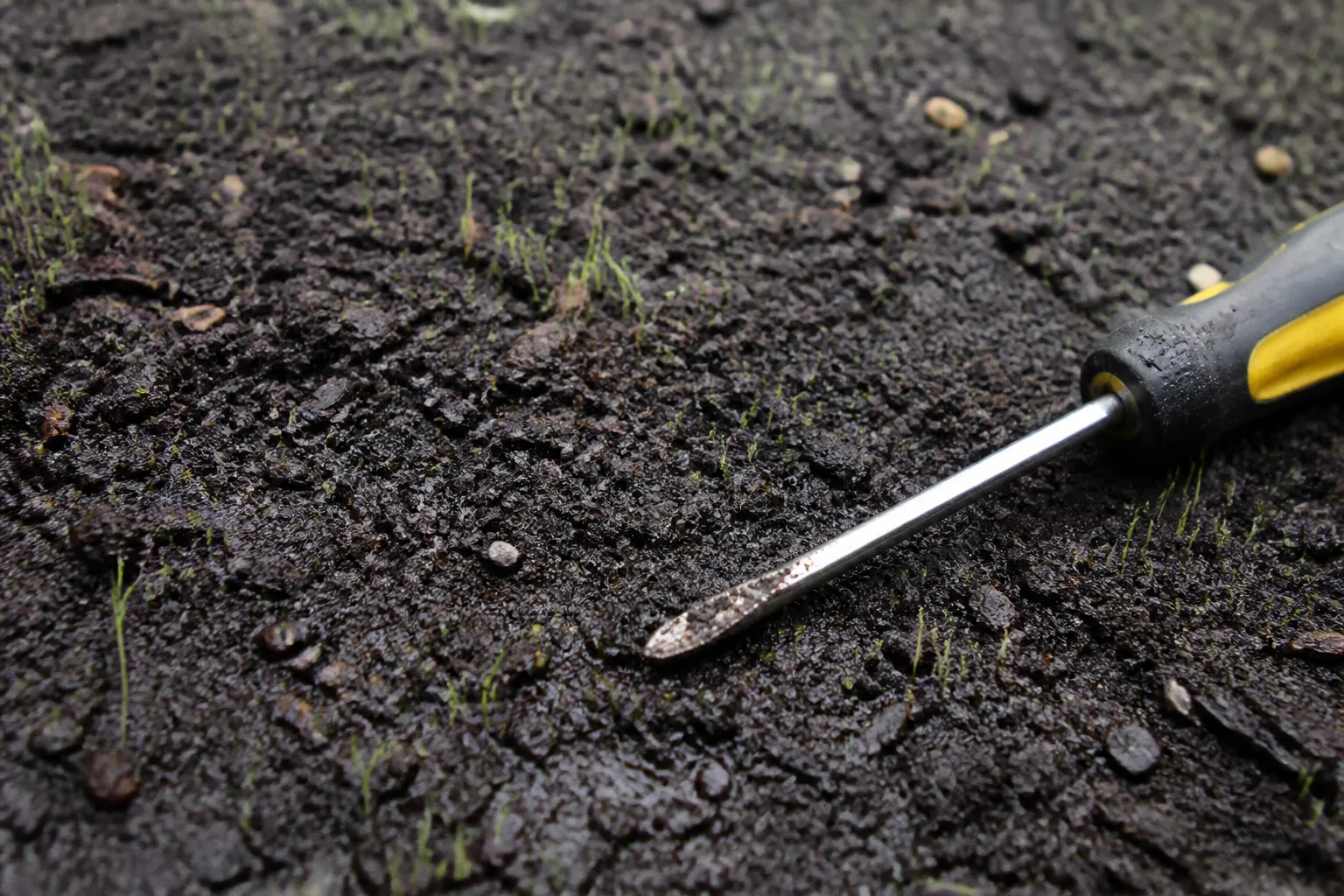
Once seedlings appear, gradually shift toward less frequent, deeper watering. Virginia Cooperative Extension recommends light, frequent irrigation during germination and then reducing frequency as roots develop. Overwatering can wash seed downhill, drown oxygen-starved roots, and encourage damping-off; letting the seedbed dry into a hard crust can stop germination just as effectively. (Virginia Cooperative Extension)
Inspect after rain. If water has formed a channel or exposed the seed, rake the surface gently and repair the bare strip rather than adding a thick layer on top. A seedbed that stays evenly moist is more useful than one that is briefly flooded.
4. Mow only after roots hold
Keep people, pets, and equipment off the new area while seedlings are fragile. When the grass reaches the appropriate height for the species and the soil is firm, begin mowing with a sharp blade. Follow the one-third rule: remove no more than one-third of the leaf height at a time.
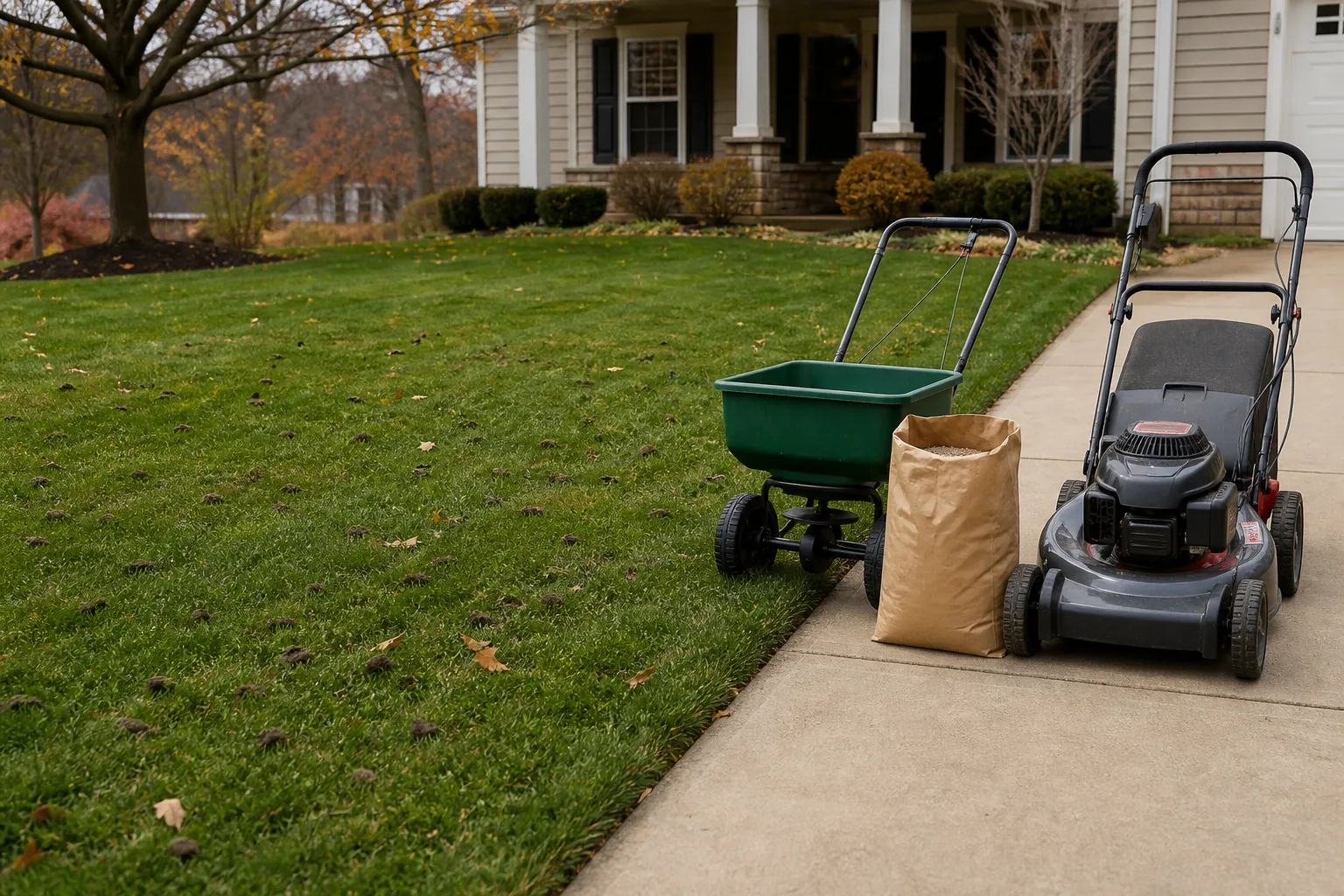
Virginia Cooperative Extension gives a practical example for tall fescue: begin mowing when the lawn reaches about 3 inches if the target cutting height is around 2 inches. The exact height varies by grass and local recommendation, but the principle is consistent—do not scalp young turf, and do not drive over wet soil that has not rooted.
Delay routine weed-control products until the label permits use after seeding and the seedlings have had time to establish. A pre-emergent that prevents annual weeds can also prevent the grass seed you just spread. Always check the product label for the exact grass, timing, and reseeding restrictions.
Avoid late-season failure
The most common fall-seeding mistake is choosing a species before checking the site. A Bermuda seed planted in a cooling northern lawn, a Kentucky bluegrass blend planted into hot drought, or a shade-intolerant grass spread beneath dense trees can all fail for reasons that watering cannot fix.
The second mistake is confusing a calendar recommendation with a deadline. “Plant in September” is not a universal rule. The better question is whether your soil is in the germination range, whether you have roughly six weeks before hard cold, and whether you can maintain moisture until roots are established.
The third mistake is putting seed on unprepared ground. Do not bury it deeply, leave it on compacted soil, apply a thick blanket of straw, or rely on one heavy weekly watering before emergence. Small, repeatable checks beat a dramatic rescue effort.
Finally, do not fertilize on autopilot. Fall can be an excellent feeding season for established cool-season turf, and a soil test can justify amendments, but a new seeding has different needs from a mature lawn. Follow the soil report, the seed label, and local extension recommendations. More nitrogen is not a substitute for light, roots, oxygen, or the right planting window.
Conclusion
The best grass seed to plant in fall depends first on whether your yard grows as a cool-season or warm-season lawn. For most cool-season fall projects, tall fescue is the adaptable default, perennial ryegrass offers the quickest early cover, and Kentucky bluegrass rewards patience with dense, self-repairing turf. In warm climates, Bermuda is the full-sun heat specialist and zoysia is the dense, slower option—but both need enough warmth left for establishment.
Choose the species, verify soil temperature and the first-frost window, prepare the seedbed, spread in two directions, keep the surface evenly moist, and protect seedlings until mowing is safe. If the timing is already marginal, use sod or a deliberate dormant-seeding plan instead of forcing a seed choice that cannot establish before winter.