Goat's Beard Plant Care: Growing and Maintenance
Plan a thriving goat's beard planting with clear light, spacing, soil, and watering guidance—plus practical help with division, seeds, pests, and winter care.
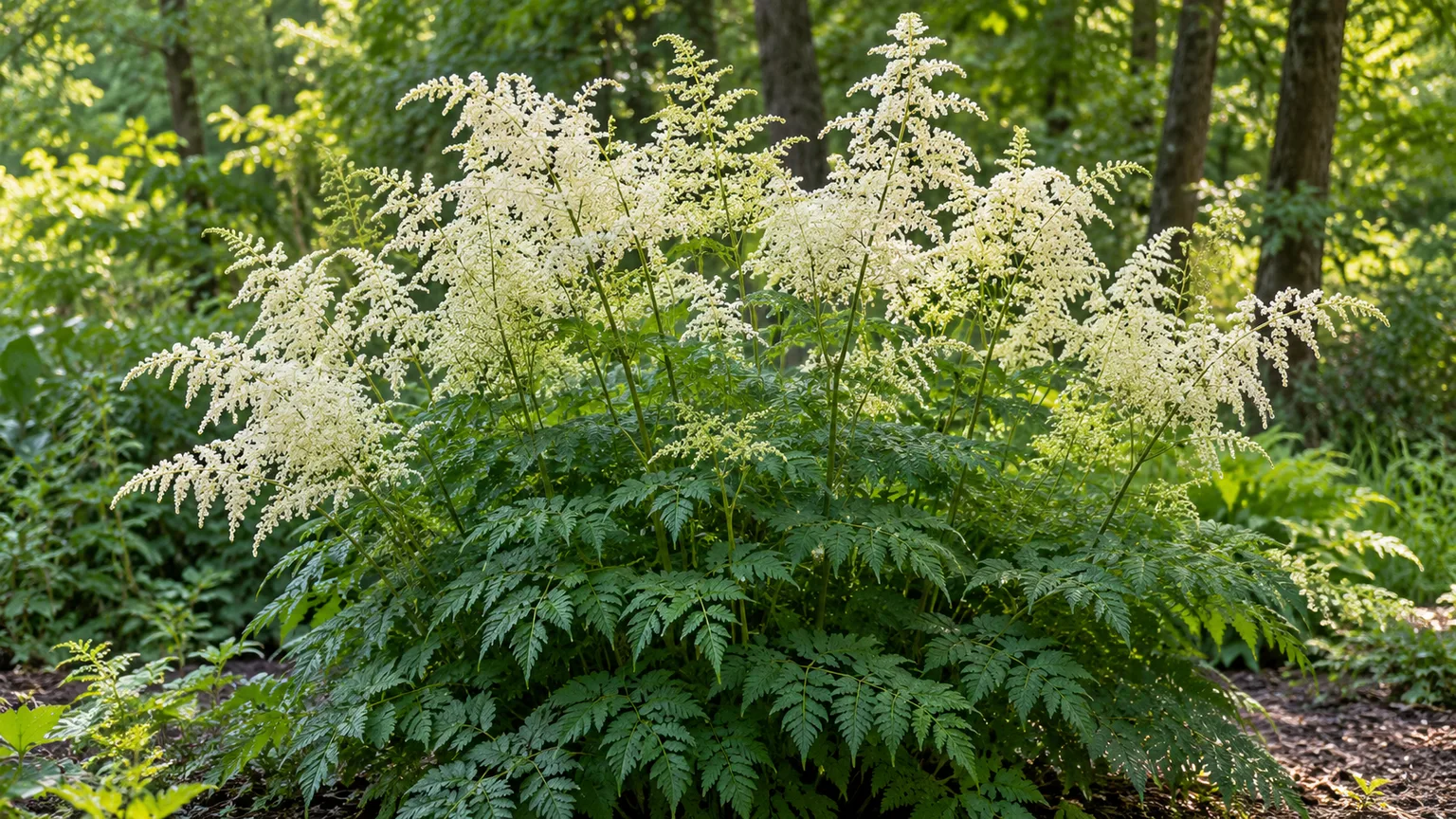
Successful goat’s beard plant care starts with choosing a cool, evenly moist site for this tall, long-lived perennial. Its botanical name is Aruncus dioicus. The plant earns its place with a broad mound of finely divided green leaves and high, airy plumes of cream-white flowers in late spring or early summer. A good site makes it dependable; a hot, dry bed turns the same plant into a season-long watering problem.
The practical rule is simple: choose a partially shaded spot with moisture-retentive soil that still drains, then leave room for a mature clump rather than planting it like a small nursery pot. In cooler climates, goat’s beard can take more sun if the soil remains moist. In warmer locations, protect it from afternoon heat. NC State Extension and University of Wisconsin–Madison Extension both describe it as a moisture-loving perennial that performs best in partial shade and fertile soil.
Understand Goat’s Beard Before You Plant
Goat’s beard is an herbaceous perennial, not a woody shrub: its top growth dies back in winter and new shoots emerge from the crown in spring. It belongs to the rose family, Rosaceae, and grows as a substantial, clump-forming plant with rhizomes. Depending on selection and conditions, the species commonly reaches about 3 to 6 feet tall and 2 to 4 feet wide. It is not a quick filler. Extension guidance notes that a new planting may take two or three growing seasons to reach its mature presence, so open space around a young plant is normal rather than proof that it needs fertilizer.
The plant is native across temperate parts of the Northern Hemisphere, including parts of North America, Europe, and Asia. In a garden, its natural fit is the moist edge of woodland, a streamside border, or a rain-garden margin that does not remain underwater. Its upright flower stems rise above the leaves, creating height without the solid, woody mass of a shrub. The feathery flowers resemble Astilbe at a glance, but the plants are not close relatives: goat’s beard is in Rosaceae, while Astilbe is in Saxifragaceae, according to Wisconsin Extension. The clump widens gradually through rhizomes rather than racing across a bed, although female plants may self-sow if seed capsules are left to mature.
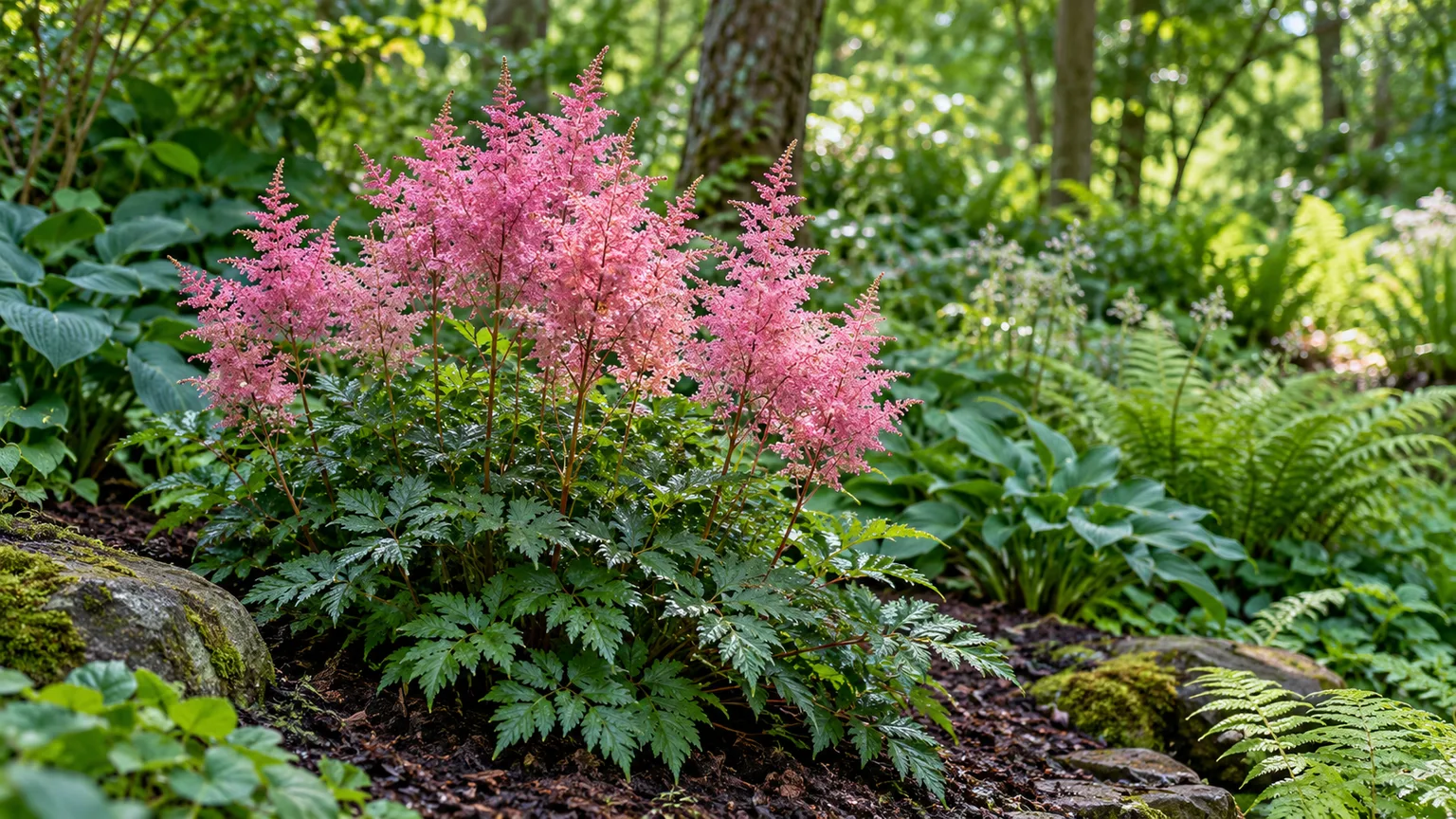
Astilbe is a look-alike, not another name for Aruncus dioicus; the pink plumes here belong to Astilbe.
This distinction matters when you shop. A label reading “false goat’s beard” usually points to an Astilbe, while true goat’s beard is Aruncus dioicus. Korean goatsbeard, Aruncus aethusifolius, is a separate, much smaller species sometimes sold under a similar common name. Check the botanical name and the mature dimensions on the tag before placing a plant in a tight border.
Where Goat’s Beard Belongs in the Garden
Use the species as a back-of-border anchor, a woodland-edge specimen, or a loose group beside a path where its spring plumes can be seen from close range. It also suits a rain garden or the edge of a pond when the root zone stays moist but is not submerged. The foliage forms a handsome green mound after flowering, so this is not a plant that disappears once its short bloom period ends. Wisconsin Extension notes that the flowers can be cut for arrangements and are at their peak for roughly ten days; the structure of the plant carries the rest of the season.
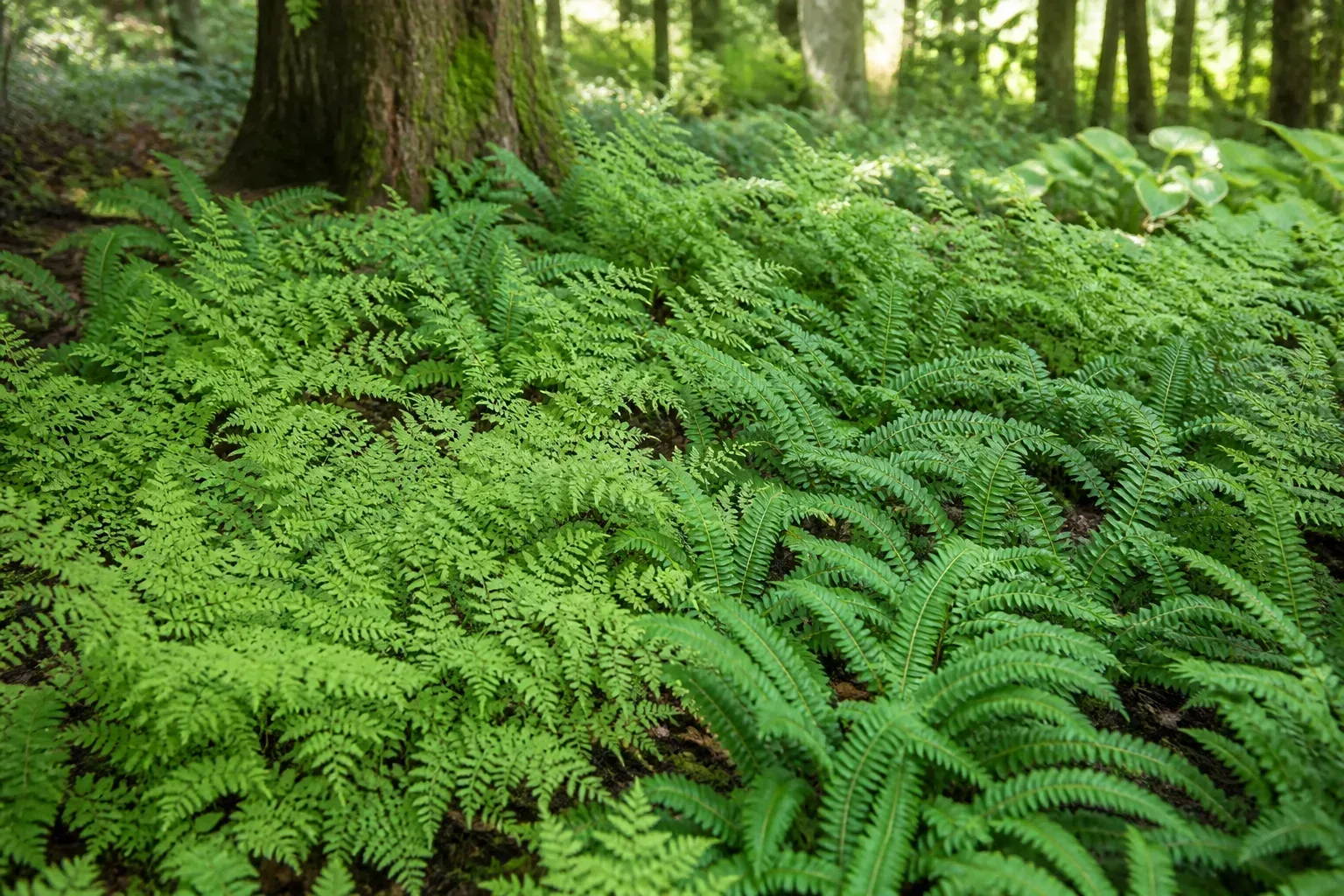
A fern understory illustrates the cool, shaded garden context; check that the soil is moist rather than dry beneath the canopy.
Goat’s beard pairs naturally with plants that appreciate similar soil and light. Ferns and hostas supply contrasting leaf shapes, while columbine, wild ginger, Jacob’s ladder, and wild geranium can fill the middle or front of a woodland bed. Astilbe can work as a companion if you want a longer sequence of plume color, but it does not replace goat’s beard’s larger scale. The Wisconsin Extension landscape guidance lists several of these woodland companions and recommends allowing ample spacing for mature plants. Harvest to Table’s goatsbeard guide likewise suggests ferns and hostas for a lightly shaded woodland planting; match companions by soil moisture and light, not by appearance alone.
Do not rely on the name “rain garden plant” to solve a drainage problem. Goat’s beard appreciates consistent moisture, but it still needs oxygen around the roots. A low pocket that holds stagnant water for days, or compacted clay that stays saturated after every storm, can be a worse location than a bed that is merely a little drier and can be watered during establishment. If the only moist place in the yard floods deeply or remains ponded, improve the grade or choose a plant adapted to those conditions.
Choose Between the Species and Smaller Selections
The full-size species makes sense when you have room for a 3- to 6-foot vertical accent and a clump several feet across. A single specimen can carry the back of a shaded border, while three or more spaced plants can soften a woodland boundary. If you need a front-of-border plant or have a narrow bed, do not try to keep the species small through constant cutting. Choose a compact selection or a dwarf relative instead.
Size and cultivar choices
Cultivars differ in height, foliage, and flower display, so compare the plant label to the available footprint. ‘Kneiffii’ is a smaller selection, commonly listed at about 2 to 3 feet tall, with finely divided leaves. ‘Zweiweltenkind’, also translated as ‘Child of Two Worlds’, is a shorter, sturdier selection. ‘Glasnevin’ is another compact form with deep green foliage. Wisconsin Extension also describes newer compact selections such as ‘Fairy Hair’ and ‘Goatee’; dimensions can vary by source, climate, and nursery stock, so use the specific plant’s tag rather than assuming every cultivar has the same mature size.
Korean goatsbeard (Aruncus aethusifolius) is another option for a small space, but it is a different species, not simply a dwarf A. dioicus. It typically stays under a foot tall, making it better suited to an edge or rock-garden position. The Wisconsin Extension cultivar notes are useful for comparison, while NC State Extension lists several of the established selections. Availability changes from nursery to nursery; buy by botanical name and stated mature dimensions, not by an isolated online photo.
What male and female flowers mean
Aruncus dioicus is dioecious: individual plants bear male or female flowers. Male plumes are often showier, while female plants can develop small brown seed capsules after flowering. Retail plants are not always sold with sex identified, and you may not be able to tell until bloom. If you are buying one plant for display, prioritize a healthy crown and the correct mature size; sex is a secondary consideration unless you specifically want or wish to avoid seed.
The seed capsules deserve a little care around children and pets. Wisconsin Extension describes the female capsules as slightly poisonous. That is a reason to keep them from being eaten, not a reason to panic about the plant in an ordinary garden. If curious children or animals routinely sample garden plants, remove the spent flower stems before capsules mature, and wash after handling seed heads. Do not use the plant as food or home medicine.
Choose a Site by Light, Moisture, and Drainage
A site is a combination of sun exposure, soil water, and root competition. Goat’s beard can accept several hours of light when the ground remains reliably damp; it struggles when strong afternoon sun and drying soil arrive together. A spot beneath a large tree may look like ideal shade but still be dry because tree roots intercept rain. Check the soil where the plant’s roots will sit, not just the amount of shade overhead.
Sunlight depends on climate
In cooler northern gardens, full sun can work if the root zone has enough moisture. In warmer regions, choose partial shade or dappled light, ideally with protection from the hottest afternoon sun. Morning sun with afternoon shade is often a useful compromise because it supports flowering while reducing heat stress. NC State Extension specifically recommends afternoon protection in the warmer portion of the growing range.
Full shade is possible if it is bright enough and moisture is steady, but flowering may be lighter than in a site with some direct sun. “Shade” is not one condition: a north-facing bed with open sky is different from a deep, dry position under evergreen branches. If you are unsure, observe the site across a summer day and consider reflected heat from walls or paving. Give the plant the coolest workable position that still provides enough light to form strong plumes.
Soil should stay moist without staying saturated
Aim for fertile, organic-rich soil that holds moisture yet lets excess water drain. Loam is convenient but not required; a sandy bed may need more organic matter and more frequent watering, while heavy clay should be improved or raised rather than kept waterlogged. Add mature compost across the planting area before setting the plant, not a concentrated pocket of rich material in the hole. A large amended pocket can hold water differently from the surrounding soil and create an uneven root zone.
You do not need to chase a precise pH number for an ordinary garden planting. NC State Extension lists a broad soil tolerance, while its care recommendation emphasizes fertility and consistent moisture. A simple soil test is more useful when you suspect an extreme condition or plan a larger bed than adding lime or fertilizer by guesswork. Avoid peat-moss recommendations as a default amendment; compost or leaf mold can improve moisture retention while adding organic matter.
Plant Goat’s Beard Without Crowding It
Plant in spring or early fall when the ground is workable and temperatures are moderate. Spring gives the roots a full growing season before winter; fall works where there is enough mild weather for establishment before hard freezes. Avoid planting during a heat wave, when a fresh rootball loses water faster than it can grow new roots. If fall arrives late in a cold region, waiting until spring is safer than asking a newly planted perennial to establish in frozen soil.
First clear weeds and loosen the soil across an area wider than the nursery pot. Dig a hole about as deep as the rootball and roughly twice as wide, then check that the crown will sit at the same level it grew in the container. Backfill with the original soil mixed with compost, firm gently to remove large air pockets, and water slowly until the root zone is evenly damp. The Epic Gardening planting guide also recommends preparing a wide planting hole and watering in the transplant.
Space the full-size species about 2 to 4 feet apart, using the widest end for a mass planting where airflow and mature shape matter. Compact cultivars can be closer, but let the tag’s mature width guide the final spacing. Leave room at the front and sides so the foliage mound is visible, and avoid putting the crown immediately against a wall or path where the plant will be clipped by traffic. Wisconsin Extension notes that the species can establish slowly; a temporary gap is less costly than crowding it and moving it later, because established plants can be difficult to transplant.
A large container is possible, especially for a compact selection, but it demands more attention than a garden bed. The pot needs drainage holes and enough soil volume to buffer heat and drying; a small decorative pot will dry quickly and restrict the plant’s roots. Set containers where afternoon sun is filtered and check moisture more often than you would for in-ground plants. If you want a low-maintenance plant for a small patio, choose a smaller cultivar rather than forcing a full-size clump into a pot.
Water for Steady Growth
During the first growing season, water deeply whenever the upper inch or two of soil begins to dry. Check near the rootball, not only at the edge of the planting hole, because a dry nursery mix can shed water even when the surrounding bed feels damp. Apply water at the soil line and let it soak in; frequent shallow sprinkles wet the surface without helping roots explore the surrounding soil.
Once established, goat’s beard still performs best with consistent moisture, particularly during hot, dry weather. It may tolerate a short dry spell in a cool, shaded bed, but repeated drying can cause wilt and brown leaf edges. Mulch helps slow evaporation, yet it cannot replace watering when the root zone is dry. If the leaves droop in late afternoon, check soil moisture before assuming the plant needs more water; temporary heat wilt can recover by evening, while a persistently dry rootball needs a thorough soak.
Watering frequency depends on rainfall, soil texture, temperature, shade, and plant age, so a fixed weekly schedule is less useful than a quick soil check. Sandy soil and containers dry faster; clay stays wet longer. When the soil is already saturated, adding water worsens the problem. The goal is damp, aerated soil—not permanently wet crowns.
Feed Lightly and Mulch to Keep Moisture
A layer of compost each spring is usually enough in average garden soil. Spread a thin top-dressing around the plant as new shoots emerge, keeping compost and mulch from being packed over the crown. Organic matter improves the soil’s structure and helps it hold moisture between rains, which matters more to this plant than pushing rapid top growth. Epic Gardening’s care notes similarly favor compost or leaf mold, with slow-release fertilizer reserved for exceptionally poor soil.
Use a balanced, slow-release fertilizer only if the soil is poor or growth is weak despite suitable light, water, and drainage. Follow the package rate and avoid repeated high-nitrogen feeding. Excess fertilizer will not correct dry shade or poor drainage, and vigorous leafy growth is not the same as a healthy flowering clump. If you have not had the soil tested, start with compost and site correction before adding more nutrients.
A two-inch layer of leaf mulch or shredded bark can reduce evaporation and buffer soil temperature. Keep the mulch a few inches away from the crown so new shoots emerge freely and the center does not remain wet. In a woodland bed, fallen leaves can serve the same purpose if they are not matted into a waterlogged layer. Replenish only as the mulch thins; a deeper pile is not automatically better.
Diagnose Slow Growth and Leaf Damage
A young plant may look modest for a few seasons as the root system establishes. Compare its condition with last year rather than judging it against a mature garden photograph: steady new shoots and healthy leaves are better signs than rapid expansion. If the clump is declining, check the order that causes most avoidable problems: root-zone moisture, afternoon heat, drainage, and competition from nearby roots. Change one condition at a time so you can tell whether the correction worked.
Brown edges, wilt, and scorched leaves
Crispy margins most often point to a root zone that is drying too often or leaves exposed to more heat and sun than the plant can handle. Probe the soil close to the crown. If it is dry, water deeply and add a light mulch; if it is damp but the plant wilts every hot afternoon, provide more afternoon shade or reduce reflected heat from nearby paving. NC State Extension and Epic Gardening both flag hot sun and dry soil as reasons foliage can suffer.
If only a few older leaflets have brown edges after a hot week, trim the unattractive parts and adjust the site or watering routine rather than removing the whole plant. New leaves should look healthier once conditions improve. If fresh growth continues to scorch despite consistently moist soil, the location may simply be too exposed. Moving an established clump is laborious, so assess shade and moisture before planting the replacement.
Yellowing, weak growth, pests, and poor drainage
Yellow leaves are not a diagnosis by themselves. A few aging lower leaflets can be normal; widespread yellowing with limp stems in wet soil suggests the roots may be short of oxygen. Check whether water remains pooled after rain, whether the crown is buried, and whether the soil has compacted. Reduce irrigation only if the soil is actually staying wet; otherwise yellowing may reflect drought, transplant stress, or competition.
Goat’s beard has few serious pest problems, but NC State Extension notes possible susceptibility to sawflies and leaf spot. Look beneath leaves for chewed edges or larvae and inspect spots for a repeated pattern before treating anything. Remove a small number of pests by hand and discard badly affected leaves. For persistent damage, confirm the pest or disease with a local extension service and follow any product label exactly; do not spray a plant merely because a leaf looks imperfect.
Prune for Appearance, Not More Flowers
Pruning is optional. The plant does not need shaping to remain healthy, and cutting spent plumes will not produce a second flush of bloom. If you want to limit self-sowing, clip female flower stems after they fade but before the seed capsules mature. If you enjoy the dried plumes through winter, leave them in place and cut them later.
To tidy the planting, remove old stems close to the ground in late winter or very early spring before new shoots expand. Work carefully once buds begin to emerge because young shoots can be easy to snap. You can also remove damaged foliage during the season, but avoid cutting a healthy mound down after flowering just to force a compact shape. If the plant is too large, change to a smaller cultivar or move it during a cool establishment window rather than maintaining it with repeated severe cuts.
Divide an Established Clump or Start Seed
Propagation makes sense when you want another plant or need to rejuvenate an overgrown clump; it is not a chore the plant requires every few years. Division gives you a plant that matches the parent and is usually the more predictable route. Seed can produce more plants, but germination is less consistent and seedlings take longer to become garden-size. Choose the method based on whether reliability or quantity matters more.
Division for reliable, identical plants
Divide in early spring as shoots begin to show, or in a cool fall period with enough time for roots to settle before the ground freezes. Water the plant a day ahead if the soil is dry, then dig a wide circle around the crown and lever the clump up from underneath. Mature rootstocks can be dense and heavy, so use a sharp spade and a strong knife or pruning saw; do not try to tease apart a large crown by pulling the stems.
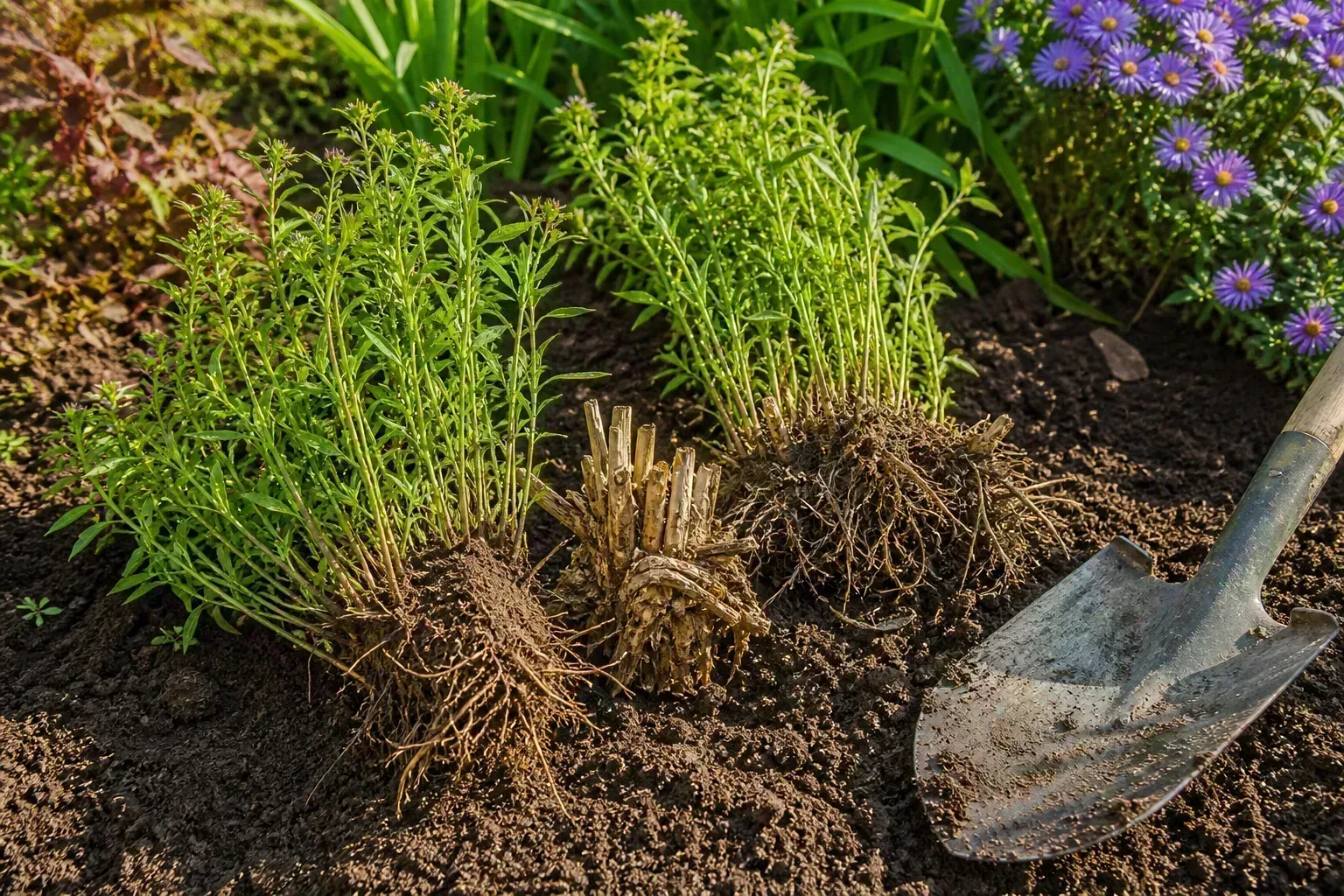
This photo shows division of a perennial aster; use goat’s beard’s own thick crown to locate viable buds or eyes.
Cut the root mass into substantial sections, each with at least one visible eye or bud and several healthy roots. Small fragments without a crown bud are unlikely to make a strong plant. Replant divisions at the same depth, space them for their eventual width, and water them slowly. Keep the soil evenly moist during establishment and expect slower growth than from a nursery-grown plant. NC State and Wisconsin Extension both recommend division and emphasize retaining a viable eye or crown section.
Because an established goat’s beard can be hard to lift, avoid dividing a healthy plant on a rigid calendar. Divide when the center is thinning, the footprint is larger than the space allows, or you genuinely want more plants. If the clump is healthy and sized well, leaving it undisturbed is often the better care decision.
For seedlings, use ripe seed capsules from a female plant and sow the seed shallowly in a labeled tray or nursery bed. Wisconsin Extension says fresh seed can be sown on the surface and kept moist, but also notes that germination may be slow or irregular in cultivation. Epic Gardening describes pre-chilling as another approach. Since published methods differ, you can sow one small batch fresh and another after a few weeks of cold, moist storage rather than assuming one treatment guarantees success. Keep the seed surface from drying, protect the tray from washout, and plan for a long wait before the seedlings resemble mature landscape plants.
Handle Winter and Seasonal Cleanup
Goat’s beard is a cold-hardy perennial in many temperate gardens, though published hardiness ranges vary by source and cultivar. Use a local nursery or extension recommendation for your region, and remember that a plant may tolerate winter cold yet struggle with hot, humid summers or summer drought. The local combination of winter temperature, heat, moisture, and drainage matters more than a zone label by itself.
After frost, the foliage will yellow and collapse. You can leave stems and dried plumes through winter for structure, then cut them back before new growth starts in spring. If the planting is tidy and you prefer fall cleanup, remove spent stems after the plant has gone dormant. In either season, keep plant debris away from the crown if it is wet and matted. Add compost or leaf mulch lightly, maintain the crown’s visibility, and make a note of any dry or overly sunny spots to correct before the next growing season.
Conclusion
Goat’s beard is a strong choice for a large, cool, moist part-shade bed where a perennial can occupy the same space for years. Match the species or cultivar to the mature footprint, protect it from hot afternoon exposure where summers are warm, and keep the soil consistently damp without leaving the crown waterlogged. Compost and a modest mulch layer usually do more good than heavy feeding.
Give a new plant time to establish, and do not divide a healthy clump just because a calendar says it is due. When you need more plants, divide a mature crown with viable eyes; when you want many starts and can wait, try seed while recognizing that germination is variable. With the right site and room to grow, goat’s beard brings late-spring plumes, season-long foliage, and woodland structure with relatively little ongoing care.



