How to Grow and Care for Gray Birch Trees: A Full Guide
Grow gray birch successfully with practical planting, watering, soil, pruning, and pest guidance tailored to its shallow roots and cooler-site needs year-round.
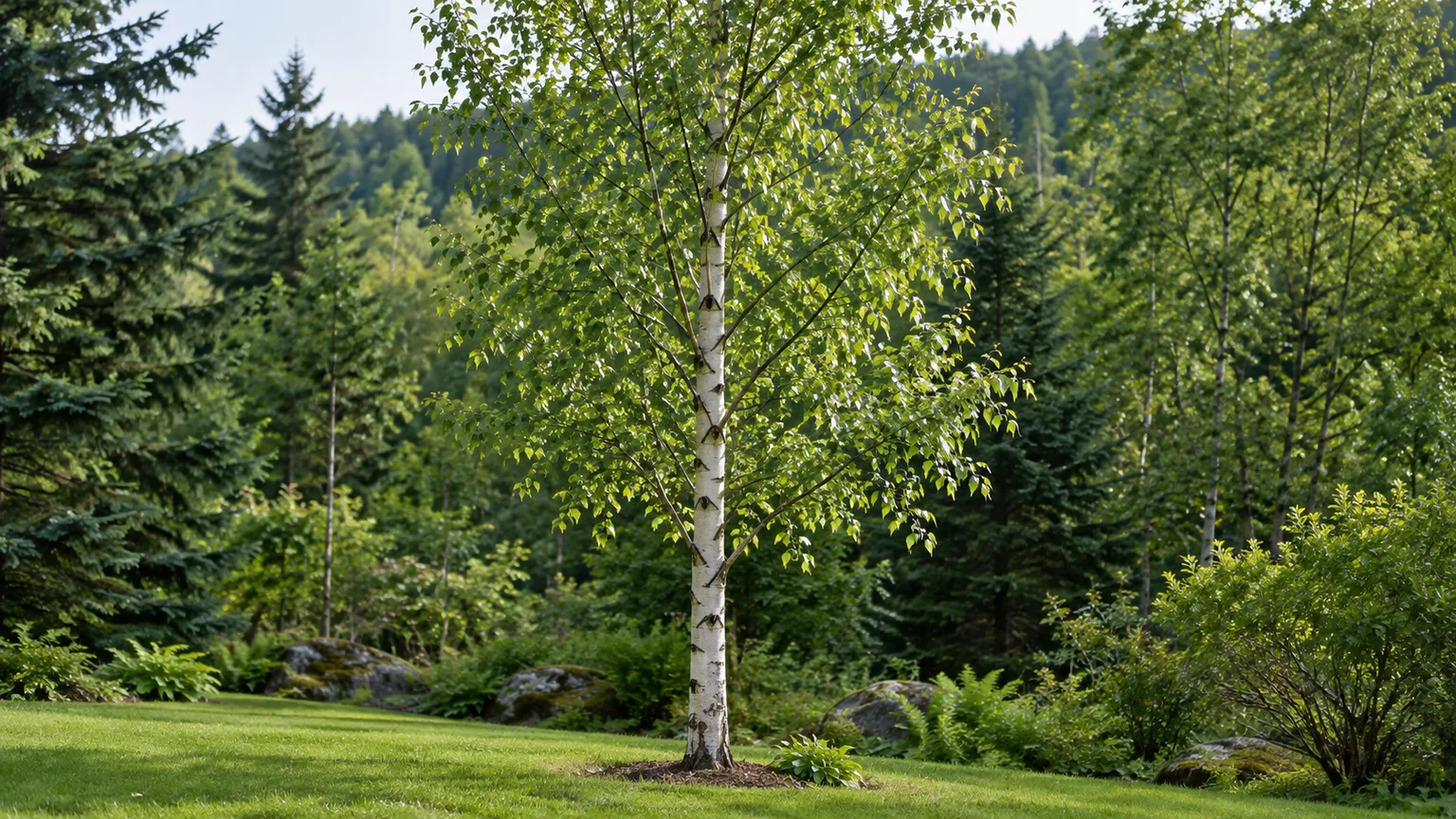
Gray birch (Betula populifolia) is a North American native with a narrow crown, fluttering triangular leaves, and pale bark marked by dark patches under the branches. It is a quick way to add a light canopy and wildlife value to a cool-climate yard, especially where richer, more demanding trees struggle. The key to keeping it healthy is choosing the right climate and protecting its shallow root zone from heat, drought, turf competition, and unnecessary pruning.
This is a low-fuss tree after it is established, but “tolerates poor soil” does not mean “thrives anywhere.” Check its eventual size, local summer conditions, and soil drainage before planting; then water consistently while new roots spread beyond the nursery root ball.
Gray birch at a glance
| Feature | What to plan for |
|---|---|
| Botanical name | Betula populifolia |
| Mature size | Often about 20–40 feet tall and 10–20 feet wide; some regional references report larger trees |
| Light | Full sun in a cool site; partial shade can help in hotter settings |
| Soil | Adaptable, with best growth in moist, well-drained ground |
| Roots | Shallow and sensitive to competition and prolonged drying |
| Main landscape value | Pale nonpeeling bark, yellow fall color, spring catkins, and wildlife support |
| Maintenance | Water during establishment and severe drought; little routine pruning or fertilizer |
Published size ranges differ. The Morton Arboretum lists a typical height of 20 to 40 feet and width of 10 to 20 feet, while University of Maine Cooperative Extension reports 35 to 50 feet tall and 20 to 35 feet wide under its regional conditions. For planning, leave room for a tree roughly 30 to 40 feet tall and at least 20 feet wide rather than treating it as a compact ornamental; nursery stock, climate, soil, and competition all affect final dimensions.
Is gray birch the right tree for your site?
Gray birch makes sense when you want a fast-establishing, relatively narrow tree for a cool-temperate yard, a naturalized edge, or a difficult but not permanently waterlogged site. It can tolerate a range of soil textures and is native across much of the northeastern United States and adjacent Canada. It is also a useful wildlife tree: its buds and seeds feed birds, and its foliage supports caterpillars of several native butterflies, including tiger swallowtails and mourning cloak, as documented by University of Maine Cooperative Extension.
Think of gray birch as a short-lived, early-successional tree rather than a permanent shade canopy. It naturally colonizes open or disturbed ground and is shade-intolerant; in a forest succession it tends to give way to taller, more shade-tolerant species. The USDA Forest Service review describes that ecological role and its shallow roots. In a garden, this means a young tree can grow well in open light, but it may not be the best choice if your top priority is a multi-generation specimen or a dense canopy.
Climate fit deserves more attention than a hardiness-zone label alone. Gray birch is associated with cooler regions, and young trees may struggle when exposed to repeated hot, dry summers even if they survive winter temperatures. In a warm location, ask a local extension office or experienced native-plant nursery whether gray birch performs reliably there; if the recommendation is “it might live,” choose a tree better matched to the site instead of planning to irrigate a stressed birch indefinitely.
Identify gray birch before you buy
The species is often confused with paper birch because both can have pale bark. Gray birch’s bark does not peel into papery sheets, and its mature trunk develops striking dark, inverted-V or triangular patches below branch attachments. Young trunks may be reddish-brown before the pale color develops, so a small nursery tree can look less white than the mature specimen in a catalog. The Chicago Botanic Garden’s species profile highlights the nonpeeling bark and branch-scar marks as useful identification clues.
| Trait | Gray birch (B. populifolia) | Paper birch (B. papyrifera) |
|---|---|---|
| Bark | Smooth, chalky white with dark triangular branch marks; does not peel | Often white and exfoliating in thin papery layers |
| Leaves | Narrowly triangular with a long pointed tip | Usually broader or more oval-triangular, depending on the leaf |
| Habit | Often a narrow, irregular or multi-stemmed crown; usually smaller | Commonly grows into a larger tree |
| Site role | Early colonizer of open ground, tolerant of many soil types | Also a northern native, but site and climate preferences vary by region |
Look at several traits together rather than diagnosing from bark color alone. If you are buying a cultivar, verify the botanical name on the tag; birch cultivars have sometimes been sold under confusing or historically incorrect names.
Choose light and a cooler microclimate
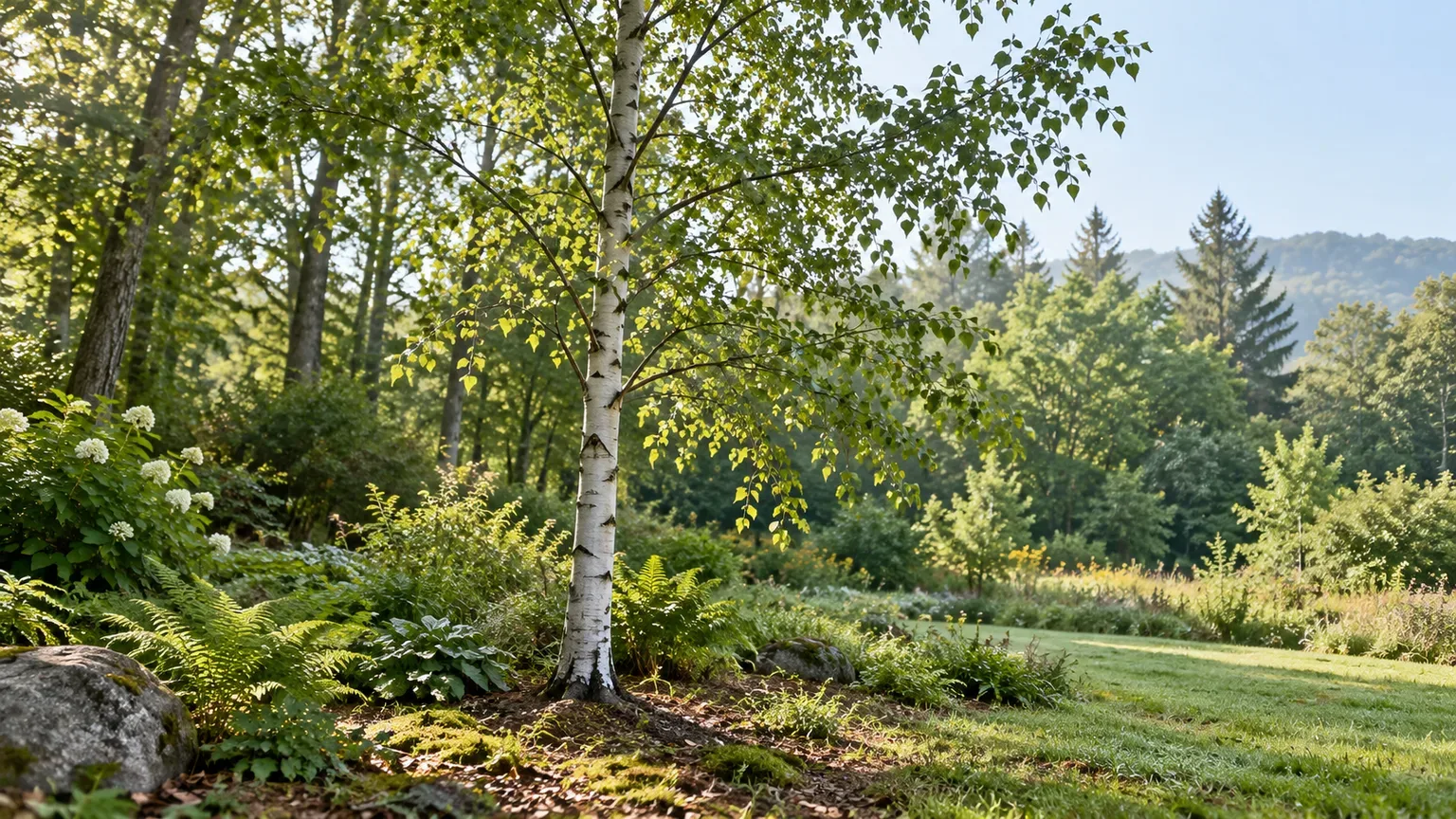
Give gray birch an open position with enough direct light to develop a balanced crown. Full sun suits many cool-climate sites, while partial shade can reduce afternoon heat load in warmer gardens. The species tolerates some shade, but it is shade-intolerant in ecological terms: a crowded understory or the deep shade of a mature canopy can slow it and eventually let competing trees overtake it.
Place it where the root zone can stay relatively cool. A lawn island with reflected heat from pavement, a south-facing wall, and no mulch is a harder site than a north or east garden edge with moisture-retaining groundcover. Avoid planting beneath overhead wires or close to buildings simply because gray birch is smaller than some shade trees; its final height and width still need clearance.
Match the soil to the roots
Gray birch can grow in sandy, gravelly, rocky, clay, or relatively infertile soil, but it generally performs best when soil stays moist without remaining saturated. The USDA Forest Service species review notes that it grows across a wide range of sites and does best on moist, well-drained ground. Poor soil tolerance is a survival advantage, not a reason to ignore drainage or root-zone moisture.
Check drainage before planting. After a soaking rain, see whether water disappears from the planting area or sits there for a day or longer; persistent standing water in compacted soil can deprive roots of oxygen even though the tree tolerates occasional wet conditions. If the site is heavy clay, do not dig a small amended “pot” that holds water; plant at the correct grade, loosen a broad area, and use a different spot or a raised planting area if drainage is chronically poor.
Soil pH matters when leaves turn pale. High-pH soil can make iron less available and cause chlorosis, which the Morton Arboretum lists as a possible issue for gray birch. Do not add lime or acidifying products by guesswork; get a soil test first, then correct only a confirmed problem. Changing the whole backfill at planting can create an abrupt texture boundary that roots may avoid.
Plant while the tree is dormant
Planting dates depend on local weather and the stock you buy. For colder parts of gray birch’s range, early spring after the soil is workable or fall after the tree has gone dormant can both be suitable; avoid frozen ground, waterlogged soil, and the heat of summer. USDA NRCS guidance for gray birch recommends spring or fall planting while the tree is dormant, and the RHS birch growing guide likewise favors planting outside hot, drying conditions, though its calendar is written for the UK.
Bare-root trees need to be planted promptly so exposed roots do not dry. Keep container or balled-and-burlapped stock shaded and watered while you prepare the hole, and inspect the root ball for circling roots or a trunk buried too deeply in nursery media. If the roots are tightly circling, tease out small roots; cut only obvious girdling roots cleanly rather than shredding the whole root system.
Set the root flare at the right depth
Find the root flare—the widening point where the trunk transitions to the main roots—before you dig. The hole should be wider than the root system but no deeper than the distance from the bottom of the root ball to that flare; set the flare at or slightly above finished grade so settling does not bury it. Minnesota Extension’s tree-planting guidance likewise emphasizes finding the original planting depth and keeping the flare exposed. This single depth check prevents a common long-term problem: a tree that is planted too low can develop oxygen-starved roots and decay where trunk tissue stays buried.
Backfill with the soil you removed, breaking up large clods without turning it into powder. Water as you backfill to settle air pockets, but do not pack the soil hard with your foot or add a strong dose of fertilizer or compost into the planting hole. General tree-planting advice from Gardeners’ World also emphasizes planting at the prior soil line, watering in, and keeping surrounding grass from competing; use that as a birch-family technique, while following local advice for gray birch and your soil.
A stake is only necessary if the tree’s root ball wobbles, the site is very windy, or the nursery stock cannot stand upright. If you stake, use a flexible tie and remove it after the tree can hold itself; permanent tight ties can girdle a growing trunk. For a multi-stem specimen, preserve its natural branching rather than pruning it into a formal single-leader shape unless you have a clear reason.
Water through establishment
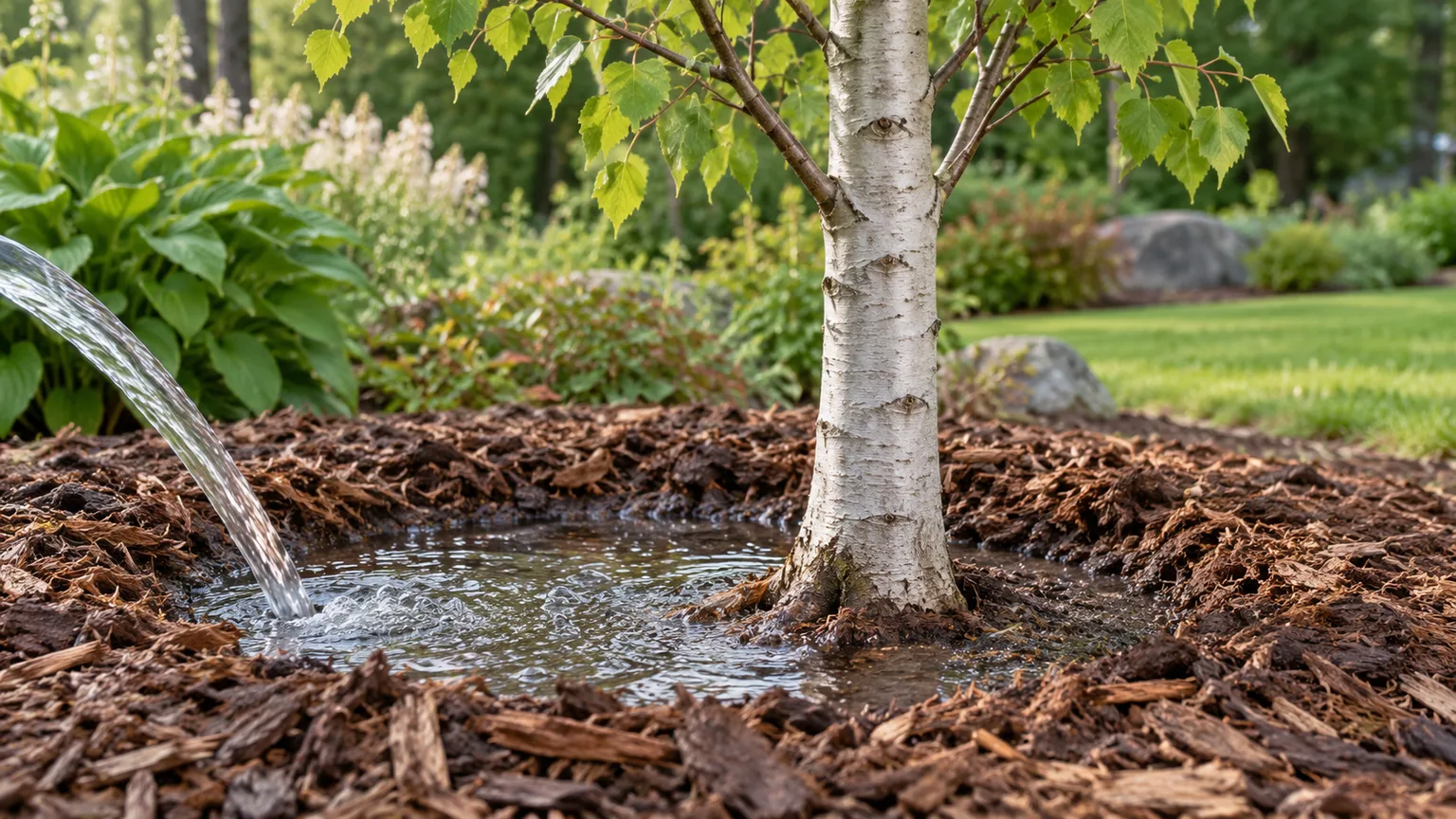
Water the root ball thoroughly at planting, then keep both the root ball and the surrounding backfill evenly moist as roots move outward. During the first weeks, check soil several inches below the surface instead of following a fixed number of minutes: if it is still damp, wait; if it is drying, soak slowly enough that water penetrates instead of running off. Rainfall counts, but a short shower often wets leaves and mulch without reaching roots.
For a starting benchmark, University of Maine Extension recommends about an inch of water per week during the establishment period, with irrigation continuing for one year per inch of trunk diameter at planting. That is a useful planning rule, not a universal timer: sandy soil drains faster than clay, a small tree uses less water than a larger one, and rainfall can reduce what you need to supply. Minnesota Extension’s new-tree watering guidance similarly recommends adjusting water to trunk caliper and expanding the watered area as roots spread.
Deep, slow watering is more useful than frequent sprinkles. Direct water over the root ball and the surrounding soil, then widen the target area as the canopy and roots expand. During hot, windy weather, check more often; during a cool wet spell, pause irrigation. After establishment, gray birch can tolerate some dryness, but water it during prolonged drought because drought stress weakens birches and raises their susceptibility to borer attack.
Mulch widely and reduce turf competition
Keep grass and weeds from competing with the tree while it establishes. A broad mulch ring shades the shallow roots, reduces evaporation, and keeps mowers and string trimmers away from the trunk. Minnesota Extension recommends organic mulch around the root zone and stresses leaving the root flare exposed; for a small yard tree, make the ring as wide as practical rather than creating a narrow decorative donut.
Spread roughly 2 to 3 inches of coarse organic mulch, such as wood chips, over the root zone and keep it several inches back from the trunk. Do not pile it against bark in a “mulch volcano.” Deep or trunk-contacting mulch keeps bark wet, can encourage roots to grow into the mulch, and may hide the flare or hold too much moisture in poorly drained soil.
Skip routine fertilizer
A gray birch in ordinary landscape soil rarely needs fertilizer just because it is growing slowly. First check whether it is planted too deep, competing with turf, drying out, sitting in saturated soil, or receiving too much shade. Those are more common site issues than a missing bag of nutrients, and fertilizer will not repair them. Maine Extension advises using a soil test to identify a need and avoiding nitrogen at planting or during the first growing season.
If growth or leaf color suggests a nutrient problem, test the soil and follow the lab’s recommendation. Maine Extension advises against nitrogen fertilizer at planting or during the first growing season and recommends fertilizing landscape trees only when testing indicates a need. Excess nitrogen can push tender shoot growth while the roots are still establishing, which is not helpful before a hot or dry season.
Prune lightly and choose timing carefully
Gray birch usually needs little pruning beyond removing dead, broken, crossing, or hazardous branches. Start by observing its natural shape for a full growing season; do not try to make a naturally narrow, slightly irregular crown look like a rigid formal tree. Avoid removing a large share of live canopy, because heavy thinning increases sun exposure and heat at the root zone.
Timing is a tradeoff for birches. Spring cuts can bleed sap, while fresh cuts during local bronze birch borer activity may attract egg-laying adults. The RHS pruning guide recommends autumn or early winter for birches to reduce bleeding; the Morton Arboretum’s borer guidance recommends pruning in fall, when adult borers are inactive. For routine shaping, late summer into fall is often a practical window, but use your local extension’s pest calendar because flight dates vary by region.
Make a clean cut just outside the branch collar, not flush against the trunk and not leaving a long stub. Remove small dead branches when you notice them, but hire a qualified arborist for high limbs, large branches, storm damage, or work near a roof or power line. Do not apply wound paint as a routine response; it does not replace sound pruning or diagnosis.
Watch for pests and stress
Gray birch is more resistant to bronze birch borer than several other birches, but resistance is not immunity. The best protection is steady moisture, an appropriate cool site, intact bark, and a root zone that is not repeatedly damaged by lawn equipment. Inspect the upper canopy during the growing season, because decline often starts high in the tree before it becomes obvious from below.
Bronze birch borer: treat stress as the warning
Look for thinning or yellowing in the upper crown, branches that die back progressively from the top, raised or serpentine ridges under the bark, and D-shaped exit holes. These symptoms can be subtle and may have other causes, so do not diagnose from a single yellow leaf or hole. University of Minnesota Extension lists gray birch among the more resistant native birches, while also noting that stressed native birches are more vulnerable; the Morton Arboretum describes upper-crown thinning as an early warning sign.
If you suspect borer damage, photograph the canopy and trunk, note how quickly symptoms are progressing, and contact a local extension office or certified arborist. Avoid prophylactic pesticide use or home trunk injections without a confirmed diagnosis and a label-appropriate recommendation. Dead or infested branches should be handled with advice from a tree-care professional if the tree is large or the damage is extensive.
Birch leafminer: distinguish leaf damage from borer decline
Birch leafminer larvae feed between the surfaces of leaves, producing irregular pale, brown, or blistered patches that can merge into scorched-looking areas. This is different from borer damage, which affects branches and often thins the upper crown. Healthy trees can tolerate some leafminer injury, but repeated heavy defoliation can weaken a tree and contribute to secondary problems.
The Penn State Extension birch leafminer guide describes gray birch as a host and notes that injury usually begins in early summer. Check whether damage is limited to leaf tissue before reaching for a pesticide; preserve beneficial insects, and ask local extension for a current management option if trees are repeatedly and severely defoliated.
Chlorosis, cankers, and other causes of decline
Yellow leaves are a symptom, not a diagnosis. If the pattern is widespread and veins remain greener than the tissue between them, high soil pH may be limiting iron availability; if leaves brown at the edges or the crown thins after a dry spell, check moisture and root competition first. Cankers, mechanical injury, compacted soil, and root damage can also cause branch decline.
Take a few observations before treating: which part of the crown is affected, whether damage is on leaves or woody stems, whether the site recently dried or flooded, and whether the bark has wounds or raised galleries. A soil test and a clear set of photographs are more useful than applying fertilizer or insecticide at random. If decline is rapid or branches could fall, have an arborist inspect the tree in person.
Grow gray birch from seed
Seed is a practical way to raise a species tree, although it will not reliably preserve the exact traits of a selected cultivar. Gray birch produces small winged nutlets in catkin-like fruiting structures; the USDA Forest Service reports that fruit ripens in fall and seed dispersal continues into winter. Gather mature brownish strobiles from a healthy tree, dry them until they loosen, and separate the tiny seeds from the chaff.
Sow seeds shallowly in a clean, well-drained medium and keep them evenly moist in bright light. USDA NRCS gray birch guidance notes that seed needs light to germinate and can be sown without a required cold-stratification step in nursery conditions; local seed lots and storage can behave differently, so follow the source’s instructions if you buy seed. If you sow outdoors, protect the seedbed from drying, erosion, and birds, then thin seedlings rather than letting many seedlings crowd in one spot.
Transplant a seedling while small, when its roots are easier to handle and the soil is workable. Keep it watered and shaded from harsh afternoon conditions while it recovers, then move it gradually into the light level it will receive in the landscape. For a named cultivar such as ‘Whitespire Senior,’ purchase a correctly labeled plant or ask a nursery about vegetative propagation; seedlings may differ from the parent tree.
Know what ‘Whitespire Senior’ changes
‘Whitespire’ is a gray birch cultivar selected for a more upright, spire-like habit and often whiter bark. Some references use the name ‘Whitespire Senior’ to distinguish the cultivar from an older, incorrect assignment to another birch species. The Morton Arboretum’s cultivar note explains that naming history and describes good resistance to bronze birch borer.
A cultivar can improve form or pest resistance, but it does not erase the species’ site needs. Check the nursery tag for the botanical name, ask whether the plant was propagated as the named cultivar, and still provide a cool root zone with establishment watering. If reliable resistance is your main goal, compare locally recommended species as well; “resistant” means lower risk under suitable conditions, not immunity during chronic drought or severe stress.
A simple year-round care rhythm
In late winter or early spring, inspect the trunk, ties, and mulch ring without making unnecessary cuts during sap rise. As leaves emerge, check that the canopy is evenly green and that the soil under the mulch is not staying waterlogged. If you planted recently, resume watering before a dry spell rather than waiting until the leaves droop.
During summer, water slowly when the root zone begins to dry, keep turf and string trimmers away, and scan the upper crown for thinning or dieback. Do not prune during the local borer flight window, and do not compensate for drought stress with fertilizer. After leaf fall, remove fallen debris if pests or disease were severe, refresh mulch without burying the trunk, and schedule any nonurgent structural pruning for an appropriate local window.
This low-intervention rhythm is enough for most established gray birches. A tree that repeatedly wilts, develops top-down dieback, or fails to recover after watering may be poorly matched to its site, so reassess the soil, drainage, shade, and nearby competition before adding more treatments.
Conclusion
Gray birch is a rewarding choice when its strengths match your landscape: a cool climate, an open position, adaptable soil, and room for a medium-sized tree. Its bark, autumn color, and wildlife value make it more than a quick filler, but its shallow roots and relatively short-lived, early-successional habit should shape where you plant it.
Plant at the root flare, keep grass away, mulch broadly, and water through establishment and prolonged drought. Prune sparingly in a season that avoids both heavy spring sap flow and local borer activity, and treat early crown decline as a reason to investigate stress rather than as an automatic cue to spray. Those few choices do more for a gray birch than a complicated fertilizer or pesticide routine.



