How to Grow and Care for Echinocereus Cactus Indoors
Grow Echinocereus indoors with bright light, gritty soil, seasonal watering, a safe winter rest, repotting steps, and practical fixes for common problems.
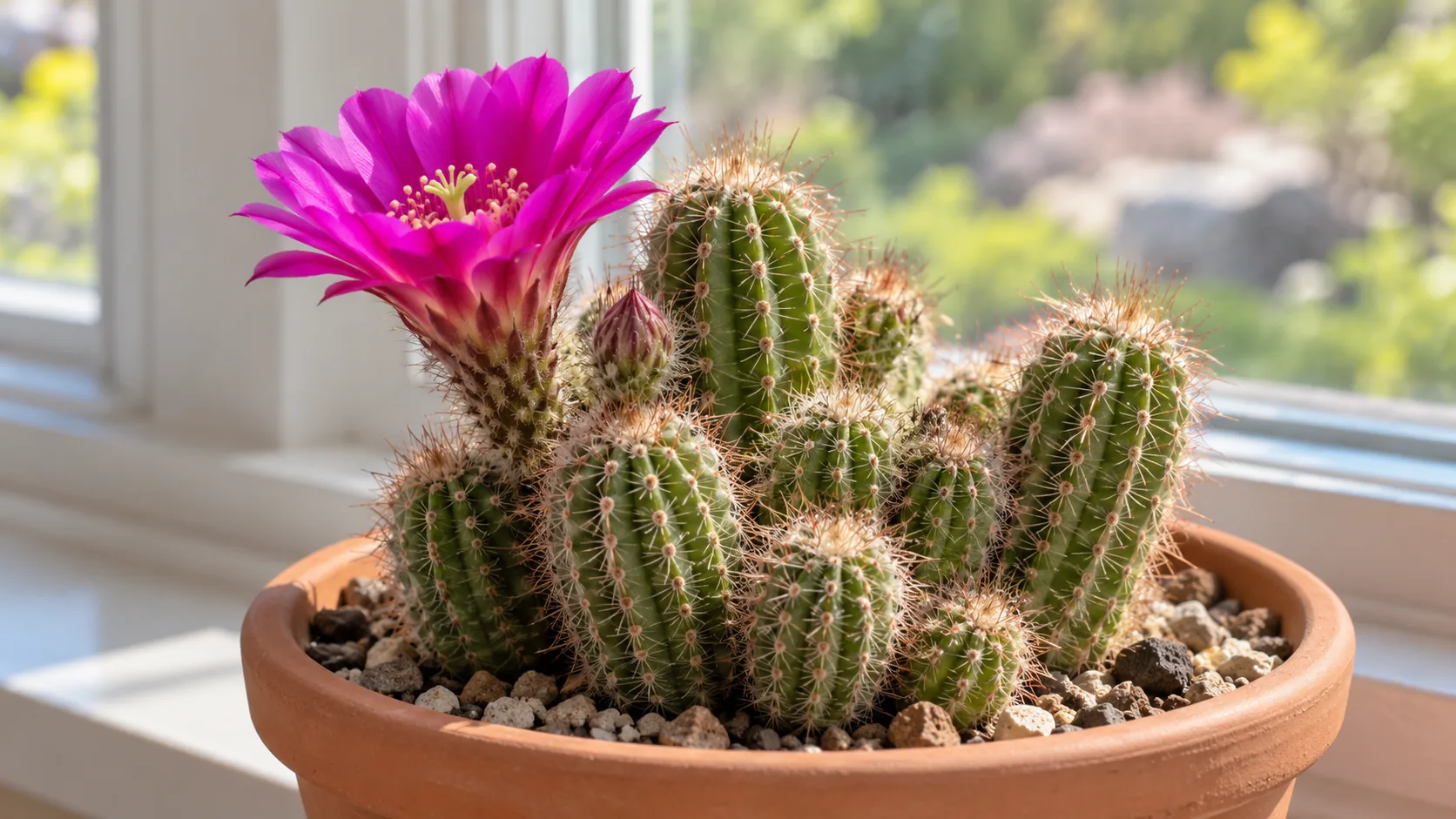
Echinocereus is a genus of compact, often clumping cacti known as hedgehog cacti. Its flowers can be spectacular, but indoor success depends less on a strict watering schedule than on matching light, soil, and moisture to the season. A pot that stays damp in a dim room is the fastest route to trouble; a bright position and a mix that dries between thorough waterings give the roots a better balance of water and air.
A useful starting routine is simple: give the plant the brightest light you can provide, use a pot with a drainage hole and coarse cactus mix, water deeply only after the root zone dries, and reduce water during a cool winter rest. Then adjust for the species on the label. Colorado State University Extension describes Echinocereus among the winter-hardy cacti, while species profiles show that individual plants can differ in shape, flowers, and growing conditions; an outdoor hardiness claim should not be treated as a guaranteed temperature for a wet potted plant indoors or out. (Colorado State University PlantTalk; Gardenia’s Echinocereus coccineus profile)
| Care decision | Reliable indoor starting point |
|---|---|
| Light | Brightest available window; introduce direct sun gradually |
| Potting mix | Coarse, fast-draining cactus mix with a mineral fraction |
| Water | Drench, drain, then wait until the root zone dries before watering again |
| Winter | Brighter, cooler, and much drier than the active season; keep unknown species frost-free |
| Flowers | Strong light, healthy mature growth, and an appropriate seasonal cycle matter more than extra fertilizer |
Understand the Echinocereus genus before choosing a routine
“Hedgehog cactus” is a common name for multiple Echinocereus species, not a single plant with one exact care card. Some are solitary cylinders; others grow into clusters of stems. The spines may be fine and close together or longer and more imposing, while flowers can be red, magenta, orange, yellow, or other colors depending on the species. Even plants sold under a broad common name can have different origins and growth habits.
A label can narrow the advice. Echinocereus coccineus, often called scarlet hedgehog or claret cup, forms clusters and has vivid spring-to-early-summer flowers; E. triglochidiatus is also called kingcup or claret cup; E. engelmannii is known as strawberry hedgehog; and E. rigidissimus is prized for its banded spines. A species-level profile for E. coccineus describes full sun, well-drained soil, regular water while actively growing, and dry winter conditions, but those details should not be copied blindly onto every plant in the genus. (Gardenia)
If the nursery tag only says “Echinocereus,” use a conservative desert-cactus routine and avoid extreme experiments. Don’t infer a plant’s cold tolerance from a photo, its flower color, or the fact that another hedgehog cactus survives outdoors in a different climate. Keep the pot, soil, and season in view: container roots warm and cool faster than garden soil, and a cactus that tolerates cold while dry can be damaged when its roots sit wet.
Give the cactus the brightest safe indoor light
Echinocereus needs substantially stronger light than many foliage houseplants. Put it at the brightest window available, ideally where it receives several hours of direct sun during the day. A sunny south- or west-facing window often works in the Northern Hemisphere, but latitude, season, exterior shade, glass coatings, and nearby buildings can change how much usable light reaches the pot.
A plant that receives too little light may lean toward the window, lengthen between ribs or new growth, become paler, or grow narrower than the older stem. These changes are more useful signals than the calendar: simply adding more water or fertilizer will not restore compact growth. Move it gradually toward stronger light and make sure the medium is drying between waterings, since low light slows water use at the same time it weakens new growth.
Adapt a plant to a brighter window or grow light
A cactus arriving from a greenhouse, shop, or shaded shelf may scorch if placed in intense afternoon sun immediately. Start it in bright filtered light, then increase direct exposure in steps over roughly one to two weeks. If the exposed side develops a bleached or tan patch, pull it back to gentler light; the damaged surface will not turn green again, but protected growth can remain healthy.
When a window is not bright enough, a grow light can supplement it. Set a full-spectrum fixture above the cactus and use the manufacturer’s distance and timer guidance as a starting point, then check for heat buildup and bleaching. A lamp placed too far away or used for a few irregular hours may not meaningfully improve growth, while a close, hot light can stress the plant. Keep the plant’s seasonal rhythm in mind: a grow light that runs all night can interfere with a natural dark period, so use a consistent daytime schedule.
Choose a quick-draining mix and a pot that dries predictably
Echinocereus roots need water when the plant is active, but they also need oxygen. Dense garden soil or moisture-retentive houseplant mix can stay wet long after the surface looks dry, especially in a cool room. Start with a commercial cactus mix and add a coarse mineral material such as pumice or perlite if it still holds moisture for too long. The exact ratio depends on your room, pot size, and watering habits; aim for a mix that wets evenly and then loses excess water promptly rather than a pot packed with pure stones that cannot hold any moisture around roots.
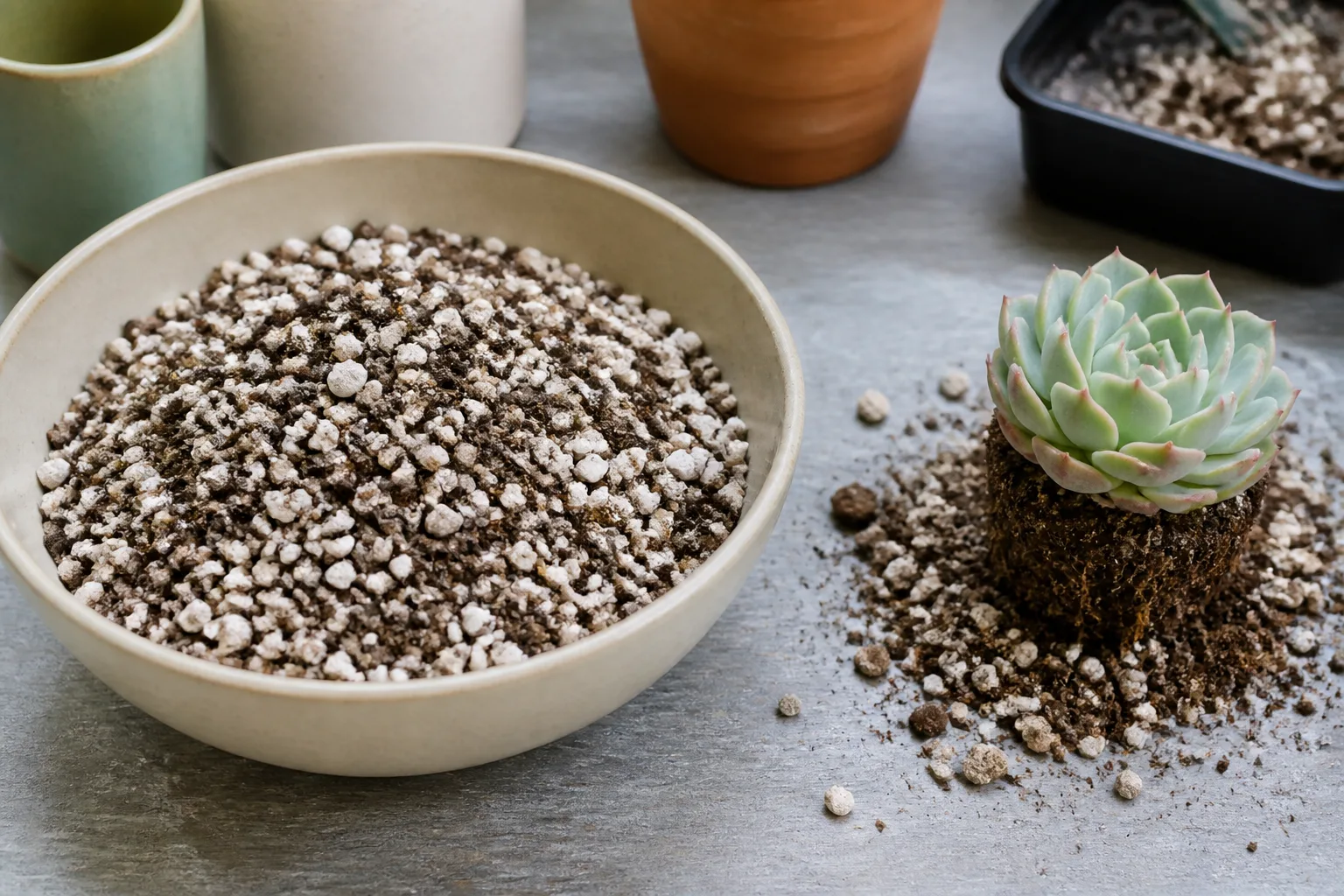
Use a container with at least one unobstructed drainage hole. Unglazed clay can help a mix dry more quickly, but it also means a small pot may dry very fast in a hot, sunny window; plastic holds moisture longer and calls for more careful waiting between waterings. A shallow pot is often suitable because Echinocereus does not need a deep reservoir of wet soil, but the plant should sit securely and have enough room for the roots.
Avoid choosing a pot several sizes too large “for future growth.” The unused soil volume dries slowly, which raises the risk of root stress before the cactus fills the container. If you use a decorative cachepot without a drainage hole, water the cactus in a sink or remove its nursery pot first, allow it to drain, then return it only after the outer pot is dry of standing water.
Water by root-zone dryness, not by the calendar
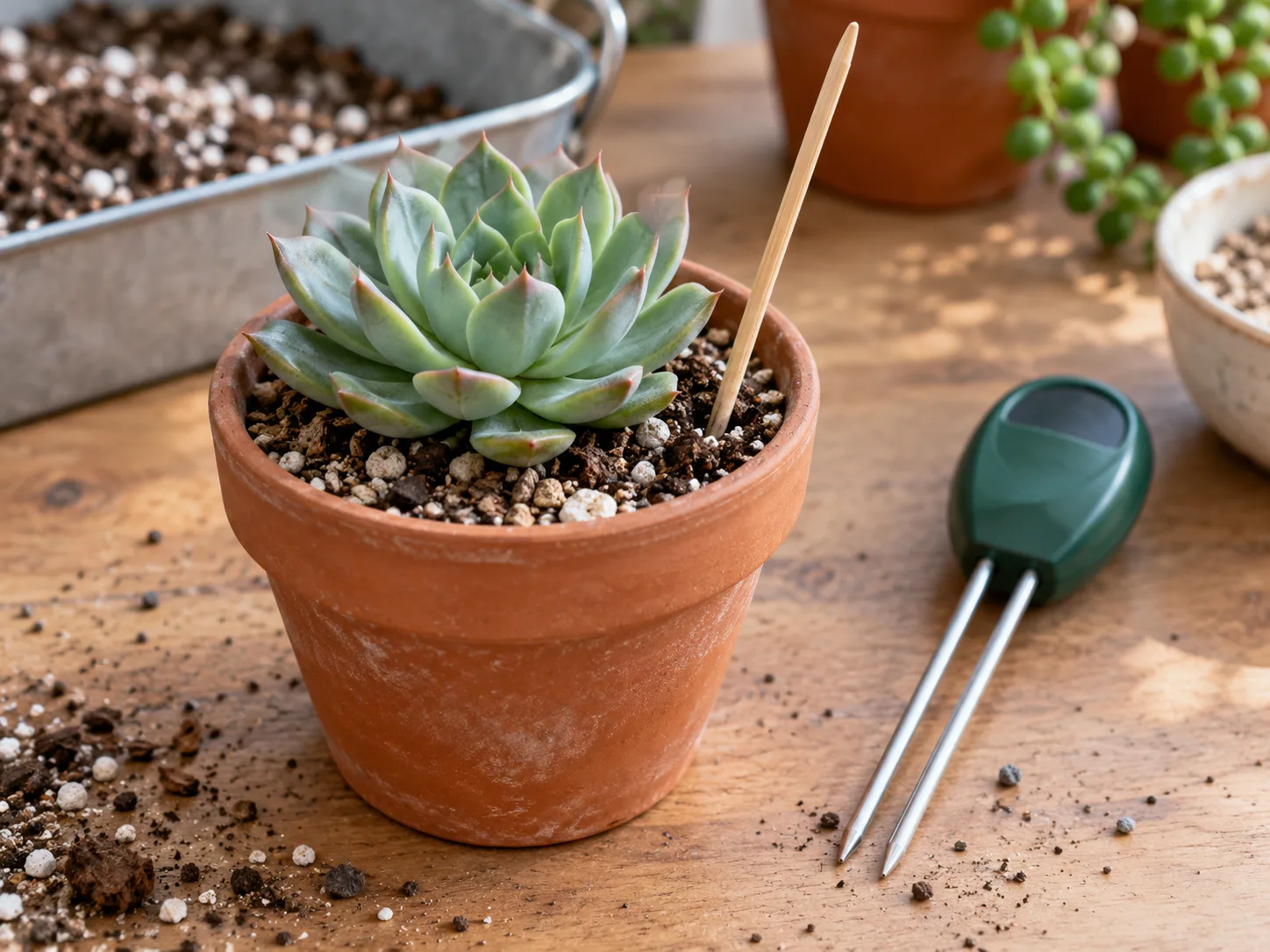
Watering every two weeks or once a month is a poor universal rule for a genus grown in homes with different light, temperatures, soil, and pot materials. Instead, check the root zone. Push a clean wooden skewer toward the lower half of the mix or lift the pot and learn how heavy it feels after watering and after drying; a dry surface can hide damp soil deeper down.
When the mix is dry through the root zone and the cactus is in active growth, water evenly until liquid runs from the drainage hole. Empty the saucer or cachepot afterward. Repeated tiny sips can wet only part of the root ball and leave soluble salts concentrated in the soil, while a thorough watering followed by a real dry-down gives the plant water without leaving its roots continuously damp. General indoor-cactus advice also stresses drainage and allowing the medium to dry, but individual cacti differ: for example, a moon cactus is not a reliable calendar model for a full-sun Echinocereus. (Epic Gardening’s moon cactus guide)
Adjust watering during active growth
During spring and summer, a warm, bright plant may use water faster than it does in fall or winter. That does not mean you should water on the first warm day or whenever the stem looks slightly less plump. Wait for the mix to dry through, then water thoroughly; reduce the interval only if the pot is consistently drying quickly and the plant is actively growing.
After watering, the pot should feel heavier and the mix should not remain cold and wet for an extended period. If several days pass and the soil still feels damp, do not add more water. Check whether the plant is in too large a pot, sitting in a cachepot, receiving weak light, or planted in a compact mix. Correcting the cause of slow dry-down is safer than trying to manage an unsuitable setup with smaller and smaller sips.
Reduce water for a cool winter rest
Many Echinocereus slow down when days shorten and temperatures drop. During this resting period, keep the plant bright and water much less often; if it is cool and the potting mix has dried, wait rather than watering simply because a month has passed. The RHS advises giving cacti very little water and no feed over winter, then increasing care as spring growth resumes. That is a useful seasonal principle, not a reason to leave every indoor cactus bone-dry all winter regardless of species, temperature, or condition. (Royal Horticultural Society winter houseplant advice)
A cool rest means less water because the roots absorb it slowly, not because the plant should be forced to shrivel. If your home stays warm and bright throughout winter, the cactus may not become fully dormant, so check the soil more frequently than you would in a cold spare room while still waiting for thorough dry-down. Never combine cold temperatures with damp soil: that pairing makes rot and cold injury more likely.
Match temperature to the species and the season
Keep an indoor Echinocereus away from heating vents, cold drafts, and window glass that chills sharply overnight. Many species tolerate cool conditions when established and dry, and some are grown outdoors in climates with freezing winters. Colorado State University Extension notes that winter-hardy cacti include Echinocereus and emphasizes that dry soil and excellent drainage are central to their survival. Those landscape observations apply to appropriately identified, acclimated plants in suitable sites; they do not give every potted specimen a universal minimum temperature. (Colorado State University PlantTalk)
If the species label is missing, keep the pot frost-free and choose a cool, bright room rather than testing its limits. For a labeled hardy species, verify the specific plant’s temperature tolerance and remember that a wet root ball is more vulnerable than a dry one. A container exposed to freezing air can become colder around the roots than a bed planted in well-drained ground, so outdoor hardiness-zone numbers are not a promise that a small pot can overwinter unprotected.
Fertilize lightly, if at all
Echinocereus does not need frequent feeding to survive, and fertilizer cannot compensate for poor light or soggy roots. If the cactus is growing well in fresh cactus mix, skipping fertilizer for the season is reasonable. In older mix, a diluted, low-nitrogen cactus fertilizer can be used once or a few times during active spring and summer growth, following the product label and watering first if the soil is completely dry.
Do not feed a dormant plant or one that is newly repotted and recovering. High-nitrogen feeding can encourage softer, elongated growth that is less compact than the plant’s normal form. If the cactus is not growing, is pale from low light, or has damaged roots, correct those conditions before considering nutrients.
Repot without injuring roots or hands
Repot only when the plant has outgrown its container, the mix has broken down and no longer drains well, or root trouble requires inspection. A cactus that looks crowded may actually be thriving; moving it to a larger pot every year can create a persistently wet root zone. Spring or early active growth is usually a practical time because the plant can re-establish, but urgent rot should be addressed when discovered rather than postponed for a season.
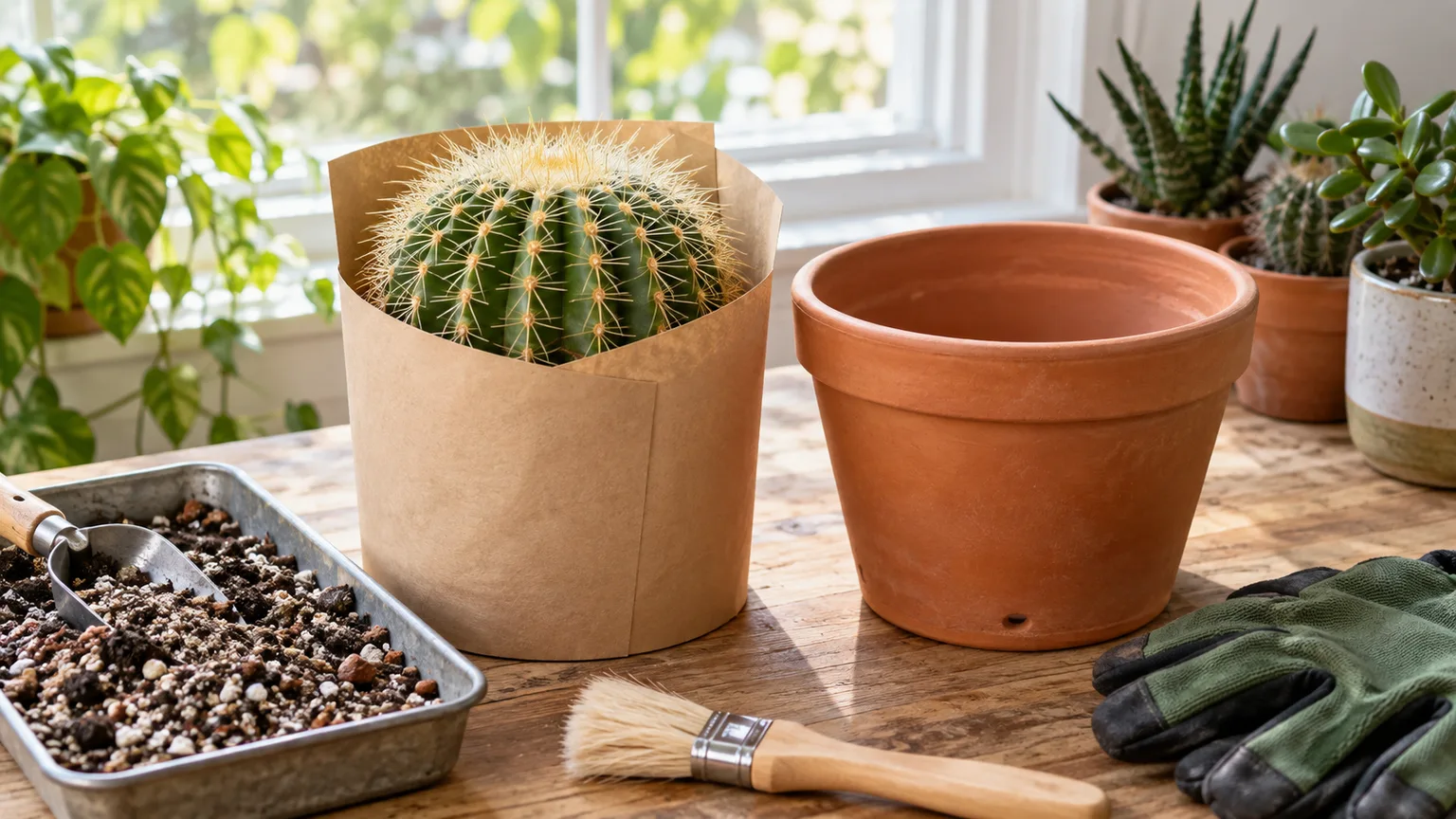
The spines can penetrate thin gloves, so use folded newspaper, cardboard strips, silicone-tipped tongs, or a thick towel as a temporary wrap. Stabilize the cactus without squeezing the stem, tip the old pot, and loosen the root ball gently rather than pulling the plant by its top. Brush away loose old mix and inspect for roots that are firm versus dark, hollow, or soft; prune only clearly dead tissue with a clean blade.
Choose a pot only slightly wider than the healthy root ball, with a free drainage hole. Set the cactus at its former depth, fill around the roots without compacting the mix into a hard plug, and keep gritty medium away from the crown. Let disturbed roots dry before the first watering; the wait depends on how much root damage occurred and how warm the room is, so use dry, settled wounds—not a rigid number of days—as the cue.
Propagate offsets or grow from seed
Propagation is easiest when a mature clump already produces offsets. Some Echinocereus stay solitary or make very few pups, so do not cut into a healthy stem just to force propagation. Seed is another route, but young cacti grow slowly and can take years to reach flowering size; choose it when you want several plants or enjoy the long growing process.
Separate an offset only when it can root on its own
If an offset has its own visible base and is large enough to handle, remove the whole clump from its pot and identify where the connection to the parent narrows. Use a clean sharp knife to separate it only if it does not twist free with gentle pressure, preserving any roots attached to the offset. Wrap the parent and pup rather than relying on bare fingers near the spines.
Set the offset in a warm, airy place out of harsh direct sun until the cut surface is dry and callused. Then place it shallowly in dry cactus mix and wait for signs of rooting before watering normally. Keep it stable and bright but protected from intense afternoon sun while it establishes; a newly separated pup without roots cannot take up water like the parent plant.
Start seed in a warm, controlled setup
Use fresh seed and a clean, shallow container with a fine, sterile cactus seed-starting medium. Scatter the seed on the surface or cover it very lightly, moisten the medium, and cover the container to slow drying while maintaining some air exchange. Warmth and bright filtered light help germination, but direct hot sun through a clear lid can cook seedlings before they emerge.
Check regularly for condensation, algae, or mold. Vent the cover if the medium is waterlogged, and avoid letting tiny seedlings dry completely. As seedlings become large enough to handle, acclimate them gradually to more airflow and stronger light. Do not treat a seedling like a mature dormant cactus: its small water reserves and developing roots call for steadier moisture than an established plant.
Improve the odds of spring flowers
A mature, healthy Echinocereus in bright light is more likely to flower than one kept dim, warm, and overwatered through every season. Flowers are typically most showy in spring or early summer, but timing and color vary by species and growing conditions. Gardenia describes E. coccineus as a full-sun plant with long-lasting orange, scarlet, or pink blooms in spring to early summer; a different hedgehog cactus may not follow the same schedule. (Gardenia)
To improve the odds, keep the plant compact with strong light, allow active-season watering only after the mix dries, and give it a cooler, drier winter when its species and home conditions support a rest. Do not move a warm-grown plant into a freezing garage to force blooms, and do not compensate for no flowers by applying extra fertilizer. A cactus needs time to mature, and an indoor window that looks bright to people can still provide less light than outdoor sun.
Once a flower fades, it can be removed if it dries and clings to the stem, but deadheading will not make the next round arrive sooner. Some flowers may form fruit after pollination; do not assume that every species, plant, or fruit is edible based on a genus-wide description. Enjoy the blooms, keep the plant stable, and resume its normal active-season routine only as new growth and warmer conditions return.
Diagnose common changes in the cactus body
Echinocereus changes appearance with age and season, so inspect texture, color, and the soil together. A single wrinkle does not prove underwatering, and a tan patch is not always rot. Before watering or cutting, note whether the pot is wet or dry, where the change begins, whether the tissue is firm, and whether the cactus recently moved into stronger sun or colder conditions.
Soft, dark tissue points to a moisture problem
A soft, translucent, or blackened base is more urgent than a dry-looking stem. Stop watering and remove the plant from the pot so you can inspect the roots and lower stem. Healthy roots are usually firm; brown, mushy, or foul-smelling tissue suggests decay. With a clean blade, remove compromised roots and stem tissue until the cut is firm and evenly colored, then let the wound dry before restarting in fresh, dry, fast-draining mix.
If rot has reached most of the stem or the central growing point, recovery may not be possible. Do not keep the cactus in its old wet mix while hoping it improves, and do not seal it in a humid bag. After any rescue, use a smaller pot if necessary, improve light, and water only after the medium dries through. A wrinkled cactus with damp soil may have damaged roots rather than a simple thirst problem, so adding water without inspection can make the decline faster.
Wrinkles, pale growth, and corking need different responses
A little shrinkage during a cool, dry winter can be a normal way for some cacti to reduce water in their tissues. If the stem remains firm and the mix is dry, keep it cool and bright and wait for active growth rather than soaking it in winter. Severe collapse during warm growing weather, especially with a very light pot and fully dry soil, is more consistent with thirst; water thoroughly and watch whether firmness returns over the following days.
Pale, narrow, or leaning new growth usually points to inadequate light. Increase exposure gradually and keep the plant upright rather than fertilizing it to “fill out.” A firm tan or brown base that develops slowly on an older specimen may be corking, a normal aging change; a rapidly spreading dark, wet patch is different and calls for root and stem inspection. Sunburn tends to appear on the newly exposed side after a sudden move and is dry or papery rather than soft.
Check for pests before they spread
Mealybugs can hide in the narrow spaces between clustered stems and around the root crown; scale may look like small fixed bumps. Inspect the cactus when watering, and also check the pot rim, underside, and roots during repotting. A small early infestation is easier to manage than insects that have spread to neighboring plants.
Isolate an affected cactus before treating it. Remove visible insects with a cotton swab or a soft brush, then follow the label for any horticultural product intended for cacti and succulents; test a small area first because waxy plant surfaces and strong light can make some treatments cause injury. Avoid spraying in hot sun or applying household cleaners. Recheck weekly for several weeks, since eggs and hidden insects may survive the first pass.
Conclusion
Echinocereus is manageable indoors when you work with its desert growth pattern instead of watering by habit. Give it strong light, a draining mineral mix, a pot that empties freely, and a thorough drink only after the root zone has dried. In winter, reduce water and feeding, keep the cactus bright, and choose a cool but safe setting based on the species label and whether the roots are dry.
When a problem appears, use the soil and the texture of the stem to choose your next step: dry wrinkles, soft rot, stretched growth, normal corking, and sunburn are different problems with different fixes. Let the species guide refine the routine, handle spines with a barrier, and give a mature plant several seasons to settle before judging its growth or bloom potential.



