How to Grow Olive Trees Indoors: What They Really Need
Learn how to grow olive trees indoors with the right light, potting mix, watering cues, seasonal outdoor time, pruning, and realistic expectations for fruit.
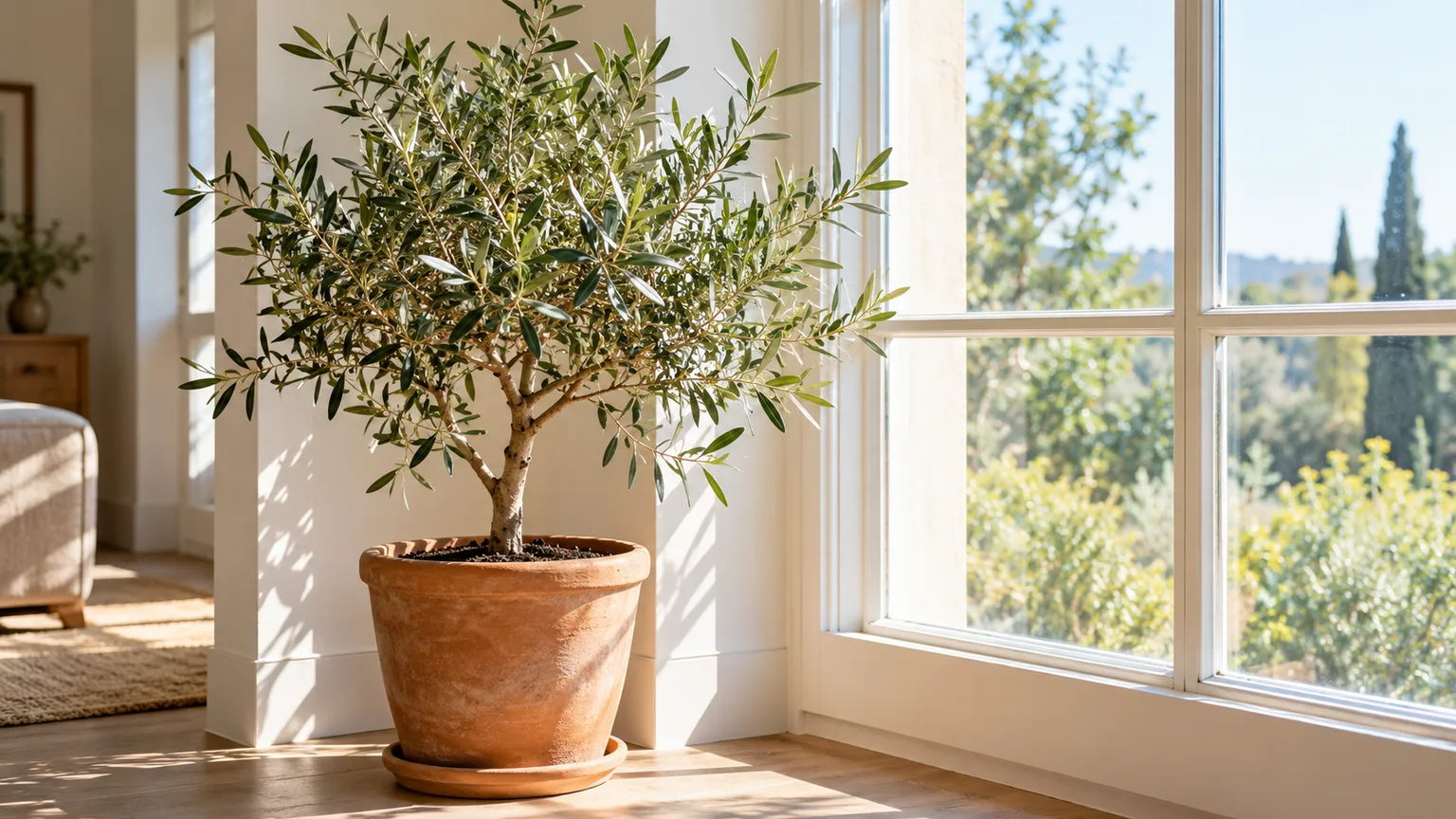
An olive tree can live in a home, but it is not a low-light houseplant that will settle happily on any decorative shelf. The deciding factor is direct sun: if you cannot offer a genuinely bright window or an effective grow light, the tree is likely to thin out and lose leaves over time. Indoors, an olive is most dependable as a foliage plant; flowering and a useful crop of olives are much less predictable.
Before buying one, look at the room during the brightest part of the day and ask whether the whole canopy can sit close to several hours of direct sun. North Carolina State Extension lists full sun as six or more hours of direct light and notes that olives can be grown in containers or brought inside in colder regions. It also notes that flowering depends on a cool period, which a heated room may not provide (NC State Extension). That makes the first decision simple: choose an olive for its sculptural, evergreen leaves if you have a sunny space; choose another plant if your only available spot is dim.
Is an Olive Tree a Good Indoor Plant?
An indoor olive can work well when you can provide a large bright window, a pot that drains freely, and enough floor space for a small tree. It is a poor match for a shaded corner, a room where the only window is north-facing, or a home where the plant must sit far from glass. The slender leaves and open branches may look airy, but the plant still needs outdoor levels of light compared with most foliage houseplants.
Think of “indoors” as a way to protect a container tree through cold weather, not as a guarantee that it will grow like a tropical houseplant in a stable room. A bright sunroom or conservatory is much better than a typical living room; summer time outside can also help a tree that is healthy enough to make the transition. If that kind of seasonal care is not practical, there is no shame in treating an olive as a short-term decorative choice—or selecting a different plant better suited to your light.
Decide whether you want foliage or fruit
For most homes, foliage is the realistic goal. An olive may remain attractive indoors for years if light and root conditions are good, but it may never flower or fruit. Fruit production depends on more than a sunny sill: the tree needs maturity, strong light, suitable seasonal temperatures, flowering, and successful pollination. NC State Extension says olives need about two months in the 40–50°F range to flower and that planting two varieties can increase fruit yield. Those are orchard-oriented conditions, not something a warm living room reliably supplies.
If you want an ornamental tree, a compact or fruitless cultivar can reduce mess and make a container easier to manage. UC’s Statewide Integrated Pest Management Program describes dwarf and fruitless forms, including ‘Swan Hill,’ and notes that fruiting trees can drop messy fruit (UC IPM: Olive). If you want olives to eat, plan for outdoor growing in a suitable climate or for a protected, cool, very bright space; do not buy an indoor tree on the promise of a harvest.
Choose compactness, not just the nursery label
There is no separate species of olive that naturally prefers a dim room. Retail names such as “indoor olive” often describe how a tree is being sold or styled, not a guarantee that it is adapted to weak light. Ask for the botanical name and cultivar, expected mature size, whether it is fruitless, and whether the seller knows it has been grown outdoors or under greenhouse light. A tree raised in bright nursery conditions may shed leaves while adjusting to a lower-light home, even if it is healthy at purchase.
Look for a naturally compact or slow-growing selection if the tree will live in a container. North Carolina State Extension lists ‘Little Ollie’ as compact and rounded and identifies fruitless selections such as ‘Swan Hill’ and ‘Wilsoni’; Fine Gardening also describes Little Ollie as a dwarf, non-fruiting olive suited to containers (Fine Gardening: Little Ollie). Cultivar names and availability vary, so verify the tag instead of assuming every small plant is a fruiting olive. Even a dwarf tree needs light and root room; “compact” does not mean miniature or maintenance-free.
Find Enough Light Before You Buy
Place an olive as close as practical to the brightest unobstructed window, usually a south-facing exposure in the Northern Hemisphere. Direct sunlight should reach the leaves for a substantial part of the day, not just brighten the room. A window screen, deep overhang, sheer curtain, neighboring building, or several feet of distance can cut the light the foliage receives. If the canopy must sit across the room from the glass, assume that a grow light will be necessary. Epic Gardening’s indoor olive care guide likewise treats strong window light as the practical limit for indoor success and recommends supplemental lighting where natural light falls short (Epic Gardening: Indoor Olive Trees).
Watch the tree rather than relying on a compass direction alone. New shoots that stretch toward the window, increasingly long gaps between leaves, a thin crown, and steady leaf loss often point to insufficient light—especially when watering and drainage are sound. Turn the pot a little every week or two so one side does not keep leaning toward the window, but rotation cannot make up for a location that is too dim. If a tree arrived from a sunny greenhouse, let it adjust rather than moving it abruptly from strong sun to a dark room.
When to add a grow light
A grow light helps when natural light is bright but short-lived, especially during winter. Choose a full-spectrum horticultural LED with enough coverage for the entire crown, and follow the manufacturer’s distance guidance; a small desk lamp aimed at one branch is unlikely to illuminate a tree evenly. Put it on a timer so light exposure is consistent, and reposition or raise the fixture as the tree grows. Supplemental light can support foliage, but it cannot reproduce every outdoor condition or guarantee fruit.
Check the leaves and growth over several weeks. If new growth stays compact and the tree holds its leaves, the location is more workable. If stems continue to stretch or the inner canopy thins, increase the light reaching the whole plant or move it closer to the window. Do not respond to light-related leaf drop by adding fertilizer: a stressed tree cannot use extra nutrients to compensate for inadequate energy.
Use a Potting Setup That Dries Predictably
Olives tolerate dry spells better than constantly wet roots, but they still need a healthy root system. In a container, the challenge is to let excess water escape while leaving enough moisture for roots between thorough waterings. UC IPM notes that olives do best in full sun, need little water once established, and do not tolerate saturated soil. In a pot, the root ball is smaller and dries faster than a landscape tree, so the goal is not to copy orchard drought; it is to keep the mix airy and avoid prolonged saturation.
Container size and drainage
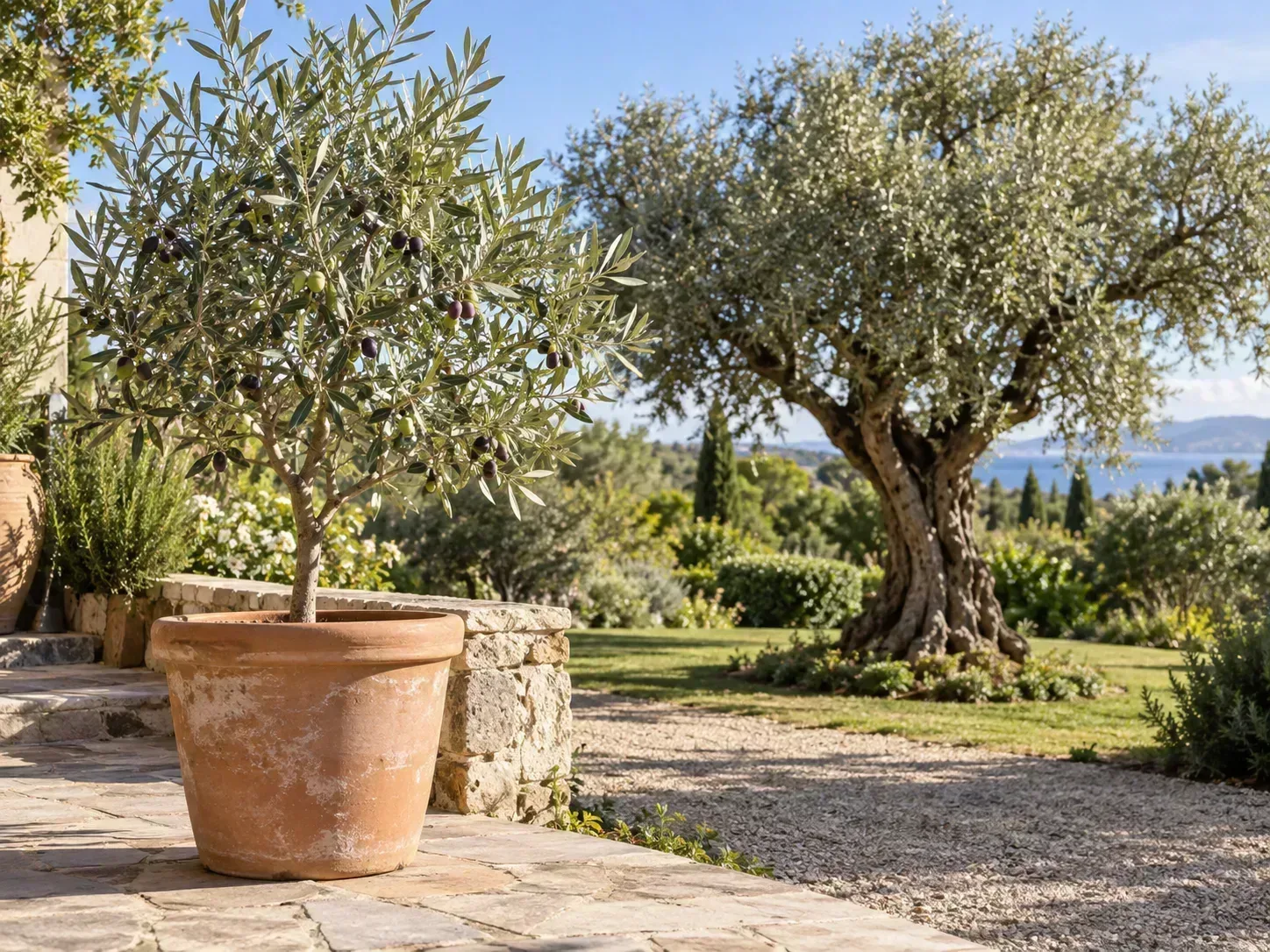
Use a sturdy container with at least one large, unobstructed drainage hole. Choose a pot only modestly wider than the root ball—roughly 1 to 2 inches larger on each side is a useful starting point for a small tree—rather than putting a nursery plant straight into a huge decorative planter. A much larger volume of unused mix dries slowly and can leave roots wet for too long. A heavy terracotta or ceramic pot also stabilizes a top-heavy tree; terracotta dries faster than glazed ceramic or plastic, so account for that when checking moisture.
If you like a cachepot, keep the growing pot removable. Water at a sink or outdoors, let it drain fully, and pour out water collected in the outer pot or saucer. Never let the base stand in runoff. Raising the container slightly on pot feet can keep the drainage hole clear and reduce the chance that the pot seals against a flat saucer. A gravel layer in the bottom does not substitute for drainage holes or a suitable mix; it just takes away root space.
Mix and pot without burying the trunk
Start with a quality potting mix that drains freely. A cactus or citrus mix can be a convenient base, but products differ: if yours stays wet for days, blend in a coarse, stable mineral component such as pumice or perlite and a modest amount of fine bark. The aim is a mix that wets evenly, then drains without turning into a dense, soggy mass. Avoid pure garden soil, which is heavy in a pot, and avoid packing the mix tightly around the roots.
When potting, preserve the depth at which the tree was growing. Set the root ball so the trunk flare remains at or just above the soil surface; do not bury the stem to make a tall tree look shorter. Fill around the root ball, tap the container to settle mix into gaps, and water thoroughly once to remove large air pockets. After it drains, check that the tree stands upright and that no water remains in the saucer. If the mix shrinks away from the pot wall or channels water down the side, re-wet slowly in several passes rather than assuming the root ball is soaked.
Water by Root-Zone Drying, Not a Calendar
There is no reliable weekly schedule for an indoor olive. A tree beside a bright window in a warm room may use water much faster than the same tree in a cool, dim room. Pot material, root mass, mix, and season also change drying time. Water according to the soil and container, not a printed calendar or the fact that the top looks dry at a glance.
Check the upper few inches of mix with a finger or wooden skewer and lift the pot to learn how heavy it feels after watering versus as it dries. When the upper layer is dry and the container noticeably lighter, water slowly over the whole surface until water runs from the drainage hole. Let it drain completely and empty the saucer. For a larger pot, check below the surface as well: dry topsoil above a cool, damp root zone is not a cue to water again.
Do not let the root ball remain bone-dry for an extended period, particularly in a small nursery pot or during active summer growth. A peat-heavy mix can also become difficult to rewet after it dries too far; apply water in a few slow passes if the first water runs straight through. In winter, growth and evaporation often slow, so the same tree will usually need water less often. The correct adjustment is a longer interval between checks, not withholding water until leaves curl or fall.
Keep Feeding Modest and Seasonal
A potted olive eventually uses nutrients in its mix, but it is not a fast-growing foliage plant that benefits from constant feeding. During active growth in spring and summer, use a balanced fertilizer according to its label, or a diluted dose if the product is concentrated and the tree is growing slowly. Water the root ball first if it is dry; fertilizer salts applied to dry roots can add stress. Stop or reduce feeding when growth slows in fall and winter, and do not try to force new growth in a dim room.
More fertilizer is not a remedy for pale leaves or sparse branches until light, watering, and roots have been checked. Excess feed can leave salt residue at the soil surface or tip-burn foliage, while low light limits the tree’s ability to use nutrients. If the plant has been in the same mix for years, repotting into fresh substrate may be more useful than raising the fertilizer dose. Follow the label and avoid piling several products on the pot at once.
Build a Useful Pruning Shape
Prune to keep the crown balanced and the tree easy to move, not to force a particular size through constant shearing. Remove dead, broken, or crossing branches first, then take out a few shoots that crowd the center. An open canopy lets light reach more leaves and makes it easier to inspect stems for scale. Use clean, sharp pruners and make cuts just above a healthy outward-facing bud or branch junction.
If the tree is tall, shorten a few long shoots gradually rather than cutting the entire crown back in one session. Removing too much foliage at once can reduce the plant’s ability to recover, especially when it is already short on light. Suckers growing from the base can be removed if the goal is a single-trunk shape; keep them if you prefer a multi-stemmed ornamental form. Avoid pruning in late fall just before moving the plant into a darker indoor environment, when it will have less light to support replacement growth.
Move Outdoors Safely, Then Bring the Tree Back In
A summer outdoors can improve light exposure, airflow, and overall vigor, but the move itself is a stress event. Wait until frost danger has passed and nights are reliably mild for your region; container roots are more exposed to cold than roots in the ground. Select a spot with strong light and good drainage, then protect the pot from intense afternoon heat if the container can bake on stone or concrete. Do not place the tree where it will be battered by wind or sit in water after rain.
The first outdoor location should be sheltered and partly shaded, even if the eventual site is sunny. Leaves formed indoors are not automatically ready for hours of unfiltered outdoor sun. Increase exposure gradually over a week or two, checking for bleached or scorched patches and keeping the root ball from swinging between drought and saturation. A container can dry much faster outside, so check it more often—especially during hot, windy stretches—while still allowing the surface layer to dry between waterings.
Acclimate in both directions
Before the move outside, spend several days in bright shade, then introduce morning sun and increase exposure in stages. If leaves bleach or develop dry patches on the sun-facing side, return to bright shade and slow the transition. When fall approaches, reverse the process: inspect the tree, rinse dust and insects from the foliage, and bring it to a bright sheltered spot before cold or frost is forecast. Check leaf joints and undersides carefully so outdoor pests do not get a free ride onto nearby houseplants.
After returning indoors, expect some adjustment if the light or temperature changes sharply. Keep the tree in its brightest available position and avoid rotating it into a completely different room while it is adapting. Quarantine it from other plants for a short inspection period if you find scale or other insects. The point of seasonal moving is to give the olive a better light environment while conditions allow it, not to shuttle it back and forth during every warm afternoon.
Give Fruiting Trees a Real Winter Rest
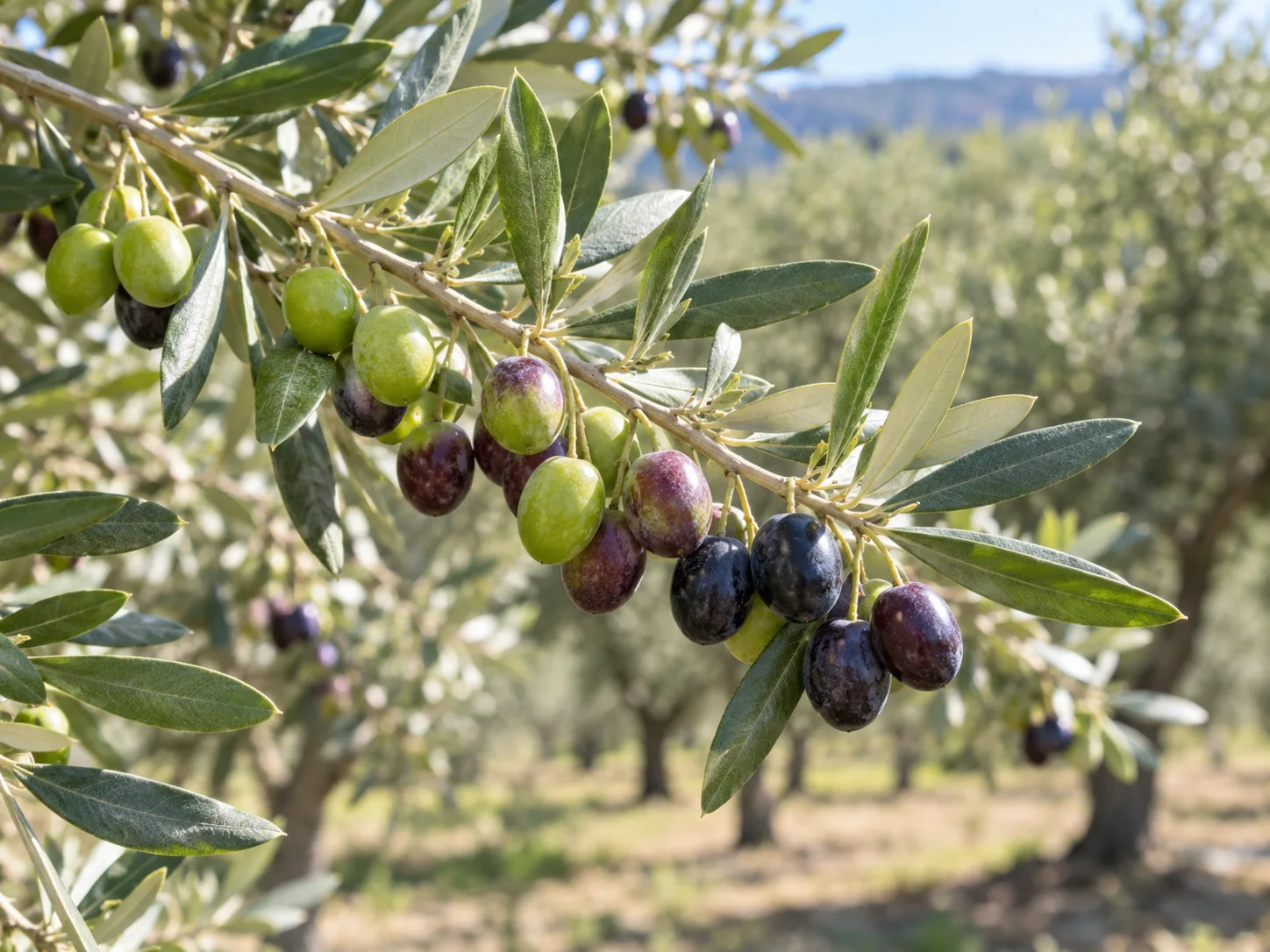
An ornamental olive can spend winter in a bright room with stable temperatures and reduced watering as growth slows. A fruiting olive has a different requirement: it needs a cool seasonal period to initiate flowering. NC State Extension specifies about two months around 40–50°F for flowering. That is a guide to flower formation, not a recommendation to expose a potted tree to frost or to chill a plant that you only want for foliage.
If you want to attempt fruit, first confirm the cultivar, pollination needs, and whether you can provide that cool period safely. Some olive cultivars are more self-fruitful than others, while planting two compatible varieties can improve the chance of a crop; even then, indoor fruiting is not assured. Strong light, a healthy mature canopy, pollination, and the right cool rest must all line up. A heated home may keep the tree alive but too warm for dependable flowering, and a dark garage may be cool but too dim and cold to protect leaves and roots.
For a foliage plant, prioritize a bright, frost-free winter location instead of trying to create artificial dormancy. Keep the tree away from heater vents, cold drafts, and repeated temperature swings. It is normal for watering needs to fall when growth slows; inspect the mix and pot weight rather than carrying over the summer schedule. If the only available space is warm and bright, use it and accept that the tree may not flower.
Diagnose Leaf Drop, Yellowing, and Pests
A few older leaves dropping as a tree adjusts to a new location is different from rapid, widespread shedding. Look for a recent move, weaker winter light, dry root ball, standing water, or a sudden temperature change before reaching for a product. Check the top growth and lower branches, then inspect stems and leaf undersides. UC IPM lists scale insects among pests that can affect olives and identifies water excess as a poor fit for the tree’s growing conditions, so inspect for pests and root-zone problems together rather than treating every yellow leaf as a nutrient shortage.
A fast decision guide
| What you see | First check | Useful next step |
|---|---|---|
| Long, sparse shoots and a thin crown | Light and distance from the window | Move the tree closer to direct sun or add a suitably sized grow light; wait for new growth before pruning heavily. |
| Yellowing leaves with mix that stays wet | Drainage hole, saucer, and root-zone moisture | Empty standing water, allow the mix to dry appropriately, and inspect roots if decline continues. |
| Crispy edges and a very light pot | Whether the root ball dried too far | Water slowly in repeated passes until the root ball is evenly moist and runoff appears. |
| Leaf drop after a move | Recent light, temperature, or location change | Keep conditions steady and bright; avoid a second move while the tree adjusts. |
| Sticky stems or fixed brown bumps | Stems and leaf undersides for scale | Isolate the tree, wipe or remove visible insects, and monitor new growth before using any pesticide. |
| Fine stippling or delicate webbing | Leaf undersides and dry indoor conditions | Rinse foliage and isolate; identify the pest before choosing a treatment. |
If a tree is declining, change one major condition at a time when possible. Moving it from a dark corner, repotting, pruning, and fertilizing all in the same week makes it difficult to learn which problem mattered and can add several stresses at once. Start with light and drainage, since those are fundamental to an olive’s needs. If you suspect root rot—soft dark roots, sour-smelling mix, or a persistently wet root ball—remove the plant from standing water and assess the roots and substrate rather than continuing to water on schedule.
Repot When Roots or Mix Say It Is Time
Repotting is usually needed only when roots begin circling densely, emerge from drainage holes, or the root ball dries unusually quickly despite careful watering. A mix that has collapsed, become compacted, or stopped draining is another reason to refresh it. A fixed two- or three-year interval is only a rough reminder; slow growth indoors may mean the tree stays comfortable longer, while a vigorous young plant may fill a small pot sooner.
Move up one modest container size in spring as growth resumes. Loosen the outer roots gently, remove only roots that are dead or damaged, and preserve as much of the healthy root ball as practical. Set the trunk at the same depth, use fresh free-draining mix, and water once to settle it. Do not jump to an oversized decorative pot or trim a large share of healthy roots to keep an olive small unless you are deliberately practicing a trained bonsai technique; ordinary houseplant repotting should give the tree room without a major root disturbance.
Conclusion
Growing an olive tree indoors is possible when the room can meet the tree’s strongest requirement: abundant direct light. Use a compact or fruitless cultivar if you mainly want the silver-green foliage, plant it in a modest container with open drainage, and water when the root zone has begun to dry rather than by a weekly rule. Seasonal time outdoors can help, provided you acclimate gradually and protect the tree from cold.
Treat fruit as a bonus, not a promise. Flowering calls for a cool winter period that many homes cannot provide, and pollination adds another variable. If you choose the tree for its foliage and give it the sunniest place you can manage, you will have a much clearer path to success—and a clear sign when the space is simply too dim for an olive.



