How to Grow and Care for Bahia Grass
Learn how to grow Bahia grass from seed or sod, choose a cultivar, water by need, mow at the right height, and avoid fertilizer and weed-control mistakes.
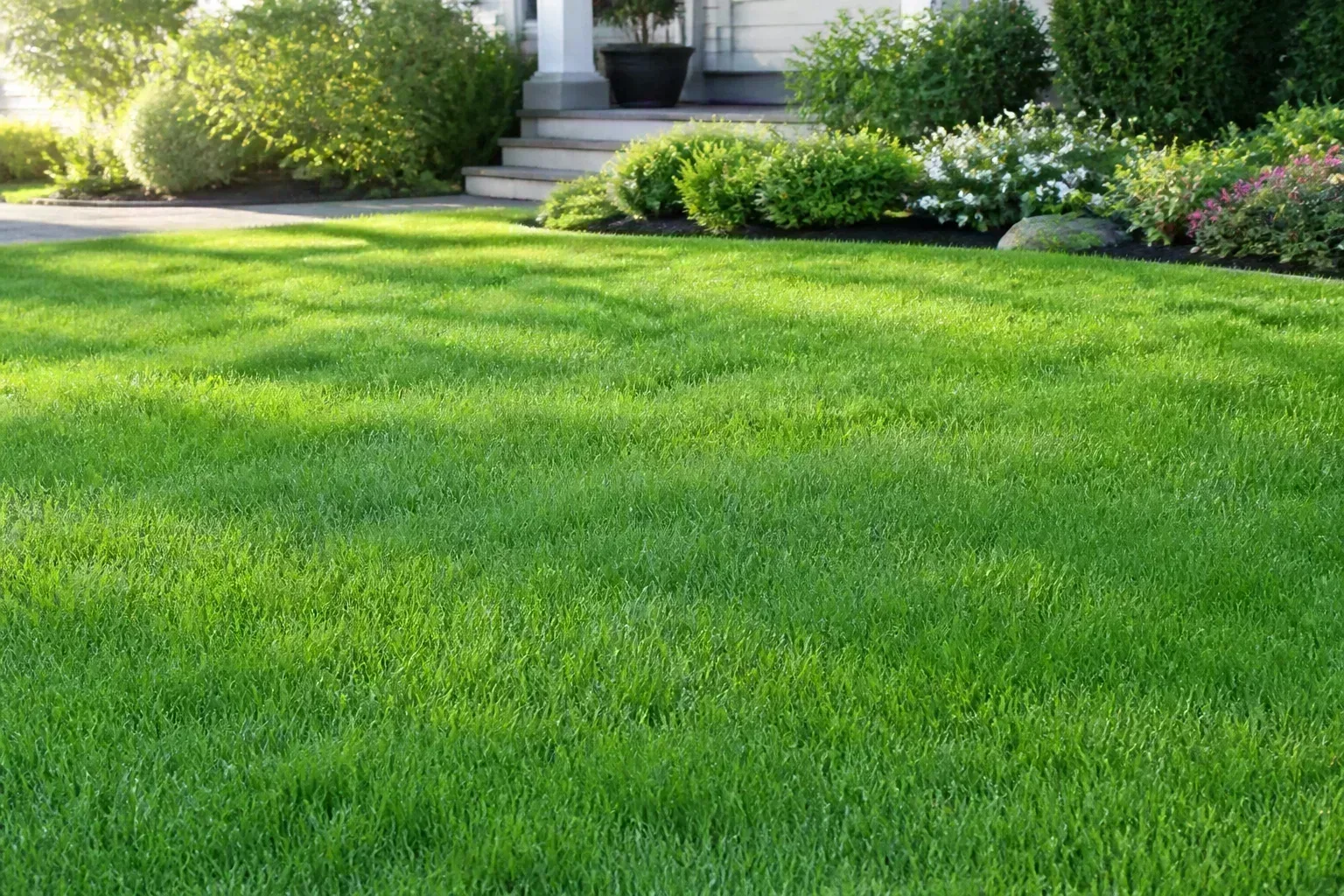
Bahia grass is a warm-season lawn for people who value persistence and lower input needs more than a velvet-smooth, perfectly uniform turf. It handles heat, sandy soil, and dry spells well once established, but it produces conspicuous seedheads, prefers sun, and can take patience to fill in from seed. Decide whether those trade-offs fit your yard before you buy a bag of seed.
The botanical name is Paspalum notatum. This perennial grass spreads through short, stout stolons and also produces abundant seed. Its deep roots help it persist in conditions where thirstier or higher-input turf can struggle. A healthy Bahia lawn may still look more open and coarse than a dense carpet of some other warm-season grasses; that is not automatically a sign that it needs more fertilizer.
Is Bahia grass right for your lawn?
Bahia is most useful in warm parts of the Southeast and Gulf Coast, including large sunny home sites, acreage, and places where regular irrigation is impractical. It can tolerate infertile, sandy soils and is relatively resilient during drought, but those traits do not make it universally easy. A deeply shaded lawn, a heavily used play area, or a yard where the owner expects close, frequent grooming may be a poor match.
What it does well—and what it does not
Choose Bahia when you want a persistent warm-season lawn that can get by with less water and fertilizer than a high-input turf program, and when you can accept visible seed stalks during active growth. It is a practical choice for open lots, road edges, and lower-maintenance landscapes. Its roots and spreading stems also make it useful for holding soil, though erosion-prone slopes may need a planting method that provides immediate surface cover.
The trade-offs matter. Bahia is coarse to the touch, does not always knit into a uniformly dense residential lawn, and can let weeds establish in thin areas. Seedlings grow slowly enough that weed competition and moisture management matter during establishment. It also has limited shade tolerance: tree shade may be survivable in patches, but persistent low light is a reason to choose a different groundcover or grass rather than continually feeding a declining Bahia lawn.
Think about foot traffic honestly. Bahia can withstand ordinary use, but it is not the best choice for a heavily played sports yard that must recover quickly from repeated wear. If you want very fine blades, a short manicured cut, or a lawn that stays green through winter, compare other grasses adapted to your county before committing.
Choose a Bahia grass variety
The cultivar on the seed label affects color, leaf width, winter behavior, seedhead production, and how quickly the stand develops. Ask a local sod grower or Extension office which cultivar is sold for home lawns in your region; pasture seed and turf seed are not always interchangeable in the qualities you care about most.
Argentine is often the more attractive residential choice where it is available. UF/IFAS describes it as darker green and relatively dense, with broader blades and somewhat shorter, less dense seedheads than Pensacola. It is less cold tolerant, however, so a northern-edge site may lose color earlier. Pensacola is widespread and more winter hardy, with an extensive root system, but its narrow leaves and abundant, taller seedheads can make a lawn look more pasture-like. That can be acceptable on a large property, but less appealing in a front yard kept for a tidy appearance.
Other named selections include Tifton-9, TifQuik, AU Sand Mountain, and UF-Riata. UGA Extension’s forage bulletin discusses these in an agricultural context: TifQuik has vigorous seedlings, AU Sand Mountain has strong cold tolerance in Georgia trials, and UF-Riata has been observed to retain color in parts of Florida. Those characteristics are helpful context, not a guarantee that the variety is available or the best fit for a specific home lawn. Confirm local availability and intended use before ordering, and do not select solely by the name printed on a generic bag.
The cultivar differences and residential traits are summarized in UF/IFAS’s bahiagrass lawn guide; UGA Extension’s bahiagrass bulletin adds useful cultivar and regional information, especially for Georgia and neighboring states.
Prepare a sunny site and test the soil
Bahia needs an open site with substantial direct sunlight. Before planting, look at the area at different times of day, including when nearby trees have leaves. A patch that seems sunny in winter may be deeply shaded in summer. If large parts of the yard receive only filtered light, do not expect seed or fertilizer to overcome the light shortage.
The grass is adapted to acidic, sandy or low-fertility soils, but “poor soil tolerant” does not mean that all soil conditions are ideal. A soil test can show pH and nutrient status; it can also prevent unnecessary additions of lime, phosphorus, or nitrogen. UF/IFAS notes that Bahia is susceptible to iron deficiency in high-pH soils, often above pH 7, which can make leaf blades pale or yellow even when the lawn has adequate nitrogen.
Correct drainage and grading before seeding or laying sod. Fill depressions that hold water, loosen compacted surface soil where water runs off, and remove competing weeds and debris. Do not add a thick layer of rich topsoil as a shortcut: a sharp change between soil layers can interfere with water movement, and the Bahia will still need proper seed contact or root contact. If the site is sloped or erosion-prone, choose sod or another method that stabilizes the surface quickly rather than leaving bare soil exposed through repeated storms.
Plant Bahia grass at the right time
The useful planting window is when the soil is warm enough for active growth and there is a long stretch of warm weather ahead. Spring into early summer is generally the safest window across much of the lawn-growing range; exact dates vary with latitude and local climate. UF/IFAS notes that north Florida plantings establish best in spring or early summer, while Florida’s warmer regions offer more flexibility. UGA Extension recommends early spring on upland sites and later spring on moist lowland soils in Georgia, and warns that late-summer weeds can compete with new stands.
Use soil temperature and local Extension timing rather than a single calendar date. Pennington’s homeowner guide points to germination around a sustained 65–70°F soil range, while the deeper point is to give young grass heat, reliable moisture, and time to root before cold weather slows it. The ideal schedule for northern Florida is not necessarily right for inland Georgia or the Texas coast.
Start with seed and keep it shallow
Seed is less expensive than sod for large areas, but Bahia seed can germinate slowly and unevenly. UGA Extension explains that a waxy seed coat and dormancy can delay emergence: roughly half to three-fifths of seed may germinate during the first month under suitable conditions, while some seed can take longer. TifQuik is an exception with faster germination in favorable conditions. This variability is why an empty-looking patch after a week is not proof that the seed has failed.
Choose clean seed labeled for the cultivar you want and follow its package rate. Scarified seed, when available for that cultivar, may germinate more promptly. Prepare a firm, smooth seedbed, spread seed evenly, and cover it only about 1/4 to 1/2 inch deep. Bahia seed is small; burying it deeply makes emergence harder. A light rake or a thin cover of suitable soil can improve contact, but avoid a heavy layer that blocks light and air at the surface.
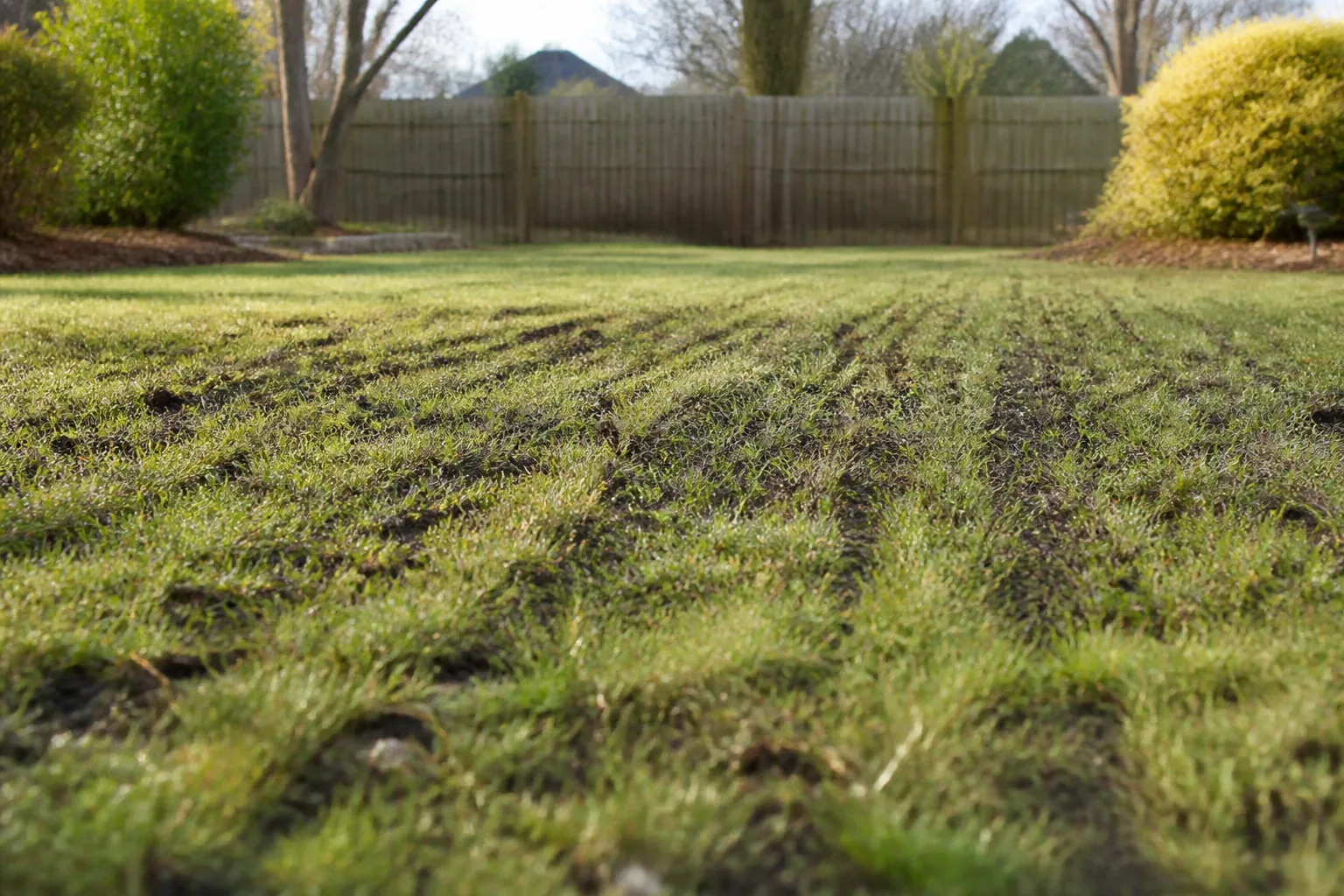
Keep the top layer evenly moist while seeds are germinating, using light watering that does not wash seed into low spots. Then gradually lengthen the time between watering as seedlings root. Do not let the young stand dry out for long periods, and do not saturate it so often that puddles form or weeds thrive. Keep foot traffic off the area until the seedlings are anchored and mowing does not pull them out.
Expect weeds to be a serious competitor during this slow phase. Avoid applying a pre-emergent herbicide if you are trying to germinate Bahia seed; a product that prevents weed seeds may also stop desirable grass seed from emerging. Identify weeds and check any product label for the exact Bahia cultivar and seeding interval before applying it. If a new lawn is overwhelmed, correcting seedbed preparation and re-seeding at a better time is usually more dependable than improvising with a herbicide.
Choose sod when rapid cover matters
Sod costs more and may be harder to source than seed, but it gives the lawn a head start and covers soil while new roots develop. Inspect the sod for weeds before accepting a delivery. Bahia sod can be less uniform and may break apart more readily than sod of other turfgrasses; small pieces can still root if they contact prepared soil and receive appropriate establishment care, according to UF/IFAS.
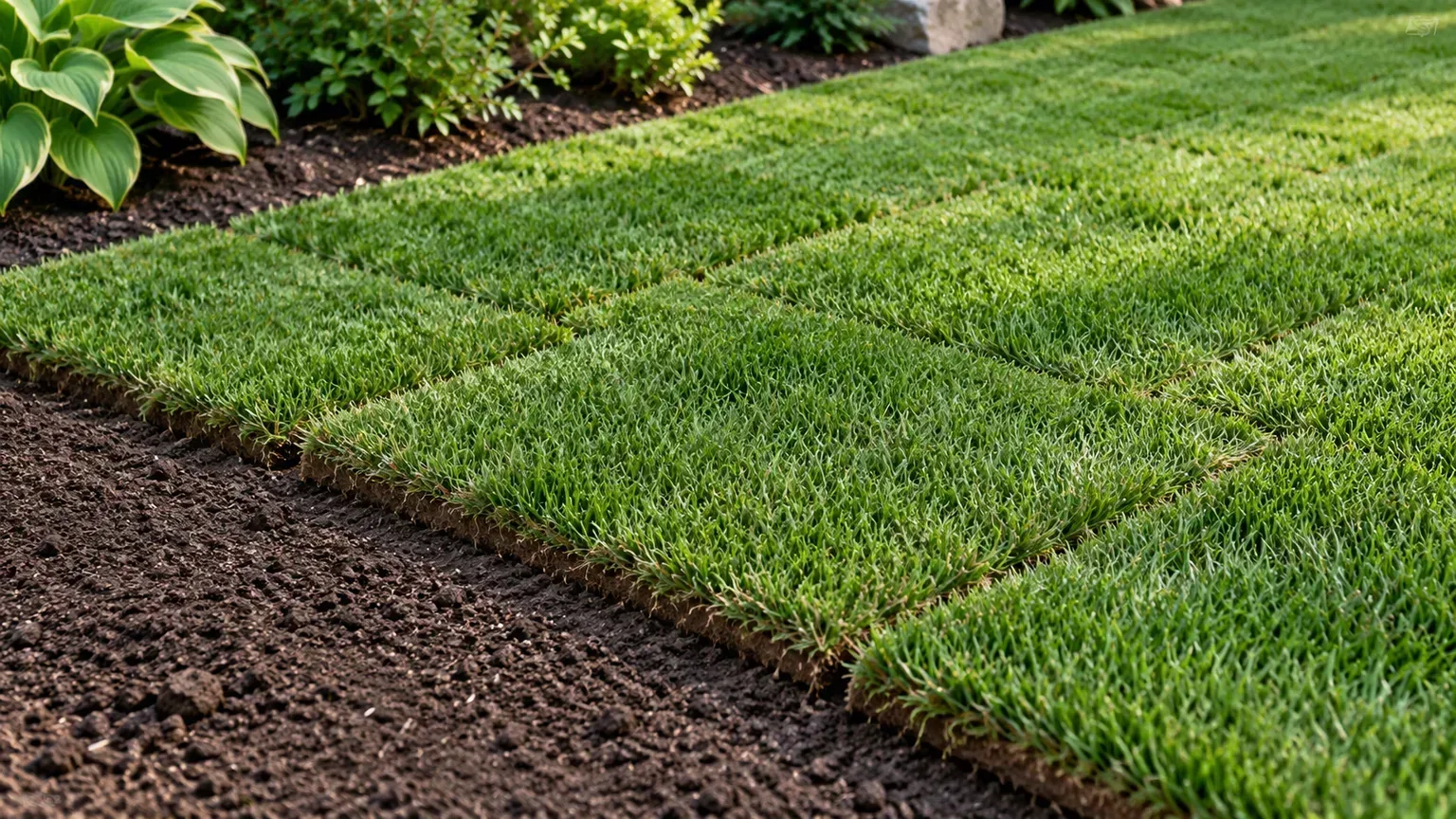
Lay sod as soon as possible after delivery on a level, moist surface. Fit the pieces closely without stretching them across gaps, then press or roll them so the roots contact soil rather than bridging air pockets. Water each completed section promptly. Avoid walking, mowing, or dragging equipment across it until roots have pegged into the ground; UF/IFAS gives roughly two to three weeks as a typical rooting period, but a gentle tug test is more useful than the calendar alone.
Plugging is usually a slow way to establish Bahia because the open spaces between plugs remain vulnerable to weed growth. It can still make sense for a small repair when matching existing grass, but for a new lawn choose seed for budget or sod for faster cover. The slow-growing grass is not a good candidate for a plug grid if you need the area to fill quickly.
Water a new lawn, then water by stress signs
New seed and new sod need more frequent attention than an established lawn. For seed, keep the surface layer damp but not flooded while emergence proceeds. For sod, water often enough at first to prevent the shallow root zone from drying out; then reduce frequency as roots establish. UF/IFAS describes short, repeated irrigations for the first week after planting sod, followed by daily watering for a second week and then less frequent irrigation. That schedule is Florida-specific guidance and must be adjusted for rainfall, soil, temperature, slope, and local water restrictions.
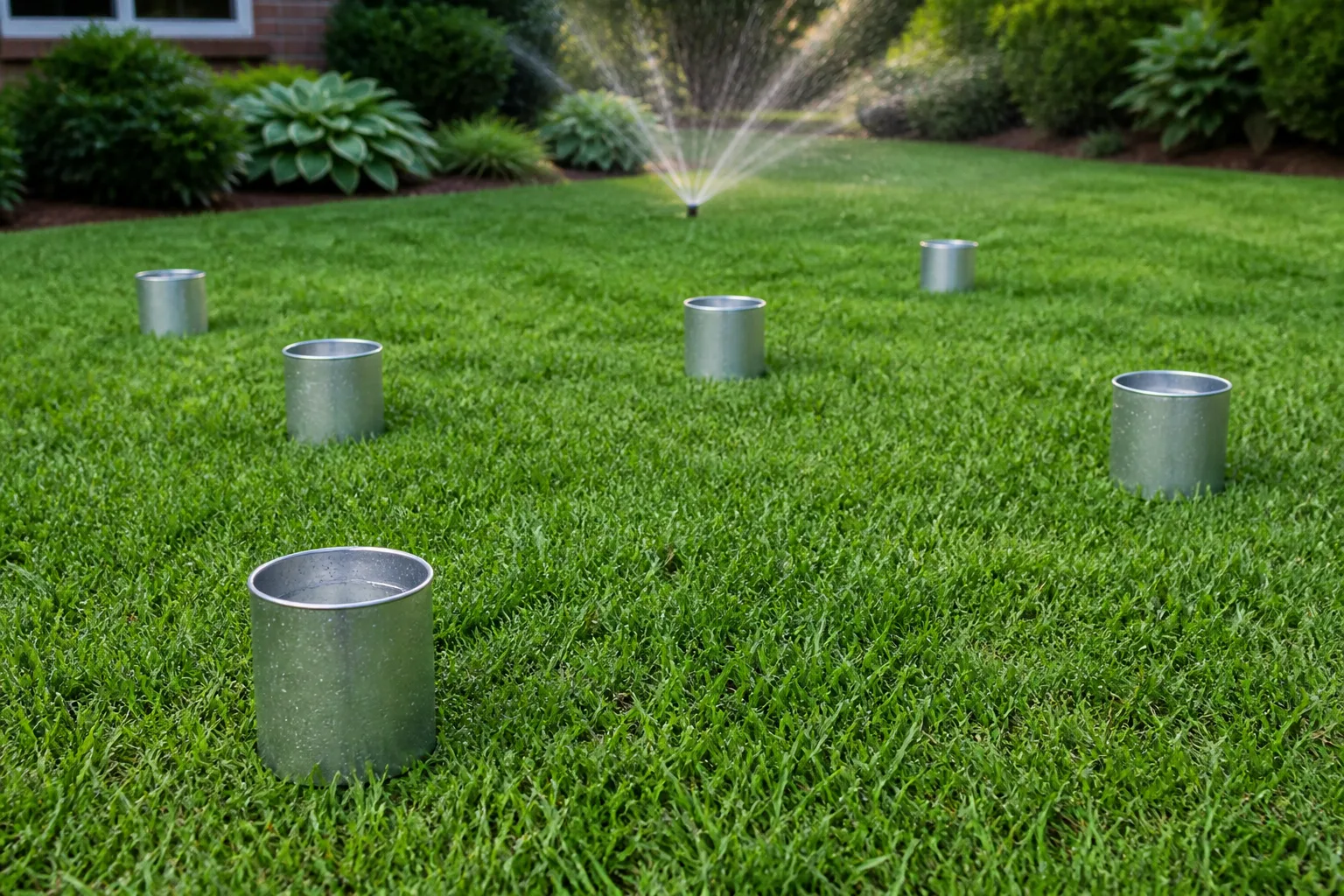
Once the lawn is mature, do not water by habit. Watch the grass: folded or wilted blades, a blue-gray cast, and footprints that stay visible are practical drought-stress cues. If you see them, apply about 1/2 to 3/4 inch of water in one application, then allow the soil surface to dry before watering again. A rain gauge or shallow straight-sided cans help you estimate how much your sprinkler applies; a screwdriver or soil probe can tell you whether the water reached the root zone.
If rainfall is absent for a long time and the lawn turns tan, Bahia may be entering drought-induced dormancy. Dormancy is a survival response, not an automatic death sentence. If water is limited, it is usually better to let established Bahia rest than to apply small amounts every day, mow it short, or feed it in an attempt to force green growth. Resume normal care after rain or irrigation restores active growth, and follow local restrictions.
Mow high and manage the seedheads
Set the mower for a 3- to 4-inch cutting height while Bahia is actively growing. UF/IFAS recommends mowing about every 7–14 days during active growth and removing no more than one-third of the leaf blade at a time. That means you may need to mow closer to once a week when seed stalks rise quickly, then less often as growth slows. The calendar is a cue; the grass height and appearance should set the actual day.
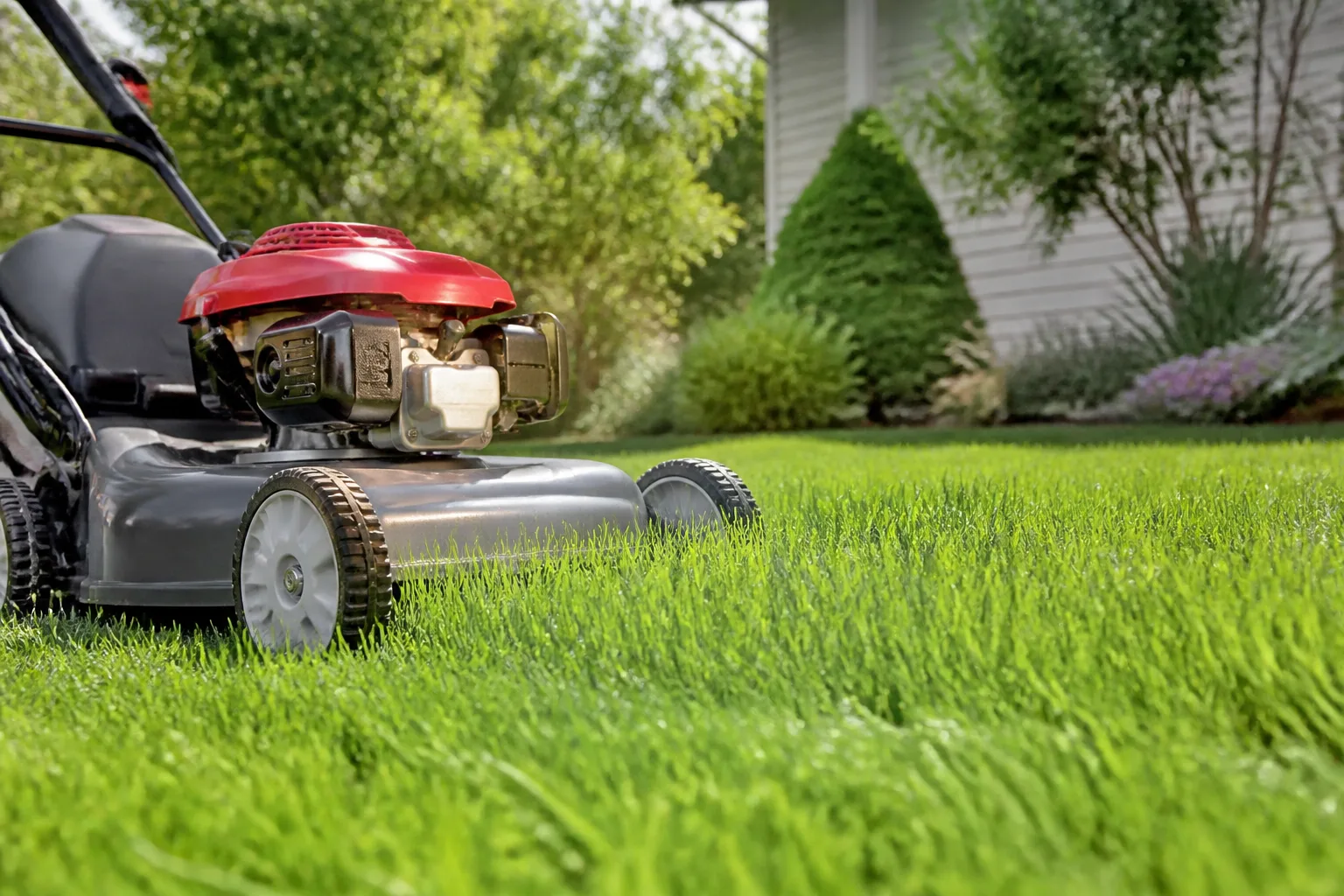
Bahia’s Y-shaped seedheads are one of its most recognizable traits and one of the reasons some homeowners dislike it. Seed stalks can appear above the blades even when the lawn has not grown excessively tall. If you want a tidier look, regular mowing while the grass is growing is the practical solution. Cutting lower is not: scalping weakens the grass, exposes soil, and can increase weed pressure without eliminating the plant’s tendency to produce seedheads.
Use a sharp, sturdy rotary mower blade. Bahia leaves and seed stalks can be tough; a dull blade tears them, leaving ragged tips that look brown and uneven. Leave fine clippings on the lawn if they are not clumping. UF/IFAS notes that clippings break down and return nutrients; they are not the same as a thick layer of dead thatch. Avoid mowing during drought dormancy or when the ground is saturated enough to rut.
Fertilize only when a test supports it
Bahia’s low-fertility tolerance is an advantage, not an invitation to skip diagnosis. Get a soil test before adding nutrients, especially phosphorus or lime. A test can help distinguish a soil-pH problem from a nutrient shortage, and it prevents treating an inherently coarse lawn as though it were a high-input, dense turf type.
For Florida home lawns, UF/IFAS lists 1–2 pounds of nitrogen per 1,000 square feet per year as a general range, divided into one to three applications from spring green-up through fall. That is regional university guidance, not a universal rate: local fertilizer ordinances, county rules, soil type, rainfall, and grass growth should determine what you apply. In other states, use your county Extension recommendations and the product label. Do not fertilize dormant grass or newly planted turf prematurely; UF/IFAS advises waiting about 30–60 days after planting a new lawn before fertilizing because immature roots do not yet capture nutrients efficiently.
Pale Bahia can have more than one cause. A high-pH soil can limit iron availability, while actual nitrogen deficiency has a different remedy. Iron is not a substitute for nitrogen, and applying extra nitrogen will not fix an iron lockout. Test first, then use only an iron product and rate suited to the diagnosis and local label; do not try to “correct” soil pH by adding untested amendments. The UF/IFAS guide explains this distinction and notes that some iron forms are less effective than soluble or chelated sources.
Diagnose weeds, yellowing, and insect damage
An open canopy leaves more room for weeds than a dense carpet of turf. The best long-term defense is to remove the causes of thin growth: shade, poor seed contact, drought during establishment, scalping, compaction, or an unsuitable cultivar. Mow at the right height, water deeply when stress cues appear, and overseed or repair thin areas during the warm growth window. A pre-emergent can help only when the target weed is known and there is no plan to germinate grass seed in the treated area.
Be cautious with combination “weed-and-feed” products. UF/IFAS warns that common ingredients such as atrazine or metsulfuron can injure bahiagrass. Product names and active ingredients change, so read the current label for the exact grass species, cultivar, temperature range, and reseeding interval. If you cannot confirm safety, pause and ask a county Extension educator to identify the weed and recommend a Bahia-compatible approach. Do not copy a treatment schedule from a different grass lawn.
Mole crickets are among the more serious insect pests reported in Bahia lawns in Florida. Look for irregular thinning, raised tunnels, and a spongy feel rather than assuming every brown patch has insects. UF/IFAS describes a small soap flush as a detection tool for suspected mole crickets; if you use it, test a small affected area and consult local Extension before treating the full lawn. Bahiagrass generally has fewer severe insect and disease problems than many other Florida lawn grasses, but diagnosis still matters: drought, pH-related chlorosis, disease, mower injury, and insects can look similar from a distance.
Distinguish dormancy from an unhealthy lawn
Use the pattern and the season. A broad area that turns evenly tan after cold weather or prolonged drought, while crowns remain rooted, is more consistent with dormancy. A sharply defined patch, a progressive edge, visible tunneling, weeds replacing the grass, or blades that pull up easily deserves a closer look.
For yellowing, begin with soil pH and recent inputs. A high-pH test paired with pale blades suggests iron may be unavailable; yellowing after heavy rain or poor drainage points elsewhere. If a lawn fades after a herbicide or fertilizer application, keep the product label and note the date, dose, temperature, and irrigation history. That record helps an Extension specialist separate chemical injury from disease or nutrient stress. Avoid adding multiple products before you know what caused the change; each extra application makes diagnosis harder and may worsen injury.
Use a seasonal Bahia grass calendar
- Late winter: Let dormant turf rest. Remove heavy leaf cover, check the mower and irrigation system, and use local weed-history information to decide whether a labeled pre-emergent is appropriate. Do not apply it where you plan to seed.
- Spring green-up: Wait until the grass is actively growing before mowing or fertilizing. Take a soil sample, correct drainage or compaction, and prepare to seed thin areas as soil warms. In the northern part of the range, plant early enough to give new grass a full warm season.
- Late spring and summer: This is the main establishment and mowing period in many locations. Keep young seed moist, transition established turf to stress-based irrigation, mow at 3–4 inches, and inspect for seedheads, weeds, and mole-cricket activity. Follow local fertilizer rules rather than copying a monthly schedule.
- Fall: Continue mowing only while growth is active. Avoid nitrogen late in the season if the lawn is slowing toward dormancy, and do not start a seeding project so late that roots cannot establish before cold weather. South Florida’s longer growing season can shift this schedule.
- Winter: Brown or tan Bahia in a frost-prone location may be dormant. Skip routine mowing and fertilizing when growth has stopped; remove leaves that smother patches and wait for warm-season regrowth.
A calendar is only a planning aid. Soil temperature, rainfall, growth, local ordinances, and cultivar affect timing more than a date printed for another region. The homeowner guidance from Pennington and LawnStarter can help translate the season into routine tasks, while local Extension recommendations should govern rates and timing where conditions differ.
Conclusion
Bahia grass earns its place where warm weather, open sun, and a lower-input lawn matter more than a fine texture or a perfectly uniform surface. Choose a cultivar based on the trade-off you can live with, prepare the site, sow shallowly or lay sod firmly, and give the new lawn close attention until roots establish.
After that, keep care simple but deliberate: mow high with a sharp blade, water established turf when it shows drought stress, test soil before fertilizing, and check every weed-control product label for Bahia safety. If the lawn turns brown during drought or winter, diagnose the season and root condition before treating it as dead. When the site suits the grass, Bahia can be resilient without being maintenance-free.



