How to Grow and Care for Broom Plants
Broom shrubs need sun, sharp drainage, and careful post-bloom pruning. Learn how to establish one, protect next year’s flowers, and prevent unwanted seedlings.
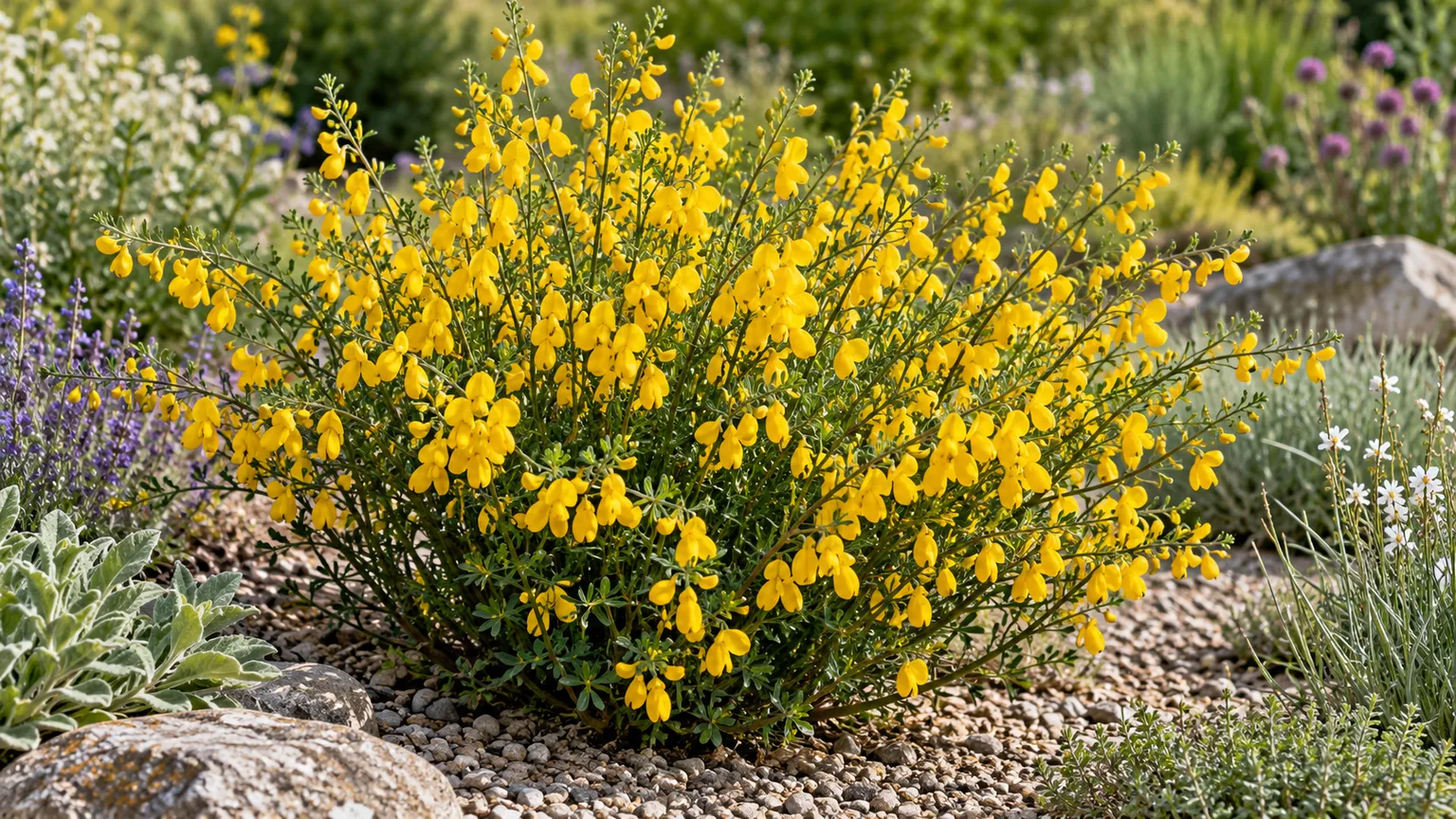
Broom shrubs are at their best in a sunny, open spot where rain drains away quickly. Most cultivated brooms need little fertilizer and, after their roots establish, little supplemental water. The catch is that “broom” is not one plant: several species and genera share that name, and some are invasive or toxic in parts of North America. Read the botanical name on the nursery label and check local invasive-plant guidance before you buy or propagate one.
For many garden Cytisus, the practical routine is simple: plant a young shrub without disturbing its root ball, water it through its first growing season, then prune lightly just after flowering. Do not shear every broom on the same calendar or cut an old, bare shrub down to woody stubs; species differ, and many do not regrow reliably from old wood.
Start with the plant label, not the common name
Which broom are you growing?
“Broom” can refer to plants in Cytisus, Genista, Spartium, and related genera in the pea family, Fabaceae. A plant sold as Scotch broom is usually Cytisus scoparius; French broom is Genista monspessulana; Spanish broom is Spartium junceum. Hybrids and cultivars may carry familiar names such as Lena, Burkwoodii, or Warminster broom, so the common name alone is not enough to identify growth size, flowering habit, or environmental risk.
Before planting, photograph or write down the full botanical name, including the species and cultivar. Then check the mature height and width, bloom time, hardiness range, soil tolerance, and any local invasive status. This takes less time than replacing a shrub that outgrows a narrow border or creates seedlings you cannot easily remove.
Check invasiveness before you buy
Some broom species have escaped cultivation and spread aggressively in particular regions. California’s UC Statewide Integrated Pest Management Program describes multiple invasive broom species in that state, while NC State Extension lists Scotch broom as invasive in North Carolina; UF/IFAS rates Cytisus scoparius as high invasion risk in Florida. Those assessments are regional, so they do not prove that every broom is invasive everywhere. They do show why a generic “broom” label is not a green light. Check your state invasive-plant council, local extension service, or weed-control authority using the exact botanical name.
The risk is not limited to the straight species. UC IPM cautions that some ornamental hybrids and related brooms may share invasive characteristics. If guidance says not to plant a broom species, do not assume a named cultivar is safe unless a local authority specifically identifies it as an acceptable alternative. (UC IPM’s broom overview; NC State Extension’s Scotch broom profile; UF/IFAS assessment)
Broom plants are also not edible ornamentals. NC State Extension flags C. scoparius as highly toxic if eaten, and Pet Poison Helpline reports gastrointestinal and neurological effects after ingestion by companion animals and livestock. Keep children and pets from chewing any part of an unidentified broom, and do not use its flowers, leaves, seeds, or stems as food or herbal remedies. If someone or an animal has eaten it, contact poison control, a veterinarian, or a local medical service rather than trying a home treatment. (NC State Extension; Pet Poison Helpline)
Where broom grows best: full sun, room, and airflow
Choose a site with at least six hours of direct sun. Broom can survive some light shade, but the plant tends to become looser and flower less when it has to reach for light. Full sun also helps the thin, arching stems stay denser and makes the shrub’s spring display more reliable. NC State Extension lists full sun as the preferred exposure for Scotch broom; treat this as a strong starting point, then follow the label for the specific cultivar.
Give the shrub enough space for its mature spread instead of planting it close to a path, wall, or neighboring plant. Many brooms have open, twiggy branches that look best when they can arch naturally. Leave airflow around the canopy, and avoid a low spot where cold air or runoff collects. A hot, dry, sunny border is generally easier to manage than a sheltered, damp corner.
Soil: lean and well drained
Fast drainage matters more than a rich planting mix. Broom shrubs tolerate poor or rocky soil once established, but roots can decline in ground that stays waterlogged, especially through cool wet periods. If a hole fills with water after rain and remains wet the next day, choose a raised or naturally free-draining location instead of trying to fix the site with a handful of gravel at the bottom of the hole.
Cytisus may struggle in strongly chalky soil, but soil tolerance varies across the broom group. Read the cultivar’s soil notes and avoid changing pH blindly. A simple soil test is more useful than adding ericaceous compost or iron products without evidence of a pH problem. Do not enrich the whole bed with manure or high-nitrogen fertilizer: broom is adapted to lean ground and extra fertility can push soft, leafy growth at the expense of a compact habit.
How to plant broom without stressing its roots
Plant in spring or early fall when soil is workable and the shrub will not face immediate heat or frozen ground. A young, compact nursery plant is often a better choice than a large specimen; broom develops a substantial root system and can resent disturbance. Nature & Garden likewise advises sliding the root ball out intact and avoiding the temptation to tease roots apart. (Nature & Garden’s Cytisus planting guide)
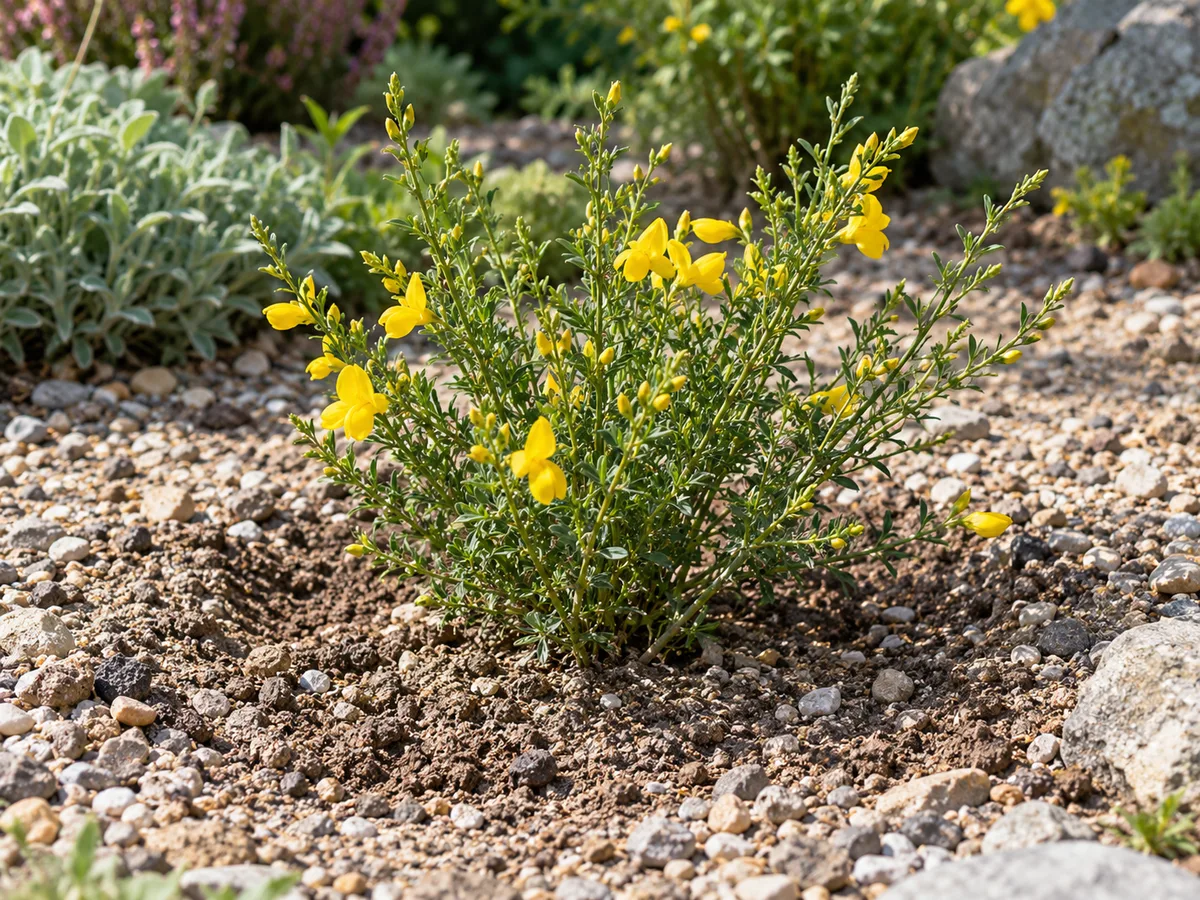
Dig a hole about as deep as the root ball and two to three times as wide. Set the plant so the top of the root ball is level with the surrounding soil, backfill with the excavated soil, and water slowly to settle it. Do not bury the stem base or pack the hole with compost. If the root ball is tightly circling in the pot, gently loosen only the outermost roots; avoid breaking the center apart. Water again if the soil settles, then apply a thin mulch layer while keeping mulch away from the stem crown.
Watering: establish deeply, then back off
During the first growing season, water when the soil several inches below the surface begins to dry. Apply water slowly across the root zone rather than sprinkling the foliage every day. The goal is to encourage roots to move outward into surrounding soil, not to keep the planting hole continuously wet. Check more often during a heat wave, in sandy ground, or when rainfall has been scarce. Gardening Know How likewise recommends regular watering while a new broom establishes, then a lighter hand once the shrub is settled. (Gardening Know How’s broom planting guide)
Once established, many brooms tolerate dry spells and need extra water only during prolonged drought. A container-grown plant is the exception: its limited soil volume dries faster, so check the mix more frequently and water thoroughly when the upper layer dries. Drainage holes must remain open, and the pot should not sit in a filled saucer. Yellowing foliage plus wet soil is a signal to stop watering and assess drainage rather than add fertilizer.
Fertilizer, mulch, and compaction
Routine fertilizer is usually unnecessary. If a broom is growing in poor but well-drained soil, sparse foliage is not automatically a nutrient deficiency; many species naturally have small leaves and green stems that carry much of the visual structure. Feed only if a soil test or a clear diagnosis points to a missing nutrient, and use a product appropriate for that deficiency at the label rate.
A light layer of organic mulch can reduce weeds and buffer soil moisture, but leave a gap around the base of the shrub. Thick, wet mulch against stems traps moisture where it is not useful. Avoid cultivating or digging deeply near an established broom, because its roots can be disrupted and later pruning or pulling is harder if it has self-seeded.
Broom in pots: choose compact cultivars and drainage
Dwarf forms such as Kew broom or a compact named cultivar are easier to manage in a container than a full-size Scotch broom. Confirm the mature size and whether the plant is permitted locally before buying; a pot does not make a prohibited or invasive plant environmentally safe. Choose a sturdy container with several drainage holes and enough room for the root ball plus some outward root growth, but do not jump to an oversized pot that holds wet mix around a small root system.
Use a free-draining container mix, set the shrub at the same depth it grew in the nursery pot, and water when the mix begins drying rather than on a fixed daily schedule. Move the pot to a sunny position, turn it occasionally if growth becomes one-sided, and protect the container from prolonged freezing if your cultivar is marginally hardy. Broom dislikes repeated repotting, so choose the final container size thoughtfully and avoid teasing apart the root mass during a move.
Flowering: bloom season and color differences
Flower timing depends on species, cultivar, and local climate. Many Cytisus flower in spring or early summer, while other brooms bloom at different times. The typical pea-shaped blossoms can be yellow, cream, red, orange, or purple, but a cultivar’s color is not a reliable clue to its environmental behavior. Check the botanical label and local plant list, not the flower color.
Most broom shrubs need a season or two to establish before they give a full display. A recently planted shrub may grow roots and stems before it produces many flowers. If the plant is mature but flowers sparsely, first check its sun exposure and whether it was pruned at the wrong time. Blooming brooms are visited by bees, but their pollinator value does not outweigh a local invasive-plant designation; choose a native or noninvasive alternative where recommended.
Pruning broom after bloom
For many garden Cytisus, prune immediately after flowering, while new green growth is present. The shrub sets next season’s flowering wood as it grows, so a late-season or winter trim can remove buds before they open. The Biking Gardener’s practical pruning guidance also warns that Cytisus often fails to resprout from old bare stems; UC IPM, meanwhile, frames seed spread as a primary issue for invasive brooms. Apply pruning advice to the actual cultivar and local rules rather than treating all genera alike. (The Biking Gardener on broom pruning; UC IPM)
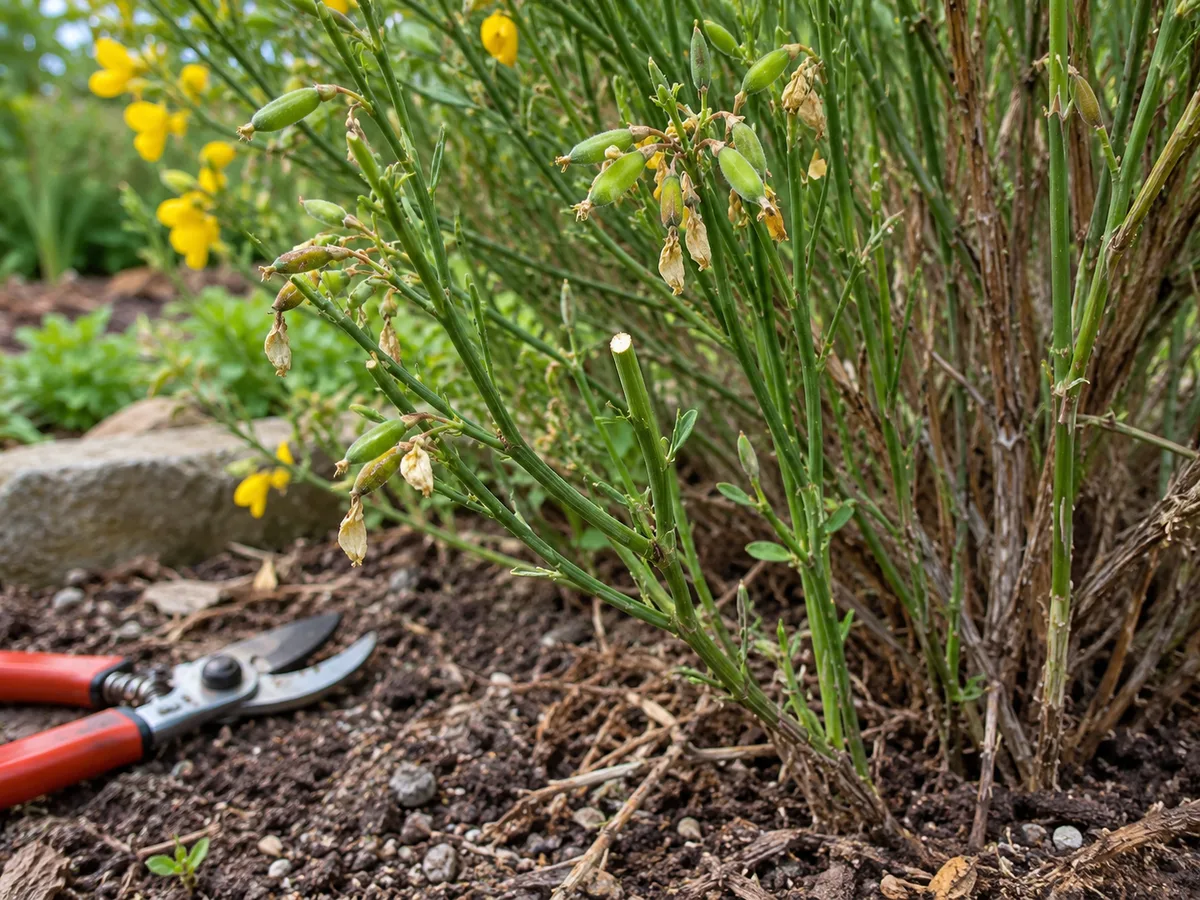
Use clean, sharp hand pruners to shorten only the green growth that formed after flowering. Make a few selective cuts to improve shape, remove crossing twigs, or keep a compact cultivar within its space. Do not shear the entire shrub into a tight ball; that removes the natural arching outline and may leave a hollow shell of foliage around bare interior wood. Start formative pruning while the shrub is young if the label recommends it, because small, regular corrections are easier to recover from than a severe renovation years later.
If a plant has become woody and bare at the base, do not assume it will tolerate hard rejuvenation. Many Cytisus do not reliably push new shoots from old brown stems. Replace an overgrown shrub or take cuttings while healthy green growth is available instead of cutting it down to a stump and hoping.
Remove seed pods before they mature
If your local guidance allows the plant but you want to reduce self-seeding, remove spent flowers or young pods before they dry. Do not wait for brown, brittle pods to split; broom seeds can be flung several feet, and dormant seed can remain in soil for years. UC IPM reports that mature broom can produce very large quantities of seed and that dormant seeds complicate long-term control. The exact numbers vary by species and site, but the practical lesson is stable: prevent pods from maturing and inspect the surrounding soil for seedlings in later seasons. (UC IPM’s identification and biology notes)
If broom is classified as invasive where you live, pruning is not a substitute for an approved removal plan. Ask your county extension or weed authority how to handle established plants and seed-bearing material. Avoid carrying pods or soil to another part of the property, and do not compost potentially viable seed unless local guidance says that composting method reliably destroys it.
Propagating broom from cuttings or seed
First confirm that the species may be propagated in your area. Do not propagate a broom listed as invasive or restricted; making more plants can extend the problem beyond the original garden. If it is permitted and you want to preserve a named cultivar, semi-ripe cuttings taken in summer are usually more predictable than seed. Nature & Garden recommends summer cuttings as a way to renew Cytisus, while seed-grown offspring may not retain a selected cultivar’s flower color or compact habit.
Seed is a poor default for most home gardens. Some broom seeds germinate unevenly because their seed coats are hard, and a shrub can produce enough seed to become a cleanup burden. If you have a locally approved species and a specific reason to raise it from seed, follow the seed supplier’s treatment instructions and sow only in pots that you can monitor. Do not scatter seed outdoors or collect pods from wild populations.
Cuttings preserve cultivar traits
Take several healthy, nonflowering semi-ripe shoots in summer, using clean pruners. Remove the lower leaves, insert the cut ends into a small pot of moist, airy propagation mix, and place the pot in bright shade. Keep the mix lightly moist, not saturated, and ventilate any clear cover so cuttings do not overheat or rot. Rooting hormone may help, but it cannot compensate for waterlogged mix or unhealthy material.
Check for resistance before tugging; new growth is a better sign of rooting than a single calendar date. Pot rooted cuttings individually and protect them through their first winter according to the cultivar’s hardiness. Grow them on before planting out, and avoid lifting a mature broom to divide it: the root system is poorly suited to division and transplanting.
Winter and climate care
Use the plant’s actual hardiness information rather than a blanket zone range for all brooms. A shrub that is hardy in a dry Mediterranean climate may behave differently in a wet winter or a cold, exposed garden. For an in-ground plant suited to your region, winter protection is often unnecessary; the more important safeguard is fast drainage so cold-season moisture does not sit around the roots.
A container exposes roots to colder air than garden soil. In cold climates, group pots near a sheltered wall, insulate the container, or move it to an unheated protected space if the cultivar’s hardiness calls for it. Do not bring a dormant outdoor shrub into a warm room; abrupt warmth and low light can disrupt its seasonal cycle. Resume normal watering as growth begins, not while the pot is cold and wet.
Pests and problems
Broom is generally resilient, but pests and dieback can occur. UC IPM describes the Scotch broom gall mite as a biological agent that may reduce seed production in some areas, but it can also cause stem dieback; that is not a reason to introduce or move the mite. Webworms and other caterpillars may shelter in old debris, so remove fallen material and inspect webbed branches before pruning them out. Do not apply a pesticide based on a vague symptom; identify the pest and follow local extension guidance and the product label.
Wet roots are a more preventable problem than most insect damage. If the shrub declines in a damp site, correct the drainage or relocate it while young rather than trying to stimulate it with fertilizer. When disease, galling, or severe dieback affects an invasive species, check local removal guidance before transporting cuttings or plant waste.
Why broom is not blooming or looks leggy
A mature broom that produces few flowers is usually asking for a site or pruning correction. Check the following in order:
- Too much shade: move the plant, if young enough to transplant, or replace it in a sunnier location.
- Pruning at the wrong time: for many Cytisus, trim just after flowering, not before spring bloom.
- Excess fertilizer or rich soil: stop routine feeding and avoid adding manure; lush, weak growth is not the goal.
- Too much water: check soil several inches down and improve drainage before watering again.
- A young or recently moved shrub: allow time for roots to establish, and avoid further root disturbance.
- A declining, old plant: if most stems are bare or dead, replacement is often more reliable than hard pruning into old wood.
Sparse leaves alone do not always indicate a problem: broom’s small foliage and green stems can make the shrub look open even when it is healthy. Compare current growth with the cultivar’s normal habit and inspect stem tips for live buds before cutting.
When broom is a poor fit—and what to plant instead
Skip broom if your local invasive-species list prohibits it, if you cannot identify the species, or if seed spread would be difficult to control near natural land, roadsides, grazing areas, or disturbed ground. In some places, dense broom stands can outcompete native vegetation and increase fire-management concerns. Those impacts are not uniform across every species or region, so rely on a local assessment rather than a generalized online hardiness chart.
If you want the same design job—sunny-site color, drought tolerance, or a compact flowering shrub—ask your extension service or native plant society for noninvasive plants suited to your soil and climate. California’s UC IPM program describes dense broom stands as a fire hazard and a barrier to native-plant regeneration; those impacts are not uniform across species or regions, so rely on a local assessment rather than a generalized online hardiness chart. NC State Extension lists native alternatives to Scotch broom, including red chokeberry (Aronia arbutifolia), American beautyberry (Callicarpa americana), buttonbush (Cephalanthus occidentalis), and sweet pepperbush (Clethra alnifolia). Choose based on the site: these are alternatives to consider, not interchangeable plants with identical size, bloom time, or water needs. (UC IPM’s broom overview; NC State Extension’s profile and alternatives)
Conclusion
Broom is easiest to grow when the species is correctly identified and the site matches its needs: full sun, fast drainage, enough room, and only modest water after establishment. Many Cytisus benefit from a light trim immediately after flowering, while severe cuts into old bare wood can leave a shrub unable to recover. Before planting or propagating, check the exact botanical name against local invasive-plant guidance and keep the plant away from children and pets that might chew it. If the species is unsuitable where you live, choose a locally recommended shrub that fills the same role without creating a long-term seed problem.



