How to Grow and Care for Clove Trees
Learn how to grow clove trees from fresh seed, provide tropical warmth and humidity, manage container care, troubleshoot decline, and harvest buds before bloom.
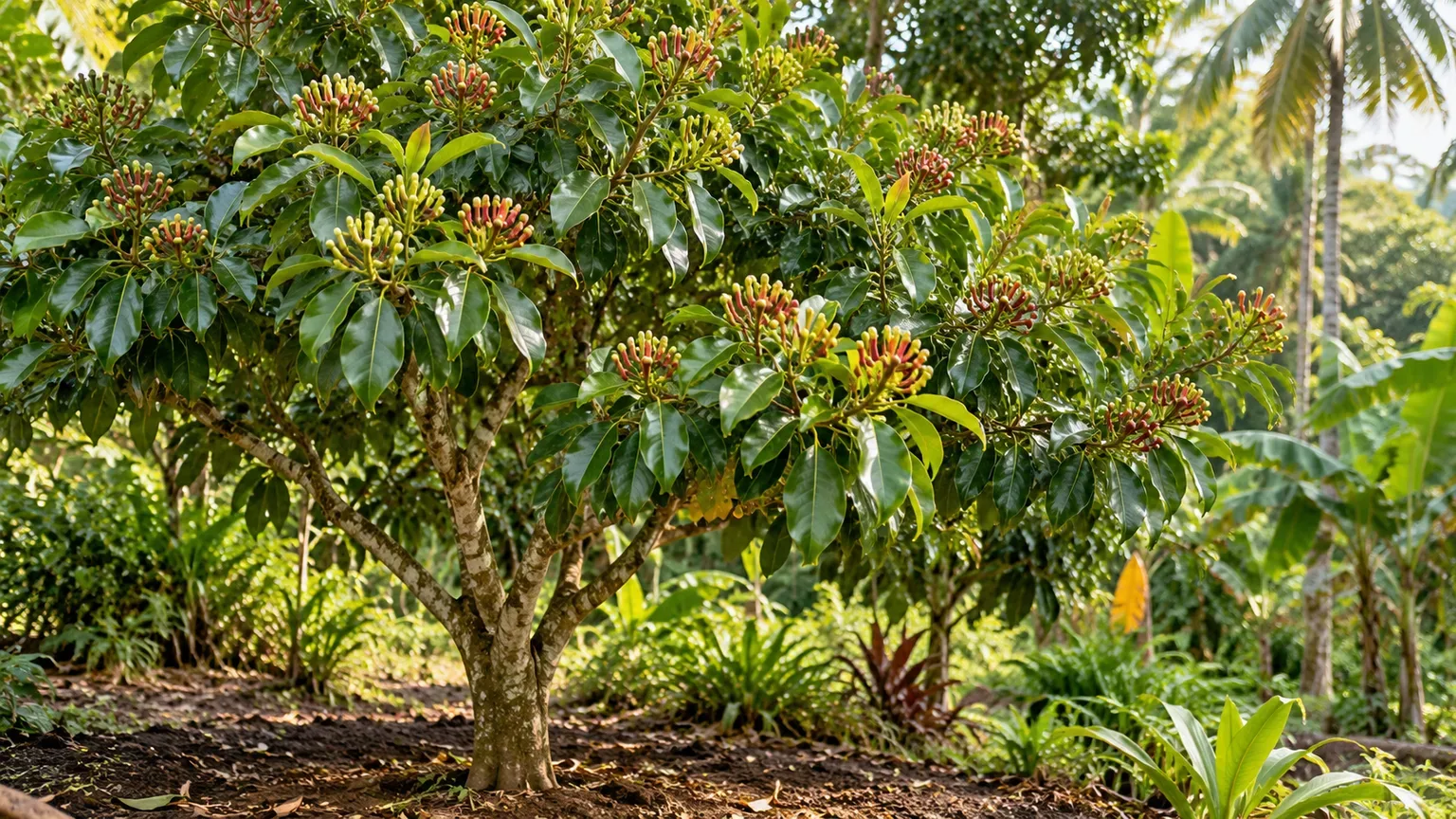
The first question to ask about a clove tree is not which fertilizer to buy. It is whether your climate can keep a tropical evergreen warm and humid through the coldest part of the year. A clove tree can be an absorbing container specimen in a cool region, but dependable flowering and spice harvest are realistic mainly in warm, frost-free conditions.
Cloves are the dried, unopened flower buds of Syzygium aromaticum, a tree in the myrtle family. They are not seeds. The seed is inside a later fruit, so a dried spice clove from the pantry will not grow into a tree. The Royal Horticultural Society’s plant profile lists Syzygium aromaticum as the correct name and notes older synonyms that may still appear on seed listings. Once you understand the difference between seed and spice, and the tree’s climate needs, the rest of its care becomes more straightforward.
Is a clove tree realistic for your climate?
Clove comes from the Maluku Islands of Indonesia and is cultivated across tropical regions including Zanzibar, Madagascar, Sri Lanka, and India. Kew describes it as a medium-sized evergreen that can reach roughly 8 to 20 meters in suitable conditions; the Spices Board of India gives a typical crop-tree height of about 10 to 12 meters. The difference is a reminder that mature size depends on growing conditions, location, and cultivation rather than a guaranteed pot-grown height. Kew Species Profiles and the Spices Board of India clove profile describe both the tree and its tropical range.
The Spices Board gives a warm crop climate of about 25 to 35°C (77 to 95°F), high humidity, well-distributed rain, and rich soil that drains well. Those figures describe growing regions, not a thermostat setting that every backyard must hit; still, they show why a dry heated room or a yard with recurrent frost is a poor match for a productive tree. Before buying one, compare the lowest temperatures in your actual yard or greenhouse, not just a broad regional hardiness label: a sheltered urban courtyard and an exposed rural garden in the same region can have very different winter lows. Ask a local tropical-plant nursery whether its stock has been acclimated to your conditions, and whether it can identify the seed source or propagation method. If winter cold is part of your normal year, grow clove only if you can provide a warm greenhouse or protected container space. Treat any indoor harvest as a bonus, not the expected result.
Build the warm, humid, well-drained conditions it needs
Light and shelter
Young clove seedlings benefit from bright filtered light and protection from harsh midday sun, drying wind, and sudden exposure changes. As the tree establishes, give it stronger light with some shelter during the hottest part of the day if leaves scorch or the site is unusually dry. In a humid tropical climate it can grow in open sun; in a hot, exposed courtyard, light afternoon shade may prevent avoidable stress. The goal is steady growth, not a fixed number of direct-sun hours regardless of climate.
Choose a spot with room for a broad canopy and enough distance from buildings, paving, and overhead wires. A seedling that looks manageable in a small pot can eventually become a substantial tree. Planting it beside a wall for winter warmth may backfire if the location blocks airflow, bakes the root zone, or leaves no room to prune safely.
Soil and moisture
Use deep, fertile soil with organic matter and reliable drainage. Clove roots need moisture, but staying saturated reduces air around the roots and encourages decline. If water stands after rain, improve the planting area or use a raised bed rather than trying to solve poor drainage with more frequent fertilizer. A regional study from Pattimura University found that altitude and slope were associated with clove production in four plots in Central Maluku; that result is useful context for a crop landscape, not a universal home-garden formula. The GEOFORUM study shows how local terrain and age can matter alongside soil type.
Keep the root zone evenly moist during establishment and through hot, dry spells. Check below the surface before watering: if the upper few centimeters are dry and the root zone is not cool or damp, water slowly enough to soak the soil; if it is already wet, wait and check drainage. Newly planted trees need closer attention than established ones, but a fixed daily schedule can still overwater a heavy soil. A broad, shallow mulch layer helps slow evaporation; keep it several centimeters away from the trunk so bark does not remain constantly damp.
Feeding without forcing growth
Start with good soil and composted organic matter rather than a strong fertilizer dose. In a garden, top-dress with mature compost or a suitable slow-release product according to its label and the tree’s growth. In a container, nutrients wash out faster, but feeding a stressed or waterlogged tree will not repair its roots. If leaves pale while the plant is actively growing and the root zone drains well, review the potting medium and local soil test before deciding that fertilizer is the answer.
Avoid heavy nitrogen applications that push soft leafy growth when the site is too cold or dim for the tree to thrive. No single fertilizer schedule applies to clove trees in every tropical soil, and the regional crop figures are not a recipe for a patio pot. Follow local horticultural advice for in-ground clove production, and use container fertilizer only at the labeled rate.
Grow a clove tree from fresh seed
Choose seed with a chance of germinating
The dried spice is harvested before the flower opens; the fruit develops only if a flower is left to mature. Kew describes the ripe fruit as reddish-purple and olive-sized, with one seed usually inside, and notes that the fruit is often called the “mother of cloves.” Because growers harvest buds, they may not leave many fruits to ripen. Buy fresh viable seed from a supplier who can confirm recent collection, or collect ripe fruit from a known tree. Do not buy dried culinary cloves expecting them to sprout.
Freshness matters. A practical clove-growing guide from Naturebring advises sowing recently collected seed promptly because dried seed is unlikely to germinate. If seed arrives in fruit, remove the fleshy covering without bruising the seed and sow it as soon as you can. Ask the supplier how the seed was stored; if it has been dry or sitting in a packet for months, low germination may reflect the seed rather than your care. Naturebring’s clove-growing guide covers fresh seed handling and container starts.
Sow and protect seedlings
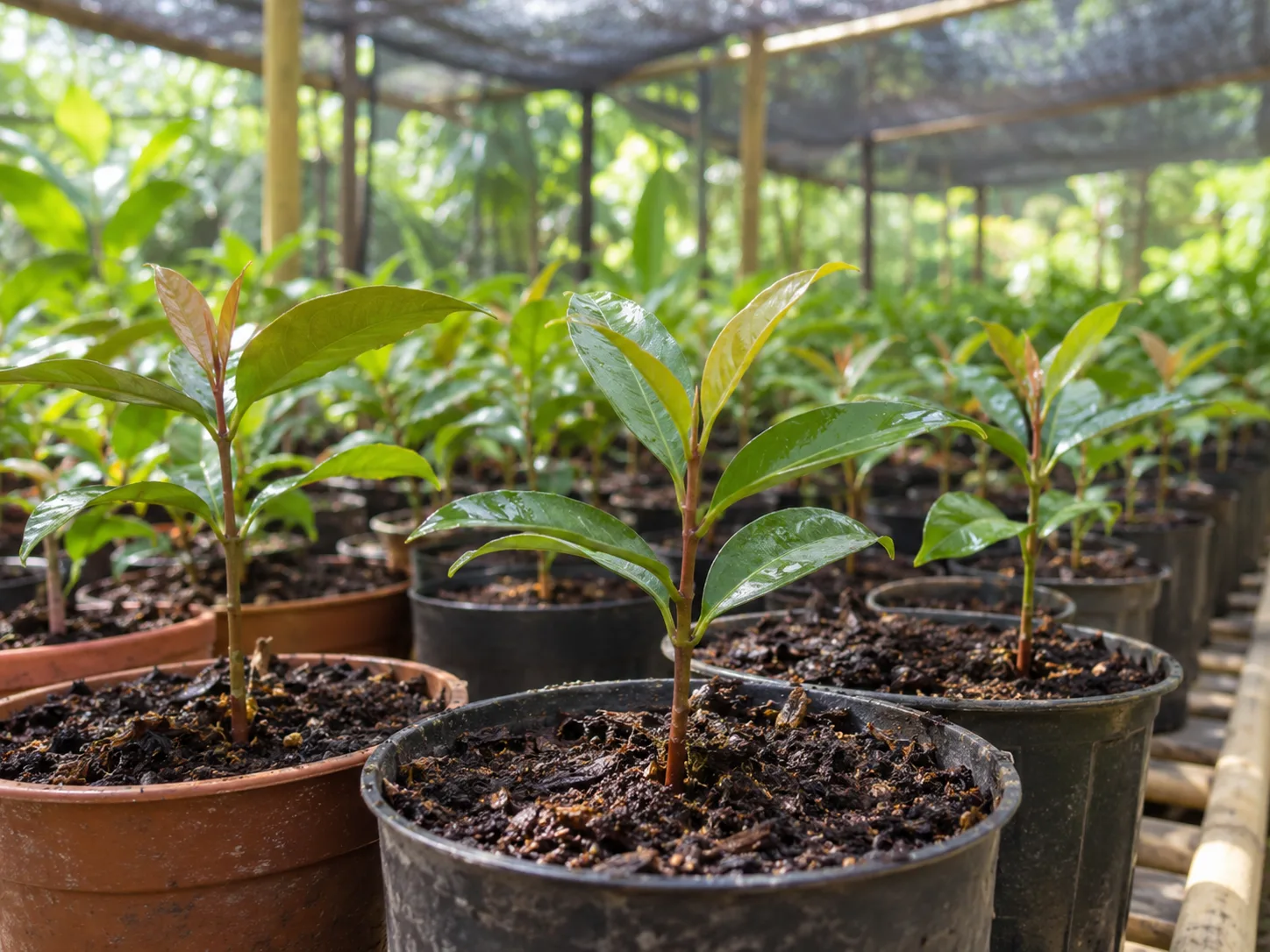
Use a clean pot with drainage and a loose, moisture-retentive seed-starting mix. Set fresh seed on the surface or cover it only lightly; deep burial can make it harder for a tender seedling to emerge. Moisten the mix before sowing, then keep it evenly damp rather than wet. A clear humidity cover can slow drying, but open it periodically for airflow and remove it after seedlings emerge so the foliage does not stay trapped in stagnant air.
Keep the pot warm in bright shade or filtered light. Check moisture daily because a small pot under cover can dry quickly in a warm room, yet a saturated mix can rot seed before it sprouts. Germination may take several weeks and is uneven, so do not discard every unsprouted pot after one short interval. When seedlings have several leaves and roots have begun to hold the mix together, move each one carefully into its own pot. Clove seedlings are delicate; preserve as much of the root ball as possible and avoid transplanting during a heat spike. The seed-starting guidance in Fine Gardening, written by a nursery manager at Monticello, also recommends individual containers for plants that resent root disturbance and removing a humidity cover as soon as seedlings emerge. It is general propagation advice rather than a clove-specific trial, but it supports the same cautious approach: steady moisture, drainage, airflow, and a gentle transition from covered seed to growing plant. Fine Gardening’s seed-starting tips explain that practical sequence.
Planting a young tree in the ground
Plant outdoors only where year-round warmth and humidity are realistic. Set the tree at the same depth it grew in its nursery container, loosen circling roots gently, and backfill with the native soil rather than burying the trunk in a mound of rich compost. Water the planting hole thoroughly to settle soil around roots, then keep moisture steady while new growth establishes. Do not stake tightly unless wind makes it necessary; a trunk that can move slightly develops better support, while a tie that rubs can damage bark.
Space trees for their mature size rather than their nursery-pot size. The Spices Board’s reported mature height and Kew’s larger upper range are both far beyond a typical houseplant, so allow enough lateral room for light and airflow. If you have only a small courtyard, choose a container plan or another plant rather than expecting frequent hard pruning to turn clove into a compact hedge.
Growing clove in a container
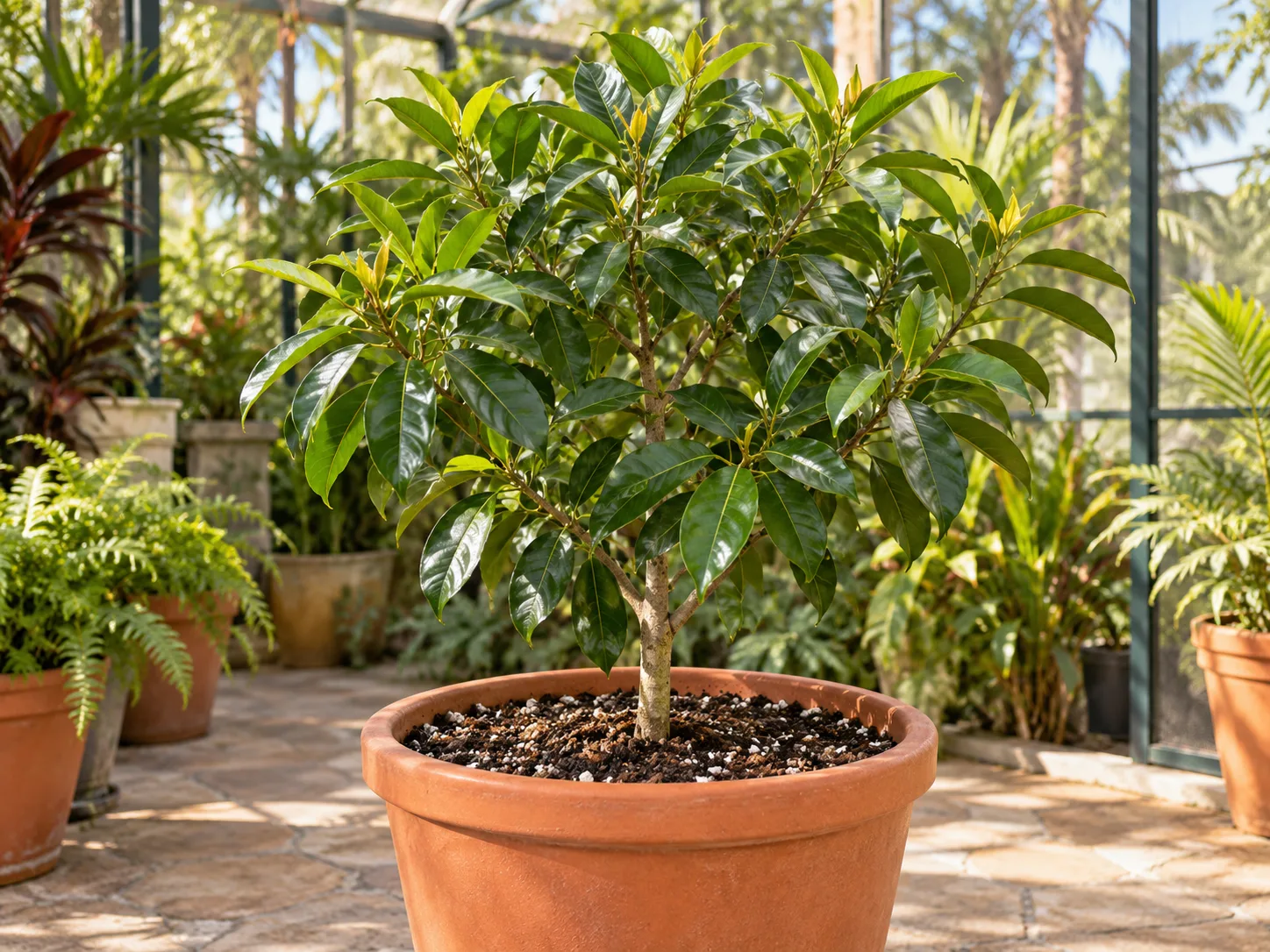
A pot is useful when winter temperatures require shelter, but it does not erase the tree’s tropical needs. Use a sturdy container with multiple unobstructed drainage holes and a high-quality, airy potting mix that holds some moisture without compacting. Start with a pot only moderately larger than the root ball; an oversized volume of wet mix dries slowly around a small root system. Repot when roots fill the container or water begins running through without wetting the center, stepping up gradually rather than jumping to the largest pot available. A large tree in a small patio may eventually outgrow the space even if the roots remain contained, so think about where the pot will be moved before it becomes heavy. Use a wheeled base only if it is stable and does not block drainage, and never leave the pot standing in a water-filled tray.
Place the tree outdoors in warm weather only after nights remain suitable, and acclimate it to brighter light over several days. Before cold weather returns, move it to a bright, warm, humid protected area. A dry heated living room is often too dim and dry for comfortable long-term growth, even if it avoids frost. If you cannot provide both adequate light and protection from cold, a greenhouse or conservatory is a better bet than a dark corner. Expect slower growth and little or no spice production if the plant spends part of the year indoors.
Prune lightly and protect the canopy
Clove does not need routine severe pruning to stay healthy. Remove dead, broken, rubbing, or diseased branches with clean sharp tools, making cuts just outside the branch collar rather than leaving long stubs. Light formative pruning while a young tree establishes can help create a sturdy framework, but retain enough healthy leaves to support growth. If you need to remove large limbs or reduce a mature tree, use a qualified arborist; an unsafe ladder harvest is not worth a spice crop.
The harvest itself can damage branches if buds are stripped by bending or breaking shoots. Pick individual clusters carefully once buds reach the right stage, and do not cut whole branches simply because they are within reach. Avoid wounding healthy bark with string trimmers, lawn equipment, or stakes. Keeping the canopy intact matters more than shaping the tree into an ornamental form.
Diagnose slow growth, leaf drop, and dieback
A clove tree that declines needs a check of climate and roots before a product. Note when symptoms began, whether they affect one side or the whole canopy, and whether the soil is dry or saturated several centimeters down. Also record recent cold, heat, transplanting, pruning, or a change in indoor placement. A single yellow leaf is not enough to identify a disease.
Leaves yellowing or falling
If several leaves yellow while soil stays wet, inspect drainage first. Empty any water trapped in an outer pot, clear blocked holes, and let the mix approach a more appropriate moisture level before watering again. If the plant is dry and the pot feels light, water thoroughly; repeated little sips may wet only the surface. If yellowing follows a cold spell, draft, or abrupt sun change, move the tree into steadier conditions and wait to see whether new leaves emerge normally.
Check leaf undersides and stems for scale insects, mealybugs, or other visible pests before treating. Sticky residue, small fixed bumps, cottony clusters, and repeated leaf yellowing are clues to inspect, not automatic proof of a specific pest. If the tree is potted, isolate it from nearby plants while you identify the cause. Avoid fertilizing a tree with wet, damaged roots because extra salts can worsen stress.
Wilting or branch dieback
Wilting in dry soil points to a water shortage or a root ball that no longer absorbs water; wilting in wet soil can mean roots are short of oxygen or already injured. Do not respond to both patterns by adding water. Check whether the root ball is dry all the way through, whether water drains freely, and whether the trunk base is buried or constantly wet. Correct the underlying moisture problem, then avoid repeated disturbance while new growth recovers.
Branch dieback that moves from the top down, especially when it continues despite suitable warmth and drainage, deserves professional diagnosis. Kew and the Spices Board describe commercial clove growing; a home gardener should not assume every decline pattern is the same crop disease. Keep suspect plant material separate, clean tools between cuts, and ask a local extension office or plant diagnostic clinic to examine samples. Do not inject antibiotics or apply an insecticide without an identified target and locally approved product directions.
Prevent pests and disease with clean growing conditions
Good drainage, gentle airflow, clean tools, and an uninjured trunk reduce avoidable problems. Inspect new nursery plants and the undersides of leaves before placing them beside other plants. Scale insects can look like small raised shields on stems and leaf veins; mealybugs appear as white cottony patches. Remove a small number by hand or with a water spray where the tree tolerates it, then recheck weekly. For a larger infestation, identify the pest and use only a product labeled for that plant and site, following its directions exactly.
Avoid keeping the foliage constantly wet in a crowded, still-air spot. If leaf spots spread, photograph the progression and have a local plant-health specialist confirm whether the cause is fungal, bacterial, or environmental before using a treatment. Clove production regions report serious diseases, but the diagnosis and legal treatment options vary by location. A symptom name alone is not a safe pesticide instruction.
Harvest flower buds at the right stage
The spice is harvested before the flower opens. Watch clusters as buds develop: they are initially pale, then green, and finally take on a pronounced pink or reddish flush. The Spices Board of India describes commercial buds as fully developed with a pink flush; Kew explains how the unopened bud’s petals remain protected by sepals until bloom. Pick during that color change, while the bud is still closed. If it opens, you have missed the best spice-harvest stage.
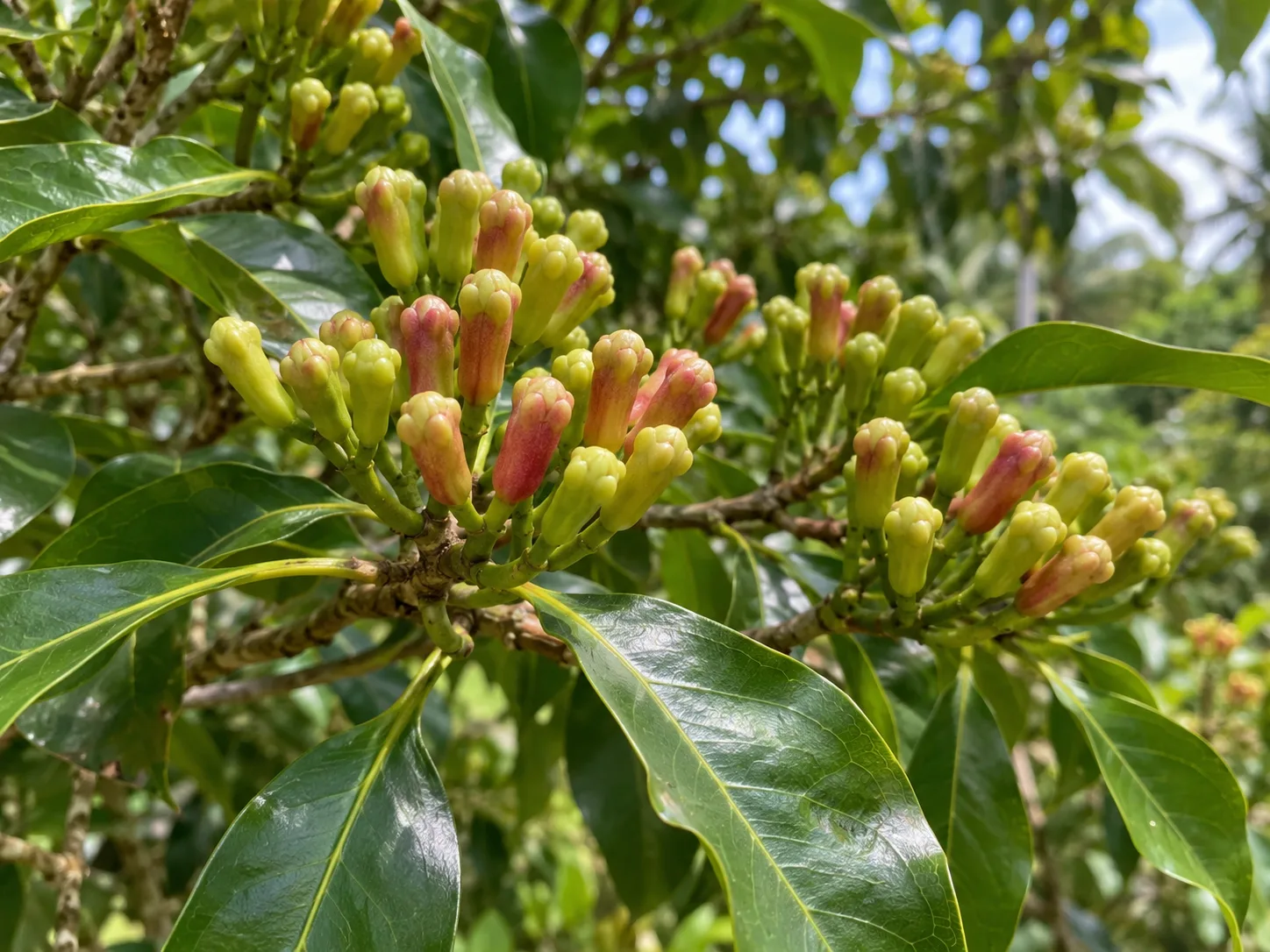
Use clean hand pruners or fingers to remove clusters without tearing the branch or stripping new growth. The harvested buds are then separated from their stalks and dried with good airflow until they are dry through, not merely brown on the outside. Commercial drying methods and timing vary with weather and scale; for a small home harvest, spread buds in a single layer in a warm, shaded, ventilated place and check that no moisture remains before storing them in an airtight jar. Do not harvest leaves or use concentrated clove oil as if it were the culinary spice; those are different products and not necessary for tree care.
Do not plan the garden around an exact first-harvest year. Kew says commercial harvest begins only after a tree is at least four years old, while the Spices Board places first flowering around seven years; a seed-grown home tree may take longer, particularly in a container or a less-than-ideal climate. The practical signal is a healthy tree that has begun flowering, not a date on a calendar.
Common clove-tree mistakes to avoid
The most common mistake is trying to grow a tropical tree as an ordinary indoor plant in a cool, dry home. A sunny window does not reproduce warm nights, humid air, and evenly distributed moisture. Another is buying grocery-store cloves as seed: the spice is a dried flower bud, while viable seed comes from later fruit. These errors are easier to prevent than to troubleshoot after a tree has been stressed for months.
Overwatering and underwatering can look similar above the soil, so always check the root zone first. Do not plant into a waterlogged site because the soil is rich, bury the trunk under deep mulch, or move a delicate seedling into a much larger pot. Avoid hard pruning to keep a naturally large tree “bonsai-small” unless you are experienced with container-tree training; repeatedly removing the canopy can set back growth and flowering.
Finally, do not treat a severe decline with a copied spray recipe. Tropical crop diseases, insect vectors, and pesticide registrations vary across countries. Diagnose first, use local plant-health advice, and never use a chemical on a food crop unless its label explicitly permits that use.
What to expect from a clove tree over time
Clove is a long-term tree, not a quick kitchen-garden crop. Expect a young plant to spend its early years building roots and a framework of branches. In suitable tropical conditions, it can eventually become a substantial evergreen and may produce flower buds over many years; the Spices Board of India says a crop tree may continue producing buds for 80 years or more. A container specimen in a cooler region may remain ornamental and never produce a meaningful harvest, and that can still be a successful outcome if its care conditions are appropriate.
Decide your goal before buying seed. For a harvest, prioritize a frost-free climate, humidity, water that drains, and enough space for a mature tree. For a protected patio specimen, focus on a stable warm overwintering place and gradual seasonal moves, while accepting slower growth. For a learning project, fresh seed and a warm nursery environment offer the most direct start, but germination and flowering are not guaranteed.
Conclusion
Clove trees thrive where warmth, humidity, steady moisture, and drainage come together. Start with a fresh seed or a healthy nursery tree, protect young roots from drying and waterlogging, and choose a container only if you can also provide enough light and warmth through winter. The right site matters more than a complicated fertilizer plan.
Remember that the spice is the unopened flower bud, not the seed. Harvest only when a developed bud changes from green toward pink, and preserve the branch rather than bending it for reach. If you treat clove as a tropical tree with a long timeline, you can make a realistic choice between growing it for foliage, learning to raise it from seed, or eventually producing your own spice.



