Grow Fruit Trees in Containers for Better Harvests
Learn which fruit trees suit pots, how large a container to choose, and how to manage watering, pollination, feeding, and winter care for a patio harvest.
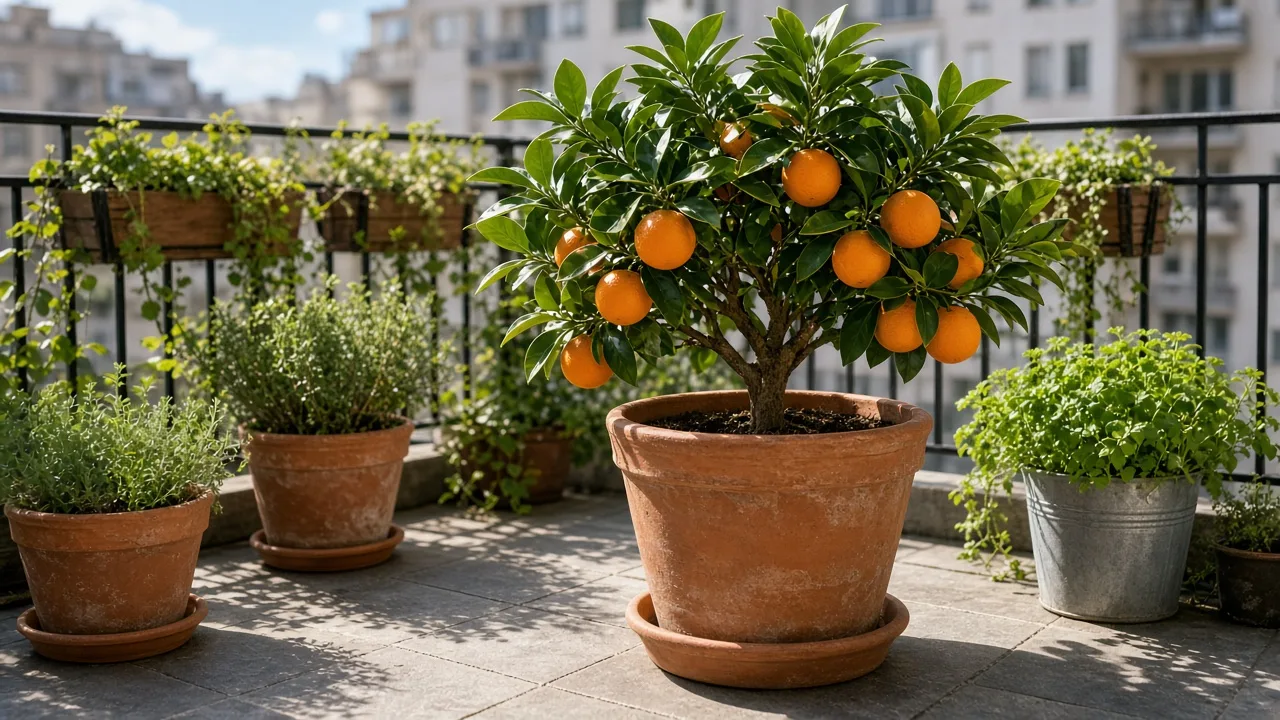
A fruit tree in a pot can turn a sunny patio, balcony, or paved yard into a small orchard. The payoff is real, but a container tree depends on you for a limited root zone, regular water, nutrients, and winter protection; it will not behave like the same tree planted in the ground. Choose a tree whose mature size, pollination needs, and cold tolerance fit your space before you buy, then make the pot and care routine match that tree.
The most reliable plan is not “buy a dwarf tree and water it often.” Start by identifying the cultivar and rootstock, confirm whether one tree can set fruit, and check whether your winters supply the chill it needs. After that, choose a stable container with drainage, use a container medium rather than garden soil, and check moisture according to weather and growth. These six tips keep the decisions in the right order.
1. Choose a tree and rootstock suited to container life
A container can restrict a tree’s roots, but it cannot turn a vigorous standard tree into a compact patio tree. The easiest starting point is a named cultivar sold for a large pot, patio, or dwarf system, with a rootstock suited to your climate and intended container. For fruit trees that are grafted, the variety name tells you what fruit to expect; the rootstock underneath it influences vigor, mature size, support needs, and how soon a tree may begin cropping.
Read the graft label, not just the word “dwarf”
“Dwarf” can describe two different things: a naturally compact genetic tree or a familiar fruit cultivar grafted onto a dwarfing rootstock. The second type is common, but it may need a permanent stake or trellis because a smaller root system can anchor a fruit-laden canopy less securely. Utah State University Extension explains this difference and notes that grafted dwarf trees often need support; that matters on a balcony or exposed deck where wind can rock a pot. Utah State University Extension
Ask the nursery for the cultivar, rootstock, expected mature height and spread, whether the tree needs staking, and the recommended final container size. A tag that says “patio apple” is not enough if it omits the rootstock.
Rootstock codes are not interchangeable between fruit types or regions: M9 and M26 are apple rootstocks, Gisela 5 is used for some cherries, and Quince C is associated with pears, but local nurseries may offer other better-adapted combinations. The RHS container guide also treats rootstock as a key part of matching apples, pears, cherries, and stone fruit to pot culture. RHS fruit-in-containers advice
Do not buy a standard seedling because it looks small at the nursery. Young fruit trees are naturally small, and pruning alone cannot make an oversized root system and canopy easy to manage in a pot for decades. Seed-grown apples and other fruit also may not come true to the parent and can take years to flower, so choose a named, grafted tree when predictable fruit and manageable size matter.
Pick fruit types that match your space and climate
Apples, pears, plums, cherries, peaches, and nectarines can all be grown in containers when you select a suitable cultivar and rootstock. Figs are naturally well suited to restricted roots, while citrus is a useful choice in warm climates or for gardeners who can move it to a bright protected spot in winter. The RHS lists several tree fruits for container growing; its recommendations are specific to cultivars and rootstocks, so use them as a starting point rather than assume every apple or peach will behave alike. RHS fruit-in-containers advice
For a first try, choose one fruit you already enjoy and ask a local fruit nursery which compact cultivar crops reliably in your area. A patio gardener in a mild coastal climate can consider a different tree from someone in a short-season inland valley; a low-chill peach is not a substitute for a high-chill cultivar where winters are long, and a cold-hardy apple will not thrive where it never receives enough winter rest. If your primary goal is reliable fruit rather than a miniature tree collection, a self-fertile peach, fig, or citrus may simplify pollination, but each still has its own cold and light limits.
2. Check pollination, winter chill, and frost exposure before buying
A tree can grow well and flower without producing a useful crop. Fruit set depends on the cultivar’s pollination requirements, compatible flowers opening at the same time, and blossoms escaping damaging frost.
It also depends on winter conditions: many deciduous fruit trees need a cultivar-specific period of cool weather before they break dormancy and flower normally. A container gives you some control over placement, but it does not erase those biological requirements.
A single tree works only when its cultivar can set fruit alone
Look for “self-fertile” or “self-fruitful” on the nursery label if you have space for just one tree. That label means the cultivar can produce fruit with its own pollen; it does not mean every blossom will set or that pollination happens automatically indoors.
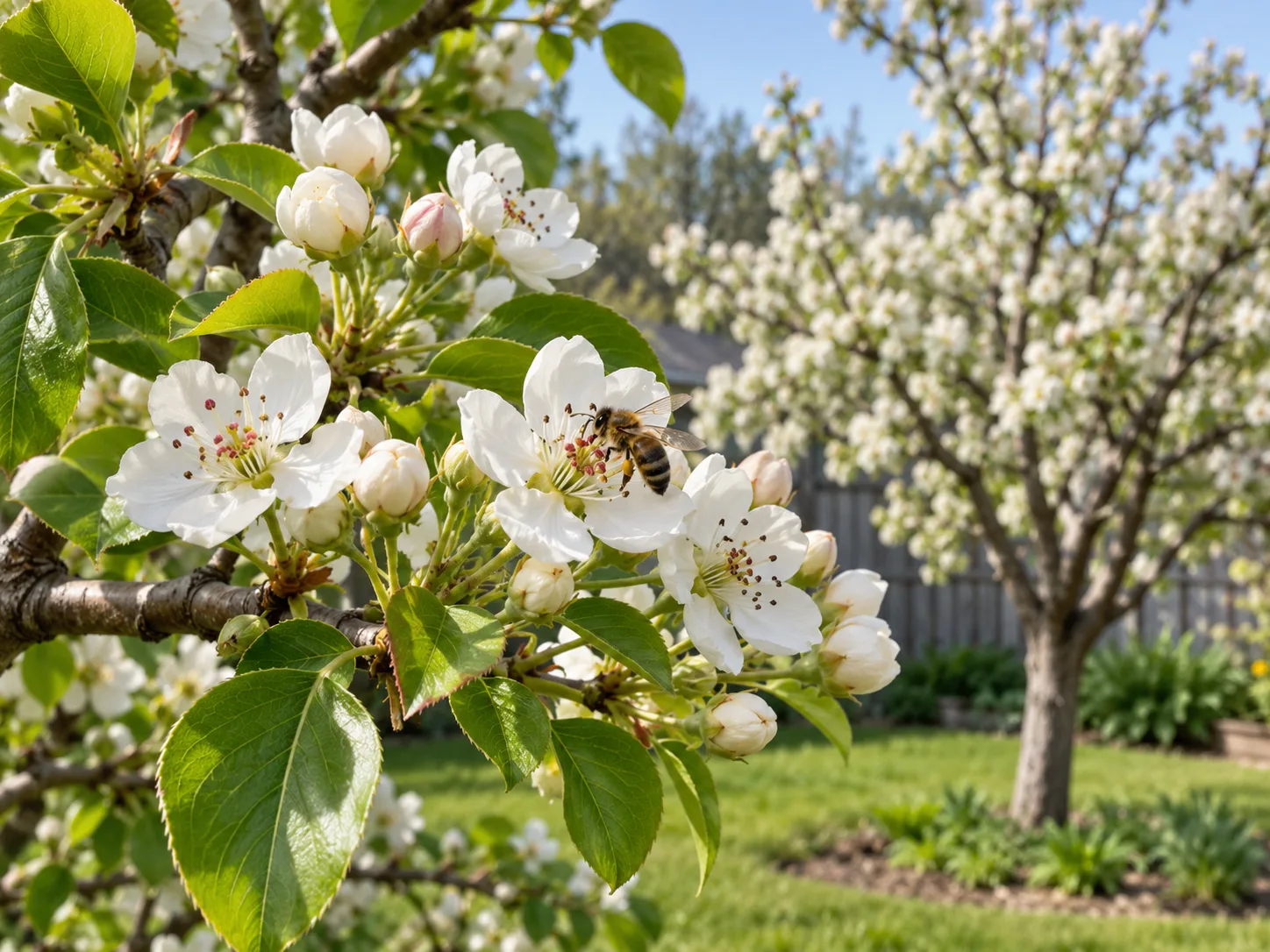
Bees and other insects still improve pollen transfer outdoors, and a tree flowering inside a house may need hand pollination with a small soft brush. Some cultivars are partially self-fertile, so a compatible partner can improve the crop even if one tree sometimes bears alone.
If the cultivar requires cross-pollination, choose a compatible partner of the same fruit species with overlapping bloom time. A pear does not pollinate an apple, and a second apple that flowers weeks later may not help the first.
The RHS gives pollination groups for listed fruit varieties, while the small-scale orchard guidance from Attainable Sustainable emphasizes matching species and bloom timing when another tree is required. Check the nursery’s pollination chart for your exact cultivar rather than relying on a generic “needs a pollinator” note. RHS fruit-in-containers advice · Attainable Sustainable
This decision can change what “small-space gardening” means. One self-fertile tree may fit a narrow terrace, but two compatible trees need enough light and floor load capacity. Some nurseries sell multi-grafted trees with compatible branches on one trunk; these can save space, but ask whether all grafts suit your climate and whether branch growth needs separate pruning.
Match dormancy and bloom timing to your local climate
Before ordering, compare the cultivar’s stated winter-chill requirement with your region’s typical winter conditions. Chill-hour estimates are a useful starting point, but nurseries and extension services may use different models, and your garden’s microclimate can differ from the nearest weather station. Attainable Sustainable describes chill hours as a key selection factor for urban fruit trees; the practical takeaway is to select a cultivar recommended for your area instead of trying to fix a mismatch by moving the pot around. Attainable Sustainable
A warm, sunny wall can advance bloom and make early blossoms more vulnerable to a late freeze. In a cold or windy site, keep the pot near shelter without trapping it in stagnant shade.
A container also exposes roots to faster temperature swings than surrounding garden soil, so a tree that is hardy in the ground may need its pot insulated or moved to a protected, unheated location during severe cold. Dormant temperate fruit trees generally need a cool winter rest; a heated living room is not a safe winter substitute. Citrus is different: it is evergreen and frost-sensitive, so gardeners in cold climates bring it into a bright, cool, protected space before frost rather than leave it outside dormant. CityRooted’s small-space citrus guide
3. Size the pot for the mature tree and your moving plan
A tiny nursery pot is a temporary home, not a long-term fruit-tree container. A pot that is too small dries quickly, restricts roots, and can make a top-heavy tree unstable; an oversized pot can leave a young rootball surrounded by wet mix that it cannot use yet. The useful target is a container large enough for the tree’s expected vigor and root system, but manageable enough that you can water it well, move it if needed, and keep it safely supported.
Use diameter as a starting point, then check the tree’s vigor
For many potted fruits, the RHS recommends a container around 18 to 20 inches (45 to 50 centimeters) wide. Treat that as a baseline, not a universal finish line: a small genetic dwarf or fig may have a different root habit from a vigorous pear or peach, and an established tree needs more volume than a young grafted sapling. RHS fruit-in-containers advice
Choose based on the nursery’s suggested final pot size and the rootball you actually have. If a small bare-root tree arrives dormant, it can often be planted into its planned container at the appropriate planting depth.
If you are moving a tree with a compact rootball, do not jump into a barrel several sizes larger simply because more compost looks safer; the outer mix can stay wet long after roots near the center have used their water. On the other hand, do not leave a growing tree in its original small plastic pot for years. Inspect roots at repotting time and step up when they circle densely or the medium dries abnormally fast.
Pot width is only part of the decision. A wide pot is harder to tip but takes floor space; a tall narrow pot can hold volume yet catch wind and rock.
Before filling a large container, decide whether it must be moved to protect blossoms, avoid a storm, or overwinter a tender tree. A wheeled plant caddy can help, but only if it is rated for the wet weight of pot, tree, and saturated growing mix. A half-barrel may work for a stationary patio, but it is a poor choice for an upstairs balcony if you have not checked the structure’s load limits.
Make drainage, stability, and weight part of the choice
Every fruit-tree pot needs unobstructed drainage holes; water should be able to leave freely after a deep soak. Use a mesh screen over very large holes if mix spills out, and keep the pot raised slightly so the holes do not seal against a flat patio.
Do not let the container sit for days in a full saucer. Waterlogged roots can fail even while the surface looks dry.
Material affects the daily routine. Terracotta is heavy and stable but loses moisture through its porous walls, which means more frequent checks in hot or windy weather.
Plastic or resin is lighter and holds moisture longer, but can blow over if the tree becomes top-heavy. Glazed ceramic and large stone planters can be attractive and stable, yet they are difficult to move once planted. Choose the heaviest container you can safely manage, then place it where it will receive enough sun and be reachable from all sides for pruning, watering, and harvest.
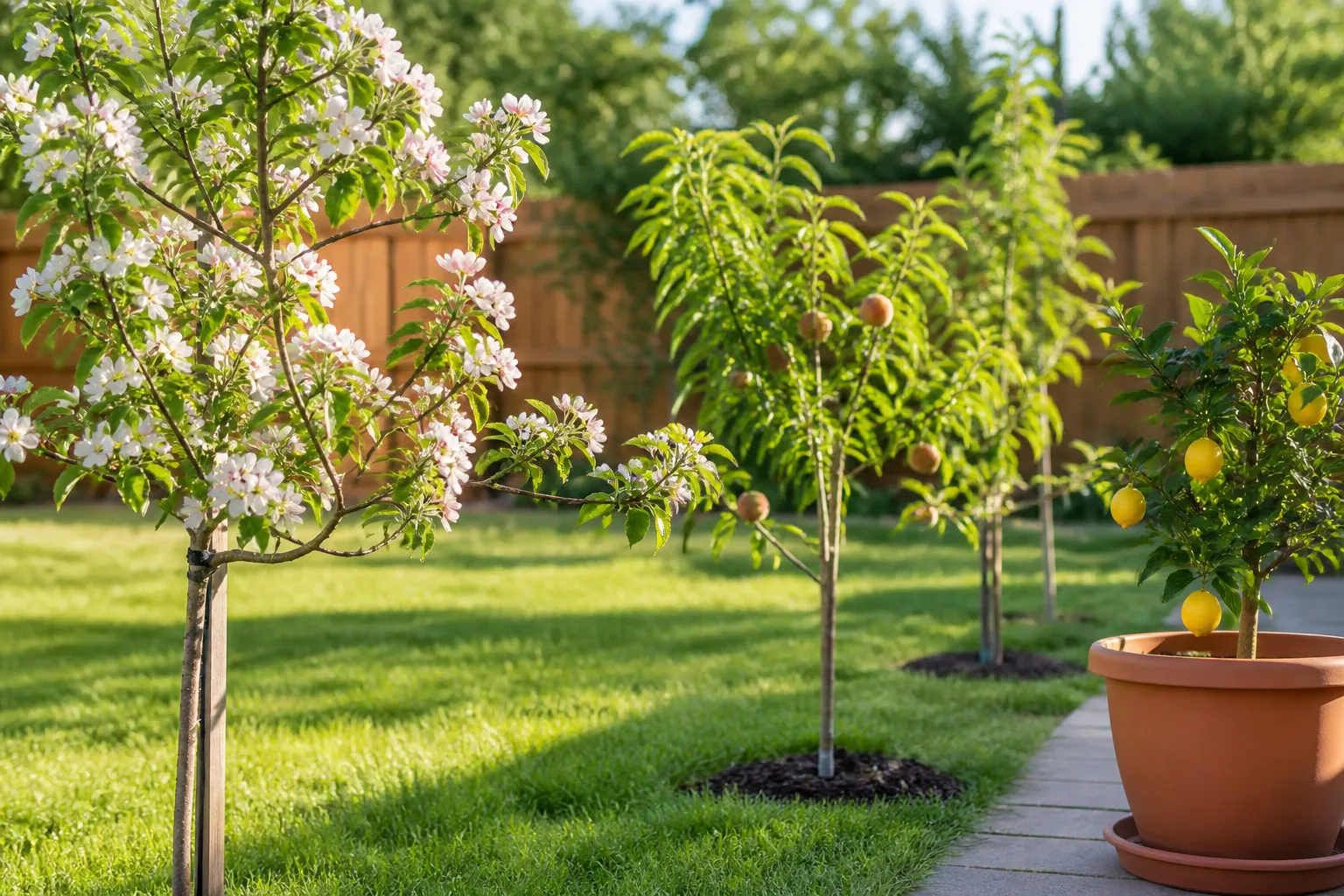
4. Use a free-draining potting mix and plant at the right depth
Do not fill a long-term fruit-tree container with soil dug from the garden. Garden soil can compact in a pot, close off air spaces, and drain poorly when its structure is disturbed.
Use a high-quality container medium that holds enough water for roots while still draining and admitting air. The RHS suggests a loam-based compost or a multipurpose container compost improved with a coarse drainage component; choose a formula intended for outdoor container use rather than trying to duplicate orchard soil in a small bucket. RHS fruit-in-containers advice
A productive mix is not just “the fastest draining” one. If it is too coarse, the rootball can dry in a day; if it is too fine or packed tight, watering becomes uneven and roots may sit in stagnant moisture.
Start with a fresh commercial tree-and-shrub or loam-based potting mix from a reliable nursery. If you amend it, follow a tested container recipe for fruit rather than adding an arbitrary layer of sand or gravel. A layer of stones at the bottom does not replace drainage holes or fix compacted mix, and it reduces the volume available for roots.
Plant the tree at the same depth it grew in the nursery unless the producer gives different instructions. Keep the root flare visible and the graft union above the finished medium; burying the graft can encourage the rootstock to send up shoots that compete with the named cultivar.
Tease apart only circling roots that can be loosened without tearing the rootball apart, then water slowly until the medium is evenly wet and excess drains from the bottom. Top the surface with a thin mulch if the pot dries quickly, but leave a small clear ring around the trunk so the bark does not stay damp.
5. Water by the root zone and feed for steady growth
Container trees have a smaller water reserve than in-ground trees, and the surface can mislead you. A sunny, windy patio may dry a pot much faster than a sheltered yard; a cool spell or a newly pruned tree may use far less water.
Do not follow a fixed “every two days” schedule. Check the root zone, account for recent rain, and water thoroughly when the medium is approaching dry rather than waiting for the foliage to wilt.
Check below the surface and soak the whole rootball
Push a finger or moisture probe a couple of inches into the mix near the edge of the rootball. If it feels cool and damp, wait and check again later.
If it is dry at that depth, water slowly over the entire surface until water begins to run from the drainage holes. A shallow splash wets only the top layer and encourages roots to stay close to the surface; one slow soak is more useful than several quick sips. Empty any catch tray after the pot has drained.
In a heat wave, during fruit swelling, or when a pot is exposed to steady wind, check daily. That does not mean you must water daily: it means the conditions can change quickly.
If a very dry rootball repels water, apply a little, wait several minutes, and repeat so moisture can soak in instead of racing down a gap at the edge. If the plant is wilted in midday heat but firms up by evening, check the mix before watering again; adding water to already wet soil can make root stress worse. Container-grown fruit can drop immature fruit or develop browned leaf edges when water supply swings sharply, so use the soil check before guessing at a pest or fertilizer problem. RHS fruit-in-containers advice
Feed to the label and the tree’s active season
Nutrients in containers are limited and can wash through the drainage holes, but more fertilizer is not a shortcut to more fruit. Start with a fresh potting mix and follow the fertilizer label for fruiting trees or outdoor containers.
Some gardeners use a controlled-release product at the start of active growth; others use a diluted liquid feed during the growing season. The RHS gives both approaches as options and advises following package directions, so do not stack a full dose of several products “just in case.”
A tree that pushes long, lush shoots may be receiving excess nitrogen or too much water for its light level. That growth can be difficult to keep compact and may delay the balance between leaves and fruit.
Conversely, pale foliage or weak growth is not automatically a fertilizer problem: poor drainage, damaged roots, a root-bound pot, or inadequate light can create similar symptoms. Feed when roots and shoots are active, reduce or stop routine feeding as the tree enters dormancy, and avoid forcing tender late-season growth that will be exposed to cold.
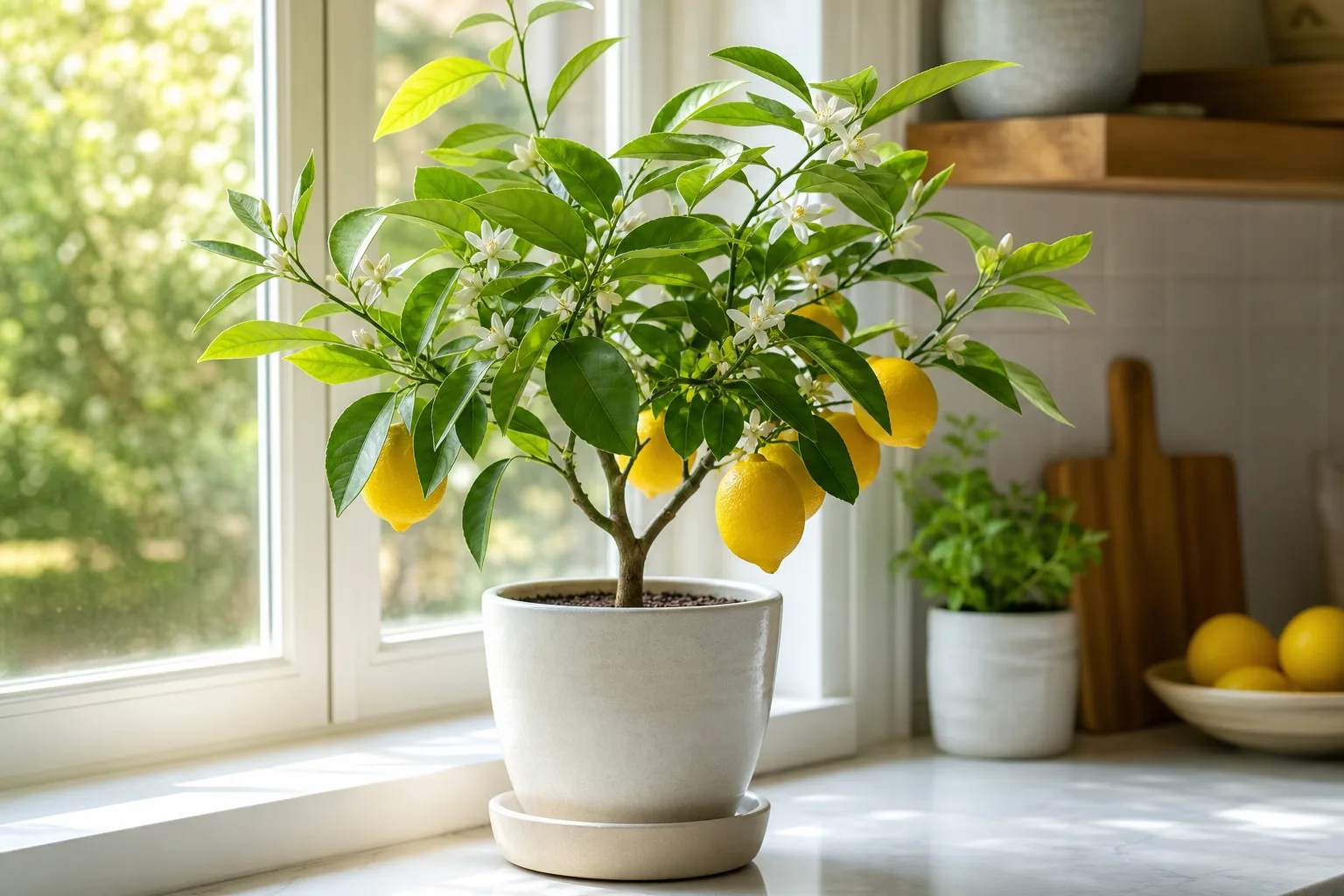
6. Prune, renew, and protect the tree as it matures
A container tree is a long-term plant, not a seasonal patio decoration. It needs enough pruning to stay accessible and healthy, but aggressive clipping every time a branch crosses an imaginary line can remove the fruiting wood you waited for.
Learn whether your tree fruits on older spurs or younger shoots, then make small, planned cuts at the right season for that fruit type. If the tree needs repeated severe pruning to fit its location, it is probably the wrong cultivar or pot system for the space.
Prune to the fruiting form rather than cutting for height alone
Start by removing dead, broken, crossing, or inward-growing branches and any suckers that emerge below the graft. Keep the center open enough for light and airflow, but do not strip the canopy bare.
For apples and pears, a trained form such as a compact central leader, cordon, or espalier can fit a narrow wall better than an unmanaged round canopy; stone fruits have different pruning timing and should be pruned according to their species-specific guidance. The RHS advises that pot-grown fruit uses the same pruning principles as open-ground fruit, not a one-size-fits-all haircut. RHS fruit-in-containers advice
Do not let a small newly planted tree carry a heavy crop before it has established roots and branches. If a young tree sets an unusually large number of fruitlets, thin some while they are still small so branches do not bend or break and the remaining fruit has more resources.
Mature trees may also benefit from thinning in heavy-crop years, especially when fruit clusters are touching. This is a crop-management decision, not a way to guarantee a larger harvest every year; weather, pollination, and cultivar all matter.
Repot or root-prune when inspection shows crowding
Check the rootball when growth slows, the pot dries unusually fast, roots appear from drainage holes, or the tree becomes unstable. If roots are circling densely and the tree still has room, move it one practical size up and refresh the medium. RHS recommends repotting every year or every other year for container fruit to prevent roots becoming pot-bound, with renewal after leaf fall; that is a useful inspection rhythm, not a reason to disturb healthy roots on a strict date. RHS fruit-in-containers advice
Once the tree is already in its final workable pot, you can renew part of the root zone rather than keep buying larger containers. Work when the tree is dormant, remove it carefully, trim only the outer crowded roots with clean sharp tools, replace some of the spent medium, and return it to the same pot.
Root pruning is more demanding than topping off the surface; if you have not handled fruit-tree roots before, ask a local fruit nursery to show you how much of the rootball your cultivar and pot can safely tolerate. Never cut away a large fraction of roots from a tree in leaf, drought, or heavy fruit, and do not root-prune simply because you want a smaller canopy.
Diagnose fruit drop, brown edges, and weak growth in sequence
A tree that flowers but does not hold fruit may have a pollination mismatch, frost-damaged blossoms, inadequate winter chill, or too little sun; fertilizer is not the first fix. Check the cultivar’s pollination requirement and bloom overlap, then review the local frost date and whether the tree is getting several hours of direct light. On citrus grown indoors, poor light and lack of insects can limit flowering and fruit set; the small-space citrus guide from CityRooted describes the indoor-outdoor shift and hand pollination with a soft brush. CityRooted
If fruitlets form and then drop, some natural shedding is normal, but a sudden large drop calls for a moisture check. Feel the mix below the surface, confirm that water can drain, and look for a recent cycle of dry soil followed by a deep soak.
Brown leaf edges can follow that same uneven water supply, salt buildup from repeated fertilizer doses, wind scorch, or damaged roots; flush the medium with plain water only if drainage is working, then pause fertilizer and reassess. Persistent wilting while the mix is wet points to root stress, not thirst.
Finally, protect the rootball according to the tree, not a generic temperature threshold. Hardy deciduous fruit trees usually stay outdoors through dormancy, but a pot exposed to a hard freeze can need insulation, a sheltered wall, or a cool unheated storage space.
Do not move dormant apples, pears, or stone fruit into a heated living room; warmth can disrupt the rest they need. Tender citrus is the exception: bring it in before frost, inspect leaves for hitchhiking pests, and provide the brightest cool location available. Move it back outside gradually in spring so leaves acclimate to direct sun and wind. RHS fruit-in-containers advice · CityRooted
Conclusion
A healthy potted fruit tree starts with a cultivar and rootstock that fit your climate, a pollination plan that can actually work, and a pot large enough to support the mature root system without making routine care impossible. Give it a stable sunny site, free-draining container mix, and water based on the root zone rather than a calendar. Then inspect the roots, branches, blossoms, and fruit as the seasons change; those observations tell you when to feed, prune, protect, or repot.
Container growing is a good choice when you want a compact tree and can commit to regular checks. If you want a large crop with very little maintenance, or cannot meet the tree’s chill, pollination, and winter-light needs, choose another cultivar or plant it in the ground. Matching the tree to the space is what makes a patio harvest plausible.