How to Grow and Care for Lithodora
Keep Lithodora healthy with cultivar notes, site and soil guidance, seasonal care, container tips, and clear fixes for yellow leaves or sparse flowers.
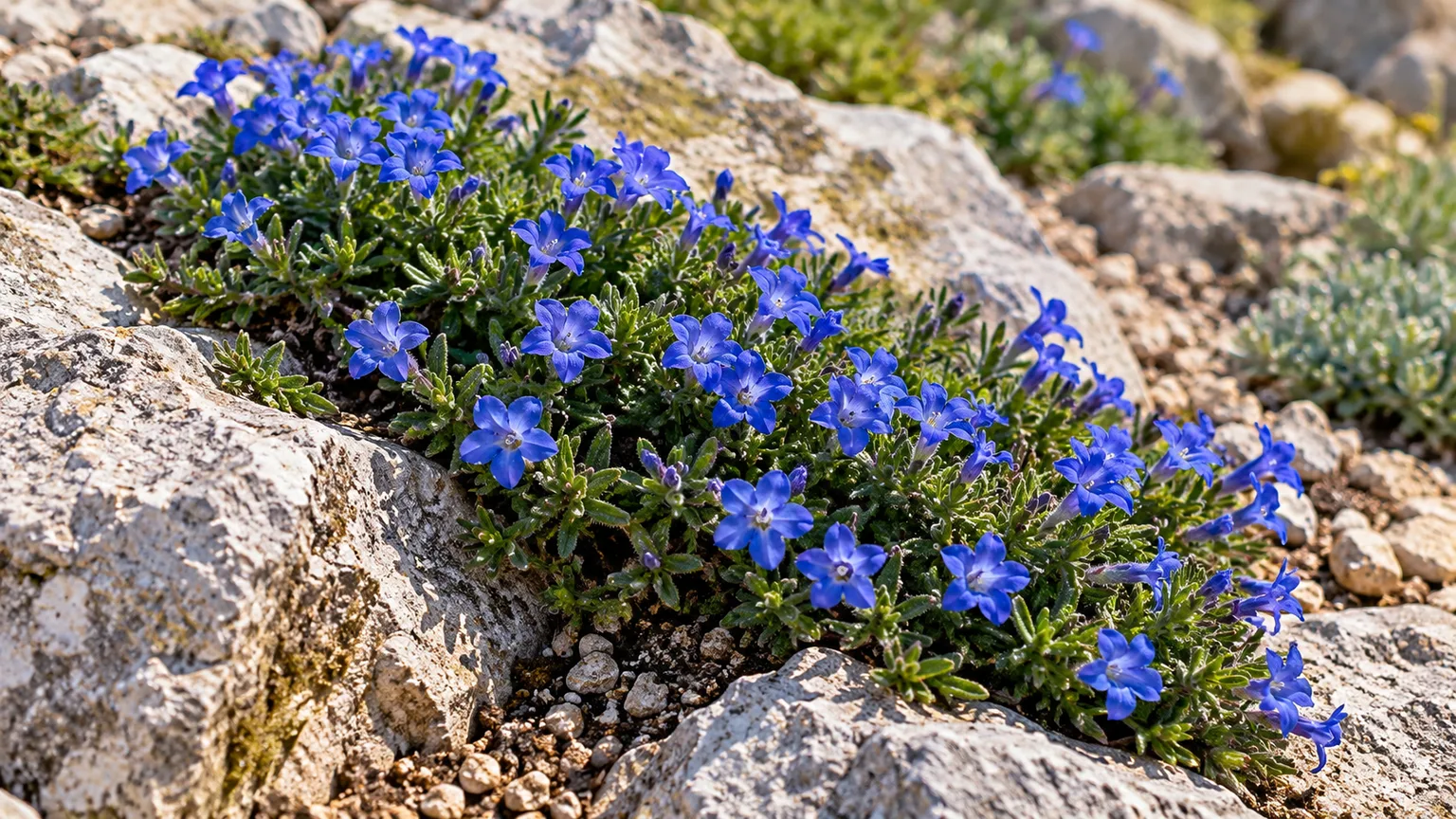
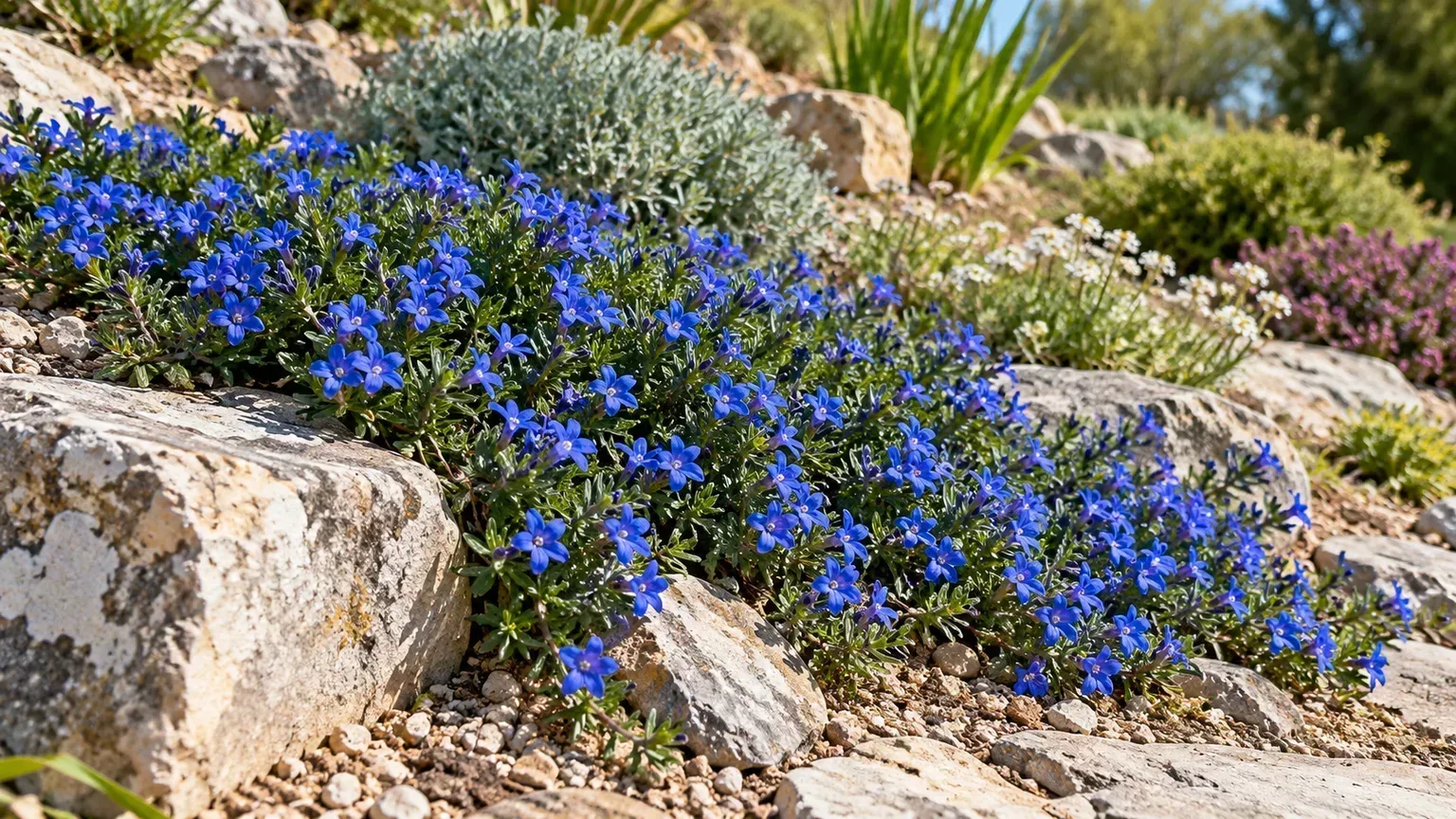
Lithodora earns its place in a garden through contrast: a low cushion of narrow evergreen leaves, then a sudden flush of vivid blue flowers in late spring and early summer. It is most rewarding where a conventional lawn or tall perennial would be awkward—along a sunny rockery, above a retaining wall, or at the edge of a raised bed where its stems can spread without being trampled.
The condition that matters more than any feeding routine is fast drainage. Lithodora dislikes roots that stay saturated, yet a new plant also needs regular moisture while it establishes. Choose the right site first, then water according to what the soil is doing rather than following a fixed weekly schedule. That simple distinction prevents many of the failures blamed on this plant being fussy.
Match Lithodora to the Right Garden Job
Lithodora is a small, mat-forming evergreen subshrub grown for its blue or blue-and-white, five-lobed flowers. It stays low and spreads sideways, making it a useful accent or modest groundcover rather than a lawn replacement. Give it a place where the foliage can spill over stone or soften a bed edge, and use stepping stones if people need to walk through the area.
A plant label may list a mature height around 4 to 6 inches and a spread approaching 2 feet, but size depends on cultivar, climate, and growing conditions. The RHS describes ‘Grace Ward’ as a prostrate mat reaching about 15 centimeters tall; its profile gives a broad eventual spread range rather than promising a fixed footprint. Leave room for sideways growth, and use the specific cultivar’s label when planning spacing. The RHS profile for ‘Grace Ward’ is a useful cross-check for its habit and site.
Understand the Names on the Plant Tag
Gardeners and nurseries still commonly use Lithodora diffusa, but plant names have changed in botanical references. Kew’s Plants of the World Online accepts Glandora diffusa and lists Lithodora diffusa and Lithospermum diffusum among its synonyms. The plant-care information and labels you encounter may therefore use either Glandora or Lithodora; that difference by itself does not mean you have bought a different blue groundcover. Kew’s accepted-name record documents the classification and native range in Spain.
Cultivar labels can add another layer of confusion. The RHS nursery lists ‘Heavenly Blue’ under Glandora prostrata and identifies the familiar Lithodora diffusa name as a synonym, while its separate ‘Grace Ward’ profile uses Lithodora diffusa. For a home gardener, the practical details are the cultivar name, flower color, habit, and the nursery’s climate guidance—not forcing every catalog to use the same botanical combination. The RHS ‘Heavenly Blue’ listing shows how retail naming can differ.
Choose a Cultivar for Its Flower Color and Habit
‘Grace Ward’ is a familiar selection with an intense deep-blue display and a spreading habit. ‘Heavenly Blue’ is also grown for saturated azure flowers. ‘Blue Star’ and selections sold as ‘Star’ have contrasting pale or white markings on the petals, making each small bloom read like a star when viewed up close. ‘White Star’ is another blue-and-white form found in nursery listings. Color distinctions are easiest to judge from a flowering plant or a reliable grower photograph because common names and catalog descriptions are not always consistent.
A newer golden-foliage selection such as Gold ‘n Sapphires changes the look of the mat while retaining blue flowers. Cultivar hardiness figures vary: Fine Gardening lists that selection across a different range from the familiar species profile, while other catalog listings may use different regional rating systems. Treat the label as a starting point, not a promise that every cultivar will perform the same way in a wet winter or a humid summer. Fine Gardening’s lithodora cultivar notes illustrate why cultivar-specific selection matters.
Choose Sunlight With Your Climate in Mind
Give Lithodora an open, sunny position for the most reliable flowering and a compact mat. A site with roughly six hours of direct light is a useful starting point, but the plant may appreciate light afternoon shade where summers bring intense heat. In a mild or cool climate, a bright exposure is more likely to help than hurt; in a hot inland garden, harsh afternoon sun on newly planted foliage can cause stress before roots are established.
Avoid a permanently shaded bed beneath dense shrubs. The plant may stay alive there, but flowering can be sparse and stems may stretch toward light instead of forming an even carpet. Likewise, do not assume a south-facing wall is automatically ideal: reflected heat can push temperatures higher and dry a small rootball quickly. Observe the actual light and heat at the planting level, not only the compass direction.
Hardiness is not a single number for every Lithodora cultivar, and published ranges do not line up. Gardening Know How lists common Lithodora for USDA Zones 6 to 10, while Fine Gardening gives different ranges by cultivar, including Zones 5 to 8 for Gold ‘n Sapphires. The RHS also publishes UK ratings, which use a different climate scale and should not be converted directly into a USDA zone. Treat any range as a starting point: choose a named cultivar with local nursery evidence, plant in a protected but bright location near your climate edge, and pay attention to winter drainage as much as minimum temperature. Gardening Know How’s growing overview and Fine Gardening’s cultivar notes illustrate the variation.
Build Acidic, Fast-Draining Soil
Lithodora is best in acidic to near-neutral soil that drains freely. A sandy or loamy bed with some organic matter can hold enough moisture for roots without staying waterlogged. Both the RHS plant profile and its growing listing emphasize acidic soil and good drainage; heavy clay and waterlogged locations are poor matches.
Do not interpret “well-drained” as “never moist.” The goal is a root zone that accepts water and then allows excess to move away, while retaining enough moisture for a new planting to root. A dry, gritty mound with no irrigation may be too harsh during establishment; a low pocket that remains slick after rain is too wet even if it receives full sun.
Check the site after a substantial rain. If water ponds around the intended crown or the soil remains sticky and saturated the next day, choose a different location or raise the planting area. A pH test can also help when nearby shrubs have been struggling in alkaline soil. Lithodora is not a reliable way to make an unsuitable patch of lime-rich ground behave like an acidic rock garden.
Correct Heavy Soil Before Planting
A small scoop of gravel in the bottom of a planting hole does not fix a clay bed. Water can collect where the loose amended hole meets dense surrounding soil, leaving the rootball in a sump. If the area is heavy clay, build a broad raised mound or bed with a free-draining mix throughout the root zone, or use a container. Improving the full planting area is more dependable than creating one isolated pocket.
Avoid adding strong acidifying products based only on pale leaves or a generic plant label. Test first and follow a locally appropriate soil recommendation; overcorrecting pH can create a new nutrient imbalance. If you cannot provide both drainage and a suitable pH without major reconstruction, choose a groundcover adapted to your existing soil rather than repeatedly replacing Lithodora.
Plant Lithodora Without Burying the Crown
Plant in spring after the soil can be worked and severe freezes have passed, or in early fall where a long mild rooting period remains. Spring planting gives a young plant time to establish before winter, while fall planting can work in climates with gentle autumn weather. Avoid planting during a heat wave, just before a hard freeze, or when the bed is waterlogged.
Water the nursery pot before planting so its rootball is evenly moist. Set it in a hole as deep as the rootball and no deeper; keep the crown—the point where stems meet the roots—at the finished soil level. Backfill with the prepared bed mix, firm gently to remove large air gaps, and water once to settle the soil. Don’t pile mulch or soil over the center of the plant.
Use the plant’s expected width to decide spacing. If you want a connected mat sooner, closer spacing fills gaps faster but costs more and can reduce airflow in a humid site. If you are uncertain about the cultivar’s spread, start with a smaller number at their recommended spacing, then fill only the gaps that remain after a growing season. Keep the base visible, especially in a damp climate.
Water by Root-Zone Conditions, Not a Calendar
Water a newly planted Lithodora thoroughly, then check the soil before watering again. During the first weeks, inspect the rootball and nearby soil every few days in warm, dry weather; the small nursery plug can dry sooner than the surrounding bed. Water slowly at the base when the root zone is beginning to dry, and reduce the frequency after new growth signals that roots are expanding into the bed.
A weekly schedule is a poor substitute for checking soil. Rainfall, slope, mulch, soil texture, temperature, and pot size all change how quickly the root zone dries. On a sunny slope in sandy soil, a plant may need attention during a long dry spell; in a cool clay bed, the same schedule can keep roots wet for too long. Insert a finger or narrow trowel into the soil just beyond the crown to assess moisture below the surface.
Established plants can tolerate short dry intervals better than newly planted ones, but do not make repeated severe drying the goal. Fine Gardening specifically cautions against letting lithodora dry out during drought, while general care references warn against waterlogged soil. Together, those recommendations point to a balanced approach: water when the root zone starts to dry, and stop when water has soaked in rather than leaving the plant standing wet. Fine Gardening’s care notes and Gardening Know How’s Lithodora overview describe these two sides of the moisture requirement.
For a container, check more often because wind and sun dry the pot from every side. Water until a little drains from the bottom, empty any saucer, and wait until the upper layer has begun to dry before watering again. Do not let the pot sit in water after a storm.
Feed Only After Checking the Cause of Pale Leaves
Lithodora usually does not need routine heavy feeding. A rich, nitrogen-heavy feed can encourage leafy growth without solving a drainage or pH problem, and excess fertilizer salts can injure shallow roots. Start with a light top-dress of compost only if the bed is poor in organic matter; keep it away from the crown.
If foliage turns pale yellow, inspect the whole plant and its soil before applying fertilizer. Older leaves yellowing evenly may signal general stress; yellow foliage with green veins can point to restricted iron availability in alkaline conditions, but waterlogged roots can also prevent nutrient uptake. A soil test and a drainage check are more useful than guessing. If testing indicates a need, use an appropriate acid-loving plant fertilizer according to its label and apply it during active growth at a conservative rate.
Do not pour concentrated fertilizer around a stressed plant or try to force flowering with frequent feeding. Correct the site problem first, then evaluate new growth. Damaged leaves may not turn green again even after conditions improve, so judge recovery by the leaves and stems produced afterward.
Troubleshoot Weak Flowering and Sparse Growth
Lithodora’s main display is generally in late spring and early summer, with the exact timing shaped by climate and cultivar. Some plants produce scattered later flowers, but a brief pause after the main flush is not necessarily a failure. A young plant may also spend its first season establishing roots rather than covering the bed or producing its fullest bloom.
When flowering is weak, check the basics in this order: direct light, root-zone moisture, drainage, and plant age. Dense shade limits flowering. Persistent wet soil can weaken roots and reduce growth. Repeated drought can interrupt new growth. A recent transplant may simply need time. Improve one likely cause at a time rather than moving, feeding, pruning, and watering more heavily all at once.
If the center is bare while the outer stems are healthy, check for crowding, buried leaf litter, woody old growth, and excess moisture. A small mat can look open in the middle as it spreads; thinning growth is a reason to assess conditions, not proof that the plant is invasive or diseased. If the center has become mostly dead wood, a replacement or a few new plants may be more successful than cutting the entire crown hard.
Read Yellowing and Dieback as Different Clues
Yellow leaves are a symptom, not a diagnosis. If the soil stays wet, starts smelling sour, or the whole plant wilts despite damp ground, suspect root stress and improve drainage before changing fertilizer. If the soil drains freely but new leaves are pale, test pH and fertility. Alkaline soil can make some nutrients less available even when they are present.
Winter-browned tips or a few damaged stems may be localized cold injury, especially after exposure to wind or a freeze. Wait until growth resumes before removing questionable stems; scratch a small section of bark or stem lightly to see whether living tissue remains. Prune clearly dead material back to healthy growth, but avoid shearing the whole mat into old, leafless wood.
Aphids may occasionally cluster on soft new growth. First confirm they are present by checking leaf undersides and stem tips. A small infestation can often be removed with a firm stream of water; if a product is needed, choose one labeled for the plant and pest, follow its instructions, and avoid spraying pollinators or beneficial insects. Gardening Know How notes aphids among the occasional pests.
Prune Lightly After the Main Flowering Flush
Lithodora needs little routine pruning. After the main bloom fades, use clean shears to shorten long tips and remove spent or damaged stems if the mat needs tidying. A modest trim can make growth look more compact, but leaving healthy shoots intact is also a sound choice. The RHS recommends a light trim after flowering for shape and size control, rather than a large annual cutback.
Do not cut deeply into the woody center or remove most of the green growth at once. Lithodora is a low woody subshrub, and a severe haircut can leave slow-to-recover bare patches. If winter has damaged foliage, wait until the worst cold has passed and new buds show where the live tissue is. This lets you distinguish dead tips from stems that are merely dormant.
Overwinter Lithodora According to Its Growing Situation
In-ground plants usually have more stable root temperatures than plants in pots. In a colder climate, site the plant away from exposed winter wind and make sure rain and snowmelt can drain away. A light layer of mulch over the root zone can help buffer temperature swings, but keep mulch clear of the crown so the base does not remain damp.
Hardiness figures vary among cultivar and regional sources, so use the plant tag for the selection you bought and consult local nursery experience where winters are severe. A rating from the RHS uses a UK scale; it does not map one-to-one onto USDA zones. In marginal climates, drainage and exposure may decide survival as much as the lowest thermometer reading.
Protect Container Roots From Hard Freezes
Roots in a pot are exposed to colder air than roots in the ground. Choose a wide container with unobstructed drainage holes and a free-draining potting mix; a mineral amendment such as grit or perlite can help keep the mix open. A frost-resistant pot is less likely to crack, and a sheltered position beside a wall can reduce wind exposure without trapping rainwater.
When a severe cold spell is forecast, group pots against a protected wall, insulate the outside of the container, or move it to an unheated sheltered space. Do not transfer a dormant outdoor plant into a warm living room for the winter. Check the pot occasionally: the mix should not remain saturated, but a completely dry rootball can also be damaged. A container will generally need closer winter monitoring than a plant rooted in a well-drained garden bed.
Propagate Lithodora From Semi-Ripe Cuttings
Named cultivars are best propagated vegetatively so the new plants retain their flower and foliage characteristics. Semi-ripe cuttings—current-season stems that are still green near the tip but firmer toward the base—are a practical method. The RHS lists semi-hardwood cuttings for ‘Grace Ward’, and Horticulture’s guide describes taking semi-ripe material in late summer. The RHS profile and Horticulture’s Lithodora guide support this approach.
Take several cuttings rather than relying on one. With clean snips, cut healthy non-flowering shoots a few inches long just below a leaf joint, remove the leaves from the lower portion, and insert each cutting into a small pot of lightly moist, open propagation mix. Keep the leaves above the surface. Place the pot in bright shade, out of hot direct sun and drying wind, and keep the medium evenly damp—not waterlogged—while roots form.
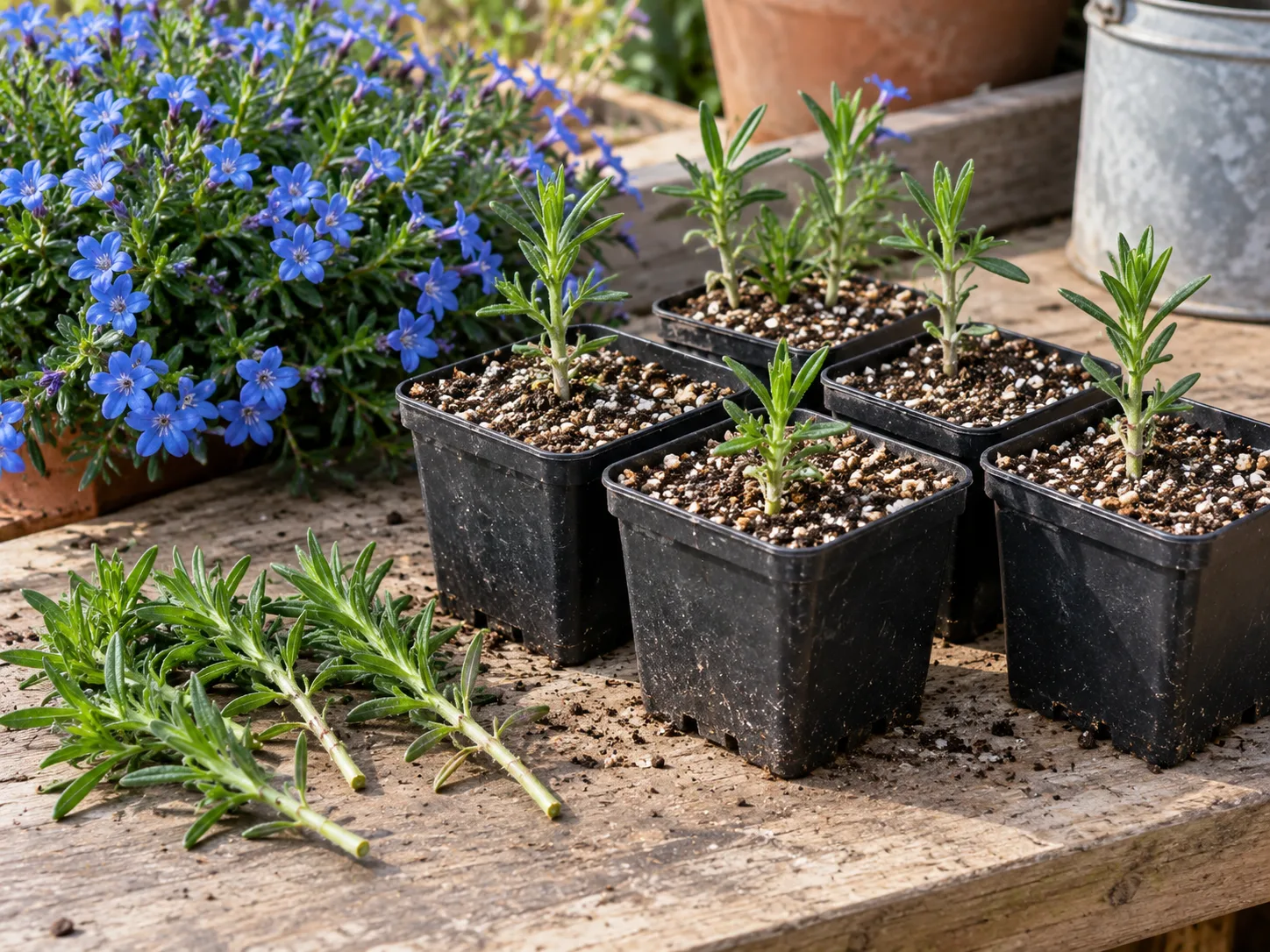
Resistance matters more than a rigid calendar. If the cutting pulls free with no roots after a few weeks, reset it gently and continue to avoid saturated medium; if the base turns soft or dark, discard it and reduce excess moisture. Pot on only after roots hold the mix together and new growth is visible. Keep young plants protected until they are sturdy enough for outdoor conditions.
Division is sometimes suggested for mature mats, but lifting and splitting a small woody crown can set it back. If a healthy edge has already rooted into soil, you may be able to separate that rooted section with minimal disturbance. For a named cultivar, cuttings are usually the more controlled choice. Seed is not the best way to reproduce a named selection because seedlings may not match the parent; buy a labeled plant or propagate vegetatively if uniformity matters.
Grow Lithodora in a Container That Drains
Lithodora can grow in a pot, trough, or window box if the container is wider than it is deep and has several drainage holes. The spreading habit looks best where stems can trail over an edge, and a shallow, open planting also reduces the risk that water remains around the roots. A pot without drainage is not suitable, even if a layer of stones is added to the bottom.
Use a potting mix that drains freely and is slightly acidic to near-neutral. A quality ericaceous mix can work; if it stays wet, blend in a suitable coarse mineral material rather than relying on fine compost alone. Do not compact the mix heavily when planting. Set the rootball at its original depth and water enough to wet it evenly, then let excess drain completely.
Pots need more frequent checks than garden beds in hot or windy weather, but more frequent checks do not mean automatic daily watering. Lift the pot or feel the mix to learn how quickly it dries. During active growth, water when the top portion has begun to dry and the root zone is approaching dry; in cool weather, the interval will be longer. In winter, rain can keep an outdoor pot wet for weeks, so use a sheltered position that still receives light and air.
Repot when roots have filled the container, growth stalls despite good conditions, or the mix has broken down and stays wet. Move only one pot size larger or refresh the mix while keeping the plant at the same depth. Very large, water-retentive containers dry slowly and can undermine the drainage this plant needs.
Conclusion
Lithodora is straightforward when you give it a bright place, acidic to near-neutral soil, and a root zone that drains after rain. The mistake to avoid is treating it as either a drought-proof rock plant or a moisture-loving perennial: new roots need steady attention, while established roots still decline in waterlogged ground.
Choose a cultivar for its mature spread and the flower color you want, check the local hardiness guidance, and plant with the crown at soil level. After that, water by checking the root zone, feed only when a test or growth pattern supports it, trim lightly after the main bloom, and protect container roots more carefully in winter. If the plant falters, inspect drainage and soil pH before adding fertilizer or cutting it back.



