How to Grow Mâche: Planting, Care, and Harvest Guide
Grow mâche in a bed, pot, or cold frame with practical advice on seed depth, spacing, watering, winter protection, harvesting, and common failures at home.
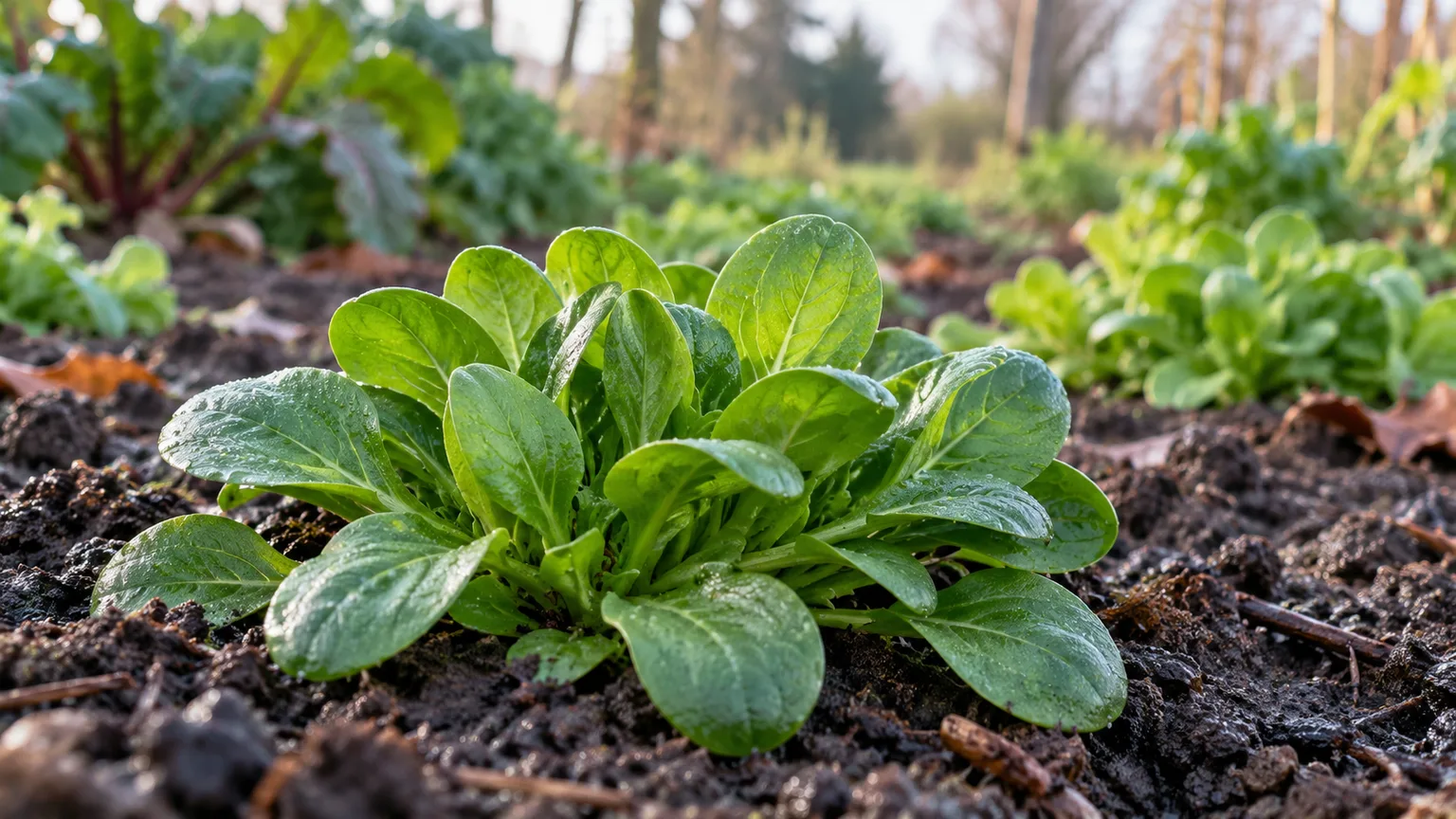
Mâche (Valerianella locusta) is a low-growing salad green with soft, spoon-shaped leaves and a mild, nutty flavor. It is also sold as corn salad, lamb’s lettuce, fetticus, or sometimes simply as field salad. Unlike heat-loving salad crops, mâche is useful when cool weather slows other greens: sow it in late summer or fall for a winter crop, or get it started in early spring before warm weather pushes it to flower.
The most important growing decision happens before you sow: check the soil temperature. Mâche seed germinates in cool ground but can enter dormancy when the soil is too warm, so a packet sown on a hot late-summer bed may sit untouched even when it is watered. Give the seed a smooth, weed-free surface, keep the top layer evenly damp, and plan to harvest small rosettes whole or take a few outside leaves from plants you want to keep growing.
What Mâche Is and When It Makes Sense to Grow It
Mâche is an annual grown for its leaves, which form compact rosettes close to the ground. The plant stays low and its leaves are softer and smaller than a head lettuce, so it works particularly well as a winter salad green, an edging crop, or a quick filler between slower vegetables. The Royal Horticultural Society describes Valerianella locusta as a rosette-forming annual with edible leaves and notes that it suits full sun or partial shade and moist but well-drained soil (RHS plant profile).
Choose mâche when you can offer cool growing conditions and want a harvest during a season when many garden beds are empty. It is not the best choice for a hot, exposed summer bed or for a gardener who wants a large, crisp lettuce head. A handful of small rosettes is its natural yield, and the crop rewards careful timing more than intensive feeding or elaborate equipment.
The common names can make seed shopping confusing. Despite the name, corn salad is not a type of corn. Seed packets may use mâche, lamb’s lettuce, corn salad, or Valerianella locusta; check the botanical name if you want to be sure you are buying the familiar edible salad crop rather than another plant sold under a similar common name.
Pick a Planting Window by Season and Soil Temperature
For reliable germination, sow when the soil is cool. Utah State University Extension recommends direct seeding at about 41–68°F and reports that seed can go dormant above 70°F; Johnny’s Selected Seeds gives a similar range and notes that germination can take 10–14 days (Utah State University Extension; Johnny’s Selected Seeds). Measure soil a little below the surface in the bed where the seed will sit, preferably in the morning. Air temperature alone can mislead: the day may feel cool while a sun-baked bed is still too warm for mâche seed.
If you have no soil thermometer, use the weather pattern as a guide. Wait until a run of cooler days has lowered the bed temperature, choose a spot with afternoon shade, and avoid sowing into freshly amended dark soil during a heat spell. Seedlings are slow to establish, so the best window is one that gives them several weeks of mild weather to develop roots and leaves before severe cold or spring heat arrives.
Fall Sowing for Winter Harvest
Fall is the most dependable planting season in many regions. Sow early enough for plants to make several true leaves before days become short and the ground freezes; in cold-winter areas that may mean late summer, while milder regions can sow later. Utah State Extension suggests starting a fall crop roughly a month before expected frost, but local soil temperature and the length of your autumn matter more than copying a single date from a calendar.
An early sowing can produce rosettes for autumn and winter picking. A late sowing may simply establish small plants that hold through winter and resume growth when light and temperatures improve. That is still a useful outcome: the leaves may not grow quickly during the darkest weeks, but an established patch can give you an earlier spring crop than a fresh sowing.
Spring Sowing Before Heat
For spring, sow as soon as the ground is workable and cool enough, often a few weeks before the average last frost. Young plants tolerate light frost better than warm soil, but repeated warm days can accelerate flowering and shorten the harvest. If spring warms quickly in your area, plant a small early patch rather than relying on a long succession that may run into summer.
To spread the harvest, sow a short row every 10–14 days while temperatures remain favorable. Stop when the soil is consistently warm; later sowings can remain dormant until conditions cool again, which may produce a delayed and uneven flush rather than the crop you planned. Homes & Gardens also recommends cool-season sowing and emphasizes that warm weather encourages mâche to flower (Homes & Gardens growing guide).
Choose a Variety for Leaf Size and Season Length
Seed catalogs may list Dutch Broad Leaved, French, ‘Vit’, ‘Verte de Cambrai’, or ‘Verte d’Étampes’, but labels and availability vary by supplier. Utah State University Extension lists Dutch Broad Leaved, French, ‘Vit’, and D’Etampes among commonly grown types. Rather than expecting a dramatic difference in care, choose based on the description you actually want: larger leaves for easier washing and quick bunching, or a compact type if space is tight and you want small rosettes.
If you are unsure, grow one packet first and note how it performs in your season. Days to maturity printed on a packet are estimates under particular conditions; a cool, bright fall and a dim, wet winter do not produce the same pace. A variety that performs well for nearby gardeners is often a better bet than a long list of varieties selected without knowing your local sowing window.
Prepare a Bed with Fine, Moist, Weed-Free Soil
Mâche seeds are small, and the seedlings do not compete strongly with weeds. Prepare the bed before sowing by removing existing weeds and breaking up clods so the top layer is fine enough for seed-to-soil contact. A level surface also makes shallow watering more even; in rough soil, seed can disappear into cracks or wash into low spots.
Choose a site that gets sun in cool weather and some afternoon shade if spring or early fall is warm. The crop tolerates partial shade, but it still needs enough light to make compact leaves. Avoid a bed that stays waterlogged after rain: the roots want steady moisture, not stagnant soil around the crown.
Mix in a modest amount of finished compost if the bed is poor or compacted. Do not add a heavy dose of fresh manure or high-nitrogen fertilizer simply because mâche is a leafy crop. Utah State Extension describes fertile, well-drained soil as preferable and recommends determining fertilizer needs from a soil test rather than feeding automatically. If you are preparing a small bed without a soil test, a thin compost amendment is a low-risk way to improve structure.
Sow Mâche Seed Shallowly and Protect the Seedbed
Direct sowing is usually simplest because mâche seedlings are small and the crop does not need a long indoor start. Sow into shallow drills or broadcast thinly over a prepared patch, then cover with about ¼ inch of fine soil. Keep rows about 12 inches apart if you want room to weed and harvest between them; closer spacing is possible for a dense baby-leaf patch, but it makes airflow and slug checks more important.
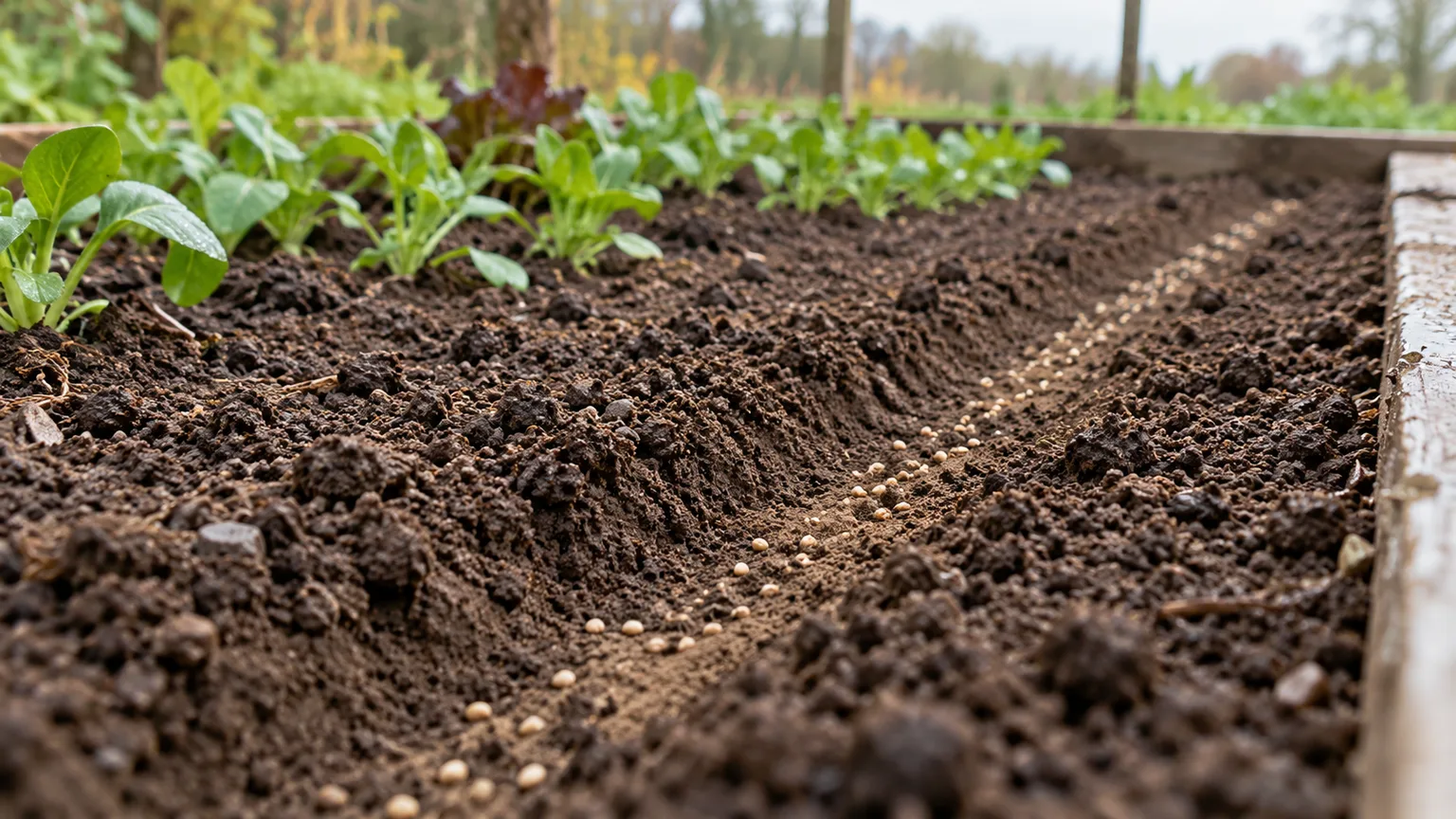
Water with a fine spray or a watering can fitted with a rose so the seed stays in place. The upper layer must not dry out before germination, but a puddled surface can bury or move the seed. In a windy or sunny bed, a lightweight row cover or a board placed over the row can help conserve moisture; check beneath it daily and remove the board as soon as seedlings begin to emerge.
Expect slow or uneven emergence when conditions fluctuate. Johnny’s Selected Seeds reports germination in roughly 10–14 days, while other practical guides describe a somewhat broader window; cool soil, fresh seed, and consistent moisture make a bigger difference than trying to force the process. If nothing appears, check the soil temperature and surface moisture before resowing. Seed that is too warm may be dormant, and seed washed into a deep furrow may be alive but unable to reach the surface.
You can start a small number of plants in individual cells if slugs or birds repeatedly destroy direct-sown seedlings. Transplant when the seedlings are young and the root plug is intact, taking care not to loosen or tear the roots. Direct sowing remains less work for a bed-sized planting, while cells give more control over the first vulnerable stage.
Thin Seedlings and Keep Weeds from Taking Over
Once seedlings have several true leaves, thin them to about 3–4 inches apart for full rosettes. Utah State University Extension uses a similar spacing, while seed growers may recommend closer spacing for small whole-plant harvests. Use the wider end in humid weather or heavy soil, where leaves stay damp longer; use closer spacing when you plan to cut young plants small and clear the row in one harvest.
Snip excess seedlings at soil level instead of pulling them beside plants you are keeping. This avoids disturbing neighboring roots, and the thinnings can go straight into a salad if they are clean and healthy. Keep the row weeded while the mâche is small: once weeds shade the rosettes, hand removal can be awkward and the low crop is easily uprooted.
Weed shallowly. Mâche roots are near the surface, so a deep hoe can cut them just as the plants begin to fill out. A thin layer of clean, fine mulch can reduce splash and suppress weeds, but do not smother tiny seedlings or cover the central crown of established plants.
Water Consistently Without Saturating the Crown
Aim for even moisture from sowing through harvest. Utah State Extension gives 1–2 inches of water per week as a general starting point and explains that moisture swings can slow growth and toughen leaves; actual needs depend on rainfall, soil, wind, and temperature. Check the soil rather than watering by the calendar: if the top inch is dry and no rain is expected, water the root zone gently.
Mâche often grows during rainy, cool weather, when frequent irrigation is unnecessary. In a dry spell, water early in the day so foliage can dry, and use drip or a gentle soil-level stream where practical. Keep the crown from sitting in a wet depression. A plant that wilts in dry soil may need water; a plant that wilts while the soil is cold and saturated needs better drainage, not another drink.
Fertilizer is rarely needed for a short-season home crop in a reasonably prepared bed. If growth is pale and slow despite cool weather, adequate light, and steady moisture, first check whether the plants are crowded or the soil is waterlogged. If a soil test shows a nutrient shortfall, use a modest amount of a fertilizer labeled for edible crops and follow the label. Too much nitrogen can give soft, excess foliage without fixing the underlying temperature or drainage problem.
Grow Mâche in Containers or Under Cover
A pot works well for mâche because it lets you keep the crop close to the kitchen and move it into partial shade when a warm spell arrives. Use a container at least 6–8 inches deep with drainage holes, fill it with fresh potting mix, and sow the seed thinly across the surface. A wider container is more useful than a deep, narrow one because mâche forms a low patch rather than a taprooted tall plant.
Containers dry faster than garden beds, especially in wind. Check the mix daily during dry weather and water when the top layer begins to lose moisture; do not let the pot stand in a full saucer. Thin seedlings so leaves have room to expand, or treat the container as a baby-leaf patch and harvest it young. A deep pot does not make mâche more heat tolerant, so use a cooler location rather than assuming extra soil volume will prevent bolting.
A cold frame, low tunnel, or cloche extends the harvest by reducing exposure to wind and hard frost. It does not make the crop grow at summer speed in winter: short days and cold soil slow leaf production even when the plants remain alive. Vent a closed frame on sunny days to prevent excess heat and condensation, and keep leaves from pressing against wet plastic or glass.
Protect an Established Crop Through Winter
Mâche is cold tolerant, but “winter hardy” does not mean every seedling survives every freeze or that leaves keep growing in deep cold. Plants with several true leaves and a developed crown generally overwinter more reliably than newly emerged seedlings. In exposed gardens, a breathable row cover, low tunnel, or cold frame can reduce wind and help keep leaves cleaner without trapping as much moisture as a sealed cover.
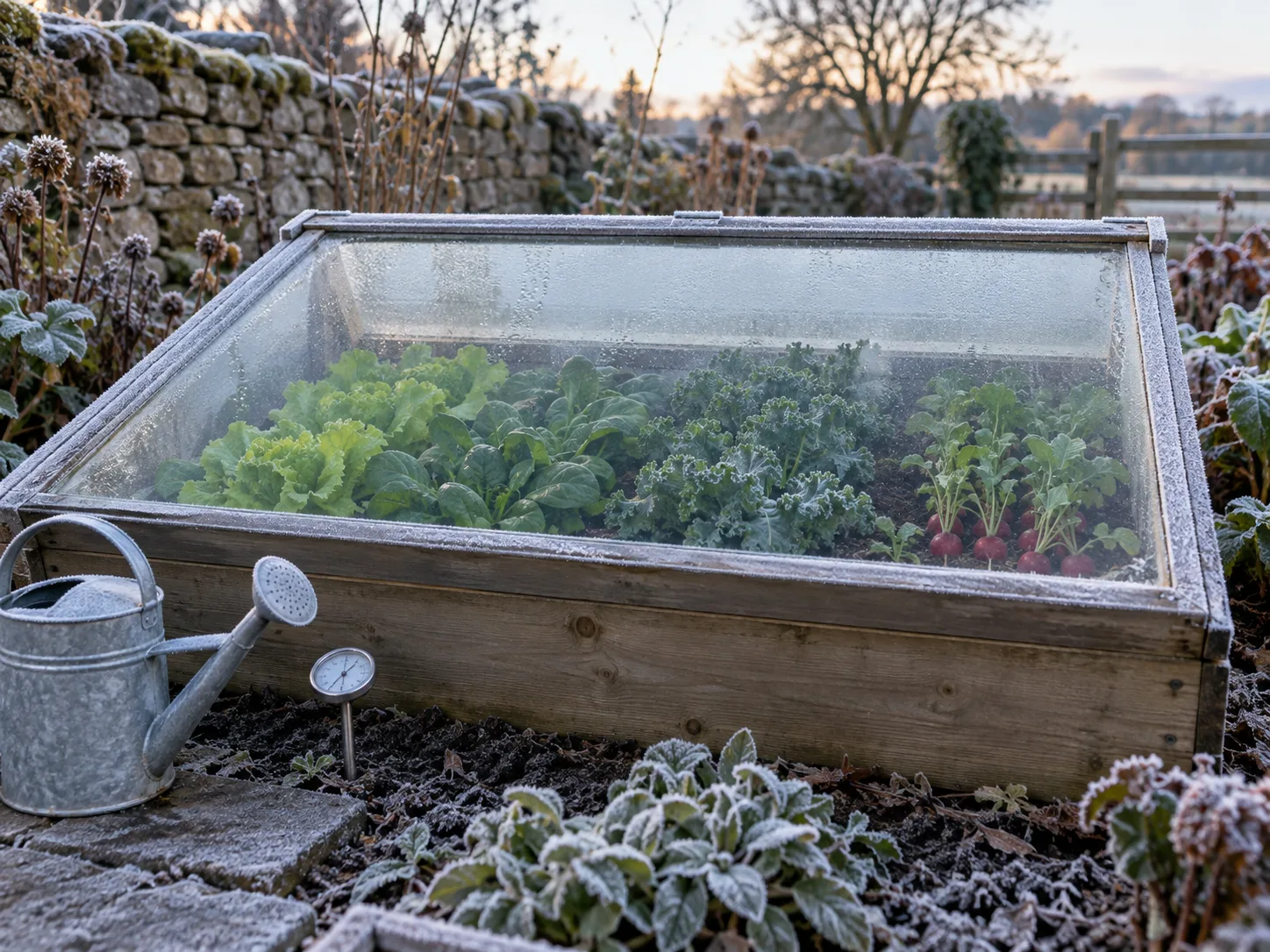
Before a hard freeze, make sure the bed drains and remove damaged leaves that are lying against the crown. A light mulch between rows can buffer soil temperature, but avoid burying the rosettes under wet, compacted material. After snow melts, pull back heavy mulch so light and air can reach the plants; resume picking once leaves are thawed and firm rather than brittle.
If winter temperatures are severe or fluctuate sharply, grow a small test patch under cover before counting on mâche for a continuous harvest. The RHS recommends cloches in very harsh weather, and Utah State Extension notes that established plants can overwinter and produce an early spring crop. Those recommendations are compatible: protection improves reliability, while local exposure determines how much cover is needed.
Harvest Rosettes for Baby Leaves or Whole Heads
Harvest timing depends on the texture and quantity you want. You can begin taking a few leaves once a rosette is established and has enough outer growth to spare, or wait until plants form compact clusters and cut whole rosettes at the base. Seed growers commonly harvest whole mâche plants when they are around 2–3 inches tall; Utah State Extension also describes harvesting leaves from larger plants and allowing the center to continue producing.
For a rough schedule, Utah State Extension says leaf harvest can begin two to three weeks after emergence, while Homes & Gardens describes first cropping at about four to six weeks and longer for mature plants. Those are different harvest goals, not a dependable countdown: a baby leaf can be usable before a plant forms a full rosette, and cool weather or short days slow growth. Judge the crop by leaf size and firmness, then harvest a small sample before cutting the whole row.
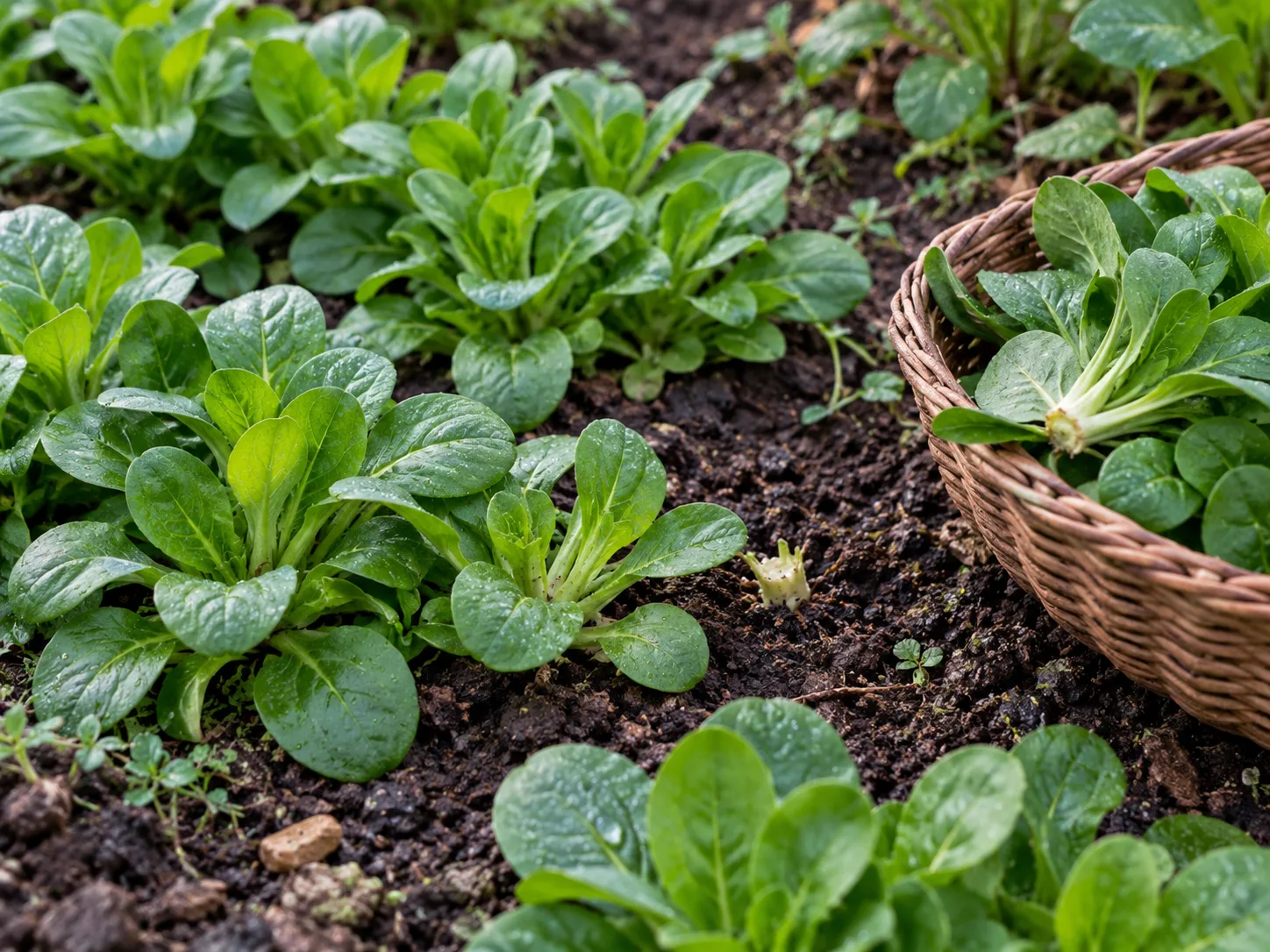
Use clean scissors or a sharp knife and harvest when leaves are dry if possible. Wet leaves collect soil and are more likely to bruise during cleaning. If the rosette is still small, cut one or two outer leaves rather than removing half the plant; if you want a single generous harvest, cut the whole plant just above the soil line and leave the root behind.
Use a Cut-and-Come-Again Approach
Mâche can regrow after leaf picking if the central growing point remains intact and the plant is not already flowering. Take the outside leaves and leave the inner leaves and crown untouched. This gives you several smaller pickings, not an indefinite supply: cold, short days, crowding, and spring heat all slow or end regrowth.
For a dense baby-leaf planting, treat it as a one-cut crop and sow another short row rather than trying to force repeated harvests from crowded seedlings. For larger rosettes, harvest selectively and leave several days between pickings so the center can replace leaves. If a plant starts stretching upward and forming flower stems, harvest usable leaves promptly; once bolting is underway, leaf texture and flavor usually decline.
Wash and Store Leaves for Best Quality
Mâche grows close to soil, so grit often hides between the leaves. Trim roots or the tough base, separate the rosettes, and swish them gently through a bowl of cool water. Lift the leaves out instead of pouring the gritty water over them, then rinse again if sand settles at the bottom. Dry the greens well in a salad spinner or on a clean towel before storing or dressing them.
Refrigerate the leaves in a container lined with a dry paper towel or clean cloth. Utah State Extension gives a storage window of about five to seven days, but small, tender leaves are at their best sooner, especially if they were wet or bruised at harvest. Add dressing just before serving; a light vinaigrette lets the mild, nutty flavor come through without weighing down the leaves. Mâche can also be folded into warm dishes at the end of cooking, when residual heat wilts it without turning it mushy.
Troubleshoot Poor Germination, Slugs, and Leaf Damage
No seedlings after two weeks: Check soil temperature first. If it has been above about 70°F, the seed may be dormant rather than dead; wait for cooler weather and sow a fresh, shallow row. If temperatures were cool, check whether the surface dried, the seed was buried too deeply, or heavy watering washed it away. Confirm that the seed packet is within its viability period before blaming the soil.
Patchy emergence: Mâche seed is tiny, so uneven contact with rough soil often creates gaps. Rake the surface fine, firm it lightly, sow evenly, and water with a gentle spray. Do not compensate by burying the next sowing deeper; shallow seed needs light soil cover and consistent surface moisture.
Seedlings vanish or leaves have ragged holes: Slugs and snails favor the damp, low-growing patch. Inspect at dusk or after rain, remove hiding debris near the row, and use physical barriers or hand-picking. A row cover can help exclude some pests, but close it securely and check underneath so slugs are not trapped with the crop. Utah State Extension also lists aphids, loopers, flea beetles, leaf miners, slugs, and damping-off among possible problems, though it notes that mâche has relatively few production issues overall.
Plants are yellow or soft at the base: Look at drainage and airflow before adding fertilizer. A saturated crown, crowded leaves, or persistently wet cover can cause decline; thin the patch, improve drainage, and water less often. If individual leaves have spots or tunnels, remove affected material and avoid working among wet plants. Rotate the next crop to another bed if disease has been recurring.
Let a Few Plants Set Seed or Remove Them Before Bolting
As spring warms, mâche sends up flower stems and stops making the same compact salad rosette. If you want to save seed or encourage volunteers, leave a few healthy plants in an out-of-the-way corner until seed heads dry. Collect them before they shatter if you want to sow in a chosen bed, or let them drop if you are comfortable with seedlings appearing nearby later.
If volunteers would be a nuisance, cut plants before seed matures and remove them from the bed. Do not assume a crop will reliably return exactly where you want it: volunteer density depends on weather, soil disturbance, and how much seed reaches the ground. A saved seed patch can reduce future purchases, but a fresh packet gives more predictable spacing and makes it easier to keep the crop within a dedicated row.
Conclusion
For dependable mâche, sow into cool soil, not merely on a date labeled “fall planting.” Prepare a fine, weed-free bed, cover the small seed lightly, and keep the surface evenly moist until seedlings emerge. Thin for airflow, water when the root zone begins to dry, and use a row cover or cold frame when wind and severe frost threaten an established crop.
Choose your harvest strategy before you cut: pick a few outer leaves for repeat small harvests, or take compact rosettes whole for a quick, tidy salad crop. Mâche will not grow rapidly through the darkest, coldest weeks, and warm soil can stall new seed, but that seasonal timing is exactly what makes this modest green useful. With one well-timed sowing and a backup row a week or two later, you can harvest tender leaves when the rest of the garden is between seasons.



