How to Grow and Care for Tiger Jaws Succulent Indoors
Grow Tiger Jaws succulent in bright light and gritty soil. Learn to water by growth cues, prevent rot, propagate offsets, and encourage yellow blooms.
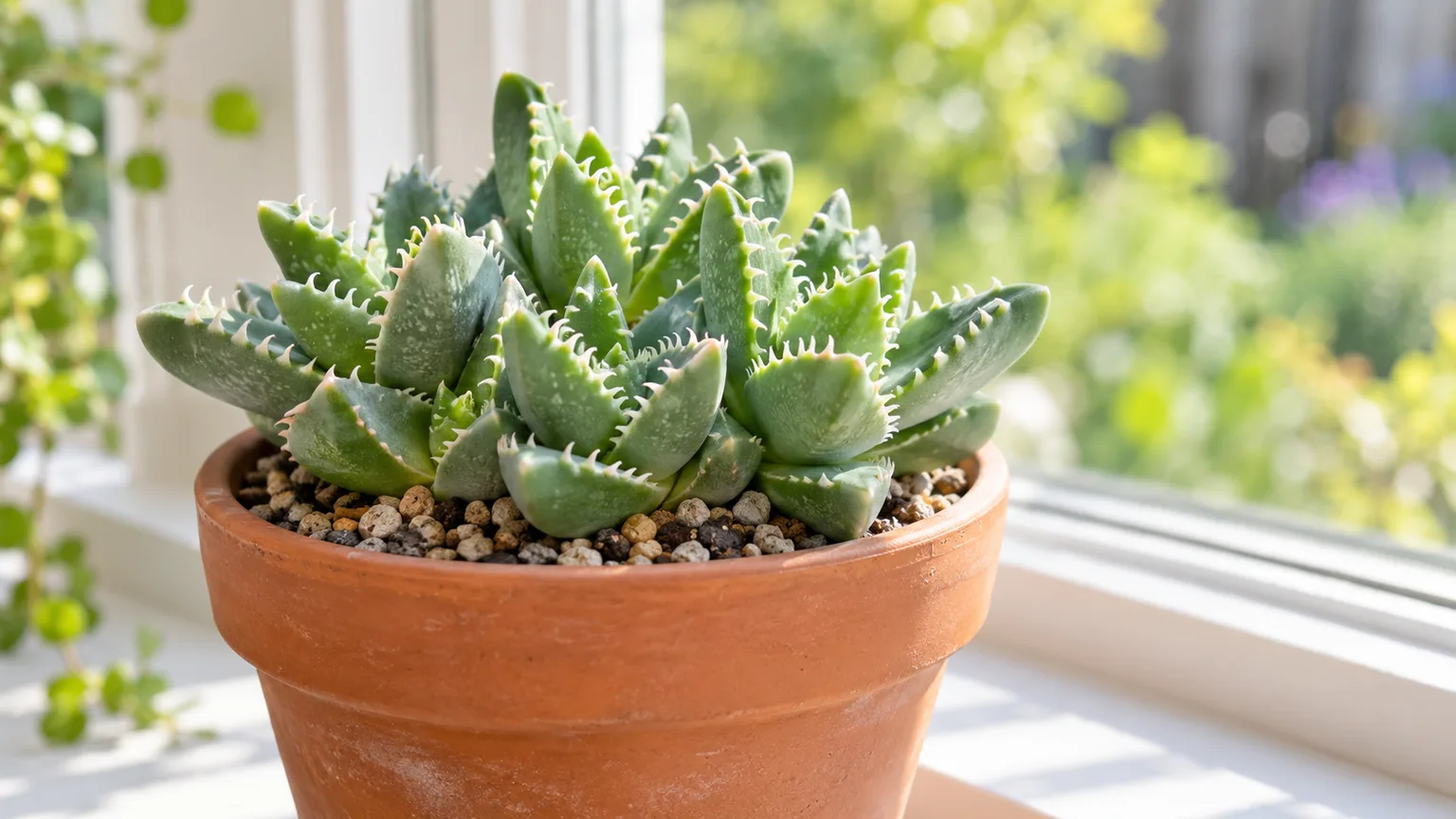
Tiger jaws is a compact succulent with paired, triangular leaves edged by soft, tooth-like projections. It looks tough, but its most common failure is ordinary and preventable: roots stay wet too long in a cool, dim room. Give it strong light, a gritty mix, and a watering routine based on actual growth and dry soil, and this slow-growing plant can remain attractive for years.
The botanical name most often attached to tiger jaws is Faucaria tigrina. It is a small, clumping member of the ice-plant family, Aizoaceae, from South Africa’s Eastern Cape. Its unusual foliage is the attraction, though a mature, well-lit plant may also produce large yellow, daisy-like flowers.
Quick Care at a Glance
| Need | Practical target |
|---|---|
| Light | Brightest available window; several hours of direct sun after gradual acclimation |
| Potting mix | Gritty, porous cactus mix with pumice or another durable mineral grit |
| Water | Wet the root ball thoroughly, drain, then wait until the mix is dry before watering again |
| Temperature | Warm room conditions; protect from frost and cold, wet compost |
| Humidity | Ordinary indoor air with good circulation; avoid persistently damp conditions |
| Feeding | A dilute, low-nitrogen succulent fertilizer during active growth, sparingly |
| Repotting | When the mix has broken down, roots crowd the pot, or the clump needs room |
| Main risk | Root and crown rot from water lingering around the roots |
Start with the pot and light, then adjust watering. A plant in weak light, a deep plastic pot, and peat-heavy soil will dry much more slowly than one in a sunny window and a small terracotta pot, so a calendar interval cannot safely fit every home.
Know the Plant Before You Choose a Spot
Faucaria tigrina forms tight, low clumps of fleshy leaf pairs. The leaf edges carry pale, flexible teeth; they look fierce but are not hard spines. The leaves may be green, gray-green, or take on reddish tones in strong light.
In its native habitat, the plant grows among rocks in open patches of Eastern Cape thicket rather than in permanently wet ground. SANBI’s Kirstenbosch plant profile describes the species’ compact form, seasonal yellow flowers, and rocky habitat.
The name matters because “tiger jaws” is also used for other members of Faucaria. Kew’s Plants of the World Online recognizes F. tigrina as an accepted species, while SANBI maintains separate profiles for other Faucaria species. Nursery labels are not always precise, so use the botanical name if you want this exact species; general care remains similar across many of the commonly sold Faucaria.
There is also a conservation reason to buy thoughtfully. SANBI’s South African plant Red List profile lists wild F. tigrina as Endangered and documents a restricted Eastern Cape range.
Choose a nursery-propagated plant instead of collecting one from the wild. A cultivated plant gives you the same distinctive foliage without adding pressure to small, fragmented natural populations.
Give It Bright Light, Then Acclimate It
Place tiger jaws in the brightest spot you can provide, such as an unobstructed south- or west-facing window in the Northern Hemisphere, or the equivalent bright exposure in your location. Several hours of direct sunlight can help maintain a compact shape and support flowering. The Royal Horticultural Society’s profile recommends full light, and the leaves often become more compact and colorful when light is adequate.
A plant that has spent weeks under shop lighting or in a dim room should not be moved straight into all-day summer sun. Start with gentle morning sun or a short period outdoors, then increase exposure over one to two weeks while checking for bleached, dry patches. The aim is a firm, compact rosette, not a sudden stress response.
If the plant stretches or leans, improve light before changing fertilizer or watering. Extra fertilizer cannot replace sunlight; it can encourage weak growth that is even less able to support itself. Rotate the pot occasionally if the rosette bends toward a window, but avoid frequent moves between sharply different light levels.
Move Outdoor Plants Into Sun Gradually
Tiger jaws can spend warm weather outdoors in a sheltered, bright spot, which may improve growth and flowering. Move it outside only after nights are reliably mild, and keep it out of prolonged rain. A covered patio or a spot where the pot can be moved under shelter is safer than an exposed bed that remains wet after storms.
For the first week, give it bright shade or early sun, then lengthen direct exposure gradually. Bring it back indoors before frost or a cold, rainy spell. Even where winter temperatures rarely freeze, a pot of wet compost can chill the roots much faster than dry mineral soil.
Choose a Gritty Mix and a Draining Pot
The soil should let water pass through quickly while holding enough fine material for roots to anchor. A reliable starting point is a commercial cactus mix amended with pumice, lava rock, or coarse horticultural grit.
If mixing from components, the SANBI cultivation notes give a useful mineral-forward example: two parts loam, one part coarse sand, and one part pumice. The exact ratio can change with your climate and how quickly the pot dries.
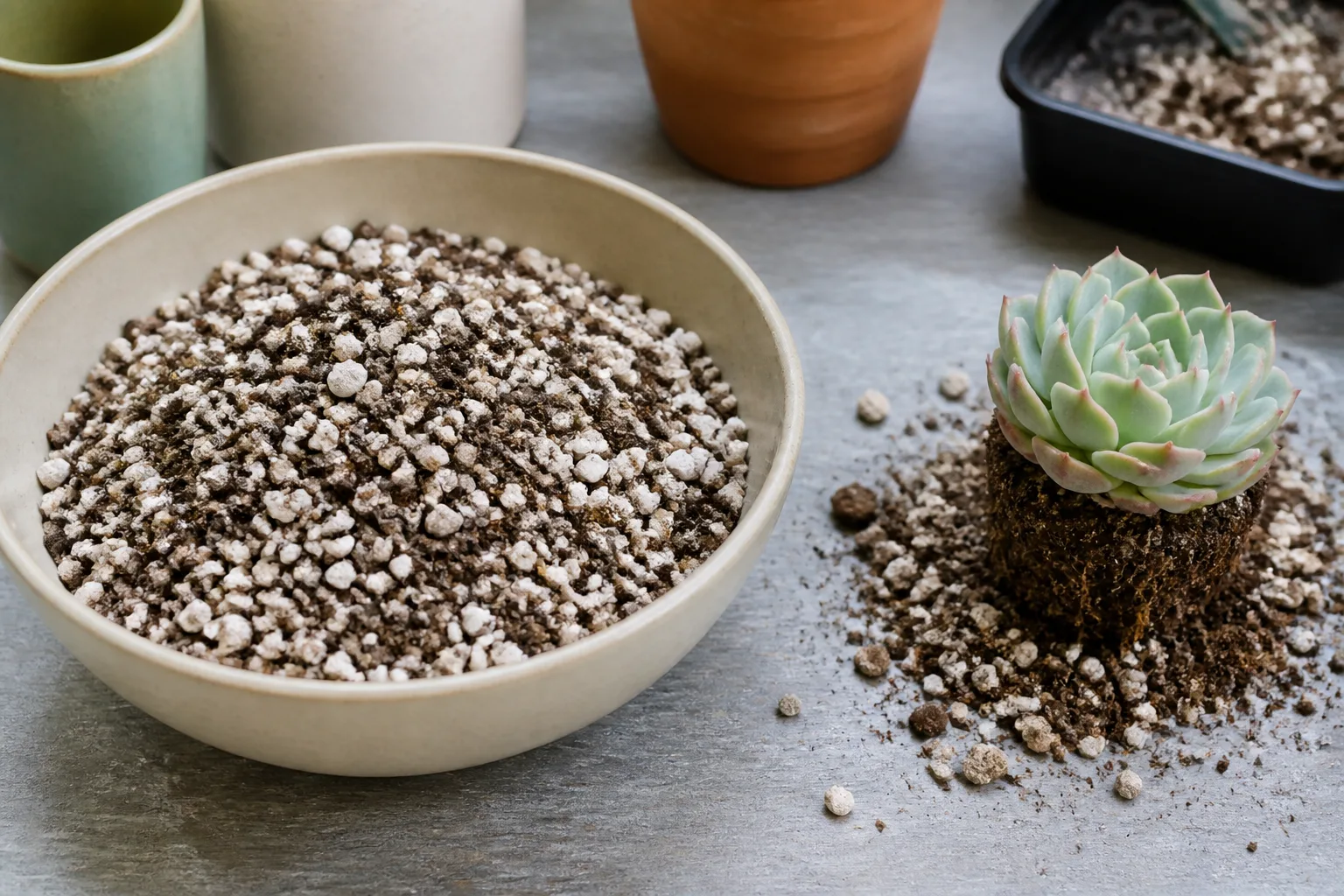
Avoid fine beach sand, dense garden soil, and mixes that remain damp for days. Fine sand can pack between particles instead of improving air space, while a peat-heavy mix may shrink or stay wet around the roots. If the potting medium is still cool and damp several days after watering in a bright, warm room, increase the mineral fraction or choose a smaller pot before reducing water to a few drops.
Use a container with an open drainage hole. Unglazed terracotta can help a mix dry more evenly in a humid home, but it is not required; plastic and glazed ceramic work if the substrate is appropriately fast-draining and you empty the saucer after watering.
Pick a pot only modestly wider than the root mass. An oversized container holds a larger volume of wet mix that the small plant cannot use quickly.
Water by Growth and Dry-Down, Not by the Calendar
Water thoroughly enough to moisten the whole root zone, let the excess run through, and empty the saucer. Then wait until the mix has dried before watering again. A small succulent does not need frequent sips; a light sprinkle wets only the surface and can leave deeper roots dry while the crown stays damp.
The right interval changes with light, season, pot material, temperature, and root health. In a warm, bright period when new leaves are forming, the plant may use water sooner. During a cool, cloudy stretch or a resting period, it may remain dry much longer.
RHS guidance is to water freely while the plant is in growth and keep it just moist at other times; SANBI emphasizes allowing the medium to dry slightly and watering dormant plants only lightly. Gardening Know How likewise advises watering when the soil is dry and reducing water in winter. Combine those recommendations with the plant’s actual activity and pot dry-down rather than following a fixed weekly or monthly schedule.
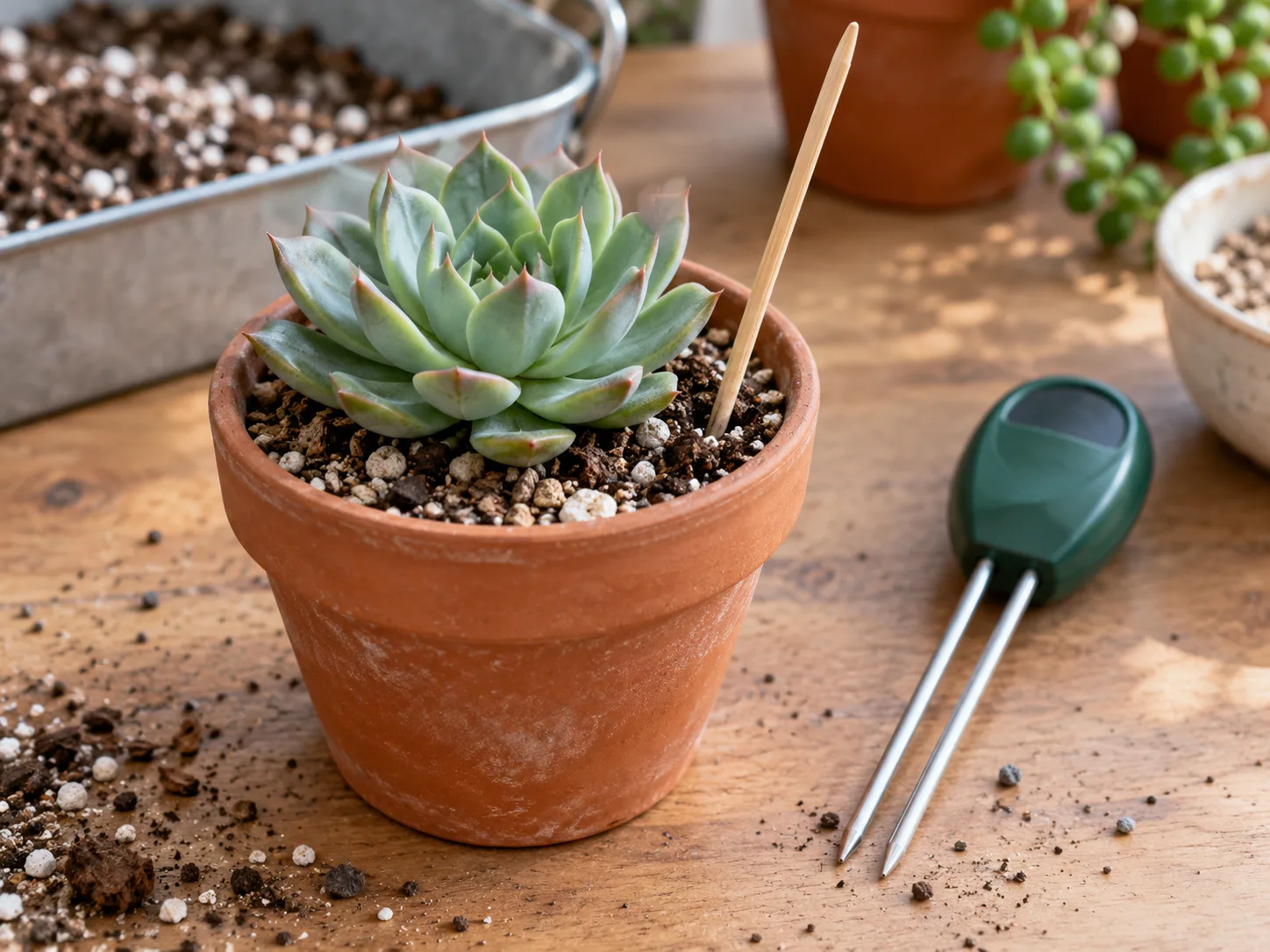
Before watering, push a clean wooden skewer into the mix near the pot edge or feel below the surface with a finger. If it comes out cool or damp, wait.
If the medium is dry through most of the root zone and the plant is actively growing, water fully. Do not make the leaves themselves the target; water that repeatedly collects between leaves in a dim, cool room can prolong moisture around the crown.
Read the Leaves Along With the Soil
Leaves give context, but they are not a moisture meter by themselves. A slightly soft, less plump plant with a completely dry mix may be ready for water; a pale or mushy plant with damp mix needs less water and better airflow, not another drink. The lower, older leaf pair may also shrink as new leaves emerge, which can be part of normal turnover.
Keep the plant drier when temperatures fall, light weakens, or growth pauses. Do not try to compensate for cold-season leaf softness with repeated watering: if roots are cold and inactive, extra moisture raises rot risk without fixing the underlying light or temperature problem. Resume a fuller soak once the plant is growing again and the mix has dried completely.
Keep It Warm, Dry, and Protected From Frost
Normal warm indoor temperatures suit tiger jaws. It tolerates cooler conditions better than some tropical houseplants, but “cool tolerant” does not mean frost-proof. RHS places it in hardiness class H2, described as tolerating low temperatures but not surviving frozen conditions; treat that as a warning to protect a potted plant from freezing rather than as permission to leave it outside through winter.
Keep the pot away from cold drafts, icy window glass, and heat vents that rapidly dehydrate foliage. More important than achieving a specific humidity percentage is avoiding a stagnant, persistently damp environment. A bright room with ordinary household humidity and gentle air movement is usually a better choice than a humid bathroom or a sealed terrarium.
If you grow it outside in a warm climate, favor a sheltered rock garden or container with exceptional drainage. The native plant grows in rocky openings among surrounding vegetation, but an ordinary garden bed may stay wet longer than its roots tolerate. In climates with freezing winters, container culture makes seasonal shelter straightforward.
Fertilize Lightly During Active Growth
Tiger jaws is slow-growing and does not need frequent feeding. During a clear period of active growth, use a balanced or low-nitrogen fertilizer formulated for succulents at a diluted rate, once or twice in the season. The RHS suggests a dilute low-nitrogen feed during late spring and summer; follow the product label and err on the weak side.
Do not fertilize dry, recently repotted, unhealthy, or dormant plants. Water first if the soil is dry, then apply fertilizer to moist mix only if the label allows it.
Strong or frequent feeding can push soft growth, leave mineral salts in a small pot, and make a low-light plant stretch. If the rosette is compact and steadily replacing leaves, extra fertilizer is unlikely to improve it.
Understand Seasonal Growth and Flowering
Tiger jaws may produce yellow, daisy-like flowers in autumn or winter, depending on the plant and the conditions in which it is grown. Flowers open in strong daylight and may close later in the day. Indoor plants need abundant light and time to mature before flowering; a young division may spend its energy establishing roots instead.
Seasonal advice can sound contradictory because the species is native to the Southern Hemisphere, where seasons are reversed for many readers, and indoor conditions do not follow outdoor calendars. SANBI describes a winter rest in its growing guidance, while horticulture references also discuss growth and flowering across different parts of the year.
Watch the rosette: new central leaves indicate activity, while a long pause during dim or temperature-stressed conditions calls for less water. Keep the root zone airy in either case.
If it does not bloom, check light and maturity before feeding it more. A plant kept far from a window may remain healthy-looking but rarely flower. Moving a plant outdoors during warm weather can increase useful light, but only after gradual acclimation and with shelter from prolonged rain.
Repot Only When the Root Zone Needs It
Repot when the mix has broken down, water no longer drains normally, roots fill the container, or the clump has become crowded and unstable. A fixed two-year schedule is unnecessary for a slow-growing succulent. If the plant is healthy and the medium still drains well, leave it alone.
Choose a pot with a drainage hole that is only slightly wider than the root mass. Gently remove loose old mix and inspect the roots; healthy roots should be firm rather than black, hollow, or slimy.
Set the plant at the same depth in dry or barely damp gritty mix, keep it in bright indirect light for a few days, and delay watering briefly if roots were disturbed. Then return it to strong light gradually.
Repotting is also a chance to separate a crowded clump, but do not divide it just to make more plants if each section would be tiny. Small divisions have fewer roots and less stored water, so they need careful light and moisture management while they re-establish.
Propagate From Offsets or Seed
The simplest home method is usually to separate a naturally formed offset. Tiger jaws grows slowly, so wait until a small side rosette has its own base and is large enough to handle. Seed propagation is possible but takes more time and a clean, controlled setup.
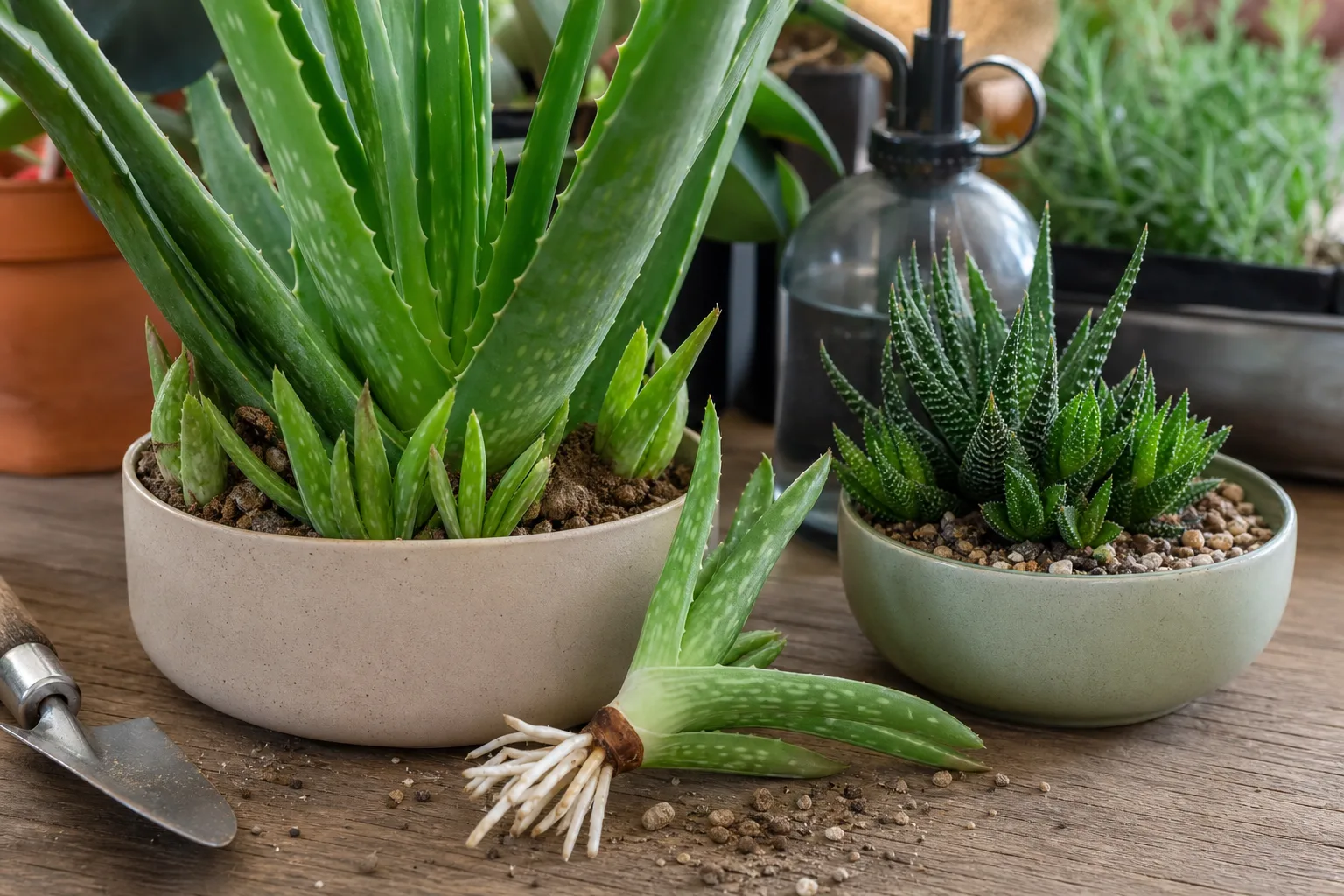
Root an Offset With Minimal Rot Risk
- Work when the plant is dry and the growing conditions are mild. Slide the clump from its pot and brush away enough mix to see where the offset joins the mother plant.
- Use a clean, sharp blade to separate the offset with a small piece of its base. Avoid tearing through the leaves, and do not force off a rosette that has no clear attachment.
- Leave the cut surface in a dry, shaded, ventilated place until it has sealed. A small cut may callus within a day; a larger wound can take longer, so judge the surface rather than following a rigid timer.
- Set the offset in a small pot of dry, gritty mix, with the base just supported by the medium. Keep it in bright indirect light while roots begin forming, then gradually reintroduce stronger sun.
- Wait several days before the first modest watering, and only water once the mix is dry again. If the base darkens or softens, stop watering and inspect for rot.
Do not begin with daily misting or a sealed plastic bag. A succulent offset needs enough air and a mix that dries; continually wetting the wound can undo the benefit of letting it callus. If it resists a very gentle tug after a few weeks and new leaves are forming, it is likely rooting.
Start Seedlings in a Controlled, Clean Mix
Seeds need warmth, light, and even moisture to germinate, so they require a different routine from mature plants. SANBI’s seed guidance uses a clean, well-draining medium and shallow sowing; sow seeds on the surface or cover them only lightly, then keep the surface evenly moist until germination. Use a clear cover only as a temporary humidity aid and vent it so seedlings are not left sealed in stagnant, wet air.
Once seedlings emerge, increase ventilation and light gradually while keeping them from drying out completely. Tiny roots can be damaged by a heavy stream of water, so use a fine mister or bottom-water briefly and let excess drain.
Transplant only after true leaves and a stable root system develop. Seed-grown Faucaria may not match the parent exactly if cross-pollination occurred, and it will take longer to reach flowering size than a rooted offset.
Diagnose Changes in Leaves and Shape
Change one condition at a time where possible. Check the soil and roots before changing watering; then consider light and temperature. The same symptom can have more than one cause, so look for a pattern instead of treating a single leaf as a verdict.
| What you see | Likely explanation | First response |
|---|---|---|
| Soft, translucent, yellowing, or mushy leaves; mix still wet | Overwatering or root/crown rot | Stop watering, improve warmth and airflow, and inspect roots if decline continues |
| Thin, stretched leaves or a leaning rosette | Insufficient light | Move brighter gradually; do not compensate with fertilizer |
| Slightly wrinkled leaves; mix dry throughout | Dehydration, especially during active growth | Give one thorough soak, drain fully, and observe recovery |
| Red or purple tint with firm leaves | Strong light or environmental stress response | Check for scorch; retain bright light but avoid abrupt exposure changes |
| Older outside leaves drying as new leaves appear | Normal leaf replacement may be occurring | Leave firm, dry leaves until they loosen; remove only dead material |
| No flowers | Young plant, limited light, or unsuitable seasonal conditions | Increase light safely and allow time; do not force with heavy feeding |
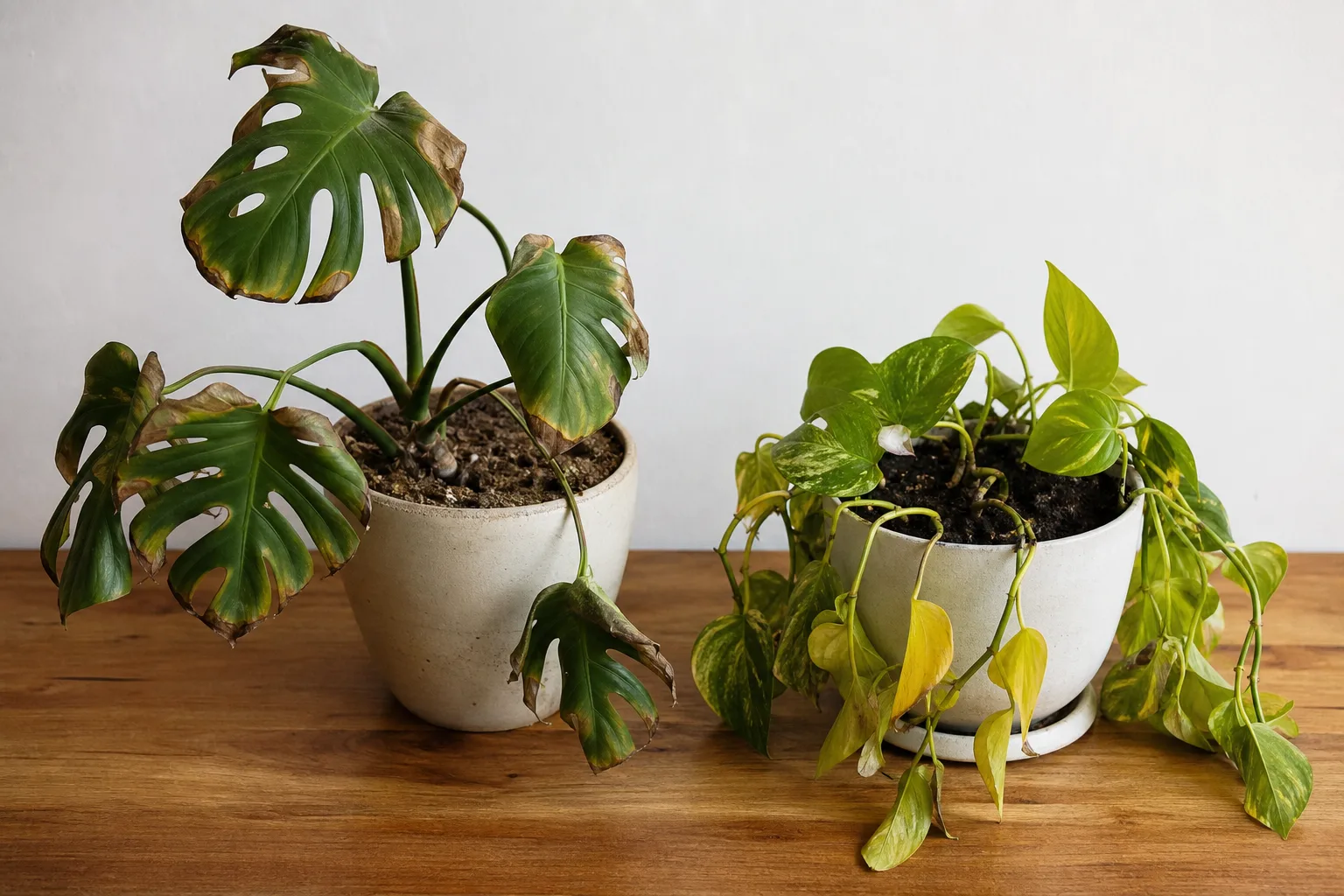
Mushiness is the most urgent sign because rotting tissue can spread. Unpot the plant if the base is soft, dark, or collapsing; remove clearly rotten roots and leaves with a clean tool, let wounds dry, and replant the firm healthy portion in fresh dry mix. If the crown has rotted through, save any sound offset with a clean cut, but discard diseased material rather than reusing it.
A wrinkled plant is not automatically thirsty. If the mix is wet, damaged roots may be unable to take up water, and another soak makes the problem worse. If the mix is dry and the plant has healthy roots, water thoroughly once and wait; repeated small drinks obscure whether the plant recovered.
Check for Pests and Treat Rot Early
Mealybugs can hide in leaf joints and under the plant, while spider mites may cause dull, stippled foliage. Inspect the center of the rosette and the soil line when growth changes unexpectedly. Isolate an infested plant, remove visible insects with a cotton swab or a controlled rinse, then recheck weekly; follow the label if you use a product intended for indoor plants.
Rot is more often a growing-condition problem than a contagious disease. Wet soil combined with low light, cool temperatures, poor drainage, or a pot without an outlet creates the conditions for roots and the crown to deteriorate.
Remove decaying material promptly, replace saturated medium, and wait for healthy tissue before resuming normal watering. SANBI notes that good drainage and air circulation reduce fungal trouble in Faucaria.
Do not mist a plant daily to manage pests if doing so keeps its crown wet. Instead, inspect regularly, improve airflow, and use a targeted treatment appropriate to the pest. If insects return, check nearby plants and the underside of the leaves rather than increasing fertilizer or watering.
Avoid the Care Mistakes That Usually Kill It
The most damaging mistake is watering by habit. A weekly schedule may be too often in a cool room or too seldom in a hot terracotta pot, so use the soil’s dry-down and the plant’s growth as your cues. Always let water drain; do not leave the pot standing in a saucer.
The second mistake is assuming that a succulent must have the hottest sun immediately. Low-light plants can scorch after an abrupt move outdoors, while plants kept too far from a window gradually stretch. Acclimate it in steps and use firm, compact growth as the goal.
Other avoidable problems include choosing a pot much larger than the root ball, using dense soil that stays wet, feeding a dormant plant, and repotting on an arbitrary calendar. A small plant in a modest pot is easier to water predictably and recover from mistakes. When in doubt, improve drainage and light first, then wait for the plant to show how it responds.
Conclusion
Grow tiger jaws as a bright-light, low-humidity succulent with fast-draining soil and a pot that has an open drainage hole. Water the root zone thoroughly only after the mix dries, then reduce watering when the plant slows or conditions turn cool and dim. Protect it from frost, feed sparingly, and propagate only offsets with enough base to root; if leaves become mushy, inspect the roots before adding more water.
For a healthy start, place the plant in bright indirect light, confirm that water drains freely, and check the mix before the next watering. Once it is established, the compact clump and unusual leaf edges need little pruning or fuss.



