How to Grow and Care for Utah Juniper Trees
Plan the right site for Utah juniper (*Juniperus osteosperma*), then learn how to establish it, limit avoidable stress, and recognize its cones and foliage.
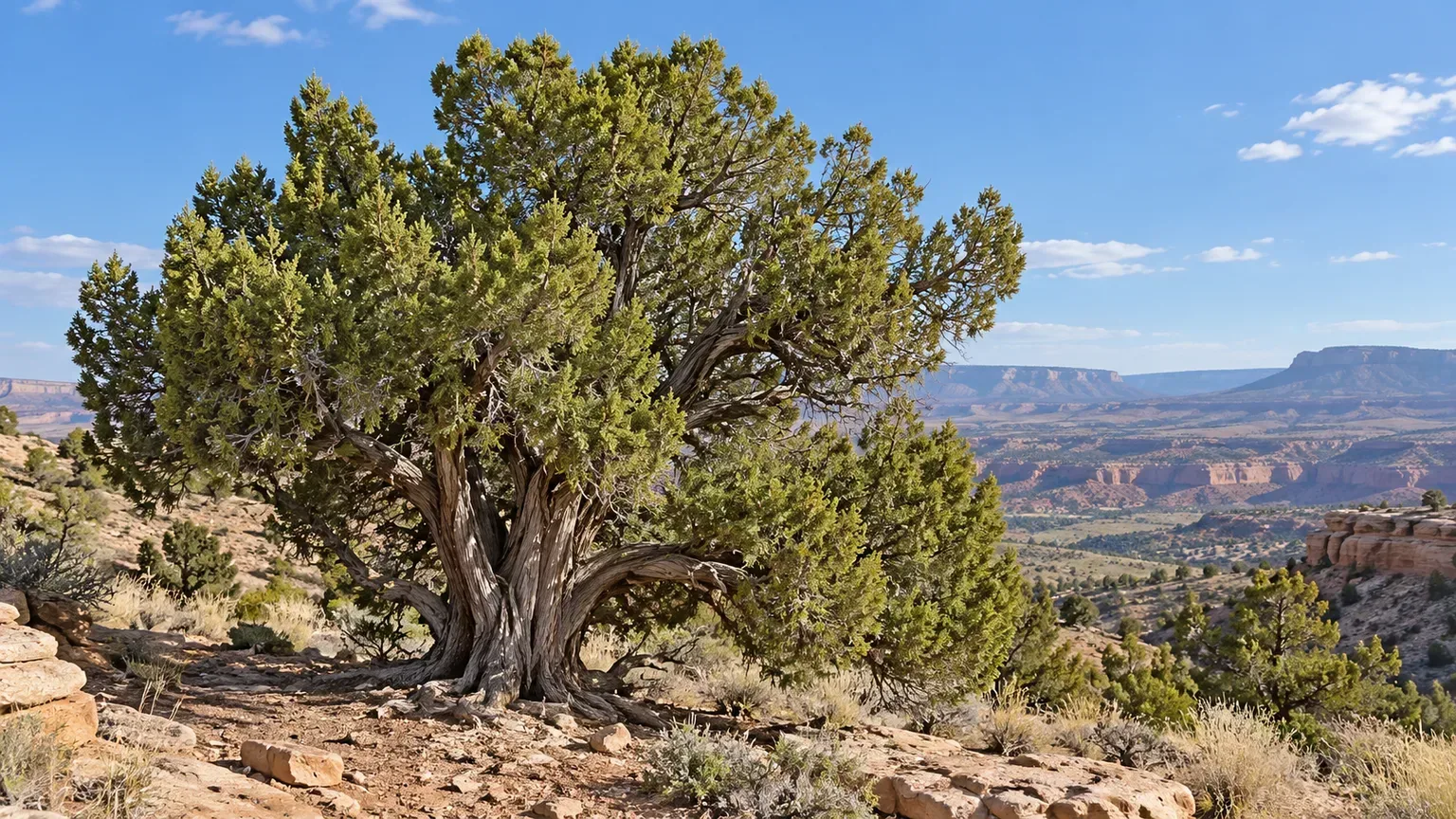
Utah juniper (Juniperus osteosperma) is built for open, dry country: it tolerates strong sun, rocky ground, wind, and long gaps between rains. In a garden, those same adaptations make it a useful evergreen for a dry, well-drained site, but they do not make a newly planted tree invulnerable. A nursery transplant still needs help establishing roots, and a persistently wet planting hole can be more damaging than a dry spell.
The best results start with a realistic expectation. Utah juniper grows slowly, develops an irregular form, and can live for centuries in the right landscape. Give it enough room, plant it high enough to keep the root flare at grade, and water according to the moisture in the rootball rather than a calendar.
Utah Juniper at a Glance
Utah juniper is a small tree or large shrub in the cypress family, Cupressaceae. Mature plants often have several low branches, a rounded or uneven crown, yellow-green scale foliage, and gray-brown bark that breaks into fibrous strips. Oregon State University’s Landscape Plants profile describes a mature height of roughly 15 to 30 feet, while Virginia Tech’s dendrology fact sheet describes a small, shrubby tree or large bush that can reach about 25 feet. A dry exposed site may keep a tree shorter and more open than a protected garden site.
This is a species, not a compact landscape cultivar with a guaranteed outline. A plant sold as Utah juniper may become a broad, multi-stemmed specimen rather than the narrow screen suggested by photos of columnar ornamental junipers. Check the botanical name on the nursery label and ask about the source and expected size of that particular plant before choosing a tight foundation bed or narrow side yard.
Its small, round seed cones are often called berries because they look fruit-like. They are not fleshy fruit: Virginia Tech notes that Utah juniper cones are typically about a quarter to half an inch across, begin bluish with a waxy coating, and mature over two growing seasons into a dry reddish-brown form. That slow maturation is one reason a young garden tree may look unchanged for a while before producing cones.
Is Utah Juniper Right for Your Landscape?
The species makes the most sense where a gardener wants a durable evergreen that can handle dry soil once established, not a fast-growing screen or a tree that will stay petite. It is native across much of the arid West, including the Great Basin and Colorado Plateau. Oregon State University describes it on dry, rocky ground and slopes, and the National Park Service account of Canyonlands’ Utah juniper places it in a high-desert woodland landscape where harsh sun, limited water, wind, and winter cold occur together.
That background is useful because it helps identify the conditions the tree can tolerate; it is not a reason to plant it anywhere and stop watering forever. The native tree’s mature roots and long adaptation to local soils are not the same as the small root system of a recently transplanted nursery specimen. A new tree can dry out before it develops roots beyond its original container, and a plant in a wet lawn or heavy irrigation zone may struggle despite its drought reputation.
Utah juniper is also slow. A modest nursery plant may take years to become a substantial specimen, and its natural irregular branching is part of its character. If you need a rapid visual screen, a tightly clipped hedge, a small-space accent with a predictable outline, or a plant for a damp garden, choose a different species rather than trying to force Utah juniper into that job.
Match the Climate, Not Just the Hardiness Zone
Cold tolerance is only one piece of site fit. Oregon State University lists the species as hardy to USDA Zone 3, but hardiness zones describe average annual extreme winter temperatures; they do not measure summer humidity, soil drainage, monsoon rain, or how long the soil stays wet. A tree can tolerate winter cold yet still be poorly matched to a warm, humid, irrigated yard.
If you garden outside the species’ native dry-western range, ask a local extension service or native-plant nursery whether it performs in your summer climate and soil. A sunny position in a dry-summer region is a closer match than a shaded low spot that receives regular sprinkler overspray. In cold climates, plant early enough for roots to settle before frozen ground, and protect a young tree from severe drying wind without wrapping the foliage in an airtight cover.
The National Park Service reports that wild Utah junipers occur on the Colorado Plateau around 4,500 to 7,000 feet elevation. That range is not a required planting elevation, but it illustrates that this tree evolved in a climate with strong seasonal contrasts. Use your local rainfall pattern and soil behavior along with the zone number when deciding whether a nursery-grown specimen is likely to thrive.
Choose a Site That Drains Fast
Utah juniper is a poor choice for a site where water stands after rain, runoff collects against the trunk, or irrigation keeps the root zone wet for days. Its natural habitat points toward air in the root zone and long intervals between substantial moisture. The Fine Gardening juniper genus guide likewise recommends well-drained soil and full sun or very light shade for junipers generally; this is genus-level advice, so the exact tolerance still depends on species and growing conditions.
Before planting, observe the proposed spot after a normal rain and after irrigation. If it remains saturated, fix the drainage pattern or select a better location rather than filling only the planting hole with gravel or loose potting mix. A sharply different pocket can collect water like a basin when surrounding soil is dense. Avoid sites where lawn sprinklers repeatedly soak the trunk and root flare, and do not create a low depression around the tree while mulching.
Sun, Soil, and Mature Footprint
Choose full sun if possible. Utah juniper tolerates some light shade, but an open position best matches its natural habitat and helps keep the crown dense. A tree crowded by buildings or larger shade trees may become lopsided or thin; shade can also coincide with slower soil drying, so account for both light and moisture before planting.
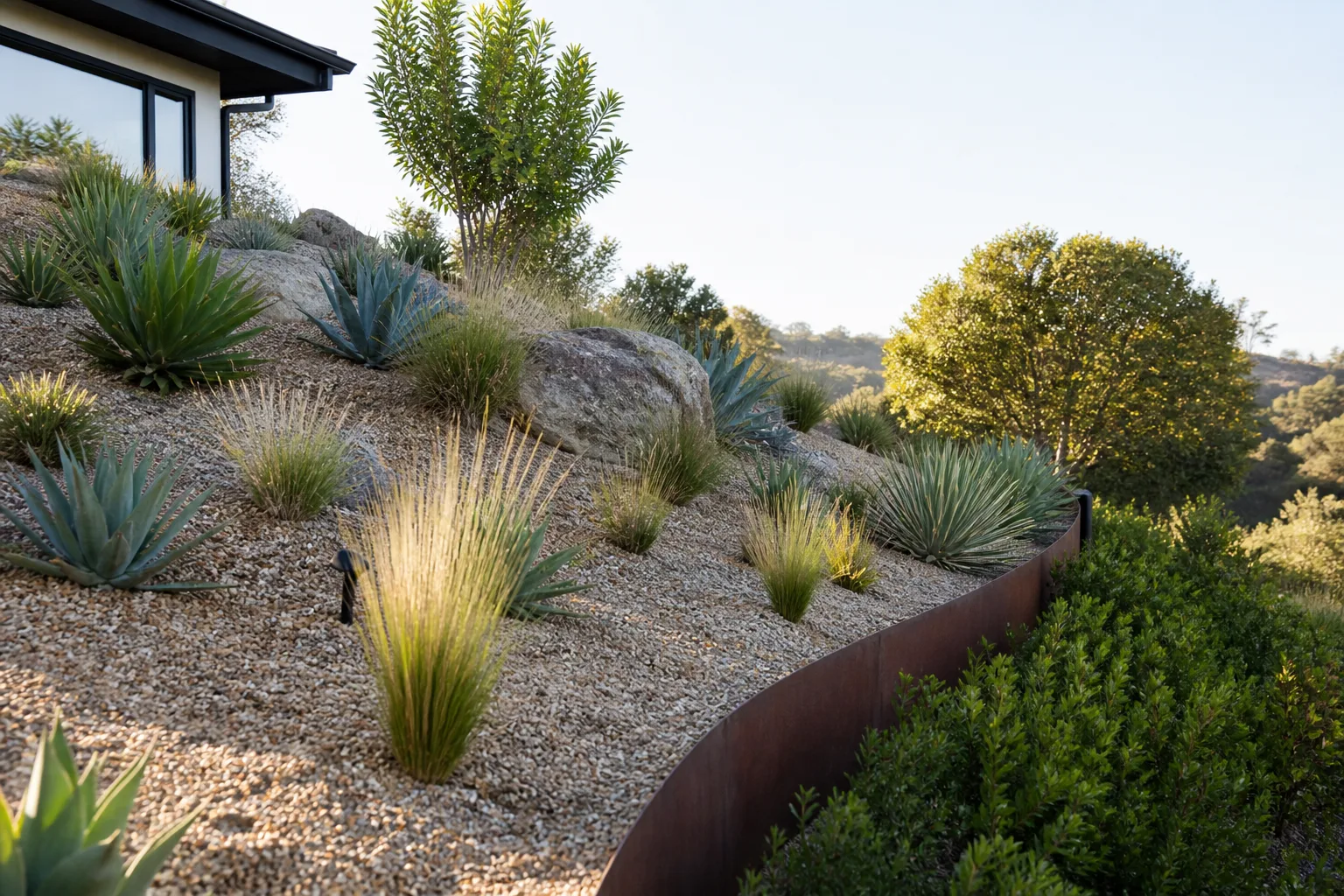
Do not try to recreate a desert by replacing the yard with gravel. The useful requirement is a well-drained root zone, not a sterile planting hole. The species tolerates rocky and sandy ground, but it still needs a stable root zone and reasonable establishment moisture. Ordinary soil that drains freely is often preferable to extensive amendments that change the soil structure in one small spot.
Allow for a broad and irregular mature crown. Oregon State’s 15-to-30-foot height range and Virginia Tech’s estimate of up to about 25 feet are useful planning references, not guarantees of width or shape. Place the tree where branches can spread without repeatedly striking a roof, blocking a path, or needing annual shearing. Consider underground utility lines before digging, and keep enough access to inspect the trunk and water the root zone during the first seasons.
Plant a Nursery-Grown Tree Correctly
A healthy container-grown sapling from a reputable regional nursery is usually a better starting point than trying to dig a wild tree. Utah juniper is slow growing and develops a substantial root system in its native habitat; moving an established wild plant can remove too much of that root system and damage the source landscape. Never collect from public land or private property without explicit permission. A nursery plant also gives you a known size, intact rootball, and a fair chance to select a plant adapted to local production conditions.
Plant when the ground is workable and weather is mild enough to reduce immediate heat or freeze stress. In many cold-winter regions that means spring; in areas with mild winters and hot summers, a cool-season planting window can help. Local nurseries can advise on regional timing. Water the container thoroughly before planting so the rootball is evenly moist, then dig a hole only as deep as the rootball and several times wider if soil conditions allow.
Slide the tree from its pot without pulling on the trunk. Loosen circling roots at the outside of the rootball; if thick woody roots wrap tightly around it, ask the nursery or an arborist whether the plant is worth correcting before planting. Set the tree upright, backfill with the excavated soil, and water slowly to settle it. Avoid burying the trunk or adding fertilizer into the planting hole.
Keep the Root Flare Visible
Find where the trunk widens into the first structural roots. That transition, called the root flare, should finish level with or slightly above the surrounding soil, not buried under several inches of backfill. A rootball that is too deep may keep the lower trunk wet and make it harder for roots to establish into the surrounding soil.
After planting, check that water drains away rather than pooling against the trunk. Apply a thin layer of organic mulch over the root zone to reduce evaporation, but leave a clear gap around the trunk. Do not stake automatically: stakes are useful only if the rootball rocks in wind, and ties should be loose enough to allow slight trunk movement. Remove supports once the tree stays stable on its own.
Water Deeply While It Establishes
Drought tolerance describes an established plant’s ability to survive dry periods; it does not mean the rootball of a new transplant should be allowed to dry completely. For the first growing season, inspect moisture in both the original rootball and the nearby soil. When the rootball is drying several inches below the surface, apply water slowly over the root area so it penetrates instead of running off. Recheck after watering, and adjust the interval for heat, wind, soil texture, and rainfall rather than following a universal weekly schedule.
The National Park Service describes mature wild Utah junipers with deep and widespread root systems that can find water in harsh terrain. A container-grown tree arrives with a much smaller root system, so it cannot yet draw on the wider soil volume of an established tree. Give it a thorough soak when needed, then let excess water drain. Frequent shallow sprinkling encourages surface moisture without wetting the deeper root zone and can leave the rootball dry even when the soil surface looks damp.
After the first season, gradually reduce supplemental water as roots grow outward. In dry climates, an established tree may need occasional deep watering during a long drought, especially if nearby construction, compacted soil, or competing roots limit access to water. In wet climates, the better response may be to improve drainage rather than add or withhold water on a calendar. Water is not helpful when roots are starved of oxygen in saturated soil.
For a newly planted tree going into a dry winter, check soil moisture before the ground freezes. If autumn has been unusually dry and the rootball is still accessible, water it deeply on a mild day. Do not keep watering frozen or saturated ground. Winter watering is a response to actual dry soil and local weather, not a routine weekly chore.
Mulch, Fertilizer, and Winter Care
Mulch helps stabilize moisture and temperature while the tree establishes, even in a dry-climate planting. Spread a shallow, breathable layer over the root zone and extend it outward as the crown grows, keeping mulch away from the trunk. Rock mulch can work in a xeric design, but it does not improve soil structure and can make it harder to see whether the rootball is drying; monitor moisture directly instead of judging by the surface appearance.
Routine fertilizer is rarely the first answer for a slow-growing Utah juniper. The tree’s natural growth rate is measured in seasons and years, not rapid flushes. If foliage is pale or growth is unusually weak, first check planting depth, drainage, moisture, sunlight, and root disturbance. Test the soil before using amendments or fertilizer, and follow a local recommendation if a specific nutrient deficiency is confirmed. Excess nitrogen can stimulate weak growth without fixing the underlying site problem.
A well-sited established tree needs little winter preparation. Young trees may benefit from a temporary wind screen in a very exposed location, but keep air moving and remove it when conditions improve. Do not use plastic wrapped tightly around foliage. In areas with heavy snow or ice, avoid pruning into a rigid artificial shape; the tree’s naturally irregular branching is more resilient than a sheared outline that traps snow at weak branch junctions.
Prune Conservatively and Keep Its Natural Form
Utah juniper does not need annual shaping. Remove dead, broken, crossing, or hazardous branches when necessary, and use sharp clean tools to make cuts just outside the branch collar without leaving a long stub. Fine Gardening’s general Juniperus guidance notes that junipers need very little, if any, pruning. The safest approach is to preserve the natural crown and intervene only when a specific branch creates a problem.
Avoid topping the tree or cutting deeply into old, bare wood to make the silhouette smaller. Junipers may not produce new growth from branch sections that have no green foliage, leaving a permanent hole instead of a neatly shortened limb. The University of Washington’s Elisabeth C. Miller Library explains this limitation in its juniper pruning guidance. If a branch has grown beyond available space, remove it back to a living lateral branch or retain the natural size and relocate a young plant. For major structural work on a mature tree, consult an arborist familiar with conifers.
The timing depends on the reason for pruning. Dead or damaged wood can be removed when it is safe to do so; structural pruning is easiest when you can see the branch framework clearly and avoid extreme heat or winter conditions. Do not prune away large amounts of live foliage at once, particularly from a drought-stressed tree. A slow-growing evergreen has limited capacity to replace foliage quickly.
Propagation: Seed and Cuttings Take Patience
Growing Utah juniper from seed is possible but is not a quick or predictable route to a landscape tree. The cones mature over two growing seasons, and the species’ hard seed and slow development add time before a seedling is ready to plant outdoors. Birds and mammals disperse seeds in the wild, as the National Park Service describes, but natural seedling establishment does not translate into a simple nursery-style germination schedule for a home gardener.
Junipers generally can be difficult to raise from seed. Fine Gardening recommends cuttings as a propagation route for the genus, while noting that seed germination is slow. Rooting a cutting requires a suitable healthy donor plant, clean technique, steady moisture, and patience; success depends on the age and maturity of the shoot and the growing setup. It can be a worthwhile experiment, but it is not the dependable way to produce a large, established tree.
For a garden planting, buy a nursery-grown Utah juniper with a clear scientific name and a rootball suited to the planting site. If you want to propagate a particular specimen, ask a regional native-plant nursery or extension specialist about local timing and technique. Do not collect seed or cuttings from a wild tree unless you have permission and have checked applicable land rules.
Identify Utah Juniper and Avoid Look-Alikes
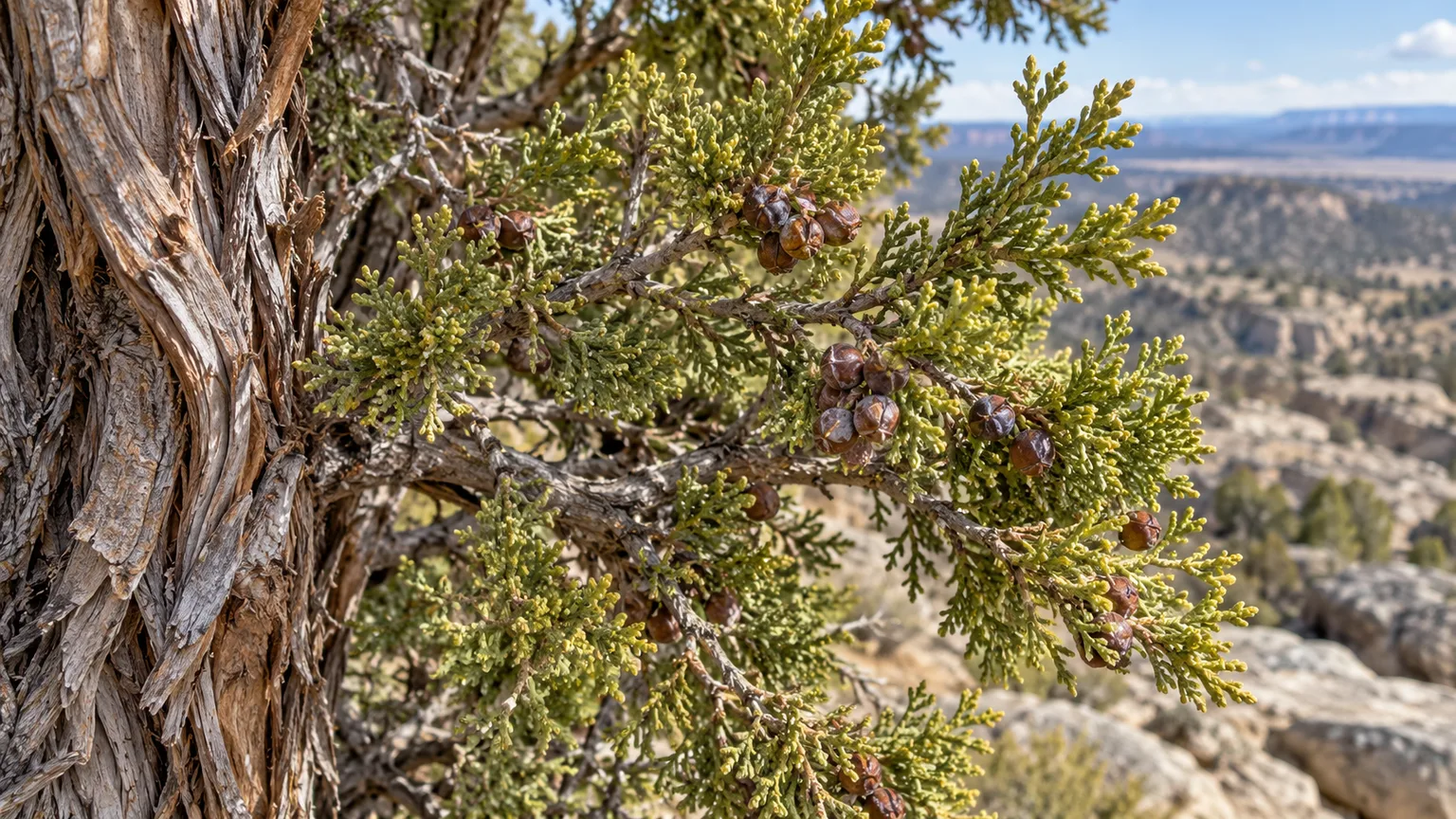
Look for a broadly rounded, often irregular evergreen with yellow-green scale foliage, slender angular twigs, and gray or light-brown bark that may separate in fibrous strips. Virginia Tech’s dendrology profile describes leaves that sit tightly against the twig in opposite pairs; vigorous shoots can also carry a few sharper, awl-like leaves. That combination is more useful than foliage color alone, which changes with light, drought, age, and camera exposure.
The small cones add another clue. Young cones are bluish with a powdery wax coating; mature cones turn dry and reddish brown, often with one or two hard seeds. Virginia Tech notes that they mature over two growing seasons. The close view below emphasizes the scale foliage, fibrous bark, and dry seed cones that help distinguish the species from junipers with brighter, fleshy-looking cones.
Tell Utah Juniper From Rocky Mountain Juniper
Utah juniper is often confused with Rocky Mountain juniper (Juniperus scopulorum) because their native ranges overlap and both retain scale foliage. Utah juniper usually has a bushier, more irregular crown, yellow-green foliage, and cones that become relatively dry and brown when mature. Rocky Mountain juniper is often more upright or conical, and its cones commonly retain a waxy blue appearance. These are tendencies, not a substitute for checking a plant’s label or comparing several features together.
A narrow upright nursery plant labeled “juniper” may be a cultivar of another species chosen for landscape screening, not Utah juniper. BBC Gardeners’ World Magazine’s juniper profile shows how widely junipers vary in habit, foliage color, and eventual size. Compare the scientific name, expected mature dimensions, bark, and cone characteristics instead of relying on the common name or a single photograph.
If exact identification matters—for example, when selecting a native restoration tree or diagnosing a regional plant issue—use a local botanical key, university dendrology profile, or extension office. Photographs can hide subtle differences in twigs and cones, while young nursery stock may not show mature bark or reproductive features yet.
Diagnose Brown Branches and Dieback
A few dead inner twigs do not automatically mean the whole tree is dying. Mature Utah junipers can shed selected branches, and the National Park Service describes self-pruning as one way a wild tree conserves resources. That natural process usually affects some branches while much of the crown remains healthy. A pattern that spreads rapidly through the canopy or begins soon after transplanting deserves a closer look.
Start with the root zone. Is the original rootball dry even though surrounding soil is damp? Is water pooling near the trunk? Was the tree planted too deep, moved recently, or exposed to an unusually hot, dry, windy period? Correct the condition that is actually present: water a drying rootball deeply, stop routine irrigation in saturated soil, and remove mulch piled against the trunk. Do not add fertilizer or prune away large areas until you understand the cause.
The National Park Service notes that Utah junipers can self-prune branches to conserve water, but that observation from wild trees is not a diagnosis for every browning garden plant. “Drought tolerant” should not be read as “cannot suffer drought injury,” especially soon after planting or after roots are disturbed. If whole branches brown, mark the affected areas and watch whether the pattern progresses. Check for physical trunk damage, pests, or lesions, but ask a local extension office or certified arborist to identify a serious or expanding problem before applying any treatment.
Use Utah Juniper for Wildlife and Dry-Site Structure
A Utah juniper can provide evergreen structure in a low-water landscape once it is established, especially where a broad, irregular specimen suits the design better than a clipped hedge. The tree’s open branching and muted green foliage pair naturally with rocks, dry-climate grasses, and other plants adapted to similar drainage and irrigation. Keep plant spacing generous enough that the juniper can reach its mature size without being crowded by neighbors that need frequent water.
The cones also support wildlife. The National Park Service notes that birds, jackrabbits, and coyotes eat the seed cones and help disperse seeds across the landscape. In a home garden, retain some natural branching and avoid treating every cone as litter if wildlife value is part of your planting goal. A single specimen can add year-round cover and seasonal food without creating a dense monoculture.
If you live in a wildfire-prone area, treat the tree as woody vegetation and follow your local fire authority’s defensible-space guidance for distance, pruning, and nearby fuels. Utah juniper is not a substitute for a fire-safe landscape plan. Likewise, do not place a mature tree where its roots, crown, or shade will conflict with utilities, structures, or paths; the slow rate of growth can make it easy to underestimate the future footprint.
Conclusion
Utah juniper succeeds when the site matches its ecology: plenty of sun, soil that drains freely, and room for a slow-growing, irregular crown. The species can handle drought after it becomes established, but a nursery transplant still needs careful moisture checks until roots grow into surrounding soil. Plant it at the correct depth, avoid saturated ground, and let its natural shape develop rather than pruning it into a form it cannot maintain.
Before buying, verify Juniperus osteosperma, confirm that your climate and irrigation pattern suit a dry western conifer, and plan for mature dimensions rather than the size of the pot. Those choices will do more for long-term health than fertilizer or frequent trimming.



