12 Colorful Hosta Types for a Brighter Shade Garden
Compare 12 colorful hosta varieties by foliage color, mature size, and light needs, then match gold, blue, and variegated leaves to the shade in your garden.
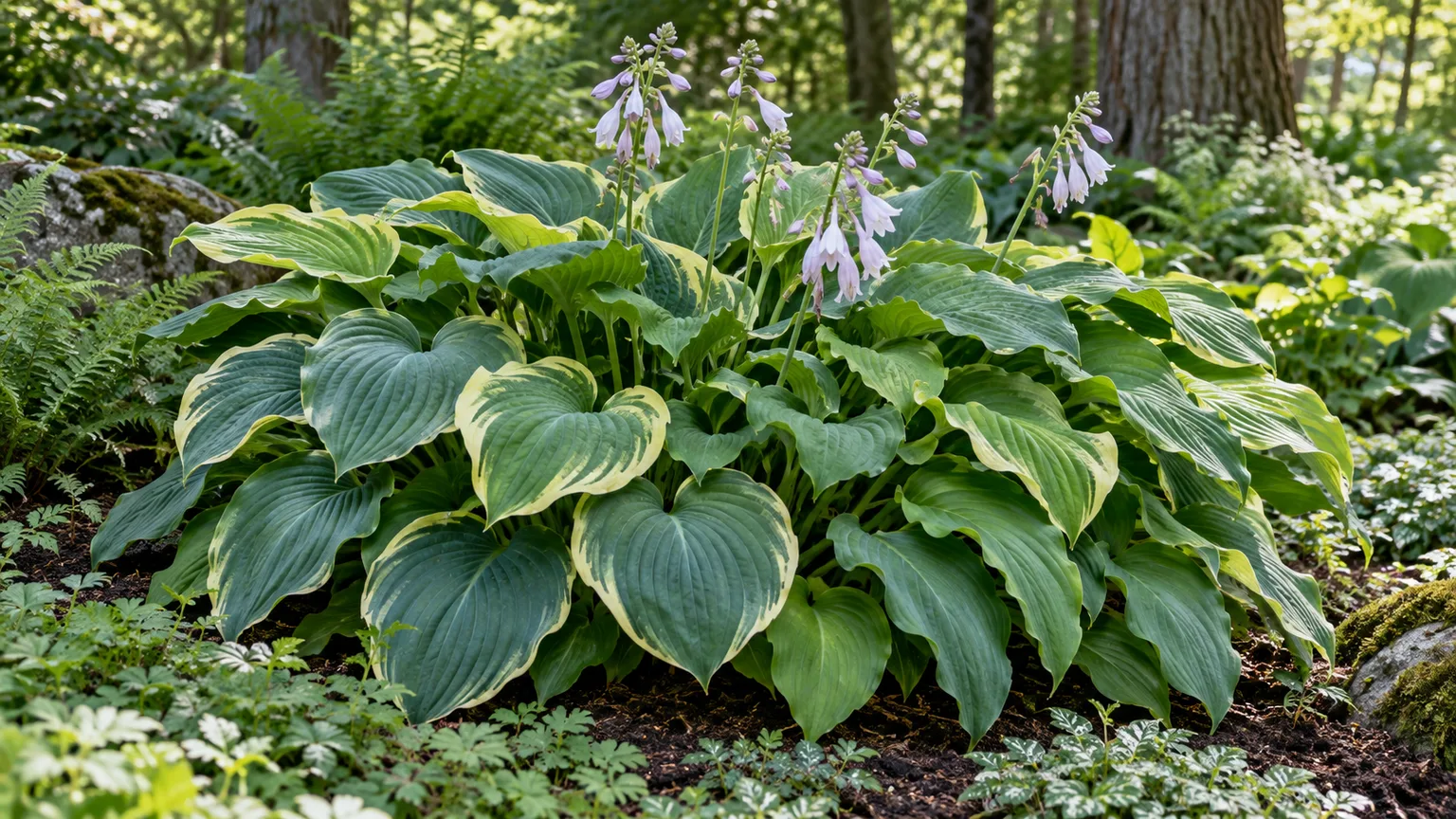
Hostas are not limited to plain green leaves. Their foliage can read as blue-gray, chartreuse, golden yellow, or green edged or centered in white and cream, while leaf shape and texture add another layer of contrast. The right cultivar can brighten a shaded border, anchor a woodland bed, or give a container a strong focal point.
The catch is that a plant’s color in a nursery photo is not a guarantee of the color it will hold in your garden. Light, heat, soil moisture, leaf texture, and the season all affect the display. RHS guidance, for example, recommends some sun for many yellow-leaved hostas while blue-leaved types do better in lighter shade; the American Hosta Society’s Hosta Helper explains that the blue cast comes from a surface bloom that wears away as the season advances. (RHS Hosta growing guide; American Hosta Society’s Hosta Helper)
Use the table to narrow the choices, then read the cultivar notes before buying. The size descriptions are practical comparisons rather than guarantees: mature width varies with age, climate, soil, and growing conditions, so leave room for the plant’s full clump instead of spacing from the pot you bring home.
| Hosta | Foliage effect | Best fit |
|---|---|---|
| ’Ground Sulphur’ | Low, sulfur-yellow mound | Small border or edge |
| ’Fire Island’ | Bright yellow leaves on red stems | Morning-lit accent |
| ’Sum and Substance’ | Oversized chartreuse-gold leaves | Large focal point |
| ’Golden Tiara’ | Green leaves with gold margins | Repeating edging or ground cover |
| ’Blue Moon’ | Compact blue-green leaves | Small bed or container |
| ’Halcyon’ | Textured, long-lasting blue-green | Reliable mid-sized accent |
| ’Elegans’ | Large, corrugated blue-green leaves | Broad shade bed |
| ’Minute Man’ | Dark green leaves with white margins | Crisp contrast in shade |
| ’Undulata Variegata’ | White-centered, green-edged leaves | Wavy, high-contrast foliage |
| ’Patriot’ | Bold white margins around green | Bright edging or grouping |
| ’Frances Williams’ | Blue-green leaves with yellow-green margins | Large, sculptural clump |
| Hosta plantaginea | Glossy green leaves; fragrant white flowers | Late-summer scent |
Gold and Chartreuse Hostas
Gold and chartreuse hostas are the easiest choices when a dark corner needs a lift. Many color best with a little gentle sun, especially in the morning, but their leaves still need protection from hot afternoon exposure and dry soil. The shade-loving hosta range is broad; gold foliage is a cue to test a brighter position, not a reason to plant in full, baking sun. (RHS Hosta growing guide; Gardener’s Path hosta cultivar guide)
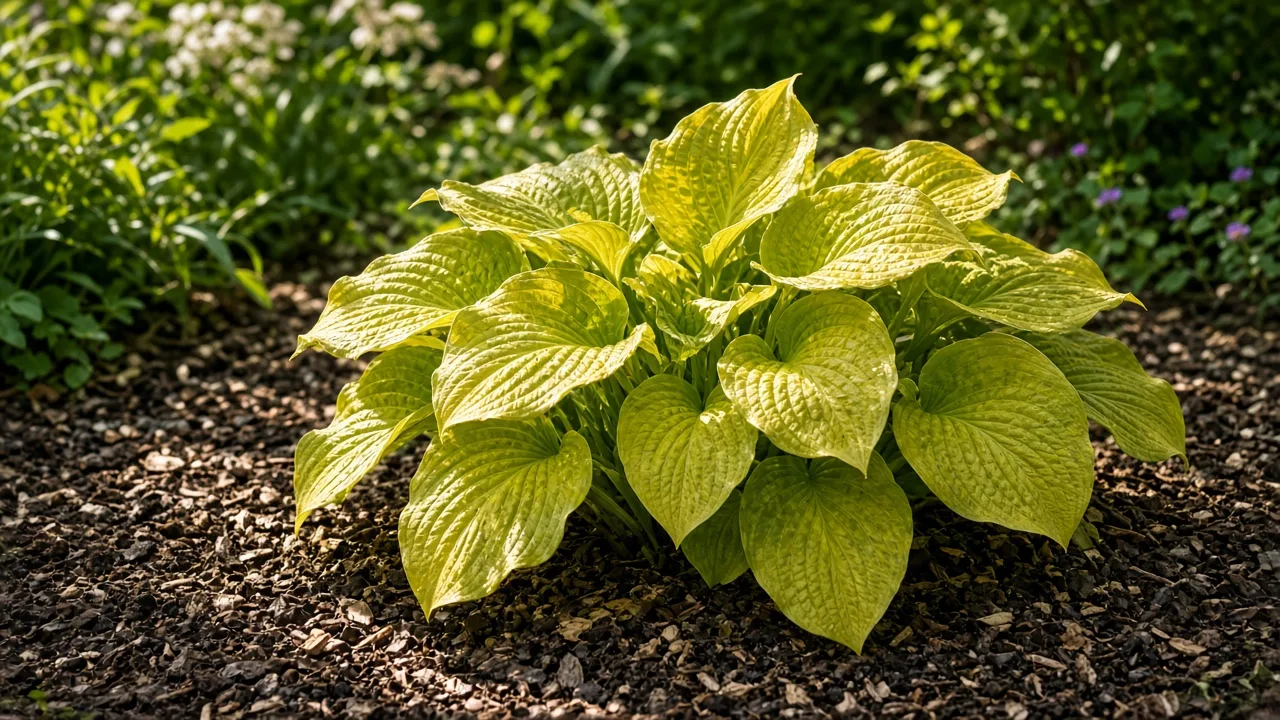
‘Ground Sulphur’
‘Ground Sulphur’ makes a compact, low mound of sulfur-yellow, heart-shaped foliage, so it suits the front of a shade border or a small space where a giant hosta would overwhelm its neighbors. Its color reads clearly against dark mulch and green ferns, and its low habit makes it useful as an edging plant rather than a background specimen.
Give it enough light to show its yellow tone, but keep it out of reflected heat beside a pale wall or pavement. Because the leaves sit close to the soil, check them after damp nights for slug and snail feeding; a tiny hosta can lose much of its best foliage to a few holes.
‘Fire Island’
‘Fire Island’ is valued for its bright yellow foliage and reddish leaf stems, which make the plant look vivid even before it flowers. The leaves tend to soften from strong yellow toward chartreuse as summer progresses, so it works especially well where its fresh spring color can be seen up close rather than being expected to stay lemon-yellow all season.
Site it in morning light with afternoon shade, and keep the root zone evenly moist. It is a good small-to-medium accent for the front half of a bed; use the nursery label for final spacing because its mature width expands beyond the footprint of a young plant.
‘Sum and Substance’
If you want a hosta that reads as a large landscape feature, ‘Sum and Substance’ is the gold choice to consider. It forms a broad clump of huge, glossy, deeply textured leaves that can look chartreuse in shade and more golden where it receives some gentle light. Allow several feet of room around it as it matures; planting it in a narrow strip beside a path will eventually force you to cut back the foliage or move the plant.
The large leaves give it presence beneath a tree or at the back of a border, but they also make dry soil conspicuous: leaf edges can brown when the root zone repeatedly dries. Better Homes & Gardens lists it among the large hostas and describes it as a limited, rather than complete, deterrent to slugs, a useful reminder that thick or tough foliage is not pest-proof. (Better Homes & Gardens hosta guide)
‘Golden Tiara’
‘Golden Tiara’ has green leaves outlined with irregular golden margins, giving it a two-tone effect without the oversized footprint of ‘Sum and Substance.’ It spreads into a rounded, medium-sized mound and is often used along a border edge or repeated in groups where a bright rim of foliage can lead the eye through a shady planting.
The cultivar is often described as more tolerant of somewhat dry soil than many hostas, but that should not be mistaken for drought tolerance. Water during prolonged dry weather, especially while a new plant is establishing, and place it where the soil drains after rain. Its yellow edge is most useful in dappled light, where the contrast remains visible without exposing the leaves to harsh afternoon sun.
Blue and Blue-Green Hostas
“Blue” hostas are blue-green leaves covered by a thin, waxy bloom that reflects light; the plant is not producing a permanent blue pigment. The bloom is strongest on fresh spring foliage and may wear down with heat, sun, rain, and handling, so a plant can look greener later in the season without being unhealthy. Choose shade or light shade, avoid brushing the leaves, and treat the color as a spring-to-summer effect rather than a fixed swatch. (American Hosta Society’s Hosta Helper)
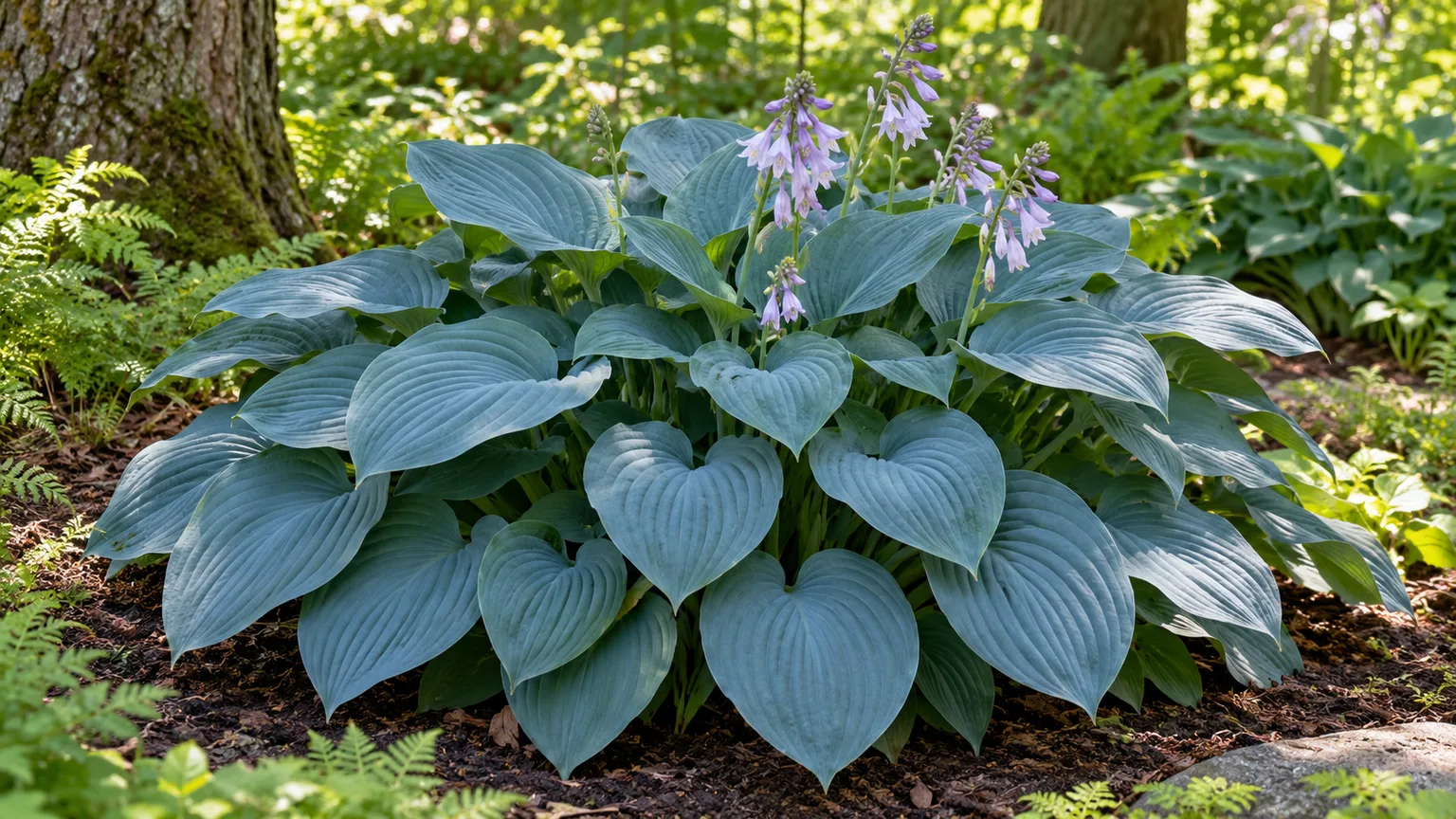
‘Blue Moon’
‘Blue Moon’ is a compact blue-green hosta with rounded, heart-shaped leaves. It is a practical option for the front of a woodland bed or a container where its leaf color can be appreciated at close range, rather than being lost under the broad foliage of much larger cultivars. Small hostas often look best when paired with other plants that stay low enough not to cover them.
The cooler blue cast is most reliable in shade, especially during the warmest part of the day. Keep the soil moist but not waterlogged, and do not rub or polish the leaves to make them look brighter; that can remove the very surface bloom that gives the foliage its blue appearance.
‘Halcyon’
‘Halcyon’ is one of the more dependable choices when you want a medium-sized blue hosta with substantial, textured leaves. Its foliage is broad, blue-green, and strongly ribbed, so it contributes structure as well as color; lavender flowers rise above the clump in summer. It is easier to place than a giant cultivar and has enough leaf mass to hold its own beside ferns or other shade perennials.
Its relatively firm leaf texture may reduce slug damage compared with thinner-leaved hostas, but no hosta is completely safe in a damp garden with heavy slug pressure. A Better Homes & Gardens cultivar list rates several thick-leaved types as having some slug resistance, and RHS likewise recommends thicker-leaved cultivars as a way to limit feeding. Read those descriptions as “less likely to be eaten,” not “will never have holes.” (Better Homes & Gardens hosta guide; RHS Hosta growing guide)
‘Elegans’
Hosta sieboldiana ‘Elegans’ is a large, classic blue-green hosta with rounded, heart-shaped leaves, prominent veins, and a heavily puckered surface. It is at its best when allowed to become a broad specimen clump, where the corrugated leaves catch low light and provide a calm, cool counterpoint to golden or white-edged plants nearby.
Plan for a substantial spread and give it consistent moisture in a fertile, well-drained bed. Its blue cast is usually strongest early in the growing season; later, the surface bloom thins and the foliage can look greener. That seasonal shift is normal, so do not fertilize or move a healthy plant simply because the leaves are less blue in late summer. The RHS notes that hostas generally thrive in moist soil and partial shade, and that dry, sunny positions can scorch foliage. (RHS Hosta growing guide)
Variegated Hostas and a Fragrant Flowering Species
Variegated hostas combine two or more leaf colors, and the location of the pale area changes the look: a margin-edged leaf frames the green center, while a pale center makes the whole leaf appear lighter. A Minnesota Hosta Society overview highlights the range of green, blue, cream, and gold combinations and the value of leaf shape and texture; those traits matter just as much as the color names when you are choosing a planting partner. (Minnesota Hosta Society)
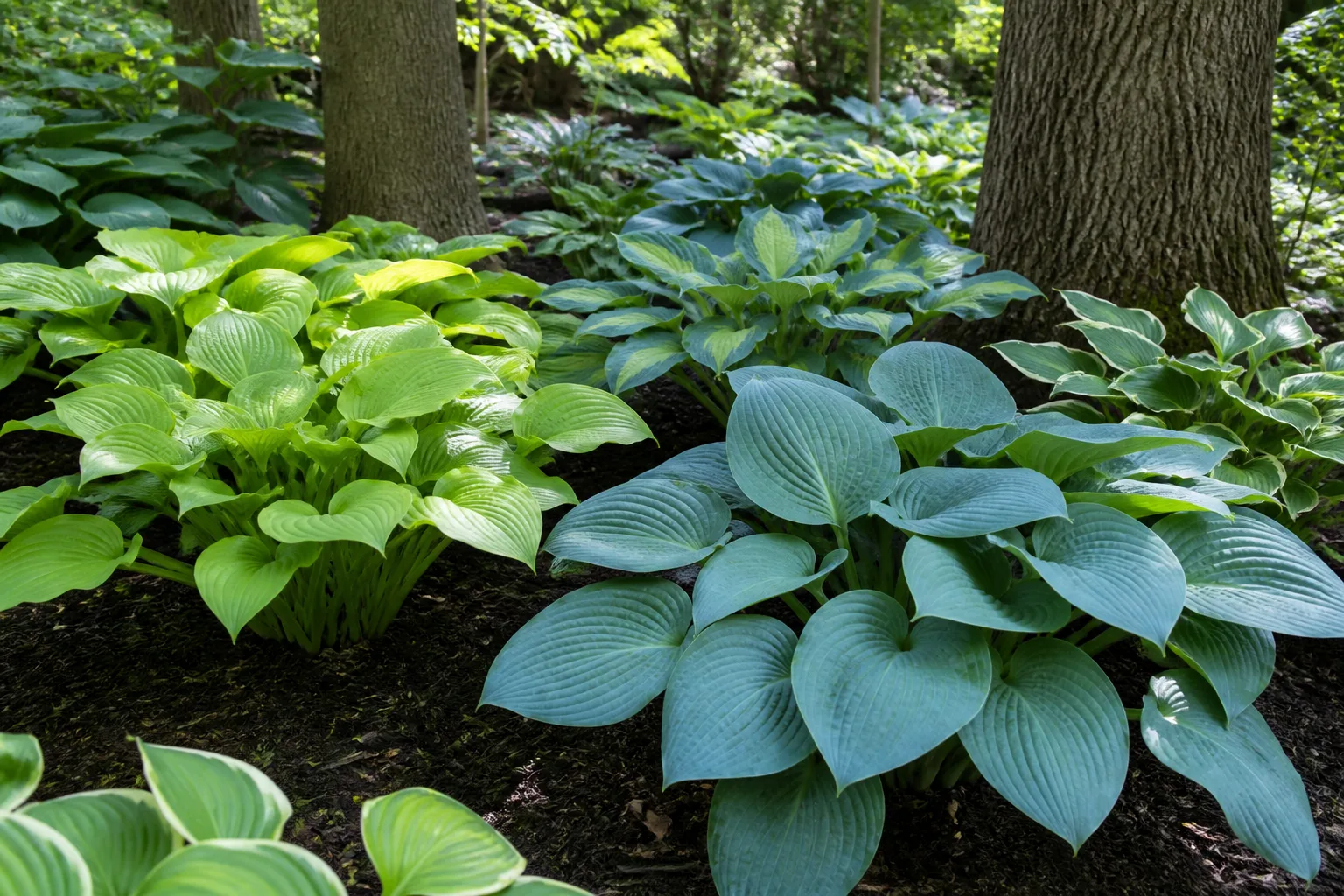
‘Minute Man’
‘Minute Man’ is a strong pick for a clean white-and-green contrast: its dark green, oval leaves carry wide white margins and slightly wavy edges. The pattern is easy to read from a path, which makes it useful at the front of a border or in a small group where repeated white edges can brighten a shaded planting.
The pale margins can look especially bright in open shade, but avoid a hot, exposed position where the leaf edge may dry or scorch. It grows into a medium-to-large mound, so leave enough room for the crown and leaf spread. If your garden is slug-prone, inspect the leaves routinely; the bold margin makes damage more visible even when the plant remains vigorous.
‘Undulata Variegata’
‘Undulata Variegata’ reverses the familiar white-edge pattern: the leaf has a pale central area and green edges, with wavy margins that add movement. That center-variegated look makes it an effective bridge between green hostas and plants with white flowers, but it can seem brighter and less solid than a dark green cultivar.
Place it in partial to full shade and keep the soil from drying hard between waterings, especially during hot weather. The paler tissue is visually delicate and can show stress sooner in strong sun, so do not choose a dry south-facing bed just because the plant looks bright in a nursery photograph. This cultivar is a good fit where you want a patterned leaf rather than a large, unbroken sheet of blue or gold.
‘Patriot’
‘Patriot’ carries crisp white margins around rich green, heart-shaped leaves. The broad edge creates strong contrast from a distance and is less subtle than the soft yellow border of ‘Frances Williams’, so it works well as a repeated edging plant or as a bright patch in a deep green bed. Lavender flowers provide a second, smaller display in summer.
Treat it as a medium hosta, not a miniature: the foliage spreads outward as the clump matures. Give it room to show its outline and use nearby plants with finer leaves, such as ferns, to keep the planting from becoming a wall of broad foliage. It will tolerate partial shade; consistent moisture helps maintain the leaf edges through warm, dry spells. Better Homes & Gardens and Gardener’s Path both include ‘Patriot’ among their recommended cultivars, noting its distinctive white-edged foliage. (Better Homes & Gardens hosta guide; Gardener’s Path hosta cultivar guide)
‘Frances Williams’
‘Frances Williams’ is a large, slow-growing cultivar with broad blue-green leaves and irregular yellow-green margins. The leaves are deeply veined and puckered, so the plant creates a bold, architectural patch rather than a fine-edged accent. Mature clumps can take several years to reach their full width, but they need generous space once established.
Use it as a focal plant in a woodland bed or at the back of a wide border, not as a tiny edging specimen. The blue-green base may turn greener as the waxy bloom fades, while the margin can vary from yellow-green to cream as foliage matures. A source-backed cultivar description from Better Homes & Gardens notes its large, thick, puckered leaves; the practical implication is to buy it for its scale and texture as well as its color. (Better Homes & Gardens hosta guide)
Hosta plantaginea
Hosta plantaginea is the outlier in a foliage-color list: its leaves are glossy green, not blue or variegated, but its large, fragrant white flowers make it a worthwhile choice when you want a sensory accent in a shade garden. The flowers open in late summer, when many shade beds have settled into a foliage-only look. Plant it where you will pass close enough to notice the fragrance rather than hiding it behind larger hostas.
This species can be more tolerant of warmth than many hostas, but heat tolerance does not remove its need for moisture or protection from dry, scorching exposure. Give it partial shade and fertile soil, and let the flowers provide the extra color interest. Better Homes & Gardens also highlights Hosta plantaginea for its fragrant white summer flowers and relative heat tolerance. (Better Homes & Gardens hosta guide)
Choose a Hosta for Your Garden Conditions
Start with the light that reaches the planting site, not the cultivar name. If the spot receives early sun and afternoon shade, try a gold-leaved hosta; for a deep, cool bed, blue-green foliage is a better fit. Green-and-white variegated types are flexible in partial shade, but the paler areas may show scorch in a hot or dry site. Hosta light preferences vary by cultivar, so use the plant label as a final check rather than applying one sun rule to the whole genus. (RHS Hosta growing guide)
Next, check moisture and drainage. Hostas like soil that stays evenly moist but does not remain waterlogged; improve poor soil with organic matter and water new plants through dry periods while they establish. Under a mature tree, roots compete for water, so a site that looks shady can still become too dry for thin-edged foliage. If the leaves develop brown, crisp margins, check the soil first and consider whether hot sun or dry wind is reaching the plant before adding fertilizer.
Finally, compare the cultivar’s mature height and spread with the available bed. Garden-center pots can make even a giant hosta look modest, and a young clump may take several seasons to fill out. The RHS advises spacing hostas according to their eventual spread and keeping them in moist, partial shade; for a small garden, choose compact cultivars like ‘Blue Moon’ or ‘Ground Sulphur’ instead of buying a large hosta and planning to divide it immediately. (RHS Hosta growing guide)
Design Around Mature Spread and Leaf Contrast
A simple shade planting can look deliberate with three leaf roles: one broad focal clump, a smaller patterned hosta near the path, and a fine-textured companion such as a fern or sedge. For example, ‘Sum and Substance’ or ‘Elegans’ can anchor a wide bed, while ‘Patriot’ or ‘Golden Tiara’ repeats a smaller contrast along the edge. The Minnesota Hosta Society notes that hosta leaf shape, size, and texture can be as useful as color in landscape design, which is why a group of different forms often looks richer than a row of similar cultivars. (Minnesota Hosta Society)
Keep large leaves toward the back or center of an island bed and low, compact cultivars where their foliage will not be hidden. Remember that a hosta clump widens over time; space the plants by expected mature diameter and use groundcover or mulch to cover gaps temporarily instead of crowding them together. Dense planting can also trap damp debris around leaves, making regular inspection harder.
Repeat colors to create rhythm, then add one contrasting form as a focal point. A blue-green hosta beside a gold cultivar gives a cool-warm contrast in spring, but the blue may become less pronounced later in summer; a green-and-white hosta offers a more stable light-dark contrast when the blue wax fades. This is a useful way to plan a bed that still looks balanced after its spring foliage shifts.
Keep Foliage Color Fresh Through the Season
Blue hostas need shade partly because their blue appearance depends on the waxy surface bloom. Avoid brushing the leaves, and water at the soil line when practical. As summer heat and rain wear away the bloom, the leaves may look greener; that does not mean the plant has lost health or needs extra fertilizer. The American Hosta Society’s Hosta Helper describes this color shift as a normal seasonal change. (American Hosta Society’s Hosta Helper)
Gold hostas need the opposite adjustment, but only up to a point: gentle morning light can strengthen yellow tones, while prolonged hot sun can dry or scorch the leaf surface. Keep the root zone moist through dry spells, and move a badly scorched plant to a shadier spot in the next suitable planting season. Pale margins and centers also look their best when they are not repeatedly stressed by drought.
Slugs and snails can chew holes through hosta leaves, and wet, sheltered conditions make damage easier to miss. Some thick-leaved cultivars may suffer less feeding, but the RHS and gardening editors describe resistance as a relative advantage rather than immunity. Check the underside of leaves and the soil around plants after damp weather; if damage recurs, reduce hiding places near the crown, keep leaves from resting on wet debris, and choose a cultivar with firmer foliage next time. (RHS Hosta growing guide; Better Homes & Gardens hosta guide)
When the season ends, allow foliage to yellow and die back naturally before tidying the bed. Remove collapsed leaves once they are spent, then use compost as a light surface mulch if the soil needs organic matter. Most hostas do not need frequent dividing; divide a clump when it outgrows its space or you want more plants, ideally while it is dormant or just emerging in spring, and replant divisions at the same depth. The RHS recommends division in spring or autumn and regular watering after replanting. (RHS Hosta growing guide)
Conclusion
The best colorful hosta is the one whose foliage suits your light, space, and expectations for seasonal change. Choose gold for a little morning sun, blue-green for a cooler shaded spot, a white-edged cultivar for high contrast, or Hosta plantaginea when late-summer fragrance matters as much as leaves.
Before buying, compare the mature spread on the nursery label with the space you have, then check whether your soil can stay moist without becoming waterlogged. That small bit of planning makes it easier to enjoy the hosta’s color for years instead of moving an oversized clump or nursing scorched leaves through summer.