5 Houseplant Humidity Tips That Often Don't Work
Not every houseplant wants tropical air. Check five common humidity myths, measure RH at leaf height, and match a practical fix to your plants and room.
The five habits this guide addresses are easier to defend than the headline suggests: misting as a lasting fix, treating every plant like a tropical, blaming every crisp edge on humidity, relying on shower steam, and running an unspecified humidifier without monitoring it. Each begins with a reasonable observation; the problem is turning a small, temporary, or plant-specific effect into a universal room-level fix. Pebble trays get their own section because they are often pitched as that quick fix, even though their effect is limited.
Humidity advice gets confusing because several different things get called “moisture.” A wet leaf is not humid air, damp potting mix is not a humid room, and a tray of water does not automatically create a climate zone. Before you buy a humidifier or change your watering schedule, identify what the plant needs, measure the air where it grows, and choose a fix that can actually affect that space.
First, know what humidity is—and what it is not
Relative humidity (RH) is the amount of water vapor in the air compared with how much that air could hold at its current temperature. It is a percentage, so the same amount of water vapor can produce a different RH as air warms or cools. In heated winter homes, outdoor air that felt damp can become very dry once warmed indoors, even if no water was deliberately removed.
Plants draw water through their roots and lose some through tiny leaf pores in a process called transpiration. Dry air can increase the pull of water from leaves, which is one reason some tropical plants develop crisp margins or struggle to unfurl clean new growth. But humidity is only one part of that water balance: light, temperature, airflow, root health, and moisture in the potting mix all matter too. Penn State Extension notes that many houseplants experience winter air below their preferred humidity, while also stressing that needs vary by plant.
Relative humidity is not soil moisture
A pot can be bone-dry in a humid room or waterlogged in a room with dry air. Adding water to the soil does not raise the room’s RH in a controlled way, and increasing RH does not fix roots that are already short of oxygen from constantly wet mix. Keep those two checks separate: measure air with a hygrometer and assess the mix with your finger or another method suited to that plant.
For a broad starting point, Nebraska Extension’s houseplant guide says 40% to 60% RH is preferred for many houseplants, while some succulents are exceptions. Treat that as a general range, not a universal prescription: a cactus and a thin-leaved fern do not share the same comfort zone, and plants can acclimate to ordinary home conditions. The aim is stable, reasonable air for the plants you have—not a rainforest in every room. (University of Nebraska–Lincoln Extension)
Measure before trying to fix the room
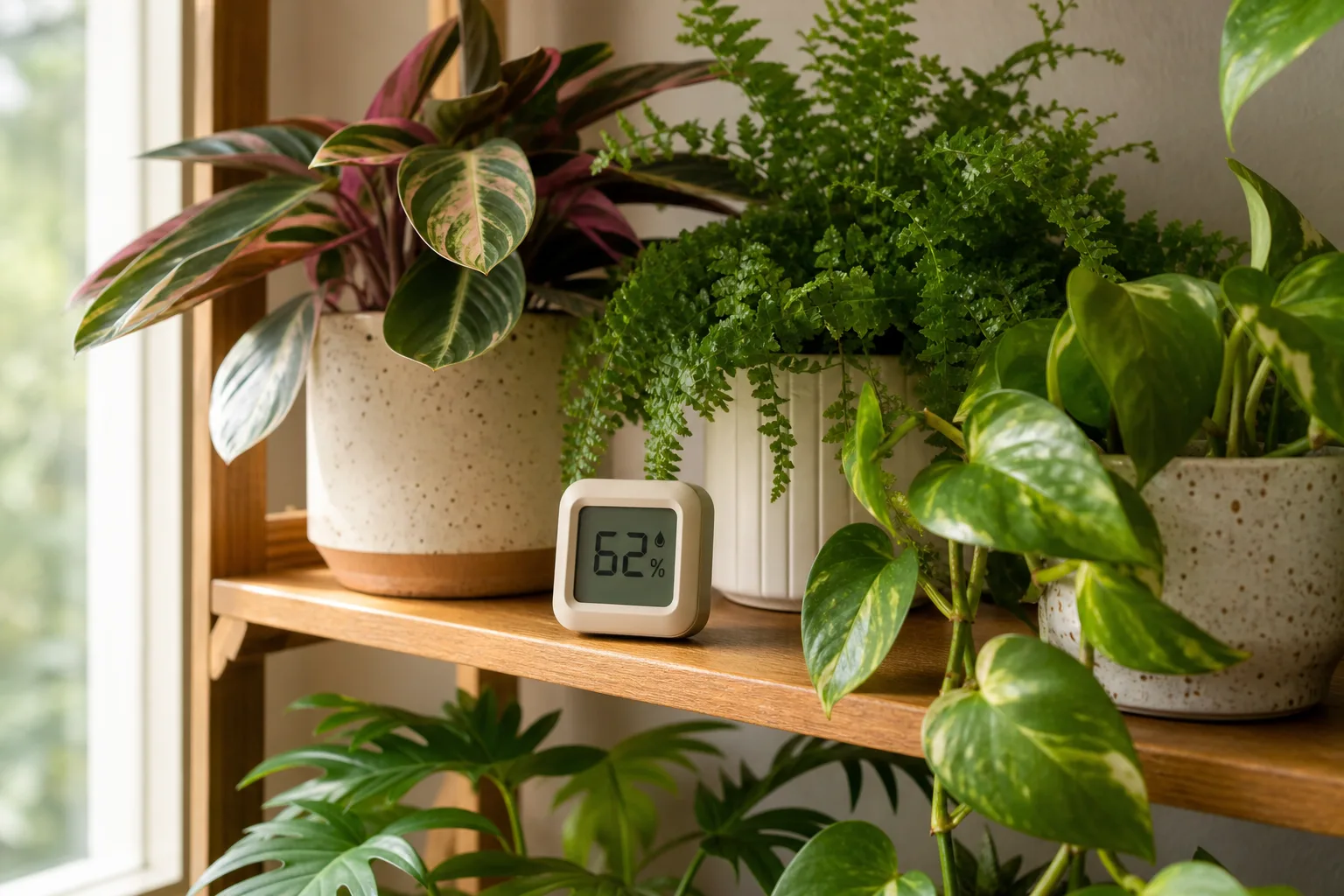
Your skin, a weather app, or the number on a thermostat cannot tell you the humidity at a plant’s leaves. A small digital hygrometer is more useful. It need not be expensive; it needs to be placed sensibly and checked more than once, because indoor RH moves with heating cycles, open windows, showers, and time of day.
Measure before changing anything, then repeat the reading at roughly the same times for several days. If you only see a low number beside a radiator or an air-conditioning vent, moving the plant may be enough. If the reading stays low across the room and the plant is genuinely humidity-sensitive, you have a stronger case for a persistent solution.
Take readings where leaves actually are
Set the hygrometer near the foliage, around the height of the canopy. Keep it out of direct sun, away from exterior glass, vents, the humidifier’s mist plume, and the top of a water tray. A sensor beside a humidifier can show a flattering number while the rest of the shelf remains dry; a sensor on the floor can describe a different microclimate from the one the leaves experience.
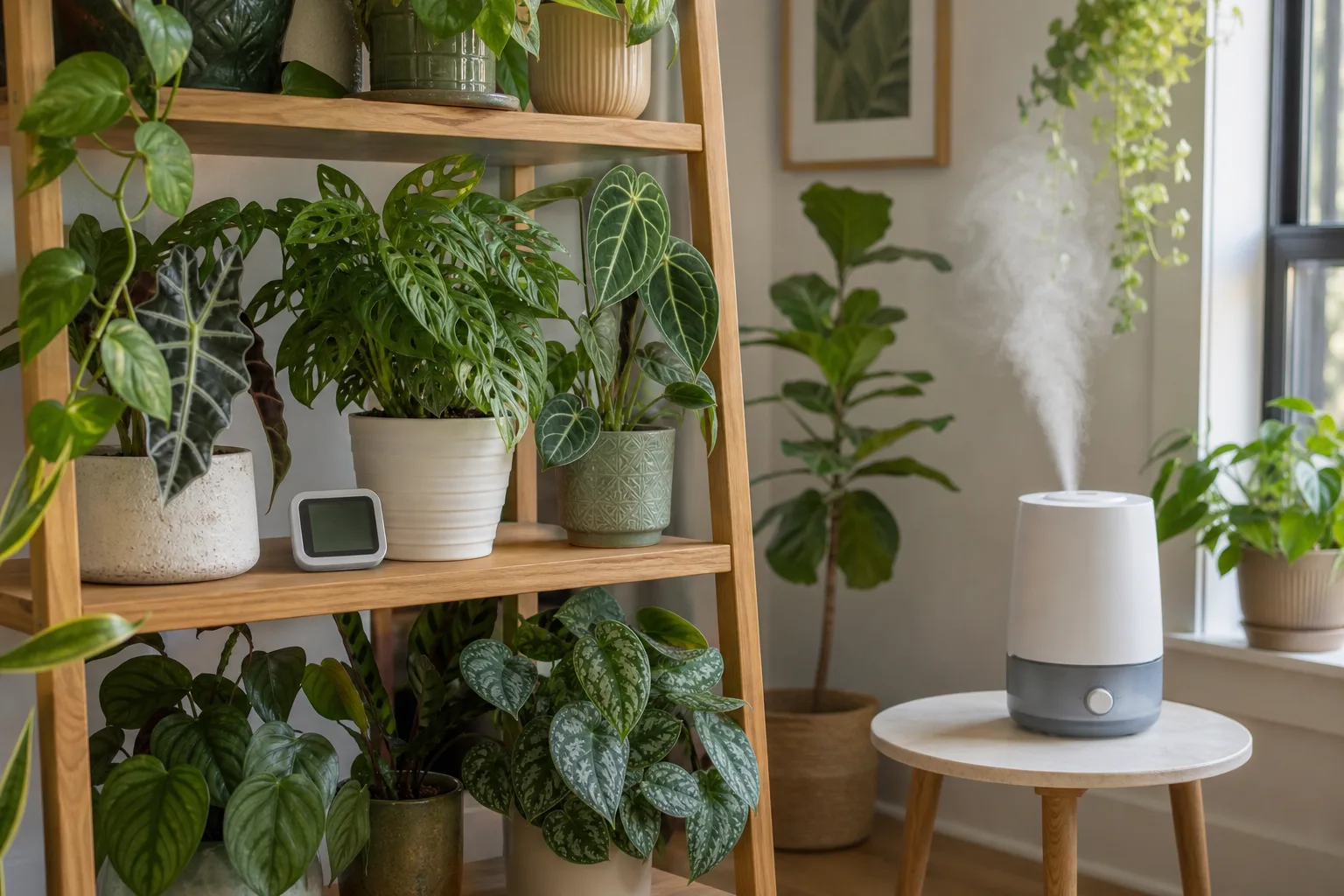
If you own several plants, compare the problem plant’s shelf with the rest of the room rather than assuming they share identical air. A reading near 30% during a heating season does not automatically mean every plant needs intervention, but it is useful evidence for a humidity-sensitive fern or calathea. If the room is already near 50% and the foliage is still crisping, investigate water quality, roots, drafts, and light before raising RH further.
1. Mist leaves to keep humidity high
Hand misting looks like the most direct way to give a plant moisture, but a spray bottle does not operate like a humidifier. It wets a small patch of foliage and briefly changes the air immediately around it; as droplets evaporate and disperse, that bump fades. Penn State Extension describes the effect as lasting only until the water evaporates—often minutes—so a daily misting routine is not a dependable way to maintain a target RH.
Repeated spraying can also leave water sitting in leaf joints or on textured, crowded foliage. That does not mean a single mist inevitably causes disease; the risk depends on the plant, temperature, airflow, and how long leaves stay wet. Still, routinely wetting leaves in a cool room with little air movement adds moisture where a plant may not benefit from it, while failing to humidify the broader space. Epic Gardening’s horticulture coverage likewise describes misting as a short-lived humidity bump and cautions about damp conditions.
When a spray is useful—and when it is not
Use a spray or rinse for the task it can do: washing dust off sturdy foliage, rinsing certain pests as part of a broader control plan, or watering plants that are specifically managed that way. Some plants, such as air plants, have care routines that include wetting their leaves; follow species-specific guidance rather than applying the same rule to every pot. Let leaves dry in a reasonable period, especially on fuzzy, folded, or densely overlapping foliage.
If brown tips are the reason you bought a mister, pause and measure first. A quick spritz can make leaves look refreshed without addressing dry air, an overly dry root ball, mineral buildup, or hot air blowing across the plant. Keep misting as an occasional cleaning or species-specific practice—not as your main humidity control. (Penn State Extension; Epic Gardening)
Pebble trays are a small supplement, not a room fix
A pebble tray is a shallow, water-holding tray with a layer of stones that props a plant pot above the waterline. The pot must sit on the stones, not in the water; otherwise, the “humidity fix” can turn into prolonged bottom-wetting and soggy roots. The setup is inexpensive and can catch drainage, but its evaporation is modest compared with the volume of air in a typical room.
That scale is the catch. Water evaporating from a tray enters surrounding air and mixes into the room; it does not form a sealed bubble that stays neatly around the foliage. Penn State Extension concludes that wet-pebble trays make almost no overall impact on room RH. Some horticulture publishers still recommend them as a small, supplemental aid, and Empress of Dirt discusses a limited local rise near the tray; those claims are not the same as evidence that one saucer can correct a dry room.
What a tray can and cannot do
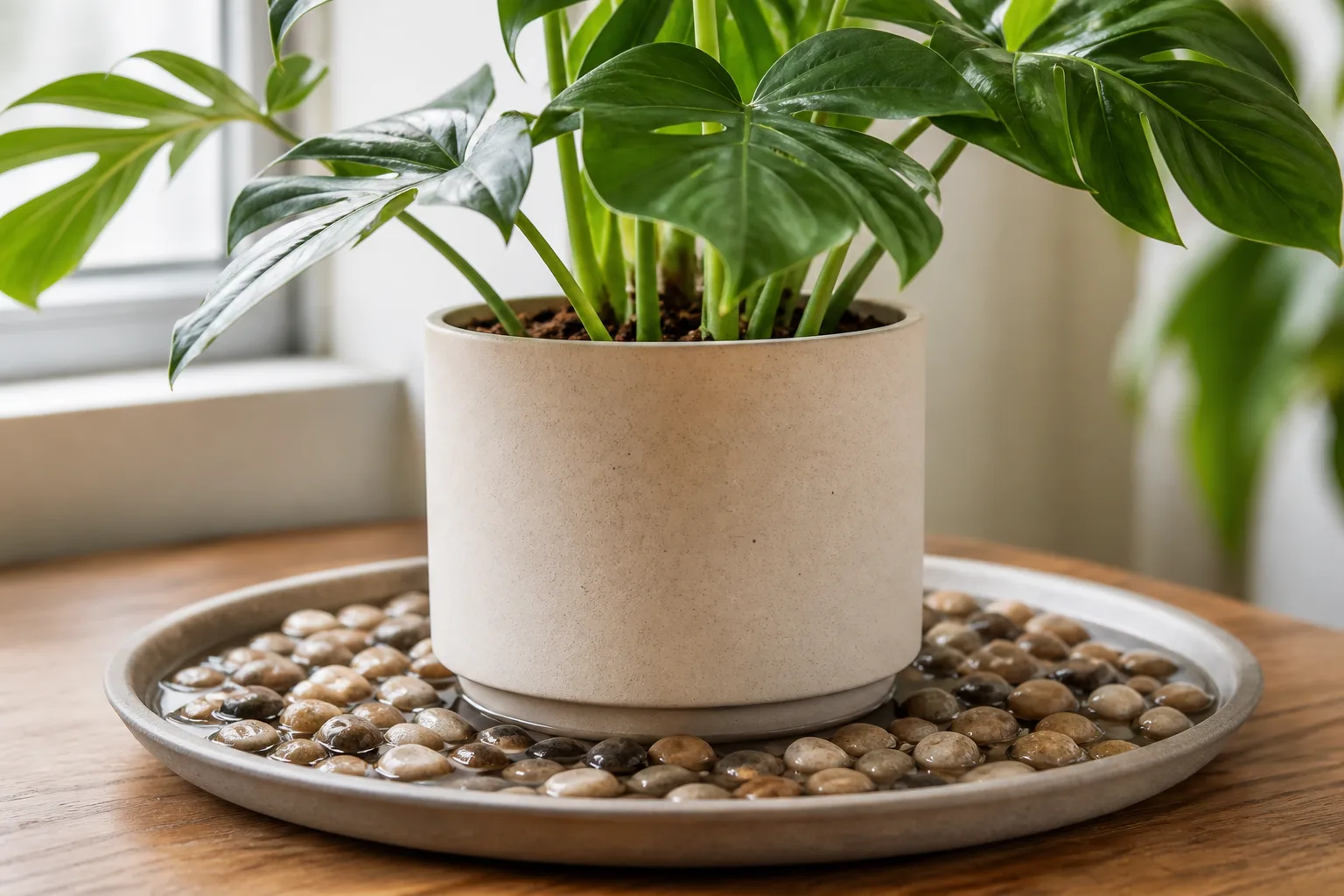
Use a tray when it is convenient for catching runoff, protecting a shelf, or adding a small passive source of evaporation beside a compact grouping. Keep the water below the tops of the pebbles so the pot base and drainage holes remain above water. Refill and clean the tray as needed; standing water that collects debris is not a set-and-forget care tool.
Do not stack trays under every plant as a substitute for measuring RH or running a humidifier when air is persistently dry. A properly sized tray may be pleasant and harmless if drainage is managed, but it cannot promise a particular percentage or solve a leaf problem by itself. Bloomscape’s practical guide shows the traditional tray setup, while Penn State’s extension guidance offers the important limit: evaporation may happen, yet the room-level change is negligible. (Penn State Extension; Empress of Dirt; Bloomscape)
2. All houseplants need tropical humidity
“Houseplant” is a shopping category, not a climate. A maidenhair fern, calathea, or some orchids may be less forgiving of dry air than a jade plant, echeveria, or many common foliage plants. Nebraska Extension notes the 40%–60% range as a broad preference for many houseplants and specifically treats succulents as an exception; species, growing conditions, and acclimation still change the response.
More humidity is not automatically better. Desert-adapted succulents generally do not need a humidifier aimed at them, and a densely packed, poorly ventilated shelf can combine persistently wet foliage with stagnant air. Raising the whole home’s moisture for one sensitive specimen may also create condensation on windows or a damp corner. It is usually better to match the intervention to the plant and the size of the dry zone.
Match the method to the plant
Start with the plant label or a reliable species-care reference, then decide how much effort the plant justifies. A resilient pothos with one brown tip may need no humidity equipment at all. A humidity-sensitive fern that repeatedly dries at the edges in measured low RH deserves closer attention—but first check for underwatering and hot drafts, which can create similar symptoms.
If your collection includes both desert plants and tropical foliage, group plants by broadly similar needs rather than clustering everything together. Keep cacti and succulents in bright, airy conditions, and place moisture-loving foliage in a smaller compatible group. A dedicated terrarium or cabinet can help one demanding plant without pushing the humidity of the entire room upward. (University of Nebraska–Lincoln Extension; Epic Gardening)
3. Crispy leaves mean humidity is the problem
Brown tips and crisp margins can be consistent with dry air, but they do not identify the cause on their own. The same appearance can follow an inconsistent watering pattern, excess fertilizer salts, fluoride-sensitive plants receiving unsuitable water, root damage, pest feeding, or hot sun and dry drafts. A plant can also have two problems at once: for example, low room RH plus roots that cannot take up water because the mix stays saturated.
Do not respond to every damaged leaf by watering more or turning on a humidifier. First ask whether the newest damage is appearing on humidity-sensitive plants, whether the room is measurably dry at leaf height, and whether the potting mix is appropriately moist for that species. Old brown tissue will not turn green again, so judge a correction by the condition of later leaves rather than expecting instant cosmetic recovery.
Rule out watering, roots, pests, and heat
Check the potting mix before you change the watering schedule. If it is very dry well below the surface, water thoroughly and let excess drain; if it stays wet for days, inspect drainage, pot size, and root health. Feel for loose, mushy roots only when there is a reason to suspect root trouble—do not unpot a healthy plant just because one leaf tip is brown.
Next, inspect both sides of leaves and the growing tips for webbing, stippling, scale, or other pest signs. Look for a nearby heater, vent, cold window, or strong direct sun that could make one plant’s leaf zone harsher than the room average. Nebraska Extension lists low humidity among several common contributors to houseplant problems and identifies leaf drying and curling as possible symptoms; its guidance also warns that brown tips can reflect other conditions. If your checks point to dry air, then use the hygrometer reading to guide the next step. (University of Nebraska–Lincoln Extension)
4. Bathrooms are automatic humidity rooms
A bathroom can be a good location for a plant if it has enough light and its humidity pattern suits that species. But the humidity increase from a shower is a pulse, not necessarily a stable all-day environment. An exhaust fan, open door, large room, or long gap between showers can disperse the moisture quickly; a small windowless bathroom may be humid but too dark for the plant you want to put there.
The useful question is not “Is this a bathroom?” but “What RH does this spot actually hold between showers, and is the light adequate?” Penn State Extension recommends using a hygrometer to assess bathroom humidity rather than assuming the room stays moist. Nebraska Extension likewise lists bathrooms and kitchens as potentially humid locations while noting that plants with very high humidity requirements may be better suited to an enclosed growing environment.
Check light, venting, and actual RH
Measure the room on a normal day, including several hours after showering. If RH rises briefly and drops back to the rest of the home, the bathroom may still be a fine plant room, but it is not a reliable treatment for persistent dry air. Do not block the exhaust fan or create a damp bathroom to chase a plant target; ventilation protects the room from lingering moisture.
Assess usable light separately. A bright bathroom window can make the room an excellent location for a plant that likes humidity, while a dark interior bathroom may require a suitable grow light or a different plant. A plant’s need for light does not disappear because the air feels damp. For a bathroom that already stays humid, choose species that can tolerate its real light and temperature conditions rather than forcing a moisture-loving plant into an unsuitable corner. (Penn State Extension; University of Nebraska–Lincoln Extension)
5. Just add a humidifier and leave it running
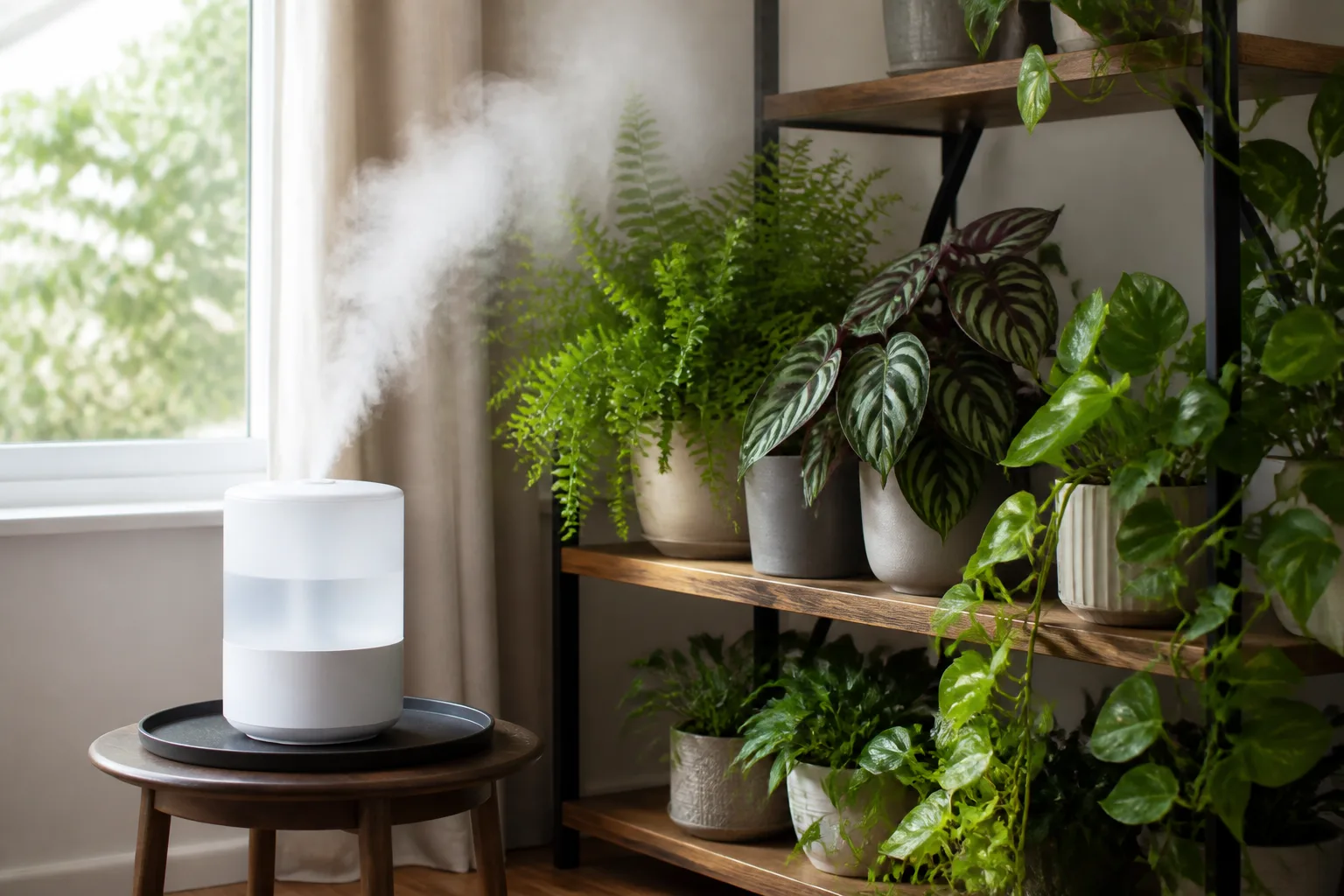
A humidifier is one of the few household tools that can measurably raise RH across a room, which is why it is more dependable than hand misting or a small tray when the air is persistently dry. But “just add a humidifier” skips the decisions that make it useful: which plants need the change, how large an area must be served, where the unit sits, how RH is monitored, and how the unit is maintained.
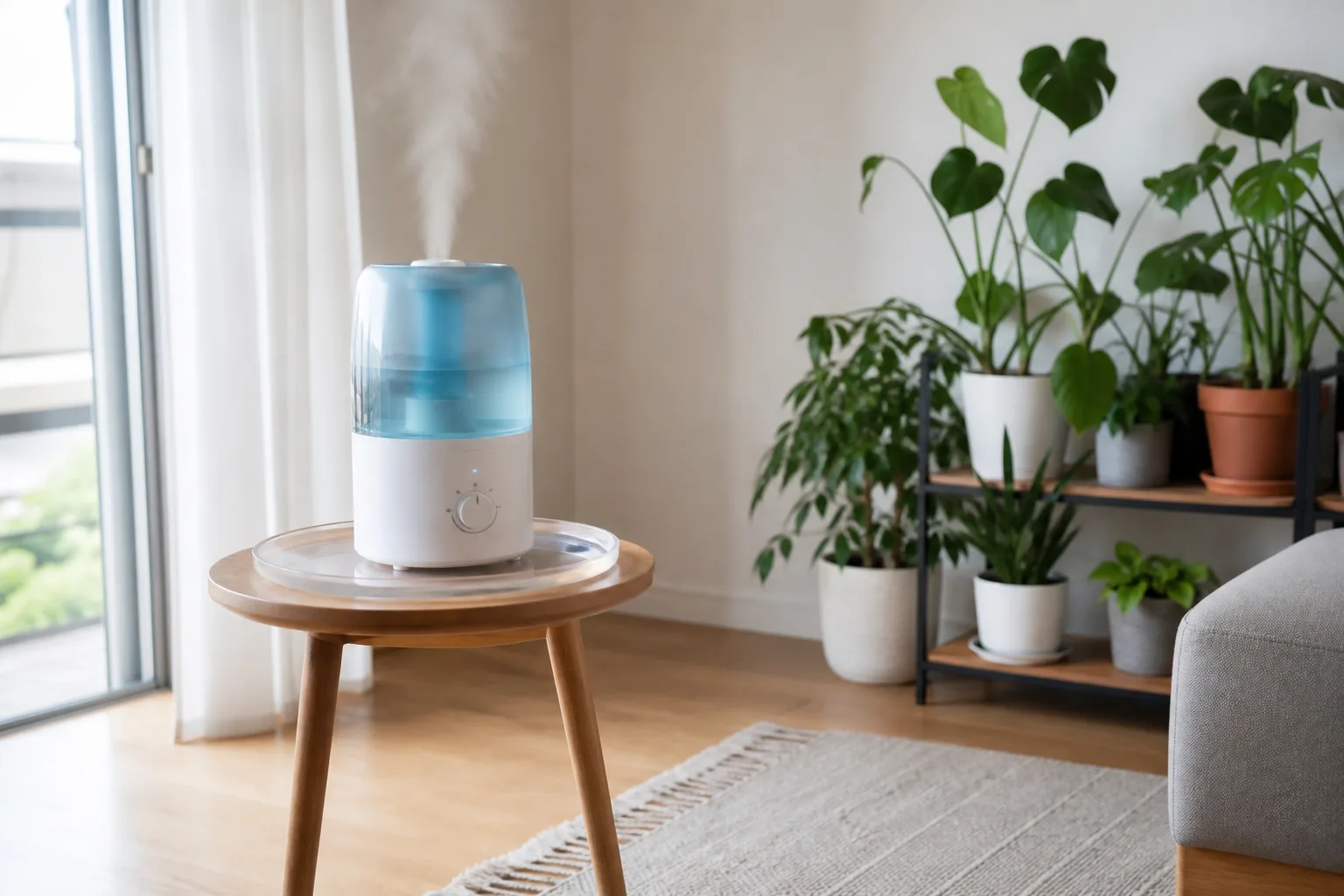
Do not choose output based on a generic square-footage claim alone. Room layout, ceiling height, ventilation, heating, local climate, and open doorways all affect results. Start with the plants’ canopy area and a hygrometer, then adjust the machine until the local readings improve without wetting leaves, walls, furniture, or window glass. The U.S. EPA advises controlling indoor moisture and addressing condensation promptly because persistent dampness supports mold growth; plant care should not create a moisture problem for the home.
Put the humidifier far enough from foliage that the leaves do not stay wet, and avoid directing a concentrated plume at the potting mix. Keep the unit on a stable, water-safe surface, follow its manual for water and cleaning, and watch for mineral dust if using an ultrasonic model with hard tap water. If you see condensation or a persistently damp surface, lower the setting, increase distance or airflow, or stop running it until the area dries. A target that is comfortable for a particular plant must still fit the limits of the room. (U.S. Environmental Protection Agency; Epic Gardening)
The fixes that work, ranked by effort
Begin with the free fixes: move plants away from heating and cooling vents, cold glass, and doors that create repeated temperature swings. If several compatible tropicals need help, group them in a bright spot with some breathing room. Plants release moisture through foliage, so a cluster can create a slightly more humid local environment than isolated pots, especially in a smaller space; do not expect it to transform an open-plan room. Penn State Extension describes grouping as a simple step whose effect depends on the number of plants and the size of the space.
For one especially humidity-sensitive specimen, a ventilated terrarium, cloche, or plant cabinet can preserve moisture around that plant without humidifying the whole house. These enclosures need monitoring: open them periodically, remove excess condensation, and give foliage enough airflow. They are not a good fit for every plant, especially those that prefer drier air or whose leaves remain wet in a closed environment.
If readings remain low and the plant’s needs justify it, use a room humidifier as a controlled system rather than a fog machine. Check RH near the foliage and elsewhere in the room, keep the unit clean, and lower output if the room develops condensation. A pebble tray can stay as a supplemental or decorative setup, and a bathroom can be a suitable growing location, but neither replaces measurement. For more detailed setup guidance, see the houseplant humidity guide and humidifier placement guide.
A one-week humidity reset you can follow
Day 1: identify the plant and symptoms. Confirm the plant’s likely humidity tolerance, then note which leaves are affected and whether the damage is new. Check the potting mix, leaf undersides, and nearby vents or windows before changing care.
Days 2–4: measure the baseline. Put a hygrometer at canopy height near the plant, away from vents, glass, and any water plume. Record RH at a couple of consistent times each day, and compare it with a reading in the rest of the room. A small difference may suggest the plant’s location—not the entire home—is the problem.
Day 5: make one low-risk change. Move the plant away from a draft or heat source, or group it with compatible plants in suitable light. Do not simultaneously increase watering, mist daily, add a tray, and buy a humidifier; changing one variable at a time makes it easier to see what helped.
Days 6–7: assess the air and room. Repeat the readings and look for condensation, wet leaves, or potting mix that stays too damp. If RH is still low and the species is showing ongoing stress, consider a controlled humidifier or a suitable enclosure. If readings are moderate already, return to the diagnosis: water quality, root health, light, pests, and temperature may matter more. The payoff is not a magically repaired old leaf; it is a more stable environment and healthier new growth over time.
Conclusion
The best houseplant humidity advice starts with evidence, not a spray bottle. Mist for cleaning or a specific plant-care routine, use a pebble tray for what it can realistically provide, and do not assume every houseplant wants the same air. Measure RH at leaf height, diagnose crisp foliage before treating it, and use a humidifier or enclosure only when the plant and the room call for one. Keep the fix local when possible, protect airflow and household surfaces, and judge progress in new growth rather than old damage. A small, measured correction is more dependable than an elaborate setup built around a humidity myth.