5 Houseplants Pros Said Were Falling Out of Style
Houseplants going out of style in 2025: revisit five forecasts, what their care really asks of you, and how to decide what suits your home. Not a 2026 forecast.
What “out of style in 2025” means now
Time note: this is a look back at a 2025 trend call, not a prediction for 2026. A list published about what might lose momentum during 2025 is now historical context; it does not tell us which plants are popular this year or prove that these five fell out of favor.
“Out of style” is an editorial judgment, not a plant-health category. A plant can be less fashionable in a particular design conversation and still be beautiful, healthy, and right for your home. Trend lists rarely measure sales or count what people actually grow, so treat their labels as prompts to reconsider the bargain: what the plant gives you, what it asks for, and whether your space can meet those needs.
The five groups below—calatheas, crawling philodendrons, succulents, fiddle-leaf figs, and variegated plants—share no single care problem. Some need more humidity, some need more light, one group grows sideways, and one is a visual trait found across many species. That difference matters more than a popularity prediction. Keep a plant that works for you; change the setup or choose a different plant only when there is a real mismatch.
Calatheas: patterned leaves, specific conditions
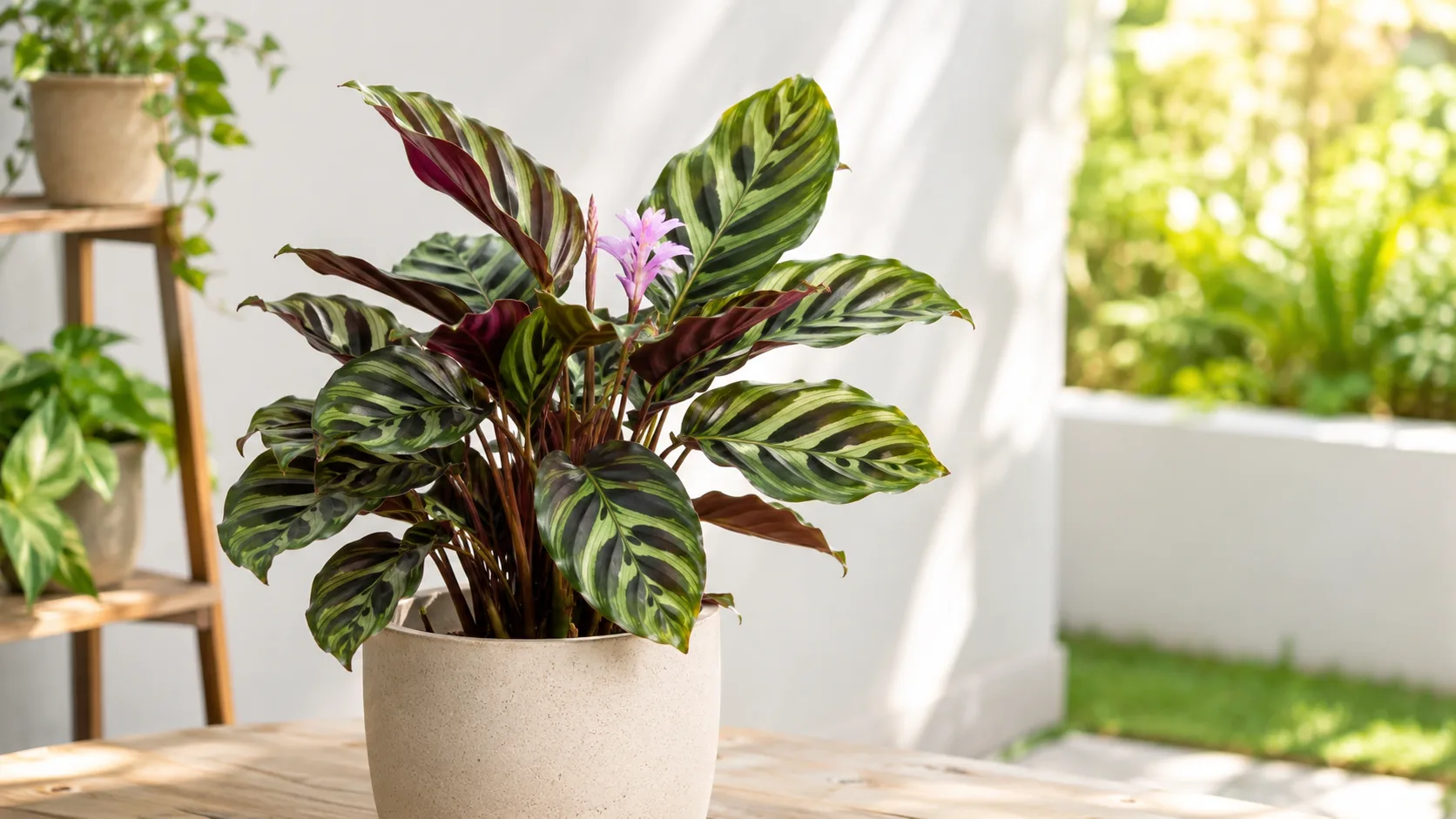
Calatheas are prized for leaves that look painted, but their beauty does not make them universally easy. The Royal Horticultural Society describes them as warm, humidity-loving plants that prefer bright but indirect light and evenly moist compost during active growth, with less water needed in winter. The RHS calathea growing guide also points to kitchens and bathrooms as potentially suitable rooms because they tend to be more humid.
The friction usually appears when a plant sits beside dry heating, a cold draft, or a bright window with harsh direct sun, while its owner tries to solve every brown edge by changing several things at once. Check the growing medium first: it should stay lightly and consistently moist in active growth, not waterlogged. Then look at light and the air around the plant. If you correct one condition at a time, you can learn whether the plant suits the room before deciding it is too demanding.
Keep a calathea when its favorite conditions fit your home
A calathea makes sense if you enjoy inspecting a plant, have a warm spot out of harsh sun, and can provide humidity without keeping the roots wet. A bathroom may work if it gets enough light; a naturally bright, plant-filled room may also offer a better microclimate than a dry corner above a radiator. A hygrometer can help you judge the room rather than relying on how humid it feels to you.
If your home is dry and you do not want to run a humidifier or adjust placement, choose for that constraint rather than buying another patterned tropical and hoping it will be tougher. A pothos or heartleaf philodendron offers foliage without the same humidity expectation for many homes, though any alternative still needs suitable light and watering. A recent Epic Gardening calathea guide reinforces that the group includes many types, so a struggling plant’s exact variety and conditions matter more than a blanket label like “diva.”
Crawling philodendrons: a footprint problem, not a bad plant
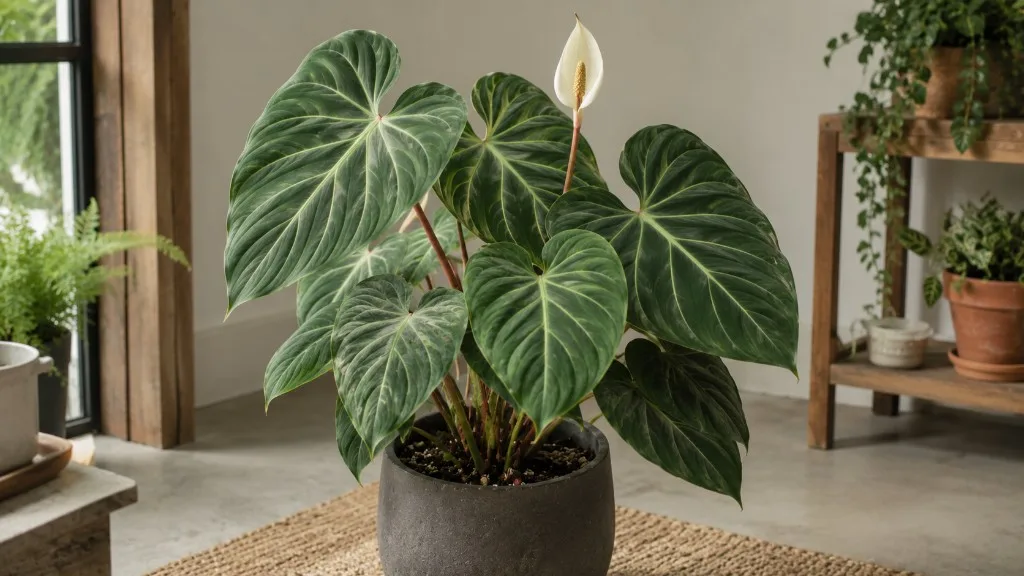
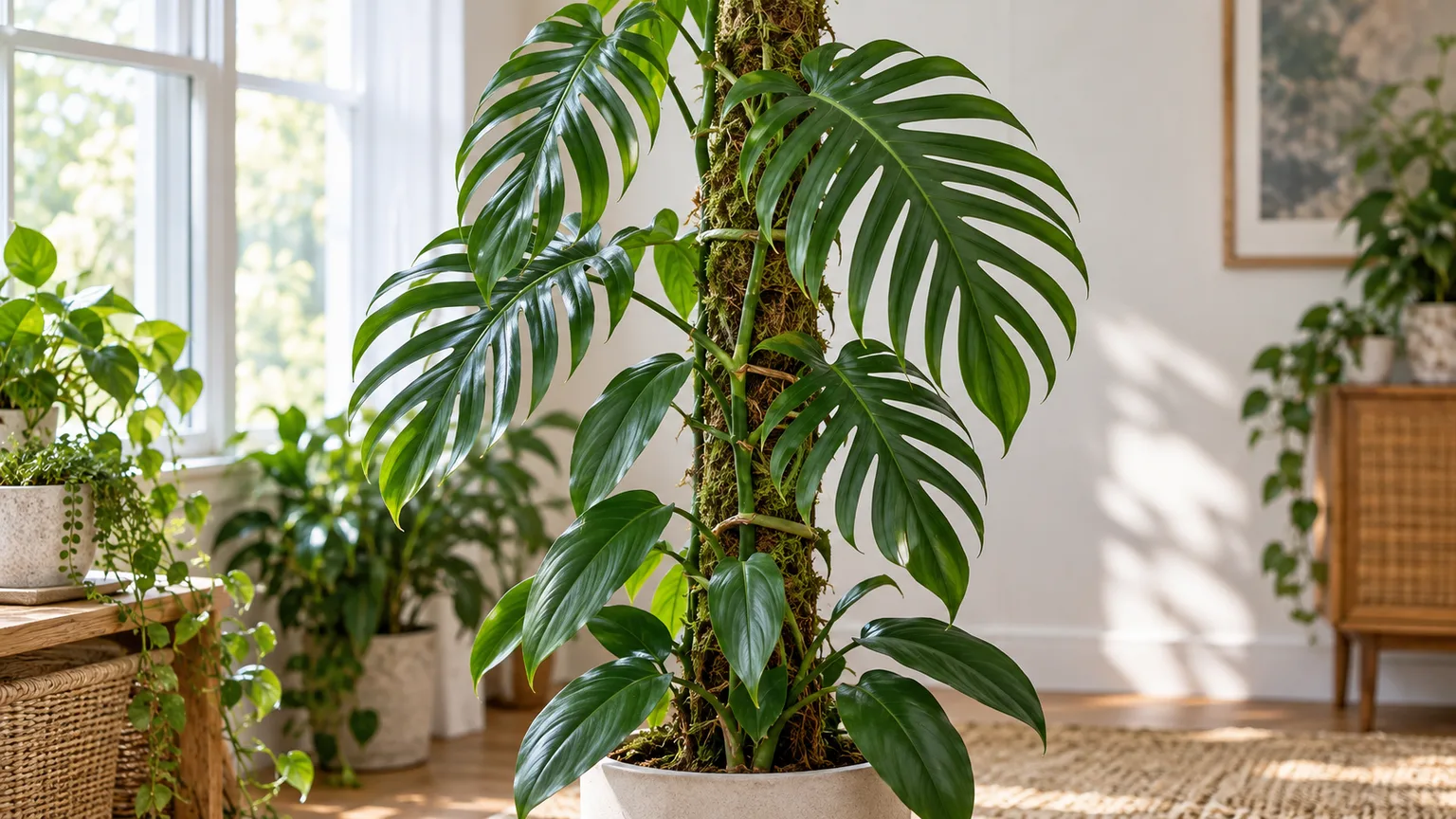
“Crawling philodendron” usually refers to species such as Philodendron gloriosum that spread horizontally from a creeping stem or rhizome. That is different from a vining philodendron that can trail from a shelf or climb a support. If you expected every philodendron to behave like a compact, upright pot plant, the broad leaves and sideways growth can seem inconvenient when the plant reaches the rim and keeps going.
The issue is often not care difficulty but geometry: a crawler needs a clear direction to grow, a stable surface, and enough width for its leaves. BBC Gardeners’ World describes P. gloriosum as a large-leaved statement plant with an eventual spread around 90 centimeters, while a Plantophiles grower’s guide distinguishes its horizontal growth from climbing philodendrons. Those are useful clues for planning, though any size estimate depends on the specimen and growing conditions.
Give a crawler a route before choosing its pot
Before repotting, decide where the plant can expand: across a low shelf, on a plant stand with open space, or along a protected tabletop. A longer, relatively shallow planter can accommodate a creeping rhizome more naturally than a narrow pot, but it is not a magic fix; drainage, an airy mix, and a container sized to the root system still matter. Do not bury an exposed growing point just to make the plant look tidy.
If you have no horizontal space, a trailing heartleaf philodendron may create a similar leafy effect on a shelf, and a climbing philodendron can use vertical support. The RHS guide to philodendrons notes that the genus includes upright, climbing, and trailing forms, while the BBC Gardeners’ World philodendron guide describes hanging or supported options. Check household safety before choosing one: philodendron tissues and sap can irritate, and the plants should be kept out of reach of children and pets.
Succulents: easy care depends on light
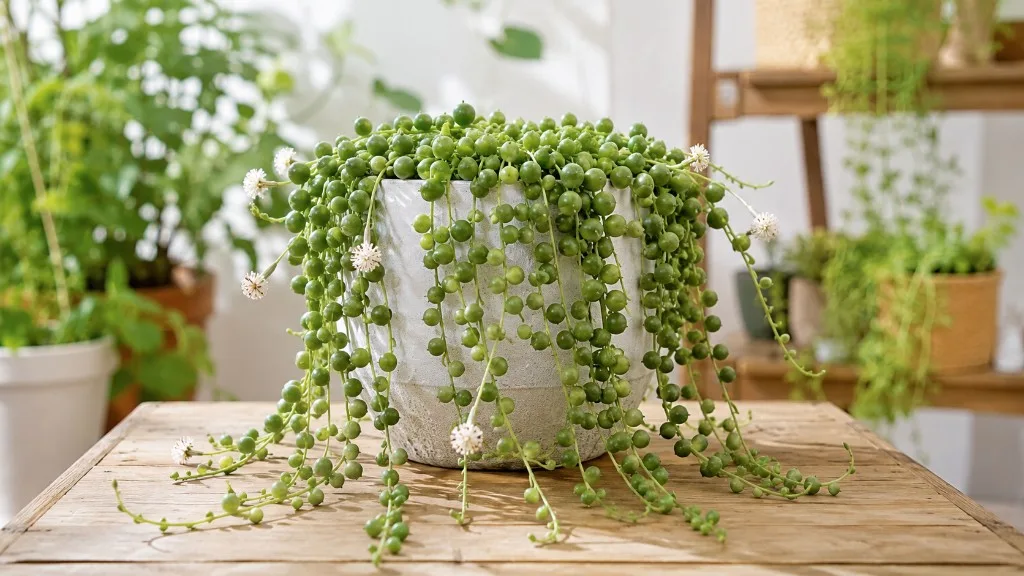
Succulents are often sold as forgiving starter plants because many store water in fleshy leaves or stems and tolerate dry air. But “water less” is not a complete care plan. If a sun-loving succulent sits in a dim room, it may stretch toward the window and weaken; if it sits in dense, slow-drying soil, infrequent watering can still leave roots wet for too long.
Start with the window, not the watering calendar. The RHS guide to indoor cacti and succulents says most enjoy bright light and many do well on sunny windowsills, in free-draining mix. That guidance varies with latitude, season, glazing, and plant species, so introduce stronger sun gradually rather than moving a nursery-grown plant straight into intense afternoon rays. In low light, a grow light may be more realistic than expecting a succulent to thrive on a distant shelf.
The succulent exceptions matter
“Succulent” describes a broad group, not one uniform care recipe. Some rainforest-dwelling succulents, including Christmas cactus and orchid cactus, prefer more regular watering and less direct sun than desert-adapted types; the RHS guide calls out these exceptions. A plant’s exact name is therefore more useful than the store label when choosing a location or deciding how long to let the potting mix dry.
For most sun-loving types, use a pot with a drainage hole and a gritty, fast-draining mix, then water thoroughly when the surface has dried and let excess water escape. Do not leave the pot sitting in a full saucer, and do not water by a fixed weekly schedule if light and temperature change through the year. If you have no bright window and do not want supplemental lighting, a shade-tolerant foliage plant is the better match; that is a light decision, not proof that succulents are bad beginner plants.
Fiddle-leaf fig: a statement plant that needs a steady spot
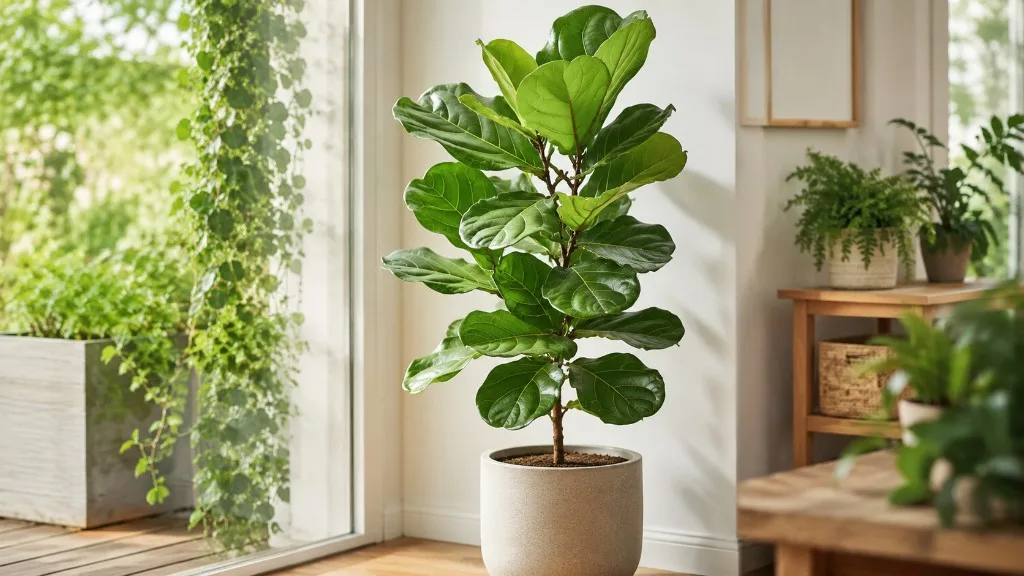
The fiddle-leaf fig earned its place as a dramatic indoor tree because its large leaves create a strong focal point. Its practical drawback is scale and placement: it needs bright indirect light, room for its canopy, and protection from drafts or abrupt environmental changes. NC State Extension describes Ficus lyrata as a large-space specimen, notes that it can reach several feet indoors, and flags sensitivity to overwatering and afternoon sun in its plant profile.
This is not a plant to keep moving between rooms until one corner looks perfect. BBC Gardeners’ World advises avoiding frequent moves because they can shock a fiddle-leaf fig and contribute to leaf drop; its growing guide also recommends bright, indirect light away from drafts. Pick a workable position first, then make small adjustments if the plant is clearly receiving too much or too little light. A smaller cultivar may reduce the footprint, but it does not turn the fig into a low-light, no-attention plant.
Respond to leaf drop with a check, not a flurry of changes
Leaf drop is a response, not a diagnosis. Before moving the tree, check whether the pot is staying wet, whether a vent or draft hits the leaves, whether light changed sharply, and whether the plant was recently moved or repotted. Change the likeliest factor and give the plant time to respond; several simultaneous fixes make it harder to tell what helped.
Keep the fig if you like the silhouette and can give it a stable, bright position with enough floor clearance. If the room is dim, the walkway is narrow, or you need to keep shifting furniture around it, choose a plant whose mature size and light needs better fit the room. A trend label should not decide that for you; the space should.
Variegated plants: pattern is not a care category
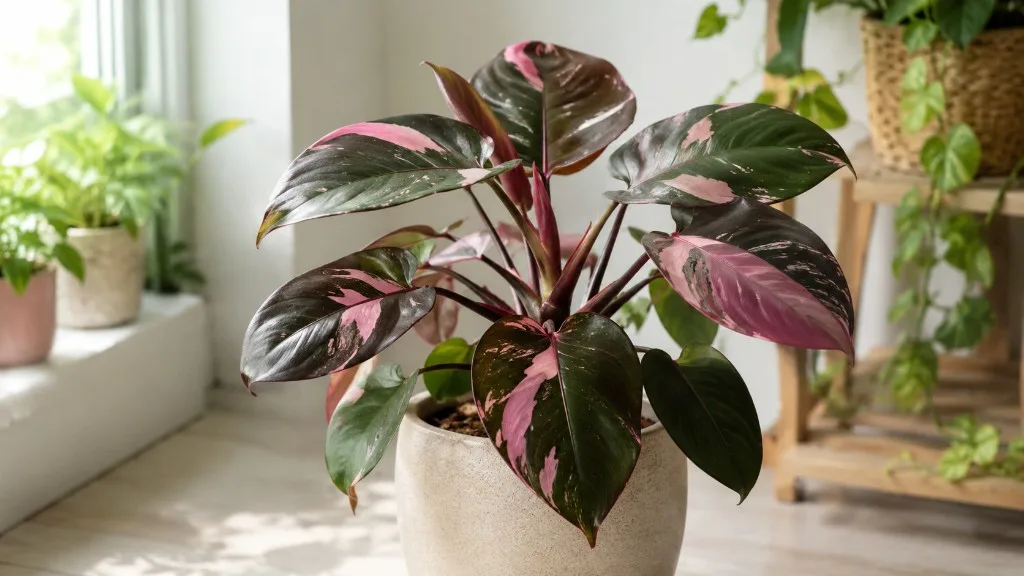
Variegation means leaves show areas of different colors, but it is not a single species or a reliable shortcut for predicting difficulty. A green-and-cream pothos, a pink princess philodendron, and a variegated monstera are different plants with different growth habits. Some pale leaf sectors contain few or no functional chloroplasts, which can reduce the amount of photosynthesizing tissue, but the pattern and its cause vary. A Springer Nature chapter on plastids in variegated leaves describes how many pale or white sectors lack functional chloroplasts while also discussing variation in the biology of variegated leaves.
That does not mean every variegated plant will burn in ordinary indirect light or needs a grower to micromanage it. It does mean that very pale growth may be less forgiving of poor light or repeated stress, and a cultivar with stronger green tissue may grow more steadily. Avoid turning one biological tendency into a universal rule: the species, cultivar, amount of variegation, and actual light level all matter.
Choose for the whole plant, not one photogenic leaf
Before buying a high-contrast cultivar, look at several leaves and the growing point, not just the most dramatic leaf in the seller’s photo. Check that the plant has healthy roots, balanced growth, and enough green tissue for the cultivar to grow well. Ask how stable its pattern is and whether the seller can identify the plant accurately; a color pattern can change as new leaves emerge, and a rare-looking photo is not a guarantee of the same pattern on every leaf.
If you want variegation but prefer a forgiving purchase, choose a common, affordable cultivar whose green pattern still appeals to you, such as a golden pothos or Philodendron ‘Brasil’. If you mainly want a dependable green plant, the all-green form may be the simpler choice. You are not giving up style by choosing a plant that can thrive in the light you already have.
Match the plant to the room before blaming the trend
The same plant can feel effortless in one home and exhausting in another. Window direction is only a rough clue: distance from the glass, trees outside, curtains, season, and nearby buildings all change the light a plant receives. Also map the physical footprint. A crawling philodendron uses horizontal space; a fiddle-leaf fig claims height and floor area; a trailing plant needs somewhere for its stems to hang.
Use this quick comparison to spot the real constraint before replacing anything:
| Plant group | Main fit question | Better fit when |
|---|---|---|
| Calathea | Can you provide warm, humid air and indirect light? | The room is naturally humid or you are willing to manage humidity. |
| Crawling philodendron | Is there open width for the rhizome and leaves? | A low shelf or broad stand gives it room to spread. |
| Succulent | Is there a genuinely bright position for this species? | You have a sunny window or suitable supplemental light. |
| Fiddle-leaf fig | Can it stay in a bright, stable spot with room around it? | The corner is bright, draft-free, and not a high-traffic route. |
| Variegated plant | Does this cultivar fit your light and patience level? | You can identify the species and accept some pattern variation. |
A quick fit check for light, space, and routine
First, observe your brightest and dimmest spots at more than one time of day. Compare the plant’s needs with where it will actually live, not the ideal conditions in a care card. If the plant is too far from a window, moving it closer or adding a grow light may solve the problem more effectively than changing the watering routine.
Next, consider what kind of upkeep feels reasonable. Someone who enjoys checking soil and adjusting a humidifier may be happy with a calathea; someone who wants to water occasionally and leave a plant alone may not. A large tree can be low-maintenance in the right room but burdensome if it blocks a door or needs to be moved for cleaning. Ease is a relationship between a plant and a household, not a permanent ranking of species.
Finally, separate a plant’s appearance from its current condition. A stressed plant may need a better location, a smaller watering adjustment, or time to acclimate. It does not automatically need a new pot, a different fertilizer, and a replacement all at once. Make one sensible change, keep notes for a few weeks, and evaluate new growth rather than expecting old damaged leaves to become perfect again.
Keep, move, or rehome? A more useful 2025 takeaway
The practical lesson behind any trend forecast is to buy less by impulse and match plants to the conditions you can offer. If you already own one of these five, there is no horticultural reason to discard a healthy plant because a trend cycle passed. Decide based on care, room, budget, and whether you still enjoy seeing it.
If trend coverage conflicts, that is another reason to avoid treating it as consensus. A 2025 page from LECHUZA Academy promoted statement foliage such as fiddle-leaf figs and calatheas alongside easy-care choices; it was a branded trend feature, not a market survey. Different lists can favor different aesthetics, so use them for inspiration and verify the care claims separately.
Keep it when the plant still fits
Keep the plant if it is healthy or recoverable, you like its shape, and its care fits the room without turning into a chore. If the mismatch is small, test one adjustment: a brighter position for a sun-loving succulent, a less drafty corner for a fig, or a more suitable humid spot for a calathea. Let the plant show you whether the change helped before buying supplies or replacing it.
Rehome it when the mismatch is persistent
Rehome a plant if you no longer want to manage its needs, it outgrows the available space, or your home cannot provide its basic conditions. Offer it to a friend, a local plant exchange, or a community group with an honest note about its light, watering, and growth habit. Do not pass along a pest-infested plant without disclosing the problem, and do not put a healthy plant in household waste simply because it is no longer fashionable.
If you replace it, write down the constraint first: too little light, too little width, dry air, or a routine you do not enjoy. Then choose for that specific constraint. A clear reason leads to a better plant choice than swapping one trend label for another.
Conclusion
The five houseplants framed as fading in 2025 were not made obsolete by a calendar. Calatheas ask for humidity and steady moisture; crawling philodendrons need horizontal room; most succulents need more light than many indoor shelves provide; fiddle-leaf figs reward a stable, bright position; and variegated plants vary by species and cultivar. Those are care and design facts, not a verdict on whether a plant is stylish.
Because this is a retrospective on 2025, it should not be mistaken for a prediction about 2026. Keep the plants you enjoy, adjust the conditions that are realistically adjustable, and rehome the ones that no longer fit. The most enduring houseplant choice is the one that thrives in your actual home.