How to Get Rid of Crickets in Your House: 3 Fast Fixes
Get rid of crickets in your house fast: remove one safely, find the three common entry routes, and seal gaps, screens, and door sweeps to stop repeat visits.
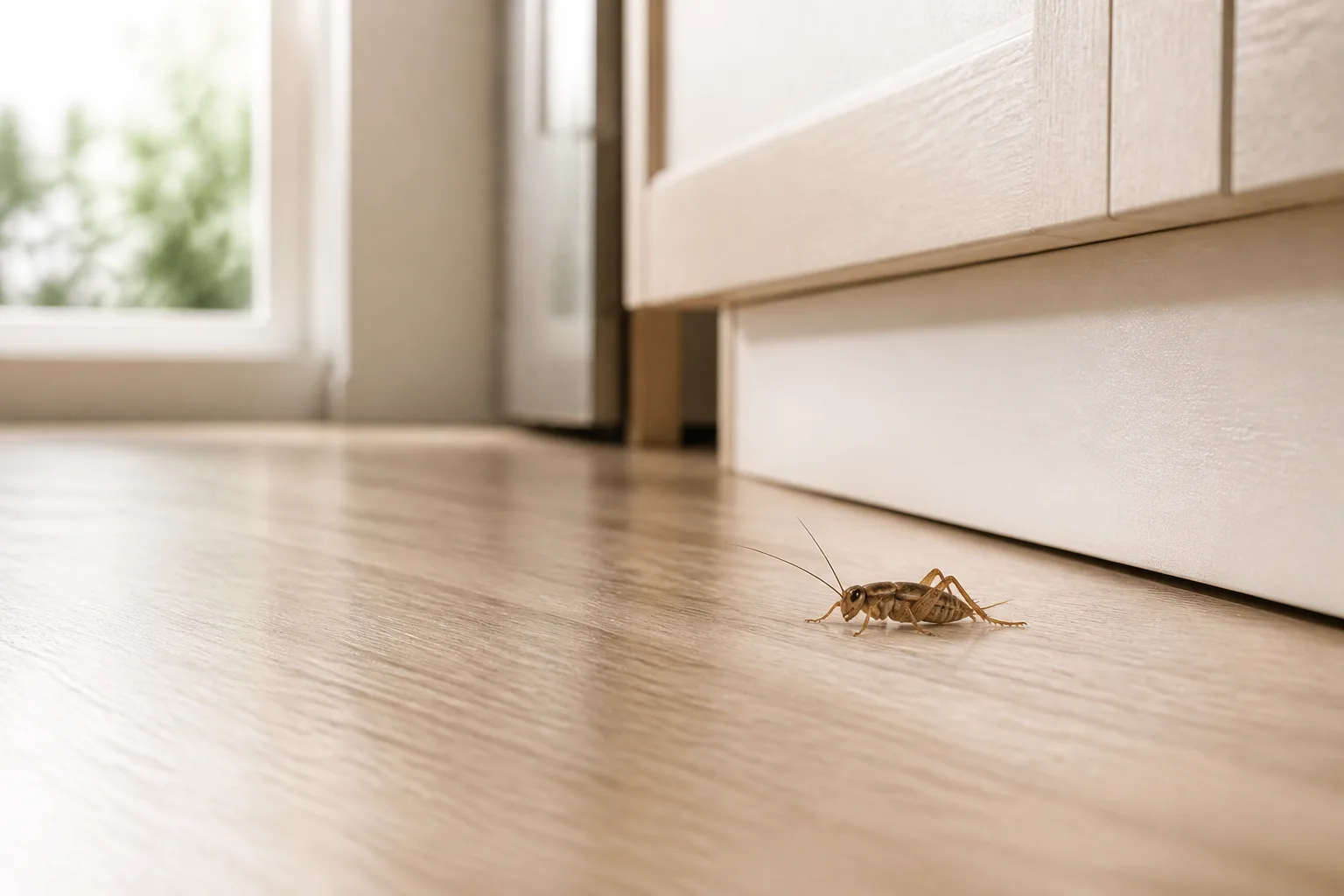
If you can see the cricket, the fastest fix is simple: vacuum it up or trap it under a cup, then empty the vacuum or release the insect outside away from the doorway. If it is hiding, listen after dark, check the nearest dark corners, and put a glue board along the wall where you heard or saw activity. For repeat visits, spend your effort on the route—usually a door gap, an opening around a utility line or vent, or an open entrance beside outdoor lighting.
One cricket is usually a nuisance, not proof that your home is infested. Crickets are active at night and hide during the day, so a single male can seem mysterious until the room gets quiet. The practical plan is to remove what is inside now, look for a repeat pattern over the next few nights, and repair the likely opening without blocking a vent that the house needs.
The fastest way to remove a cricket tonight
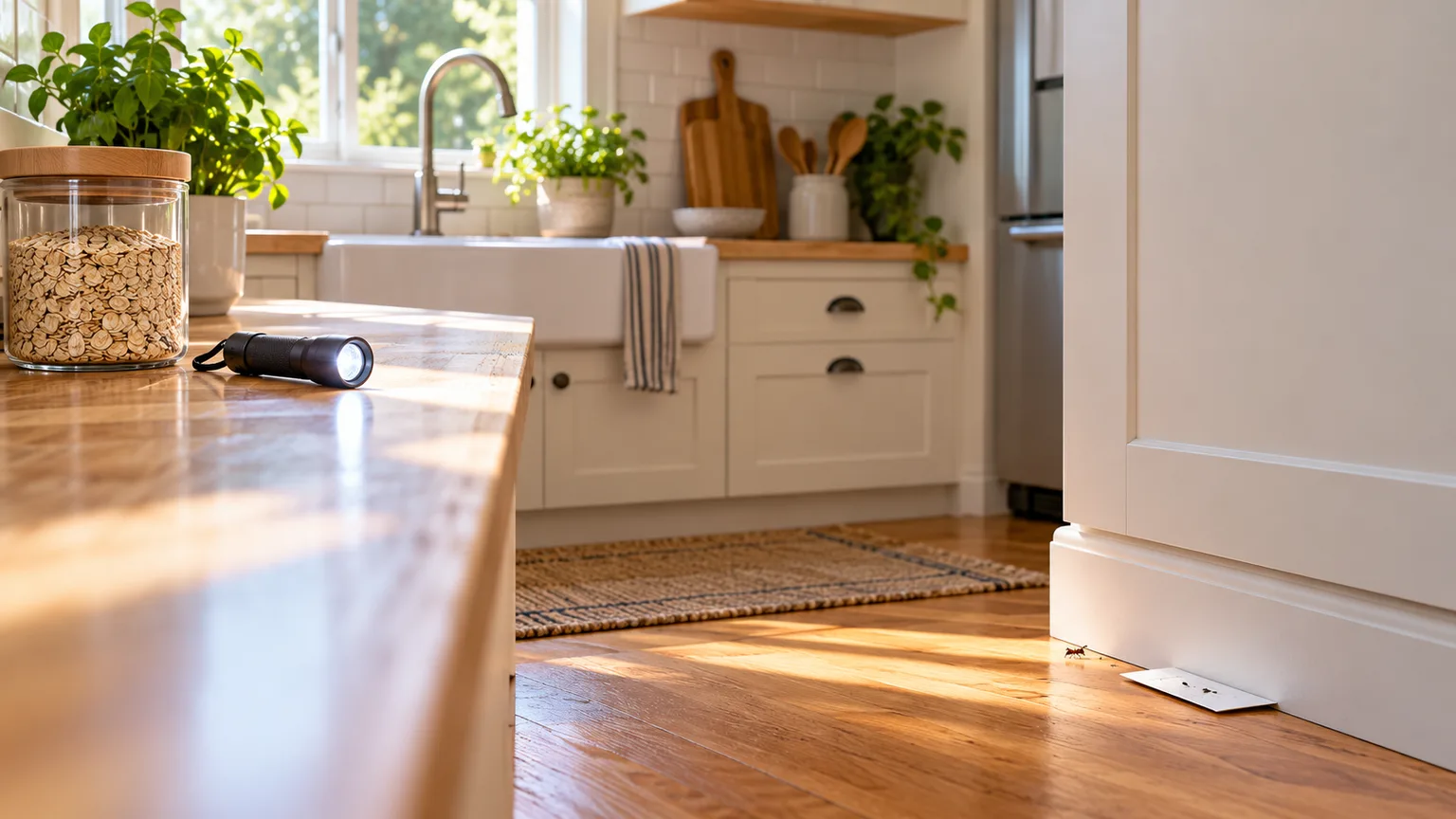
First, turn off nearby music or fans and wait a moment. A cricket’s chirp may stop when you approach, but the last sound still gives you a direction: check low, dark places along the closest wall, behind a cabinet toe-kick, under a radiator, near stored boxes, or beside a basement door. A flashlight held close to the floor can help you spot the insect without moving every piece of furniture.
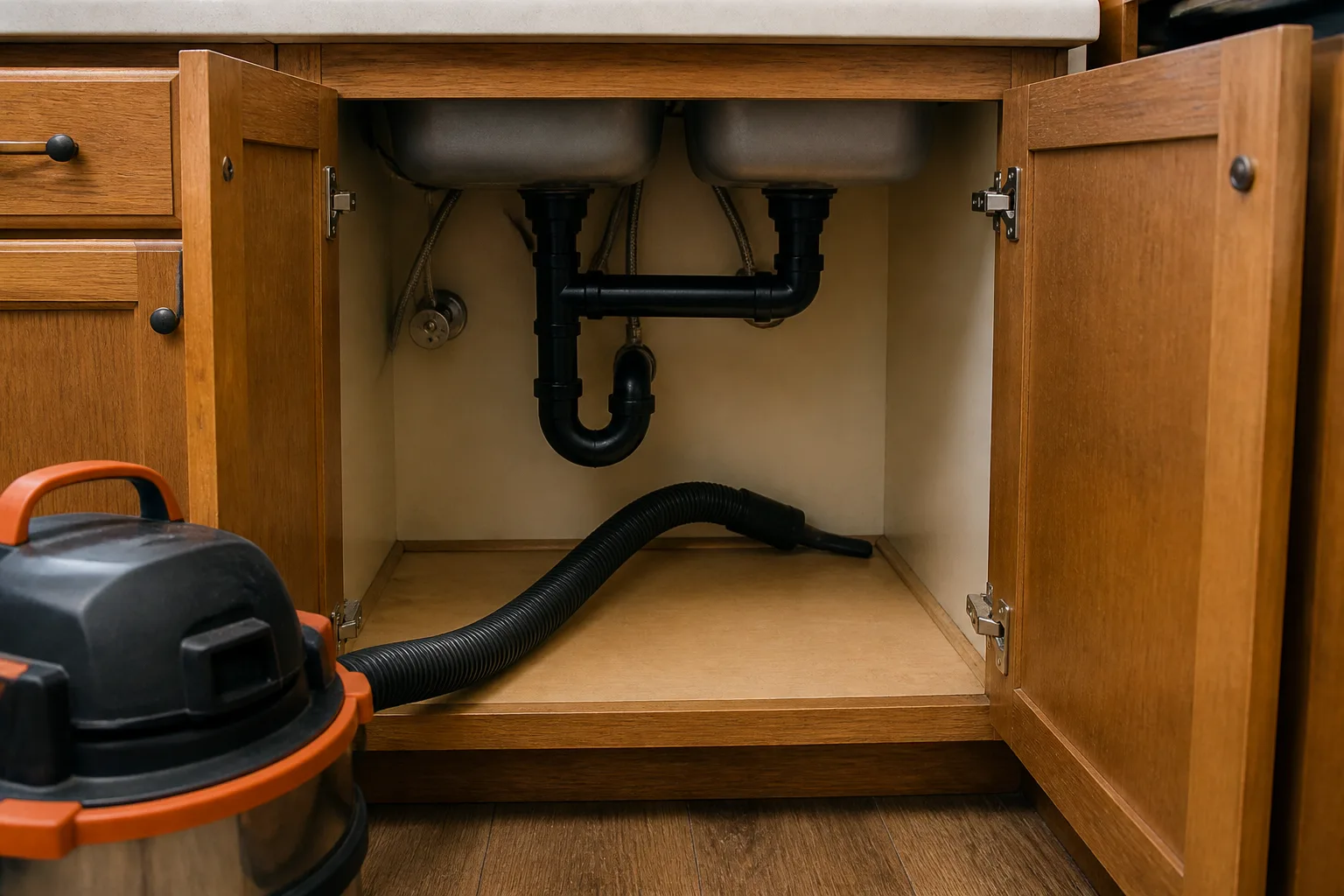
Utah State University Extension recommends vacuuming crickets that enter buildings as part of an integrated pest-management approach. That is often the quickest choice when you do not want to chase a jumping insect around the room. Use the hose attachment, then empty a bagless canister into an outdoor trash bin or seal the vacuum bag before disposal; do not leave the captured cricket in an open indoor canister overnight.
Vacuum the visible cricket or catch it under a cup
If the cricket is exposed, vacuum it directly and move on to the entry check. If you want to release it, place a cup or clear container over it, slide stiff paper underneath, and carry the covered container outside. Keep your fingers away from the insect; a cricket is easier to control with a container than by trying to pinch it while it jumps.
Do not spend half the night spraying baseboards for a single visible cricket. A room spray does not close the door gap or screen tear that allowed it in, and it may expose people or pets to a product the label does not permit for that spot. The National Pesticide Information Center recommends an integrated pest-management approach, indoor-formulated pesticides only, and following label directions. Utah State Extension describes crickets around buildings as typically minor nuisance pests and recommends vacuuming and sealing exterior cracks as practical controls. For one visitor, physical removal plus inspection is the proportional first step.
Use a glue board to monitor a repeat route
If the chirping continues but you cannot find the cricket, place one ready-made glue board flat against a wall close to the sound or recent sighting. Crickets move along edges and through shadowed spaces, so a board in the middle of an open floor is less useful than one beside a suspected route. Better Homes & Gardens also recommends placing sticky traps near active areas; use them as a small monitor that helps identify where activity is concentrated, not as a substitute for fixing the route.
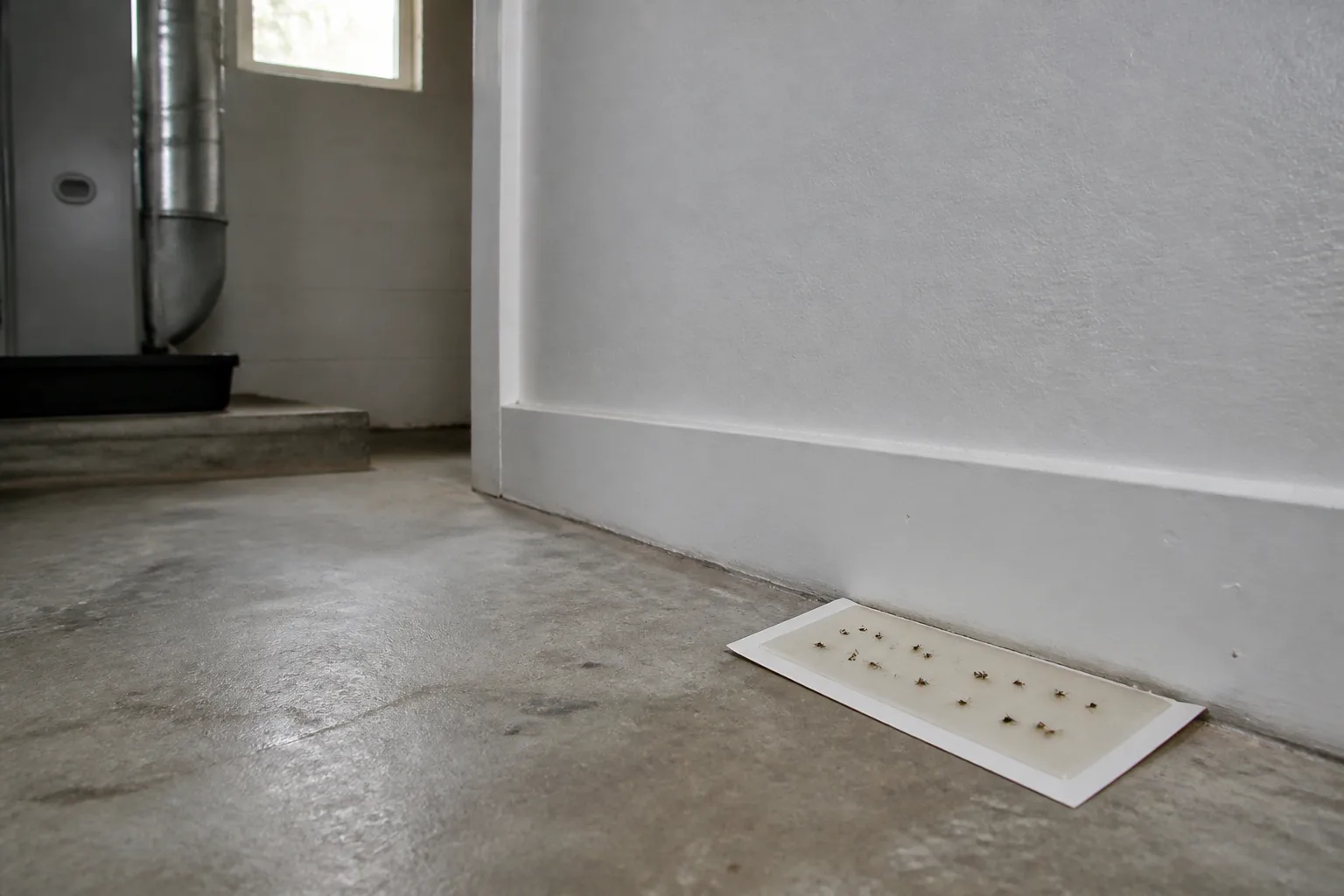
Keep glue boards out of reach of children and pets, away from places where a pet may step on them, and out of walkways. Check them at least daily so you can see whether activity is continuing and remove the board promptly if it catches a non-target insect. If you cannot place a board where it is inaccessible, skip it and use a cup or vacuum when the cricket appears instead.
One capture does not tell you how many crickets may be outside. It does tell you which side of a room deserves a closer look. Mark the location and date; if a second cricket appears or another is caught near the same wall, inspect that wall, threshold, and nearby utility opening before adding more traps.
Three ways crickets get inside
The word “three” is useful if it helps you inspect efficiently: check gaps in the building shell, service openings, and open doors near outdoor activity. These routes can overlap. A cricket can gather by a lit porch and still need a door gap or open threshold to reach the room, so use the clues below to identify the step you can actually fix.
1. Gaps around doors, windows, and the foundation
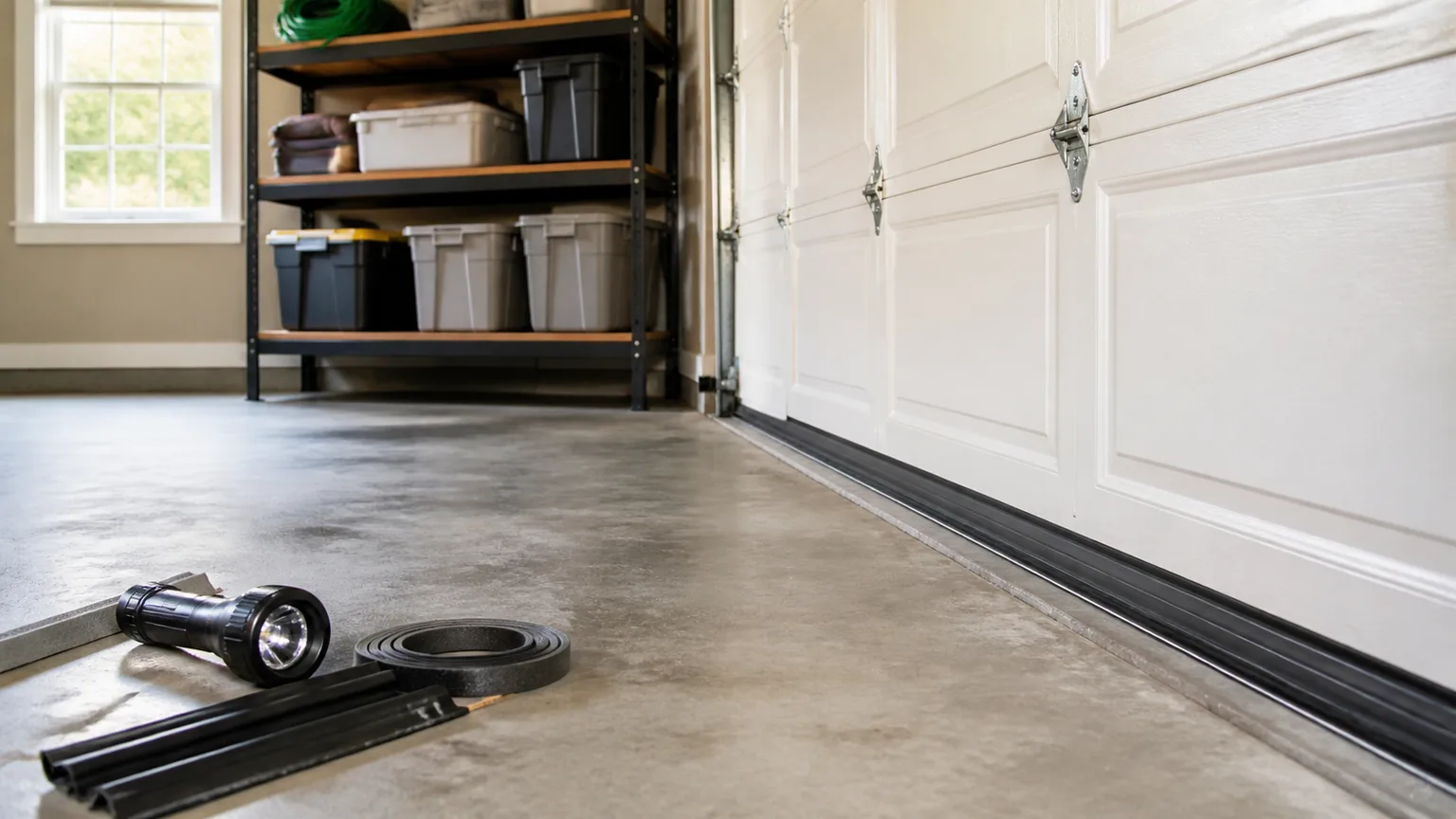
Small cracks at a door frame, a worn threshold, torn window screen, or an opening in the foundation can let a ground-moving cricket pass into a basement or living area. Utah State University Extension specifically recommends sealing cracks around the outside foundation and installing tight-fitting door sweeps under exterior doors. A screen is only useful if it fits its frame and has no open corner or tear.
Start where you heard the chirp or found the insect, then inspect the closest route outdoors. Close the door and look for daylight below it; check whether the sweep touches the threshold all the way across. Inspect weather stripping along the sides and top, screen edges, basement windows, and the joint where siding or masonry meets the foundation. A gap that admits daylight or moving air is worth fixing even if you cannot prove a cricket used it.
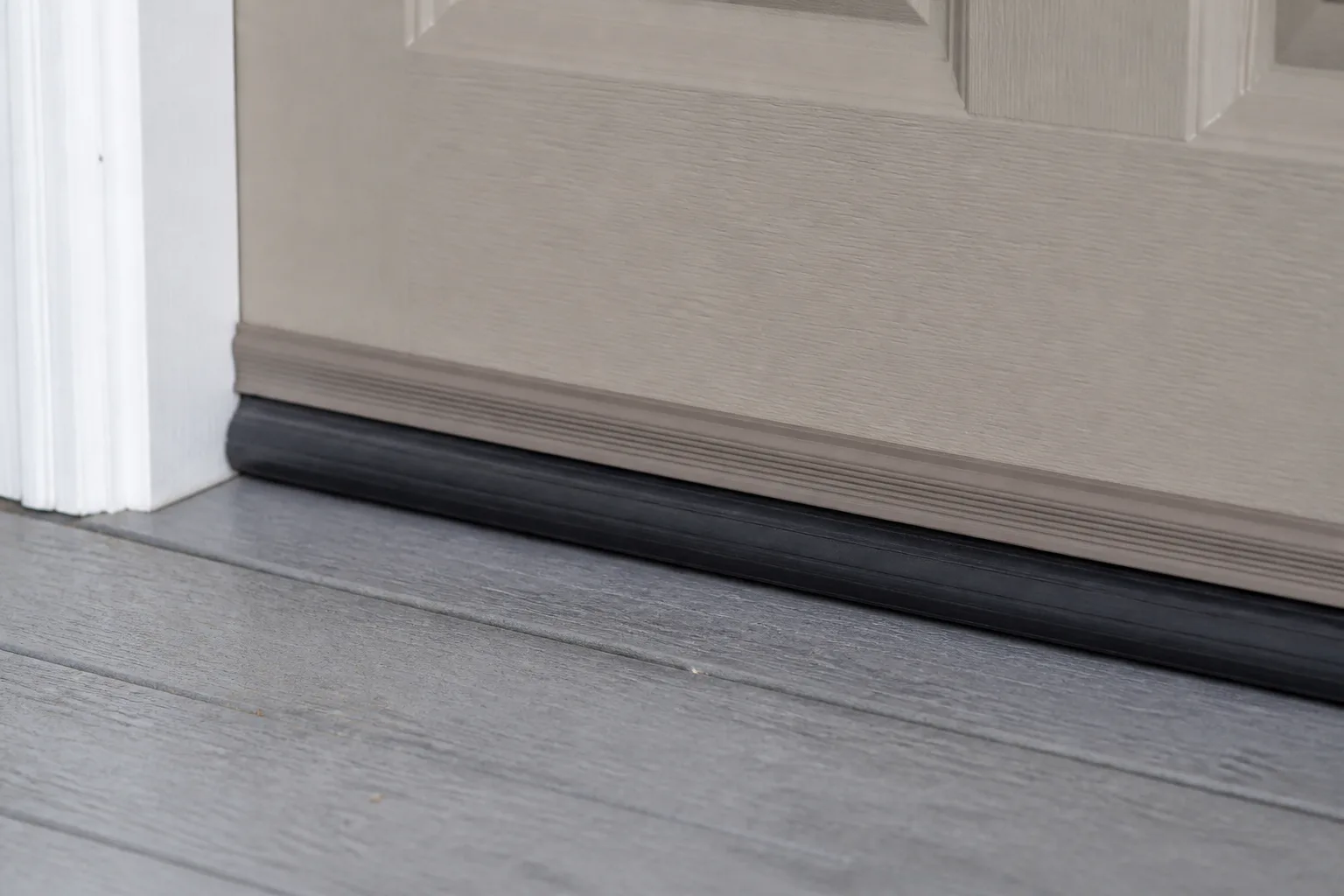
Choose the repair to match the opening. Replace a split sweep or flattened weather stripping; mend a screen with screen repair material; use an exterior-rated sealant for a narrow stationary crack. For a larger gap, damaged sill, or movement in a foundation joint, use a repair material suited to the building rather than stuffing the opening with paper or cloth. Those temporary fillers can fall out and do not make a durable insect barrier.
2. Openings around utilities, vents, garages, and crawl spaces
Look where pipes, cables, and conduits pass through an exterior wall, and where a garage, basement, or crawl-space boundary meets the living area. The cricket usually travels through the gap around the service line; it is not evidence that it came up through a water pipe. A loose vent cover, damaged screen, or unsealed rim-joist opening can also provide a route from a sheltered area into a room.
Inspect the garage-to-house door as carefully as an exterior door. A sweep that is missing at one corner, a door that does not latch, or a garage door that stays open for a long time can leave a direct path. Check crawl-space and foundation vents for broken mesh or a loose frame, but do not close ventilation openings just to keep out insects. Repair or replace the screen with a cover designed for that opening and preserve the airflow the space requires.
Give dryer exhaust, bathroom exhaust, combustion-air intakes, and appliance flues special care. Do not put expanding foam, cloth, or fine mesh across an exhaust or intake, and do not alter a vent in a way that slows airflow or traps lint. Seal the gap around the outside of the duct where it meets the wall, while leaving the duct opening and its proper exterior hood clear. If an opening involves a gas appliance, electrical wiring, or a crawl space you cannot inspect safely, ask a qualified contractor or pest professional to identify the proper repair.
3. Open doors and nearby lights draw them toward the threshold
Some house crickets gather around electric lights, and crickets are mostly active at night. A porch lamp can make a doorway a busy meeting point; if the door is left open while unloading groceries, talking outside, or letting a pet out, an insect close to the threshold can walk or hop indoors. Outdoor lighting does not teleport crickets through a sealed wall, so if you find them inside repeatedly, still check the sweep, frame, and screen.
Try a simple change for a week during the active season: switch off decorative lights that are not needed, use a motion sensor for the light you do need, and keep the door closed rather than propped open. If you replace a bulb, choose a warmer or yellow-toned outdoor bulb where the fixture and local lighting needs allow; it may be less attractive to some insects, but it is not a repellent barrier. PestWorld and Gardening Know How both describe the connection between cricket activity and lights, while the dependable control remains keeping the entrance closed and fitted well.
The clues are often straightforward. Crickets found right inside a frequently used door point to an open-door event or an inadequate sweep. A cricket below a window points you toward the screen and frame. A cluster in a garage, basement, or crawl-space access area suggests checking utility gaps and sheltered outdoor cover near that side of the house.
| Where you find it | First place to inspect | What to do first |
|---|---|---|
| Just inside a frequently used exterior door | Threshold, sweep, and nearby porch light | Close the door, replace a worn sweep, and reduce unnecessary light by the entrance. |
| Below a window or beside an outside wall | Screen corners, frame, and foundation joint | Repair the screen or seal the stationary exterior gap. |
| In a garage, basement, or utility room | Door between spaces, cable or pipe opening, and vent screen | Seal around the service line; repair the screen without blocking airflow. |
If you do not see an obvious opening, do not seal random parts of the house or assume a hidden nest is present. Remove the cricket, note its location, and monitor the nearest wall edge for another sign of activity. A repeat in the same area is a better reason to investigate that route than one insect found in a room far from an exterior wall.
What kind of cricket is indoors—and what that tells you
Color can narrow the possibilities, but it is not a perfect identification tool: several crickets are brown or dark and look similar at a glance. House crickets are usually pale yellow-brown with three darker bands on the head; adults are around three-quarters of an inch long. Field crickets are often darker, but color overlaps. Camel or cave crickets have a humped back and especially long rear legs; they do not chirp and are often found in cool, damp places, according to PestWorld’s camel-cricket profile. University of Minnesota Extension lists house, field, and camel crickets among the types commonly found around homes; PestWorld’s house-cricket profile gives the distinguishing color and head markings.
Location can be more useful than color. A chirping insect in a warm room or near a furnace may be a house cricket; a dark cricket in a garage or lower floor may have wandered in from outdoors; a hump-backed cricket in a damp, dark basement or crawl space calls for an inspection of that sheltered area. Do not assume the exact species from one glance. A clear photo, capture, or pest professional’s identification can resolve a case where the difference matters.
Crickets chirp after dark because males make their calling sound by rubbing their wings together. Their nocturnal habits explain why a room can seem cricket-free during the day and noisy after bedtime. UC IPM notes that crickets are nocturnal and need shelter during the day; it also describes some outdoor cricket movement from weedy areas as those sites dry, which helps explain why an increase outside can produce a temporary wave of visitors rather than a permanent indoor colony.
Most household encounters are nuisance problems, not emergencies. Utah State Extension characterizes building-associated crickets as typically minor pests, although house crickets can damage fabrics when they are established and feeding. If you have only seen one, remove it and look for an opening; if you repeatedly find insects or visible fabric nibbling, move to a structured inspection rather than assuming the insects will vanish on their own.
Keep crickets from coming back
Use this order so the fix addresses the likely route instead of treating the whole house: close the opening, reduce the nearby hiding place, then monitor. A cricket caught tonight is removed; a working sweep or repaired screen stops the next one. Cleanliness alone is not the solution, because crickets commonly enter from outdoor shelter even in a tidy house.
Seal entry gaps without blocking working vents
Once you know which side of the room had activity, inspect the matching outside wall and the nearest threshold. Replace door sweeps that no longer touch the floor, repair torn screens, and close small cracks around the frame or foundation with an appropriate exterior sealant. At utility lines, seal only the space around the pipe or cable. A rigid screen or vent cover should fit tightly without reducing required air movement.
You do not have to seal every seam in the home before tonight. Focus first on the opening nearest the insect, especially if it is large enough to see or feel air through. Then walk the ground-level perimeter with a flashlight and note other openings to repair. If you rent, photograph the gap and send the location to the property manager; a missing sweep or loose crawl-space screen is a building repair, not a problem a tenant should solve with an improvised barrier.
Reduce outdoor hiding places and light near entrances
Crickets rest in sheltered, often moist outdoor places such as weeds, mulch beds, woodpiles, rock piles, and debris. USU Extension recommends removing or reducing such harborage, sealing foundation cracks, and fitting door sweeps. Move firewood and stored materials away from exterior walls, trim vegetation that touches the building, and avoid leaving damp piles of leaves against a basement window. These steps reduce places where crickets can gather; they will not eliminate every cricket in a yard.
Check for a dripping hose bib, irrigation leak, or persistently wet area near a foundation, and correct the leak if you find one. In a basement or crawl space, address ongoing dampness with a fix suited to the cause—such as a leaking pipe repair, drainage correction, or professionally chosen ventilation solution. A dehumidifier can help lower indoor humidity in an appropriate basement, but it will not seal a crack or repair a torn vent screen. Moisture management supports exclusion; it does not replace it.
At the same time, turn off unneeded exterior lights near a frequently used entry, or use a motion sensor. Gardening Know How discusses reducing garden and porch lighting as a way to limit cricket activity around the garden; PestWorld also notes that house crickets are attracted to electric lights. If security lighting is necessary, keep the fixture working and the door closed, then look for a bulb option that better fits the fixture and local safety needs.
When traps or professional help make sense
Use a glue board to answer a narrow question: is a cricket still moving through this room or wall edge? Set one near a recent sighting, check it every day, and replace it according to its package directions. A board is a monitor, not a whole-home solution, and it may catch other small insects. The goal is to learn whether activity repeats and where, then improve the exclusion at that location.
For one cricket, you do not need an insecticide barrier, broadcast dust, fogger, or strong-smelling homemade mixture. They cannot repair the route and may be inappropriate for the room, surface, child, pet, or beneficial insect in question. If you choose any pesticide, use only a product whose label covers the intended indoor use and cricket; follow the label exactly, as the National Pesticide Information Center advises. Do not apply an outdoor-only product indoors or improvise a concentration. When the label or placement is unclear, skip the application and ask a licensed pest-control professional.
Know when repeated sightings deserve an inspection
Call a professional if crickets keep appearing after you have repaired the obvious opening, if several are caught in the same area over successive days, if you hear chirping from an inaccessible wall or crawl space, or if the home has a recurring basement or garage problem you cannot trace. A professional can identify the cricket, inspect less visible entry points, and tell you whether the source is an outdoor harborage, a building gap, or a damp sheltered space. PestWorld likewise advises professional inspection when a house-cricket problem persists.
Before the visit, note the dates and exact rooms, take a photo if possible, and keep any glue board that captured an insect sealed away from children and pets until the technician can examine it. Mention recent weather changes, the side of the home closest to sightings, and whether they occur near an exterior door, garage, or basement. Those details can shorten the inspection and help avoid treating unrelated rooms.
Common mistakes that slow cricket control
Chasing the cricket without closing the door. A cricket may jump into another room while you follow it. Shut interior doors to limit the area, remove it with a vacuum or cup, and check the nearest exterior threshold after the room is quiet.
Searching only in daylight. Crickets are mainly nocturnal and hide by day. If you hear chirping, locate its direction after dark; then inspect the area in daylight for cracks, screens, and sheltered cover outdoors.
Sealing the visible vent opening. A vent may serve an exhaust, appliance, or crawl-space airflow need. Seal around the vent frame or replace damaged screening with a suitable cover; never obstruct the working opening to stop an insect.
Leaving a trap where a child or pet can reach it. Glue can adhere to fur, paws, or fingers. Use one only in a protected spot and check it often, or choose physical capture instead.
Treating dampness as the only cause. Damp basements can provide shelter, but an interior cricket still needs a route into the structure. Correct leaks and persistent dampness while also checking door sweeps, screens, wall penetrations, and crawl-space access.
Expecting outdoor cleanup to eliminate every cricket. Clearing dense weeds and moving wood away from the wall reduce nearby harborage. The repair that stops entry is still a fitted door, intact screen, and sealed gap.
Conclusion
To get rid of a cricket fast, remove the one you can see with a vacuum or a cup and paper, then use a protected glue board only if you need to monitor a hidden or recurring cricket. Trace repeat activity to one of three routes: gaps around doors or windows, openings around utilities or vents, or an open entrance where outdoor lights gather insects.
Repair the specific opening, keep required vents clear, move damp clutter and wood away from the foundation, and reduce unnecessary porch lighting. A single cricket usually calls for removal and a quick check; repeated sightings, activity in inaccessible spaces, or signs of fabric damage call for a more thorough inspection or a licensed pest professional.