Snake Plant Winter Care: Water, Light, and Temperature
Learn snake plant winter care with a soil-first watering routine, safe light and temperature guidance, symptom fixes, and a simple spring reset.
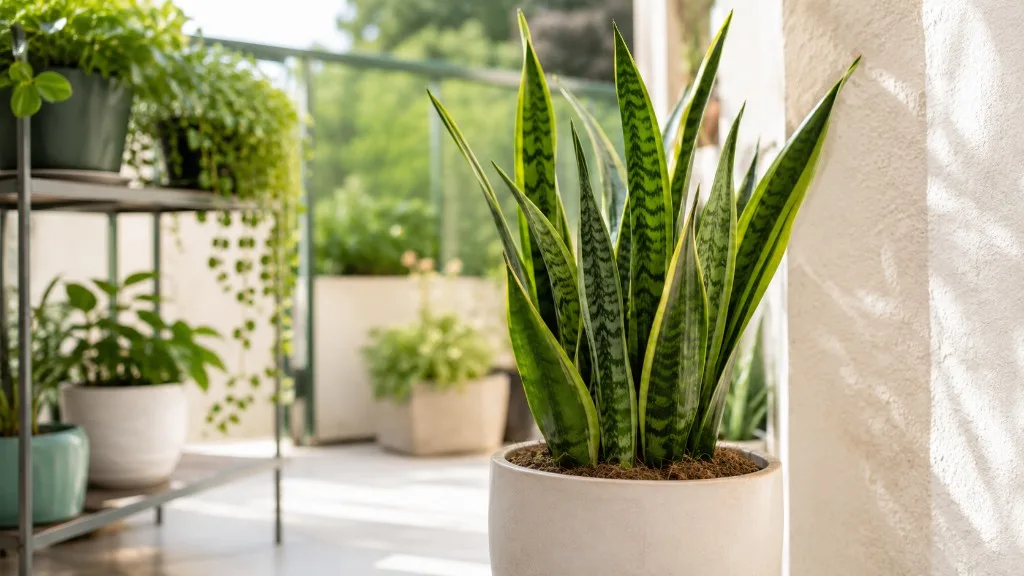
Winter care for a snake plant is mostly about restraint. Shorter days and cooler rooms slow water use, while cold glass, drafts, and heating vents can stress leaves from opposite directions. The safest routine is simple: give the plant the brightest stable light you can, let the soil dry well, keep the pot away from temperature swings, and postpone feeding or major surgery until active growth returns.
The plant sold as a snake plant is usually Dracaena trifasciata, formerly Sansevieria trifasciata. Its thick leaves and underground rhizomes store water, which is why it can tolerate neglect. They also explain why a well-meant winter watering can do more harm than a missed drink. The New York Botanical Garden’s snake-plant guide describes overwatering as the most frequent cause of failure and recommends much less water in the low-light winter period.
Winter care in one sentence
Let light and temperature set the pace, then water only when the root zone has dried thoroughly. A snake plant in a bright, warm room may dry faster than one in a cool north-facing corner, and a small terracotta pot may dry faster than a large plastic pot. That is why “once a month” is a useful starting point for some homes, not a rule to follow with your eyes closed.
In practice, winter means fewer interventions rather than a special product. You do not need to force growth with fertilizer, raise humidity just because the calendar changed, or move a healthy plant into harsh midday sun. You need to prevent the wet-and-cold combination that leaves roots short of oxygen and foliage vulnerable to damage.
Reset your plant before winter
A ten-minute reset in fall or at the start of a cold spell prevents many problems later. Check the pot, soil, leaves, and location while the plant is still stable; do not wait until a leaf has collapsed to discover that the decorative container has been holding runoff for weeks.
Check the soil and pot
Look for a drainage hole, a saucer that can be emptied, and a pot that is not dramatically larger than the root ball. The RHS recommends a free-draining, peat-free cactus compost and warns that an oversized pot leaves extra compost wet for too long, increasing the risk of root rot. A mix containing plenty of mineral material such as perlite, pumice, or horticultural grit is easier to manage in a dim winter room than dense, moisture-retentive soil.
Slide a finger into the mix or use a wooden skewer to check below the surface. Surface-dry soil can hide moisture lower down, especially in a deep pot. If the pot feels heavy and the lower mix is cool and damp, do not water because the top looks dusty. If the pot is in a cachepot, lift it out and empty hidden runoff before returning it.
Inspect the plant itself. Firm leaves, a stable crown, and a mild earthy soil smell are reassuring. A wobbly crown, soft leaf bases, sour odor, or repeated fungus gnats point to a root-zone problem that should be addressed before you reduce watering and hope for the best.
Find a stable winter location
Choose a bright area away from an exterior door, drafty window, radiator, heat pump, or forced-air vent. Do not press leaves against cold glass. A window can provide the best light in the room while still becoming the coldest surface at night, so pull the pot back after sunset if the pane chills noticeably.
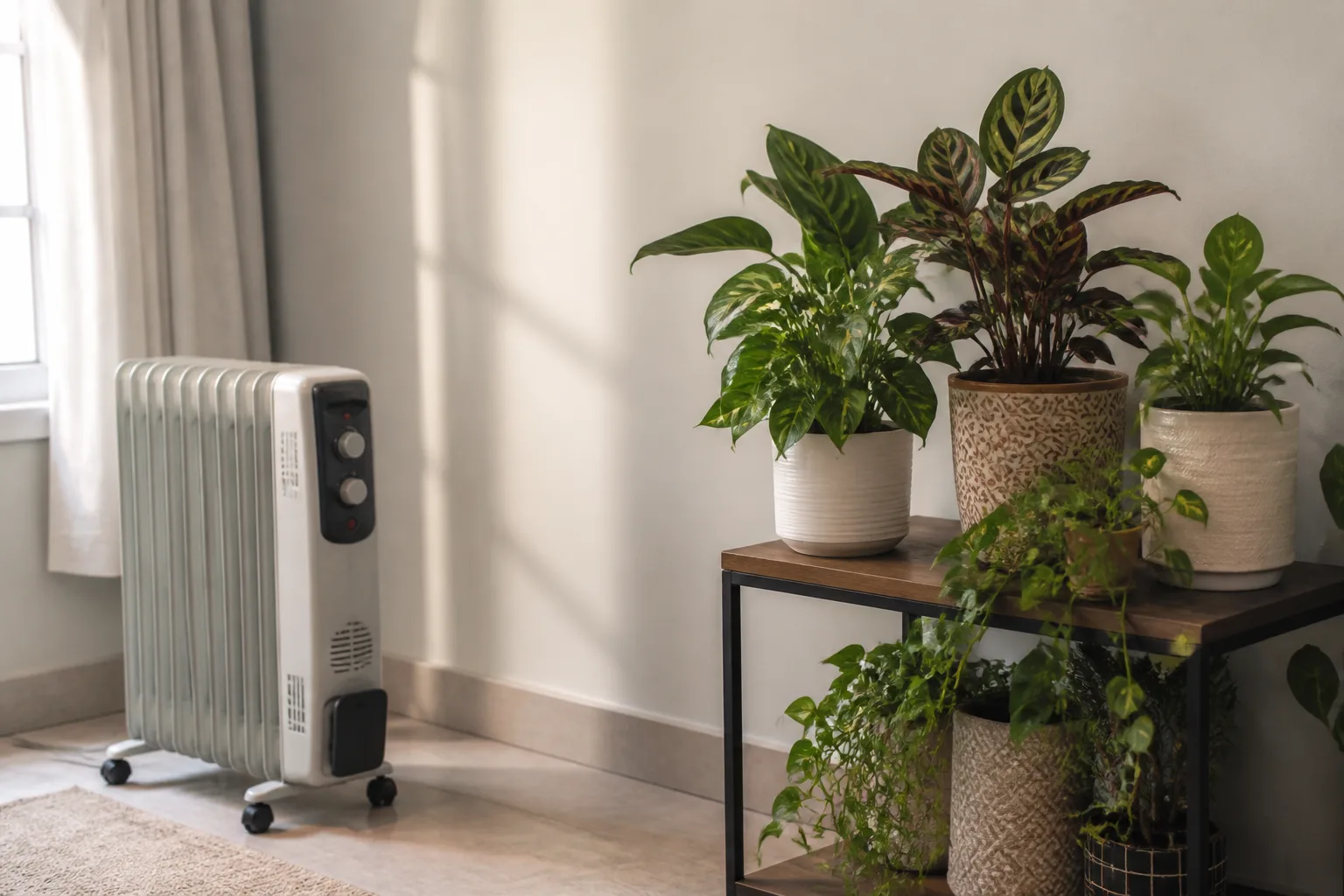
If the plant lived outdoors for summer, bring it inside before cold nights arrive rather than waiting for frost. Inspect leaf undersides and the soil surface before placing it near other houseplants. A gradual move from outdoor light to indoor light also reduces the chance of stress and gives you time to notice hitchhiking pests.
The best location is not always the brightest possible location. A slightly less intense window with a stable overnight temperature is safer than a brilliant window that exposes the pot to a sharp cold drop every evening.
Water by dryness, not by calendar
The most important winter adjustment is to water less often, but “less often” does not mean giving a tiny splash every week. Snake plants need a thorough drink when the mix is dry and then a real dry-down. Light sprinkles wet the surface while leaving dry pockets below, which encourages you to water again before the root zone has had time to breathe.
Use a calendar only as a reminder to check. Fine Gardening suggests roughly three to four weeks between winter waterings for many indoor snake plants, while Gardening Know How gives a broader one- to two-month winter range. Those intervals differ because homes, pots, soil mixes, and light levels differ. The shared recommendation is the important part: let the soil dry and adjust to the conditions around your particular plant.
Use the finger-and-pot-weight test
Check the soil when you pass the plant, but do not water on every check. Push a finger about 2 inches into the mix, or use a skewer to sample deeper in a tall pot. The top should be dry, and the root zone should feel close to dry rather than cool and damp. Lift the pot after watering and again when dry; over time, the change in weight becomes a useful second signal. Savvy Gardening explains this soil-first approach and notes that temperature, light, soil type, pot size, and pot material all change watering frequency.
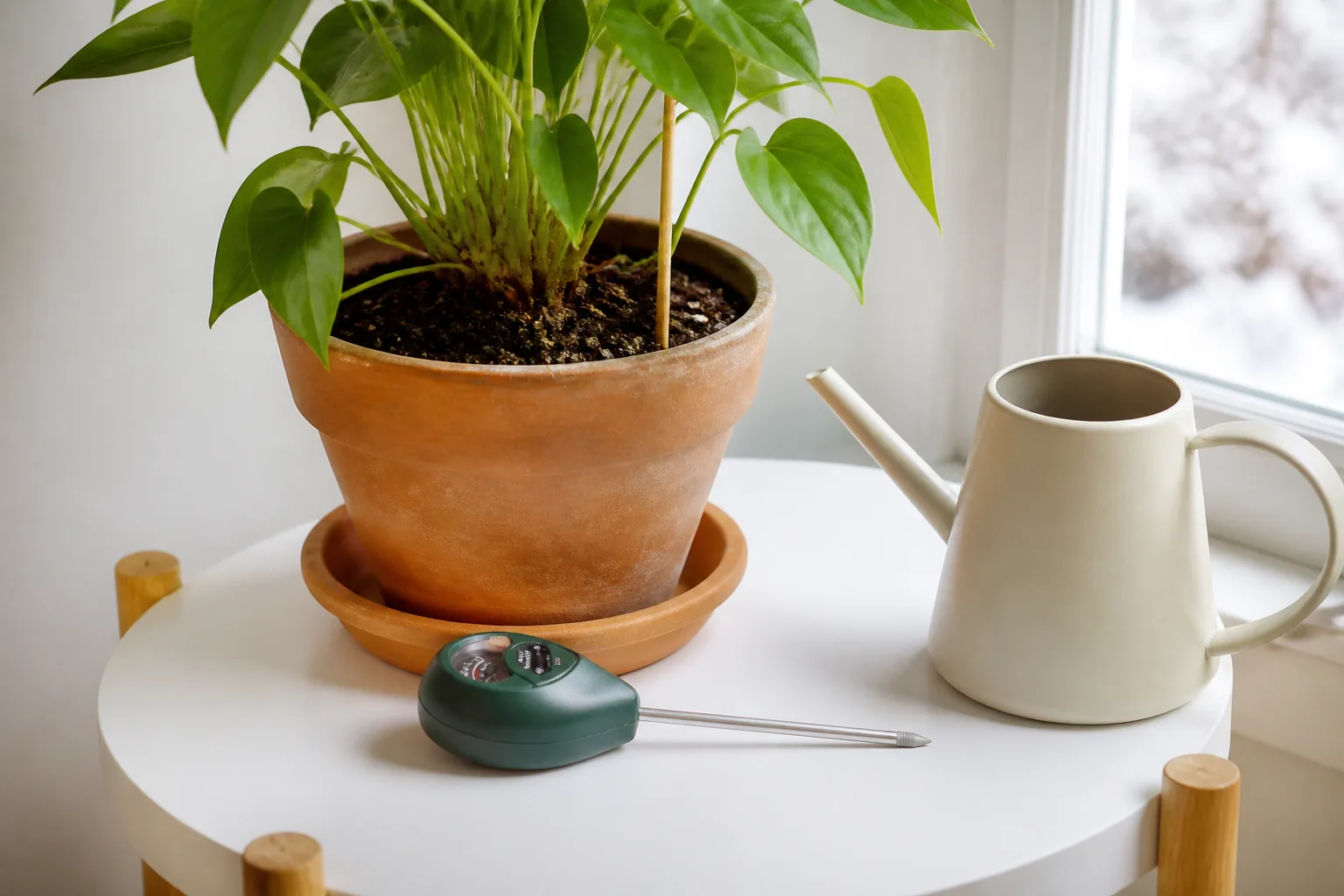
Use these as starting check intervals, not promises:
| Winter setup | Start by checking | Why it changes the pace |
|---|---|---|
| Cool room, dim window, large plastic pot | Every 5–7 weeks | Low light and cool roots slow drying |
| Average heated room, bright indirect light | Every 3–4 weeks | Moderate warmth and light use more stored water |
| Small pot, terracotta, or bright grow light | Every 2–3 weeks | Less soil or more evaporation can shorten the interval |
If the soil is still damp at the suggested check, wait and test again later. If leaves are wrinkling and the mix is genuinely dry, water sooner. A plant that is actively growing under a strong grow light may need a summer-like rhythm even when it is winter outdoors.
Water deeply, then drain completely
When the soil is dry, water slowly over the surface until a little runs from the drainage hole. Pause and repeat if the mix repels water. Then let the pot drain fully and empty the saucer or outer pot. The RHS specifically recommends watering from above while avoiding the center of the rosette, then removing water that collects below the pot.
Do not pour water into the leaf crown and leave it there. Moisture trapped between tightly packed leaves is slower to evaporate in winter and can encourage soft tissue or rot. Do not bottom-water a pot and then forget it in a tray; remove it once the mix is evenly moist and let it drain.
If the plant is in a pot without a hole, the winter is not the right season to keep improvising a watering schedule. Move it into a draining nursery pot or repot only if the current setup is actively causing damage. A healthy plant can wait for a planned spring repot; a pot that traps standing water cannot.
Give the brightest safe light
Snake plants tolerate low light, but tolerance is not the same as strong growth. The RHS growing guide says sansevierias can thrive in sun or light shade, while the New York Botanical Garden notes that poor light may keep them alive but will not support vigorous growth or flowering. In winter, the useful question is not “Does it survive in this corner?” but “Does this corner provide enough light for the soil to dry at a reasonable pace?”
Move the plant closer to a bright east, west, or winter-safe south window if its leaves are paling, stretching, leaning, or producing no new growth after a long period. Clean dusty leaves and the window glass so available light reaches the foliage. Turn the pot a quarter turn periodically to prevent one-sided leaning, as the RHS recommends.
Be careful when moving a plant from deep shade into bright sun. Increase exposure over a week or two, especially for yellow-edged or heavily variegated cultivars that can scorch more readily. If the best window is too cold at night, use a sheer curtain during the brightest part of the day and pull the plant back from the glass after sunset.
Keep temperature steady and humidity ordinary
Room temperature is usually enough. The RHS gives 15–24°C (60–75°F) as an ideal range and advises keeping sansevierias away from cold drafts and radiators. The New York Botanical Garden recommends a warm home and says not to keep the plant below 55°F; Fine Gardening similarly says snake plants should not be placed in conditions colder than 50°F. Treat those lower numbers as danger thresholds to avoid, not temperatures to aim for.
The cold-and-wet combination is the real winter hazard. A dry plant can sometimes tolerate a brief cool spell better than a freshly saturated root ball, but that is not a reason to expose it to cold. Move the plant to a stable room, keep leaves off the glass, and let the mix dry before the next watering.
Snake plants do not need tropical humidity. Average household humidity is adequate, and the RHS says they prefer low humidity and should not be misted or kept in a steamy bathroom. A humidifier may be useful for people or for other humidity-loving plants, but it is not a required snake-plant treatment. If brown tips appear, check watering, heat, drafts, salt buildup, and direct sun before assuming the air needs more moisture.
Keep the pot and soil fast draining
Winter exposes drainage mistakes because the plant uses water slowly. A dense mix, a pot without a hole, a saucer that never gets emptied, or a container much too large for the roots can keep the bottom of the pot wet long after the surface looks dry. The RHS recommends a free-draining cactus compost and a snug pot; BBC Gardeners’ World Magazine likewise suggests cactus compost or a peat-free mix amended with horticultural grit and recommends a slightly larger pot only when the plant has outgrown its current one.
Do not repot a healthy snake plant just because winter began. Repotting adds disturbance at the same time that light and growth are slowing. Wait for spring if roots are not escaping, the pot is stable, drainage is good, and the plant is not declining. Act sooner only when you have a failed drainage setup, severe root rot, or a pot that is cracking or buckling from crowded rhizomes.
Heavy upright plants also need stability. A broad, heavy container can prevent tipping, but do not compensate for a top-heavy plant with a giant volume of wet soil. Keep the root ball snug and the container stable, then support the plant externally if needed.
Pause feeding and major work
Do not fertilize a snake plant simply because it is indoors and still green. Both the RHS and Gardening Know How place feeding in the active growing season, and Fine Gardening recommends stopping fertilizer in winter. If light is weak and growth has paused, fertilizer is more likely to leave unused salts in the mix than to produce useful leaves.
Save routine pruning, dividing, leaf-cutting propagation, and repotting for spring when new growth is starting. The RHS says propagation is easiest in spring, and the New York Botanical Garden notes that pruning is most successful then. If a leaf is dead, mushy, or broken, remove it with a clean sharp tool at the soil line; avoid cutting healthy foliage just to reshape the plant during its winter rest.
There is one exception: correct an active hazard. Remove standing water, move a plant away from cold glass or a heater, isolate pests, or inspect roots if the plant is deteriorating in wet soil. “Wait until spring” applies to optional improvement, not to a drainage failure that is damaging the plant now.
Use a symptom-first winter triage
Winter symptoms overlap, so do not diagnose from leaf color alone. Pair the symptom with soil moisture, leaf texture, the location of the damage, and any recent change in temperature or placement.
Yellow, soft, or leaning leaves
Yellow leaves that feel soft, especially near the base, are a reason to inspect the root zone before watering. Wet mix, a heavy pot, a sour smell, or a crown that wobbles points toward overwatering and possible root rot. The RHS lists overwatering or standing water as the main health problem for sansevierias; BBC Gardeners’ World Magazine also recommends checking the roots when yellowing appears in winter.
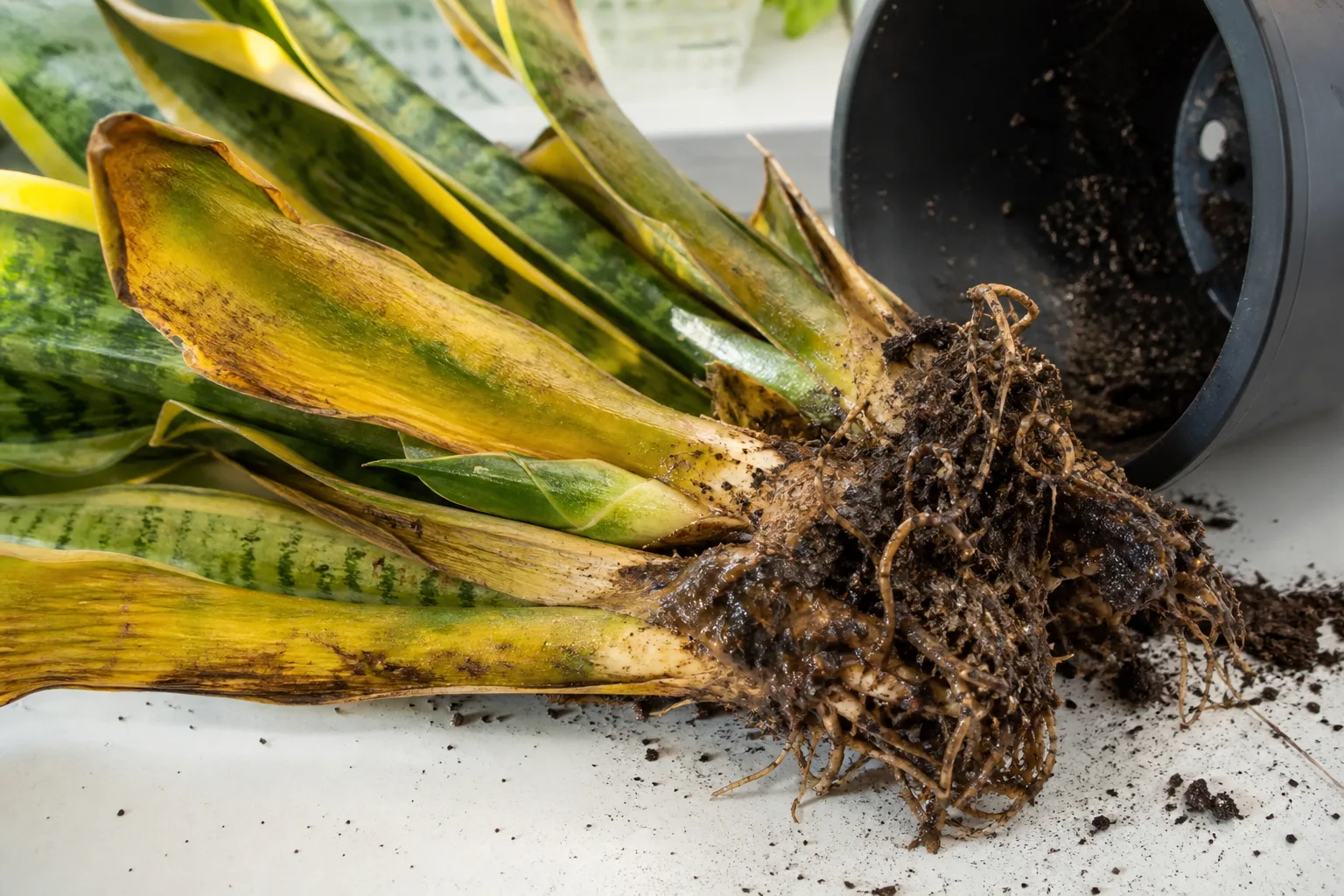
Stop watering and empty every saucer. If the plant does not improve as the mix dries, slide it from the pot and inspect the roots. Healthy roots are firm; rotten roots are dark, soft, and easy to pull apart. Trim only damaged tissue with a clean tool and repot the remaining healthy portion into fresh, fast-draining mix. If most of the root system has collapsed, recovery is uncertain, so keep the smallest healthy crown rather than placing a damaged plant back into a large wet pot. Our root-rot houseplant guide covers the inspection and rescue sequence in more detail.
Leaning can also come from weak winter light, tall older leaves, or a plant that is simply top-heavy. If the base is firm and the soil is dry, improve light and add external support. If the whole crown rocks in the soil, treat it as a root problem until proven otherwise.
Wrinkled leaves or dry tips
Wrinkled, curling, or puckered leaves with dry soil indicate that the plant has used more stored water than the current routine replaces. Water thoroughly when the mix is dry, let it drain, and reassess over the next week. BBC Gardeners’ World Magazine describes wrinkled leaves as an underwatering signal, but a wrinkled leaf is not permission to water a pot that is still damp.
Brown tips need more investigation. They can follow underwatering, sudden heat, direct sun, fertilizer salts, or physical damage to the pointed leaf tips. Fine Gardening notes that abrupt moves, excess water, excess fertilizer, and temperatures below about 50°F can all contribute to poor-looking foliage. Trim the brown portion only for appearance; the damaged tissue will not turn green again. Fix the cause before trimming more.
Cold patches, pests, or soil mold
Dark, water-soaked, translucent, or rapidly collapsing tissue on the side facing a cold window suggests cold injury rather than thirst. Move the plant to stable warmth and bright indirect light, keep the mix on the dry side, and wait to see which tissue remains viable before pruning. The Sansevieria International cultivation guidance recommends a minimum winter temperature of 10°C (50°F) and notes that brief lower temperatures are more tolerable when plants are kept dry.
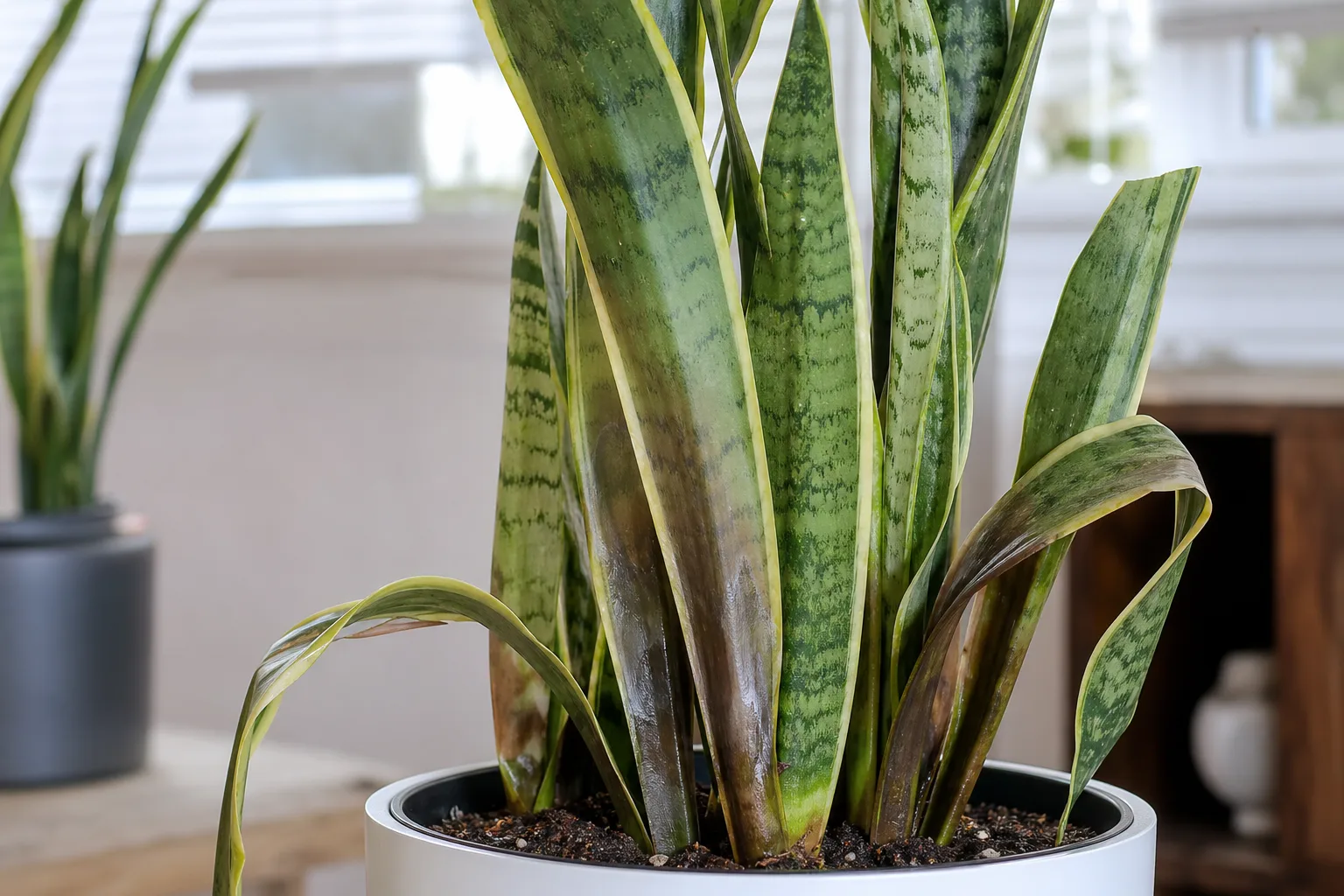
White cottony clusters at leaf bases or in crevices are more consistent with mealybugs than with ordinary dust. Inspect undersides and neighboring plants, isolate the affected pot, and wipe visible insects away with a damp cotton swab or cloth. RHS identifies mealybugs as a sansevieria pest and notes that red spider mites are more likely in hot, dry conditions. A plant that is suddenly stressed by a heater or a move deserves a closer pest check, not an automatic increase in watering.
Fuzzy growth on the soil surface usually means the mix has stayed wet and air movement is poor. Remove the visibly affected surface material, improve drainage and airflow, and let the root zone dry. If the plant also has soft bases, yellowing, or a foul odor, inspect the roots rather than treating the surface growth as the whole problem. Keep snake plants away from curious pets and children: RHS describes sansevierias as poisonous and their sap as a skin irritant.
Treat a winter bloom as a signal, not an emergency
A snake plant flowering in winter can be surprising, but it is not proof that the plant is suffering. The New York Botanical Garden explains that flowering may happen when a plant has enough stored energy and little room left for new shoots; generous light and a very crowded plant can both play a role. The RHS describes the flowers as occasional and fragrant.
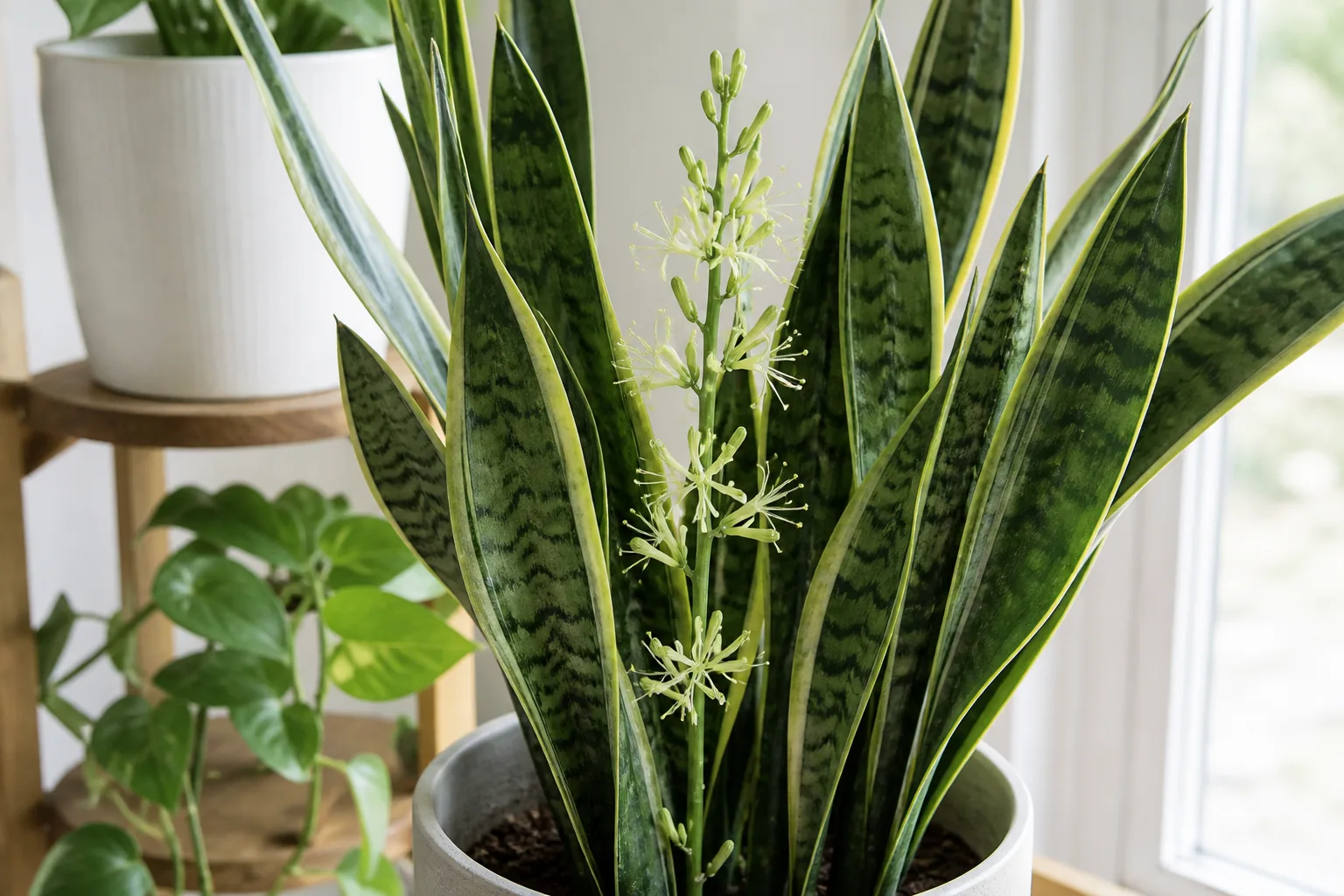
Do not respond to a flower stalk by doubling the water or starting fertilizer in December. Check the same basics you would check on any healthy plant: firm leaves, dry-down between waterings, good drainage, stable temperature, and no pests. Let the flowers finish, then cut the spent stalk at the base with a clean tool. If the plant is truly root-bound, plan a snug spring repot or division instead of disturbing it during the bloom.
Winter routine and spring reset
Keep the winter routine deliberately small:
- Weekly: Look at the leaf bases and undersides, check for drafts or heater blasts, and turn the pot slightly if it is leaning toward the window.
- Every few weeks: Test soil depth and lift the pot. Water only when the mix is dry enough, then soak thoroughly and empty all runoff.
- After a cold snap or move: Check for new dark or water-soaked patches, but do not prune every damaged-looking leaf immediately. Stabilize conditions first.
- At the first sign of sustained new growth: Increase watering gradually as the soil dries faster, then resume a diluted houseplant or cactus feed according to the label.
- In spring: Repot, divide, prune, or propagate only if the plant needs it. Use the smallest practical pot and fresh, free-draining mix.
The timing of spring is not identical everywhere. Follow the plant’s behavior—longer brighter days and new growth—rather than a fixed date. A snake plant under a grow light in a warm room may never enter a deep rest; a plant in a cool, dim room may remain nearly still well into spring.
Conclusion
Successful snake plant winter care comes down to matching water to drying time and matching placement to temperature. Keep the plant bright but acclimated, warm but away from heaters, and dry between thorough waterings. Skip routine misting, fertilizer, pruning, and repotting while growth is paused, then use the first consistent new growth of spring as your cue to restart.
If a winter symptom appears, check the soil and roots before changing anything else. Yellow soft leaves in wet mix, wrinkled leaves in dry mix, cold patches after a draft, and cottony insects each call for a different first move. That small pause before watering is what keeps a resilient snake plant healthy through the season.