How to Grow and Care for a Tulip Tree
Learn how to grow a tulip tree with the right site, planting depth, watering, pruning, cultivar choices, propagation, and pest fixes.
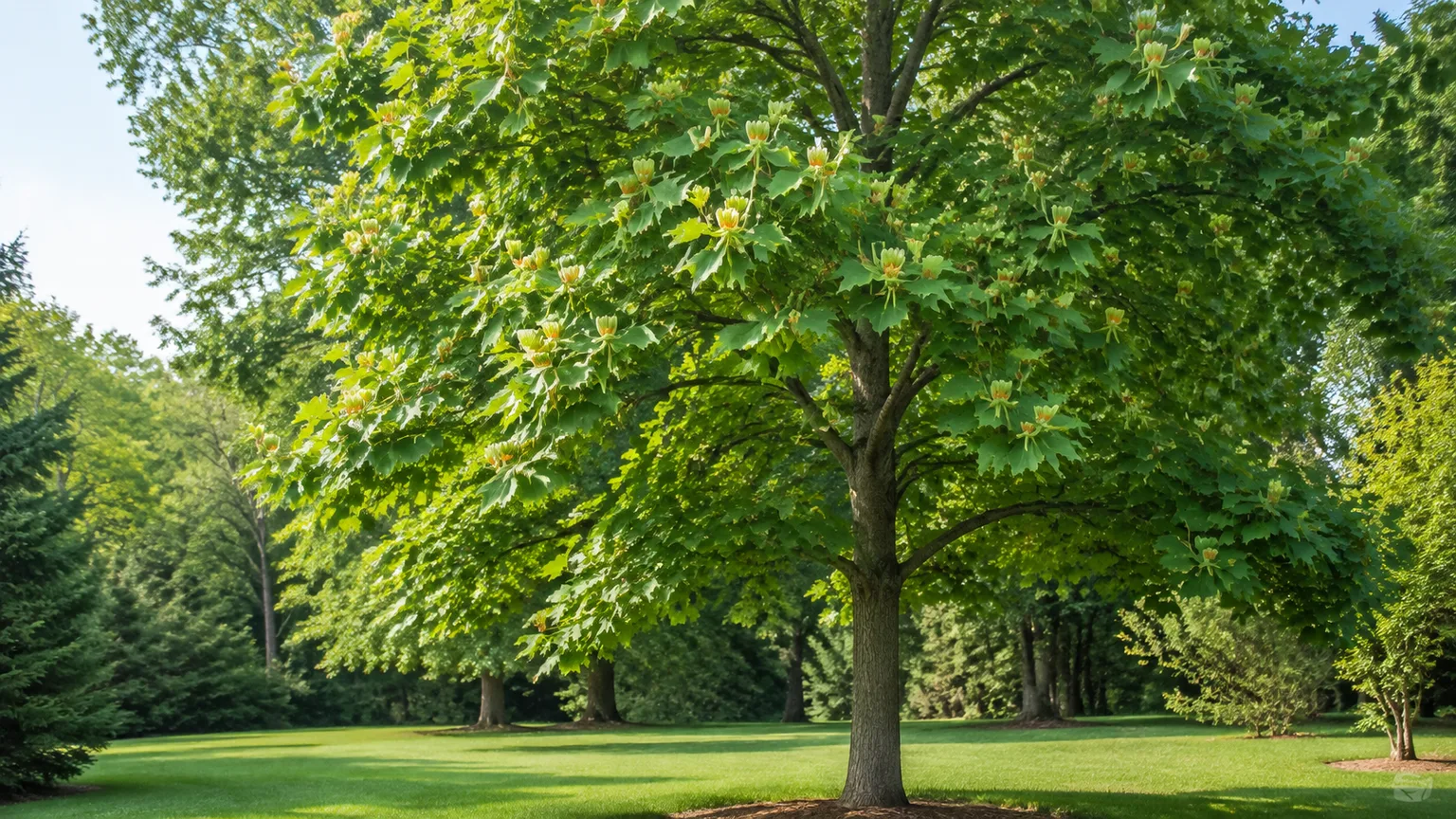
Tulip trees are spectacular when they have room to become what they are: tall, fast-growing eastern North American hardwoods with four-lobed leaves, yellow-green flowers marked with orange, and bright yellow fall color. They are also a poor choice for a cramped front yard, a dry planting strip, or a place beneath wires. The most important part of tulip tree care happens before planting: match the tree’s eventual size and moisture needs to the site.
The botanical name is Liriodendron tulipifera. “Tulip poplar” and “yellow poplar” are common names, but this tree is not a true poplar; it belongs to the magnolia family. NC State Extension describes it as a tree of deep, moist forests that is sensitive to heat, drought, soil compaction, and limb breakage. (NC State Extension)
The right tree for your yard
Choose a tulip tree for a large property, woodland edge, park-like lawn, or naturalized area where its canopy can expand without pressing against a roof, road, patio, septic field, or power line. A mature species tree commonly reaches roughly 80–120 feet tall and 30–60 feet wide in the landscape, although growth depends on climate, soil depth, moisture, and cultivar. That is a long-term design constraint, not a detail to solve later with severe pruning.
This is a good tree when you want height, filtered shade, wildlife value, and a strong seasonal sequence: fresh foliage in spring, flowers in late spring to early summer, golden leaves in fall, and persistent cone-like fruit structures in winter. The flowers can be hard to see on a mature tree because they form high in the crown after the leaves emerge, so plant it for the whole tree rather than expecting a shrub-level flower display.
It is a poor fit for a small residential lot or street planting unless a genuinely smaller cultivar has been selected and the site still provides adequate root volume. The University of Minnesota notes that the fleshy root system is best transplanted in early spring in its region and prefers moist, well-drained, slightly acidic soil; its species profile also flags salt sensitivity. (University of Minnesota UFOR)
Tulip tree quick reference
| Care factor | Practical target | Why it matters |
|---|---|---|
| Botanical name | Liriodendron tulipifera | Confirms you are buying the tulip tree, not a true poplar |
| Mature species size | About 80–120 ft. tall × 30–60 ft. wide | Reserve a large, open planting area |
| Hardiness | Commonly listed for USDA zones 4–9 | Heat and drought can still limit performance within the range |
| Light | Full sun; partial shade is tolerated | More light supports a fuller crown and better flowering |
| Soil | Deep, fertile, moist but well-drained | Standing water and drought are both damaging |
| Roots | Fleshy, relatively shallow near the surface | Protect the drip line from compaction and digging |
| Water | Slow, deep watering while establishing | Frequent shallow sprinkles encourage a shallow root system |
| Fertilizer | Soil-test-led and modest | Excess nitrogen can push weak, overly soft growth |
| Pruning | Structural work when young; hazard work later | Fast growth and weak wood make branch selection important |
| Flowers | Fragrant, yellow-green with orange markings | Typically appear after the tree is mature enough to flower |
| Wildlife | Nectar, seeds, nesting and larval-host value | Useful as part of a larger native planting |
Growth is often rapid in good soil; MyGardenLife reports roughly 1–2 feet of new growth per year for this species. (MyGardenLife) Treat that as a favorable-season estimate, not a guarantee. A tree that grows quickly because it is well watered can still develop poor branch structure if its competing leaders are ignored.
Choose the site before you buy
Measure the planting area from the tree’s future trunk, not from the nursery pot. Look up for utility lines, roof edges, chimneys, lights, and neighboring trees; look down for septic systems, buried services, paving, and areas where vehicles compact soil. If the only available spot is a narrow strip between pavement and a house, select a smaller tree instead of trying to keep a tulip poplar artificially small.
Light and exposure
Give a tulip tree full sun when the site has adequate moisture. Six or more hours of direct sun is a useful target, though a young tree may tolerate some afternoon shade and a mature forest-grown tree can begin life under filtered light. Dense shade produces a thin, reaching crown and reduces the energy available for strong branch development.
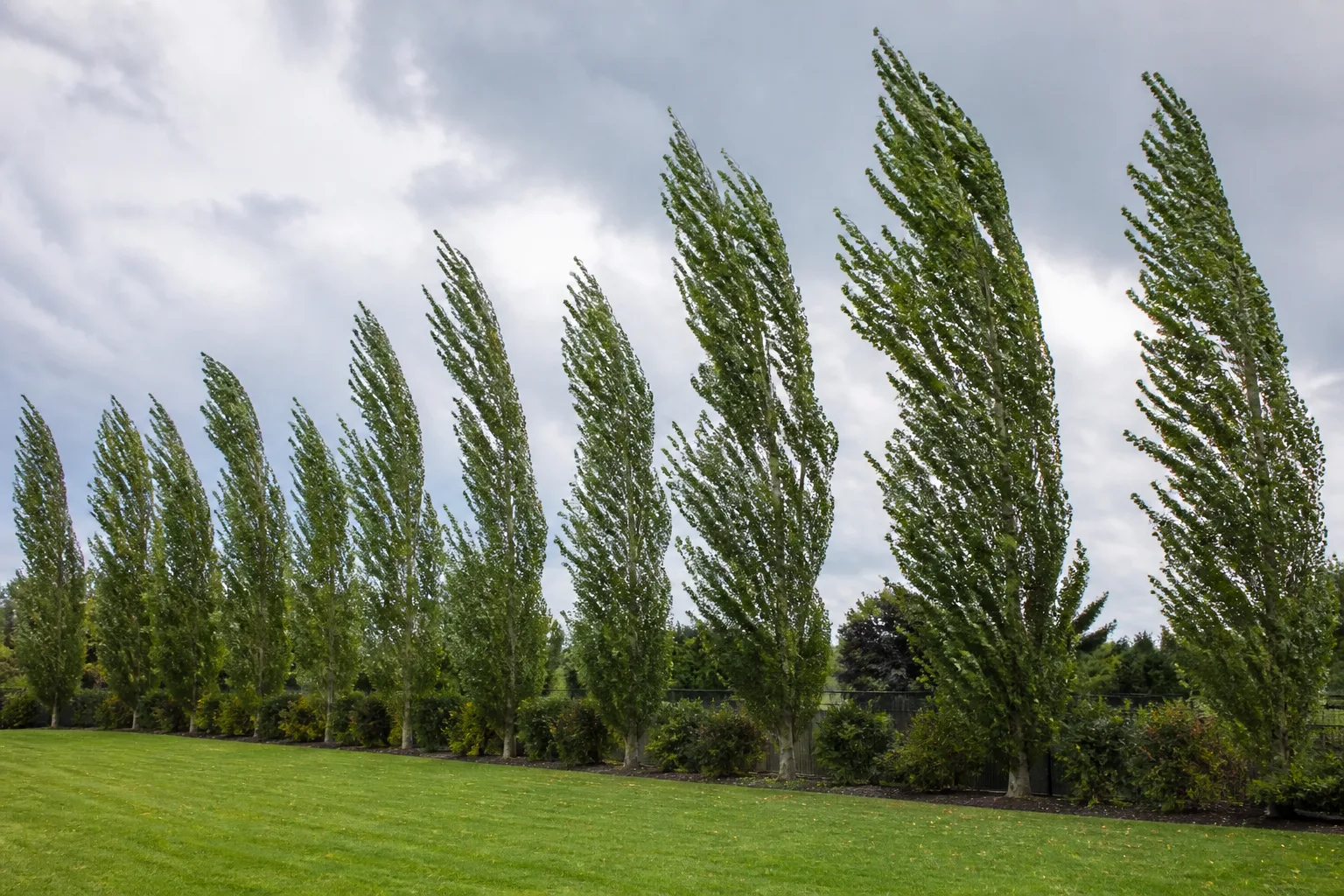
The best exposure is bright and open but not relentlessly drying. In a hot, dry region, a site with morning sun and some afternoon relief can reduce leaf scorch, provided the tree still receives enough light. Avoid a wind tunnel or exposed ridge if another spacious position is available: large, fast-growing limbs are more vulnerable to wind, ice, and snow breakage than a slower, denser tree.
Soil, drainage, and root space
Tulip trees prefer deep, organically rich soil that holds moisture but drains excess water. They can adapt to clay, loam, or sandy soil when the root zone is deep and not chronically saturated, but compaction is a serious disadvantage because it removes the air spaces roots need.
Do not fill a planting hole with a small pocket of rich soil surrounded by hard, poor soil. Instead, loosen a broad area, keep the native soil available for root exploration, and use a soil test if fertility or pH is uncertain. Compost can improve structure when mixed modestly through the planting area; it is not a substitute for drainage or a reason to bury the root collar.
Preserve the soil under the future drip line. Mowing, parking, repeated foot traffic, trenching, and thick layers of fill can injure roots long before the canopy shows stress. A mulch ring and shade-tolerant groundcover outside the trunk flare are safer than digging a dense bed beneath the tree.
Plant correctly from container or balled stock
Spring is a reliable planting window in cold climates, while early fall can work where the ground stays workable and the tree has time to establish roots before severe cold. Buy a healthy, properly identified tree with a straight central leader, evenly distributed branches, no trunk wounds, and a visible root flare if possible. Avoid a specimen with circling roots that have been left tightly bound in its container.
Dig a hole two to three times wider than the root ball but no deeper than the root ball’s actual height. Set the tree so the first major roots and trunk flare sit at or slightly above the surrounding grade; never bury the flare to make the tree look more upright. If you can only see the trunk entering a smooth-sided root ball, brush or wash away enough soil to find the flare before setting the tree.
Remove a container carefully and tease apart only roots that are visibly circling or matted. For balled-and-burlapped stock, remove ropes and as much wire and burlap from the upper root ball as practical after the tree is stable in the hole. Backfill with the soil you removed, firming it lightly to eliminate large voids without compacting it into a hard plug.
The first-year watering and mulch setup
Build a low temporary watering basin just outside the root ball, then soak the entire planting area slowly. Water should move through the root zone rather than run down a slope or sit against the trunk. Check the soil after watering; the goal is moist soil with air still present, not mud.
Apply about 2–3 inches of shredded bark or another coarse organic mulch over the root zone, keeping it several inches away from the trunk and root flare. A mulch volcano traps moisture against bark, encourages decay, and hides changes in the trunk base that you need to inspect. For a broader explanation of mulch placement and thickness, see our guide to what mulch is and how to use it.
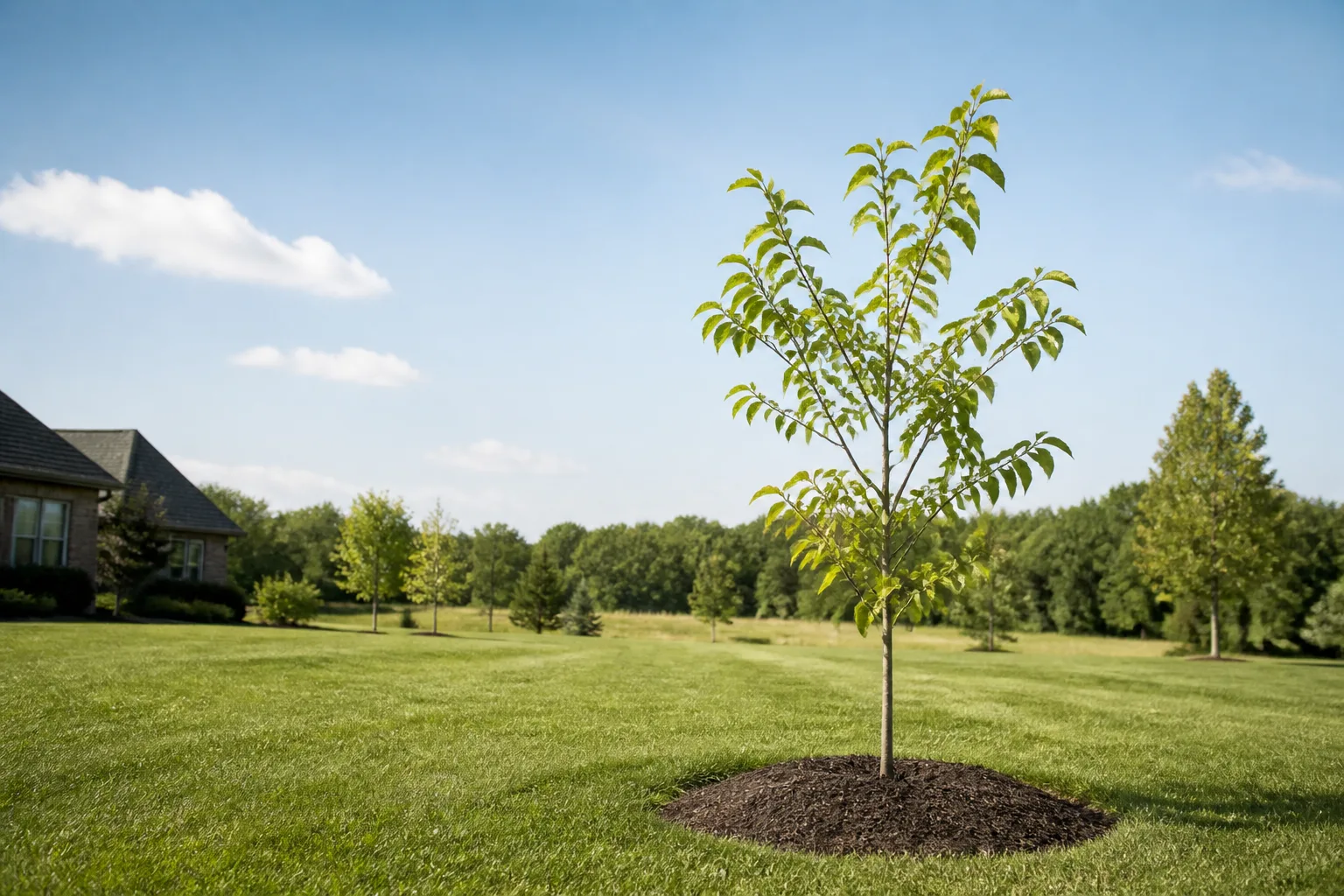
Skip nitrogen fertilizer at planting unless a soil test and a local recommendation point to a specific deficiency. The new tree is already under transplant stress; immediate forced top growth can outpace root establishment.
Watering that builds a resilient root system
Water a new tulip tree deeply and slowly whenever rainfall does not keep the root zone evenly moist. As a practical check, push a finger or hand trowel into the soil a few inches away from the root ball; when the upper 2–4 inches are dry, water thoroughly, then allow the surface to begin drying again. The exact interval may be weekly in moderate weather or every few days during heat, sandy soil, or drying wind.
For a young tree, a hose on a low trickle or a soaker setup is more useful than a quick splash. Move the delivery point gradually outward as roots extend, and water the area beneath the canopy rather than only the trunk. In the first year, monitor through every hot spell; in the second year, continue checking after drought even if the tree appears established.
Premature yellowing and leaf drop during hot, dry weather are classic drought signals for this species, but do not respond by watering on a rigid calendar if the soil is already saturated. Poorly drained soil can suffocate roots and create symptoms that resemble thirst. Dig before watering, and improve drainage or redirect runoff if the root zone stays wet for days.
Once the tree is well established in deep soil, it should need less supplemental water, but “drought tolerant” is the wrong expectation. A mature tree can still shed leaves during severe heat and drought, especially where roots are compacted or paved over. Keep the mulch ring replenished, protect the drip line, and water during exceptional dry periods rather than waiting for severe canopy loss.
Fertilizing without forcing weak growth
Start with a soil test rather than a calendar application. Healthy trees growing in deep, fertile soil often need no routine fertilizer, while a young tree with poor growth may need a targeted correction for a documented nutrient shortage. A balanced product is not automatically appropriate, and more nitrogen does not compensate for drought, compacted soil, or bad planting depth.
If a test or local extension recommendation supports feeding, apply a tree-and-shrub fertilizer in early spring and follow the label rate. Keep granules off the trunk and avoid fertilizing before a heat wave or late in the season when a flush of tender growth could be damaged by cold. Established trees should be evaluated by shoot growth, leaf color, and soil results—not by the desire to make a naturally large tree grow even faster.
Pruning for structure, clearance, and safety
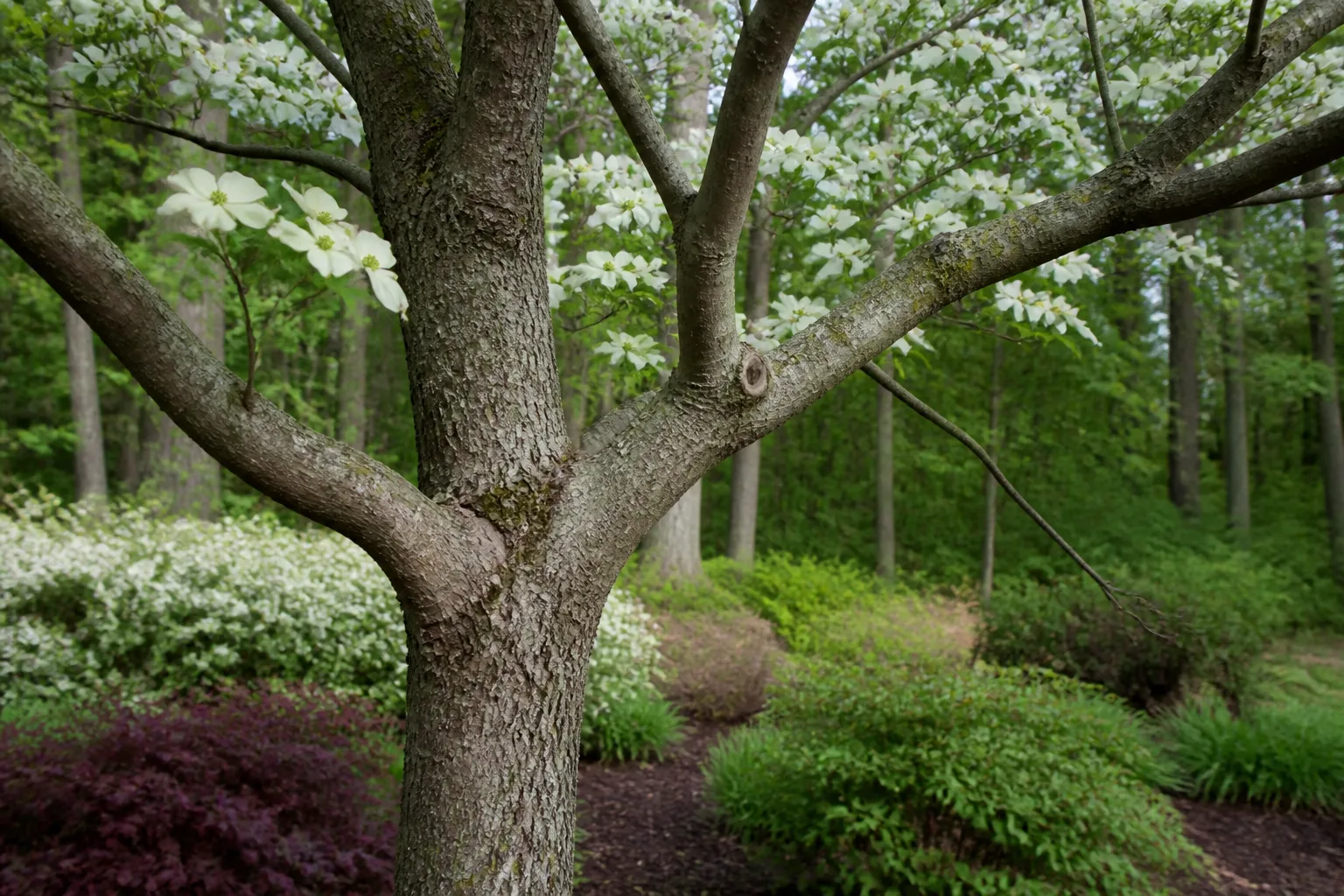
Prune with a purpose. On a young tulip tree, the priority is a strong central leader, well-spaced permanent branches, and removal of badly attached, crossing, dead, or damaged growth. On an established tree, remove only what has a clear reason to come out: dead wood, a dangerous defect, a branch interfering with a structure, or a small number of competing limbs that can be addressed safely.
Late winter, before vigorous spring growth, is a useful time to inspect the branch framework, but the safest window can vary with climate and the specific job. Make a clean cut just outside the branch collar; do not leave a long stub and do not cut flush into the trunk. Never top a tulip tree to reduce its height. Topping creates weakly attached sprouts, large wounds, and a cycle of emergency regrowth.
Use hand pruners or loppers only for branches they can cut cleanly. A pole saw is not a safe answer for large overhead limbs, and a ladder plus chainsaw is an especially poor combination. For mature trees, large cuts, storm damage, branches over a roof, or a trunk defect, hire a qualified arborist; our guide to the risks of not pruning trees correctly explains why delayed structural work becomes more expensive and dangerous.
Tulip tree cultivars for different spaces
The straight species is the best choice when you truly have a large site and want its full woodland character. Cultivars can change the shape or scale, but “smaller” does not mean suitable for a tiny courtyard. Check the mature height, mature width, growth habit, and local availability for the exact cultivar rather than relying on a label such as dwarf or columnar.
‘Little Volunteer’ is often selected for a smaller, more compact form, while ‘Arnold’ and ‘Fastigiatum’ are known for narrower, upright habits. ‘Emerald City’ is more upright and compact than the species in many landscape descriptions. These are planning tools, not guarantees: a cultivar still needs room for roots, and a narrow crown can remain tall enough to conflict with wires.
Variegated forms such as Liriodendron tulipifera ‘Aureomarginatum’ can bring a different foliage effect and may be listed with a smaller mature range, but verify the nursery’s information and local performance. Gardenia’s cultivar profile also cautions that height, spread, bloom timing, and color can vary by climate. (Gardenia) If your site cannot accommodate even the cultivar’s mature root and crown space, choose a genuinely smaller native tree instead of relying on repeated severe pruning.
Propagating tulip trees
Propagation is rewarding as a long project, not a shortcut to a flowering tree. Seedlings can take many years to reach bloom size, and a seed-grown tree will not necessarily reproduce a selected cultivar’s form. Cuttings can root inconsistently, so buying a healthy nursery tree is usually the most predictable choice for a landscape.
Growing from seed
Tulip tree fruit resembles a narrow, dry cone made of overlapping winged samaras. Collect mature fruit in late summer or fall as it turns tan, then allow it to dry in a paper bag so the individual seeds separate. Discard moldy or damaged material and keep the best-filled samaras.
Fresh seed benefits from a cold, moist dormancy period. Mix the seeds with barely damp sand or a similar sterile medium, place them in a labeled sealed bag, and refrigerate for roughly 60–90 days. Do not freeze them, and do not let the medium become wet enough to rot the seed.
After stratification, sow the seeds in a clean, well-drained potting mix and cover them lightly. Keep the mix evenly moist in bright light, but do not keep the container waterlogged. Once seedlings have several true leaves, grow them on with good light and protection from drying; plant them outdoors only after hardening off and when the soil is workable.
Trying cuttings
Cuttings are less dependable than seed or nursery stock, and a softwood cutting can wilt before it roots. If you try, take a 6–8 inch section of healthy current-season growth in late spring or early summer, cut just below a node, remove leaves from the lower half, and dip the base in rooting hormone according to the product label.
Insert the cutting into a sterile, airy rooting medium such as a sand-and-peat or comparable propagation mix. Cover it loosely with a clear bag or propagation dome to retain humidity, keep it in bright indirect light, and provide gentle bottom warmth if available. Vent the enclosure so the cutting does not stay stagnant and moldy, and check for roots after several weeks without tugging hard.
Even a rooted cutting should spend time developing a substantial root system before it goes into the landscape. Planting a fragile rooted piece into dry lawn or a windy bed is a common way to lose it.
Pests and diseases: what to watch
Tulip trees can host tuliptree aphids and tuliptree scale. Aphids feed on the undersides of leaves; scales appear as bumps on branches. Both can produce honeydew, a sticky waste product that coats lower leaves and nearby surfaces, allowing black sooty mold to grow.
The important management decision is whether the infestation is persistent and damaging. NC State Extension reports that natural enemies often reduce tuliptree aphids by early summer, so a few insects or some honeydew does not automatically justify treatment. Lady beetles, lacewings, syrphid flies, and parasitoids are part of the tree’s biological control system; broad insecticide use can remove those allies. (NC State Entomology)
Monitor the canopy, branch undersides, and the ground beneath the tree. If leaves are dropping heavily, growth is declining, or honeydew is persistent, identify the insect and consult a local extension service or qualified arborist about timing and a product labeled for the site. Do not guess at pesticide rates, spray a tall canopy from the ground, or treat a tree simply because ants are present; ants may be farming honeydew-producing insects, but the safe response depends on the actual pest and label.
Diseases to recognize include powdery mildew, leaf spots, cankers, and wilt problems. Penn State Extension notes that powdery mildew and sooty mold often require different responses: powdery mildew is a fungal growth on leaf surfaces and may cause little damage, while sooty mold is growing on honeydew and is managed by addressing the sap-feeding insect. (Penn State Extension)
Troubleshooting yellow leaves, breakage, and no flowers
Leaves turn yellow and drop in summer: First dig into the soil. If it is dry several inches down, drought and heat are the leading suspects; water slowly and deeply, then protect the root zone with mulch. If the soil is wet, inspect drainage and roots rather than adding more water. If the leaves are black and sticky, look upward for aphids or scale and sooty mold.
Branches break in wind or ice: Tulip tree wood is relatively weak, and rapid growth can produce long limbs that fail under load. After a storm, keep people away from hanging branches and have a professional assess large limbs, split unions, or damage near a structure. Preventive formative pruning while the tree is young is more useful than trying to shorten a mature crown aggressively.
The tree is not flowering: Age is often the explanation. Tulip trees may need many years before they bloom, and flowers high in the canopy can go unnoticed. If an established tree remains flowerless, evaluate whether the climate is too hot and dry, the soil is compacted, the tree is water-stressed, or the root collar was buried; do not add high-nitrogen fertilizer as a first response.
The trunk base looks buried: Pull mulch and soil back until the root flare is visible. Do not excavate major roots with a shovel or cut roots to expose the flare; use gentle hand work or ask an arborist for an air-spade assessment when the grade is badly wrong.
The tree looks thin beneath the canopy: Shallow roots and dense shade limit what can be planted under a tulip tree. Avoid deep cultivation and turf competition around the trunk. A thin mulch ring, careful watering, and low-disturbance shade plants suited to your region are safer than filling the drip line with thirsty annuals.
Sticky residue covers cars or furniture: Honeydew from aphids or scale may be falling from the canopy, while flowers and samaras also create seasonal litter. This is a placement problem as much as a pest problem; keep parking and outdoor seating outside the drip line when possible. If the residue is heavy, identify the insect before choosing control.
A simple year-round care calendar
Late winter: Inspect the structure while the branches are bare. Remove small dead, crossing, or poorly attached branches when you can do so safely, and arrange professional pruning for large limbs or defects. Check that winter mulch has not been piled against the trunk.
Spring: Plant new trees when the soil is workable, water them thoroughly, and watch for aphids as leaves expand. This is also when you can make limited formative cuts on a young tree before the canopy becomes dense. Avoid turning a young tree’s rapid growth into a reason for heavy fertilizer.
Summer: Check soil moisture during heat and drought, especially for trees in lawn, compacted soil, or exposed wind. Look under leaves for aphids, on twigs for scale, and on lower leaves for honeydew and sooty mold. Water the root zone deeply when it is dry; do not alternate between drought and constant saturation.
Fall: Enjoy the yellow foliage, collect mature seed if you want to propagate, and inspect the trunk and branch unions after leaves drop. Rake heavy litter from paths and gutters where needed, but leave some healthy leaf material to decompose in appropriate areas. Keep vehicles away from the drip line and do not disturb major roots while cleaning up.
Winter: The bare framework makes structural problems easier to see, and the pointed, duck-bill-like terminal buds are a useful identification feature. Watch for ice or snow loading, but do not climb into the tree or shake heavy branches. If a limb fails, keep clear and call an arborist for work near people, buildings, or utilities.
Conclusion
To grow a healthy tulip tree, start with enough space, deep moisture-retentive soil, and full or near-full sun. Plant the root flare at grade, water slowly and deeply through the first two growing seasons, mulch broadly without touching the trunk, and prune for structure while the branches are still small enough to manage safely.
The tree’s strengths—speed, size, shade, flowers, fall color, and wildlife value—are inseparable from its limits. Give it a cramped site, compacted soil, drought, or improvised topping cuts and those strengths become liabilities. Give it the right landscape, and Liriodendron tulipifera can become a long-lived canopy tree that rewards good placement more than constant intervention.