How to Get Rid of Mothball Smell From Clothes
Remove mothball odor from clothes with label-safe airing and laundering. Learn when vinegar may help, when to call a cleaner, and how to reset storage.

If clothes smell like mothballs, treat the odor as a sign that the fabric has been exposed to pesticide vapors—not as a perfume problem. The safest practical sequence is to remove any remaining mothballs, air the clothing in a controlled place, wash it if the care label allows, and keep it out of the closet until you have reassessed it.
Mothballs usually contain either naphthalene or paradichlorobenzene. Both solids slowly release vapor at room temperature, and those vapors can cling to clothing during storage. The National Pesticide Information Center (NPIC) says affected clothing may need airing and washing to remove odor; Poison Control also advises washing clothing and bedding stored with mothballs before wearing or using them.
There is no reliable number of hours that guarantees a garment is ready to wear. Fabric, how many mothballs were present, how long the item was stored, room temperature, and airflow all affect how long the smell lasts. A mild odor may fade after cleaning; a strong, persistent odor calls for more ventilation or a professional cleaner, not a stronger dose of household chemicals.
Why mothball odor clings to clothing
The familiar smell comes from pesticide chemicals entering the air as vapor. Mothballs are not simply scented balls: they are pesticide products designed to release fumes slowly. In a properly labeled use, those fumes are trapped inside a tightly closed container with the clothing pests. When the container leaks or mothballs are placed in an open closet, people and pets can breathe the vapors as well as the fabric absorbing some of them. NPIC explains that the time a mothball takes to vaporize varies with temperature, airflow, and the amount present.
That chemistry helps explain why opening a window or putting a garment outside may reduce the smell without being the whole cleanup. Air movement helps vapors disperse, while laundering can remove odor-causing material from washable fabric. Neither an open box of baking soda nor a scented spray proves that a garment has been washed or that a pesticide exposure has been assessed.
It also helps to separate odor removal from exposure safety. A strong odor is a reason to keep working on the garment and storage area, but your nose cannot measure a chemical concentration. The conservative rule is to wash clothes and bedding that were stored with mothballs before wearing them, even if the smell seems faint; do not rely on scent alone to make that decision.
Make the garment and room safe first
Before treating fabric, stop adding to the exposure. Keep children and pets away from loose mothballs and the affected clothing, and do not leave mothballs in an open closet, drawer, basement, or room as a general repellent. NPIC notes that mothballs are insecticides whose labels specify where and how they may be used; using them outside those directions can harm people, animals, and the environment. Read the product label and follow its instructions for handling, ventilation, and disposal.
Remove the source and isolate affected clothes
If you find loose mothballs, flakes, or residue, avoid crushing or sweeping them into a place where a child or pet can reach them. Use the product label’s handling and disposal directions, and check your municipal household hazardous-waste program if the label or local rules call for special collection. Disposal practices vary, so do not assume that the household trash, sink, or toilet is appropriate.
Move affected garments away from clean laundry and everyday living areas. If the smell is strong, carry the clothes in a washable basket or other container that you can clean afterward; do not seal them in a plastic bag for storage while they are still off-gassing. Take them to a shaded outdoor line or a well-ventilated utility area where children and pets cannot access them and fumes will not be drawn directly indoors through an open window or air intake. Keep them away from food, flames, and heat sources.
Before you shake out or sort a garment, look for loose pellets, flakes, or visible powder in pockets, cuffs, hems, and the bottom of the storage box. An item with visible product on it needs more cautious handling than a garment that only carries a lingering odor; do not brush the material into the room or put it straight into a shared hamper. Follow the product label for direct contact, and ask NPIC or Poison Control how to handle a suspected spill on fabric. A normal wash sequence is designed for exposed clothing, not for scooping up loose pesticide product.
For a whole room that smells strongly, remove the remaining source first, ventilate to the outdoors when practical, and limit time in the area while the air clears. An air freshener, candle, or essential oil may cover the smell but does not remove the source. If the room remains strongly odorous after the mothballs are removed and ventilation has continued, contact your local poison center or environmental health department for situation-specific guidance.
Know when exposure needs urgent advice
If someone swallowed a mothball, do not wait for the clothing cleanup to finish. In the United States, call Poison Control at 1-800-222-1222 or use its online tool for immediate case-specific instructions; call emergency services for severe symptoms such as trouble breathing, collapse, or a seizure. Outside the U.S., contact your local poison center or emergency service. Keep the product package or label available so responders can identify the active ingredient.
If someone has been breathing fumes and feels unwell, move them to fresh air and call Poison Control for advice rather than trying to diagnose the exposure from the smell. Exposure risk depends on the chemical, concentration, duration, and person; a young child or someone with a health vulnerability deserves a cautious response. NPIC also offers pesticide-specific information at 800-858-7378 on weekdays.
Choose a cleaning route by fabric
Start with the care label, not with the strongest odor-removal tip you find online. Check whether the item is machine-washable, hand-washable, dry-clean-only, or labeled with restrictions on water temperature, agitation, or drying. If the label is missing, the garment is valuable, or its construction is unfamiliar, do not guess with a vinegar soak or hot wash.
Machine-washable cotton, linen, and synthetics
For a washable cotton shirt, linen bedding, or durable synthetic garment, use the normal care-label wash method and a regular amount of laundry detergent. Wash affected items separately from clean clothes so the odor does not transfer, and do not overload the machine; water and detergent need room to move through the fabric. A second wash may be reasonable if the first wash reduces the smell but does not remove it.
Before loading, empty every pocket and open folds, cuffs, and button plackets so detergent and rinse water can reach areas where vapors linger. Keep strongly affected pieces together only if their colors and care labels are compatible; otherwise, split them into smaller loads. Check the machine’s instructions before using a laundry additive, and do not add more detergent than directed in the hope of overpowering the smell. Excess detergent can leave its own residue and does not make an incompatible water temperature or fabric treatment safe.
Use the warmest water the care label permits, not an automatic hot cycle. High heat can shrink, distort, fade, or damage a garment, and it is not a substitute for removing the source. If you are treating a mixed load, follow the most restrictive item’s instructions or split the load by fabric and color.
Wool, silk, and dry-clean-only garments
Wool, silk, lined coats, structured jackets, embellished clothing, and vintage pieces can be damaged by soaking, agitation, or a high-temperature wash. Air them first, then contact a professional cleaner and explain that the garment was stored with mothballs. The cleaner can choose a process that fits the fiber and construction; the important detail is to disclose the pesticide odor instead of describing it only as a musty smell.
Do not use a vinegar-and-water soak on a dry-clean-only item just because another fabric tolerated it. Water can leave rings, distort the structure, or affect dyes and finishes. If the garment has visible mothball residue, a strong odor, or was stored in direct contact with the product for a long time, ask the cleaner before applying any home treatment so the professional can advise on safe handling.
A step-by-step method for mothball odor
Use this sequence for garments that can be safely handled at home. It moves from the least aggressive step to laundering, then gives you a checkpoint before you expose the item to heat or put it back into storage.
1. Air the garment with controlled ventilation
Hang the garment so air can reach both sides, with pockets open and layers unbuttoned. A shaded outdoor spot with a breeze is useful if it is protected from rain, direct sun, and access by children or pets. If outdoor airing is not practical, use a well-ventilated room with air moving out through a window; avoid directing fumes toward occupied rooms or an HVAC return.

Check the garment after a few hours, but do not treat a calendar interval as a clearance test. Leave it longer if it still has a noticeable smell, and avoid bringing it indoors simply because it has been outside overnight. For very strong odor, laundering may be more useful than extending passive airing indefinitely; the smell’s persistence varies with the garment and exposure history.
2. Wash it only as the care label allows
For machine-washable clothing, wash the garment by itself or with other affected washable items using detergent and a care-label-safe water temperature. A rinse cycle can help clear detergent and loosened material from the fibers. Do not add bleach, solvent, fabric softener, or multiple odor products by default; an extra product can damage the textile, create a new residue, or complicate a later professional treatment.
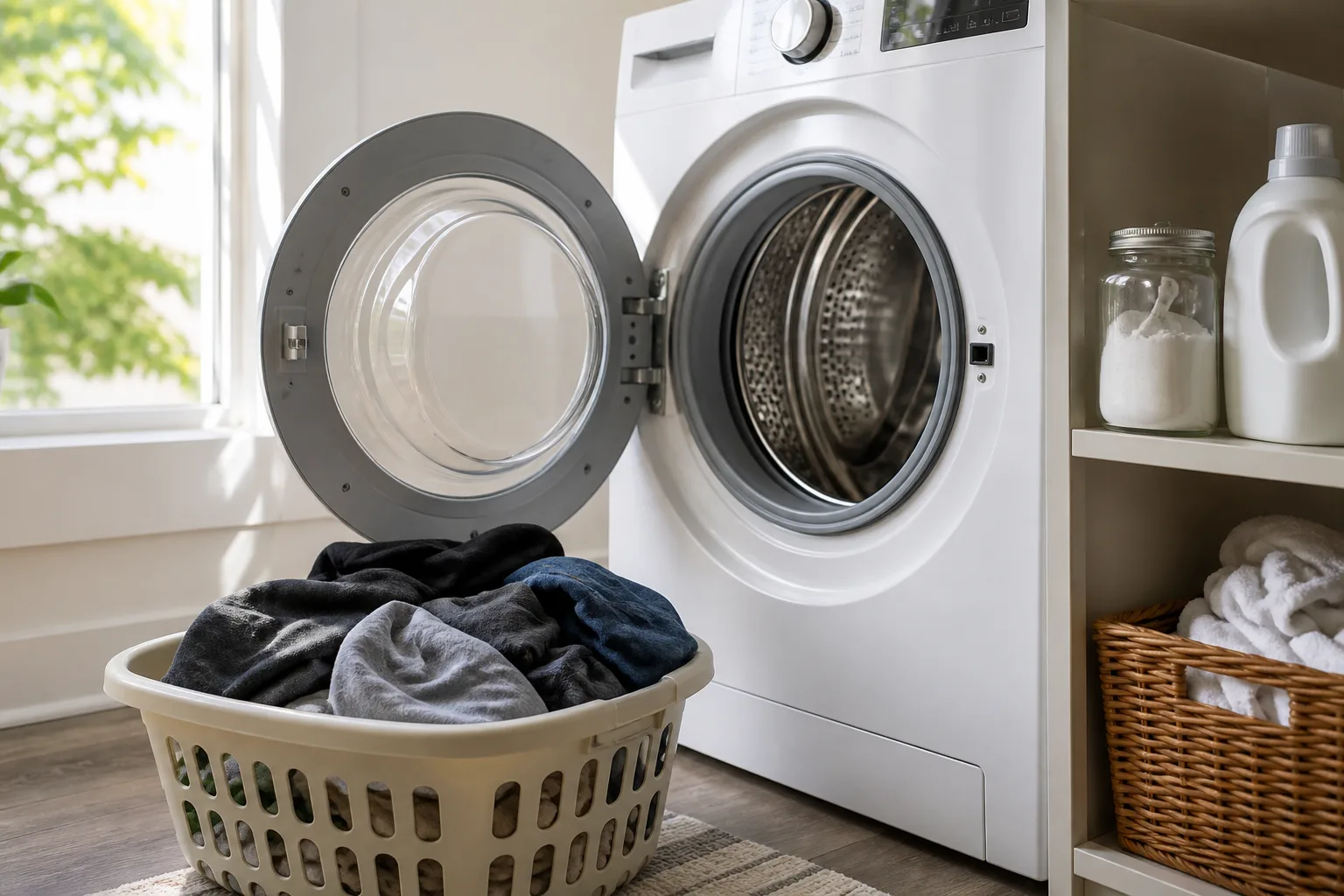
If the first wash leaves a clear improvement but some odor remains, let the item air and reassess before deciding whether to wash it again. Repeated normal laundering is preferable to jumping to a harsh treatment, but endless cycles are not useful if the smell barely changes. At that point, stop and ask a cleaner or Poison Control for advice based on the item’s history and the person who will wear it.
Once the cycle ends, remove the affected clothes promptly and check whether the washer drum or door seal picked up the odor. If the machine itself smells, leave its door open to dry and follow the appliance manual’s cleaning instructions before washing clean laundry; do not pour in a new chemical combination. This check is especially useful after a heavily affected load because it helps prevent a faint odor from being mistaken for a problem in the next batch of clothes.
Where vinegar and odor absorbers fit
Some household cleaning articles suggest white vinegar as an odor aid for washable clothes. Hunker’s clothing-odor guide describes vinegar as one option, but it is not a pesticide antidote and should not replace washing with detergent or label instructions. If you choose to try it, first confirm that the fabric and washing-machine manufacturers allow it, test an inconspicuous area if the garment is color-sensitive, and use a single method rather than combining cleaners.
Baking soda, coffee grounds, and activated charcoal may help manage odor in the surrounding air, but do not count them as fabric decontamination. In particular, do not put an odorous garment in a sealed bag or airtight bin with an absorber; mothball fumes build up in closed spaces, which is how the pesticide is intended to work when used according to its label. Place an appropriate odor absorber in the ventilated room only after removing the mothball source, and keep it away from children and pets.
3. Air-dry, then reassess before using heat
After washing, air-dry the garment where air can circulate. This gives you a chance to check the odor before using a dryer, iron, or heated drying rack. Follow the care label for drying, but do not use heat as an odor-removal treatment; air drying gives you an inspection point before you decide whether another wash or professional cleaning is appropriate.
When the item is fully dry, smell it from a normal distance in a clean, well-ventilated place. Do not press your face into the fabric or deliberately inhale it. If the smell is still obvious, keep the garment separate and ventilated; if it is a washable item, a second label-safe wash may be appropriate, while a delicate item should go to a cleaner.
Think about where and how the garment will be worn, too. A coat worn outdoors for an hour is different from pajamas, a child’s blanket, or a scarf held against the nose for long periods. That does not create a numerical safety threshold, but it is a sensible reason to be more conservative with clothes that sit against skin or are used in a sleeping space. When the exposure was substantial or the intended wearer is especially vulnerable, get exposure advice rather than deciding based on a sniff test.
4. Repeat carefully or stop and escalate
Use the change after each step to choose the next action. A large improvement after airing and washing suggests that ordinary cleanup is working; a smell that is unchanged after careful treatment suggests the source may have been substantial, the garment may retain odor, or the method may not suit the fiber. Do not respond to a stubborn smell by soaking the item in several products, spraying perfume, or increasing water temperature beyond the label.
If you are treating a child’s clothing, bedding, or an item worn close to the face, be especially conservative. Poison Control’s general advice is to wash clothing and bedding stored with mothballs before use. If a garment still smells strongly after laundering, is visibly contaminated, or caused symptoms while being worn, set it aside and get case-specific advice rather than testing it on someone.
When home treatment is not enough
A home wash is not the right next step for every item. Stop if the garment is dry-clean-only, valuable, visibly stained with mothball material, or has a persistent strong odor after one or two correct wash cycles. Stop sooner if anyone handling or wearing it develops symptoms, or if the source was used incorrectly in a living area and exposure may have affected people or pets.
Ask a professional cleaner before another treatment
Tell the cleaner what product was used if you can identify it, how long the clothing was stored, whether mothballs touched the fabric, and what you already tried. Bring or photograph the label when possible. This information lets the cleaner consider fiber care and residual pesticide odor without adding an incompatible treatment on top of the garment.
Professional cleaning is not a guarantee that every old odor can be removed. A sweater kept for years in a box packed with mothballs may need multiple treatments or may never return to a condition you find wearable. The cleaner can help you make a practical choice about whether another attempt is worthwhile, especially for heirloom, lined, or structured pieces.
If a professional cleaner declines the item, follow their handling advice and do not move it back into a closet with clean textiles. For broader exposure questions, use Poison Control or NPIC rather than relying on a laundry service to assess health risk. Cleaning changes the garment; it does not diagnose a person’s exposure.
Some garments simply are not worth repeated treatment. If an inexpensive item remains strongly odorous after correct washing, compare the cost and time of another cleaning attempt with replacing it; do not put it back into routine use just because you are tired of troubleshooting. For an heirloom or high-value item, professional advice is more useful than trial-and-error. Keep any garment you decide not to wear away from children, pets, and clean textiles while you determine an appropriate next step.
Reset the closet and prevent the odor returning
Cleaning the clothes but leaving mothballs in the storage area can restart the problem. Remove the source, air the space, and clean any container that held the product before returning freshly washed garments. If the closet itself remains strongly odorous, keep clean clothes elsewhere until ventilation and source removal have made a difference.
Ventilate and clean the storage space
Open closet doors and, where practical, windows that vent outdoors. Use a fan to move air toward the outside rather than blowing closet air deeper into the home. Remove nearby clothing and bedding for washing, and wipe hard surfaces with a mild cleaner compatible with the finish; do not spray pesticide, vinegar, or scented products broadly as a substitute for ventilation and source removal.
Check drawers, boxes, garment bags, and the floor for forgotten mothballs or crumbs. If an item or container still smells strongly, keep it out of the clean-storage zone until it has been aired and cleaned according to its own care instructions. An activated-charcoal air purifier or an appropriate absorber can be an optional room-level odor aid, but it cannot replace removing the chemical source or laundering clothing.
Store textiles clean, dry, and sealed without mothballs
For future seasonal storage, clean and fully dry clothes before packing them away. Store natural-fiber garments in clean, tightly closed containers or bags that protect them from clothes moths; do not add mothballs unless the product label explicitly describes that use and you can follow the exact container and handling directions. NPIC explains that mothball labels typically require tightly closed containers, because vapors are meant to build inside the sealed space rather than leak into rooms.
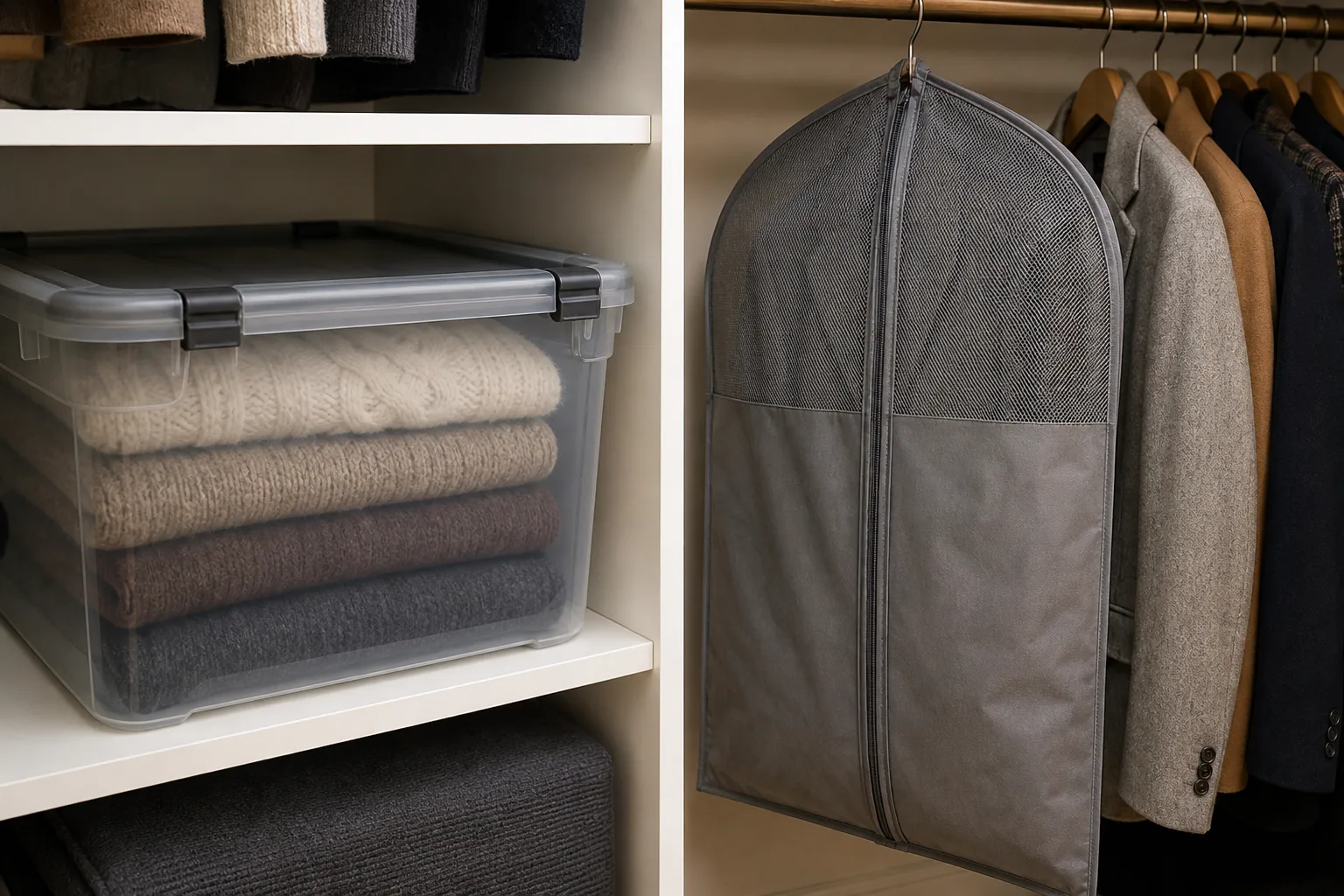
Inspect stored items when you rotate seasons. Look for webbing, larvae, cast skins, or new holes, then vacuum closet corners and clean affected textiles before storing them again. Cedar, lavender sachets, and similar scented products may make a closet smell pleasant, but they should not be treated as a proven replacement for inspection and sealed storage. If you find an active clothes-moth problem, address the pests and their food source instead of filling the closet with more vapor.
Conclusion
To get mothball smell out of clothes, remove the mothball source, air the garment with good ventilation, and wash it only if the care label permits. Air-dry and reassess before using heat; choose a professional cleaner for delicate, valuable, or persistently odorous garments. Wash clothes and bedding stored with mothballs before wearing them, and do not use odor absorbers or perfume as proof that the pesticide exposure has been resolved.
The odor may fade quickly or persist, depending on exposure and fabric, so avoid promises tied to a fixed number of hours. If a person swallowed a mothball, feels unwell after exposure, or a child or pet may have been exposed, contact Poison Control or the appropriate local service. Once the clothes are clean, reset the closet and store textiles in clean, dry, sealed containers without off-label mothball use.