Mexican Feather Grass Care & Growing Guide
Learn Mexican feather grass care, from sun and drainage to pruning, pots, and seed control—and check regional risks before planting this self-seeding grass.
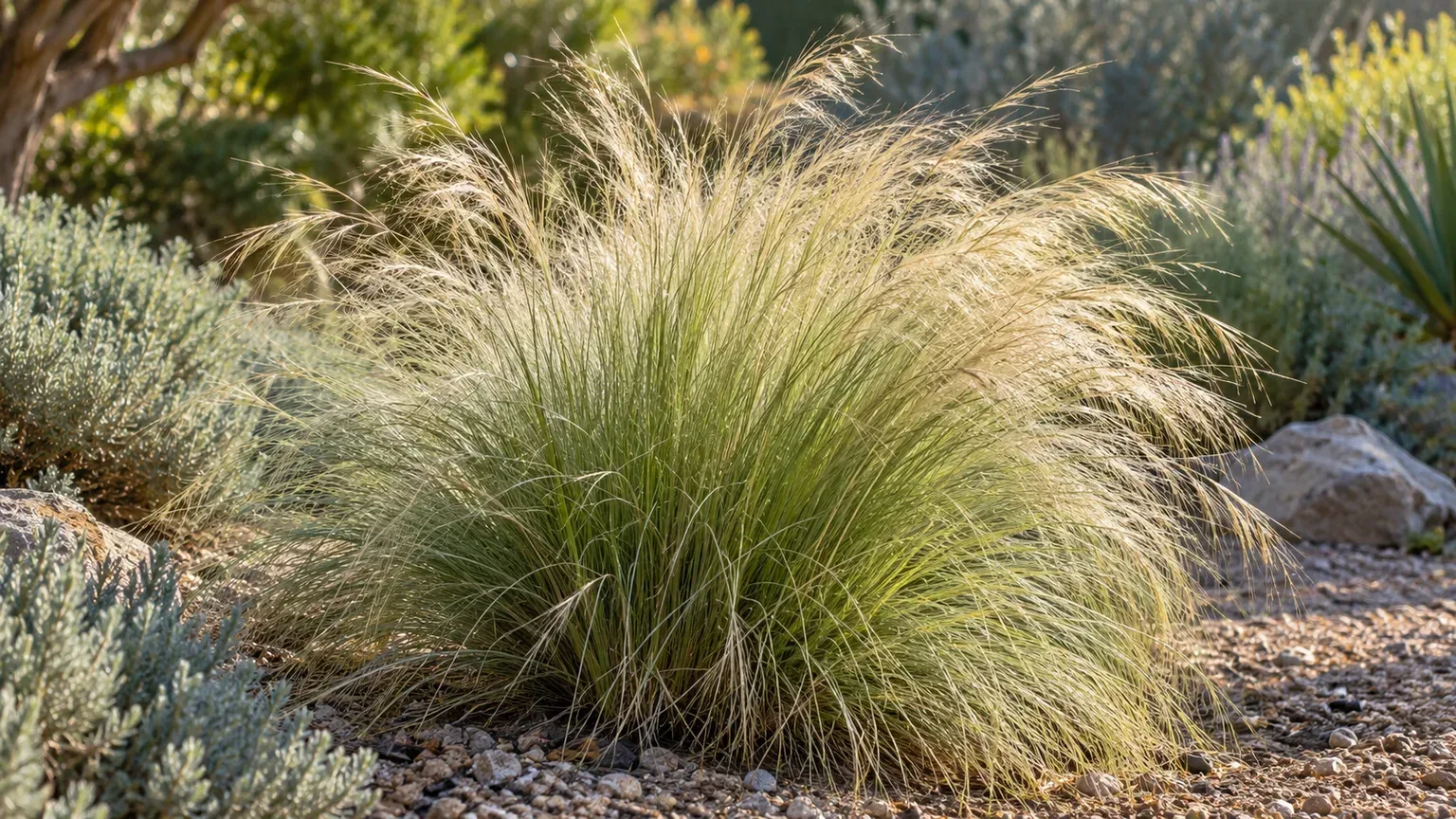
Mexican feather grass (Nassella tenuissima, often sold under its former name Stipa tenuissima) makes a small garden feel animated: fine leaves and airy seed heads move in a light breeze, then turn straw-colored as the season advances. It can be a graceful accent in the right setting, but its ability to self-sow changes the planting decision. Before you choose a sunny spot or buy a pot, find out whether local authorities or regional invasive-plant groups flag it where you live.
If it is an appropriate plant for your region, care is straightforward: give it sun, provide drainage, water new plants until established, and avoid rich feeding that encourages loose growth. The ongoing job is not complicated, but it is specific—remove seed heads before they disperse if volunteers would be a problem, and tidy the clump in spring rather than cutting it hard on autopilot.
Mexican feather grass at a glance
This is a warm-season, clump-forming grass in the Poaceae family. Its threadlike green to silvery foliage makes a fountain-shaped mound, typically around 1 to 2 feet tall, with arching leaves and feathery panicles that age from pale green or silver to blond and tan. Depending on conditions and how you measure the arching leaves, the plant can occupy a wider footprint than its upright height suggests. NC State Extension describes the fine foliage, seasonal seed heads, and prolific seed production; the Royal Horticultural Society’s profile lists full sun and well-drained soil as its preferred setting.
| Growing factor | Practical guidance |
|---|---|
| Botanical name | Nassella tenuissima; Stipa tenuissima is a common former label |
| Habit | Fine-leaved, fountain-shaped perennial bunchgrass |
| Light | Full sun is best; some light afternoon shade can work in very hot sites |
| Soil | Any texture can work if water drains freely; avoid a persistently wet crown |
| Water | Keep the root ball evenly moist while it establishes; established clumps tolerate dry spells |
| Feeding | Usually little or none; excess fertility can make growth lax |
| Maintenance priority | Check local invasive status and manage seed heads before they mature |
| Size | Often about 1–2 feet tall, with arching foliage spreading roughly 1–3 feet |
The name on the nursery tag may be Nassella tenuissima, Stipa tenuissima, Mexican feather grass, Mexican feathergrass, or ponytails. Those names can refer to the same species, so search local plant rules under both botanical names before assuming the tag describes a different, safer plant. The plant is grown for foliage and fine-textured panicles, not for showy petals; its movement and warm-season color are the main design value.
Decide whether to plant it in your region
There is no responsible one-line answer to “Is Mexican feather grass invasive?” It is a self-seeding ornamental that is considered invasive, weedy, or a watch-list concern in some regions, while gardeners elsewhere may grow it without the same documented ecological risk. Texas A&M AgriLife Extension warns that it can escape cultivation and become an aggressive weed on disturbed sites, and the California Invasive Plant Council maintains a Mexican feathergrass profile under its botanical synonym. These sources describe regional concerns; they do not establish a blanket ban in every state or country.
This difference is why a plant’s reputation can sound contradictory. NC State Extension notes that it is invasive in Australia and becoming problematic in parts of California, while it is native to parts of the south-central United States and Mexico; the exact native-range statements vary among horticultural references. A plant can be attractive and manageable in one climate yet escape into open, disturbed ground in another. The meaningful question is not whether the grass is beautiful or drought-tolerant, but whether it is allowed and ecologically suitable at your address.
Read local risk lists before buying
Before planting, search the current state or provincial invasive-species list, your county extension or weed-control office, and any local native-plant or conservation organization. Search both Nassella tenuissima and Stipa tenuissima, because databases and older regulations may use different names. If a local authority says not to plant it, choose a native or non-invasive substitute rather than relying on frequent weeding to make a prohibited species acceptable.
Do not treat a nursery’s “sterile,” “low seed,” or “non-invasive” wording as proof unless it names a specific cultivar and you can find reliable documentation that the cultivar is genuinely non-viable in your region. A pot controls the roots, not airborne seed, and one missed seed-head season can create volunteers beyond the container. If you cannot commit to watching seed heads and pulling seedlings, choose a different grass even where planting is permitted.
Choose the right light, soil, and climate
Mexican feather grass looks best when it has enough light to form a dense, upright-to-arching clump and enough air around the foliage to dry after rain. Full sun is the reliable choice; it can tolerate some partial shade, but shade often produces a looser, less floriferous plant that leans toward light. The Oklahoma State University Extension profile gives full sun to part shade and well-drained soil as its basic conditions, while NC State cautions that hot, humid southeastern conditions are a poor fit.
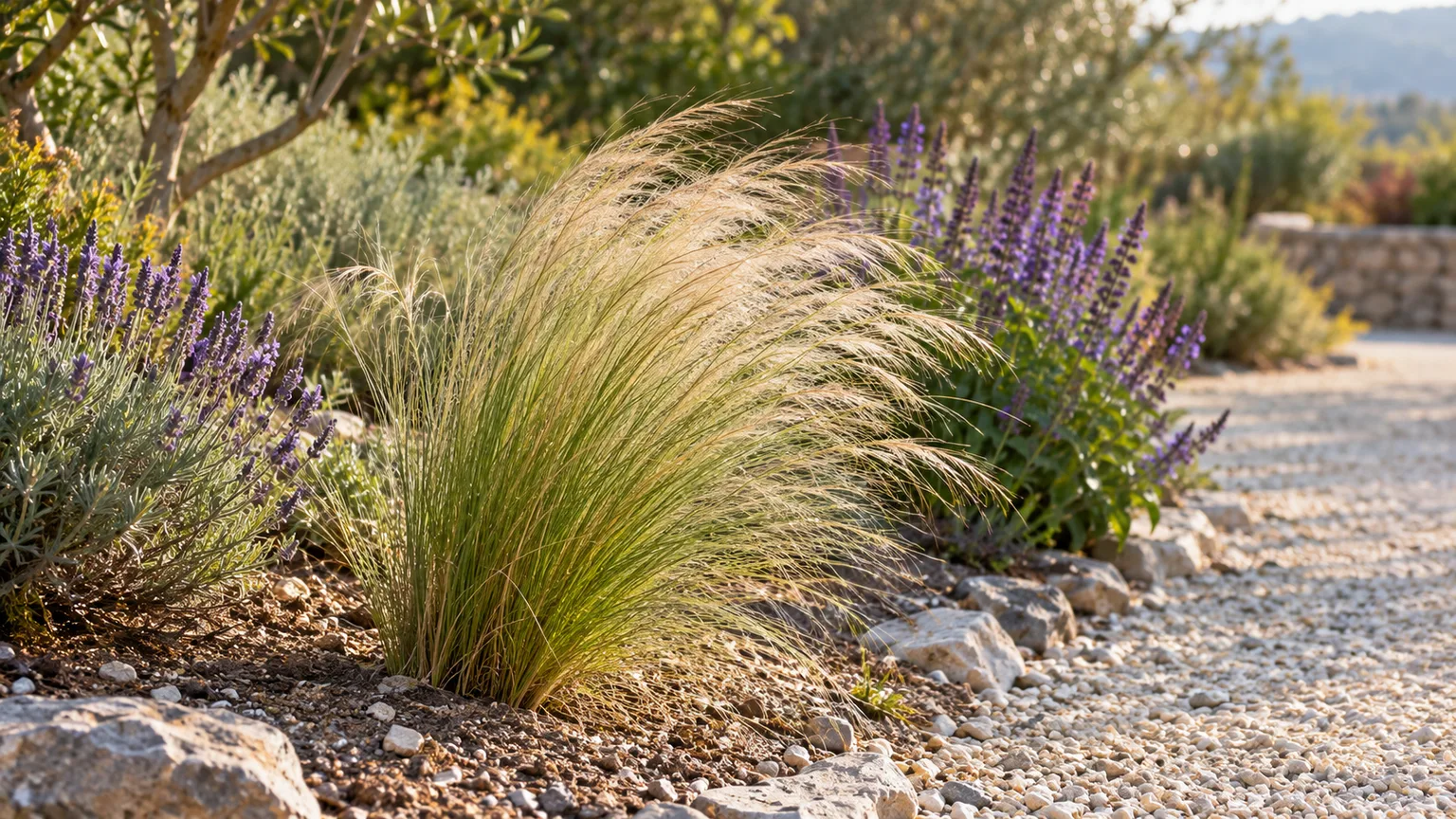
Full sun and fast drainage shape the clump
A sunny, open site with drainage is more important than chasing one exact soil texture. References list sand, loam, and even clay among possible soils, but “clay is tolerated” does not mean a wet, compacted planting hole is safe. If water lingers after rain, plant on a raised berm, improve drainage across a broader bed, or select another plant; a narrow pocket of sand in heavy clay does not reliably correct a saturated root zone.
In hot, dry weather, established clumps may pause growth or turn dull rather than keep producing fresh green leaves. That can be normal drought dormancy, not a signal to keep the crown wet. In humid regions with warm nights and summer rain, the problem is often the combination of heat and persistent moisture, not a lack of fertilizer; choose a species adapted to that climate if the site stays damp or shaded.
Plant Mexican feather grass without burying the crown
Plant nursery-grown clumps in spring after the soil begins warming, or in early fall where roots will have time to settle before winter. Avoid planting into cold, waterlogged ground or during the hottest spell of summer, when a new root ball can dry faster than it can expand into surrounding soil. Space plants according to the mature spread on the label, commonly about 18 to 24 inches apart for individual clumps, and leave room to reach the base for grooming and seed-head removal.
A simple transplanting sequence
Water the nursery pot first, then dig a hole as deep as the root ball and roughly twice as wide. Set the plant so the crown—the point where foliage meets roots—sits at soil level, backfill with the excavated soil, and firm gently without packing it hard. Water slowly to settle soil around the roots, and check that the site drains rather than leaving a puddle around the crown.
For clay, do not bury the clump in a highly amended pocket that behaves differently from the soil around it. Either improve the whole bed, make a modest raised planting area, or move the plant to a better-drained spot. Finish with a thin mulch layer if needed to limit weeds, but keep mulch pulled back from the crown so moisture and debris do not build up at the center.
Water for establishment, then let the soil dry between drinks
Watering depends on root establishment, weather, soil, and container size—not on a fixed weekly calendar. During the first growing season, check the root ball every few days in hot or windy weather and water when the upper soil begins to dry; apply water slowly enough to wet the root zone, then let excess drain. A new plant in a sandy bed or a small pot will need checks sooner than one in cool weather or moisture-retentive loam.
Once roots have grown into the surrounding soil, Mexican feather grass is drought-tolerant and generally needs supplemental water only during extended dry spells. Water deeply at the base when the soil has dried through the root zone, then wait; frequent shallow sprinkles keep surface roots active and leave the crown vulnerable to wet conditions. Fine Gardening’s plant profile notes its drought tolerance, while NC State describes possible summer dormancy during drought. A faded or resting clump may be conserving resources, so first check the soil and season before adding more water.
Skip routine fertilizer unless the plant shows a real need
A clump that grows slowly in lean soil may be behaving normally. Mexican feather grass does not need the feeding schedule used for vegetables or flowering annuals, and high nitrogen can push soft foliage that flops instead of holding a graceful shape. A light layer of compost around the root zone in spring is enough for most garden soils; keep it off the crown and do not pile fertilizer into a planting hole.
If foliage is pale and growth is weak, diagnose the site before feeding. Check for too little sun, saturated soil, a pot-bound root system, or normal seasonal dormancy; fertilizer will not fix any of those. In a container, a modest, balanced slow-release feed in spring can help if the potting mix is exhausted, but follow the product label and skip it if growth is already lush or floppy.
Grow it in a pot only with seed escape in mind
A container is useful when you want to control the clump’s footprint or move it before a hard freeze, but it does not eliminate the species’ seed-spread risk. Choose a sturdy pot with several open drainage holes and enough width for the foliage to arch without scraping against a busy walkway. Use a free-draining potting mix; garden soil alone can compact in a pot and hold water around the crown.
Water a container more often than an established in-ground plant because pots dry faster, especially in wind and full sun. Still, water when the mix is drying rather than keeping it constantly wet, and empty decorative cachepots or saucers after watering. If the pot is moved indoors for winter in a cold climate, keep it in a cool, bright, frost-protected place and reduce watering while growth slows; do not put a dormant clump in a warm, dark room.
A container placed near paving can make seedlings easier to notice, but wind can carry seed beyond the pot. Remove seed heads before they shed, sweep the surrounding hardscape, and inspect nearby gravel or cracks for volunteers. If you are growing the grass specifically to avoid spread in a restricted landscape, a pot is not a substitute for choosing a safer species.
Prune and groom it at the right time
Treat Mexican feather grass as a fine-leaved bunchgrass, not as a hedge. Its foliage can persist through part of winter in mild places, so leaving it in place retains texture and protects the crown; in colder weather, leaves may brown as the plant goes dormant. The RHS recommends removing dead leaves when they die back and waiting until early spring rather than cutting in late autumn. This timing also makes it easier to distinguish dead material from new shoots.
Spring cleanup without shearing the crown
In early spring, wear gloves and gently comb or rake through the clump to lift loose dead blades and old seed heads. If the center is still green, leave that living growth alone; a hard cut to soil level can remove the growing points and leave a ragged, slow-to-recover plant. Oklahoma State Extension advises removing only the top third to rejuvenate rather than cutting the grass to the ground, a useful limit if grooming does not clear enough dead foliage on its own.
If the plant has become too large or has a tired center, divide it in spring instead of repeatedly shearing it shorter. Clean up fallen seed heads and bag them if they may be viable; do not toss mature seed-bearing clippings into an open compost pile where they could be redistributed. Where local rules or ecological concerns call for tight seed control, clip the flowering stems before the panicles dry and release seed, even if that means giving up some late-season movement.
Propagate only where growing it is appropriate
Mexican feather grass can be raised from seed or divided from an established clump, but propagation makes sense only after you have confirmed local planting guidance. Do not distribute seed or divisions to friends in areas where the plant is discouraged or regulated. Propagation is not automatically benign just because the source plant is already in a home garden; seed can travel beyond the intended bed.
Start seed carefully
If local guidance permits the species, sow purchased seed in spring in a clean pot or tray of fine, well-drained seed-starting mix. Scatter the small seed over a level surface, press it into contact with the mix, and cover only lightly according to the seed supplier’s directions; keep the mix evenly moist, not waterlogged, while germination begins. A cold frame or protected bright spot helps moderate temperature and rain, but seedlings still need good light once they emerge.
Pot seedlings on when they can be handled without tearing the roots, then grow them until they have a stable root system before transplanting. Label the pot with the botanical name, since packets may use either Nassella or Stipa. If you do not know whether the seed is viable or where it may be planted, do not sow it casually outdoors where wind or runoff can move it.
Divide a clump in spring
Divide a healthy clump just as new growth starts in spring, when you can identify the plant’s live center and give new sections a full growing season to root. Dig wide enough to lift a useful section with roots attached, then split the root mass into smaller crowns with a sharp spade or knife. Each division needs both a firm piece of crown and healthy roots; loose foliage alone will not establish.
Replant divisions immediately at their original depth, water them in, and keep the root zone modestly moist while they settle. Do not divide a plant whose center is rotting from poor drainage and expect division to solve the same site problem. Correct the drainage or move to a better site first, and discard diseased or dead crown material rather than planting it elsewhere.
Diagnose browning, flopping, and a thinning center
The same beige color can mean seasonal dormancy, drought, age, or a root problem, so start with timing and soil moisture. Check whether browning began after cold weather, during prolonged heat, or while the soil stayed wet; then inspect the crown for firm, live growth rather than judging only the outer leaf tips. Most established plants have few serious insect or disease problems, but NC State lists aphids, leaf spot, and root rot in overly wet soil as possibilities.
| What you see | More likely cause | First response |
|---|---|---|
| Tan foliage after cold weather | Normal seasonal dieback | Wait until early spring, then comb out loose dead growth |
| Dull or brown tips during a hot, dry spell | Drought stress or temporary dormancy | Check soil at root depth; water deeply only if it is dry |
| Yellowing, soft crown, or decline in wet soil | Poor drainage or root rot | Stop frequent watering and correct drainage; replace if the crown is lost |
| Plant leans or flops while still green | Too much shade, rich soil, or a dense/old clump | Increase light if practical; avoid fertilizer and divide an overcrowded clump |
| Small volunteers nearby | Mature seed heads have dispersed | Pull seedlings while small and remove remaining seed heads before they shed |
Do not respond to every brown blade with more water or a ground-level cut. If the crown is firm and the brown growth arrived with winter, grooming is usually enough; if the crown is soft and the soil remains wet, irrigation is making the problem worse. When a clump collapses after heavy rain, allow the soil to drain and remove only broken or dead material, then reassess new growth before feeding or dividing.
Keep self-sown seedlings from becoming a larger problem
Seed management is the maintenance step that determines whether the plant stays a deliberate accent or becomes repeated weeding. Fine Gardening describes the grass as self-seeding and notes that gardeners may comb out panicles; Texas A&M’s warning about escape on disturbed sites makes that cleanup more than a cosmetic preference. Inspect the clump as flowering panicles mature, and clip them while they are still attached if you do not want seed to drop.
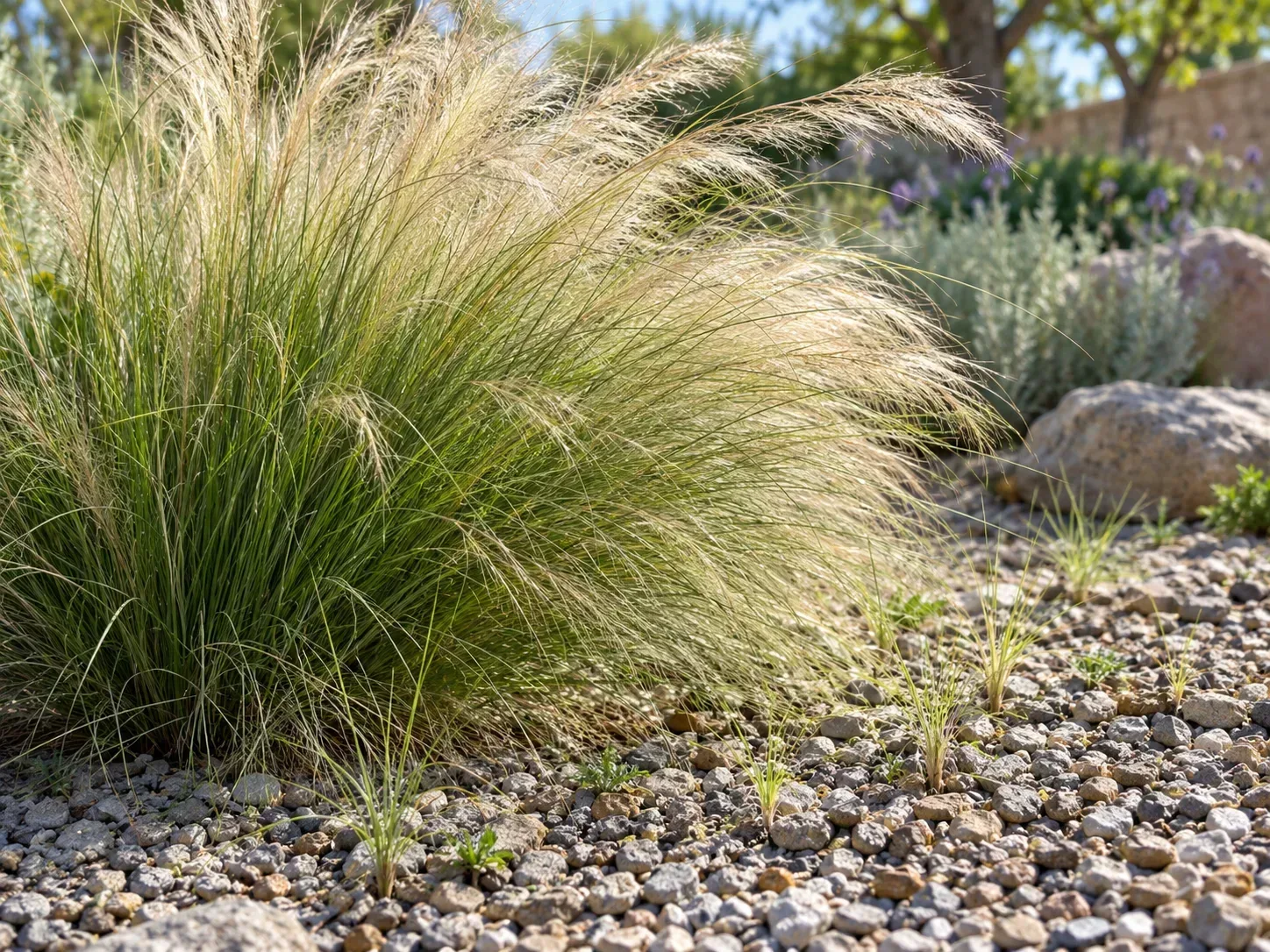
Bag seed-bearing cuttings instead of shaking them over the bed, and check gravel, paving joints, dry soil edges, and neighboring pots where seedlings are easy to miss. Pull small seedlings after rain or irrigation when the soil is loose; remove the whole young root system and do not leave flowering seedlings to mature. If volunteers have spread into a natural area or beyond your property, ask the local extension or invasive-plant office for region-specific control advice before using herbicide or mechanical methods that might move seed farther.
For a plant that is prohibited locally or established across a large area, hand pulling can become an ongoing project rather than a one-time fix. Do not mow mature seed heads and assume the problem is solved: cutting can scatter seed and leave rooted crowns behind. For large or ecologically sensitive infestations, follow local agency guidance and use only legally labeled control products under their directions; treatment choice depends on nearby plants, water, and the site.
Use it in a border—or choose a local alternative
Where planting is acceptable, use Mexican feather grass where its movement can be seen without brushing people or snagging clothing. It works at the sunny edge of a border, in a gravel garden, or in a container arrangement with similarly well-drained companions; its pale panicles contrast with broad leaves and saturated flower colors. Fine Gardening’s planting notes describe it as a fine-textured accent for borders and containers, while the RHS lists architectural, cottage, and informal garden uses.
Avoid placing it beside a natural area, roadside, drainage channel, or wildland edge if local guidance warns against escape. Keep it away from narrow paths and high-traffic play areas: fine leaves and seed structures can be uncomfortable to brush against, and grooming it is easier when you have access around the clump. In sites with recurring damp shade, hot humidity, or restrictions on the species, choose a locally native bunchgrass matched to your soil and rainfall instead of trying to force this plant to fit.
The safest substitute depends on where you garden. In parts of the central and southern Great Plains, blue grama or little bluestem may suit a sunny, well-drained planting; in California, ask a county native-plant group or extension office for locally appropriate native grasses rather than assuming a species from another region will be safe. Native plants are not interchangeable across a state: match the species to local rainfall, soil, mature size, and wildlife goals. A local plant list is more useful than a generic “drought-tolerant” label.
Conclusion
Mexican feather grass is easy to grow when the climate and drainage suit it, but “easy” should not be confused with “right for every garden.” Check current local invasive-plant guidance under both Nassella tenuissima and Stipa tenuissima before buying, because regional escape risk is the deciding factor. If local advice permits it, plant in sun with free drainage, water new clumps until rooted, skip routine feeding, and groom in spring without cutting away the crown.
Make seed control part of the plan from the first season: remove panicles before they shed, bag mature clippings, and pull seedlings while small. If you do not want that recurring check—or if the grass is restricted where you live—choose a native alternative suited to your site. That choice preserves the qualities gardeners want from ornamental grasses without creating a spread problem you have to solve later.



