How to Grow and Care for Heliotropes
Learn how to grow heliotropes with the right light, watering, feeding, pruning, propagation, and winter care, plus fixes for common problems.
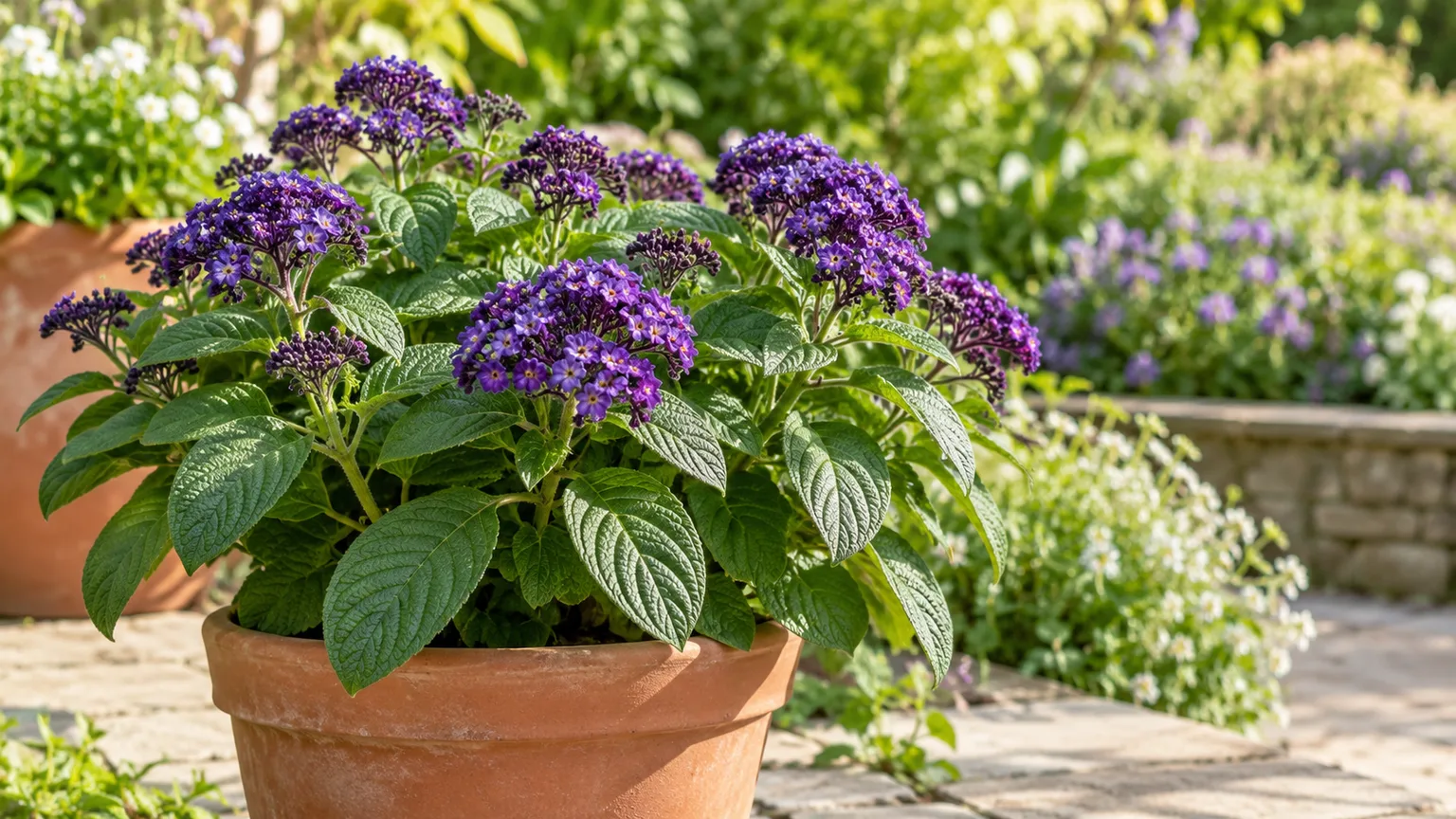
Heliotrope earns its place near a patio, path, or sunny window because a healthy plant offers both dense purple flower clusters and a sweet fragrance. The familiar garden plant is usually Heliotropium arborescens, a tender South American perennial grown as a summer annual wherever winter frost would kill it. Its care is straightforward once you solve three linked problems: give it enough light, keep the root zone evenly moist without leaving roots waterlogged, and protect it from cold.
The advice below focuses on garden heliotrope, often sold as cherry pie plant or Peruvian heliotrope. The common name also applies to many other species, so confirm the botanical name on a plant label before applying care details or making safety assumptions. North Carolina State Extension identifies garden heliotrope as a sun-loving plant for moist, humus-rich, well-drained soil and notes that it appreciates afternoon shade in hot summers.
Know Which Heliotrope You Are Growing
“Heliotrope” names a genus of roughly 325 species, not one uniform garden plant. This guide concerns the ornamental H. arborescens, sometimes sold under the older name H. peruvianum. It forms a bushy, leafy plant with clusters of small flowers, usually violet or purple, and a scent that different people describe as vanilla, cherry, or almond-like. Fragrance intensity and color vary by cultivar and conditions, so neither trait is a reliable way to diagnose plant health.
Many nursery varieties are compact selections of H. arborescens. ‘Marine’ is a familiar deep violet-blue type; ‘Princess Marina’ is another compact selection, while white and pale lavender cultivars are also sold. Select by mature width and flower color as well as fragrance. Some varieties are hybrids, and seed saved from a hybrid may not produce offspring that resemble the parent; if you want an exact repeat, choose a named plant and propagate it by cuttings.
Do not assume every plant labeled “heliotrope” has the same growth habit. Clasping heliotrope (H. amplexicaule), seaside or salt heliotrope (H. curassavicum), and garden heliotrope are distinct species with different ecological preferences. The first two may behave as spreading or weedy perennials in suitable regions, while H. arborescens is the familiar tender bedding and container plant. Identify the species before planting a vigorous groundcover near natural areas.
Choose a Site With Strong Light and Airflow
Aim for at least six hours of direct sun for steady growth and flowering. In a mild summer, a full-sun bed is usually appropriate. In a hot inland or southern climate, morning sun followed by light afternoon shade can preserve flowers and reduce leaf scorch. Deep shade tends to produce stretched stems and fewer flower clusters, so shade should protect the plant from peak heat rather than deprive it of most of the day’s light. Garden Design gives the same full-sun baseline and recommends afternoon shade where summers are especially hot.
Warm days and cooler nights suit heliotrope better than prolonged heat or cold. The plant is frost tender, and cool conditions can stall or damage it; do not use a fixed calendar date as the only signal for moving it outdoors. Check your local last-frost timing and the forecast, then wait for consistently mild nights. In regions where nights regularly dip below about 40°F (4°C), delay planting or protect the plant, since cold stress can set it back even without a killing freeze.
Air movement matters when warm weather turns humid. Leave room around the plant rather than packing it tightly between larger foliage, and avoid a permanently damp, shaded nook. Good airflow helps leaves dry and lowers the likelihood of powdery mildew and leaf spots. If your only sunny place is exposed to fierce afternoon heat, a movable pot lets you adjust the balance more easily than a fixed bed.
Prepare Drainage-First Soil and Containers
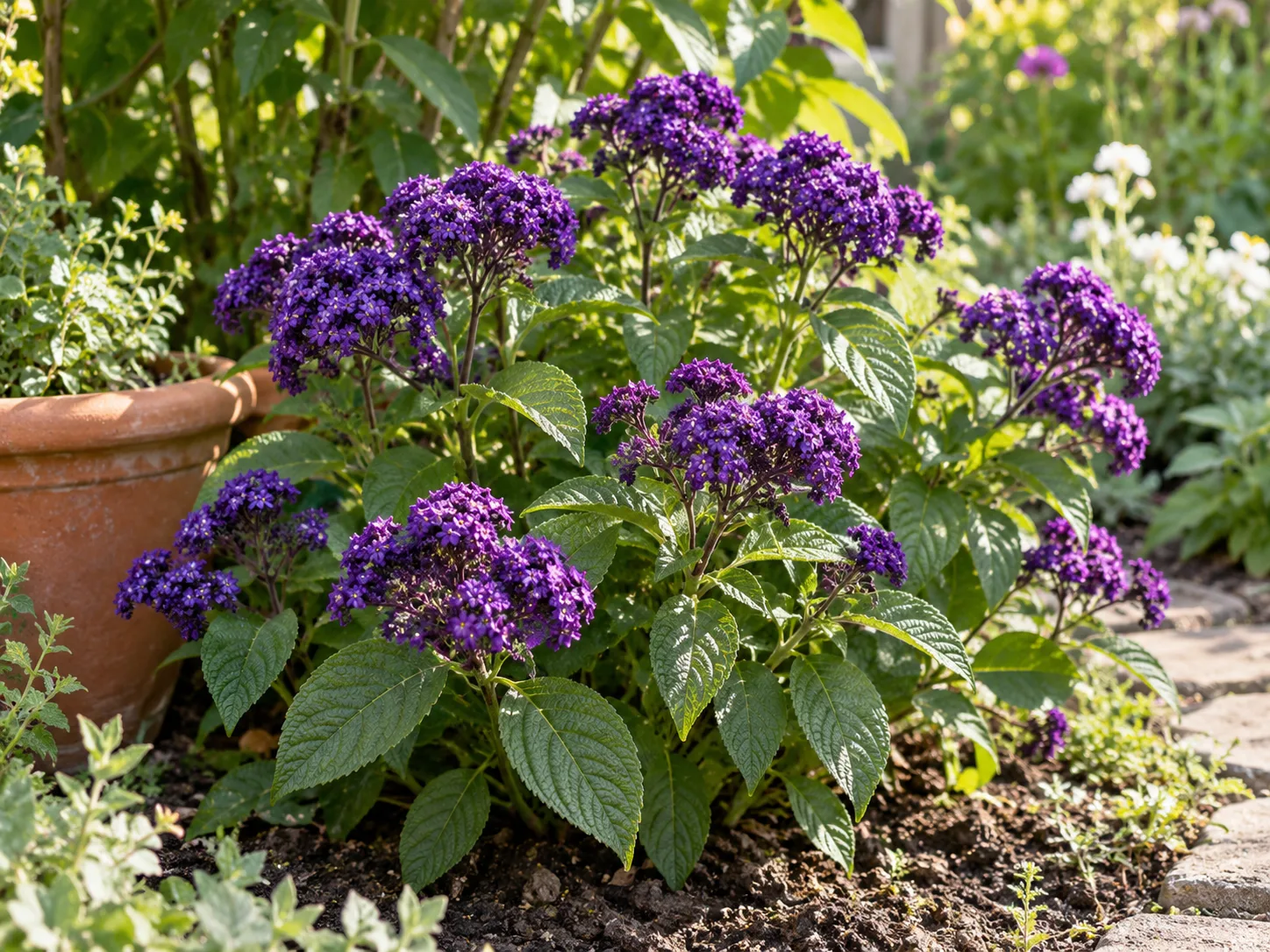
Heliotrope likes soil that holds some moisture but drains freely. In a garden bed, mix in mature compost to improve organic matter, then check whether water drains rather than pooling around the root ball. A low spot that stays wet after rain is a poor location; use a raised bed or a different site if the soil remains saturated. A soil test can help you decide whether the bed needs pH adjustment, but a typical workable target is mildly acidic to neutral, around pH 6.5–7.5, as summarized by Garden Design.
For a pot, use fresh, quality potting mix made for containers and a pot with unobstructed drainage holes. Garden soil is too dense for most pots and can compact around roots. Choose a container only moderately wider than the nursery root ball; a huge volume of wet mix around a small root system dries slowly and increases the chance of root problems. The pot should be stable enough for a leafy plant and easy to move before fall cold arrives.
Do not add a layer of gravel to the bottom as a substitute for drainage. The pot still needs open drainage holes, and the growing medium needs an airy structure from top to bottom. Empty any saucer after watering so the plant does not sit in runoff. If the potting mix has become compacted or repels water, refresh it rather than responding with more frequent small sips that wet only the surface.
Plant After Frost, Then Establish Gently
Buy compact, healthy starts with firm stems and evenly colored foliage. Avoid plants with sticky leaves, webbing, whiteflies, or a root ball that smells sour. Wait until frost danger has passed and the soil has warmed before planting; Garden Design advises waiting for soil temperatures above 60°F (16°C) for starts. A transplant that goes into cold soil may remain stalled even if the afternoon feels warm.
Water the nursery pot before planting so the root ball is moist, not crumbling dry. Set the plant at the same depth it grew in its pot, fill around it with loosened soil, and water thoroughly to settle the mix. Space plants according to the cultivar’s mature width—often about 12 to 24 inches apart—so the foliage can fill in without becoming a dense, damp mass. For containers, one plant can fill a modest pot; use the label’s mature spread when combining it with other flowers.
For the first couple of weeks, check moisture more often while roots grow into surrounding soil. Water the root zone when it begins to dry, and watch for afternoon wilt that disappears by evening. A newly planted heliotrope can need temporary protection from intense midday sun while it adjusts, especially if it was raised under cover. Once established, do not confuse “moist soil” with permanently wet soil: drainage remains essential.
Water by Checking the Root Zone
Keep the mix evenly moist, not soggy. Instead of following a strict once-a-week schedule, check the soil at the root zone. In a bed, feel the soil a couple of inches below the surface; in a pot, test near the edge without damaging major roots. If it is still cool and moist, wait. If the top layer has dried and the mix is becoming dry below it, water slowly and thoroughly so moisture reaches the full root ball.
Container plants often need water more frequently because the limited mix warms and dries faster than garden soil. On a hot, windy day, a pot may need checking every day, but checking is not the same as watering automatically. When you do water, continue until excess drains from the bottom, then empty the saucer. A lightweight pot and dry top layer can indicate it is time to water; a heavy pot and persistently wet mix are a cue to hold off and investigate drainage.
Water early in the day when practical and direct the stream at the soil rather than splashing the leaves. This gives foliage time to dry and is useful in humid areas where fungal problems are more likely. A wilted plant with bone-dry mix is thirsty; one that droops while the soil is wet may have damaged roots or heat stress. Adding more water to the second plant can make the underlying issue worse. Garden Design and Auckland Botanic Gardens both emphasize moisture with good drainage and caution against wet overwintering conditions.
Feed for Flowers Without Forcing Soft Growth
Start with reasonably fertile soil and use fertilizer only while the plant is actively growing. A controlled-release fertilizer mixed into the soil at planting can reduce repeated feeding, while a liquid product offers more control for a pot. If you choose a liquid feed, follow its label rate and interval; garden references commonly suggest regular feeding during the growing season, with container plants often fed more frequently because watering washes nutrients through the pot.
Do not chase flowers by applying extra fertilizer or choosing the highest-phosphorus product on the shelf. A balanced product used according to its label is a sensible starting point. Excess nitrogen can make heliotrope leafy at the expense of blooms, and fertilizer salts can damage roots in a pot. If you see crisp leaf edges or a white crust on the mix, pause feeding and flush the container with clean water if drainage is good. Resume at the label rate only after the plant stabilizes.
Plants growing in rich, compost-amended beds may need less supplemental feeding than container plants. If foliage is healthy and the plant is flowering, more fertilizer is unlikely to improve it. Auckland Botanic Gardens recommends spring feeding for established plants in its local conditions; in other climates, align feeding with active growth rather than a calendar month.
Pinch, Prune, and Deadhead at the Right Time
Pinch the growing tips of a young, established plant to encourage branching. Use clean fingers or snips to remove the soft tip just above a pair of leaves. This creates a bushier shape, but every pinch removes a potential flowering tip and can delay the first flush. If your plant is already compact or the season is short, leave its tips alone and focus on deadheading instead.
Remove faded flower clusters by cutting the stem back to a healthy leaf pair or side shoot. This tidies the plant and encourages continued growth; it is more precise than cutting back the entire plant whenever one bloom fades. If stems have become lanky, trim them modestly to a leafy node, then give the plant enough light and airflow to support new growth. Avoid a severe late-season haircut if there is little warm weather left for recovery.
At season’s end, remove dead or diseased material and decide whether to overwinter the plant or treat it as an annual. Do not put heliotrope clippings where horses or other grazing animals can reach them. The toxicity issue is separate from routine garden handling: the practical priority is preventing ingestion and disposing of trimmings safely.
Grow Heliotrope Successfully in a Container
A pot is useful when your garden soil drains poorly, you want fragrance close to a seating area, or you plan to bring the plant indoors for winter. Choose a sunny patio or balcony where the pot receives strong light, and place it where air can move around the foliage. A container also makes it easier to shade heliotrope from the hottest afternoon sun or move it under cover during a cold snap.
The trade-off is faster change in moisture and temperature. Check container mix more often than bed soil, but do not let a daily check become automatic daily watering. Make sure the pot has drainage holes, use a saucer only to protect the surface, and pour away standing runoff. If the plant dries repeatedly between waterings, move to a slightly larger pot or a less exposed location rather than keeping the roots continuously wet.
When pairing heliotrope with other flowers, select companions that need similar sun and moisture. A pot crowded with plants that tolerate drought poorly may be hard to water evenly, while a thirsty companion can increase watering needs. Keep enough room for heliotrope’s mature width and do not bury its crown under neighboring foliage. The plant’s fragrance is most useful where people pass or sit, but keep its ingestion risk in mind when choosing a location near children or animals.
Propagate a Favorite Plant From Cuttings
Stem cuttings are the reliable choice when you want a new plant to preserve a named cultivar’s flower color and growth habit. Take cuttings in late summer or during active growth, choosing firm, healthy, non-flowering shoots. With clean snips, cut a 4- to 5-inch tip just below a leaf node. Remove leaves from the lower half so they will not sit in the rooting mix, and remove any flower buds that would divert energy from rooting.
Insert the bare end into a small pot of moist, free-draining propagation mix, such as a blend with perlite. A rooting hormone is optional; it can help, but cleanliness, warmth, and steady moisture matter more. Cover the pot loosely with a clear bag or dome if the cutting wilts quickly, keeping the cover from touching the leaves and airing it daily. Place it in bright indirect light, not harsh sun, and keep the mix damp but never waterlogged.
Rooting time varies with temperature and cutting condition; some horticulture guidance reports roots in about two weeks, but use that as an estimate rather than a guarantee. Check gently for resistance or new growth instead of tugging every day. Once rooted, remove the cover gradually, pot the cutting up if needed, and keep it in bright light. If you plan to move it outdoors in spring, acclimate it over several days to stronger sun and outdoor conditions.
Start Heliotrope From Seed When You Have Time
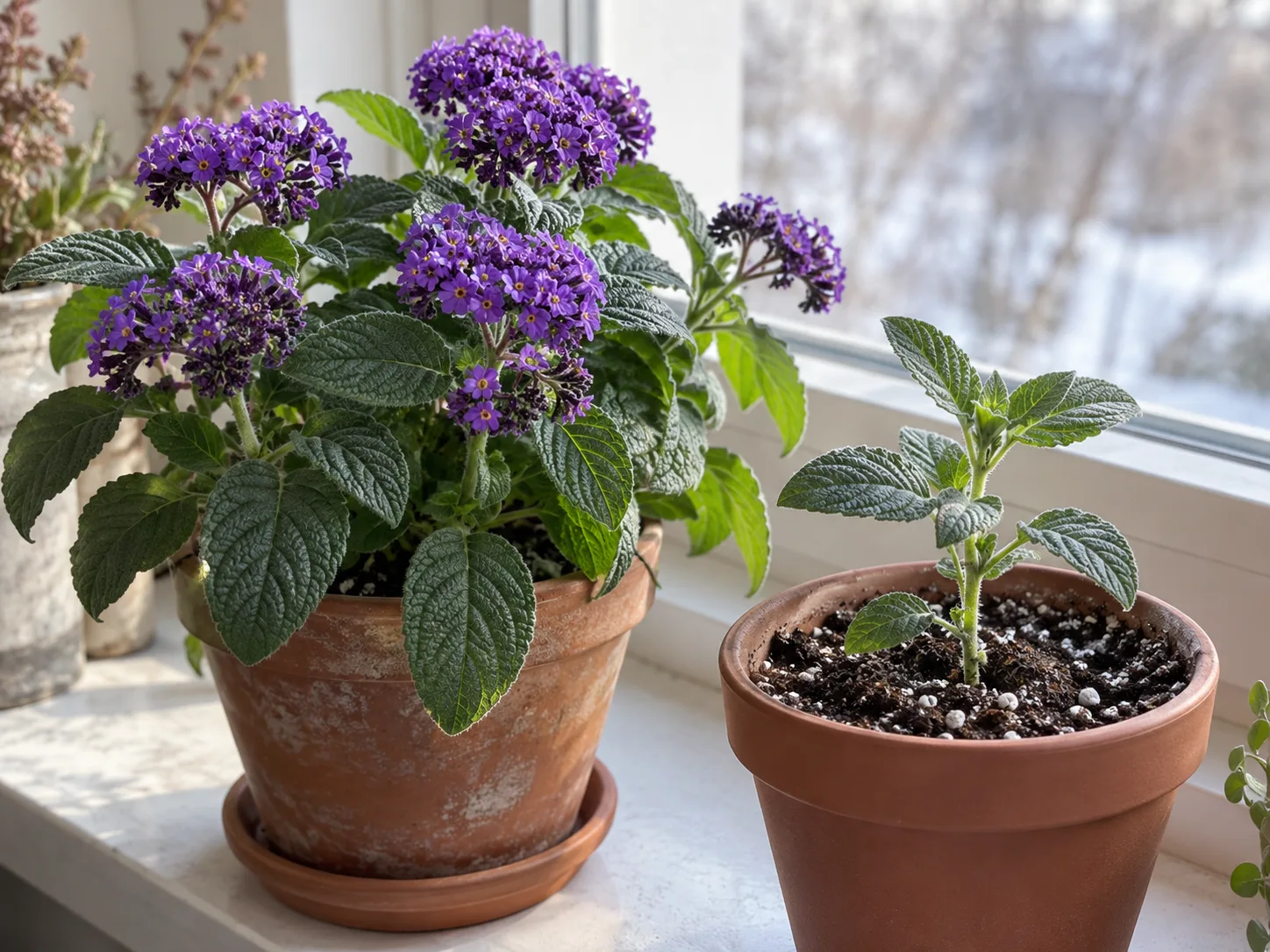
Seed is useful if you want several plants or enjoy starting flowers indoors, but heliotrope is slower than many warm-season bedding plants. Start about 10 to 12 weeks before your average last frost so seedlings have time to grow before transplanting. Keep the seed-starting mix warm—roughly 70–75°F (21–24°C)—and consistently moist, not soaked. Germination can take several weeks; do not discard the tray after a few days because nothing has emerged.
Follow the seed packet’s sowing instructions, since seed size and cultivar directions can differ. Many growers cover seed very lightly; if the packet specifies surface sowing or light exposure, follow that instead. Use a fine watering rose or bottom watering so the small seeds are not washed into a corner. As seedlings emerge, move them into bright light to prevent weak, stretched growth and keep air moving around the tray.
Pot seedlings on after they develop true leaves and transplant outside only after frost danger has passed and conditions are warm. Pinch a seedling’s tip once it is growing strongly and has several sets of leaves, not while it is tiny or stressed. Seedlings from hybrid varieties may differ from the named parent in color, vigor, and fragrance. Gardener’s Path describes seed starting 10 to 12 weeks before frost and notes that hybrid seed may not reproduce parent traits; choose cuttings when uniformity matters more than quantity.
Overwinter Plants Before Cold Damages Them
In frost-free parts of its range, heliotrope can persist as a perennial shrub. In colder climates, the usual choices are to let the outdoor plant finish as an annual, keep a container plant indoors, or take cuttings to raise a younger replacement. USDA zones are a broad guide, not a promise that a plant will survive a particular cold spell; exposure, drainage, duration of cold, and microclimate all matter. Do not wait for the first frost warning if you want to save a plant.
Before bringing a pot inside, inspect leaf undersides and stems for aphids, whiteflies, mealybugs, and spider mites. Rinse the foliage, remove dead leaves, and isolate the plant from other houseplants while you monitor it. Put it in the brightest available window and a cool room away from heating vents. The plant may drop some leaves as it adjusts to lower indoor light; that does not automatically mean it needs more water or fertilizer.
Water less often than in summer because growth and evaporation slow indoors, but do not let the root ball turn bone dry for long periods. Check the mix before watering and empty the saucer. Skip or reduce fertilizer while growth is slow, then resume when spring growth begins. After frost danger has passed, reintroduce the plant outdoors gradually over a week or more, starting in shade and increasing sun exposure. Rooting a few cuttings is a practical backup if you do not have a cool, bright indoor spot.
Manage Pests and Prevent Disease
Inspect new plants before they join a bed or indoor collection. Aphids cluster on tender tips, whiteflies flutter when foliage is disturbed, mealybugs look like small cottony deposits, and spider mites can leave stippling and fine webbing. These pests are more likely to build up on stressed plants or indoors where natural predators and rain are absent. North Carolina State Extension lists whiteflies, spider mites, aphids, and mealybugs among pests to watch for.
Start with isolation and a careful rinse, particularly on leaf undersides. Remove heavily infested leaves, then reassess after several days. If pests persist, use an insecticidal soap or other product labeled for the specific pest and plant; follow its directions, including repeat intervals and pollinator precautions. Test a small area first if the label advises it, and avoid spraying open flowers when pollinators are active. Do not assume that a homemade oil mixture is safer or more effective than a labeled product.
Powdery mildew and leaf spot become more likely when foliage stays damp, air is stagnant, or the plant is stressed. Water the soil rather than repeatedly wetting leaves, space plants, and remove affected debris. Brown leaves can also result from root stress, dry mix, sun scorch, or mites, so treat the cause you observe rather than automatically applying a fungicide. When the mix stays wet for days and the plant is declining, check drainage and roots before watering again.
Diagnose Drooping or Browning Leaves
First, check the soil before reaching for the watering can. If the root ball is dry and the pot feels light, water deeply and let it drain; a wilted plant may recover once moisture reaches the roots. If the mix is wet or smells sour, stop watering and check for blocked holes, standing saucer water, or damaged roots. A plant that wilts only during hot afternoons but firms up later may be experiencing heat stress, so try afternoon shade before increasing irrigation.
Next, look closely at the foliage. Dry brown margins after a hot, windy spell point toward water stress or heat; pale stippling and fine webbing suggest spider mites; white fuzzy growth on leaves is more consistent with powdery mildew. Yellowing lower leaves with wet mix can signal root trouble rather than thirst. Remove only damaged material that will not recover, correct the environment, and give the plant time to produce healthy growth before pruning heavily.
Restore Bloom When Flowers Are Sparse
Check light first: a heliotrope in deep shade is unlikely to flower generously, even if the leaves look lush. Next consider fertilizer. Heavy nitrogen feeding encourages foliage, while too little light and constantly wet roots both reduce vigor. Move a pot gradually into brighter conditions, let the mix drain between waterings, and use only the product-label feeding rate during active growth.
Timing also matters. A recently pinched plant may spend time branching before it flowers, and seedlings need time to reach maturity. High heat can stress buds, while humid, stagnant air encourages disease. Deadhead spent clusters once they fade, but do not repeatedly shear the whole plant; removing every growing tip can trade the current bloom for later branching. If the plant is healthy but bloom is delayed, correct the limiting condition and avoid adding multiple stressors at once.
Handle Heliotrope Safely Around People and Animals
Treat heliotrope as an ornamental, not an edible herb. North Carolina State Extension flags H. arborescens as poisonous and says it is toxic to people if eaten in large amounts. Pyrrolizidine alkaloids occur in Heliotropium species; veterinary toxicology references describe livestock poisoning particularly when plants or seeds contaminate feed or become a substantial part of grazing. The ASPCA’s heliotrope entry specifically lists toxicity to horses and liver disease after large or prolonged ingestion.
That horse-specific listing does not establish that every household pet has the same risk profile, so do not overstate it or assume an animal is safe to nibble the plant. Keep heliotrope out of reach of children and pets, do not use it in tea or food, and never feed trimmings to livestock. Wear garden gloves if you prefer to avoid plant sap on your skin, wash hands after pruning, and dispose of cuttings securely.
If a person or animal may have eaten heliotrope, remove access to the plant and contact an appropriate medical or veterinary professional promptly. For a pet, call a veterinarian or an animal poison-control service with the plant label or a clear photo and an estimate of the amount and time involved. Do not wait for symptoms or induce vomiting unless a qualified professional tells you to do so.
Conclusion
Grow heliotrope in warm weather with strong light, freely draining soil, and moisture that stays even without becoming stagnant. Use a pot if you need better drainage or want to bring the plant indoors before frost, then adjust watering to the mix rather than the calendar. Pinching and deadheading can shape the plant and extend its display, while cuttings preserve a favored cultivar more reliably than saved seed.
The most useful troubleshooting habit is to diagnose before you intervene: check the root zone, inspect leaf undersides, and compare the plant’s light and temperature with its recent symptoms. That prevents the common mistake of adding water or fertilizer to a stressed plant that actually needs drainage, shade, or pest control. Keep the plant away from grazing animals and prevent ingestion, and heliotrope can provide a long season of fragrant flowers with manageable care.



