How to Grow and Care for Curry Trees
Grow curry leaf in a pot or frost-free garden with clear guidance on light, drainage, watering, pruning, harvesting, pests, and winter care.
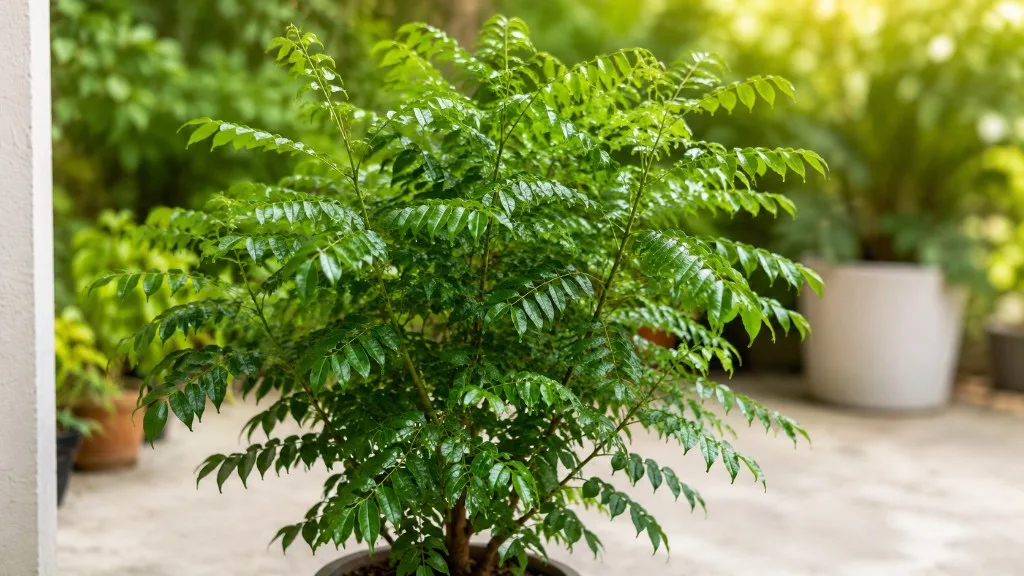
The curry leaf tree is a warm-climate evergreen grown for the aromatic leaflets used in South Asian cooking. It is manageable in a pot if you can give it strong light and protect it from cold; in a frost-free garden, it can become a broad, multi-stemmed shrub or small tree. The practical care formula is bright light, a freely draining root zone that does not stay bone-dry, restrained feeding while it grows, and early protection from frost.
Before you buy, decide where the tree will spend winter. A standard curry leaf tree can eventually outgrow an easy-to-move pot, while a smaller dwarf or Gamthi selection is more realistic for seasonal indoor shelter. That choice affects almost every later decision, from pot size to pruning and harvest.
Start by identifying true curry leaf
Although commonly sold as Murraya koenigii, Kew accepts the name Bergera koenigii; older labels still use Murraya, and both refer to the same plant. Look for aromatic, pinnate leaves with multiple leaflets along a central stalk. The tree belongs to the citrus family, Rutaceae, and is native to India, as described by Kew and UC Master Gardeners.
“Curry plant” is an imprecise nursery label. Check the botanical name before buying: Helichrysum italicum is a separate, gray-leaved ornamental with a curry-like scent, while curry powder is a spice blend; neither is the edible curry leaf tree. The actual leaf has its own citrusy, savory flavor and is used fresh in cooking.
Choose the right growing method
Think about winter lows and plant size before planting. Curry leaf is tropical to subtropical and frost tender; leaf drop or dormancy in cool weather does not prove the plant can safely endure repeated freezes.
A USDA hardiness-zone label can help screen locations, but local microclimates, exposure, duration of cold, and whether roots are in a pot all matter. The RHS profile treats it as an indoor or conservatory plant in frost-prone climates, while UF/IFAS Extension describes containers as a way to shelter it during a hard freeze.
Regular, dwarf, and compact Gamthi forms are commonly sold, but names and availability vary by nursery. A standard plant grows fastest and can become a sizable shrub; dwarf plants stay shorter and broader, while Gamthi is slower and often has thicker, strongly aromatic leaves.
Ask the seller about mature size and parent stock, and choose the smallest credible form if you expect to move it indoors each winter. Gardener’s Path’s curry-leaf guide compares these size types and their container implications.
Grow in the ground only where winters stay mild
Plant outdoors in spring after the danger of frost has passed, giving a young tree time to root before its first cool season. Pick a warm, sheltered site with sun and soil that drains after heavy rain; avoid exposed corners where wind can rock young stems or dry the root zone. In suitable subtropical climates, a planted tree establishes more room for roots and can grow beyond the reach of ordinary winter coverings, so do not put it in the ground if you will need to carry it inside.
If your area gets occasional cold snaps, consider the coldest garden microclimate you actually have rather than relying on a zone map alone. A wall or protected courtyard may reduce wind, but it will not make a tender plant freeze-proof. Keep a frost cloth ready for brief cold events and use a container if freezes are routine.
Use a container when you need winter mobility
A pot gives you control over placement and makes a tender tree easier to shelter, but it also makes the roots more exposed to temperature swings and dries faster in sun or wind. Select a sturdy container with unobstructed drainage holes and a stable base; a lightweight pot or wheeled caddy can make autumn moves safer. The right “size” is one that accommodates the current root ball with some room to grow, not an enormous tub filled with wet mix the roots cannot yet use.
The trade-off is future weight. Even a compact plant becomes harder to move as stems and roots enlarge, so work out the winter route through doorways and choose a manageable container before the plant is heavy. If you cannot provide a bright, protected winter location, a seasonal outdoor display may be more realistic than promising yourself that the plant will survive in a dim room.
Give it bright light with afternoon relief in hot climates
Light drives compact branching and steady leaf production. Outdoors, give an established curry tree a sunny to lightly shaded position; in a mild, cool-summer climate, more direct sun usually helps.
In hot inland or desert conditions, a young plant and a potted specimen can scorch when intense afternoon sun heats the pot and leaf surface, so morning sun with light afternoon shade may be safer. UC Master Gardeners specifically note summer sun protection in hot weather, and the RHS lists full sun to partial shade.
Indoors, choose the brightest window available, ideally one that receives several hours of direct light. A location that looks bright to a person may still be dim for a sun-loving woody plant, especially during short winter days; if shoots stretch, leaf spacing widens, or growth stalls while the mix stays damp, add a grow light or move it closer to the window. Rotate the pot occasionally so the crown does not lean toward one light source.
Do not move a plant that has spent months indoors straight into all-day outdoor sun. Acclimate it over about a week, starting in bright shade and increasing sun gradually; this reduces leaf scorch while the foliage adjusts. Reverse the transition in autumn by checking for pests and bringing it in before nights turn cold.
Choose a draining, fertile root zone
Use a loose, well-drained potting mix that holds some moisture but leaves air around the roots after watering. A quality container mix amended with a modest amount of coarse perlite, pumice, or fine bark can improve air space if the base mix remains dense; there is no single recipe that suits every climate and pot. Avoid heavy garden soil in a container, and do not put gravel in the bottom as a substitute for drainage holes or an airy mix.
For an in-ground tree, assess drainage before planting. If water remains around the root zone for hours after rain, improve the site or use a raised bed instead of trying to cure a wet planting hole with a small amount of sand. Curry leaf tolerates a range of soils but performs best in fertile, draining ground; the RHS lists moist but well-drained to well-drained conditions and acid to neutral pH.
Keep the trunk base visible and do not pile wet mulch against the stems. A thin organic mulch over outdoor soil slows evaporation and moderates root temperature, but leave a clear gap around the main stems to limit persistent dampness and decay. In a pot, remove fallen leaf litter from the surface so it does not mat over the mix.
Water when the mix begins to dry
Do not water curry leaf by a fixed number of days. Check the top inch or two of potting mix with a finger, lift the pot if it is small enough, and water thoroughly when the surface has begun to dry but before the root ball becomes dusty and hard.
Let excess drain away and empty the saucer; a pot sitting in runoff keeps lower roots saturated even if the surface feels dry. Outdoor rainfall, pot material, root mass, wind, sun, and season all change how quickly it needs another drink.
During warm active growth, check more often because leaves and new shoots use water quickly. In winter, low light and cool temperatures slow growth and evaporation, so let the mix dry farther between waterings and never keep it wet just because the plant has tropical origins. The UC Master Gardeners’ guidance is to allow the soil to dry between waterings; that is a better starting point than a universal schedule.
If the tree wilts, inspect the mix before adding water. A limp plant in dry, shrunken soil may need a deep drink, while limp foliage above wet, sour-smelling mix points toward poor drainage or damaged roots. Watering both on a calendar and whenever leaves droop is how a container can remain wet for days and lose root oxygen.
Feed during active growth, not by habit
Container-grown trees use a limited volume of mix, and nutrients can be washed out with repeated watering. If the plant is producing new growth, use a balanced fertilizer labeled for edible plants at the label rate; a mild, regular feed during the growing season is easier to manage than a strong dose meant to force a sudden flush. Stop or reduce feeding when winter light is low and the plant is dormant or barely growing.
An in-ground tree usually needs less routine feeding than a potted one. If leaves yellow or growth weakens, check root moisture, light, cold exposure, and drainage before assuming the plant needs fertilizer; nutrient deficiency is only one possibility. Avoid adding iron, sulfur, or large amounts of nitrogen without a soil test or a clear diagnosis, because amendments can create imbalance rather than fix the underlying stress.
Prune to shape the plant and renew harvests
Prune in warm active growth, using clean, sharp pruners. To make a young plant branch, pinch or cut a growing tip just above a leaf node; the buds below the cut can then produce side shoots. On an established tree, remove dead, rubbing, or inward-growing stems first, then shorten only the branches that make the crown too tall or awkward to move.
Treat harvest as light pruning rather than stripping the tree. If you want a compact shape, shorten a few branch tips at a time and let the plant respond before cutting again; removing a large fraction of the crown at once can leave a small root system supporting too little foliage. A mature in-ground specimen can be selectively shaped, but avoid severe cuts into bare old wood unless you know the plant is actively regrowing.
Flowering is optional, not a pruning emergency. You can leave clusters for their fragrance and the plant’s natural cycle, or remove some flower buds if your priority is leaf production; avoid removing every bud on a stressed or recently repotted plant just to follow a calendar rule. The RHS lists curry tree pruning as routine maintenance, and practical guidance from Gardener’s Path describes spring pruning as a way to manage size and encourage bushier growth.
Harvest leaves lightly until the plant is established
Let a new transplant build a sturdy framework before you take a meaningful harvest. There is no reliable age that fits every plant: a vigorous warm-climate tree may establish faster than a seedling in a cool room, and a compact Gamthi selection naturally grows more slowly. Begin with a small amount once it has several healthy branches and is pushing new growth, leaving plenty of leaf area to power the next flush.
Use scissors to take a few complete compound leaves or trim a small branch tip above a node. Avoid plucking every leaflet off one stem or removing most of the green crown; spaced cuts keep the plant photosynthesizing and can encourage side branching. If a plant is recovering from winter leaf drop, repotting, pest damage, or drought, postpone harvest until new growth resumes.
Fresh leaves have the strongest aroma. Rinse only what you will use, and freeze surplus leaves if you want to preserve more of their flavor; UC Master Gardeners note that drying reduces flavor and freezing is an option. Because the plant is grown for food, use only pest products labeled for edible plants and follow all label instructions and harvest intervals before picking treated foliage.
Pot and repot without drowning the roots
Repot when roots circle densely, emerge from several drainage holes, or the mix dries unusually fast despite reasonable watering. Move up only one pot size at a time, keeping the root flare near its previous level and filling around the root ball with fresh, airy mix. A much larger pot is not automatically an upgrade: unused wet mix can stay saturated around a small root system, especially indoors in winter.
Choose a pot with holes rather than a decorative cachepot as the plant’s permanent container. If you use an outer cover pot, remove the inner pot after watering and drain it before replacing it. Avoid routinely disturbing the roots to check them; a quick look through the holes and a change in how the mix dries are usually enough to decide whether repotting is needed.
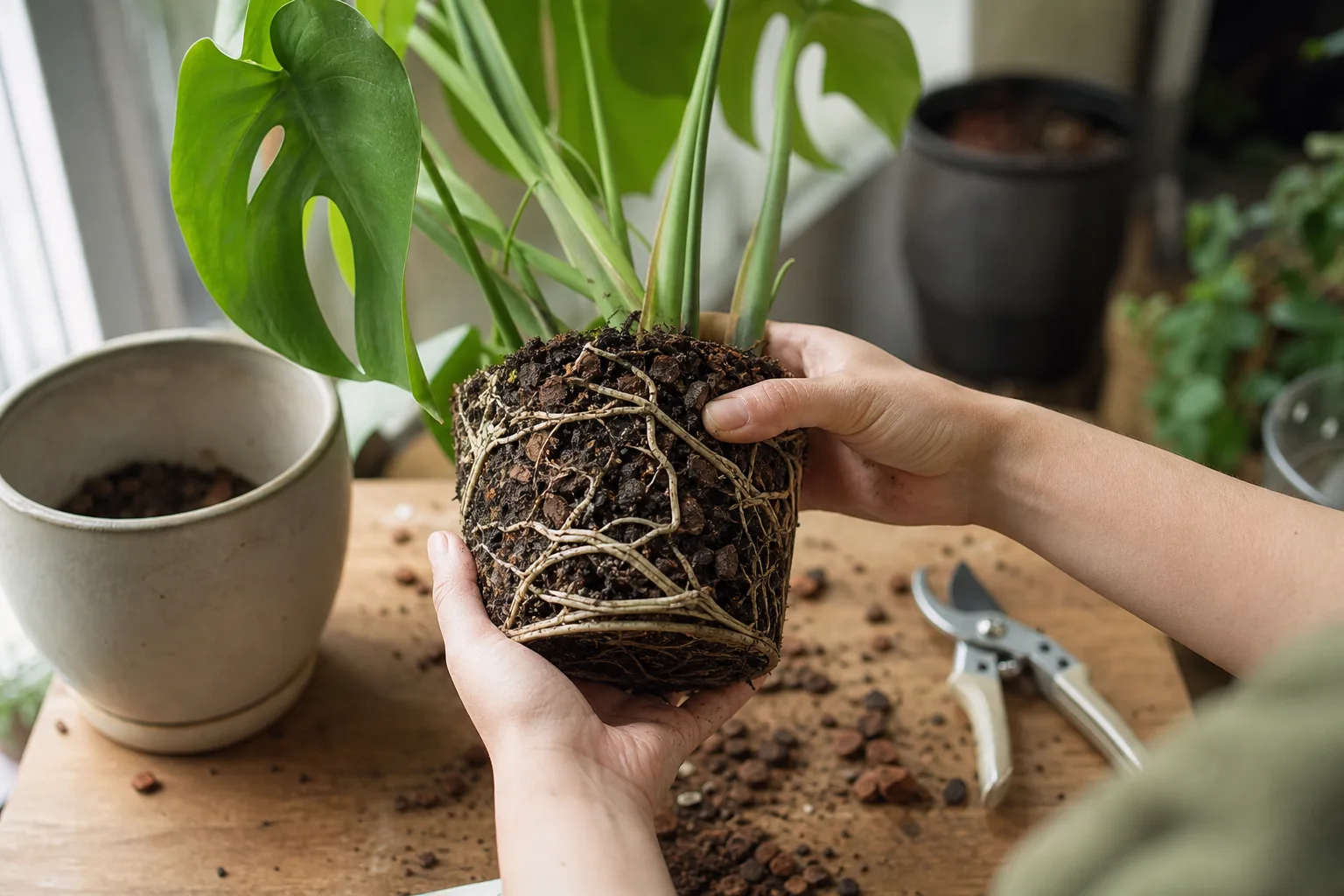
After repotting, water once to settle the mix and let it drain fully. Keep the plant in bright, indirect light for a short recovery period if the roots were disturbed, then return it gradually to stronger sun. Resume fertilizer only after active growth returns; feeding damaged roots immediately will not speed recovery.
Overwinter it before a cold night
In frost-prone climates, bring the pot indoors before frost threatens, not after leaves have been blackened. A sheltered, bright room or warm conservatory is preferable to a dark garage; if the only available room is cool, reduce watering and accept that some leaf drop may occur. Keep the plant away from cold glass, drafty exterior doors, and heating vents that blow hot, dry air directly onto the foliage.
Before moving it inside, inspect leaf undersides, branch joints, and the soil surface for pests. Rinse the foliage if practical, remove dead leaves, and isolate the curry tree from other houseplants for a couple of weeks while you watch for mites or scale. If the plant is too large to move, plan ahead with a local frost-protection strategy, understanding that a cover may reduce damage in a brief cold snap but will not make a tropical tree reliably hardy through repeated freezes.
Once days lengthen and nights stay safely warm, acclimate the plant back outside gradually. A sudden change from indoor low light to strong sun can scorch foliage even when temperatures are suitable. Recheck the mix after the move because outdoor sun and wind can make watering needs rise quickly.
Diagnose leaf drop, yellowing, and weak growth
Leaf drop has several plausible causes, so start with the recent change. A cold spell, a move indoors, or short winter days can trigger seasonal shedding; if stems remain firm and buds are alive, stabilize the conditions and wait for warmer active growth rather than pruning everything back. A plant in wet mix with soft, dark roots needs drainage and watering correction, while one in a small, dry pot may be thirsty.
Yellowing across older leaves can reflect low light, cold stress, overwatering, or nutrient issues. Yellow leaves with a mix that stays wet for a long time point first to root-zone trouble; yellowing between green veins can suggest a nutrient availability problem, but confirm the growing conditions and soil before applying a corrective product. Weak, stretched shoots usually signal inadequate light, particularly indoors.
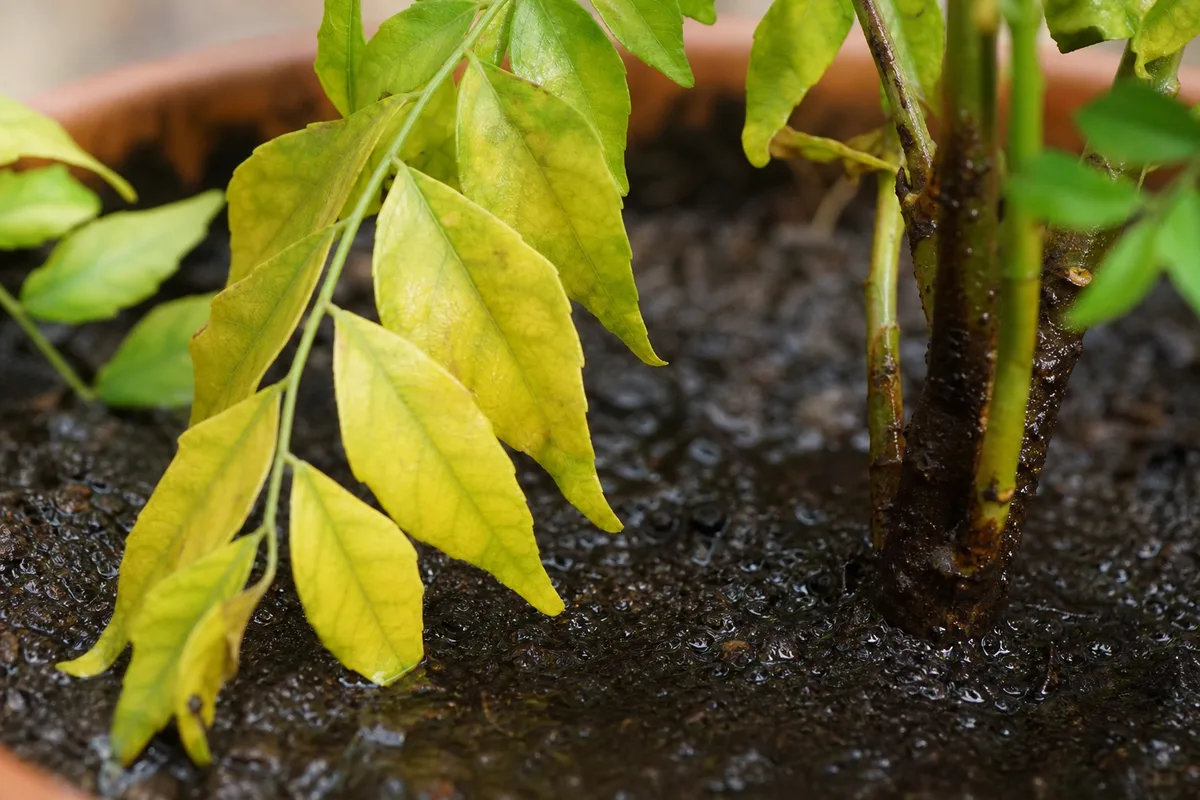
Use this order before reaching for fertilizer: check temperature history, inspect the light level, feel moisture several inches down, confirm water can leave the pot, and look closely for pests. Change one main factor at a time and watch new growth, since damaged leaves may not turn green again even after the cause is corrected. If the trunk is soft at the base or most roots are dark and mushy, the plant may not recover, but a firm stem can sometimes reshoot after conditions improve.
Manage pests with a food-safe plan
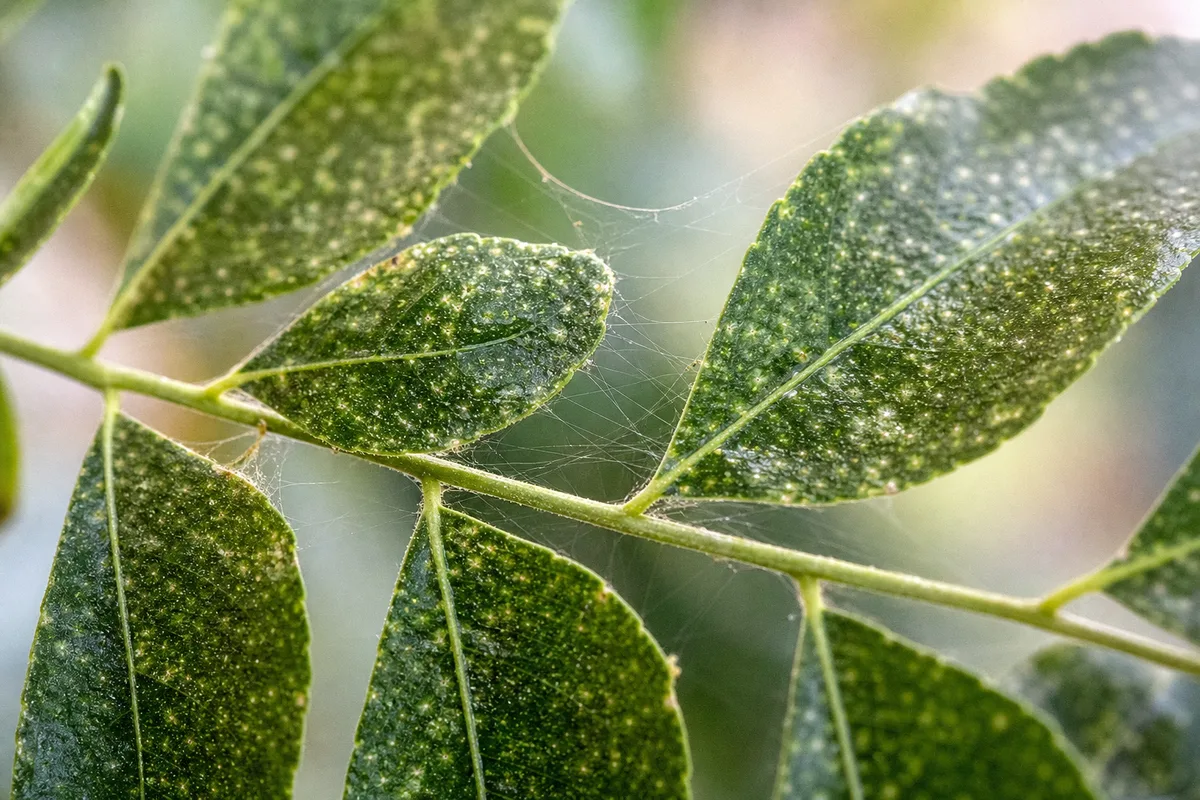
Common indoor pests include spider mites, scale, mealybugs, and aphids. Look for fine webbing, stippled leaflets, sticky honeydew, cottony clusters, or small fixed bumps along stems and leaf undersides; the RHS plant profile specifically lists red spider mite, scale, and mealybug susceptibility. New growth is especially worth checking because sap-feeding insects often gather there.
Isolate an affected pot and rinse foliage with a firm but gentle stream of water, protecting the mix from becoming waterlogged. Wipe or remove pests you can see, then monitor and repeat inspection because eggs and hidden crawlers can survive a single cleanup. If you choose a soap or oil product, use one whose label permits application to edible plants, test a small area first, avoid spraying in hot direct sun, and follow its instructions exactly.
Because curry leaf is in Rutaceae, it can also host Asian citrus psyllid. In California and other regulated regions, rules may limit the movement of plants, leaves, or other material across quarantine boundaries; check current state and USDA guidance before mailing, carrying, or sharing cuttings. UC IPM identifies Indian curry leaf as a host, and USDA APHIS posts current quarantine and movement information.
Propagate from suckers, cuttings, or fresh seed
A rooted sucker from the base of a mature tree is often the most straightforward home method because it already has roots. Separate it carefully with a clean knife or spade, keeping as many fine roots as possible, and pot it into a draining mix at the same depth. Keep it warm and evenly moist while it settles, then increase light as new growth appears.
For a stem cutting, take a healthy semi-ripe shoot during active growth, remove the lowest leaflets, and insert the bare node into a small pot of moist, airy propagation mix. Covering the pot loosely can reduce water loss, but vent it and keep foliage from staying wet; excessive condensation can rot a cutting before roots form.
Give it warmth and bright indirect light, and wait for resistance to a gentle tug or visible new growth before potting on. Gardener’s Path outlines a spring cutting method, though rooting success and timing depend on temperature and the condition of the cutting.
Seed is possible but less predictable. Use a fresh ripe seed rather than an old packet; viability falls quickly in storage, and germination can be erratic.
The UC Davis Foundation Plant Services propagation fact sheet explains why short storage life and seedling loss make propagation challenging. Sow fresh seed warm in a clean, draining medium and treat any seedlings as a long-term project rather than a quick source of kitchen leaves.
Decide what to do with flowers, fruit, and seeds
Mature curry trees may produce small fragrant white flowers followed by dark berries. Flowers add scent and interest, while fruit can provide seed for propagation; if your goal is foliage, selectively removing flower clusters may redirect the plant toward vegetative growth, but it is a choice rather than a mandatory care step. Do not let berry production distract from the core needs of a young or stressed tree.
Use the leaves as the culinary harvest, not the seeds. Reports differ on the fruit pulp, and UF/IFAS Extension takes a conservative position because the seed is considered toxic: avoid eating the berries and keep fallen fruit where children and pets cannot reach it. UF/IFAS Extension’s curry leaf profile summarizes that caution; there is no need to experiment with fruit when the aromatic leaves are the reason to grow the tree.
Conclusion
Successful curry leaf care starts with a realistic winter plan. Grow it in the ground only where cold is rarely a threat; elsewhere, choose a manageable pot and a bright place to shelter it, preferably a dwarf or Gamthi form if you expect to move it every year. Give it strong light, draining mix, moisture checks instead of a rigid watering schedule, and moderate feeding only while it grows.
Then let the plant mature before harvesting heavily, prune gradually to keep it branched, and diagnose stress before applying products or fertilizer. If you choose a true curry leaf tree and match its root zone and winter shelter to your climate, it can provide useful fresh foliage for years without being treated like a carefree outdoor herb.



