How to Grow and Care for Purple Hyacinth Bean
Grow purple hyacinth bean from seed with frost-aware timing, a sturdy trellis, steady moisture, pruning advice, and clear guidance on seed safety.
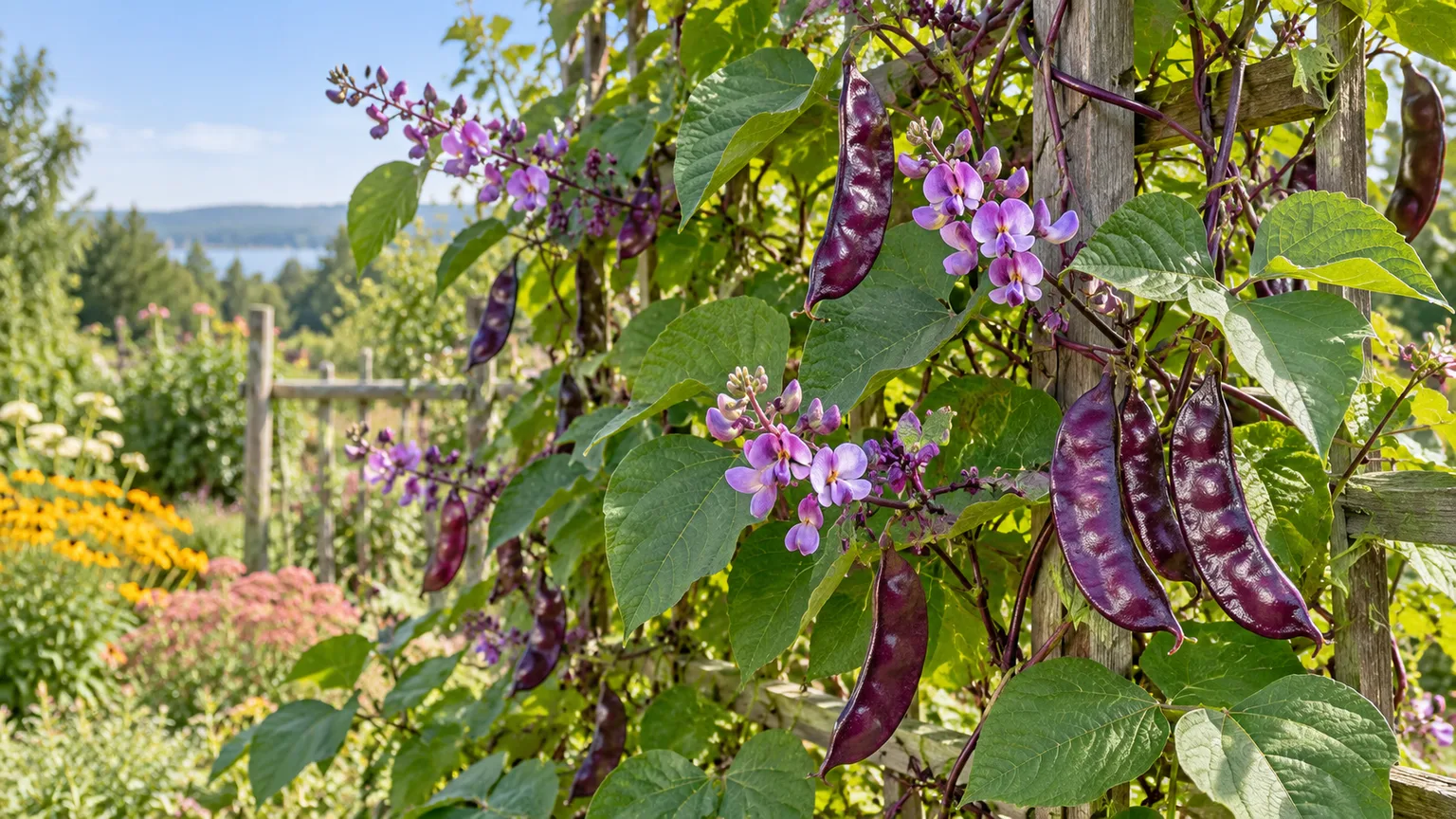
Purple hyacinth bean, Lablab purpureus, is a heat-loving, twining legume grown mainly as a dramatic warm-season vine. Give it sun, a long frost-free stretch, evenly moist but well-drained soil, and a substantial support before sowing; its growth can outpace a small garden structure surprisingly quickly. The purple flowers and glossy pods arrive later in the season, so the first important decision is where the vine can climb without swallowing a neighbor.
| Need | Practical starting point |
|---|---|
| Light | At least six hours of direct sun; more sun generally supports better flowering |
| Planting window | After frost danger has passed and the soil has warmed |
| Soil | Fertile, moisture-retentive, and well drained |
| Support | Install a sturdy trellis or fence before the seedling needs it |
| Water | Keep the root zone evenly moist while the vine is actively growing |
| Habit | Annual in most climates; a tender perennial only where winters stay mild |
| Important caution | Raw mature seeds can be toxic; ornamental pods are not automatically food-safe |
Purple Hyacinth Bean at a Glance
Hyacinth bean belongs to the pea family, Fabaceae. Its leaves are made of three broad leaflets, and its flexible stems twine around a support rather than gripping it with tendrils. Depending on cultivar and conditions, a vine can reach roughly 10 to 20 feet in a season, with some extension references recording taller growth. That range is a planning warning, not a promise: a late planting, cool summer, or shaded fence may produce a much smaller plant. NC State Extension describes it as a rapidly growing annual vine for home gardens and recommends a sturdy trellis.
Purple is the familiar look, but not every selection has purple flowers or pods. White-flowered selections such as ‘Alba’ and ‘Silver Moon’ can have green stems or pods, while ‘Ruby Moon’ keeps the purple effect prominent. The plant may also be called lablab, Indian bean, or by its older botanical names, including Dolichos lablab. Check the seed packet for the botanical name so you are comparing the same species rather than another ornamental bean.
Most gardeners in the United States grow it as an annual. The vine is frost-sensitive; it may persist as a tender perennial in reliably warm regions, but a hard freeze ends the season. The species is native to tropical Africa and is also cultivated as a food and forage crop in parts of the world. In a home landscape, the simplest use is vertical: train one or a few vines across a support to create late-summer color, shade, or a temporary screen.
Decide What You Want From the Vine
Before planting, choose whether the goal is flowers, a fast screen, seed saving, or food. These aims affect where you place the vine and when you stop harvesting its pods. If you want a neat flowering feature, one plant on a dedicated trellis may be enough. If you expect privacy coverage, remember that the foliage is seasonal in cold climates and will not provide a permanent screen through winter. If you want seed, leave a portion of the pods to mature and dry rather than picking every one while it is glossy.
Hyacinth bean is a good fit for a sunny fence, arbor, or freestanding trellis that can handle a dense annual vine. It is a poor fit for a narrow bed beside small perennials, a weak balcony railing, or a structure that must stay clear for repairs. The mature vine can shade plants below it and make a wall difficult to access. Leave room to reach the base, inspect the leaves, and remove the growth at the end of the season.
There is also a meaningful difference between growing the species ornamentally and growing it as a crop. A decorative plant from a nursery may not have been sold or handled as food, and attractive purple pods do not mean a bean is ready to eat. If food is the aim, buy correctly identified seed intended for edible use and follow reliable, species-specific preparation guidance. If you do not plan to use the crop as food, treat all seed pods as ornamental and keep mature seeds away from children and pets.
Plan the Support Before You Sow
The vine twines as it grows, so it needs narrow bars, mesh, cord, or branches it can wrap around. A flat smooth post by itself may offer too little purchase. Put the support in place before sowing or transplanting; installing it after the plant spreads risks tearing stems and disturbing roots. A practical home-garden support is tall enough to use the available vertical space, securely anchored, and open enough that air can move through the foliage.
Think about the vine’s weight when wet, not just its weight on a dry day. A small bamboo teepee can work for a single plant in a sheltered bed, but several vines can become a broad, heavy canopy. A well-anchored fence panel, arbor, or strong trellis is safer for a long run. Avoid attaching the vine to trees or shrubs you do not want it to climb; the stem can wind through branches and become awkward to remove without damage.
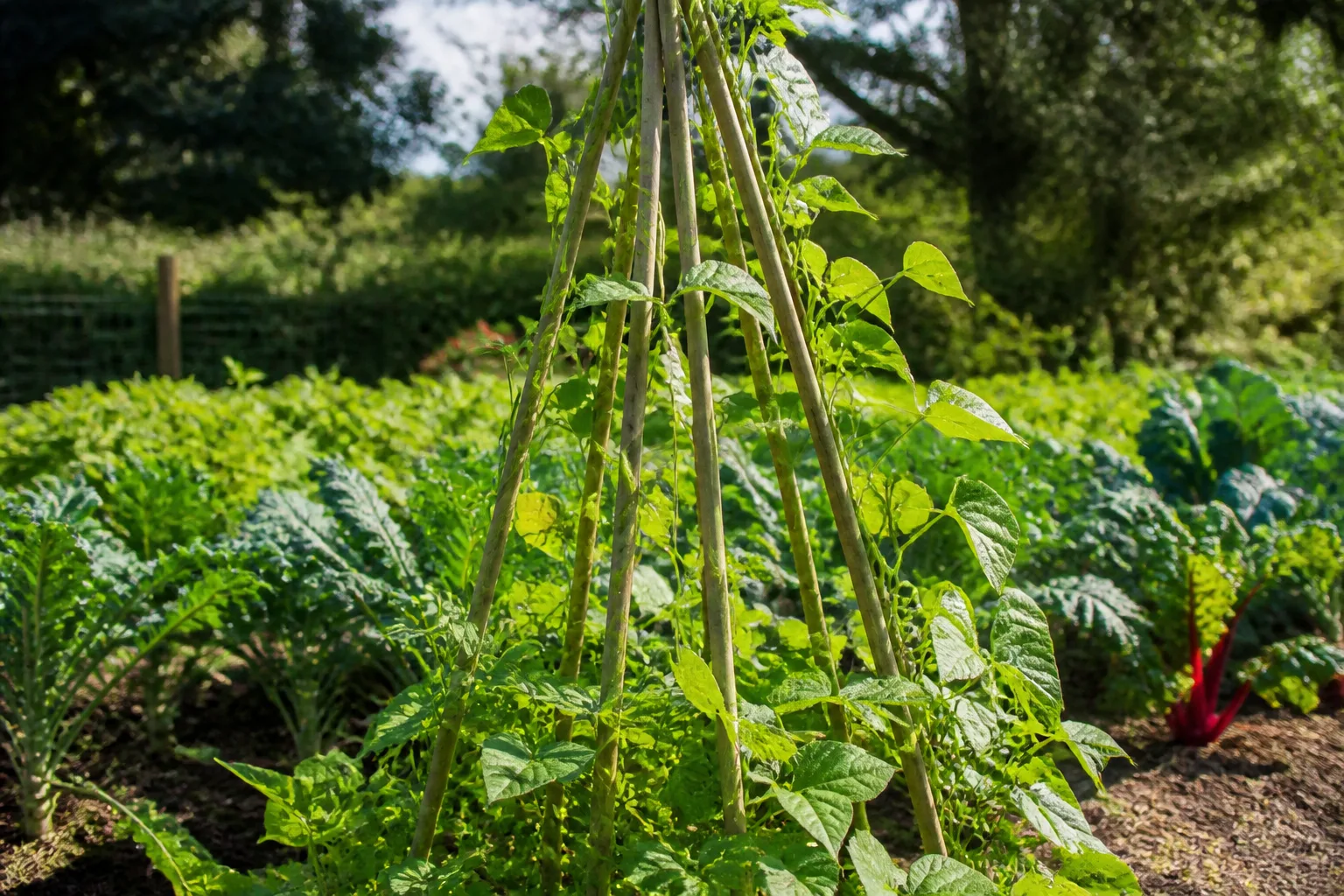
Choose a sturdy, climbable structure
For a privacy panel, use a trellis with openings the young stems can find and a structure that will not bow under mature growth. For a teepee, anchor the legs and leave enough space between poles for the vine to wind upward. For a fence, check that the mesh is attached firmly and that you can reach both sides for pruning or cleanup. A support that is difficult to access becomes a maintenance problem once the vine fills it.
The key is not a particular trellis material or exact height. It is matching the structure to the growing space and the number of plants. If you cannot support the full height safely, use fewer plants and pinch or trim the leaders before they reach the top. Do not plant a fast-growing vine first and hope to improvise a support later.
Choose the Site, Soil, and Climate
Give hyacinth bean a sunny position with a minimum of about six hours of direct light. More sun usually means more flowers and pods; the vine can survive some shade but may respond with leaves and stems rather than the bloom display you expected. In a very hot region, good airflow helps the foliage dry after rain. Do not tuck it into a still corner between a wall and dense shrubs simply because the spot is warm.
The soil should drain after watering while holding enough moisture to keep the root zone from drying quickly. Loam enriched with mature compost is a useful starting point. Sandy soil may need added organic matter and more frequent checks during hot weather; heavy clay may need a raised bed or another site if water stands around roots. Do not assume that compost fixes poor drainage. Improving the soil structure and choosing a location that drains are more important than repeatedly adding fertilizer.
Hyacinth bean tolerates heat and humidity better than cold, but it still needs water during active growth. Arkansas Extension calls it a hot-weather plant and recommends full sun and rich, well-drained soil. NC State Extension likewise lists good drainage and full sun. Those conditions matter together: damp soil is useful; permanently saturated soil is not. If the bed stays wet for days after rain, move the planting or grow it in a raised bed rather than watering by a fixed calendar.
When to Plant Purple Hyacinth Bean
Wait until your local frost danger has passed and the soil has warmed. The calendar date differs by region, so use your area’s last-frost estimate and the actual forecast rather than a national planting date. A late cold snap can injure seedlings even when afternoons feel mild. For direct sowing, a consistently warm bed is more useful than a precise air-temperature threshold; cold, wet soil delays germination and encourages seed rot.
In a long, warm season, direct sowing is usually the simplest route. In a short season, start seeds indoors a few weeks before the last expected frost so the seedlings have a head start, then harden them off gradually. Do not start them too early: the vine grows quickly, and a root-bound indoor plant can become tangled before outdoor conditions are safe. Better Homes & Gardens recommends beginning indoors shortly before the expected last spring frost and transplanting after the risk has passed. Better Homes & Gardens
Use your first expected frost in fall as a second planning marker. If summer is short, sow as early as conditions safely allow and avoid delaying until late spring just because the bed is convenient. A seed planted weeks late may still grow vigorously but have too little warm weather left to flower before frost. If your season is very short, start indoors, choose the warmest sunny site, and accept that the vine may be more foliage than flowers in its first year.
Grow It From Seed
Seeds are large and usually easy to handle. Soaking them for a few hours or overnight can soften the seed coat and may help water enter more quickly; it is a convenience, not a guarantee. Discard seed that is soft, moldy, or damaged. Use clean pots and fresh seed-starting mix for indoor sowing rather than garden soil, which can compact in a small container.
Plant each seed roughly half an inch to an inch deep, following the seed packet if it gives a different depth. Keep the mix moist but not waterlogged and warm. Germination can take about a week or two, sometimes longer under cool conditions. Once seedlings emerge, give them bright light so they do not stretch. A small stake or a clear path to the trellis helps direct the first twining stem without forcing it around a sharp wire.
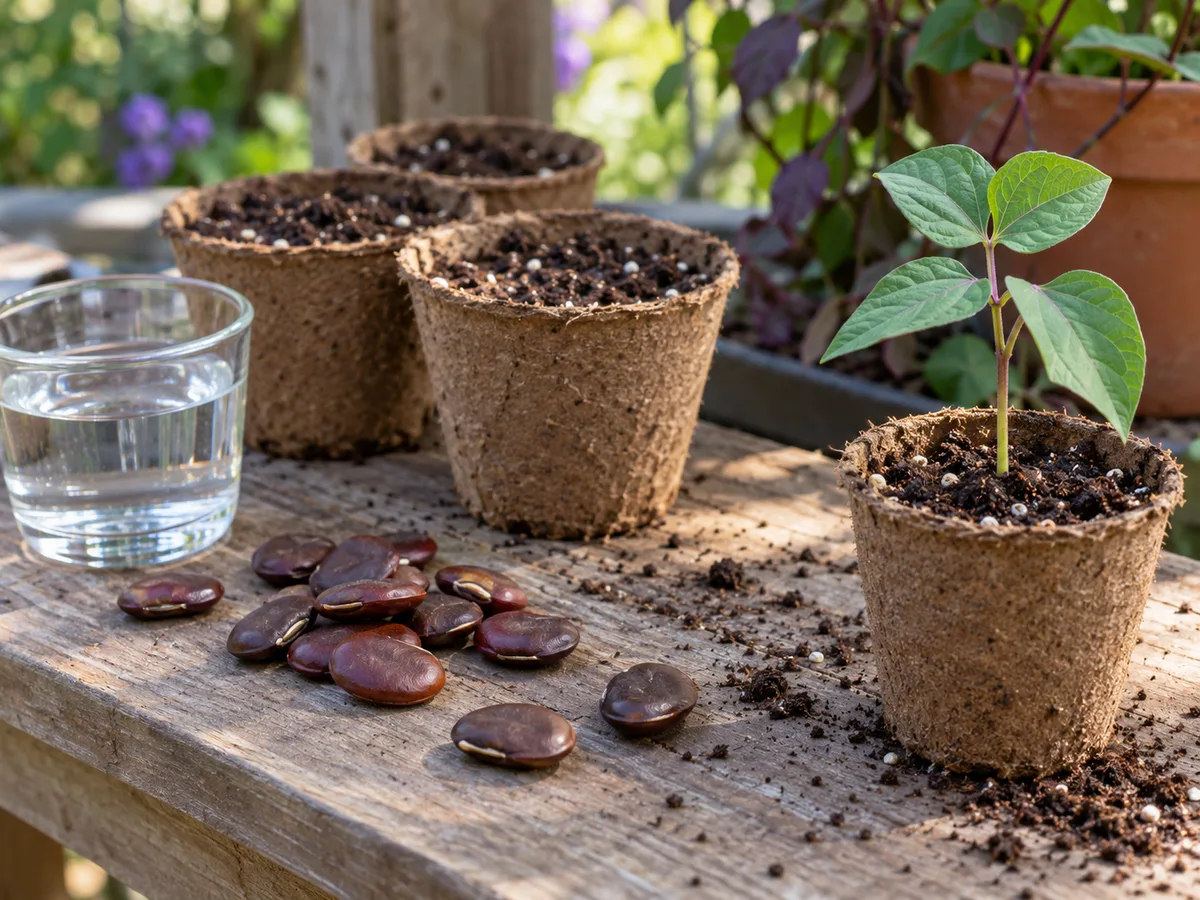
Direct sowing or starting indoors
For direct sowing, place the seed near the support and water the spot gently. Sow more than one seed only if you intend to thin the seedlings; leaving a crowded clump creates extra competition and traps moisture in the foliage. Once plants establish, thin to the spacing recommended on the packet or leave enough room for each vine to spread along its own section of support. If the packet is missing, use a few feet between plants as a conservative starting point for a tall screen and adjust to the trellis width.
For indoor sowing, use individual pots deep enough to hold a young root system and transplant while the seedling is still manageable. Harden off over about a week by gradually increasing time outdoors in sheltered conditions. Plant at the same depth as the pot and water it in. Avoid teasing apart intertwined seedlings or pulling a vine by its stem. If roots have filled the container, loosen the outermost circling roots gently and transplant promptly rather than letting the plant wait another week.
Water for Growth Without Waterlogging
Keep the root zone evenly moist while the plant is establishing, then water deeply when the upper soil begins to dry. A deep soak encourages roots to explore the bed; a daily sprinkle may wet the surface while leaving the deeper root zone dry. Check with a finger or small trowel near the plant rather than deciding from the leaf surface alone. Containers may need water more often than an in-ground bed, especially in hot, windy weather.
Wilt does not always mean the vine needs more water. If leaves droop in afternoon heat but recover in the evening, check the soil before adding water. If the soil is still wet, extra irrigation can make roots short of oxygen and increase disease risk. If the top few inches are dry and the plant remains limp, water slowly at the base and recheck later. A consistent mulch layer can reduce evaporation, but keep mulch from pressing against the stem.
Rainfall changes the schedule. During a dry stretch, inspect the root zone every day or two until you learn how quickly it dries. After a soaking rain, skip irrigation even if the normal watering day arrives. The goal is moist, aerated soil—not a permanently wet bed. Good drainage and steady moisture are more reliable than alternating drought stress with heavy flooding.
Fertilize Lightly and Avoid Excess Nitrogen
Hyacinth bean is a legume and can form root nodules with nitrogen-fixing bacteria. Once that partnership is established, a routine high-nitrogen feed is often unnecessary. Too much readily available nitrogen can push lush leaves and long stems at the expense of flowers, especially when the plant also receives less sun than it needs. BHG and Gardenia both note the legume’s nitrogen-fixing habit; this is a reason to avoid automatic heavy feeding rather than a promise that every garden soil needs no fertility.
Start with soil in reasonable condition and mix in mature compost if it is low in organic matter. If you use a fertilizer, follow the label and begin conservatively. Do not repeatedly add a bloom booster or phosphorus simply because flowers are late; excess phosphorus can build up in soil and is not a substitute for sunlight or a long enough season. A soil test is the better next step if growth is weak or the soil has a history of repeated fertilizer use.
The visual diagnosis is useful. A vigorous vine with very dark, abundant foliage and few flowers suggests checking shade, sowing date, and nitrogen before adding more nutrients. A small, pale plant may need a different diagnosis, such as poor drainage, cold soil, damaged roots, or a nutrient problem. Treat fertilizer as one possible factor, not the default fix for every slow plant.
Train and Prune a Fast-Growing Vine
Guide the young stem toward the support while it is flexible. Once it begins twining, check that it is climbing where you want rather than looping through nearby plants, gutters, or electrical equipment. Loosely tie only if needed, using soft plant ties and leaving room for stem expansion. Do not cinch wire or string tightly around a growing stem.
Prune for access and containment, not because every vine needs routine shaping. If the leader reaches the top of the support, trim it back to a side shoot or shorten it enough to keep growth within the structure. You can remove damaged or crowded stems and redirect healthy runners before they become woody and tangled. Make cuts with clean pruners and avoid stripping away so much foliage that you remove most of the plant’s ability to support flowers and pods.
Deadheading is optional. If you want the purple pods, leave at least some flowers in place; each pod follows a bloom. If you want the vine to keep flowering and do not need seed, remove spent flower clusters only when they look untidy, but do not expect deadheading to fix a shaded or overfed plant. A midseason hard cut is risky in a short season because the vine may not have enough warm days left to rebuild and bloom. It is more sensible to prune lightly and early than to cut a mature vine to the ground.
Read the Flowers and Pods
The pea-like flowers appear in clusters during warm weather, commonly from summer into fall. Bloom timing depends on the planting date, sun, warmth, and cultivar. After pollination, the flowers give way to flattened pods that often turn glossy purple as they develop. White-flowered selections may produce green pods, so pod color is not a reliable way to confirm the identity of every variety. Arkansas Extension notes that first pods can take roughly 90 days from planting in favorable conditions; use that as an estimate, not a countdown that overrides the plant’s growth or local weather. University of Arkansas Cooperative Extension
For an ornamental display, leave the pods on the vine while they are bright and glossy. As the pods mature, they lose some shine, dry, and eventually split to release seeds. If you are saving seed, wait for pods to dry on the plant when weather permits, then collect them before they shatter. Finish drying the pods in a dry, airy place and store fully dry seeds in a labeled envelope in a cool, dry location. Keep saved seeds separate from food and out of reach of children and animals.
The bloom-to-pod cycle is useful for troubleshooting. Flowers without pods may reflect poor pollination or hot, stressful weather; a vine with no flowers points more strongly to shade, excess nitrogen, late sowing, or a season that is not warm or long enough. Do not assume every flower must become a pod. If flowers are present and the vine looks healthy, give it time and keep the soil evenly moist rather than changing several care practices at once.
Diagnose a Vine That Will Not Bloom
Start with sunlight. Count direct-sun hours where the leaves grow, not where you stood while looking at the bed. If the vine receives only a few hours, it can make leaves without producing the bloom show you expected. For a future season, move the support to a brighter spot; transplanting a large established vine is usually more disruptive than starting fresh in a better location.
Next check the calendar. A seed sown late or a cool spring can push flowering toward the end of the season. The vine may be healthy but simply not mature enough before fall frost. A warm, sheltered site and earlier sowing after frost risk passes can help next year. Avoid planting too early into cold soil, because a seed that rots or stalls does not gain a useful head start.
Then assess nitrogen and root conditions. A dark green vine with long, soft growth and few blooms may have received too much nitrogen. Stop feeding, and do not add phosphorus unless a soil test supports that need. If growth is stunted or leaves yellow, check drainage and moisture; root stress will not be solved by a bloom fertilizer. Also inspect whether the support is crowded by neighboring plants that shade the vine. Correct the most likely cause first, then give the plant time to respond.
Manage Pests and Leaf Disease
Hyacinth bean is generally vigorous, but inspect it regularly rather than assuming it is pest-free. Japanese beetles may chew leaves and flowers. Long-tailed skipper caterpillars use lablab and related plants as hosts, and some leaf loss is part of supporting that wildlife. If damage is minor and the vine still has healthy foliage, leaving the caterpillars is a reasonable choice. If you need to reduce a concentrated pest problem, identify the insect first and use the least disruptive method that fits the damage; avoid treating flowers indiscriminately when pollinators are active.
Leaf spots, rust, or other fungal problems are more likely when foliage stays wet and crowded. Oklahoma State Extension lists leaf spot susceptibility, and NC State Extension identifies the plant as one that can be affected by disease. Improve airflow by thinning crowded growth, water near the soil instead of repeatedly wetting leaves, and remove badly affected material. Do not compost diseased foliage unless your local compost system reliably handles plant disease. Clean pruners between plants when disease is present.
Avoid diagnosing every yellow or spotted leaf as a fungal infection. Older leaves naturally age; drought, waterlogging, nutrient imbalance, and insect feeding can look different but overlap. Check the pattern: whether spots are spreading, whether new growth is affected, and whether the soil is wet or dry. If a problem is moving quickly through the vine, take a clear close-up and ask your local Extension office for identification before applying a pesticide or fungicide.
Grow It in a Container and Plan for Winter
A container works if you can give the vine enough root room, full sun, drainage holes, and a support that is anchored independently or securely to the pot. Use a heavy, wide container so the mature vine does not pull it over in wind. A small hanging basket is the wrong form for a plant that wants to climb many feet. In a pot, the root zone dries faster, so check moisture more often and water thoroughly until excess drains from the base.
Container growing can also limit vigor. That may be useful on a patio where a full-size vine would be too large, but do not expect a restricted root system to cover a tall arbor as quickly as a garden-bed plant. Set the trellis at planting time and keep the pot where the vine has a clear path up. If you are renting or growing on a balcony, confirm that the support can be secured safely and that the foliage will not block a neighbor’s light or access.
In frost-free climates, lablab may behave as a tender perennial, though local winter wetness and cold snaps matter as much as the zone label. In colder regions, treat it as an annual, let frost finish the vine, collect any seed you want to save, and remove the rest. Bringing a large vine indoors is rarely practical, and an unheated garage or porch can still expose it to damaging cold. Start again from seed when spring conditions are safe.
Choose a Purple or White-Flowered Cultivar
Seed packets may simply say “hyacinth bean,” or they may name a selection. ‘Ruby Moon’ is commonly grown for purple stems, flowers, and pods. ‘Alba’ is a white-flowered form, while ‘Silver Moon’ is sold for white blooms and greener pods. NC State Extension also lists ‘Giganteus’ for large tropical-looking foliage and ‘Rudy Ruby’ for dark burgundy leaves. NC State Extension Selection names and availability can vary among suppliers, so compare the exact packet description rather than relying only on a catalog photo.
Choose by the feature you want to see. For the classic purple display, look for a named purple selection or a seed packet that specifies purple flowers and pods. For a lighter fence or a color contrast, a white-flowered form may suit better. If the seed packet is open-pollinated and you save seed, the next generation may not match every trait perfectly; keep records of the cultivar and avoid mixing seeds if you want to preserve a particular color.
Cultivar differences do not change the basic care plan. All need warm conditions, sun, support, and good drainage. A named selection is not automatically compact, safe to eat, or adapted to your local season. Check the seed supplier’s instructions, especially for days to bloom and mature size, and leave enough room for a vigorous vine even when the packet does not state a precise height.
Understand Seed Safety and Edible Use
The name “bean” can invite an unsafe assumption that every pod is ready for the table. NC State Extension identifies mature dried seeds as containing cyanogenic glycosides and notes that eating a large quantity can cause serious symptoms. It describes young, immature pods as edible when cooked and mature dried seeds as edible only after thorough boiling with repeated water changes. The University of Arkansas Extension likewise warns about mature dried seeds and says preparation involves boiling in two changes of water. These are not instructions for casual tasting; do not eat raw seeds or improvise a preparation method from ornamental gardening advice. NC State Extension University of Arkansas Cooperative Extension
For most home gardeners, the safest and simplest choice is to grow the vine ornamentally and not eat it. If you intend to cook lablab as a traditional food, use a correctly identified food crop and a species-specific preparation method from a reliable food or agricultural authority. Keep uncooked seed away from children and pets, and do not assume that a purple pod is mature, immature, or safe based on color alone. If someone or an animal eats raw seeds, contact poison control or a veterinarian for advice rather than waiting for symptoms.
Source descriptions differ in how they summarize edible parts, so the distinction matters: young shoots, leaves, or pods may be eaten in established cuisines, while raw mature seed is the clear hazard flagged by extension references. Cultivar, maturity, quantity, and preparation all affect risk. This article does not provide a recipe because the required preparation is more specific than a garden-care guide can safely reduce to a one-line cooking tip.
End the Season and Limit Volunteer Seedlings
If you want seed, leave several healthy pods to dry and collect them before they split. If you do not want volunteers, remove the pods while they are still attached and before they turn brittle. A single plant can produce many seeds, and dropped pods may leave seedlings where you do not want them in a mild climate. Pull young volunteers while the soil is damp and before they twine into nearby plants.
After frost, cut the vine at the base and remove the dead growth from the trellis in sections. Do not yank the entire vine downward from a tall support; it may pull on fasteners or damage the structure. If seed saving is your goal, label the dry seed with the cultivar and year. If disease was a problem, discard affected material according to local guidance rather than saving seed from a stressed or uncertain plant.
This annual cleanup also gives you a chance to inspect the trellis and decide whether it needs repair or a different location next spring. Remove any remaining seed pods before they drop, especially if the vine was grown near a vegetable garden, children’s play area, or pet run. The best reset is simple: clear the support, store only the seeds you intend to sow, and begin again after the next frost-free window.
Conclusion
Purple hyacinth bean is easiest to manage when you plan for its mature size before the seed goes in the ground. Give it a sunny, warm site, a sturdy structure it can twine around, and soil that stays moist without becoming soggy. Direct sow after frost in a long season or start a small number of seedlings indoors shortly before spring warms, then guide the young vines before they tangle.
If the plant grows leaves but not flowers, check light, planting date, and excess nitrogen before changing fertilizer. Let glossy pods remain for ornament or collect dry seed before it shatters, and handle mature seeds with care because raw seed can be toxic. With those choices made early, the vine can provide late-season color and vertical cover without becoming an unmanageable surprise.



