Cherry Laurel Care: Is This Fast Hedge Right for You?
Learn how to grow cherry laurel, choose a cultivar, plant a hedge at the right spacing, water through establishment, and prune without leaving ragged leaves.
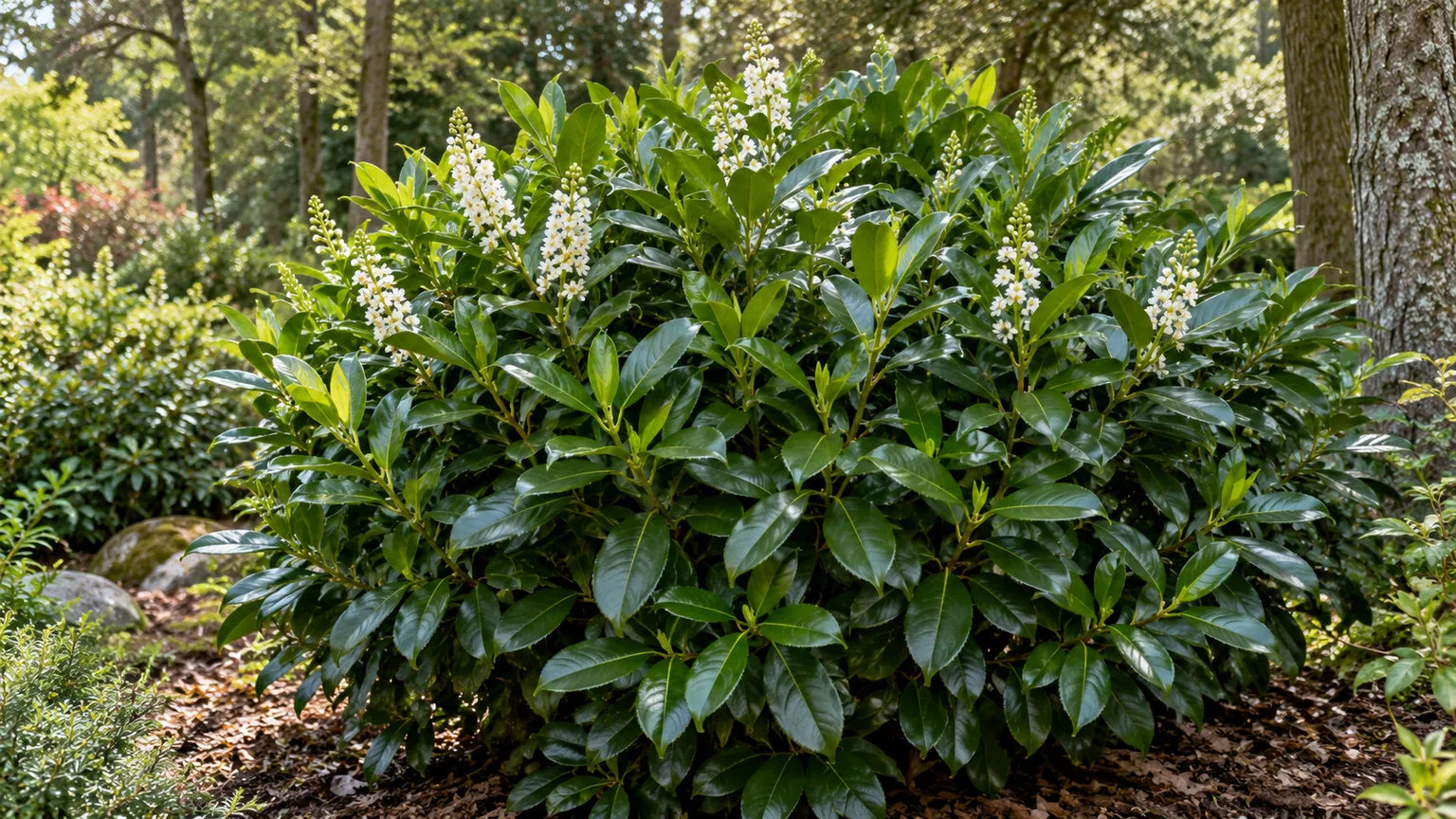
Cherry laurel (Prunus laurocerasus) is useful when you need a broadleaf evergreen screen that tolerates shade and responds to pruning. Its glossy leaves, spring flowers, and dense habit can make a quick privacy hedge, but the same vigor can turn a small planting strip into a constant trimming job. Before buying, measure the space for the shrub you will have at maturity, not the pot on the nursery bench.
The species can reach roughly 10 to 20 feet tall and spread broadly; under favorable conditions, plants may grow larger. A hedge can be kept smaller, but only with recurring pruning and enough room to work around it. Cherry laurel is a good fit for a roomy boundary where year-round cover matters. It is a poor fit for a narrow bed beside a path, foundation, or property line if you want a low-maintenance plant that will stay compact on its own. (NC State Extension Plant Toolbox; Oregon State University Landscape Plants)
Before You Plant, Check the Mature Size and Regional Fit
Start with three questions: How tall should the screen be? How much width can it occupy? And is the plant recommended in your region? Cherry laurel’s mature size varies with cultivar and growing conditions, but it is generally a large, spreading shrub or small tree rather than a naturally narrow column. The Royal Horticultural Society lists the species at about 4 to 8 meters tall with a spread exceeding 8 meters, while Oregon State University describes a vigorous, wide-spreading plant around 10 to 20 feet tall. These are not competing promises; they show why a plant tag or local nursery’s cultivar-specific size is more useful than a single universal number. (RHS plant profile; Oregon State University Landscape Plants)
Also consider what happens beyond the hedge. The shrub’s large leaves can shade ground beneath it, and established roots compete with nearby plants for water. Birds eat the dark fruit and can disperse seeds into nearby natural areas. Cherry laurel is treated differently across regions: it has escaped cultivation in parts of the Pacific Northwest and is listed on Washington’s monitor list, which means the state is tracking it rather than classifying it as a listed noxious weed. If you live near woodland, a park, or other sensitive habitat, check your local invasive-plant guidance before planting. (NC State Extension Plant Toolbox; Washington State Noxious Weed Control Board)
Identify Cherry Laurel—and the Laurel It Is Not
Cherry laurel has thick, glossy, oval to oblong evergreen leaves and upright clusters of small white flowers in spring, followed by cherry-like fruit that changes from red to dark purple or black. The plant belongs to the rose family, Rosaceae, despite “laurel” in its common name. Its leaves often have small glands near the base on the underside, a useful identification feature described by NC State Extension. (NC State Extension Plant Toolbox)
Do not confuse it with true bay laurel (Laurus nobilis), whose leaves are used in cooking. Cherry laurel is an ornamental Prunus, and its foliage, stems, and seeds contain cyanogenic compounds. “English laurel” and “common laurel” are other names for cherry laurel, while “Carolina laurelcherry” usually refers to a different species, Prunus caroliniana. Check the botanical name on the nursery label; common names are not precise enough when plant identity affects both mature size and safety.
Choose a Cultivar That Fits the Finished Hedge
Choose the plant by its mature height and spread, not only by its hardiness or how quickly it fills gaps. A vigorous cultivar can be useful when you have a broad boundary to screen, but its fast growth means more frequent trimming. If you need a lower hedge, ground cover, or a small specimen, select a named compact form and give it the full width listed on a reliable plant label.
Compact Cultivars Still Need Room
‘Otto Luyken’ is a compact, spreading selection with relatively narrow leaves. NC State lists it at about 3 to 4 feet tall and 6 to 8 feet wide, so it works better as a low, broad screen than as a skinny upright hedge. ‘Schipkaensis’ (often sold as Skip or Schip laurel) has a more upright, goblet-shaped habit; published size estimates vary by selection and climate, so check the stock you are buying rather than assuming every plant sold under that name will stop at the same height. (NC State Extension Plant Toolbox; Oregon State University Landscape Plants)
Other cultivars such as ‘Zabeliana’ have narrower leaves and a spreading habit. A cultivar described as dwarf can still spread several feet, and “compact” does not mean no pruning. For a small yard, draw the mature width on the ground before planting. If that footprint crosses a path, fence, or neighboring bed, choose a genuinely smaller shrub instead of planning to shear the laurel into a shape it will constantly outgrow.
Reserve Vigorous Forms for Wider Sites
The species and large forms such as ‘Rotundifolia’ make lush, tall screens, but they need a wide planting bed and an owner willing to trim them. A dense row can block wind and views effectively; it can also shade the planting area and create a dry rain shadow close to the hedge. Keep space on both sides if possible so you can prune without leaning over a fence or cutting from a neighbor’s property.
For a formal screen, buy plants of similar size and cultivar so growth stays reasonably even. If you want flowers and fruit for wildlife, avoid clipping every surface repeatedly through the growing season. A more natural, lightly managed shrub will be wider and less geometric, so decide which look matters before you plant.
Match Light, Climate, and Soil to the Shrub
Cherry laurel grows in full sun, partial shade, and even deep shade, which makes it more flexible than many evergreen hedging shrubs. Shade tolerance means it can survive and provide foliage where a sun-loving plant struggles; it does not guarantee the same flowering, fruiting, or compact density. If you have a choice, a spot with sun for part of the day usually gives stronger growth and more spring bloom, while a shaded site is still reasonable for screening. (NC State Extension Plant Toolbox; Gardeners’ World cherry laurel guide)
The species is commonly listed as hardy around USDA Zone 6, but exposure, winter wind, drainage, and cultivar matter near the cold edge of its range. In a cold or windy site, leaves can scorch or brown during winter even when branches survive. Ask a local extension office or reputable nursery how the specific cultivar performs in your area, particularly if the site is exposed or the winter is colder than usual. (Oregon State University Landscape Plants)
Give it moist but well-drained soil. Cherry laurel tolerates a range of textures and pH levels, including clay and alkaline soils, but roots still need oxygen. A low spot that holds water after rain is a poor planting site; improve drainage across the bed or choose another location rather than trying to solve standing water with a gravel layer in the planting hole. On shallow, chalky soil, the RHS notes that foliage may become chlorotic, so yellow leaves should prompt a check of both drainage and soil conditions. (RHS plant profile; NC State Extension Plant Toolbox)
Plant at the Right Depth and Space for the Mature Width
Plant when the soil is workable and not frozen, saturated, or hot and dry. In climates with cold winters, dormant-season planting in fall or early spring gives roots time to establish before heat arrives; container-grown shrubs can be planted in other mild periods if you can keep them watered. Gardening Know How also recommends fall planting and well-drained soil, while local climate determines the safest workable window. (Gardening Know How) Prepare the entire hedge line rather than digging a series of isolated amended holes. Loosen compacted soil across the bed, remove perennial weeds, and check drainage before setting plants.
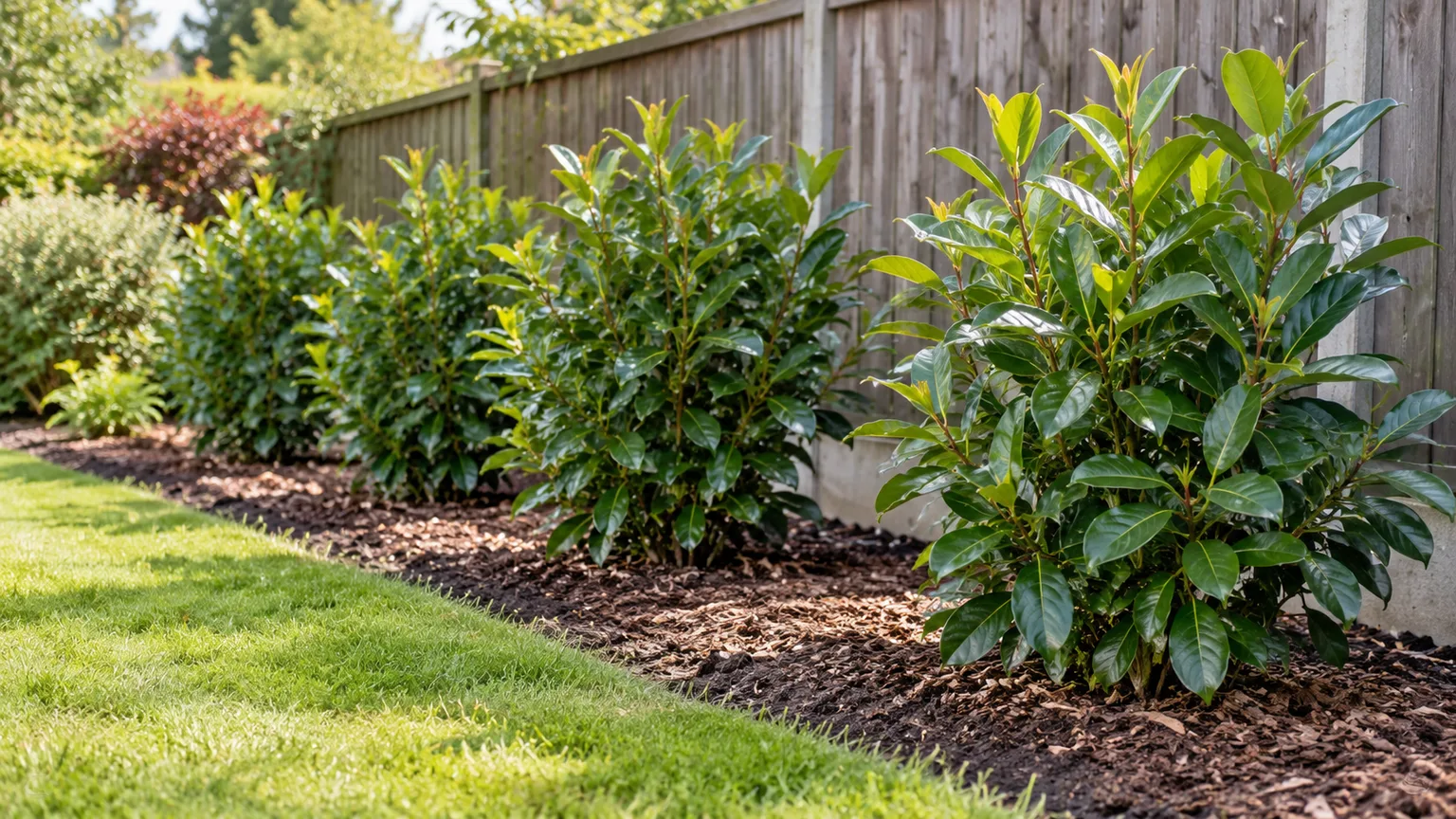
Dig each hole about as deep as the root ball and wider than it. Set the top of the root ball level with the surrounding soil, backfill with the soil you removed, firm gently, and water thoroughly to settle it. Do not bury the stem flare or pile soil against the trunk. Add a few inches of organic mulch to conserve moisture and suppress weeds, keeping it several inches away from the stems so the bark stays dry. Water again if the root ball settles below grade.
Choose One Row or a Staggered Double Row
For a single-row hedge, Gardeners’ World gives 60 to 90 centimeters (about 2 to 3 feet) as a starting spacing range. Use the wider end for larger plants or a looser screen, and check the cultivar’s mature spread before choosing a closer interval. Planting too tightly can make a hedge look full sooner, but it also increases root competition, reduces airflow, and leaves more pruning work once the plants knit together. (Gardeners’ World cherry laurel guide)
A staggered double row can fill a broad screen, but it consumes more space and makes access to the center difficult. Gardeners’ World describes spacing the rows about 45 to 60 centimeters apart with plants staggered; treat that as a layout for a roomy hedge, not a trick for squeezing a large shrub into a narrow border. For most home gardens, a single row with space for mature growth is easier to maintain.
Before planting against a fence, leave enough room to reach the back of the hedge with hand pruners. Measure from the plant line to paths, drains, foundations, and property boundaries. Gardeners’ World advises leaving around 1 to 1.5 meters from a fence for access when growing a mature hedge; the exact distance depends on cultivar and desired width. (Gardeners’ World cherry laurel guide)
Water Through Establishment, Then Follow the Soil
Water new plants deeply after planting and keep the root ball from drying while roots move into surrounding soil. During the first growing season, check the soil every few days in warm weather and water when the upper few inches begin to dry; sandy soil and windy sites dry faster than clay. The point is not to keep the bed constantly wet, but to prevent repeated drought stress before the hedge is established.
After the first year, established plants usually need less supplemental water, but a long dry spell can still stress a broadleaf evergreen. Water the root zone slowly so moisture penetrates below the surface instead of running off. If leaves droop or turn dull during a dry period, check soil several inches down before watering; if the soil is already wet, more water may worsen root stress.
Mulch helps, but it cannot fix poor drainage or a crowded root zone. Keep mulch replenished in a shallow layer and avoid piling it against stems. The hedge’s roots can draw moisture from nearby beds, so plants immediately in front of a mature screen may need more frequent checks than plants in an open border.
Fertilize Only When Growth Shows a Need
Do not fertilize cherry laurel automatically every spring. It tolerates ordinary garden soils and NC State Extension notes that it is intolerant of heavy fertilization. If the shrub has normal leaf color and makes healthy shoots, mulch with compost and leave it alone; extra nitrogen can push soft, fast growth that needs more pruning. (NC State Extension Plant Toolbox)
If growth is weak, first inspect drainage, root competition, light, and the planting depth. A soil test is more useful than guessing at a nutrient problem, especially where the soil is alkaline or shallow. Apply a fertilizer only if a soil test or local extension recommendation points to a deficiency, and follow the product label for the amount and timing. Do not feed a shrub whose roots are sitting in water or whose leaves are yellow from winter exposure; fertilizer will not correct those problems.
Prune for Dense Growth Without a Ragged Surface
Prune to control size, remove dead or damaged wood, and keep light reaching the lower branches. Cherry laurel can take pruning, but a hedge that is repeatedly clipped only across its outer surface can become a green shell over a thin, shaded interior. Start shaping while the plants are young: encourage low branching and keep the hedge slightly narrower at the top than at the base so sunlight reaches the bottom.
Trim After Flowering and Keep the Base Wider
The main trim usually belongs in late spring or early summer, after flowering. The RHS places cherry laurel in pruning group 8 and recommends pruning hedges during this window; Gardeners’ World also recommends trimming after bloom. Local bloom time shifts with climate, so use flowering as your cue rather than a fixed date. Check carefully for active bird nests before cutting and postpone work where birds are nesting. (RHS plant profile; Gardeners’ World cherry laurel guide)
For a neat hedge, use hand pruners to shorten selected shoots just above a leaf or side branch. The large leaves show cut edges, so a powered trimmer can leave many half-cut leaves that brown and make the hedge look ragged until new growth covers them. For a tall hedge, a trimmer may be practical for the broad outline, but finish visible surfaces with hand pruners if appearance matters. Wear gloves and eye protection, keep blades sharp, and clean them between plants if you have been removing diseased growth.
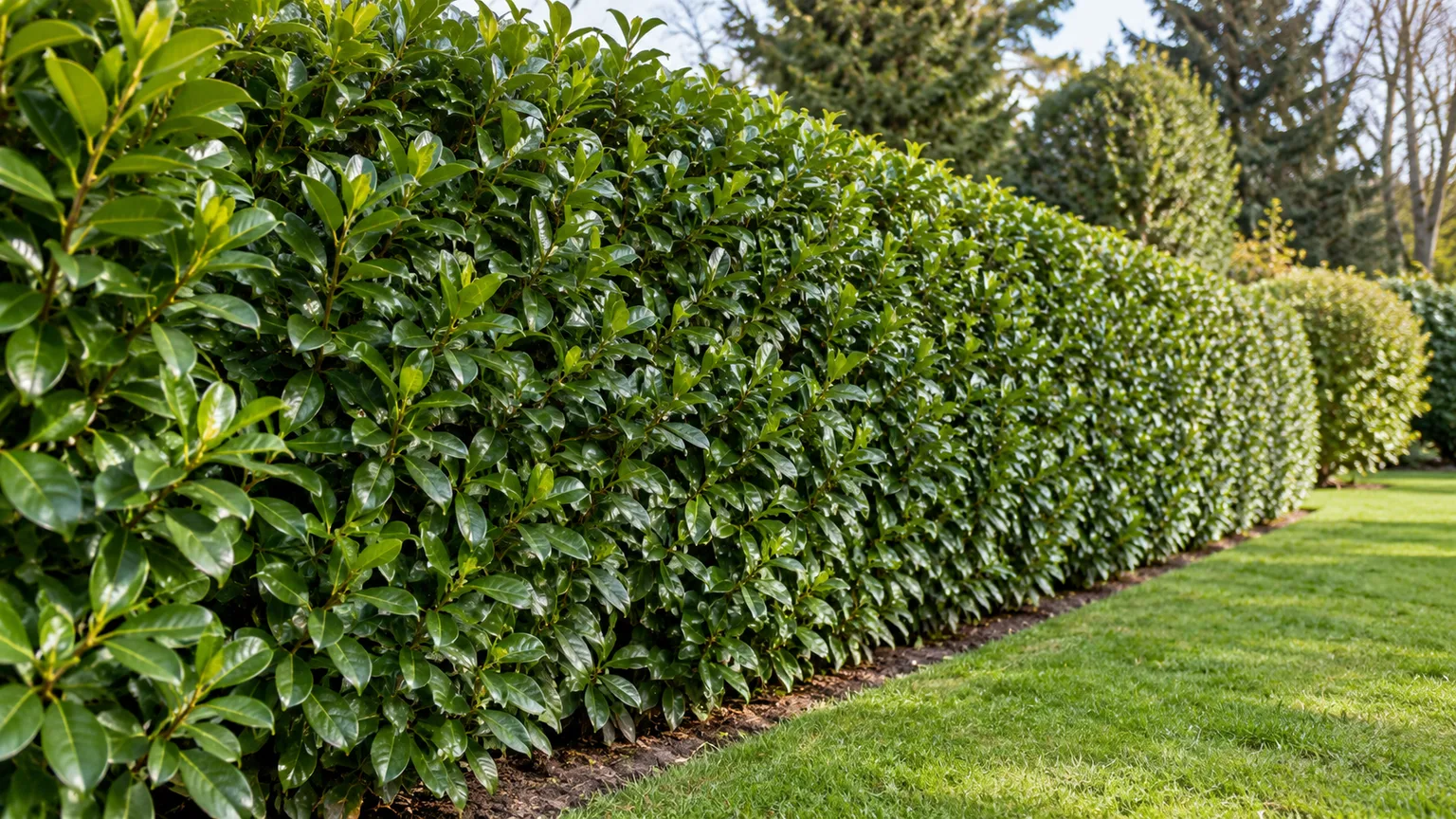
Make the top level or gently rounded, and keep the base wider than the top. A hedge that is broader near the ground is less likely to lose its lower foliage in shade. Remove dead, crossing, or badly placed branches at their point of origin rather than clipping every shoot to the same line. If a mature plant is badly overgrown, it may resprout after hard pruning, but renovation can leave it bare for a season and recovery is not guaranteed. Reduce height or width in stages when possible, and do not cut into old wood unless you accept that risk. (NC State Extension Plant Toolbox)
Propagate Cherry Laurel From Semi-Ripe Cuttings
Semi-ripe cuttings taken from late summer into autumn are a practical way to make more plants; hardwood cuttings are another option from late autumn through late winter. The RHS lists both methods for cherry laurel. Cuttings are slower than buying nursery plants, and rooting success depends on timing, temperature, moisture, and the condition of the shoot. (RHS plant profile)
Choose a healthy, current-season shoot that has begun to firm but is not fully woody. With clean pruners, take a 4- to 6-inch (10- to 15-centimeter) cutting and remove the leaves from its lower half. Insert the bare lower portion into a small pot of clean, free-draining propagation mix. Water gently, then cover the pot with a clear plastic bag or propagator to maintain humidity while keeping the leaves from touching the cover.
Place the cutting in bright shade, not direct midday sun, and ventilate the cover regularly so the mix stays lightly moist without turning sour. Check for roots by giving the stem a very gentle tug after several weeks; resistance suggests roots are forming, but do not keep disturbing it to check. Once rooted, pot it up and grow it on in a sheltered place until it is sturdy enough for the garden. Keep a new cutting’s label with the parent cultivar name, since a seed-grown plant may not reproduce the same form.
Troubleshoot Yellowing, Holes, and Leaf Drop
Look at the pattern before reaching for a treatment. A few older leaves yellowing and dropping as new growth appears can be normal; broad yellowing across the hedge, sudden leaf drop, or damaged new shoots deserves a closer look. Check whether the whole row is affected or only plants in one low, dry, shaded, or exposed spot. Site patterns often reveal more than a single leaf does.
| What you notice | Likely first check | Practical response |
|---|---|---|
| Yellow leaves with soil that stays wet | Drainage and planting depth | Improve drainage, clear blocked runoff, and avoid adding fertilizer until roots recover |
| Yellow leaves on shallow, chalky soil | Soil conditions and the newest leaves | Test soil and ask local extension whether chlorosis is likely before applying nutrients |
| Round holes or brown spots that later fall out | Shot-hole or other leaf disease | Remove heavily affected fallen leaves, improve airflow, and seek local diagnosis if it spreads |
| Brown leaf edges after winter | Wind, cold exposure, or dry soil | Wait for spring growth before removing live branches; water during dry spells when soil is unfrozen |
| A few old leaves drop while new shoots look healthy | Normal seasonal turnover | Monitor new growth rather than treating the plant |
Separate Disease From Drainage and Weather Stress
Cherry laurel can develop shot-hole disease, powdery mildew, and root rot; the RHS also notes other laurel leaf diseases and possible damage from vine weevil or leaf-mining moths. Shot-hole symptoms can resemble chewing: look for spots with discolored edges that dry and drop out, and inspect several leaves before deciding which is responsible. If holes appear without lesions, check for insects and caterpillars on both sides of the leaf. (NC State Extension Plant Toolbox; RHS plant profile)
Persistent yellowing plus wet soil points toward poor drainage or root damage more strongly than fertilizer deficiency. On the other hand, dry, curled leaves after a hot spell can reflect a dry root zone, while winter browning is often concentrated on exposed sides. Correct one likely cause at a time and watch the next flush of growth; old damaged leaves may not recover even when the cause is fixed.
Avoid spraying a product based only on a photo or a vague symptom. If disease is spreading through the hedge, take a fresh sample to a local extension diagnostic service or nursery and follow any pesticide label exactly. Removing fallen infected leaves and improving air movement are sensible first steps, but they will not cure root rot caused by a persistently waterlogged site.
Manage Fruit, Toxicity, and Unwanted Spread
Treat cherry laurel as an ornamental, not an edible hedge. Oregon State University reports cyanogenic glycosides in its leaves, stems, and seeds; damaged or chewed plant tissue can release hydrogen cyanide. NC State Extension classifies it as a plant with high-severity poison characteristics, and the RHS warns that seed kernels are harmful if eaten. Do not taste the berries, use leaves as bay seasoning, or let children, pets, or livestock chew the plant. (Oregon State University Landscape Plants; NC State Extension Plant Toolbox; RHS plant profile)
Wear gloves when pruning, collect fallen fruit and trimmings where animals may browse, and dispose of plant waste according to local green-waste rules. If a person or animal may have eaten part of the plant, contact a poison-control service, veterinarian, or medical professional promptly rather than waiting for symptoms. This is a practical precaution, not a reason to panic over simply having the shrub in a garden.
The fruit is also a route for seed dispersal. In the UK and parts of the Pacific Northwest, cherry laurel can escape ornamental plantings and establish outside gardens; the degree of concern varies by region. If you keep an existing hedge, remove seedlings and monitor nearby woodland edges. If you are planning a new screen in a region where local authorities flag the species, choose a locally suitable alternative instead of relying on pruning alone to stop seed spread. (Gardeners’ World cherry laurel guide; Washington State Noxious Weed Control Board)
Conclusion
Cherry laurel is easiest to manage when you give it enough room before planting. Choose a cultivar by mature spread, use well-drained soil, water deeply while roots establish, and avoid routine heavy feeding. In shade it can still make a useful evergreen screen, but good placement and a hedge that is wider at the base help it stay dense.
Prune after flowering, use hand pruners where clipped leaf edges would show, and check for disease, nesting birds, and local spread concerns before trimming. If the space is tight, the site stays waterlogged, or the plant is discouraged in your region, another shrub will usually be easier than forcing cherry laurel to fit.



