How to Grow Prairie Dropseed: Planting and Care
Grow prairie dropseed with practical advice on planting, watering, seed-starting tradeoffs, division, seasonal care, and choosing the compact ‘Tara’ cultivar.
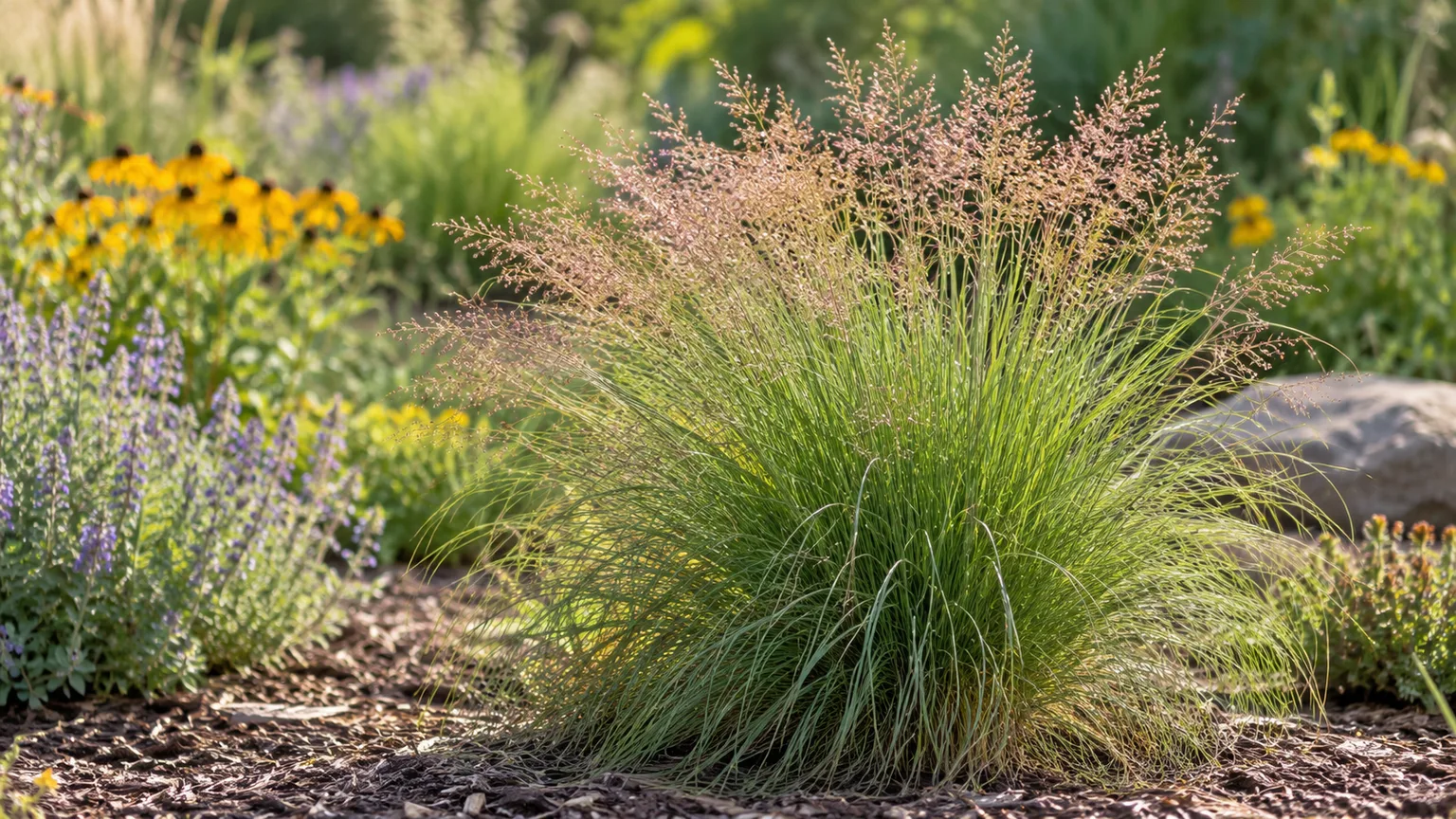
Prairie dropseed (Sporobolus heterolepis) is a warm-season perennial grass that earns its place through shape and texture, not a showy flower display. A mature plant makes a fine-leaved mound roughly 2 to 3 feet tall and wide; in late summer, airy flower stems rise above it, and the foliage shifts toward gold, copper, and bronze as the season cools. The flowers can carry a distinctive scent, often compared with coriander or buttered popcorn, though the fragrance varies and may be faint outdoors. University of Wisconsin–Madison Extension describes its long-lived, fountain-shaped growth and fall color.
The main challenge is patience. Prairie dropseed is slow to establish, especially from seed, and mature clumps form a dense root mass that is difficult to divide. Choose a sunny, draining site, buy plugs if you want a more predictable start, and treat the first year as root-establishment time rather than expecting a finished border by midsummer.
What Prairie Dropseed Looks Like Through the Year
This North American native is a bunchgrass: its blades emerge from a central crown and form a rounded fountain instead of sending out fast-growing runners. That habit keeps an established plant relatively well behaved, but it does not make it quick. The foliage grows actively in warm weather; plants may look unimpressive early in spring, then fill out as soil temperatures rise. Local conditions, cultivar, and the size of the transplant affect the pace.
Flowering usually comes in mid- to late summer, with fine, branched panicles held above the foliage. The flowers are subtle at a distance, so site them where backlighting and movement matter more than a bold block of color. Seeds mature later and drop from the hulls, giving the plant its common name. Sparrows, juncos, and other wildlife may forage on the seeds, but prairie dropseed is wind-pollinated; it is better described as a structural native grass with seed value than as a nectar plant. UW Extension notes that it generally does not self-sow freely in gardens.
In fall the narrow foliage takes on warm tones, and the dry clump can remain upright through winter. Leaving it standing protects that seasonal structure and gives the garden a softer outline when many perennials have disappeared. Cut it back in late winter or early spring, before new leaves begin to emerge.
Choose a Site That Suits Its Roots
Give it sun for a full, flowering mound
Full sun is the most reliable choice. Aim for a spot receiving at least six hours of direct light, particularly in the morning and middle of the day. Prairie dropseed may tolerate light or partial shade, but shade can leave the mound looser and reduce flowering; a nearby tree that leafs out late may still cast deep shade during the grass’s active summer growth.
Watch the site over the season rather than judging it on a bright spring afternoon. If a fence, building, or deciduous tree blocks the summer sun, the plant may survive yet never develop the compact, well-flowered look you expected. In a border, place shorter plants in front only if they will not smother the crown, and avoid planting a fast, spreading groundcover through the clump.
Prioritize drainage over soil richness
Prairie dropseed grows in a range of soils, including clay, provided water does not remain trapped around its crown for long periods. It is often associated with dry or well-drained prairie and rocky sites, but “prairie grass” does not mean it needs a sandy, sterile planting hole. If your soil is heavy, assess how it behaves after rain: occasional moisture is manageable; a low pocket that stays saturated for days is a poor fit.
Do not dig a small gravel-filled pocket into clay and assume that solves drainage. A sharply different texture can hold water at the interface. Instead, choose a naturally higher area, improve the broader bed only when needed, or select a plant adapted to the wet site. Prairie dropseed can tolerate occasional saturation and may work near the upper edge of a rain garden, but it should not be treated as a pond-edge grass. UW Extension documents its tolerance of clay and intermittent saturation while still recommending well-drained soil.
Skip routine soil amendments and fertilizer. A rich, heavily composted planting hole can encourage soft, lush growth that does not match the plant’s compact prairie habit. If the bed is exceptionally poor or compacted, correct the physical problem across the root zone rather than creating a pocket of potting mix, and keep any mulch a few inches away from the crown.
Planting Plugs and Container-Grown Plants
Spring is a convenient planting window because the grass has a full warm season to make roots before winter. Early fall can also work where local frost timing leaves enough time for establishment; in hot-summer climates, avoid setting a small plug into dry soil just before a heat wave. If planting in fall, water the root ball and surrounding soil thoroughly, then keep checking moisture until growth stops.
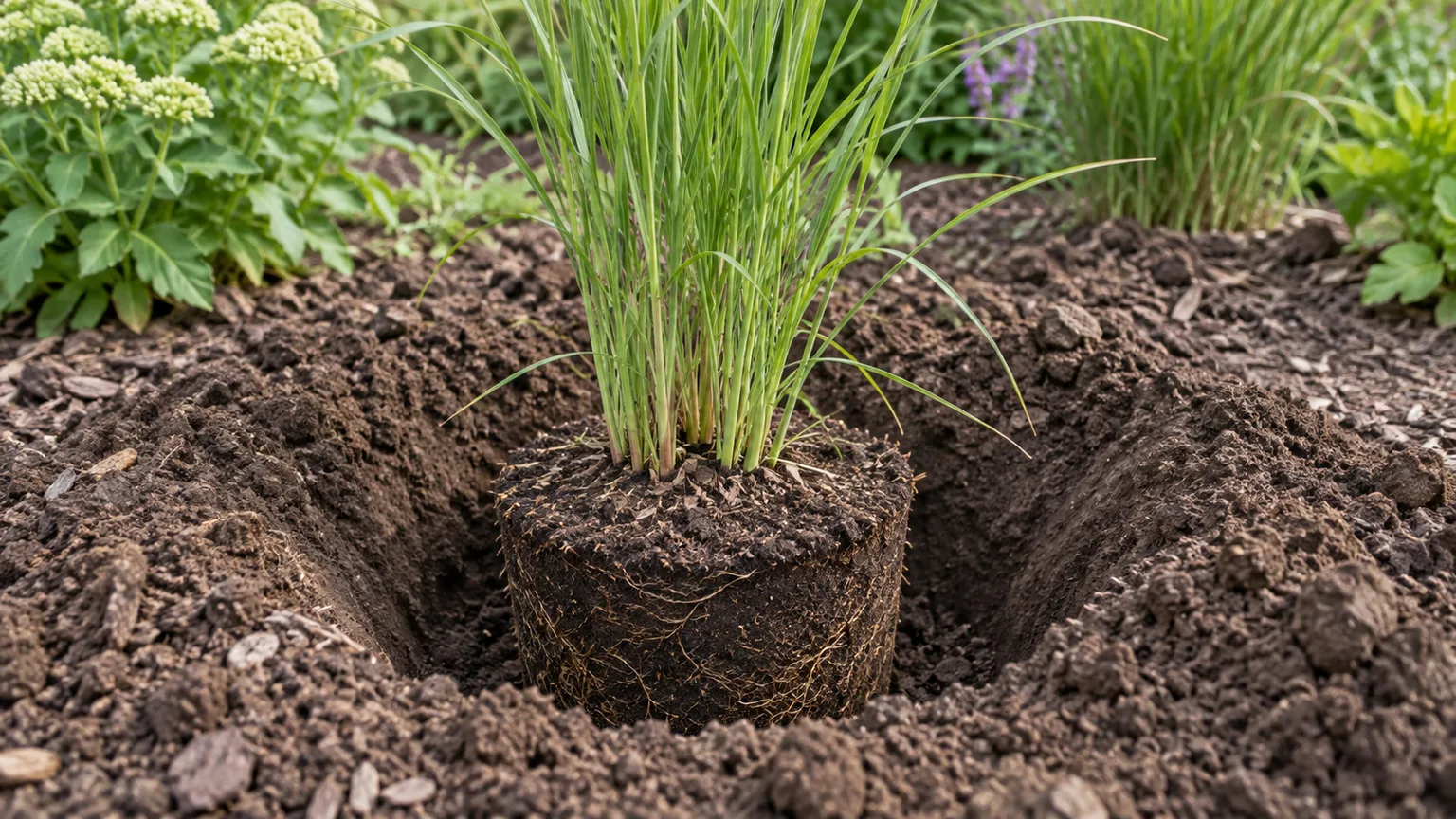
Before planting, remove perennial weeds and loosen compacted ground across the bed. Set the plant so its crown sits level with the surrounding soil, not buried beneath it. Backfill, firm gently to eliminate large air gaps, water slowly, and check that the plug has not sunk. A thick layer of mulch over the crown can obstruct new shoots; use a light, open layer between plants if needed, while leaving the grass base exposed.
Space plants for the effect you want
Read the nursery’s plant label, but plan around the mature footprint rather than the pot size. The species commonly reaches about 2 to 3 feet across. For individual fountain-shaped mounds with visible gaps, start roughly 30 to 36 inches apart on center; closer spacing creates a more continuous matrix sooner, but the plants may merge into each other as they mature. There is no single spacing that suits a formal edge, a meadow, and a slope equally well.
Draw the planting as circles on paper before buying a flat of plugs. For a low border, stagger plants in a loose line and leave room to edge the lawn without slicing through crowns. For a mass planting, repeat a few consistent groups instead of scattering isolated plants; the repeated form reads clearly and makes it easier to weed around young clumps. Wider spacing costs more time before the bed fills, while tighter spacing increases the number of plants and can make future access for division difficult.
Watering and Fertilizer: Less Is Usually Better
Water newly planted dropseed deeply enough to wet the full root ball and the soil just beyond it. During the first growing season, check the bed during dry stretches and water when the root zone begins to dry, rather than following a fixed daily schedule. A small plug in hot, windy weather dries faster than a large container-grown plant, and sandy soil dries faster than clay.
Once established, prairie dropseed is drought tolerant and usually needs supplemental water only during extended dry weather. Water slowly at soil level so moisture reaches the roots; frequent shallow sprinkling keeps the surface damp while encouraging shallow rooting. If the foliage wilts or browns during drought, verify soil moisture before watering: drought stress and root damage from prolonged wetness can look similar from above. Persistently wet soil calls for a drainage or placement correction, not more fertilizer.
Routine fertilizer is unnecessary. A soil test may be useful if the whole bed performs poorly, but do not apply lawn fertilizer to a native-grass border by habit. Excess nitrogen can push foliage growth at the expense of a sturdy, natural shape and may feed neighboring weeds. Keep the first-year goal modest: roots that survive summer and winter are a better measure than maximum top growth.
Growing Prairie Dropseed From Seed
Seed is the least expensive way to raise many plants, but it is not the fastest way to create a finished landscape. Seedlings grow slowly and are vulnerable to weeds and drying before they become established. The Tallgrass Prairie Center’s species production guide explicitly advises against direct seeding for production because seedling development is slow. For a home garden, that makes plugs a more dependable choice when you need a defined number of plants; seed makes sense when you enjoy propagation and can maintain a tray or nursery bed.
Stratification advice differs for good reason
Seed protocols are not perfectly uniform. A current Tallgrass Prairie Center guide recommends four weeks of moist stratification at 35–40°F, then greenhouse sowing about two months before the last frost date; the University of Wisconsin profile describes indoor spring sowing 10–12 weeks before the expected last frost. A U.S. Forest Service review reports that one experiment found strong germination after dry-soil stratification, while other trials found only a small difference between stratified and unstratified seed. These sources describe different experiments and production contexts, not a universal promise for every seed lot.
Use the supplier’s instructions as your starting point because seed age, cleaning, storage, and lot quality differ. If you have enough seed, test a small batch with the prescribed treatment and keep an untreated comparison rather than committing the whole packet to a method that may not suit it. If no protocol is supplied, winter sowing in a protected outdoor container can expose seed to natural seasonal conditions; controlled indoor sowing lets you monitor moisture and temperature. Do not bury seed deeply: follow the source or packet depth, because small seeds need a shallow covering and light contact with the mix.
Raise seedlings until they can compete
Use clean plug trays or small pots filled with a fine, well-draining seed-starting medium. Keep the surface evenly moist, not waterlogged, and provide bright light once seedlings emerge. Prairie dropseed seedlings can be tiny and slow, so label the tray and give them space; they are easy to mistake for weeds or lose among faster-growing native species.
Pot on only when roots hold the plug together, and harden plants gradually before moving them outdoors. Set them in a weed-free nursery row or final bed once frost danger has passed and the ground is workable. Protect young plants from competition with careful hand-weeding and light mulch between plugs, not over their crowns. The U.S. Forest Service’s species review also notes that direct seeding does not establish this species well.
Expect a multi-season project. University guidance puts seed-grown plants at about four years to flowering size, although actual timing depends on growing conditions and whether you started with seed, plugs, or a larger transplant. A plant that is alive but still small in its first season is not necessarily failing. Look for a healthy crown, gradual increase in leaf number, and roots holding the soil before judging its final size.
When and How to Divide a Mature Clump
Division is useful when you want another plant or when an old clump develops a dead or crowded center. It is not a routine annual chore. Prairie dropseed forms dense, fibrous roots, so a mature crown can be surprisingly hard to cut; dividing a small or struggling plant adds stress without solving a real problem. If the plant is healthy and still has a good shape, leave it in place.
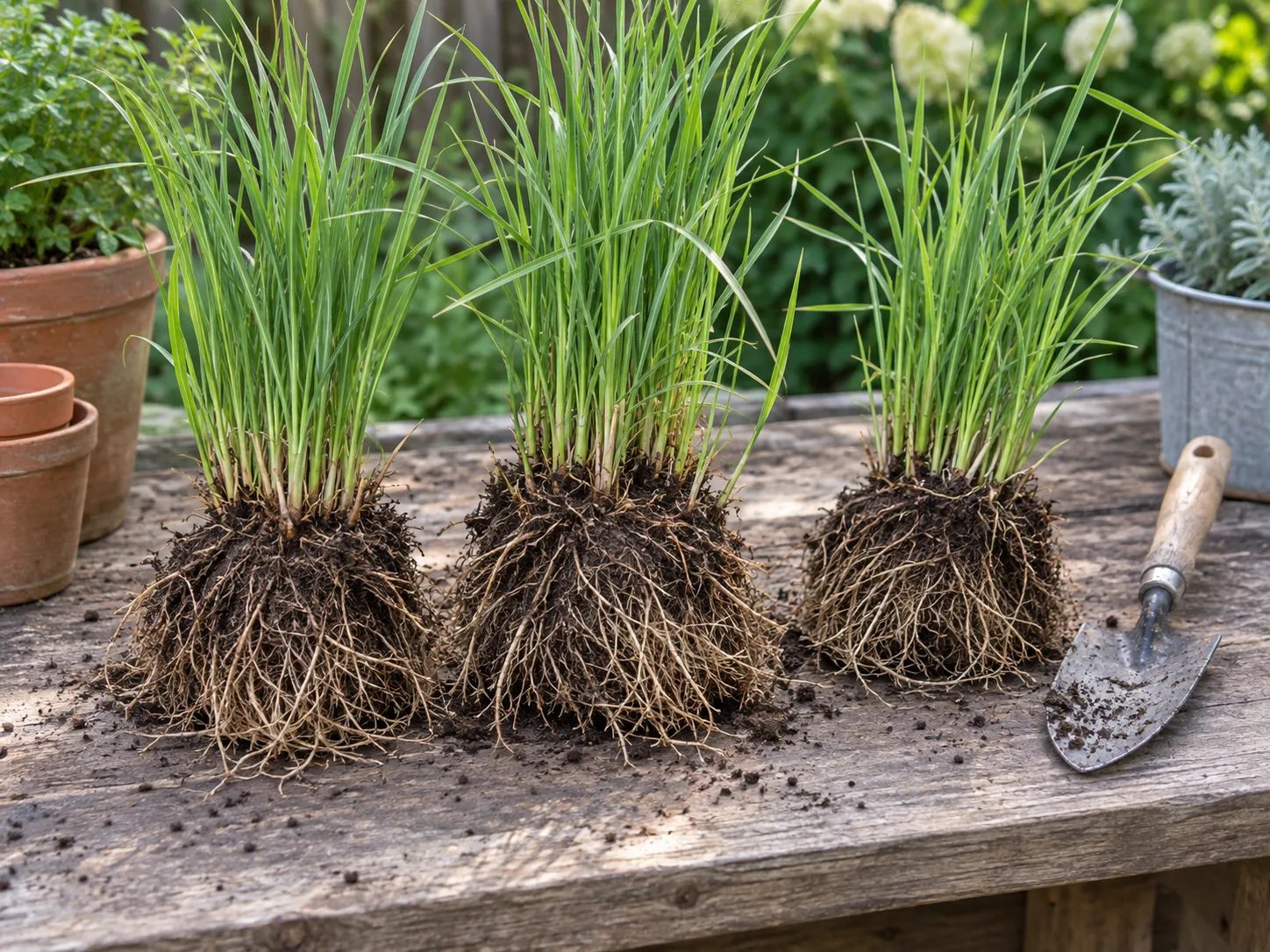
Divide in spring as new growth begins, when you can see where living shoots are emerging. Water the plant the day before if the soil is dry, then dig widely enough to lift as much of the root mass as possible. Use a sharp spade or sturdy knife to split the clump into sections that each have live shoots and a substantial root portion. Discard dead, woody center material rather than replanting it as though it will recover.
Replant divisions promptly at their original depth, firm the soil, and water well. Keep them evenly moist while they reestablish, but do not leave them in saturated ground. Division can set growth back for a season or more; schedule it when you can provide follow-up water and avoid extreme heat. If you cannot get a clean division without hacking the crown into tiny pieces, buying a new plug may be kinder to the plant and easier for you.
Seasonal Care, From First Summer to Winter
The maintenance calendar is simple: water new plants as needed through their first growing season, keep weeds from crowding the crown, enjoy the flowers and autumn color, then leave the dry foliage standing through winter. Prairie dropseed is a warm-season grass, so it is normal for it to start growing later than cool-season lawn grasses. Do not respond to a bare-looking early spring mound by fertilizing or digging it up before the weather warms.
The foliage catches snow and keeps its shape better than many soft grasses. This winter structure is part of the plant’s value, and the seed heads may also remain available to wildlife. If you prefer a tidier bed, remove loose seed stalks selectively after seed has matured, but avoid shearing green foliage in autumn; the plant needs those leaves to finish the season.
Cut back only after winter interest has done its job
Cut old leaves back in late winter or early spring, before fresh growth pushes through. A hedge shear or hand pruners can remove the previous season’s foliage close to the crown; leave a short stubble if that makes it easier to avoid cutting into emerging shoots. Wear gloves and eye protection, gather the dry blades, and keep them away from drains and paths where they can blow around.
Burning is sometimes used in managed prairie restoration, but it is not a default backyard pruning method. Dry ornamental grass can carry fire, and burning can damage the crown if conditions are wrong. Never burn a clump without checking local fire restrictions, site conditions, and any applicable safety requirements; cutting is the simpler choice for most residential gardens.
Troubleshooting Slow Growth and Bare Centers
A new plant has not filled out: first check the calendar, sun, and weeds. Prairie dropseed is slow, especially from seed or a small plug, and a nearby vigorous perennial may be taking its light and moisture. Keep competition away from the crown and give the plant a full season or two before deciding that it is undersized. In shade, it may stay open even when well watered.
The center is thinning: an old clump can become congested and lose vigor in the middle. In spring, lift and divide the healthy outer sections, discarding dead center portions. Do not divide only because several years have passed; the plant can remain attractive for a long time without intervention.
The foliage is floppy or sparse: confirm that the site gets adequate sun and that the soil drains. Heavy shade, excessive fertilizer, crowding, or prolonged wetness are more plausible causes than a need for frequent feeding. Correct the site condition first, then allow time for new growth to respond.
There are few flowers: a young plant may simply not be mature enough. Established plants need plenty of sun to flower well, while shade and excessive fertility can reduce the display. Avoid trying to force blooms with a high-phosphorus fertilizer; resolve light and age before changing the soil.
The plant is not spreading: that may be exactly what you want. The species grows as a clump rather than an aggressive runner, and it generally does not self-sow freely in a maintained garden. To make more plants, divide a mature clump or raise additional seedlings rather than expecting it to carpet an area by itself.
Use Prairie Dropseed in a Planting That Can Mature
Its narrow leaves and airy seed heads work as a visual bridge between clipped lawn and a looser native border. Repeating several mounds along a path creates rhythm without making a hedge; massing them on a sunny slope provides a low, textural layer, although young plugs need weed control while they fill in. The plant’s mature size also makes it useful near a patio edge where a taller grass would block views, as long as the crown is not trampled.
Pair its fine texture with plants that have a contrasting silhouette or bloom time: purple coneflower, butterfly weed, black-eyed Susan, compact goldenrods, or little bluestem are options with prairie connections. Leave enough space for each companion to develop rather than trying to pack a container-sized garden into the first-year bed. Wisconsin Horticulture lists these kinds of prairie perennials and grasses as useful companions, while Wild Ones illustrates prairie dropseed in both structured borders and more naturalistic plantings.
Use local native-plant references to decide whether the species is native to your county or region. A plant’s broad North American range does not mean every seed source is local, and state conservation ranks differ. When ecological fit matters, favor locally appropriate nursery stock or seed and consult your state’s native plant society, extension service, or natural heritage program.
Is ‘Tara’ a Better Fit for a Small Garden?
The straight species is a good choice if you want the natural 2- to 3-foot mound and have room for its full spread. ‘Tara’ is the best-known compact cultivar in the sources reviewed: it is more upright and typically about 18 to 24 inches tall, with references describing a narrower, uniform shape. The Morton Arboretum lists dwarf prairie dropseed ‘Tara’ at 18 to 24 inches, while the University of Minnesota’s native-grass guide gives a similar compact range.
Choose the cultivar by the role it needs to play, not simply because a smaller label sounds easier. A compact selection suits a narrow border or repeated low edging; the species offers a more relaxed fountain and is often more readily available. Ask the nursery which name is on the tag and whether the plant is the straight species or a named cultivar. Cultivars are selected horticultural forms, so gardeners prioritizing local ecological provenance may prefer regionally sourced straight-species plants.
Growing Prairie Dropseed in a Container
A large outdoor container can display prairie dropseed on a sunny patio, but it is a compromise rather than its ideal long-term home. The pot must have open drainage holes and enough volume for a perennial root mass; small decorative pots dry quickly in summer and leave little room for years of growth. Use a durable, frost-resistant container and a free-draining potting mix, then monitor moisture more often than you would for an in-ground plant.
Container roots experience more extreme heat and winter cold than roots insulated by garden soil. In cold climates, protect the pot or move it to an unheated sheltered location during severe winter weather without bringing the grass into a warm room; it needs seasonal outdoor conditions. If the crown becomes crowded or the center dies, divide the plant in spring and replant a healthy section in fresh mix. For gardeners seeking a low-water border, in-ground planting is usually simpler.
Conclusion: Plant It Where Patience Pays Off
Prairie dropseed is a durable, fine-textured grass for sunny gardens with soil that drains, and its best features unfold over several seasons: the arching mound, late-summer fragrance, golden fall color, and winter structure. Give a new plug reliable moisture while it roots, then reduce irrigation and skip routine fertilizer. Leave the foliage through winter and cut it back before spring growth begins.
If you need an immediate border, start with established plugs and space them for their mature width. If you enjoy propagation, sow seed with realistic expectations, follow the seed supplier’s protocol, and raise seedlings where weeds cannot crowd them. Divide only a mature clump that needs rejuvenation or multiplication. With those choices, prairie dropseed can become a long-lived part of the planting instead of a project that needs constant correction.



