How to Grow and Care for Japanese Andromeda
Learn how to grow Japanese andromeda with the right light, acidic soil, watering, pruning, and lace bug checks, plus clear toxicity and winter-care guidance.
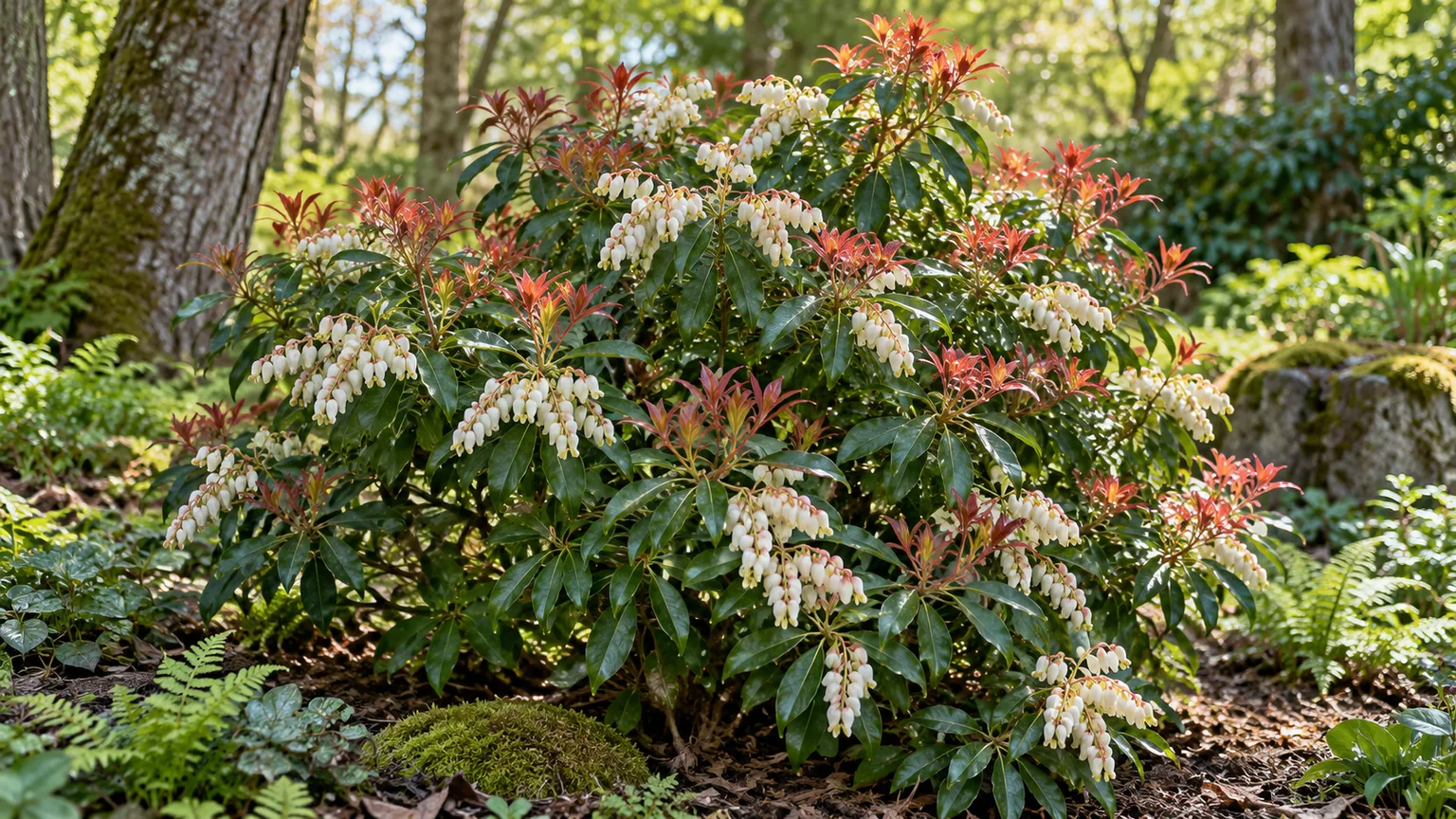
Japanese andromeda (Pieris japonica), also called Japanese pieris or lily-of-the-valley shrub, is an evergreen that earns its space in more than one season. It carries glossy foliage through winter, pendulous clusters of small bell-shaped flowers in spring, and often a flush of red or bronze new leaves. The catch is that it is particular about its roots: a shrub in alkaline, waterlogged, or heat-stressed ground can yellow, scorch, or become more vulnerable to pests.
The most reliable care plan starts before you plant. Choose a sheltered spot with filtered light, confirm the soil is acidic and drains well, and match the cultivar to the space you have. Once established, Japanese andromeda usually needs steady moisture, light pruning after bloom, and regular checks beneath its leaves for lace bugs.
Japanese Andromeda at a Glance
| Feature | What to expect |
|---|---|
| Botanical name | Pieris japonica |
| Type | Broadleaf evergreen shrub in the heath family, Ericaceae |
| Mature size | The species can reach about 8–10 feet tall and 6–8 feet wide; cultivars vary |
| Light | Partial shade is the most forgiving exposure; morning sun is usually easier than hot afternoon sun |
| Soil | Acidic, rich in organic matter, moist but well-drained |
| Flowers | Drooping clusters of white, cream, or pink urn-shaped flowers in late winter or spring, depending on region |
| Special cautions | Lace bugs can stipple leaves; the plant is poisonous if eaten |
The species is native to parts of East Asia and grows as a slow-growing, rounded shrub. Cultivars range from small mounds to substantial landscape plants, so a nursery tag matters more than a generic mature-size estimate. NC State Extension’s plant profile lists the species at roughly 8–10 feet tall and 6–8 feet wide, while also noting that dwarf cultivars are available.
Hardiness listings differ among references and cultivars. NC State lists a broad range that includes USDA Zones 4b through 8b, but that does not guarantee success in every location within those zones: winter wind, summer heat, drainage, and cultivar selection all affect performance. For a borderline site, ask a local nursery or Extension office which selections have proven reliable nearby.
Pick a Spot With Morning Light and Afternoon Shelter
Japanese andromeda grows in full sun to shade, but partial shade is usually the safer choice. Aim for gentle morning sun or bright dappled light, then protection from intense afternoon sun, especially in warm climates. Deep shade may keep leaves from scorching, but it can also reduce flowering and make the plant’s red new growth less vivid.
Wind protection matters because evergreen leaves continue losing moisture during winter. A location beside a building, fence, or taller evergreen can reduce cold, drying winds without trapping the shrub in stagnant air. Avoid a hot south- or west-facing wall if it reflects heat onto the leaves or dries the root zone quickly.
The choice is also about pest pressure. UMass Extension reports that Japanese andromeda planted in full sun can suffer more severe andromeda lace bug damage than plants in less exposed locations. That does not mean shade prevents the insect, but a site that avoids heat and drought stress gives the shrub a better chance of holding its foliage.
Give It Acidic Soil That Drains Well
The root zone should stay evenly moist without remaining soggy. Japanese andromeda prefers acidic soil; the RHS places the ideal pH around 5 to 6 and warns that alkaline soil can cause poor growth and yellow foliage. The RHS Pieris guide and NC State Extension both emphasize acidic, well-drained conditions.
Test the soil before adding sulfur, iron, or a fertilizer marketed for acid-loving plants. Yellow leaves with greener veins can point to high pH and iron becoming unavailable, but yellowing is not a diagnosis by itself. A soil test helps separate pH trouble from nutrient imbalance and tells you whether an amendment is appropriate; adding fertilizer blindly can raise salts without correcting the cause.
Drainage is just as important as acidity. In compacted clay or a low spot where rainwater lingers, a planting hole filled with loose potting mix can become a water-holding bowl. If the site stays wet, choose a raised bed or large container with an acidic, freely draining mix, or select a shrub better suited to the ground you have. Do not try to fix chronic waterlogging with extra fertilizer or frequent shallow watering.
Plant in Spring or Fall Without Burying the Root Collar
Spring and fall are usually the easiest planting windows because temperatures are moderate and the soil is less likely to dry as quickly as it does in summer. If you must plant during warm weather, water carefully through establishment and provide shade from harsh afternoon sun. Gardening Know How likewise recommends spring or fall planting and watering immediately after backfilling; choose the season that gives your shrub moderate temperatures and a moist, workable root zone. Planting in a cool, damp period is not a substitute for suitable drainage.
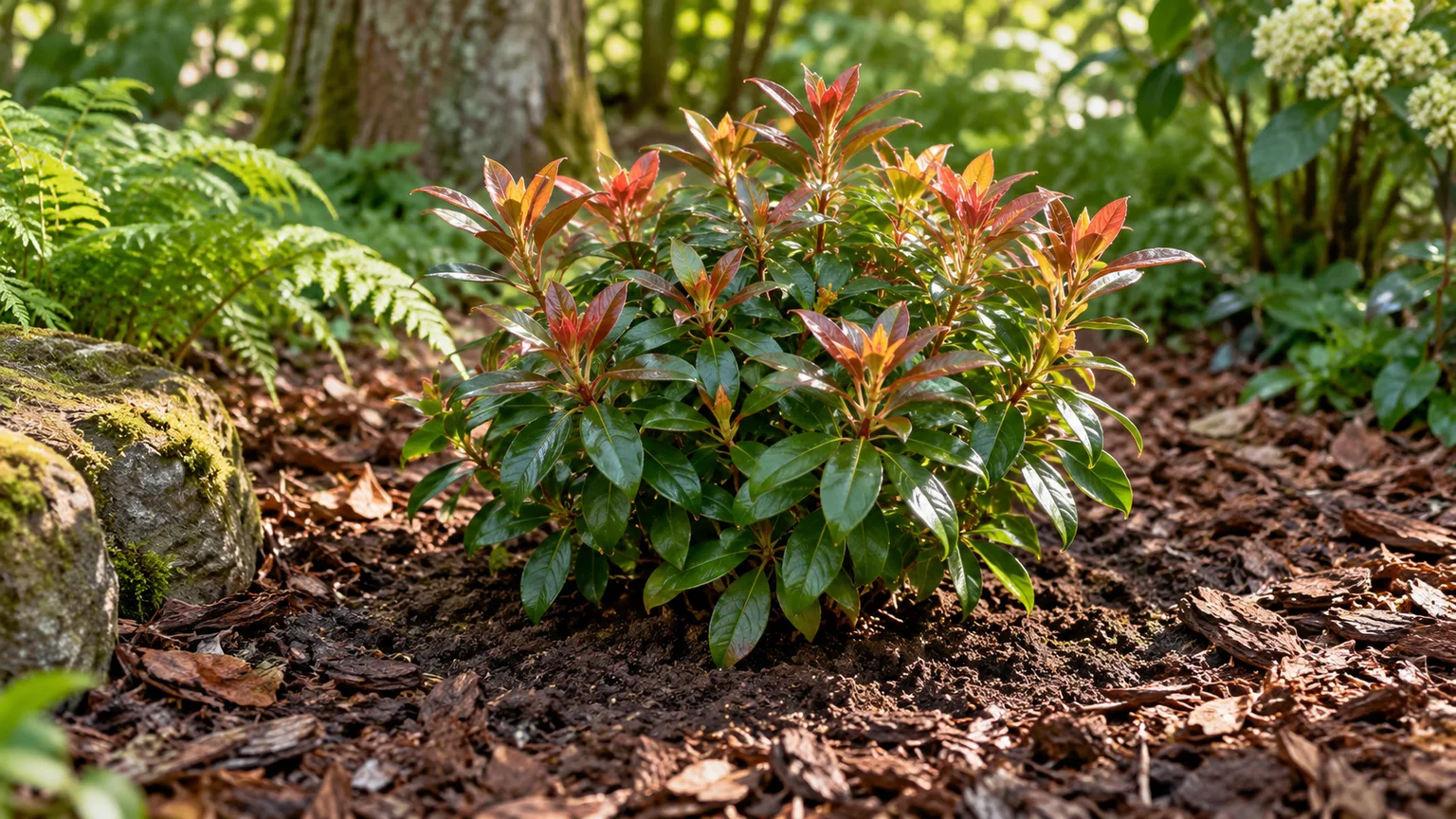
A simple planting sequence
- Check the site’s light and drainage, and test soil pH before making amendments.
- Dig a hole wider than the root ball but no deeper than the root ball’s height.
- Slide the shrub from its nursery pot and loosen circling roots gently; do not tear apart a healthy, fine root system.
- Set the top of the root ball level with the surrounding soil, or just slightly above grade in heavy soil where settling is likely. Keep the stem base and root collar uncovered.
- Backfill with the excavated soil, firm lightly to remove large air pockets, and water slowly until the root zone is evenly damp.
- Spread a thin layer of organic mulch over the root zone, leaving a clear gap around the stems.
Avoid burying the root collar or piling soil against the trunk-like base. A shrub planted too deep may decline even if its leaves look healthy for a while, because the crown stays damp and roots have less access to oxygen. Likewise, do not put fertilizer directly into the planting hole; first let roots settle, then fertilize only if soil or growth indicates a need.
Water Deeply While the Shrub Establishes
Newly planted Japanese andromeda needs regular water until roots extend into the surrounding soil. Water slowly at the base so moisture reaches the root ball rather than running off the surface. Check the soil an inch or two below the mulch before watering again; if it is still moist, wait, and if it is drying, water thoroughly.
There is no dependable calendar schedule for every garden. Sandy soil, wind, heat, and a small root ball shorten the interval between waterings, while clay, cool weather, and rain lengthen it. After the first growing season, the shrub may need less supplemental water, but it still benefits from irrigation during prolonged dry spells because drought stress can scorch evergreen leaves and make pest damage harder to tolerate.
Container-grown plants dry faster than plants in the ground. In warm weather, check a pot more often and water until excess runs from its drainage holes, then empty any saucer. Frequent small sips keep only the soil surface wet; the goal is to moisten the whole root zone and then allow excess water to drain.
Use mulch without burying the stems
A 2- to 3-inch layer of bark, leaf mold, or other organic mulch helps moderate soil temperature and slows moisture loss. Keep it several inches away from the stems so the crown stays airy and dry. Refresh it as it thins, but do not stack new mulch over old layers until the bed becomes a deep, soggy mound.
Mulch can improve the conditions around the roots, but it does not reliably change alkaline soil into acidic soil. If the plant is yellowing and the soil pH is high, use a test-based correction rather than adding more pine needles and hoping for a quick result. Avoid dark, heat-absorbing materials against the stems in a hot, exposed site.
Fertilize Only When the Soil or Plant Needs It
A healthy Japanese andromeda in reasonably fertile ground does not need routine heavy feeding. If a soil test or weak, pale growth suggests a nutrient shortage, use a fertilizer labeled for acid-loving shrubs such as azaleas or rhododendrons, and follow the product’s rate and timing exactly. Spread granular fertilizer over the root area rather than against the stem, and water it in as directed.
Fertilizer cannot compensate for waterlogged roots, drought, deep shade, or a pH that locks up nutrients. If a plant is yellowing, check drainage and soil pH before feeding it. Overfeeding can encourage soft, vulnerable growth or injure roots with excess salts, while a stressed shrub may not be able to use the nutrients anyway.
Do not use fertilizer as an improvised soil acidifier. Products differ in how they affect pH, and changing pH takes time; a soil test and local recommendations are the safer guide. If soil is strongly alkaline and difficult to correct, moving the shrub to a raised bed or choosing another plant may be more practical than repeated amendments.
Choose a Cultivar for Mature Size and Color
Start with the space the plant will occupy, then choose the foliage and flower colors you like. The species can become a large shrub, while compact selections are better for a foundation bed or patio pot. Ask for the cultivar name, not just “Japanese andromeda,” and check the mature width as well as height so the plant can grow without constant cutting.
‘Mountain Fire’ is popular for a bright red flush of new foliage that matures through bronze tones to green. ‘Forest Flame’ is also selected for vivid red young growth. ‘Cavatine’ and ‘Prelude’ are more compact options, with ‘Prelude’ listed by NC State at about 2–3 feet; ‘Valley Rose’ has pink flowers. Cultivar size and color intensity can vary with climate, age, light, and the nursery’s exact selection, so use a regional source when a close fit matters.
A compact cultivar is not a solution to poor growing conditions. A small plant still needs acidic soil, reliable drainage, and enough light to bloom. If your garden is alkaline and wet, select a plant suited to that soil instead of buying a smaller Pieris and trying to manage it into health.
Protect Flower Buds and Red New Growth
The flowers are small, urn-shaped bells that hang in clusters. Depending on region and weather, they open from late winter into spring; flower buds are often visible on the shrub before they open. New leaves may emerge red, pink, or bronze and then turn green as they mature, so a colored flush is normal rather than a sign of disease. Epic Gardening’s care guide describes the seasonal sequence of winter buds, early blooms, and colorful new foliage.
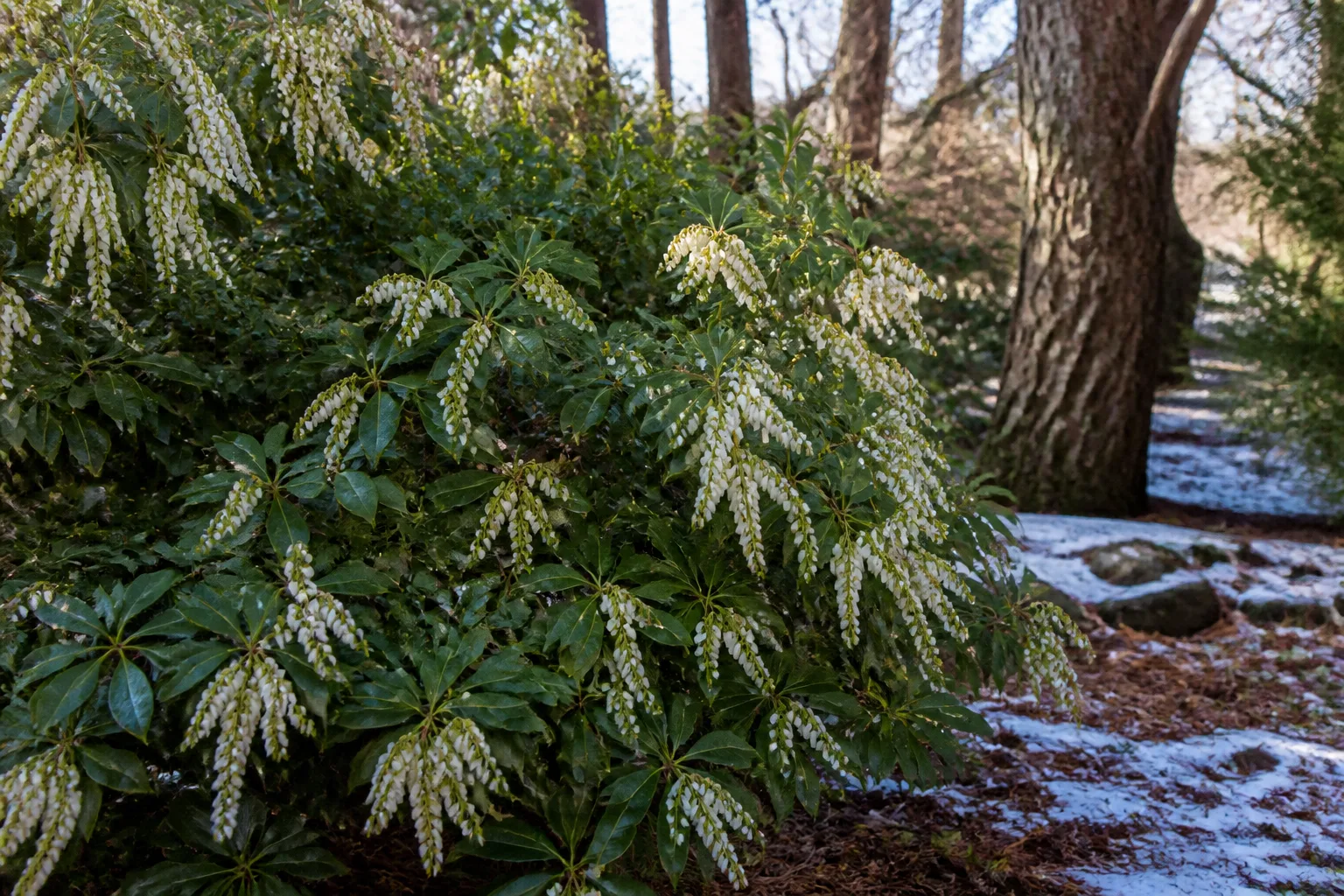
Japanese andromeda blooms on older growth. That timing explains why a shrub can look healthy but flower poorly after a late pruning: the cuts may have removed the next set of buds. Avoid heavy shaping as the buds swell or after they have set for the following season.
Flowering can also be limited by heavy shade, an immature or recently transplanted shrub, drought, or poor root conditions. Give the plant a full season to settle after planting, and avoid trying to force blooms with high-nitrogen fertilizer. A shrub that grows leaves but few flowers needs a check of light, pruning timing, and root health before it needs more food.
Prune Just After Flowering
Most Japanese andromeda needs little pruning because it naturally forms a rounded, upright shape. If you need to tidy it, wait until the flowers fade, then remove dead, broken, crossing, or badly placed branches with clean, sharp pruners. Make each cut just beyond a healthy side branch rather than leaving a long stub.
This short window preserves as many buds as possible for the next spring. Pruning later in summer or fall can remove flower buds that have already formed, so a late-season haircut may trade next year’s bloom for a neater outline today. Shearing the whole shrub into a tight box also removes the natural layered shape and can leave bare interior wood visible.
If the shrub has outgrown its space, first decide whether selective thinning can restore the outline. A severely overgrown, old Pieris may not respond well to cutting back into leafless wood; repeated hard pruning is a poor way to keep a cultivar that is fundamentally too large. Moving it or replacing it with a compact cultivar can be the better long-term fix.
Grow Japanese Andromeda in an Outdoor Container
A pot can work when garden soil is alkaline or poorly drained, or when you want to grow a compact cultivar on a patio. Choose a wide container with several open drainage holes and use an acidic, well-drained mix formulated for rhododendrons or camellias. A large container gives roots room and dries more slowly than a small nursery pot, but it still needs regular moisture checks.
Keep the shrub outdoors in a bright, sheltered position. Protect it from harsh afternoon heat and drying winter winds, and make sure rain or irrigation can drain freely. Container roots are more exposed to temperature swings than roots in the ground, so move the pot to a protected spot before severe winter weather and insulate the container if freezing conditions are expected.
Repot when roots fill the container or water runs straight through without wetting the root ball. Move up only one pot size, refresh the mix, and avoid disturbing the roots more than necessary. A plant that is very root-bound or declining from poor drainage may take time to recover after repotting.
Propagate with early-summer cuttings
Named cultivars are best propagated from cuttings because seed-grown plants may not keep the same foliage color, habit, or flower traits. Take a 4- to 6-inch cutting of healthy new growth after flowering, remove the leaves from the lower portion, and place it in a clean pot with moist, free-draining propagation mix. A small amount of rooting hormone may help, but it does not guarantee success.
Keep the cutting warm, bright, and out of direct sun, with humidity high enough to prevent wilting and ventilation good enough to limit mold. The mix should stay evenly moist, never waterlogged. Rooting can be slow and uneven; wait for resistance to a gentle tug and visible new growth before potting it on. For a single landscape shrub, buying a named cultivar is usually simpler and more reliable.
Check Leaf Undersides for Andromeda Lace Bug
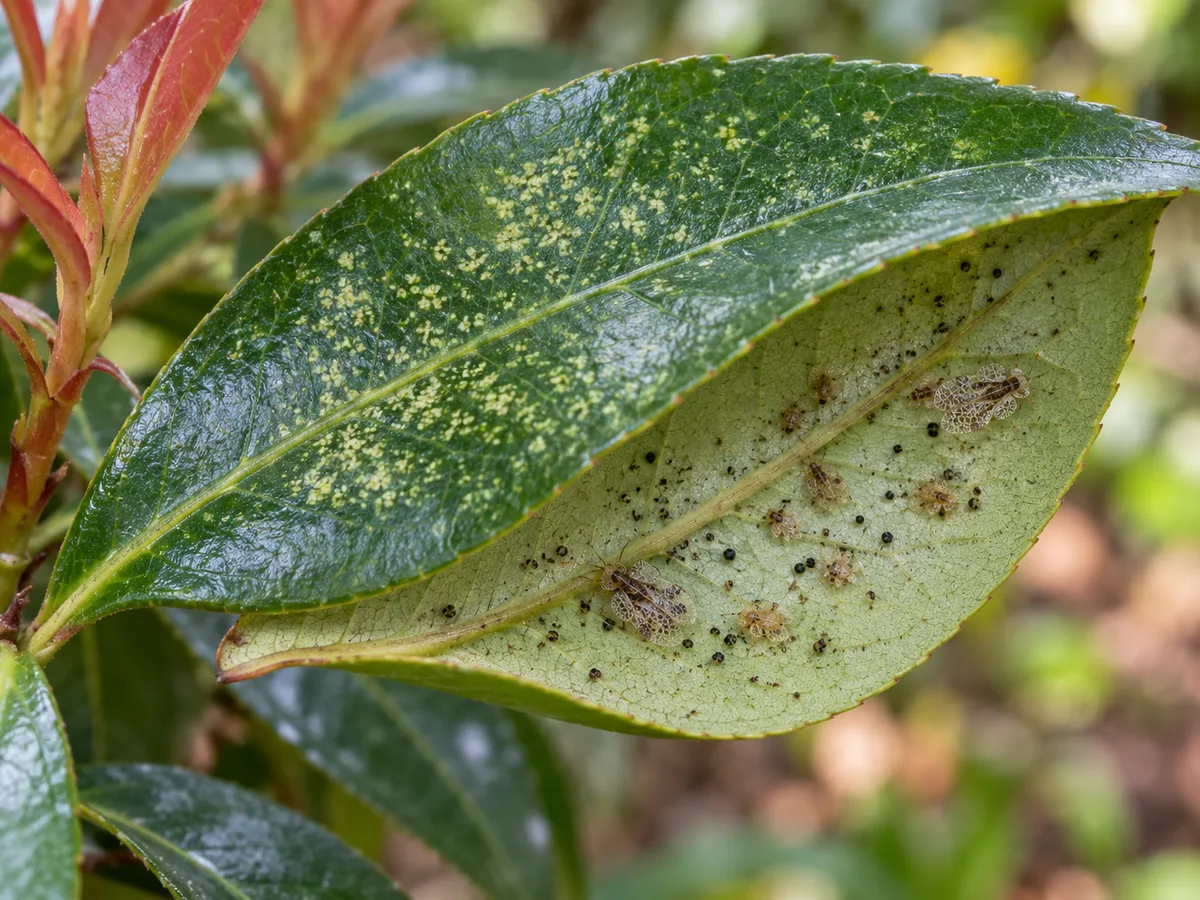
Andromeda lace bug (Stephanitis takeyai) feeds on the underside of leaves. Early clues appear on top as fine yellow or pale stippling; flip an affected leaf over and look for tiny lace-patterned insects, immature nymphs, shed skins, and shiny black, tar-like droppings. Those underside clues help distinguish lace bug from yellowing caused by soil or water problems. UMass Extension’s fact sheet describes the characteristic stippling and black deposits.
Inspect in late spring and summer, especially when new stippling appears or the plant is growing in a hot, dry, sunny spot. The insect can have several generations in a season, so one check is not enough if damage is increasing. A shrub may remain alive while losing attractiveness, but repeated defoliation can weaken a young or newly planted shrub.
Treat only after confirming the pest
First confirm that lace bugs are present. If the infestation is limited, remove badly affected leaves where practical and use a firm but gentle water spray on the leaf undersides to dislodge insects. Correct drought stress and consider whether the shrub can be moved to a less exposed position; cultural changes reduce stress but may not eliminate an established population.
If the damage continues, an insecticidal soap or horticultural oil labeled for the plant and pest may help when it thoroughly coats the leaf undersides. These contact products do not reliably affect eggs, so a repeat application may be needed according to the label. Do not spray open flowers or treat when pollinators are active; follow all label directions, local rules, and temperature restrictions. UMass Extension notes that post-bloom timing and underside coverage matter, and that permitted products differ by state.
Avoid routine broad-spectrum insecticide use as a first response. It can harm beneficial insects and pollinators, and a product that is allowed in one state may not be legal for a particular use in another. If the plant is repeatedly damaged despite correct site and moisture care, ask local Extension whether replacing it with a more resistant species is a better long-term decision.
Diagnose Yellow, Brown, or Wilted Leaves
A useful diagnosis begins with the pattern and the soil, not the fertilizer bag. Check whether the discoloration is on old leaves or new growth, whether the veins remain green, whether the soil is dry or saturated, and whether the underside of the leaf shows lace-bug signs. Compare several leaves and inspect the root zone before deciding what to change.
- Yellow leaves with greener veins: Soil that is too alkaline can limit iron availability. Test pH before applying iron or acidifying products.
- Whole leaves pale or growth weak: Consider low light, nutrient shortage, or root stress. Test soil and check the plant’s recent growing conditions.
- Yellowing with wilt in constantly wet soil: Suspect root decline or Phytophthora root rot, especially if roots are brown and soft rather than firm. Improve drainage and avoid adding more water.
- Crispy edges or scorched patches: Look for afternoon heat, drought, winter wind, or a recently planted root ball that is drying faster than surrounding soil.
- Fine pale dots with dark specks underneath: Inspect closely for lace bug before treating.
These clues can overlap. For example, a plant in alkaline soil may also be drought-stressed, and leaf scorch can happen at the same time as pest feeding. Change one likely cause at a time and watch new growth; old damaged leaves may not turn green again, so judge recovery by fresh leaves and the rate of decline.
Root rot is not fixed by pruning leaves or feeding the plant. If the soil stays saturated, correct the drainage problem first. When the main roots are soft and brown and the shrub continues to collapse, recovery may be unlikely; do not keep watering in the hope that the soil will somehow dry around a waterlogged root ball.
Protect the Shrub From Winter Stress
Japanese andromeda is evergreen, so winter sun and wind can dry foliage when cold soil limits water uptake. Plant it in a sheltered place, water before the ground freezes if autumn has been dry, and keep a moderate mulch layer over the root zone. Do not pile mulch against the stems or wrap the entire shrub tightly in plastic.
Container plants need more protection than in-ground shrubs because their roots are exposed to cold from every side. Move the pot near a sheltered wall or into an unheated protected space where it can remain cold but not be buffeted by drying wind. Insulate the pot if necessary, and check occasionally that the mix is not bone-dry; do not keep it waterlogged through winter.
After a severe winter, wait until spring growth begins before removing branches that look damaged. Some leaves may be scorched while the stems remain alive. Scratch a small patch of bark on a suspect twig: green tissue just beneath the bark suggests it may still be living, while dry brown tissue all the way through is more likely dead.
Place Japanese Andromeda Carefully Around People and Pets
Japanese andromeda is poisonous if eaten. NC State Extension lists high-severity poisoning potential from the plant’s leaves, flowers, and sap, and identifies grayanotoxins; the ASPCA’s Pieris listing marks it toxic to dogs and cats and warns that even a few leaves can cause serious problems. Keep leaves, flowers, and pruning debris away from children, pets, and grazing animals.
Touching the plant is not the same as eating it, and NC State does not classify it as a contact-dermatitis plant. Still, wear gardening gloves if you prefer, wash your hands after pruning, and never use the clippings in food, tea, or animal bedding. Place the shrub where curious children and animals are less likely to chew it, especially because its attractive flowers and evergreen leaves are accessible year-round.
If a person or animal eats any part of Japanese andromeda, contact local poison control, a veterinarian, or an appropriate emergency service promptly. Do not wait for symptoms or try a home remedy. Take a photo or sample of the plant for identification if it can be done safely.
Conclusion
Japanese andromeda is rewarding when its site matches its roots: acidic soil that drains, consistent moisture, partial shade, and shelter from drying wind. Choose a cultivar that fits its eventual size, water by checking the soil instead of following a rigid calendar, and prune just after flowering so you do not remove next year’s buds.
When a shrub declines, inspect both the soil and the undersides of its leaves before reaching for fertilizer or pesticide. That simple sequence separates many cases of chlorosis, water stress, root rot, and lace bug damage. Keep the plant away from mouths as well as puddled ground, and this evergreen can provide flowers, glossy foliage, and colorful new growth for years.



