How to Grow Rhubarb From Seed: A Step-by-Step Guide
Start rhubarb from seed with clear indoor and direct-sowing steps, climate-based timing, transplant spacing, a first-three-years care plan, and harvest advice.
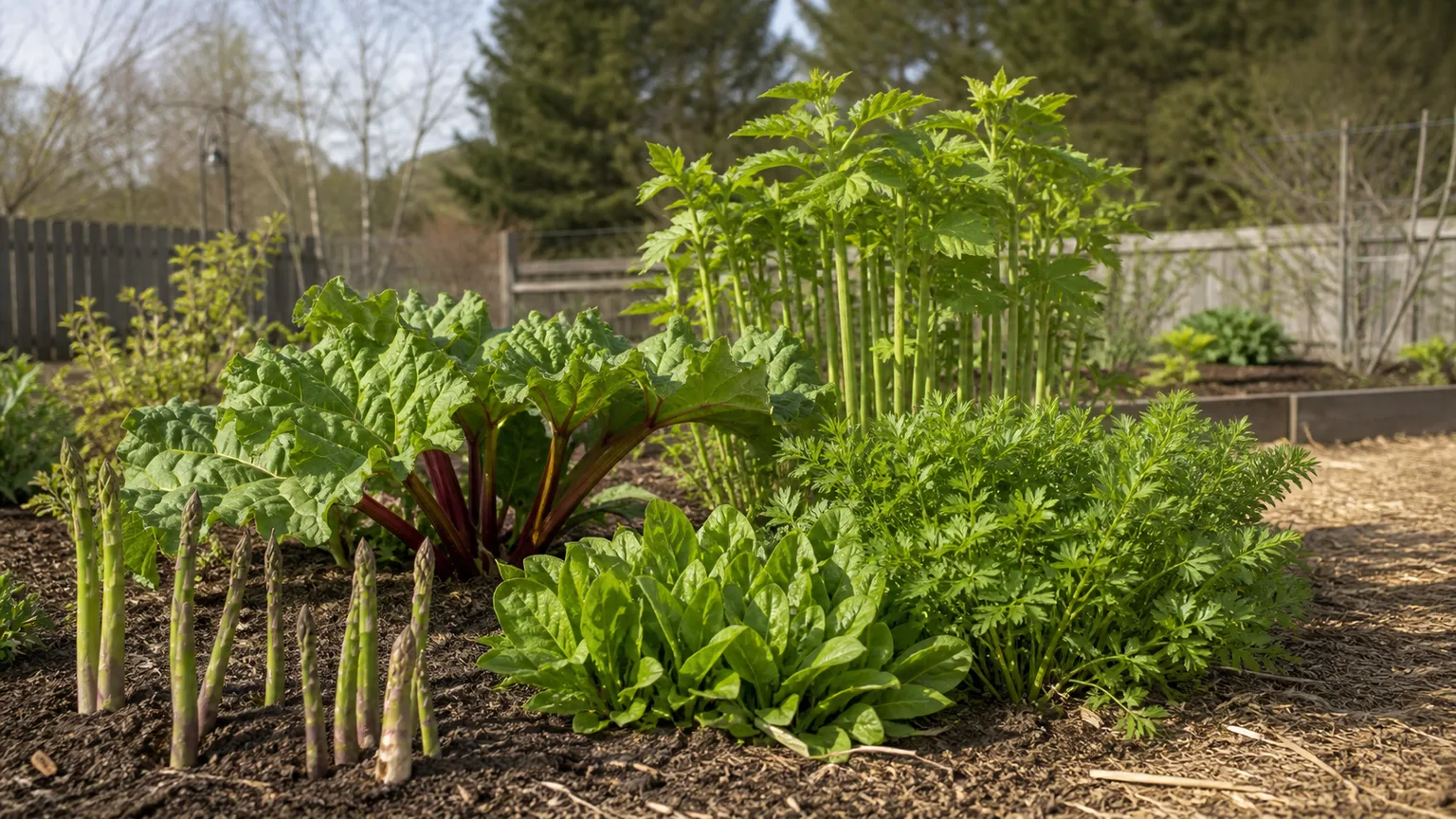
Growing rhubarb from seed is a patient way to build a productive patch, not a shortcut to next spring’s pie. You can raise several plants from one packet, but seedlings take longer to establish than crowns and may differ from the parent in stalk color, flavor, vigor, and tendency to flower.
The safest route is to start seed in a small nursery setup, move sturdy seedlings into a permanent bed with room to spread, then leave the crown alone while it builds roots. Timing depends more on frost, soil warmth, and summer heat than on a single calendar date. Once you understand those cues, the process is straightforward.
Is Growing Rhubarb From Seed Right for You?
Choose seed when low cost, multiple plants, or the pleasure of raising a crop from its beginning matters more than a fast harvest. A seed packet also gives you a chance to select the strongest plants from a batch rather than committing to one plant sight unseen. The tradeoff is time: plan on several growing seasons before a dependable harvest.
Rhubarb sold as a named cultivar is usually propagated by dividing its crown. That makes the new plant a clone, so it keeps the parent’s traits. Seedlings are genetically different from one another, especially when seed comes from an open-pollinated plant; stalks may be greener or thinner than expected, and flowering can be more common. The RHS guide to growing rhubarb notes that seed-raised plants are slower and more variable than plants grown from divisions.
If you need a predictable cultivar or want stalks as soon as possible, buy a healthy crown or ask a local gardener for a division. If you want several plants on a budget and can wait, seed is a sensible choice. Think of the resulting patch as a group of individual plants to evaluate, not as guaranteed copies of the variety named on the packet.
Why Seedlings Vary and When Crowns Make More Sense
The name on a seed packet identifies the source or variety offered, but it does not guarantee that every seedling will reproduce all of its traits exactly. Rhubarb can cross-pollinate, and even seedlings from the same plant can mature differently. That variation is a feature if you enjoy selecting for a vigorous plant; it is a drawback if you want uniform stalk color or a cultivar with known harvest timing.
Seed is also not the only economical option. A division from an established, healthy patch can give you a known plant without the years of seedling care. Choose seed for quantity and experimentation; choose a crown or division for speed and predictability.
Plan the Sowing Date Around Your Climate
Rhubarb is a cool-season perennial in places where it can experience winter dormancy and avoid prolonged summer heat. Seedlings need time to become sturdy before harsh weather, so plan backward from the season in which you can safely plant them outdoors. For indoor sowing, count back roughly six to ten weeks from your usual transplant window, then adjust to how quickly spring warms where you live.
For outdoor sowing, use the soil itself as your guide. The Homes & Gardens seed-starting guide recommends waiting until the soil reaches about 60°F (16°C) for direct sowing; cold, wet ground is a poor place to ask a seed to germinate. A simple soil thermometer gives you a more useful signal than the month printed on a generic zone calendar.
Cool-Winter Gardens
In regions with cold winters and a moderate spring, sow indoors in late winter or early spring, or sow outside after the soil is workable and warming. Indoor starts give you a head start and protect the seedbed from heavy rain, slugs, and temperature swings. Direct sowing is simpler if you have a spare nursery row and do not mind waiting for seedlings to grow large enough to handle.
Move seedlings into the permanent bed in late spring after hardening them off, or in early autumn while the soil is still warm enough for roots to settle in. Avoid a transplant date that leaves tiny plants facing a long stretch of heat or a freeze before they have rooted. Frost dates are a planning guide, not a promise: a sheltered yard, exposed hill, and low-lying frost pocket can differ by weeks.
Hot-Summer Gardens
In a climate with very hot summers, the challenge is not getting seed to sprout; it is keeping young plants growing before heat stalls them. Start seed so seedlings can establish during a cooler season, often by sowing in late summer or early autumn where winters remain mild. Do not copy a northern spring schedule if it would put new plants into their first summer with shallow roots and no shade.
Rhubarb may behave as a short-lived or cool-season crop where summers are persistently hot, rather than as a long-lived perennial. Purdue Extension notes that heat stress, including temperatures above 90°F (32°C), can contribute to unwanted flowering. If your site stays hot for months, try a small planting first, provide afternoon shade during establishment, and treat long-term survival as uncertain rather than assuming a particular hardiness zone guarantees success.
Start Rhubarb Seeds Indoors
Indoor sowing makes it easier to keep the seed evenly moist and to spot germination. It also lets you raise seedlings in a compact tray before giving them the wide spacing a mature rhubarb plant needs. Start with fresh, labeled seed from a supplier; seed that has been stored warm or damp may germinate poorly.
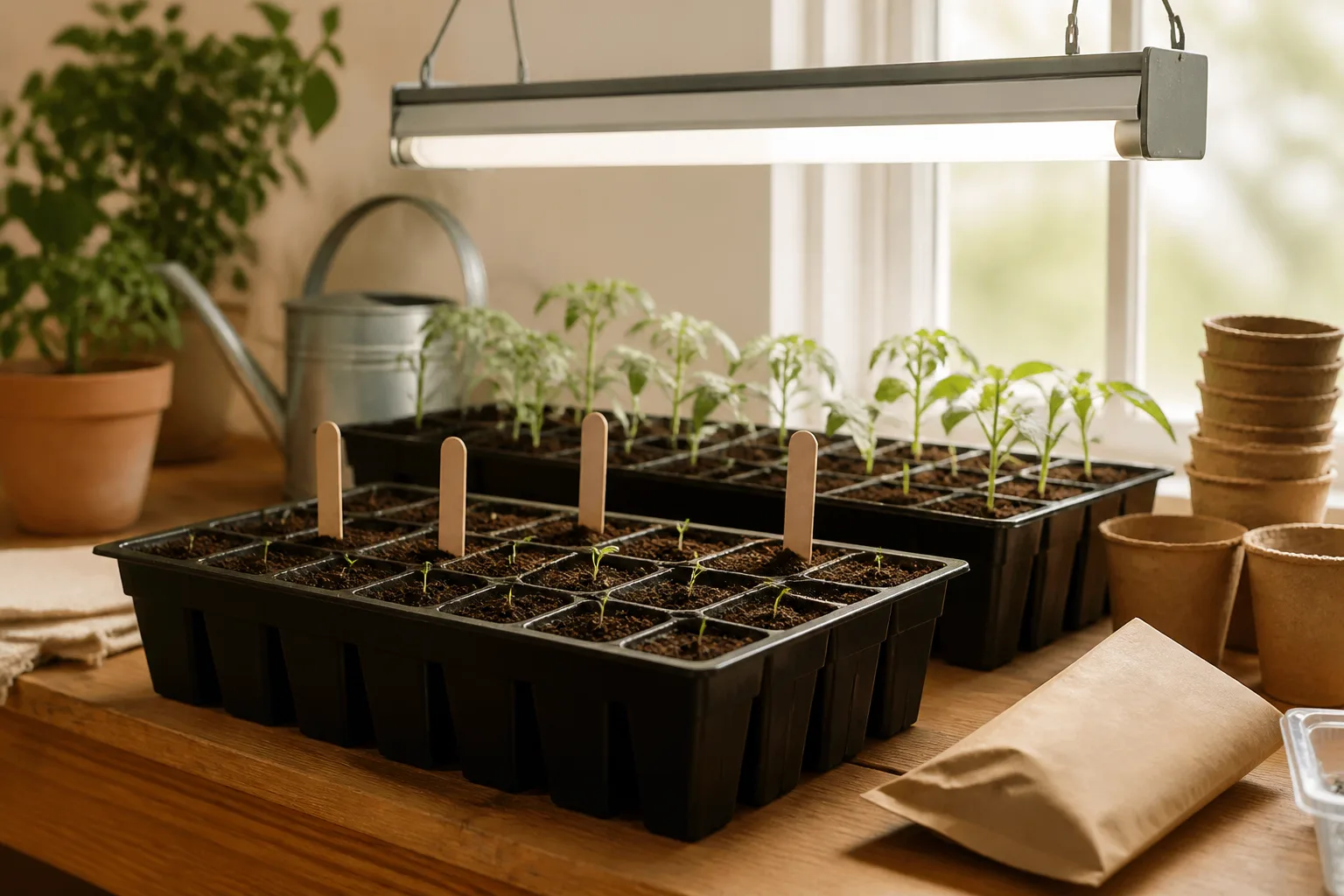
Prepare the Seed Tray
Use clean modules or small pots with drainage holes and fresh seed-starting mix. Sow one seed per cell about half an inch deep, then cover it lightly and water gently so the seed is settled without washing to the bottom. Published depths vary: Homes & Gardens suggests about half an inch, while the RHS guide gives one inch for its indoor modules and outdoor seedbed. Follow the depth on your packet if it is specific to that seed lot; for an ordinary home tray, a light cover is a practical starting point.
Rhubarb seeds do not need an elaborate cold-stratification routine to start indoors. A brief soak in room-temperature water can soften the seed coat, but it is optional; the Homes & Gardens method treats soaking as a possible aid, not a requirement. Soaking is not a substitute for fresh seed, warmth, or steady moisture. If seed is scarce, sow extra cells rather than packing several seeds into one small pot, where their roots will tangle before you can separate them.
Keep Moisture, Warmth, and Light in Balance
Set the tray in a bright place that stays around 65–75°F (18–24°C). Keep the mix consistently damp, not glossy-wet or waterlogged. A clear cover can slow drying before germination, but remove it as soon as shoots appear and give seedlings good airflow; a persistently wet, enclosed tray invites weak growth and seedling collapse.
Seedlings commonly emerge in roughly one to two weeks under suitable conditions, though a cool room, old seed, or inconsistent moisture can stretch the wait. Do not keep digging for the seed to check progress. If nothing has appeared after two or three weeks, check the tray temperature and moisture first, then sow a fresh batch in clean mix if the seed may be old.
Once shoots are up, give them the brightest light you can provide without cooking the tray. Turn pots if one side leans toward a window. If stems lengthen and flop while leaves stay small, improve light and airflow rather than feeding heavily; young rhubarb needs a stable root system before it needs a rich fertilizer program.
Direct-Sow Rhubarb in a Nursery Row
Direct sowing works best when you have garden space that can be kept weed-free and evenly moist. Prepare a narrow nursery bed by removing perennial weeds, breaking clods, and mixing in finished compost if the soil is poor. Do not sow into a permanent patch at mature spacing: most of that ground would sit empty for months while you tend small seedlings.
Sow seeds in a shallow drill, cover them lightly, water the row, and mark both ends so you do not hoe it by mistake. Keep the top layer from drying until the seedlings are established. Thin crowded seedlings once they have several leaves, first leaving enough room to grow without competition, then move the best plants to their final positions. BBC Gardeners’ World describes thinning seed-grown rhubarb in stages before planting selected seedlings in a permanent site; that nursery-to-bed approach uses space more efficiently than sowing each seed three feet apart.
Direct-sown seedlings are exposed to rain, slugs, weeds, and temperature swings, so sow a few more than you ultimately need. If a downpour crusts the soil surface, loosen only the thin crust between seedlings; do not rake across the row or bury emerging shoots deeper. Where spring soil stays cold and saturated, start in modules instead and transplant when conditions improve.
Pot Up, Harden Off, and Choose Seedlings
When seedlings have several true leaves and are large enough to lift without pinching the stem, move indoor starts into individual pots if their roots are crowding the cell. Hold each seedling by a leaf, not by the tender stem, and keep the root ball intact. Water after potting, then let excess drain; a tray that remains full of water can suffocate roots.
Before planting outside, harden seedlings over seven to ten days. Begin in a sheltered, bright-shade spot for a few hours, then increase outdoor time and exposure gradually. Bring them in or cover them if frost is forecast, and avoid putting an indoor-grown plant straight into all-day sun or strong wind. The goal is not to make a delicate seedling tough overnight; it is to let leaves and stems adjust while roots keep up.
Choose seedlings with compact growth, several healthy leaves, and no soft or darkened base. If you raised more than you need, keep the strongest plants and give extras away. A small, well-spaced patch is easier to weed, water, and harvest than a crowded row of every seed that happened to germinate.
Prepare a Permanent Bed Before Transplanting
Rhubarb occupies a site for years, so prepare the bed before the seedling comes out of its pot. Pick an open spot with sun or light afternoon shade, fertile soil, and good drainage. Work in well-rotted compost or manure, remove perennial weeds, and check where water collects after rain. Rhubarb appreciates moisture, but a crown sitting in saturated soil is vulnerable to rot.
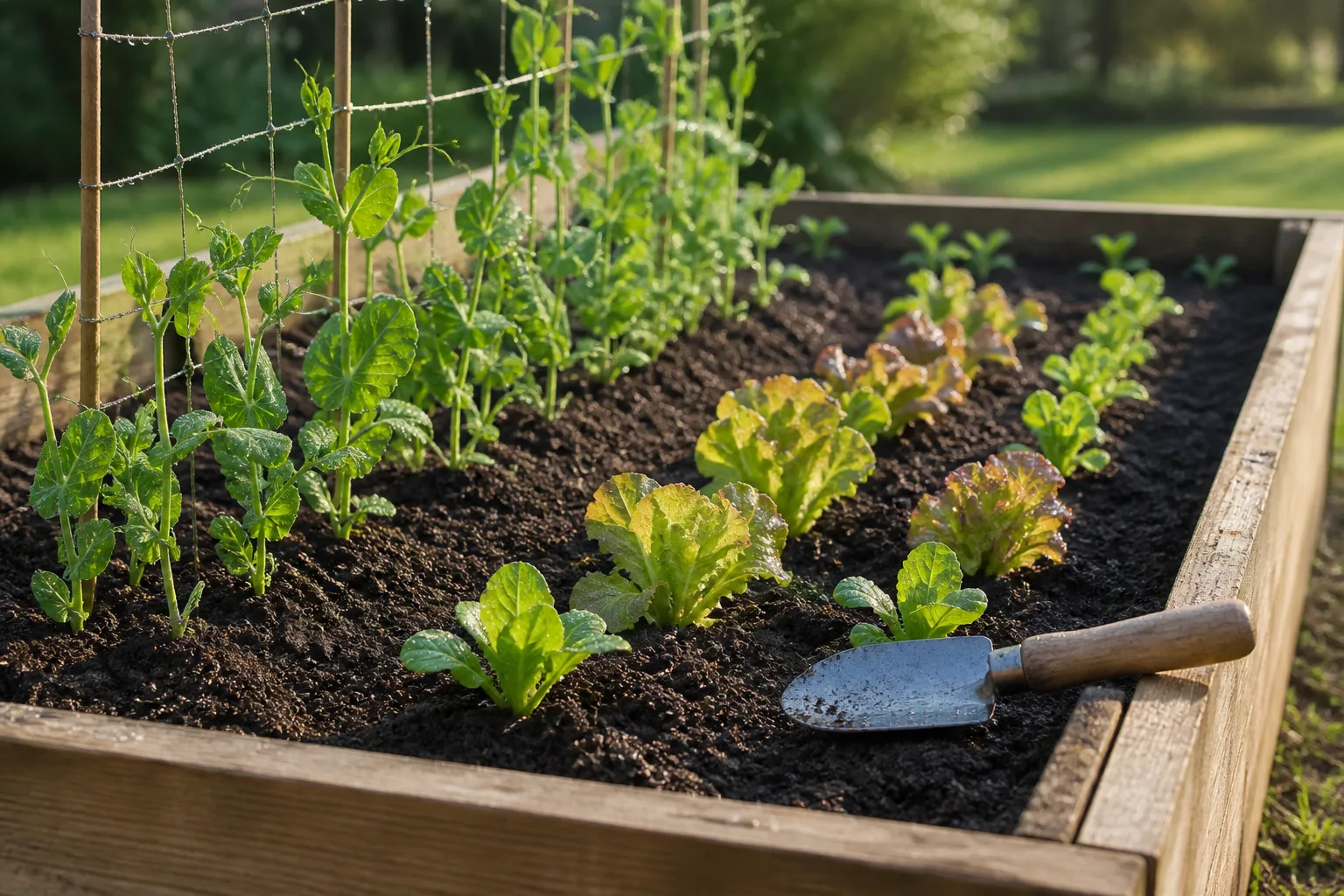
If heavy clay stays wet, improve drainage with a raised bed or choose a different site instead of trying to solve a low, waterlogged spot with more compost. Leave nearby crops enough room that their roots and foliage will not crowd the rhubarb later. Set the transplant at the same soil depth it occupied in its pot, firm soil gently around the root ball, and water it in.
Space Plants for Their Mature Size
Give plants about 30–35 inches (75–90 cm) between centers as a starting point; use more for a large cultivar or where airflow and access matter. The RHS recommends roughly this spacing for permanent planting. This is permanent spacing, not the distance needed for tiny seedlings in a temporary nursery row. Mature rhubarb can spread into a broad leafy clump, so squeezing plants together to make the bed look full now creates a harder-to-manage patch later.
For a row, leave a generous path so you can weed and pull stalks without stepping on crowns. A single plant can become a substantial feature, and its broad leaves may shade smaller crops beside it. Plan the space as you would for an asparagus or other permanent vegetable bed, not as you would for a quick annual crop that comes out at season’s end.
Care Through the First Three Growing Seasons
The first years are root-building years. A seedling that looks modest above ground may still be establishing the crown that will support later harvests, so do not judge success only by stalk thickness in its first summer. Keep weeds down, water during dry spells, and leave enough leaf area for the plant to recharge.
Water and Mulch Without Smothering the Crown
Water newly planted seedlings when the root zone begins to dry, especially during hot or windy weather. Aim water at the soil rather than repeatedly wetting the leaves, and let the surface drain between waterings. A deep drink followed by a check a day later is more useful than a fixed daily schedule that leaves heavy soil soggy.
Once the plant is established, a spring layer of well-rotted organic matter helps conserve moisture and suppress weeds. Keep mulch pulled back from the crown instead of burying the point where stalks emerge. The RHS recommends regular watering for new plants in dry spells and warns that waterlogged compost or soil can lead to root rot; its guidance also emphasizes keeping mulch off the crown.
Use compost as the default feed. If soil is poor and growth remains weak, choose a modest, balanced approach based on a soil test rather than repeatedly applying high-nitrogen fertilizer. Excessive nitrogen can push lush growth and, along with heat, wet weather, age, and plant stress, may contribute to flowering, according to Purdue Extension.
Remove Flower Stalks; Save Seed Only on Purpose
Rhubarb sends up a thick flower stalk as part of its reproductive cycle. If you want edible stalks and a stronger crown, cut or snap the flower stalk close to its base as soon as you notice it. Do not confuse this with the ordinary leaf stalks you are growing the plant for.
Seed-raised plants may be more prone to flowering than some selected cultivars. Purdue Extension explains that bolting can reflect several factors, including plant age, heat, drought, nutrition, and cultivar; it also notes that seed-grown offspring may vary and can flower more readily. Removing the stalk redirects the plant from seed production, but it does not turn a variable seedling into a named cultivar.
If your purpose is to save seed, allow one healthy plant to flower and mature seed only after you have decided that its traits are worth keeping. Expect offspring to vary, and keep the seed-bearing plant away from the plants you intend to harvest if you do not want it to dominate the patch with seedlings. Otherwise, remove the flower stalk promptly and keep the bed focused on leaf and crown growth.
Troubleshoot Slow, Weak, or Flowering Plants
When rhubarb struggles, check the root zone and weather before reaching for fertilizer. A seed that has not emerged may be old, too cold, too dry, or sitting in saturated mix. Correct one condition at a time: warm the tray, let excess water drain, or resow fresh seed. Adding feed to a seed that has not germinated cannot solve the underlying problem.
A seedling that collapses at soil level is often suffering from a wet, poorly ventilated start. Remove collapsed seedlings, empty standing water from the tray, improve airflow, and let the surface become just slightly less wet before watering again. A plant that wilts after transplanting may simply need shade and a careful drink while it adjusts; if the crown is soft, dark, or foul-smelling and the soil stays wet, suspect rot and correct drainage rather than increasing water.
Flowering in a young patch is not a reason to discard the plant. Remove the flowering stem at its base, then review heat exposure, drought, feeding, and whether the plant is mature. If a seedling’s stalks are green instead of red, that alone is not a disease or proof of poor care: seed-grown plants vary, and stalk color is not a reliable measure of readiness. Keep the healthiest plant, observe its flavor and vigor when it is old enough to harvest, and remove plants that consistently disappoint.
Grow Rhubarb in a Container Only If Size Allows
Rhubarb can grow in a container, but a small decorative pot is not a long-term home for a large perennial. Choose a stable container at least about 20 inches (50 cm) deep and wide, with several unobstructed drainage holes, and use a compact variety if you can. A seedling can spend its early months in a smaller nursery pot; move it into its permanent container before roots circle densely or watering becomes difficult to keep even.
Container mix dries faster than garden soil, so check it regularly through spring and summer and water thoroughly when the upper layer begins to dry. Never leave the pot sitting in a saucer of water. A container is useful where garden soil stays waterlogged or space is limited, but it demands more frequent attention and may not protect the plant from extreme heat or winter root temperatures as well as an in-ground bed.
Harvest Without Setting Young Plants Back
Leave every stalk on the plant during its first growing season in the permanent bed. In the second season, if the plant is vigorous, take only a few stalks and leave most of the foliage working. By the third season, a well-established plant can usually support a modest harvest, but plant strength matters more than a calendar anniversary. If growth is sparse, wait another season rather than weakening the crown for an early taste.
Harvest stalks that are firm and well developed, using their size as a guide rather than waiting for a particular red color. Hold the base, twist gently, and pull outward; remove the leaf blade before cooking. The RHS advises taking no more than about one-third of the stalks at one time so enough leaves remain to replenish the crown. Stop harvesting when the plant’s growth slows or when the main harvest period is ending in your climate.
Never eat rhubarb leaves. Purdue Extension distinguishes the edible leaf stalks from the poisonous leafy blades, and the RHS recommends removing the leaves after harvest. Discard the blades safely, keep them out of reach of children and pets, and compost them only where local guidance and household access make that appropriate. A flower stalk does not make the ordinary leaf stalk poisonous; the leaves themselves are the part to avoid.
Conclusion
Rhubarb from seed rewards patience with an affordable way to raise several plants and choose the strongest. Start with fresh seed, use frost and soil warmth to time sowing, and give each seedling a temporary nursery stage before it receives permanent space. Keep the soil moist but not saturated, protect new growth from heat and hard transitions, and resist picking while the crown is still building strength.
Expect variation, especially in color and flowering, and choose crowns instead when you need a known cultivar or a quicker crop. With good drainage, generous spacing, and a gradual harvest, a seedling can become a productive part of the garden for years.