How to Keep Flies Off Your Porch: 10 Fixes That Work
Keep flies off your porch with 10 practical fixes: remove breeding sites, use fans and traps correctly, repair screens, and protect outdoor food.
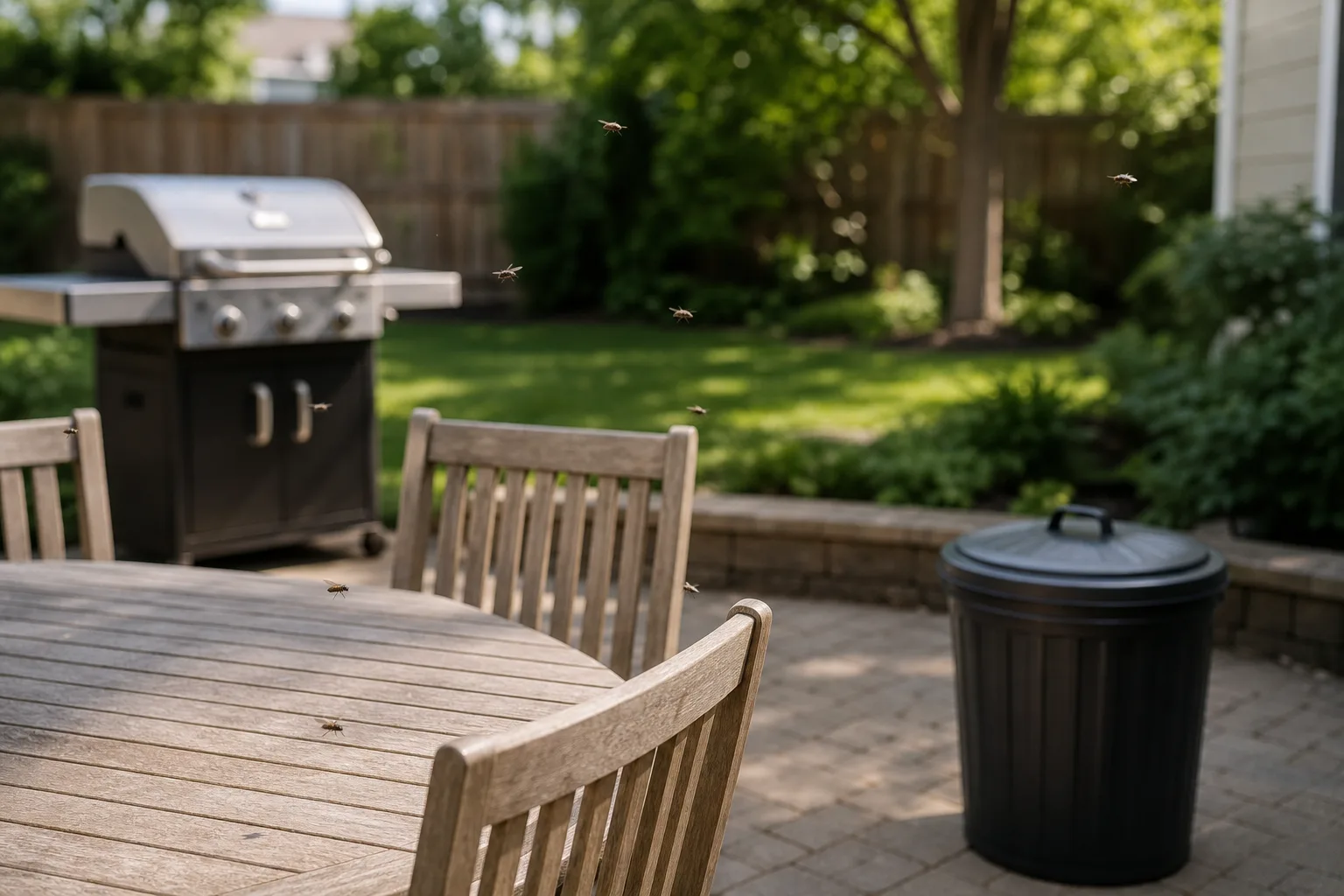
A few flies drifting across a sunny porch are normal. A steady cloud circling the grill, landing on every glass, or hovering at face height usually means the space is offering one of three things: food, moisture, or shelter. The lasting answer is not a stronger-smelling spray. It is a short source audit followed by the right physical barrier or trap for the flies you actually have.
That distinction matters because adult flies are the visible part of the problem. Their immature stages can be developing in a tied garbage bag, wet compost, fallen fruit, pet waste, or grass clippings tucked beside the house. UC Statewide Integrated Pest Management guidance calls removal of larval habitat the preferred control method, while Purdue University Extension describes sanitation as the first line of defense for outdoor flies (UC IPM; Purdue Extension).
Start With the Right Order of Operations
If you want the porch to feel better tonight, use this order:
- Cover food and drinks, wipe spills, and remove food waste.
- Check the nearest trash, recycling, compost, pet area, and gutter for an odor or wet organic residue.
- Run a fan across the seating or eating zone.
- Put any odor-baited trap downwind and away from people, doors, and food.
- Repair the entry point if flies are getting through a screen or door gap.
This sequence separates relief from control. A fan and food cover make an outdoor meal more comfortable immediately; source removal is what lowers the number of flies arriving tomorrow. An integrated-management review from the Indian Council of Agricultural Research makes the same broader point: sanitation, monitoring, and targeted control work together better than repeated, isolated insecticide applications (ICAR review).
Watch where the flies spend time before you start moving everything. Flies gathering around one bin, compost corner, or pet bowl are giving you a useful map. Flies spread evenly across a clean porch may be coming from a neighbor’s waste area, livestock, a dead animal, or a hidden structural space rather than from the chair where you see them.
Make that map more useful by checking the porch at two different times. Walk the perimeter at the warmest part of the day, then repeat the check around the time you usually eat outside. Note whether flies land on vertical walls, hover in still air, circle a light, or dive toward food. A shaded, head-height cloud points toward little house flies and stagnant air; metallic blue or green flies near garbage or carrion suggest blow flies; tiny tan flies around drinks and fruit suggest fruit flies. These clues will not replace an entomologist’s identification, but they can stop you from buying a trap designed for the wrong insect.
Take a photograph of the problem area before cleaning if the source is hard to explain. A picture of the bin, compost surface, gutter, or fly resting pattern gives a pest professional something more useful than “there are lots of flies,” especially if the activity drops before an inspection. It also lets you compare whether the same cluster returns after cleanup.
10 Ways to Keep Flies Off Your Porch
1. Remove Food and Drink Residue Immediately
Outdoor meals create a fly trail from tiny, easy-to-miss residues. Sweet tea rings, beer foam, grill grease, fruit juice, crumbs beneath a table, and a sticky cooler handle can all matter more than the visible plate of food. Wipe tables and railings after eating, rinse reusable cups, and put scraps into a lidded container instead of carrying them inside in an open bowl.
Protect the food that remains. Mesh food covers, closed serving containers, and a separate cup for drink waste keep flies from repeatedly landing on food while you finish cooking. If a fly has been walking on uncovered food, especially meat or ready-to-eat items, the cautious choice is to discard the exposed portion rather than brush the insect away and continue serving it.
The grill deserves its own check. Let grease cool enough to handle safely, then clean the grates, drip tray, and the ground beneath the grill where grease or scraps may have fallen. Do not hose food residue into a storm drain or across the porch; move it into a sealed waste stream where it cannot remain wet and exposed.
2. Empty and Wash Nearby Garbage and Recycling Bins
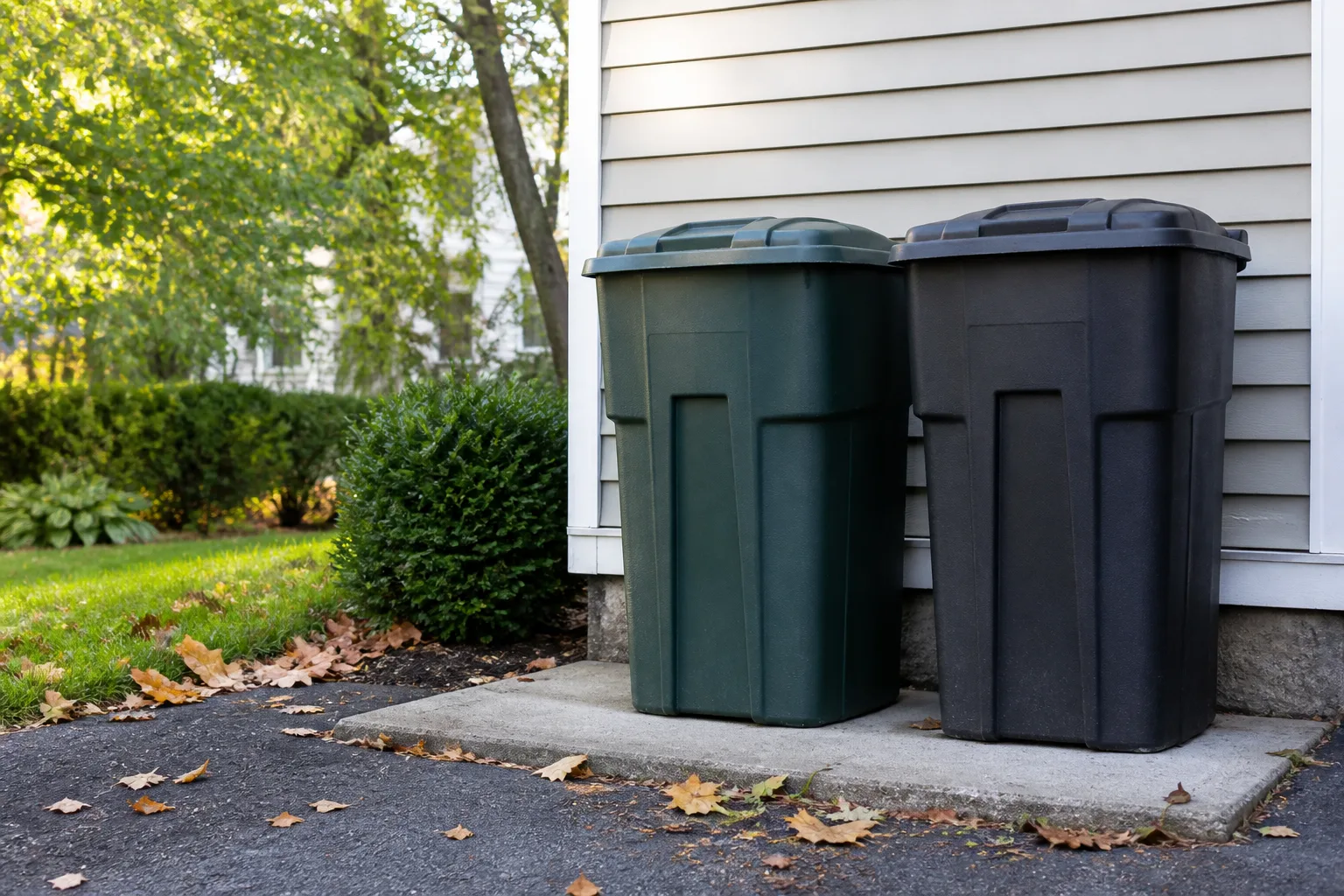
An outdoor bin can smell clean from a distance while its lid rim, hinge, wheels, and bottom seam hold enough residue to support flies. Use tied bags, keep the lid closed, and rinse the inside with ordinary detergent and water when residue builds up. Let the bin dry before adding a new bag; a warm, wet container with scraps is exactly the kind of place fly larvae can use.
Move the bin as far from the porch and door as your property allows, preferably downwind of the seating area. Follow local collection rules and do not leave a full bag beside the container overnight. Rinse beverage containers before recycling them, especially after a party, because a small amount of sugary liquid can ferment in a warm recycling tote.
If you see maggots, do not solve the problem by hanging a trap beside the bin and leaving the waste in place. Seal the material, clean the container, and inspect the surrounding ground for spilled food or a torn bag. UC IPM recommends keeping garbage in tight-lidded containers and placing it as far from a building entrance as practical.
3. Scoop Pet Waste and Clean Outdoor Bowls
Pet waste is one of the first places to check when flies appear suddenly. Scoop dog waste at least daily during warm weather and after gatherings where waste may have been overlooked beneath shrubs, decks, or furniture. Bag it securely before putting it in the outdoor bin, and wash the scoop if residue is visible.
Outdoor pet bowls can create a second attractant. Wet food, softened kibble after rain, and the film underneath a water bowl all deserve a daily rinse. Move feeding stations away from the porch if possible, clean the mat beneath them, and sweep under the deck or table where crumbs collect.
Do not assume every porch fly came from the pet area. Tiny, slow-hovering flies at face height can be little house flies, which may breed in compost or other moist organic material and are not always drawn to the same baits as house flies. If removing pet waste changes nothing, keep looking rather than applying more repellent around the bowl.
4. Manage Compost, Fallen Fruit, and Wet Yard Debris
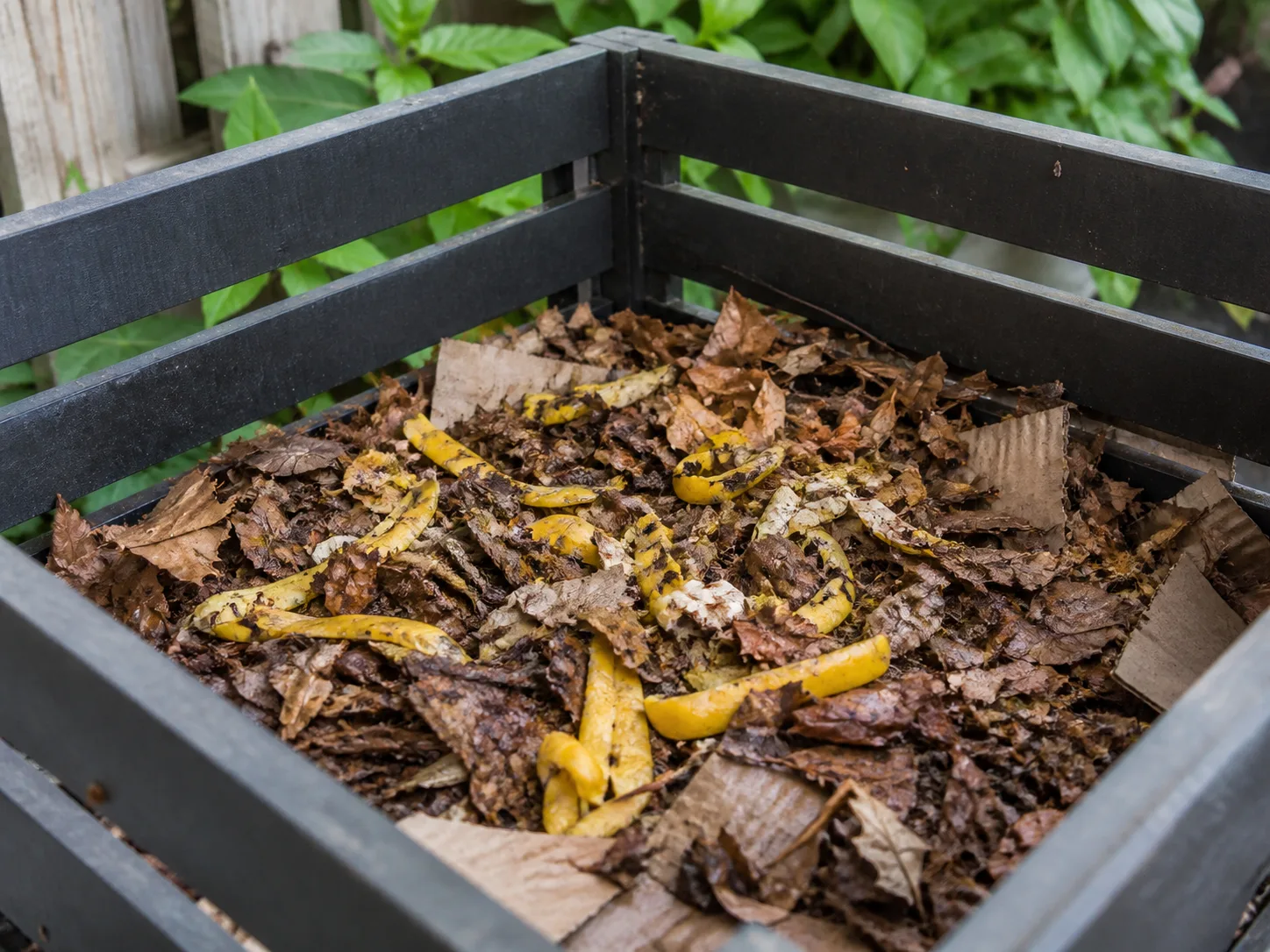
Compost is useful, but an exposed, waterlogged pile close to the porch can become a fly nursery. Keep fresh kitchen scraps covered with a layer of dry browns such as leaves or shredded cardboard, turn the pile so air reaches the center, and correct persistent sogginess. Do not add more fragrant scraps to a surface already showing maggots; bury or mix them into the pile and let the material heat and dry.
Pick up fallen fruit under trees and berry bushes before it collapses into fermenting pulp. Bagged grass clippings, rotting leaves, dead rodents, and forgotten produce in a garden cart can create the same problem. UC IPM specifically lists lawn clippings, decaying fruits and vegetables, garbage, and animal waste among common house-fly developmental materials.
Distance helps. Place compost and waste storage away from dining areas, doors, and the path you use to carry food. You do not need a sterile yard, and you should not remove healthy plants simply because flies pass through them. Focus on wet, decomposing material where flies repeatedly land or where larvae are present.
5. Run a Fan Across Seating and Outdoor Food

A fan is one of the best same-evening tools because it changes the flight environment without putting a chemical on your table. Aim an oscillating or outdoor-rated fan across the plates, seats, and people—not straight at a wall behind you. The goal is a steady cross-breeze over the landing zone, with the speed adjusted until lightweight napkins move slightly but food and conversation remain comfortable.
Airflow does not kill flies or remove their breeding site. It makes hovering, landing, and face-height swarming harder, which is particularly useful for little house flies that gather in protected, still-air areas near porches. UC IPM notes that strong air currents can disperse these aggregations, and Bob Vila’s outdoor guidance likewise recommends trying an oscillating fan near a grill or picnic table (Bob Vila).
Use only equipment rated for the location. Keep cords, plugs, and connections away from rain, sprinklers, and standing water, and never treat an indoor fan as weatherproof. For a large porch, two fans angled across the eating zone can create better coverage than one fan blasting directly at a single chair.
6. Put Baited Traps at the Yard’s Edge
Outdoor baited traps are useful for reducing adult house flies, but placement decides whether they help or make the porch busier. Hang a commercial odor-baited or inverted-cone trap near the property edge, a trash-storage area, or another fly route well away from the door and seating. A practical starting point is roughly 20 to 25 feet from the porch when the product and property layout allow it; always follow the label’s distance and disposal directions.
The trap should intercept flies before they reach the porch, not advertise the porch as the place to visit. Keep it downwind of the area where you eat if possible, and never hang a foul-smelling bait trap above a table, beside a door, or near a children’s play area. Replace or dispose of it before it becomes overfull, leaks, or turns into its own odor source.
Use the trap as a simple trend monitor. Take a quick look at the same time each day and record whether the catch is rising, steady, or falling. A falling catch after the bins and compost are cleaned is evidence that source removal is working; a trap that fills quickly while the porch remains busy means the source is still active or the trap is competing with something more attractive nearby. Do not move the trap every few hours or change bait types mid-test, because you will lose the comparison.
UC IPM warns that attractant traps compete poorly with nearby garbage or animal waste and that the baits can be foul-smelling, which is why distance from occupied structures matters. A trap is a population-reduction and monitoring tool; it cannot compensate for an open bin or wet compost pile ten feet away.
7. Use Sticky Traps Only Where They Fit the Problem
Sticky fly paper works best for a few flies in a confined, shaded place where people and pets will not brush against it. A covered porch corner, detached garage, bin enclosure, or quiet fence line may be appropriate. Hang the strip vertically, inspect it often, and remove it when it is dusty, full, or no longer sticky.
Sticky traps are not a good answer for a heavy outdoor swarm. Wind reduces their usefulness, and they can catch non-target insects. They also do little for blow flies that do not regularly rest on vertical surfaces. UC IPM describes sticky paper as useful for a few flies in relatively confined areas but not sufficient for heavy infestations or general outdoor control.
Keep any trap away from food preparation, children, and curious pets. If you need to monitor whether flies are entering through a screened door, a sticky card in a protected corner can show activity without placing a bait directly beside the food. Treat the catch as information: a full card means you should revisit the source audit.
8. Repair Screens, Door Sweeps, and Frame Gaps
If flies are on the porch and then appearing indoors, treat the threshold as an exclusion problem. Patch tears, press loose spline back into the frame, replace a damaged screen door, and check the bottom sweep for a continuous seal. Look at the corners where the frame meets siding; a narrow gap can be more important than a large open area that flies rarely use.
Make the door easier to keep closed. A spring or automatic closer reduces the time the door stands open, while a magnetic screen can help on a busy porch if it closes fully after each person passes. Do not block the only safe exit or create a trip hazard in the name of exclusion.
For a screened-in porch, turn off lights inside when the door is open at night and inspect the roofline, pet door, vents, and cable penetrations. If flies remain inside after repairs, vacuum the adults and look for a source behind stored bins, a forgotten drink, a dead animal, or a gap around the structure. Spraying the screen is not a substitute for closing the opening.
9. Rethink Porch Lighting at Night
If most of the flies arrive after sunset and collect around one bright fixture, test the light before buying a new pesticide. Turn off decorative lights when the door is open, move a bright fixture farther from the doorway, or switch a harsh white bulb to a warmer, shielded light. Keep security lighting where you need it, but aim it downward and away from the door rather than creating a bright halo around the entry.
Lighting is not a universal fly solution. Different flies respond differently, and a porch light may be revealing a nearby resting spot rather than causing the whole problem. The useful question is whether changing the light changes the pattern over several evenings; if it does not, return to sanitation and exclusion.
Avoid placing a UV bug zapper beside outdoor food. UC IPM warns that fly bodies can be propelled from zappers, and UV devices can draw insects toward a space that should stay clean. If you use a light trap at all, keep it away from food preparation and follow the device’s indoor or outdoor rating.
10. Clear Gutters and Other Wet Organic Pockets
Gutters are not automatically a fly source, but a clogged section filled with wet leaves, flowers, or fallen fruit deserves inspection when flies cluster beneath it. Remove the organic material safely, correct the clog, and check whether the downspout discharges beside the porch. A damp wall, leaking outdoor faucet, or saturated patch under a hose reel can create the moisture that keeps nearby debris attractive.
Use a ladder only if you can do so safely, or hire someone for a high or unstable roofline. Keep gutter debris out of open compost if it contains animal waste or unknown material; bag it according to local rules. The point is to remove a wet, decaying pocket—not to sterilize every damp surface outdoors.
Match the Method to the Fly and the Moment
If You Need Relief for Dinner Tonight
Start with a clean table, covered food, and a fan. Put drinks in lidded cups, move the trash bag away from the eating zone, and wipe the grill area. If adults still circle the porch, place a baited trap at the far edge of the yard rather than on the table and use a swatter or vacuum away from food for the few that remain.
Do not fog the porch before a meal or spray a residual insecticide over chairs, cushions, plates, or serving surfaces. If a labeled outdoor pesticide is ever needed, remove or cover furniture and food, keep children and pets away for the label’s required period, and follow the label exactly. Purdue Extension notes that outdoor residual treatments require protecting or removing picnic surfaces and keeping pets out until the product is dry.
If You Have a Screened-In Porch
Repair the screen first, then check the door sweep and the frame corners. A fan inside the porch can make the space less attractive to hovering flies, but it will not fix a gap. Keep an eye on door traffic: a screen that closes slowly can undo an otherwise good repair every few minutes.
If the porch is clean but flies still gather, identify their resting height and time of day. Swarms under a roof overhang point toward still air and nearby outdoor habitat; flies appearing around a ceiling light after dark may be entering through a roofline or door gap. Persistent activity after exclusion is a reason to inspect the structure and nearby property, not to keep applying surface sprays.
If Tiny Flies Keep Hovering Near Food or Plants

Tiny tan flies around fruit, drinks, or recycling are more likely to be fruit flies than the larger house flies that gather around garbage. Remove fermenting food, rinse bottles, clean sticky residue, and use a small vinegar trap beside the suspected source. Planet Natural’s practical trap instructions use apple cider vinegar, a funnel or covered opening, and frequent cleaning, while emphasizing that sanitation is still necessary (Planet Natural).
Tiny dark flies rising from damp porch-planter soil are a different problem. Let the soil surface dry as the plant allows, empty saucers, and correct overwatering; an outdoor baited house-fly trap will not solve larvae in potting mix. If the flies are fuzzy and moth-like near a drain, inspect the drain film and plumbing instead of treating the plants.
When to Call a Pest Professional
Get professional help when heavy swarms continue after you have removed accessible waste, cleaned the bins, corrected compost moisture, scooped pet areas, and repaired obvious entry points. The same applies when flies appear from a wall, ceiling, crawlspace, sewer-like odor, or inaccessible roof void; those sources are difficult to prove with porch traps.
Do not keep escalating pesticide use because the first application did not work. UC IPM notes that house flies have resistance to many registered pesticides, and USDA Agricultural Research Service research describes house flies as difficult to control because resistance has developed to insecticides used against them (USDA ARS). A licensed professional can identify the fly, locate the breeding material, and select a legal treatment that fits the site.
Call sooner around food-service operations, childcare areas, vulnerable occupants, or a suspected dead animal. A few flies are a nuisance; a persistent swarm landing on food is a sanitation and source-location problem worth taking seriously.
Conclusion
The most reliable way to keep flies off a porch is to make the space hard to reach and uninteresting to return to. Remove food residue, clean and relocate waste containers, manage compost and pet areas, then add a fan, repaired screen, or correctly placed trap according to the moment and the fly.
Start with the source you can change today. If numbers do not fall after a full cleanup and exclusion pass, stop guessing, identify the species or hidden habitat, and bring in a professional. A porch does not need to be perfectly insect-free to be comfortable; it needs a plan that breaks the breeding cycle without putting food, pets, people, or beneficial insects at unnecessary risk.