How to Keep Roses Blooming All Summer
Learn how to keep roses blooming all summer without overwatering or overfertilizing, including the right deadheading cut and a simple troubleshooting plan.
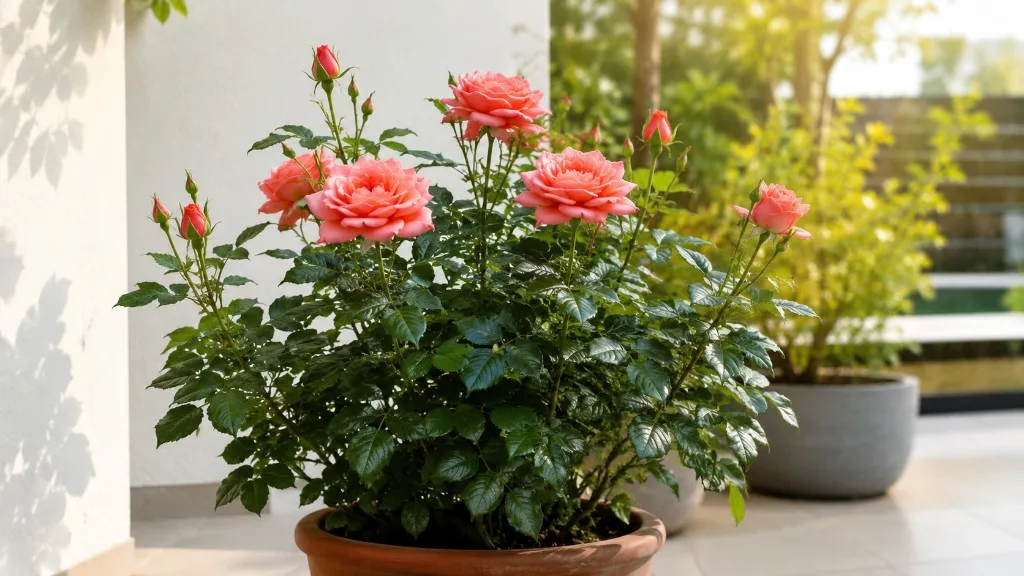
If you want roses to flower through summer, start by identifying what kind of flowering pattern your plant has. A modern repeat-flowering, or remontant, rose can produce several flushes when its roots stay steadily supplied and its finished flowers are removed. A once-flowering species, rambler, or old garden rose may give one spectacular display and then spend the rest of the season building hips, no matter how often you feed it.
That is the first correction to make to summer rose care: more fertilizer, more water, and harder pruning do not automatically create more flowers. The reliable approach is a small routine that keeps the plant growing without stress—deeply water when the soil is drying, deadhead at the right point, feed during active growth, preserve healthy leaves, and inspect the plant before a small problem becomes a bloom-stopping one.
The RHS rose growing guide describes roses as sun-loving plants that prefer rich, moist but well-drained soil, with many varieties repeat-flowering into autumn. Use that as a framework, then adjust it for your rose type, soil, container, weather, and local growing season.
Start With the Rose, Not the Fertilizer
Look at the plant tag or cultivar name before changing the care routine. Words such as “repeat flowering,” “reblooming,” “remontant,” “floribunda,” “hybrid tea,” or “modern shrub” usually point toward a rose that can flower in waves. “Once flowering,” “species,” “old garden,” or “rambling” may signal a rose that has one main bloom period, although the categories contain exceptions.
The difference is biological, not a reflection of your gardening skill. A repeat-flowering rose keeps initiating new flower buds on new growth, while a once-flowering rose may use the months after bloom to mature fruit and seed. Deadheading can tidy either plant, but it cannot make a once-blooming cultivar behave like a floribunda.
Light is the next non-negotiable. Most roses need several hours of direct sun to produce strong flowering growth; six hours is a useful target when the site is not punishingly hot. In a very hot climate, morning sun with protection from the harshest afternoon exposure can be a better compromise than a west-facing bed beside a heat-reflecting wall. The Martha Stewart rose-care roundup similarly emphasizes adequate sun, while the Homes & Gardens rose guide notes that cultivar and site should be considered together.
If a rose receives only a little filtered light, is crowded by a tree, or is shaded by a fence for most of the day, fertilizer will not solve the underlying problem. Move a container, selectively open the canopy of a competing plant, or plan to relocate an in-ground rose during a mild dormant period rather than repeatedly forcing a plant that is in the wrong place.
Build a Summer Blooming Routine
Treat summer care as a loop, not a one-time rescue. Walk past the rose at least once a week and use four questions: Is the root zone drying? Are flowers fading? Are leaves and stems healthy? Is the plant still producing new shoots and buds? Each answer points to a different task, which keeps you from reaching for fertilizer whenever the flower count dips.
Water when the root zone is drying
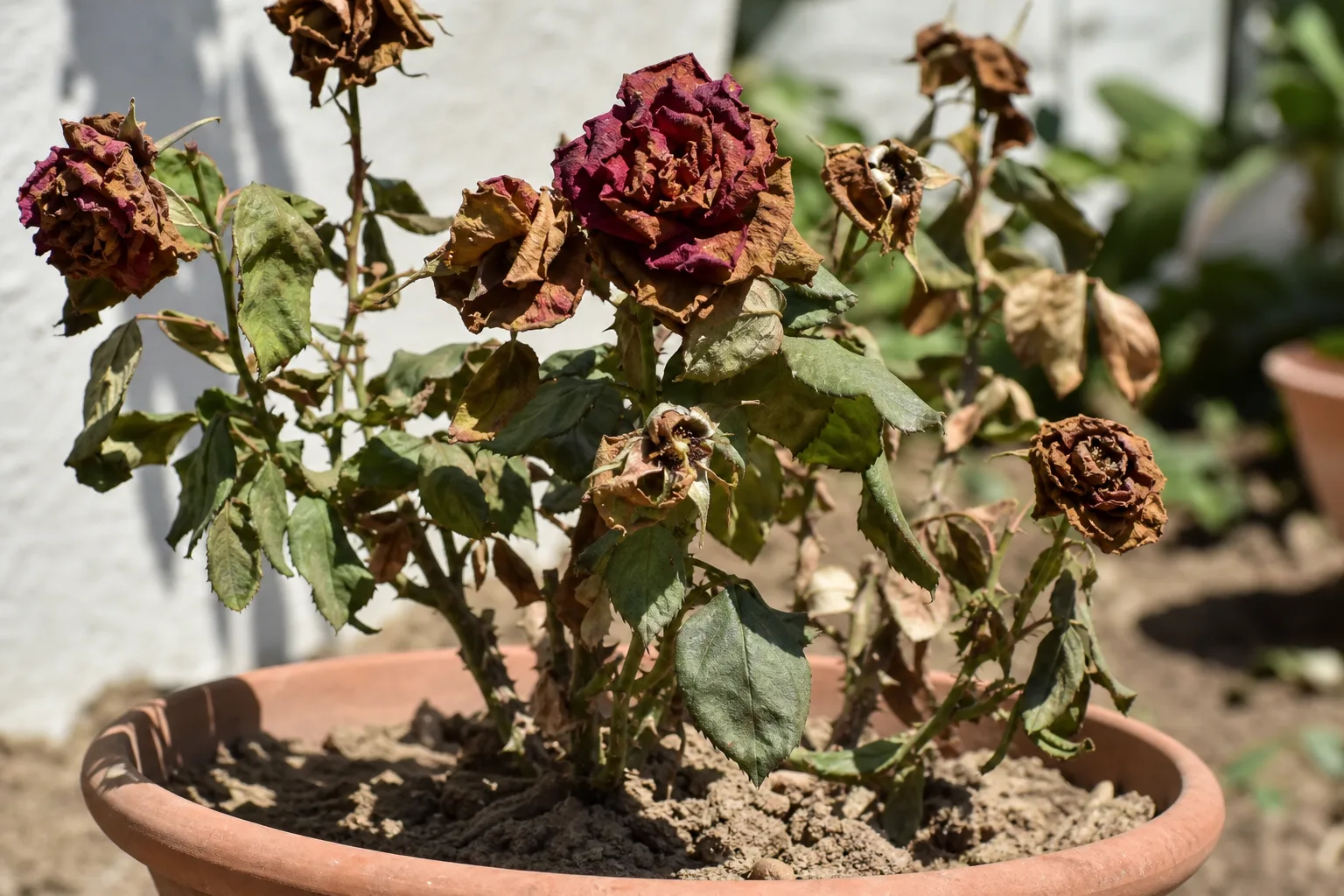
Push a finger or a narrow trowel into the soil several inches from the stems. If the soil is dry below the surface, water slowly at the base of the plant until the root zone is thoroughly moist. If it is cool and damp, do not add water simply because the leaves droop during the hottest hour; temporary heat wilt can happen when leaves lose water faster than roots can replace it.
Watering at the soil line also keeps the foliage and flowers drier. The RHS guidance recommends directing water around the base rather than over the leaves, and notes that established roses need extra water in hot, dry spells while containers can need attention daily in hot weather.
Feed during active growth, not by habit
Fertilizer supports a rose that has enough light, water, and healthy roots; it is not a substitute for any of them. Apply a complete, balanced rose or general-purpose fertilizer according to the label and the condition of the soil. Avoid piling fertilizer against the canes or using a concentrated product on a wilted plant.
The Missouri Botanical Garden’s rose fertilizer guidance recommends a soil test when possible and gives balanced fertilizer as a fallback when a test is not available. It also recommends stopping late in the season rather than encouraging soft new growth when the plant should be preparing for dormancy. Exact timing depends on climate, rose type, and the fertilizer label, so do not treat an early-July or mid-August cutoff as universal across every region.
Deadhead before a reblooming rose forms hips
Remove spent flowers as they fade if your main goal is another flush of flowers. Once a rose begins investing in hips, or seed-bearing fruit, the plant has less reason to initiate another flower at that stem. Deadheading is most useful on repeat-flowering roses and can be done every few days or about once a week depending on how quickly the flowers fade.
Do not turn this into a frantic schedule. The RHS deadheading guide notes that a delay of a few days or even a week will not greatly change flowering performance for many plants. A calm weekly inspection is enough for most home gardens.
Scout leaves and stems once a week
Healthy leaves are the plant’s working solar panels. Check the tops and undersides for black spots, yellowing, powdery growth, distorted new leaves, aphids, webbing, or stems that are dying back. Also look through the center of the bush: crowded, still air and leaves that stay wet after irrigation make disease management harder.
Treat the visible cause rather than spraying by calendar. Remove badly affected leaves from the garden, improve airflow, direct irrigation to the soil, and follow the product label if a treatment is actually needed. If the diagnosis is unclear, use the photos and progression pattern to seek local extension help instead of combining several products and hoping one works.
Deadhead Roses Without Removing Future Buds
Deadheading is not the same as structural pruning. You are removing a finished flower or flower cluster, not reshaping the whole shrub or cutting back every long cane. Use clean, sharp secateurs for thick stems and wear gloves that protect your hands without making it difficult to see the leaf joints.
Remove single flowers and finished clusters
For a single spent flower, trace the flower stem down to the next healthy leaf or leaf joint and cut just above it, leaving a short stub rather than cutting into the joint. If the rose has a cluster, you can remove individual faded flowers as they finish, then cut the entire cluster once the last flower has faded. Keep enough healthy foliage to support the next growth flush.
Hybrid tea roses are often deadheaded below the flower head, while other roses are commonly cut just above the next leaf. Do not blindly use “the first five-leaflet leaf” as a rule for every cultivar; the strongest cut point is a healthy outward-facing leaf joint on a stem that can support new growth. The practical Homes & Gardens deadheading guide explains the difference between removing individual blooms and cutting off a finished truss.
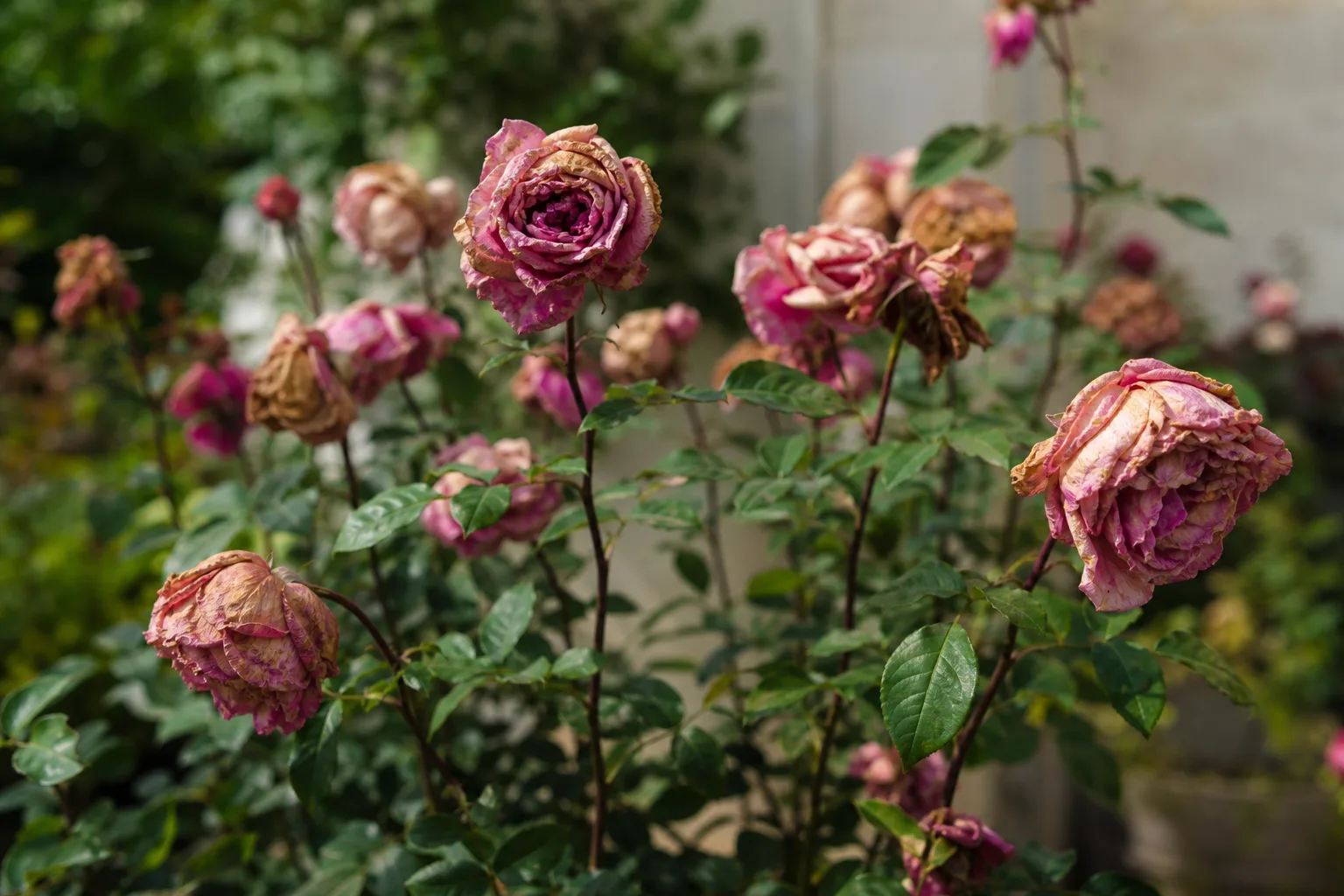
Make the cut cleanly and collect loose petals if the bush is prone to fungal problems. A quick wipe of the blades between visibly diseased plants is sensible, and it is especially important not to drag infected leaves or canes through healthy bushes.
Know when to leave hips on the plant
Not every rose should be deadheaded all summer. Many species and rambling roses produce attractive hips that add fall color and food for birds. If the plant is a once-flowering rose, leaving the spent blooms may be part of its intended seasonal display rather than a mistake.
You can also stop deadheading late in the growing season when you want hips or when your climate is moving toward dormancy. A repeat-flowering rose may give you more flowers if you keep removing faded blooms, but the final decision should account for the cultivar, wildlife value, and your local winter timing. The goal is to choose the display you want, not to follow a rule that removes every fruit automatically.
Water by Root Zone, Weather, and Rose Type
Roses are often described as thirsty, but that phrase is too blunt to guide care. A mature rose in deep soil, a new shrub in a compacted bed, and a miniature rose in a dark container can experience completely different moisture conditions on the same day.
Established in-ground roses
Once established, many in-ground roses can draw moisture from a wide root area. During a hot, dry spell, give the root zone a slow, thorough soak rather than a daily sprinkle that wets only the surface. The RHS recommends a good soak during high-summer dry spells, while noting that exact need changes with soil and weather.
Use the soil and the plant together as your gauge. Dry soil several inches down, limp foliage that does not recover overnight, and fading buds point toward water stress. Wet soil, yellowing leaves, a sour smell, or a plant that stays limp after irrigation point toward poor drainage or root damage, not thirst.
Mulch can make the routine easier. Apply about 2 inches of composted bark, leaf mold, or another suitable organic mulch over the root zone, keeping it away from the canes. Mulch slows evaporation and moderates soil temperature, but it will not fix a blocked drain, heavy compaction, or a rose planted in a shallow pocket over rock.
New plantings and container roses
Newly planted roses need closer checks because their roots have not yet occupied the surrounding soil. Water the original root ball and the adjacent soil slowly, then check whether the moisture is spreading outward rather than pooling in one hole. A layer of mulch can protect the young roots, but do not bury the stem or graft union.
Containers dry faster because they hold less soil and expose more of the root zone to sun and wind. Check the mix several inches down during hot weather and water thoroughly when it is drying; a small pot may need water daily, while a larger shaded container may not. Confirm that water exits the drainage holes and empty a saucer so the rose never sits in standing water.
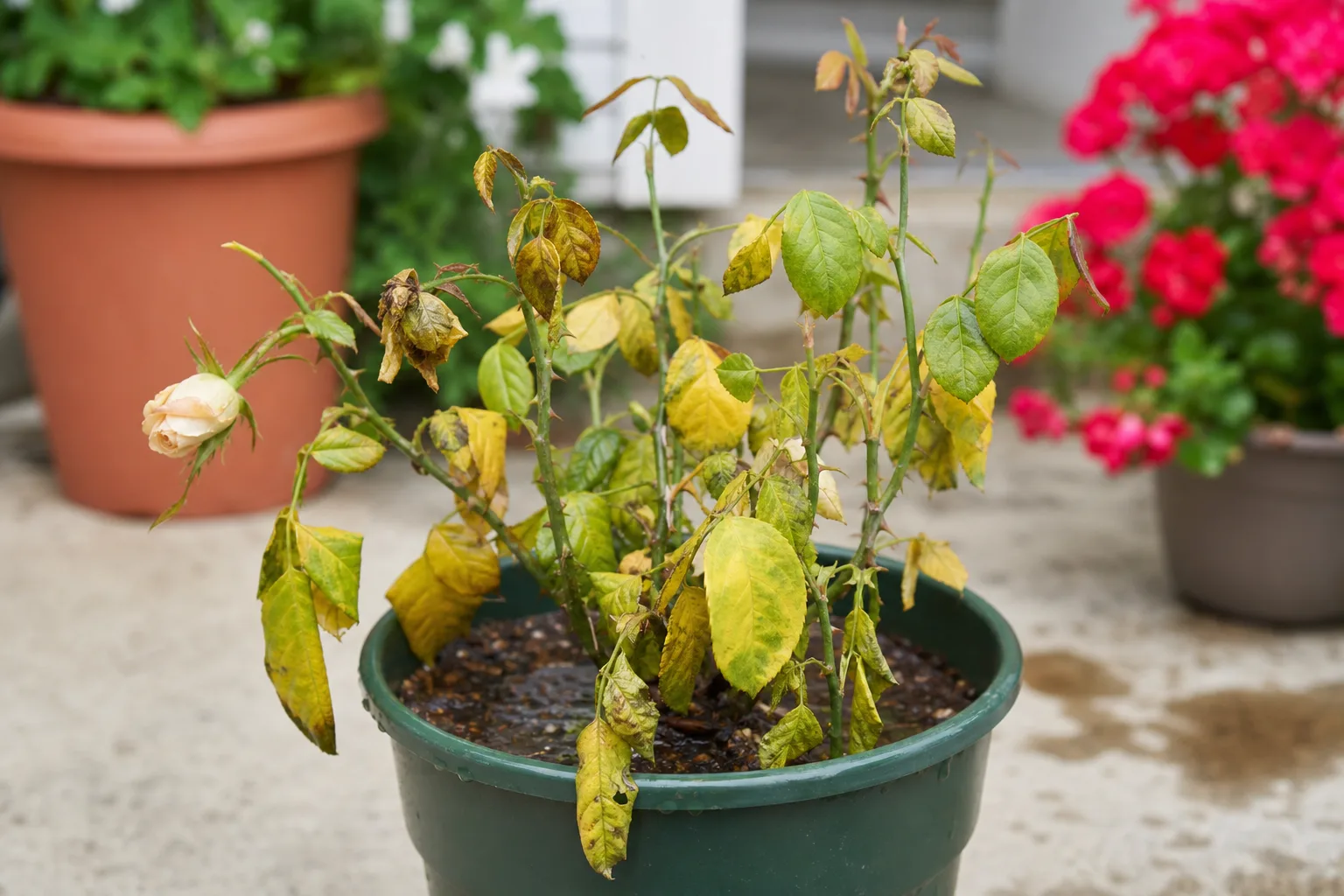
Black plastic pots on hot paving are especially unforgiving. Move a container away from reflected heat, protect it from the harshest afternoon sun, or place it inside a larger outer pot that shields the root ball while preserving drainage. Do not repot or aggressively prune a heat-stressed rose unless there is an urgent root or safety problem; stabilize moisture and temperature first.
Feed for Flowers Without Forcing Weak Growth
If the rose is growing vigorously but producing leaves instead of buds, suspect excess nitrogen before adding more fertilizer. Nitrogen can push soft leafy growth while the plant is already receiving enough nutrients, and a flush of tender growth can be more vulnerable to pests. A soil test is more useful than guessing from the flower count.
When a test shows a deficiency, follow the recommended product and rate. When the soil is unknown, a complete balanced fertilizer used according to its label is a safer starting point than a high-phosphorus “bloom booster.” Phosphorus is not a universal solution for poor flowering, and adding nutrients that the soil already contains can create an imbalance.
Feed when the rose is actively growing and has enough moisture to take up the nutrients. Water the soil first if it is dry, keep granules away from the canes, and water after applying a granular product when the label directs you to do so. Do not fertilize a severely wilted, heat-damaged, or freshly transplanted rose as a rescue; fertilizer can add salt stress while the roots are struggling.
Container roses have less soil to buffer nutrients and usually need more frequent but weaker feeding than established in-ground shrubs. Use the container fertilizer’s instructions, watch for a crust of fertilizer salts, and reduce feeding as your local season cools. Late-season soft growth is not a prize if it delays dormancy or is damaged by the first cold snap.
Protect Healthy Foliage From Pests, Disease, and Heat
Flowers are the visible reward, but leaves are what power the next flush. A rose with sparse, diseased, or repeatedly scorched foliage may survive yet fail to maintain the energy needed for continuous flowering. Protection is therefore part of bloom care, not an unrelated cleanup job.
Keep leaves dry and air moving
Space rose bushes so air can move around them, and avoid planting them tight against walls or dense shrubs. Water at the soil line in the morning when practical, remove fallen diseased leaves, and avoid creating a humid canopy with frequent overhead sprays. These habits reduce the conditions that favor black spot and other fungal problems without pretending they make a rose disease-proof.
Heat adds a second kind of stress. A rose may droop in the afternoon while the soil is still moist, especially beside paving or a reflective wall. Give a container temporary afternoon shade, keep the root zone mulched, and water only when the soil check shows that the plant needs it. A temporary cooling measure is better than flooding the bed every time the leaves hang at 3 p.m.
Treat the cause instead of spraying on a guess
Black spots with yellowing around them, clusters of aphids on tender growth, powdery white growth, and browning from hot exposure do not have the same cause or treatment. Photograph the whole plant and a close-up, note whether the damage is on new or old leaves, and watch how it spreads over a few days. That pattern is more diagnostic than a single damaged leaf.
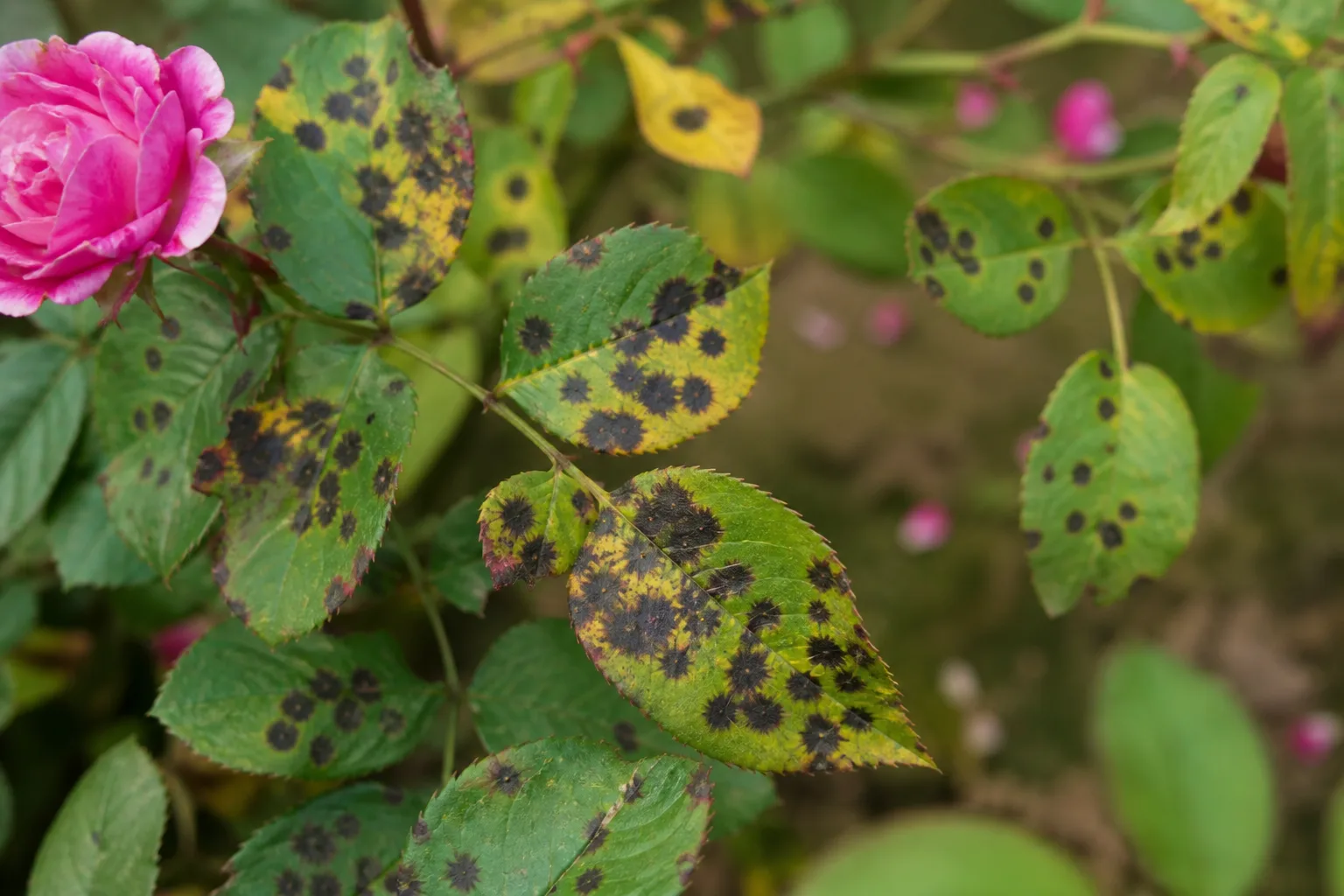
Remove affected material when appropriate, improve the growing conditions, and use only a treatment labeled for the identified problem and plant. Follow the label’s directions and local rules; stronger or more frequent application is not automatically more effective. If stems are dying back, buds are collapsing across the plant, or a rose declines despite good moisture, seek a local extension diagnosis.
Prune Only When Pruning Helps
Summer deadheading is light pruning. It removes a spent flower to encourage another shoot, while structural pruning removes canes to shape the plant, open the center, or remove dead and diseased wood. Confusing the two is one of the fastest ways to remove healthy leaves or next season’s flower buds.
Do not hard-prune a rose simply because it has paused between bloom flushes. Remove dead, broken, diseased, or badly crossing growth when necessary, but save major shaping for the correct seasonal window for that rose and climate. Many modern shrub, floribunda, and hybrid tea roses are pruned in late winter or early spring; climbing and rambling roses can have different timing, especially when they flower on older canes.
Pruning also cannot compensate for a rose that is planted in deep shade or chronically waterlogged soil. If the plant is healthy but too tall, crowded, or weakly branched, identify the rose class and its flowering wood before cutting. A few minutes with the cultivar label or a local rose reference can protect an entire season of buds.
If Roses Still Won’t Bloom, Diagnose the Bottleneck
When a rose stops flowering, change one variable at a time. Use the following order so a plausible answer does not hide the real problem:
| What you observe | Most likely bottleneck | First response |
|---|---|---|
| Plenty of leaves but no buds | Too little direct light, excess nitrogen, or a once-flowering cultivar | Check the tag, measure the light, and pause fertilizer until the soil is understood. |
| Buds form but drop or fail to open | Heat, drought, thrips or other pests, or fungal damage | Check soil moisture, inspect buds closely, and look for a pattern across the bush. |
| New leaves are pale or distorted | Nutrient issue, sucking pests, or root stress | Inspect leaf undersides and drainage before applying feed. |
| Leaves are spotted and falling | Black spot or another foliage disease | Improve airflow, keep leaves dry, remove infected debris, and identify the disease. |
| The whole plant wilts in wet soil | Poor drainage, root damage, or a container problem | Stop automatic watering and inspect drainage and roots. |
| One long flush, then no more flowers | Once-flowering genetics or late-season hip production | Confirm the rose type and decide whether hips are part of the desired display. |
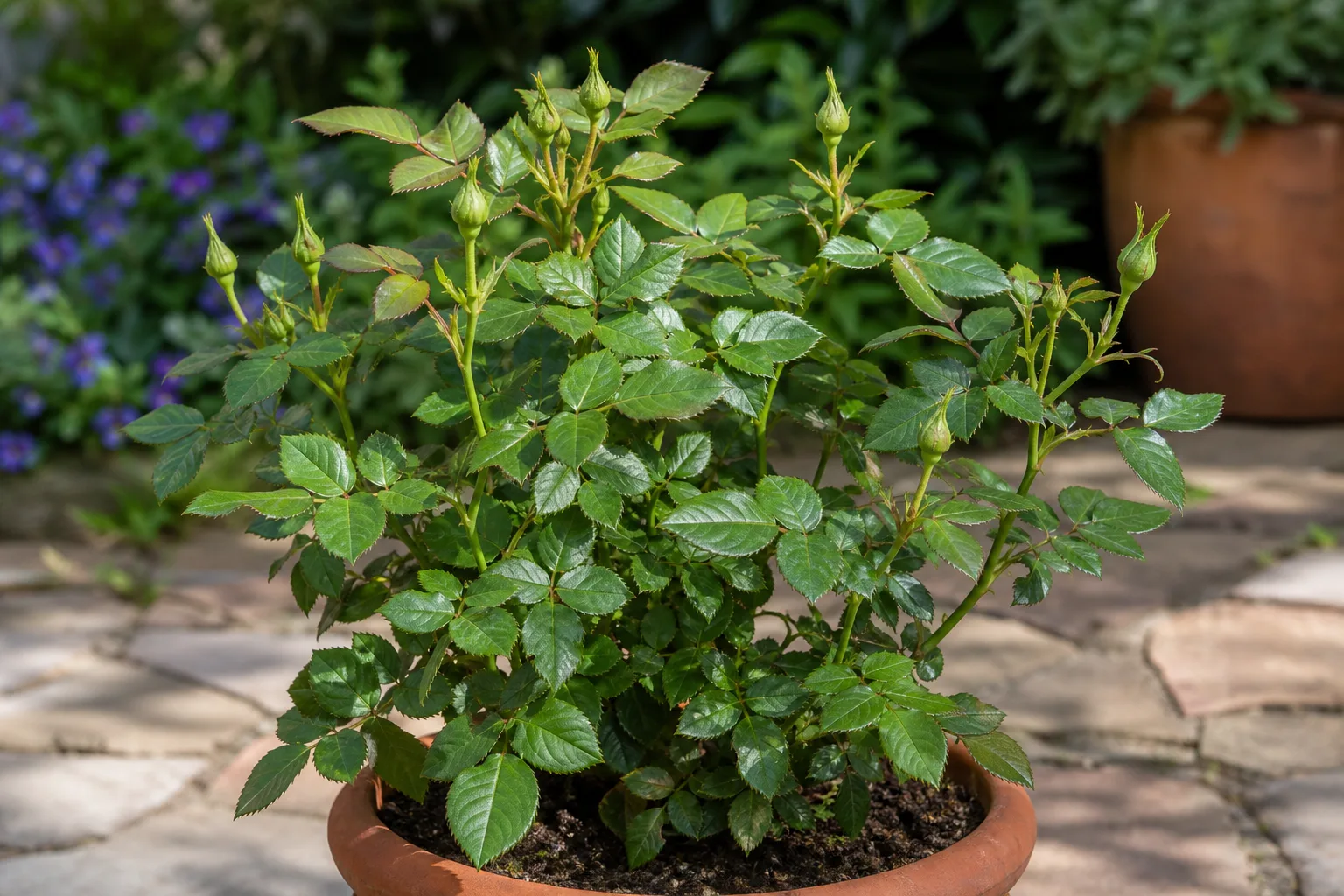
Start with the simplest checks: light, rose type, soil moisture, and recent pruning. Then look at fertilizer history and foliage health. If the rose is in a pot, also check whether the root ball has filled the container or whether the drainage holes are blocked. A root-bound or repeatedly waterlogged rose may need a longer-term correction, not another weekly dose of plant food.
The Missouri Botanical Garden explanation of deadheading is useful here because it makes the limitation clear: deadheading can redirect energy in plants that rebloom, but it does not guarantee a new flower on every plant. If you want a second opinion on a persistent symptom, take a photo of the entire bush, the soil, the leaves, and the bud or stem that concerns you.
Conclusion: Consistency Beats a Miracle Product
To keep roses blooming all summer, choose a repeat-flowering rose for repeated flushes, give it enough light, and keep the root zone evenly moist without leaving it saturated. Deadhead finished flowers when you want more blooms, feed only during active growth and at label rates, preserve healthy foliage, and inspect for pests and disease before they weaken the next set of buds.
The best summer routine is small enough to repeat: check the soil, water deeply when it is drying, remove spent flowers, scan the leaves, and stop before a helpful task becomes overwatering, overfertilizing, or overpruning. When a rose still will not bloom, diagnose the cultivar and growing conditions first; the right correction is usually more specific than a stronger product.



