7 Humane Ways to Keep Squirrels Out of Fruit Trees
Keep squirrels out of fruit trees with seven humane tactics, from pruning and trunk baffles to safe netting, sprinklers, and careful harvest cleanup.
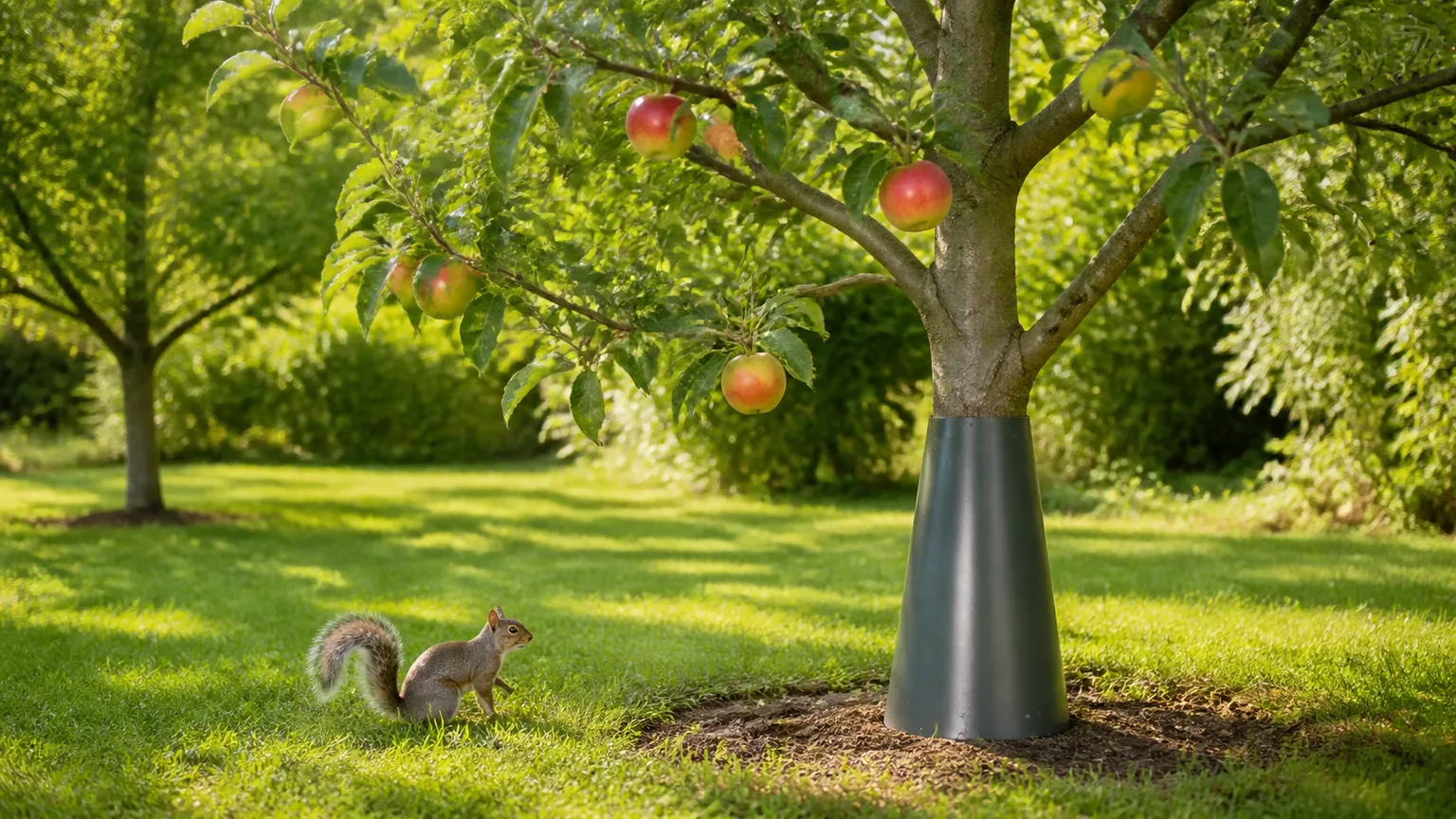
The best way to keep squirrels out of fruit trees is to block the route they are using, then add a temporary deterrent while fruit ripens. Start by looking for a nearby branch, fence, roof, wire, or dense canopy that lets a squirrel bypass the trunk. An isolated tree may respond well to a properly fitted baffle; a tree beside another canopy usually needs pruning plus netting or a motion sprinkler.
No humane method makes a fruit tree permanently squirrel-proof. Squirrels climb well, learn quickly, and may ignore a scent or shiny object when ripe fruit is the most rewarding food in the yard. Physical exclusion is the reliable part of the plan; streamers, water, and labeled repellents are supporting tactics that work best when used early and changed before the animals get used to them.
Start with the access route, not a repellent
Walk around the tree before buying anything. Look at the trunk, the lowest branches, the edges of the canopy, and every nearby launch point. A baffle cannot stop a squirrel that jumps from an adjacent tree, fence, shed, roof, picnic table, or overhead line directly into the fruiting branches.
Make a simple map: ground to trunk, neighboring structure to branch, and branch to branch. If the tree is part of a row, inspect the entire row rather than treating one trunk in isolation. Squirrels may use the easiest tree as a ladder and move through connected canopies after they reach the first crown.
Timing matters. Put barriers in place before the fruit colors or softens, not after squirrels have spent several days feeding there. UF/IFAS Extension notes that wildlife can become accustomed to deterrents, and that deterrents work best when started early, rotated, and combined across more than one sense. (UF/IFAS Extension)
1. Prune branches that create a launch route
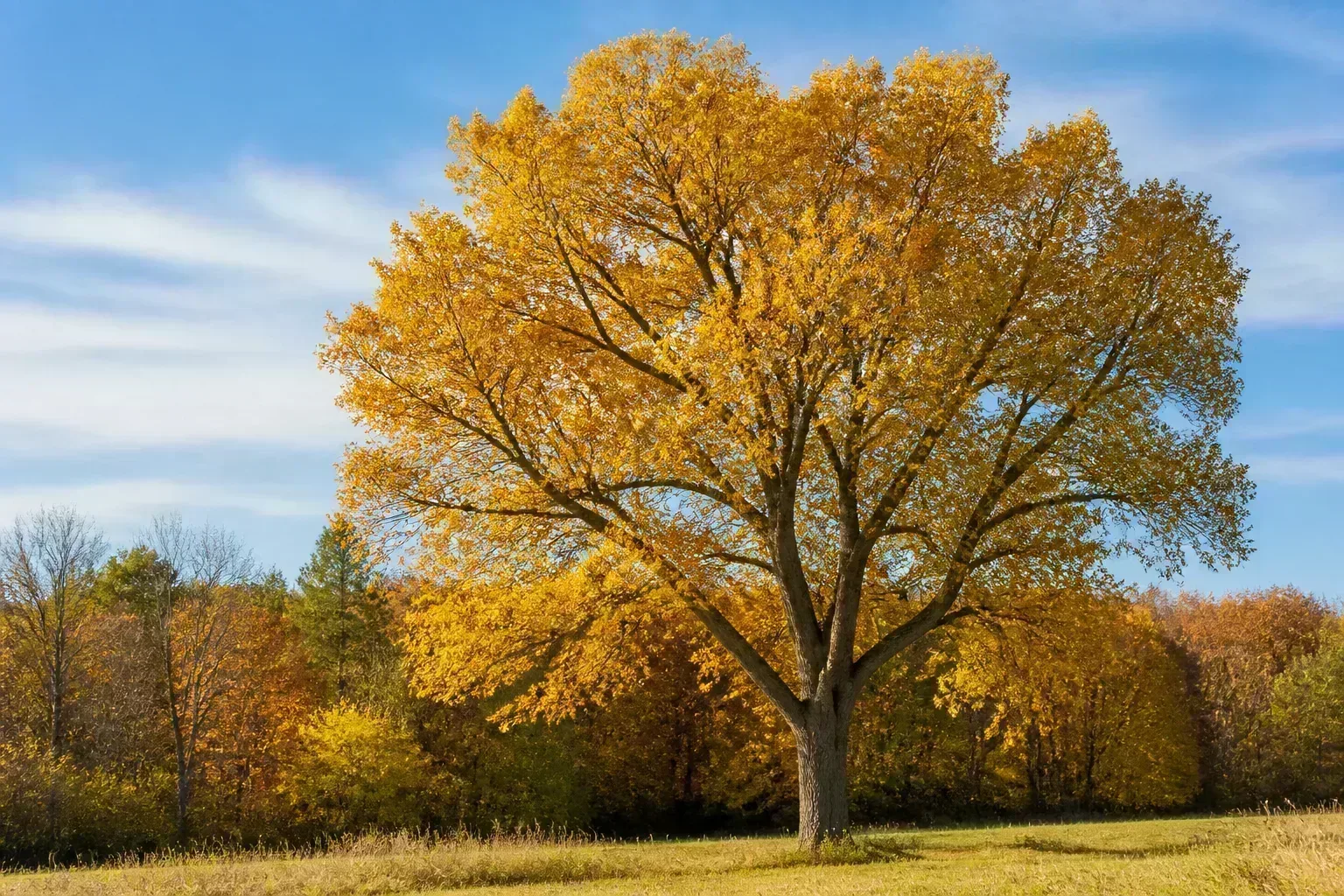
Prune back branches that touch or nearly touch another tree, a fence, the roof, utility lines, or a structure that gives squirrels a higher starting point. The goal is not to make the tree sparse; it is to remove the most obvious runways into the fruiting canopy. Pruning also improves air movement and light, but those benefits do not justify indiscriminate cutting.
Keep the pruning targeted, not drastic
Use the tree’s normal pruning season and species-specific training rules. Remove dead, broken, crossing, or poorly placed wood first, then shorten only the branches that create access. If a branch is large, high, or close to a power line, stop and hire a qualified arborist; never approach or attach a deterrent to an electrical line yourself.
Avoid stripping the outer canopy just to create a large empty gap. Heavy pruning can reduce the leaf area that supports fruit and can stimulate vigorous regrowth that recreates the route next season. A few strategic cuts, followed by a baffle or net, are usually more useful than trying to out-prune a determined animal.
Pruning is most valuable when the tree is currently connected to another tree. If the trunk is the only route, pruning will not stop a squirrel climbing from the ground, so move to a trunk barrier instead. Gardening Know How likewise treats pruning and canopy netting as complementary measures rather than a guarantee of total protection. (Gardening Know How)
2. Install a smooth trunk baffle
A squirrel baffle is a smooth metal or plastic collar that interrupts climbing. Commercial tree baffles are usually easier to fit and adjust than improvised sheet metal, but either can work if the surface is smooth, the edges are secure, and the squirrel cannot leap around it.
Penn State Extension describes a two-foot-wide metal collar as a way to keep squirrels from climbing individual trees, with the collar held by wires and springs so the tree has room to grow. K-State Extension gives similar guidance for a two-foot-wide metal wrap or baffle and emphasizes that an isolated tree is the best case for this tactic. (Penn State Extension; K-State Research and Extension)
Install the baffle below the first major branches but high enough that a squirrel cannot simply jump over it from the ground or a low object. Keep the smooth face continuous around the trunk. Close gaps at the overlap without driving fasteners into the bark, and never wrap wire tightly around a growing trunk.
Check the fit as the tree grows
A baffle is not a set-it-and-forget-it device. Inspect it every few weeks during the growing season and after storms. The collar should remain stable without pinching the trunk, rubbing a branch union, trapping water against the bark, or becoming a ladder through accumulated mulch and pruned branches.
Keep grass, stakes, stacked pots, firewood, and fallen limbs away from the lower trunk. A baffle that works in April can fail in June if a chair, ladder, or tall weed gives the squirrel a higher takeoff point. If the tree is next to a fence or another canopy, pair the baffle with pruning or netting instead of assuming the collar covers every route.
3. Cover the canopy with wildlife-safe netting
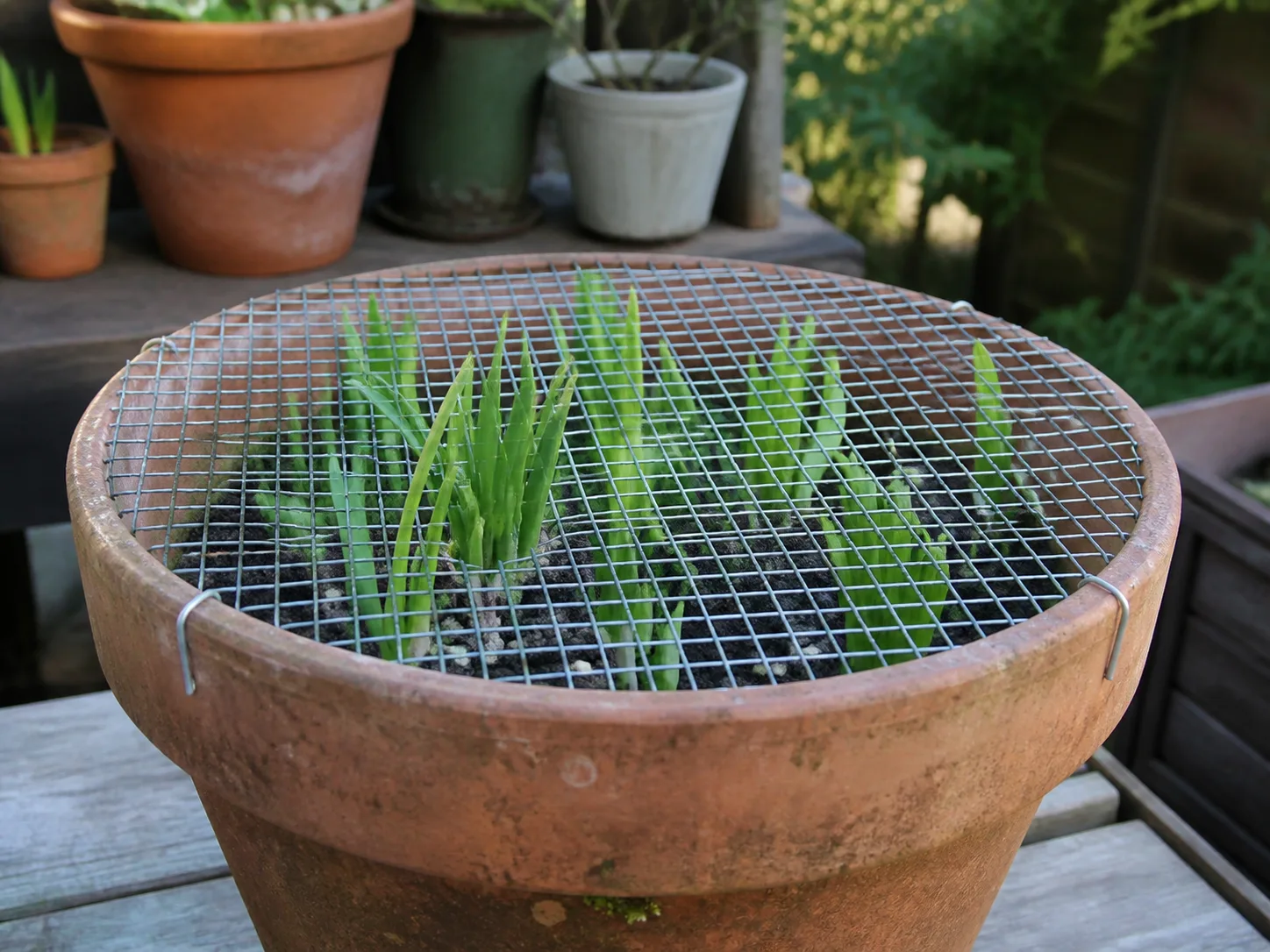
Netting is the strongest practical option for a small or dwarf fruit tree when squirrels are already reaching the canopy. Use a durable, clearly visible mesh designed for wildlife exclusion, drape it over the entire canopy, and secure the bottom around the trunk or support frame so there is no loose opening at ground level.
UF/IFAS Extension recommends lightweight, UV-stabilized plastic mesh for protecting individual plants, but warns against extremely thin netting that can entangle birds. Its example uses mesh around three-quarters of an inch, although the right product depends on the animals in your area and the fruit tree’s size. (UF/IFAS Extension)
Inspect, anchor, and remove it correctly
Before covering the tree, check that no squirrel, bird, nest, or other animal is inside. Anchor the lower edge tightly enough that a squirrel cannot nose underneath, but do not cinch it against a trunk so hard that it cuts into bark. Keep the mesh from resting heavily on fruit-laden branches, which can bend or break them in wind.
Inspect the net every day or two during peak ripening. Repair holes promptly, look for animals caught in folds, and remove the net after the harvest window or when it is no longer needed. A net that is technically squirrel-proof but traps birds is not a humane solution.
For a tall mature tree, netting can be difficult to install and inspect safely. A professional orchard or tree-care crew may be the better choice, especially if ladders, large branches, or a complicated support system are involved. Netting is excellent for a high-value small tree; it is often impractical for a full-sized backyard tree unless the canopy can be managed from the ground.
4. Add a motion-activated sprinkler
A motion-activated sprinkler delivers a sudden burst of water when an animal enters its detection zone. Aim the sensor at the likely approach path or trunk base, not directly at the fruiting canopy, and adjust the sensitivity so the system is not constantly triggered by every person, pet, or wind-blown branch.
This is a hazing tool, not a physical wall. UF/IFAS Extension says the surprise of water can make wildlife leave, but also notes that effectiveness may be short-lived and can last longer when the unit is moved. (UF/IFAS Extension) Use it at the beginning of the damage cycle, then shift the position after a few days if squirrels start walking around the spray arc.
Remember the practical drawbacks: a sensor can soak you while harvesting, wet pathways can become slippery, and a sprinkler may waste water if it fires all day. Turn it off before entering the detection zone, check local water restrictions, and avoid directing repeated spray at a tree trunk or fruit that is close to harvest if prolonged wetness creates disease or cracking concerns for that species.
5. Hang reflective streamers for short-term hazing
Reflective Mylar tape, silver streamers, or other lightweight foil strips add moving flashes and sound around the tree. Hang several short lengths near the outside of the canopy where wind can move them, then change their position regularly. This is most useful when fruit is approaching ripeness and you need a quick, low-cost layer while installing a baffle or net.
Visual deterrents fade when squirrels learn that the object is harmless. UF/IFAS Extension explains that reflective foil can work through both sight and sound, but animals can still become accustomed to a single tactic. (UF/IFAS Extension) Remove damaged strips before they fray into loops that could entangle birds, and do not use fishing line, fine thread, or loose mesh as a substitute.
Streamers are a poor stand-alone answer for an established feeding site. Use them as a changing cue around a barrier, not as proof that a squirrel will avoid a tree forever. If the tree is near a window or a neighbor’s property, consider the noise and appearance before adding many strips.
6. Use a labeled taste repellent carefully
Commercial taste repellents can make a plant less appealing, but they are more variable than exclusion. Look for a product whose label specifically allows use on the tree, crop, and growth stage you are treating. Follow the label for mixing, protective equipment, reapplication, harvest interval, and weather limits; “natural” does not mean automatically safe for edible fruit or beneficial wildlife.
Capsaicin-based repellents are sometimes used for squirrel pressure, but the product’s label controls where and when they can be applied. Penn State Extension notes that a capsaicin product may be used on fruit trees only before fruit is present or after it has been removed, while Nebraska Extension cautions that taste repellents and other products have limits and legal restrictions. (Penn State Extension; Nebraska Extension) Do not spray a homemade pepper or essential-oil mixture onto fruit you plan to eat unless the product is explicitly labeled for that use.
Why homemade sprays are a poor substitute
Peppermint oil, vinegar, garlic, coffee grounds, soap, and hot-pepper concoctions may smell strong to you, but their performance outdoors changes with rain, heat, sunlight, and the availability of other food. Some oils can injure leaves or fruit, while unlabelled mixtures can expose pets, birds, pollinators, and children without a tested application rate. Southern Living lists strong scents as a possible short-term tactic but also notes that frequent reapplication is needed. (Southern Living)
If you use a repellent, treat it as the last layer after access is reduced. A squirrel that can reach a ripe peach from a neighboring branch may accept an unpleasant smell for a meal. A baffle plus early netting usually gives you a clearer, more controllable result.
7. Remove food cues and harvest promptly
Pick ripe fruit as soon as it is ready, collect windfalls daily, and remove fruit that has been chewed and dropped. Fallen fruit does not reliably distract squirrels from the canopy; it can simply give them an easy snack while they continue climbing for more. Cleanup also reduces wasps, flies, and other animals attracted to fermenting fruit.
Thin damaged or overripe fruit according to the tree’s normal care routine rather than leaving a heavy crop to advertise the tree. Keep compost, pet food, and open bags of seed away from the trunk. Store harvested fruit indoors or in a secured container instead of leaving a basket on a porch beneath the canopy.
Rethink bird feeders near fruit trees
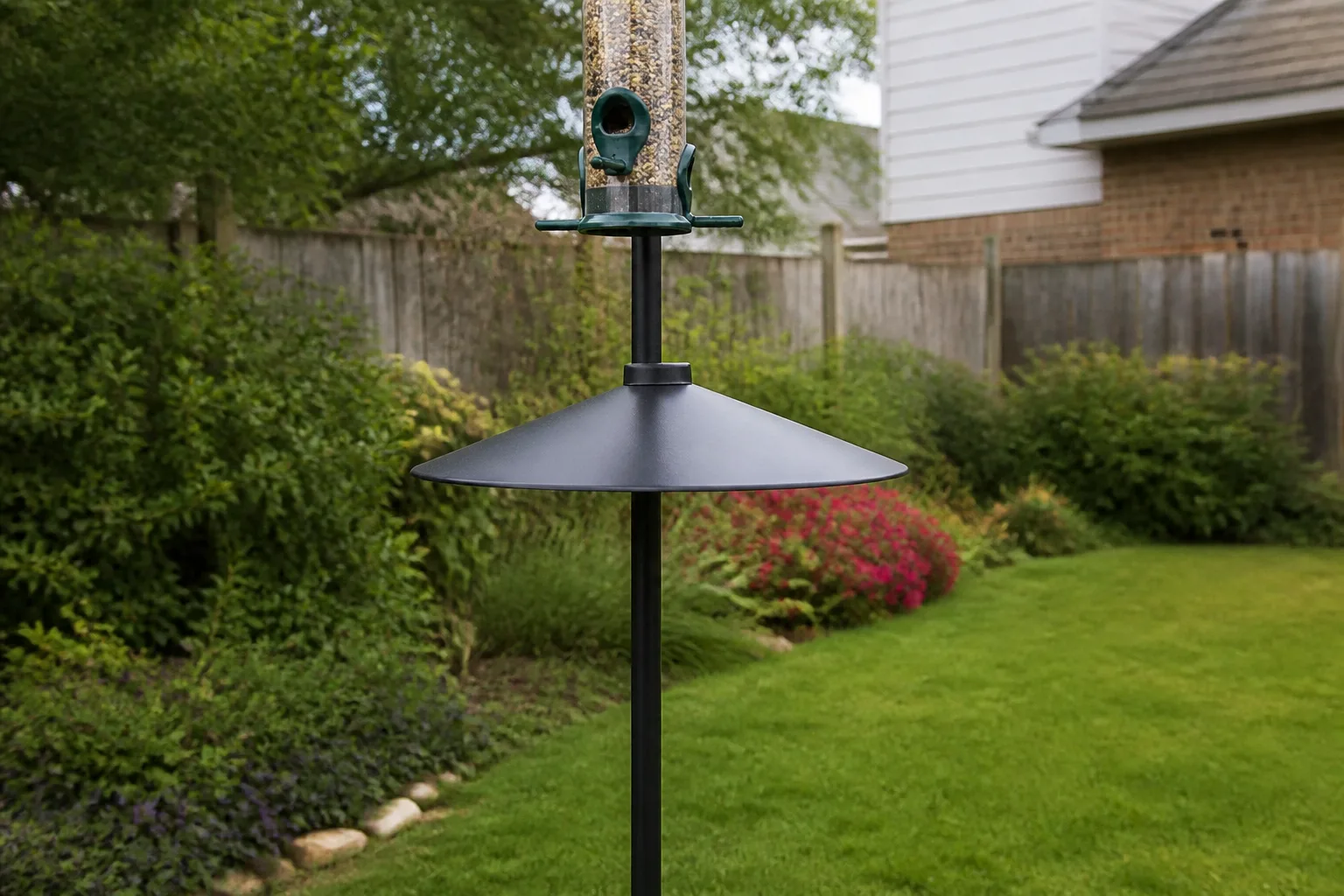
Moving bird feeders away from the fruit tree is usually a better first step than adding a second food source beside it. Squirrels learn locations that reliably provide food, and a feeder can increase the number of animals visiting the same yard. If you keep a feeder, place it on a properly baffled pole away from branches and structures, clean spilled seed, and do not position it as a squirrel buffet next to the fruit tree.
Penn State and Nebraska Extension both discuss how feeders can become reliable squirrel travel and feeding sites. (Penn State Extension; Nebraska Extension) A distant, squirrel-resistant bird-feeding setup may coexist with an orchard; a pile of corn under the protected tree usually undermines the exclusion plan.
Choose a combination that fits your tree
The right combination depends on the route, tree size, and value of the crop. Use this as a starting point rather than applying all seven methods at once.
| Tree situation | Start here | Add if squirrels still get through |
|---|---|---|
| Isolated dwarf or young tree | Smooth trunk baffle plus prompt harvest | Wildlife-safe canopy netting during ripening |
| Tree beside a fence, roof, or another tree | Targeted pruning to remove launch points | Baffle plus motion sprinkler or netting |
| Small backyard orchard | Prune connected canopies, clean windfalls, and keep feeders away | Net individual high-value trees or use sprinklers at the orchard edge |
| Tall mature tree | Prune only accessible routes and clean up the ground | Hire a qualified tree-care or wildlife professional for safe netting or arborist work |
| Damage mostly to bark or young shoots | Baffle or a labeled trunk treatment | Inspect for new access routes and protect the tree before winter or spring damage peaks |
The highest-payoff sequence is usually route audit → pruning → baffle or net → cleanup → rotating temporary deterrent. Give each change several days, observe where the squirrel goes next, and strengthen the weak link instead of randomly adding more sprays.
What not to use against squirrels
Do not use poison, mothballs, glue traps, or sticky products on a fruit tree. These methods can injure or kill squirrels and non-target animals, contaminate the garden, or create a hazard around edible crops. The International Wildlife Damage Management Council states that no toxicants are registered for tree-squirrel control in its guidance, and it does not recommend foothold traps because of non-target and humane concerns. (International Wildlife Damage Management Council)
Avoid grease or petroleum-based coatings on the trunk unless a product is specifically labeled for that situation and the tree is protected from contact. Sticky substances can foul fur, feet, bark, soil, and birds. Never install sharp wire, electrified fencing, or homemade devices where children, pets, birds, or maintenance equipment can reach them.
Do not attach anything to a utility line or use a ladder near one. Rules for trapping, relocation, and removal vary by location and species; some squirrels are protected, and relocation may be illegal or harmful. If physical barriers cannot solve serious damage, contact your state wildlife agency, county extension office, or a licensed wildlife-control professional before trapping.
If squirrels still get into the canopy
First, watch the tree at dawn or late afternoon long enough to identify the entry route. If the squirrel climbs the trunk, the baffle is too low, too loose, too narrow, blocked by mulch or a nearby object, or being bypassed by another branch. If it appears in the canopy without using the trunk, pruning or netting is the missing layer.
Next, inspect the barrier rather than escalating immediately to a stronger chemical. Look for a gap at the net’s bottom, a torn seam, a branch touching a neighboring tree, a baffle overlap that has opened, or a feeder that is concentrating activity. Squirrels often exploit one small weakness repeatedly.
If the damage is bark stripping, not fruit theft, protect the trunk before the next period of peak gnawing and ask an arborist to assess serious wounds. If an animal is trapped in netting, do not chase or cut blindly around it; keep people and pets away and contact a wildlife professional or local animal services for safe release.
Protect the tree while you protect the harvest
Check the trunk under every collar after rain and during active growth. The barrier should not girdle the tree, rub through bark, trap moisture, or become embedded. A spring-connected wire or adjustable commercial baffle gives the trunk room to expand, but it still needs inspection.
Support or prune branches that become heavy with fruit, especially if netting adds wind resistance. Harvest in stages rather than waiting until every fruit is fully ripe at once. Remove dead branches and sanitize pruning tools according to normal fruit-tree practice, but do not cut healthy wood solely because a squirrel has climbed on it.
The goal is a harvest barrier, not an animal-free yard. Squirrels are part of the local food web, and a well-fitted baffle, carefully inspected net, and targeted pruning can protect valuable fruit without poisoning the garden or turning a temporary problem into a wildlife emergency.
Conclusion: block access, then add temporary deterrents
To keep squirrels out of fruit trees humanely, start by removing launch routes and then install a smooth trunk baffle or wildlife-safe netting that physically blocks the canopy. Add a motion sprinkler or reflective streamers while the animals are learning the new boundary, use only labeled repellents on edible crops, and keep fallen fruit and birdseed from reinforcing the tree as a food destination.
No single trick beats a squirrel that can jump from a nearby branch into ripe fruit. A route-based combination does: make the tree harder to reach, inspect the barrier as it grows, change temporary deterrents before they become background noise, and ask for local wildlife or arborist help when the problem involves trapping, power lines, tall trees, or serious bark damage.



