How to Keep Squirrels Out of Potted Plants: 6 Ways
Keep squirrels out of potted plants with barriers, scent deterrents, and layered defenses. Practical steps for patios, balconies, and porch pots.
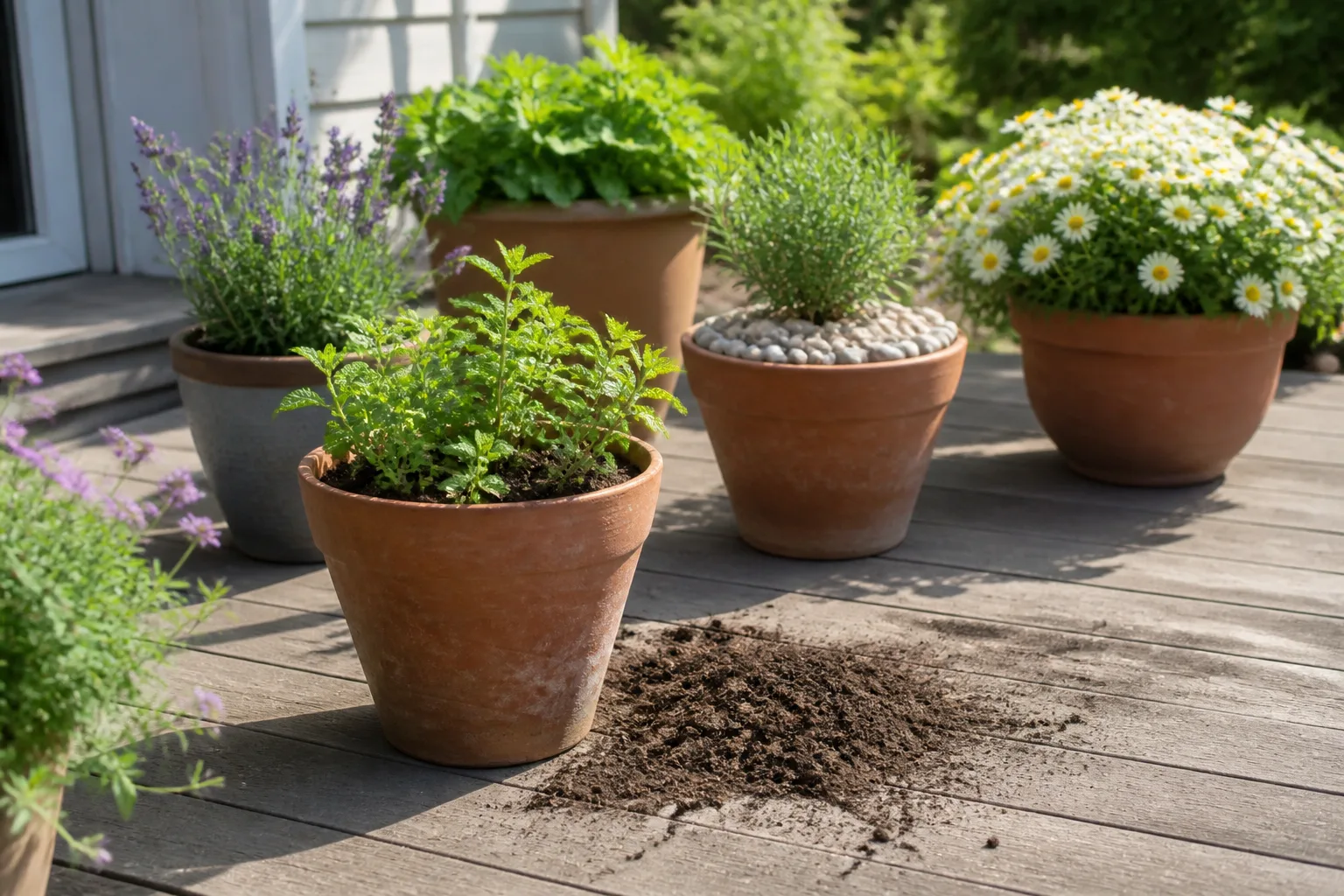
You watered yesterday. This morning the soil is cratered, a seedling is uprooted, and someone has been burying acorns in your rosemary pot like it is a personal pantry. Squirrels do not hate your garden — they are doing what gray and fox squirrels evolved to do: cache food in loose, diggable soil and revisit it later. Container mixes are soft, exposed, and often full of bulbs or seeds, which makes patio pots and balcony planters prime real estate.
The fix is not one magic sprinkle. It is matching the method to the behavior — blocking soil when they dig, repelling scent when they browse, and layering tactics when pressure is high. Below are six approaches that work in real container gardens, in the order most gardeners should try them.
Why squirrels dig in container soil
Tree squirrels — especially the eastern gray squirrel (Sciurus carolinensis) and fox squirrel (Sciurus niger) — eat mast (nuts and tree fruits), bulbs, berries, and planted seeds. In fall and early winter they hoard nuts by burying them in soil they can reach quickly. Penn State Extension notes that squirrels also chew bark, clip twigs, and eat planted seeds and mature fruits when populations are high or food is scarce.
Potted plants check every box squirrels want: loose potting mix, easy access from railings and fences, and — if you just planted tulips or crocus — a buffet sitting inches below the surface. They are not being malicious. They are treating your 12-inch terra-cotta pot like a dry storage locker.
What the damage looks like by season
Damage patterns shift through the year, and that matters for which fix you reach for first.
In late summer through fall, expect shallow holes, buried nuts, and disturbed mulch — classic caching. In late winter and early spring, squirrels dig deeper hunting bulbs they smell or remember planting. After you sow seeds in containers, you may see neat divots where seeds were eaten or flicked aside. Year-round, heavy pots get knocked off railings when squirrels launch onto them or dig aggressively at the rim.
If you are new to containers, our container garden tips for beginners guide covers drainage and soil basics — the same loose mix squirrels love is what healthy roots need, so you solve this with protection, not by packing soil rock-hard.
Pick your first defense before buying anything
Before you scatter cayenne or hang CDs, identify the primary problem:
- Digging only → start with a soil barrier (Method 1).
- Eaten shoots or bulbs → barrier plus taste repellent (Methods 1 + 2).
- Overturned pots → secure the container first (Method 5), then address soil.
- Repeat visits after rain → you need reapplication schedule or switch to physical exclusion.
Penn State Extension ranks exclusion — blocking access — as the most effective damage control for persistent wildlife. Repellents help, but their success varies with food availability and weather. Plan on combining methods, not choosing one forever.
When physical barriers beat sprays every time
Sprays and spices wash away with rain and irrigation. Barriers do not. If squirrels visit daily, if you just planted expensive bulbs, or if you cannot reapply repellent every few days, skip straight to chicken wire or a rigid soil guard. Scent tactics are better as a secondary layer on pots you can reach easily, not as the only plan on a third-floor balcony you rarely visit.
Method 1 — Block the soil with physical barriers
Physical barriers are the closest thing to a reliable fix for container digging. You are not training squirrels; you are removing the soft soil they need.
Chicken wire caps and soil guards
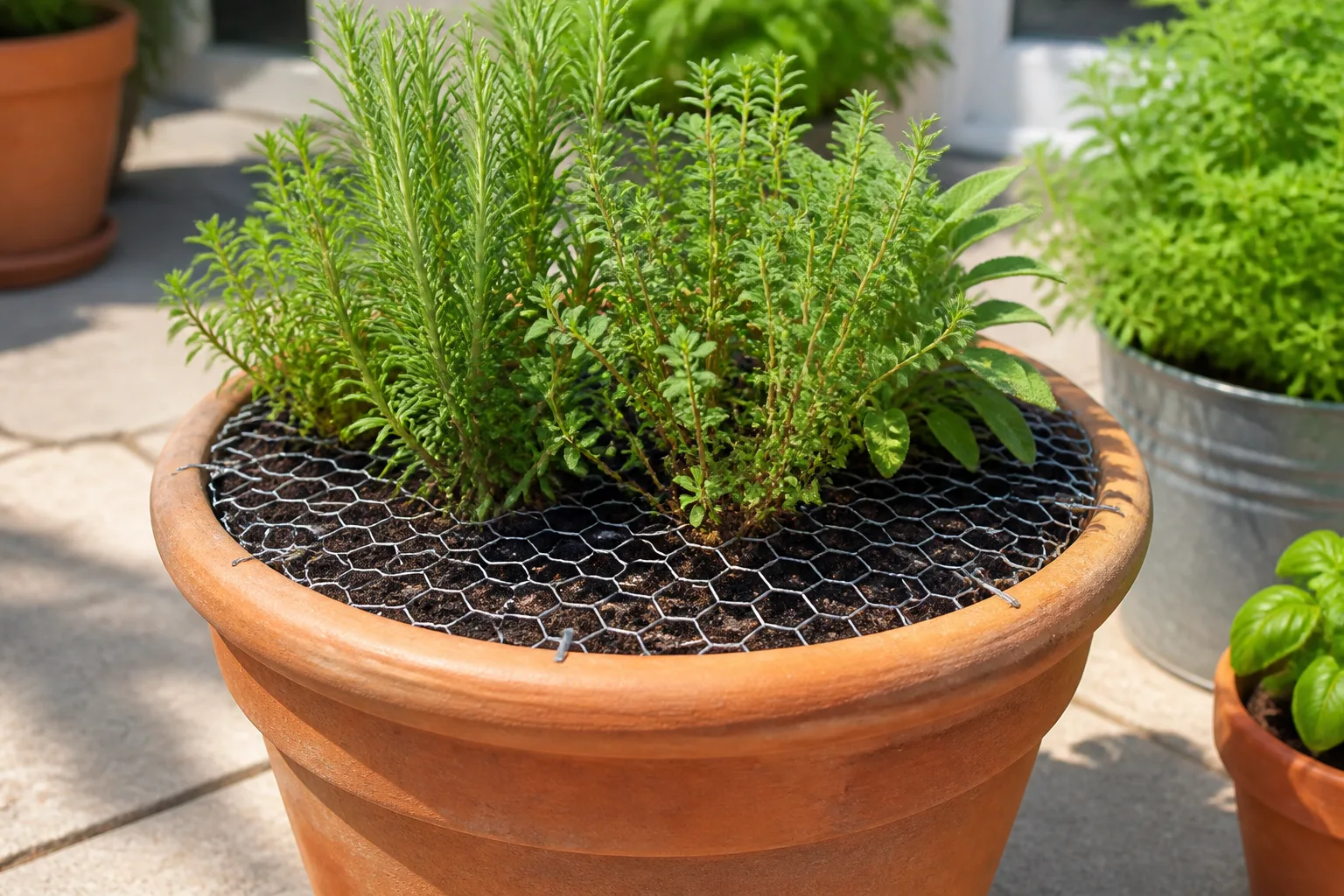
Chicken wire or ¼-inch hardware cloth cut slightly wider than the pot rim works well. For bulbs, lay the mesh flat across the soil surface and hold it with landscape staples or tuck edges under the pot rim. Leave it in place until shoots push through, then remove or cut X-shaped openings above each sprout.
For established plants, form a low dome or use a cylindrical soil guard that sits inside the pot rim above the soil line. The mesh only needs to stop digging — not block light to foliage. Check that drainage holes stay clear; never seal the pot bottom.
Bird netting stretched over stakes works for larger patio tubs, but squirrels can sometimes chew or push through thin netting. Metal mesh lasts longer on high-traffic pots.
River stones and mulch layers that still drain
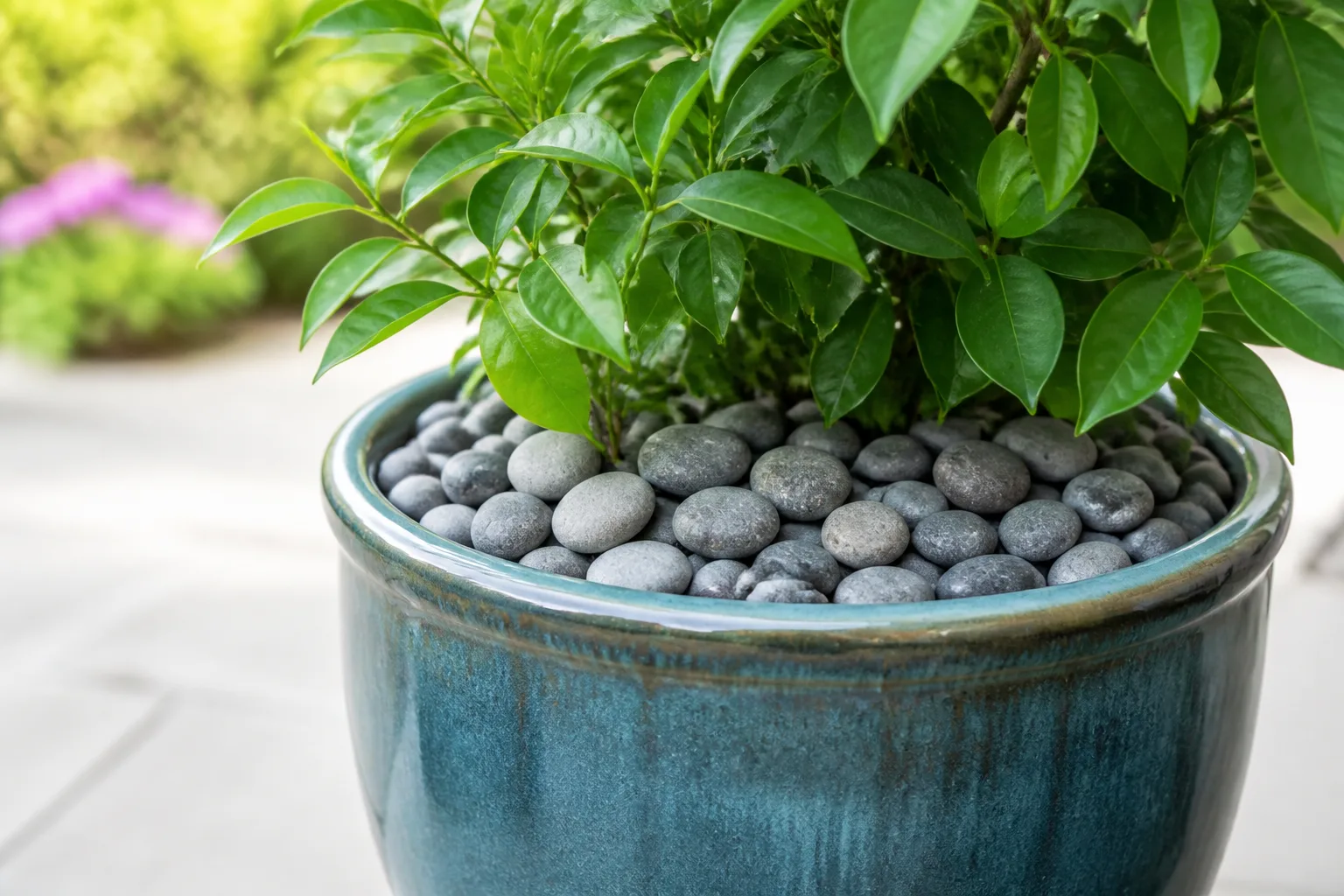
A 2-inch layer of river stones or large pebbles over the soil surface makes digging slower and less rewarding. Choose stones too heavy for a squirrel to flick aside easily. Leave gaps so water reaches soil — a solid stone sheet can block irrigation and overheat roots in sun.
Wood chip mulch or coconut coir mats cut to pot shape are softer barriers. They deter casual digging but a determined squirrel in peak caching season will push through. Pair mulch with pepper spray or wire on high-value pots.
Watch root heat: dark stones in full sun can warm the root zone. Light-colored gravel and morning-only sun exposure reduce that risk on small pots.
Method 2 — Use scent and taste repellents
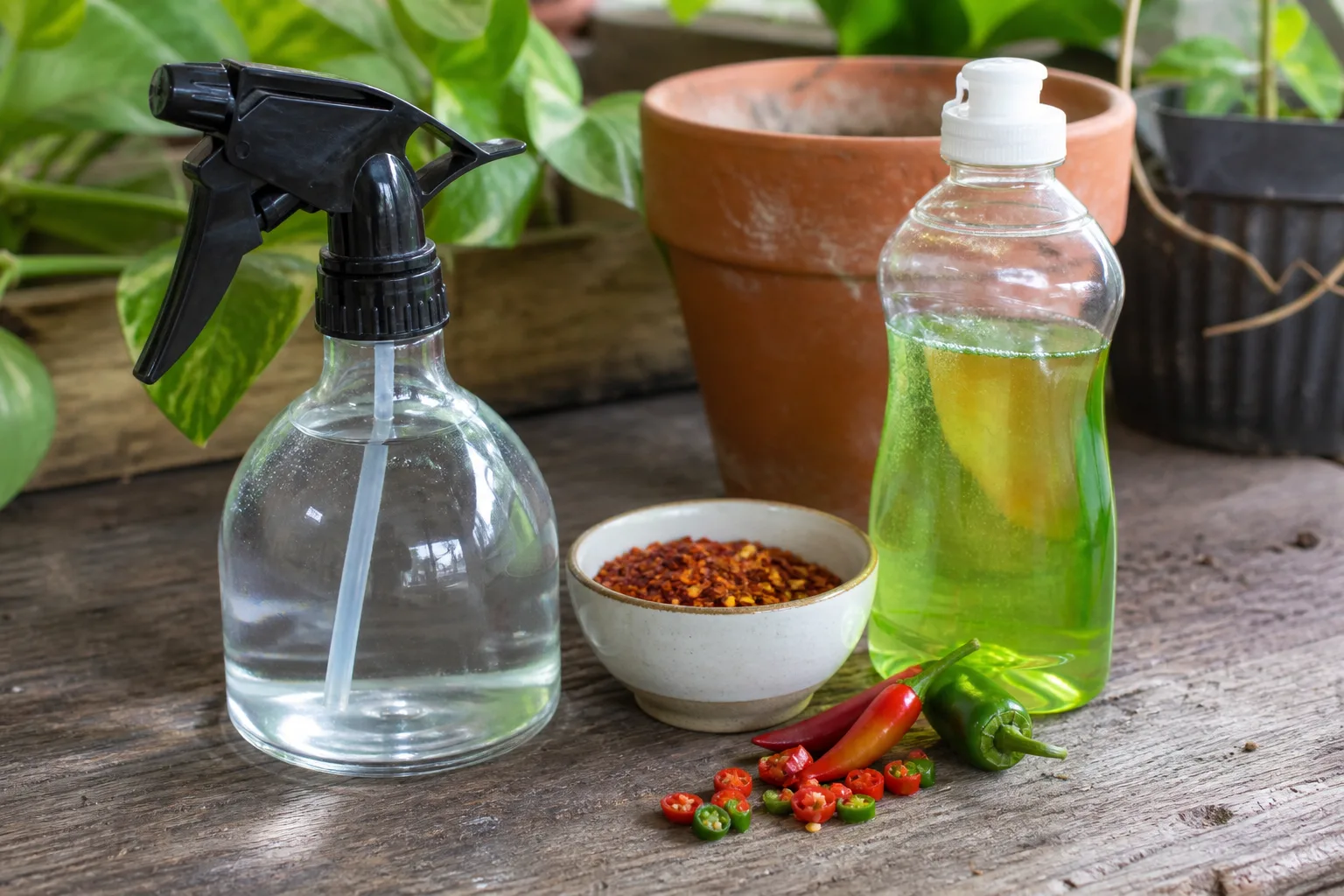
Repellents exploit squirrels’ sharp smell and taste. They work best on low-traffic pots you can refresh often, not as a set-and-forget fix.
Coffee grounds with plant-safe limits
Coffee grounds repel many squirrels through strong scent and bitter taste. Work a thin layer into the top inch of soil or sprinkle used grounds across the surface after brewing. Grounds add a little nitrogen, which can help leafy plants in moderation.
Do not dump thick mats of wet grounds on small containers. Excess nitrogen can tie up soil and encourage surface mold in humid climates. Refresh after heavy rain — the smell fades fast. Skip coffee on seed-starting trays where you need even moisture and gentle chemistry.
Capsaicin and DIY pepper sprays
Capsaicin — the heat compound in hot peppers — irritates squirrel mouths and throats. Penn State Extension notes that capsaicin-based products like Miller Hot Sauce are used as taste repellents on plants, with effectiveness that varies when other food is available.
DIY spray: simmer 2–3 tablespoons cayenne flakes or chopped hot peppers in 1 quart water for 15 minutes, cool, strain, add a few drops of dish soap as a spreader, and pour into a labeled spray bottle. Mist the soil surface and pot rim — not foliage you will eat. Wear gloves and eye protection; capsaicin burns skin and eyes.
Reapply every 3–5 days and after every rain or overhead watering. Dry cayenne powder dusted on soil works briefly but blows away on windy balconies.
Essential oil and vinegar blends
Squirrels dislike peppermint, spearmint, clove, cinnamon, garlic, and vinegar odors. Mix 10–15 drops food-grade peppermint or clove oil with 1 cup water, ½ cup white vinegar, and a drop of dish soap. Spray pot rims and outer soil, not edible leaves close to harvest.
Essential oils can burn tender leaves in hot sun — test one pot first. Vinegar at full strength can lower soil pH if you drench repeatedly; use it as a surface cue, not a daily soak.
Blood meal and bone meal smell predator-adjacent to some animals and add nitrogen. They can repel squirrels briefly, but the ASPCA lists blood meal as toxic to dogs and cats, with vomiting and GI upset common if ingested. Avoid these on patio pots pets can reach.
Method 3 — Plant companion flowers squirrels avoid
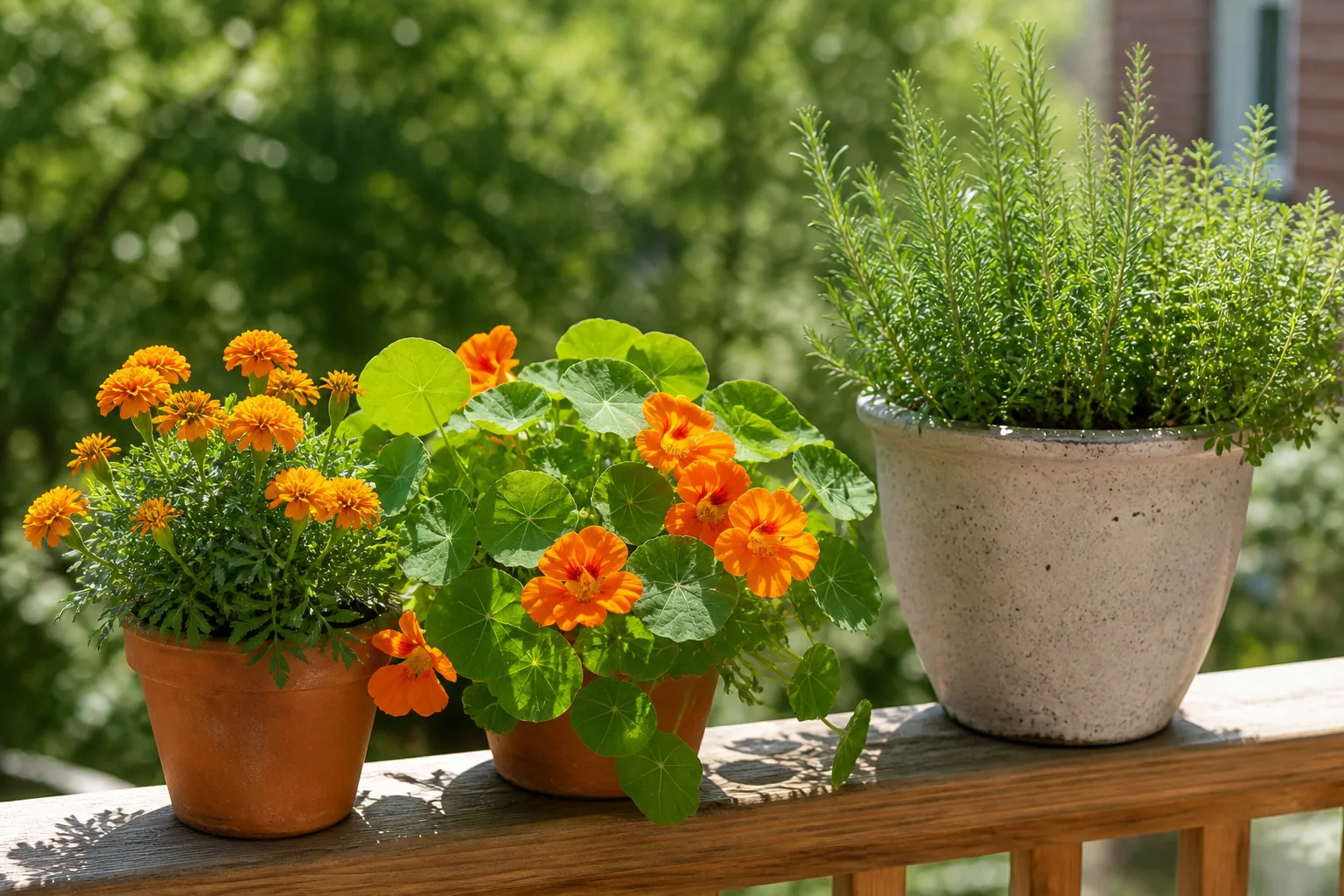
Scent-forward flowers can edge a container cluster without replacing barriers. French marigolds (Tagetes patula) and nasturtiums release resinous or peppery scents many squirrels avoid. Place small pots of them beside vulnerable containers on a balcony rail or patio step.
They work best as border plants around a grouping of pots, not as a single flower in a 6-inch pot under siege. Nasturtiums also function as trap crops for some caterpillars in vegetable setups — see our companion plants for broccoli guide for how trap-crop logic works in tight beds.
Companion flowers are lowest reliability alone. Use them to support Methods 1 and 2, especially where mesh looks ugly on a front-porch display.
Method 4 — Distract with shiny movement
Pinwheels, reflective tape, old CDs on string, and small garden spinners create motion and flash that can startle squirrels — briefly. Squirrels habituate quickly once they learn no predator follows the glitter.
Treat shiny objects as a seasonal nudge while bulbs establish or while you install wire. Move them every week so the pattern stays unfamiliar. Pair with scent or mesh; never rely on dazzlers alone on a pot of newly planted tulips.
Method 5 — Secure pots squirrels knock over
Digging is one problem; physics is another. Lightweight plastic pots on narrow railings tip when a squirrel lands or roots at the rim.
- Clamp or screw plastic pots to rail brackets using deck screws and fender washers through drainage holes (into wood, not into the pot side).
- Heavy ceramic or concrete pots resist tipping better — trade weight for stability on windy balconies.
- Rail planters with integrated brackets beat balancing loose pots on flat caps.
- Move high-value pots inward from the outer rail edge where squirrels jump from posts or trees.
Stability does not stop digging, but it stops the cascading mess when they try.
Method 6 — Layer repellents instead of relying on one trick
The Old Farmer’s Almanac squirrel pest overview and extension guidance both point the same direction: combine tactics when pressure is high.
A practical layered setup for a bulb pot on a patio:
- Plant bulbs at proper depth.
- Lay hardware cloth across the soil; stake edges.
- Add a thin cayenne soil mist.
- Place a marigold in the adjacent pot.
- Remove mesh when green tips show; switch to pepper refresh every few days until leaves toughen.
For daily-dug herb pots, skip spices and keep a permanent pebble top-dressing plus weekly coffee refresh on the stones only.
Track what works with photos every Monday. If new holes appear after three dry days, escalate — thicker wire, smaller mesh, or moving the pot farther from the launch point (fence, tree branch, utility line).
What not to do around pets and edible pots
- Do not use mothballs — they are illegal for outdoor pest use in many jurisdictions and toxic to pets and people.
- Do not spread blood meal or bone meal on pots dogs or cats can access (ASPCA blood meal guidance).
- Do not spray capsaicin on leafy greens you will harvest within a few days — wash-off is imperfect and capsaicin residue lingers.
- Do not expect ultrasonic devices to solve balcony pots; results are inconsistent, and squirrels in open air can simply avoid the cone of sound.
- Do not trap and relocate without checking local wildlife rules; many areas restrict squirrel relocation, and Penn State notes trapping is mainly for inside buildings, not patio pots.
Feeding squirrels elsewhere “to distract them” usually increases visits and teaches them your yard is a food zone.
Conclusion
Squirrels dig in potted plants because loose container soil is perfect for caching nuts and unearthing bulbs — not because your garden failed. Block the soil first with chicken wire or heavy pebbles when damage is daily or bulbs are at stake. Add scent and taste repellents on pots you can refresh after rain. Companion flowers and shiny objects help at the margins. Secure wobbly pots so digging does not become a balcony landslide.
Pick two methods that fit your schedule, run them for two weeks, and adjust. The goal is not a squirrel-free neighborhood — it is a container garden where your plants stay planted long enough to grow.



