How to Keep Snakes Out of Your Yard Safely
Learn how to keep snakes out of your yard with habitat changes, food-source control, sealed gaps, exclusion fencing, and safe encounter steps.
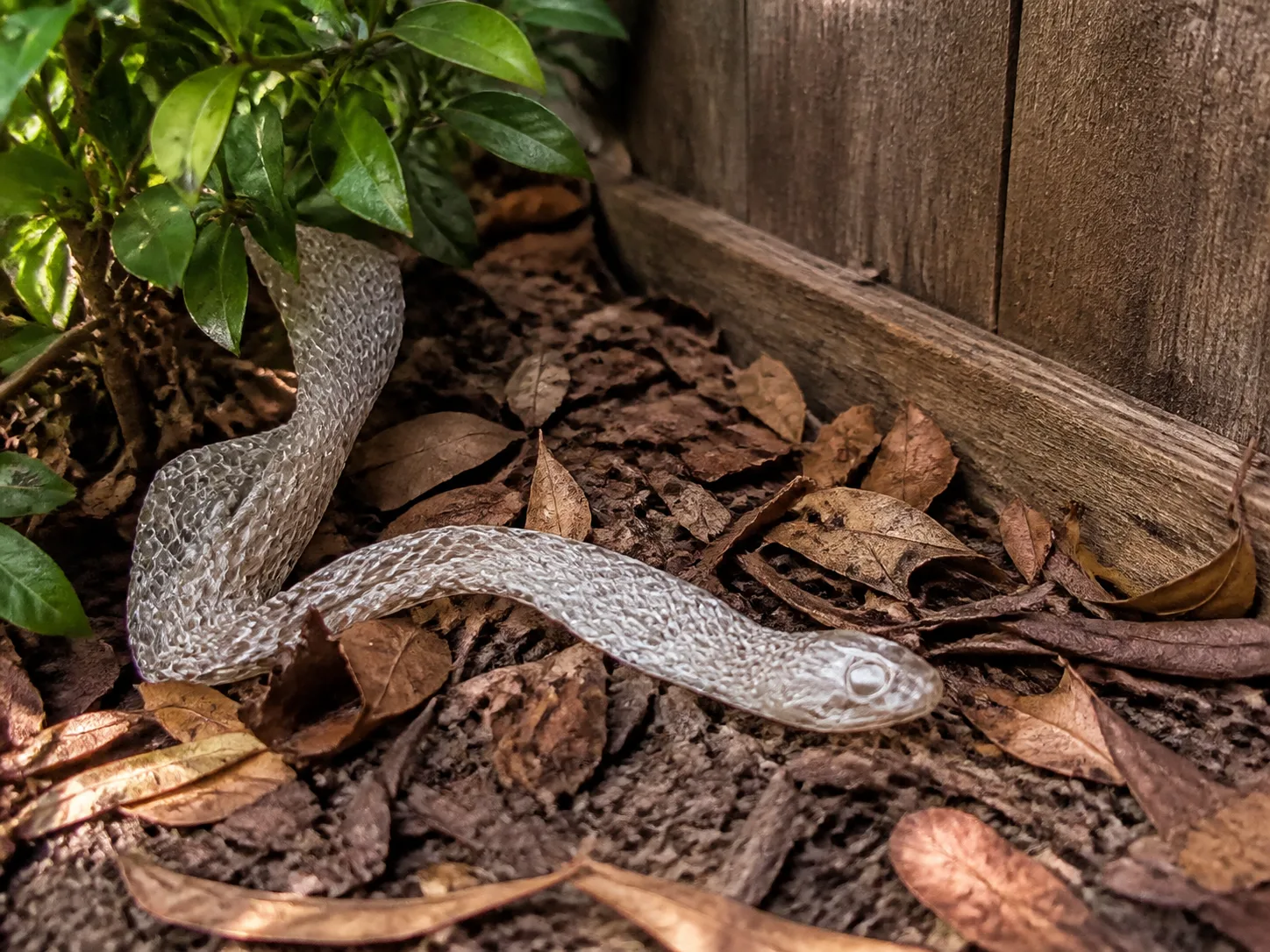
The most reliable way to keep snakes out of your yard is to make the area around your home less useful to them, then block the specific routes they use to enter. Start with food, water, and shelter: spilled seed and pet food attract rodents, leaking irrigation creates damp cover, and piles of boards, rocks, leaves, and firewood make protected resting places. Seal gaps around buildings, and use a properly built exclusion fence only where the added cost is justified.
No responsible plan can promise a completely snake-free property. Snakes are part of the local food web, and a clean, well-maintained yard can still border habitat. The practical goal is to reduce close encounters, protect the places people and pets use most, and give any snake you meet a safe reason to move on.
Start with the right goal: fewer encounters, not a snake-free ecosystem
First decide what “keep snakes out” means for your property. A family may only need the patio, play area, back steps, and dog run to feel predictable. A gardener may want to keep snakes out of a potting shed but be comfortable with them at the far edge of the lot. Those are different projects from fencing an entire acre, and the smaller project is usually cheaper and easier to maintain.
Snakes do not visit a yard because it is aesthetically pleasing. They follow conditions that help them thermoregulate, hide, find prey, or reach water. A lawn can therefore be attractive to snakes even when it looks tidy: a bird feeder drops seed, the seed feeds mice, the mice use a woodpile, and the snake follows the food chain. Removing the chain is more durable than scattering a scent around the perimeter.
The right standard is lower probability, better visibility, and a safer response. If a neighbor’s meadow, creek, stone wall, or undeveloped lot borders your property, occasional sightings may continue. That does not mean your prevention failed; it means the property sits inside wildlife habitat.
Identify the local risk before changing the yard
Species and laws vary by region, so do not assume that a snake’s color, head shape, or behavior is enough for a safe identification. Many common yard snakes are nonvenomous, but some regions also support venomous species. Utah State University Extension recommends learning which snakes are common locally and contacting local wildlife or extension resources rather than relying on fear-based product claims. (Utah State University Extension)
Use a local field guide, university extension identification page, or wildlife agency resource before trying to classify a snake. A photograph taken from well outside striking range can help an expert; do not approach to capture a better image. If you cannot confidently identify the species, treat it as an unknown animal and do not touch it.
Timing also matters for planning. The CDC’s outdoor-worker guidance notes that venomous snakes are more active in warm weather and around dawn and dusk, and recommends not handling any snake. That is useful information for mowing, lifting boards, checking sheds, or walking a property after dark—not a reason to assume every snake you see is dangerous.
Remove the food that brings snakes close
A snake usually arrives because the yard supports prey, not because it is seeking a particular plant. The most productive food-source audit is therefore a rodent audit. Look for spilled birdseed, open trash, compost scraps, chicken feed, outdoor pet bowls, fallen fruit, and storage sheds with gaps beneath the door. Store seed and feed in sturdy, closed containers and clean up leftovers promptly.
Bird feeders deserve a location decision, not an automatic ban. If you keep one, move it away from the house, sweep up fallen seed, and watch for rodent activity below it. If mice, rats, or chipmunks are already active, address the food and shelter that support them. Do not use poison or glue traps as a shortcut to snake control; they can create risks for pets and wildlife, and they do not repair the habitat that keeps attracting prey.
Outdoor pet feeding is another common loop. Feed pets indoors when possible. If an outdoor meal is unavoidable, supervise it, remove the bowl as soon as the pet finishes, and wash away crumbs. This simple routine also reduces insects and rodents, so it often improves more than one yard problem at once.
The Internet Center for Wildlife Damage Management describes food-source reduction as a core part of snake management, especially where rodents, birds, eggs, or other prey are present. The important interpretation is not “remove every living thing.” It is “do not subsidize prey beside the door, deck, or play space.”
Reduce hiding places without stripping the whole yard
Snakes use cover because it helps them avoid predators and regulate body temperature. Boards, sheet metal, dense ground cover, leaf piles, stacked lumber, firewood, and loosely arranged rocks can all create a sheltered route through a yard. The ICWDM guidance specifically recommends removing or moving low-lying debris, shrubs, rocks, boards, and firewood away from buildings.
Work from the house outward. Move firewood and spare lumber onto a raised, stable rack away from doors and play areas. Keep compost contained and inspect the underside before shifting a pile. Consolidate building materials rather than leaving scattered pieces across the ground. When you lift a board, turn the far edge toward you with a tool or gloved hands so you can see what is underneath without placing your fingers into a hidden space.
Landscaping does not have to become bare soil. Deep, loose mulch can hold moisture and cover rodents, while large stones can create shaded gaps and warm basking surfaces. Use the mulch and rock that your plants need, but keep deep beds, boulder clusters, and dense ground covers away from foundation walls and high-traffic paths. A narrow, inspectable edge is usually a better compromise than removing every natural feature.
Keep a visibility strip around high-use areas
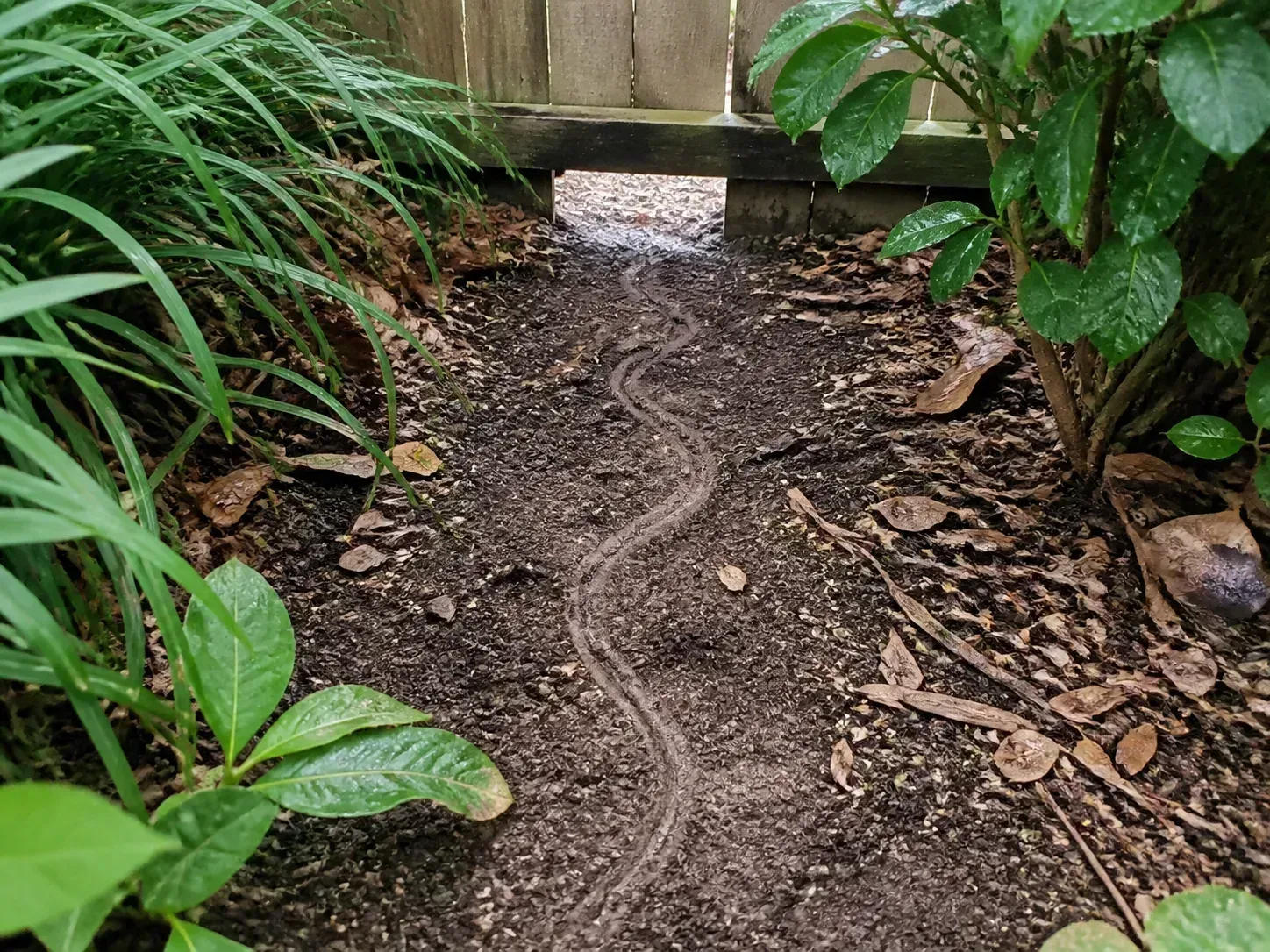
Mow lawn at the height recommended for that grass rather than scalping it. The useful change is a short, open sightline around the foundation, steps, play equipment, dog run, and frequently used paths. Utah State University Extension suggests keeping grass fairly short and maintaining clearance beneath shrubs and trees so snakes are easier to see. (Utah State University Extension)
Lift low branches and prune shrub growth so it does not rest on the ground or touch the house. A 24- to 36-inch visual clearance below shrubs near buildings can make inspections easier, but do not turn that number into a requirement for every ornamental plant. Preserve shade and habitat farther from the house if you want it; concentrate the tidy, visible zone where people actually walk.
Before mowing or using a string trimmer, walk the area with a tool or noise-making footsteps, especially when vegetation is thick. Do not reach blindly into grass, ivy, rock gaps, or brush. Visibility reduces surprise; it does not make an unknown animal safe to handle.
Manage irrigation and water features
Fix leaking hose bibs, broken sprinkler heads, clogged gutters, and downspouts that empty beside the foundation. Overwatering can support worms, slugs, frogs, and rodents, which may then support snakes. Water that stands under a deck or beside a shed also makes the area cooler and more sheltered.
This does not mean every pond or birdbath must disappear. A water feature can be valuable habitat, especially in a dry climate, but place it away from the house and children’s play zone when possible. Keep the surrounding edge visible, maintain the banks so debris does not form a tunnel, and make sure irrigation does not turn the path between the water and the house into a permanently damp corridor.
Savvy Gardening describes wildlife habitat through the connected needs of food, shelter, and water. (Savvy Gardening) That framework explains why removing one small puddle may accomplish little if a leaking irrigation line, dense ground cover, and birdseed remain nearby. Manage the cluster rather than chasing isolated signs.
Seal the places snakes can enter
Once the yard is less inviting, inspect the structures people care about: the house, garage, shed, crawl-space vents, chicken coop, and storage areas. Snakes can use gaps at door thresholds, around pipes and utility lines, under siding, through foundation openings, or beneath poorly fitted vents. They do not chew through walls, so repairs that exclude mice can also block many snake entry routes.
The ICWDM snake-exclusion guidance uses openings about 1/8 inch and larger as a threshold to inspect around buildings. Seal masonry cracks with a suitable repair material, fit doors with intact sweeps, and cover vents with rigid mesh that does not leave a loose edge. Do not seal an opening until you are reasonably sure no animal is inside; trapping wildlife in a wall, attic, or crawl space creates a larger problem.
Inspect these overlooked gaps
Walk the perimeter in daylight with a flashlight and a notepad. Check:
- The bottom corners and sweep of every exterior door.
- Gaps around water pipes, electrical conduits, and air-conditioning lines.
- Crawl-space vents, weep holes, foundation joints, and the rim joist.
- The space under porches, decks, sheds, and stairs.
- Garage-door corners and the seam where the slab meets the wall.
- Chicken-coop mesh, feed-storage doors, and gaps beneath raised structures.
Repair the largest, easiest route first, then recheck after rain or a landscaping project. Do not rely on expanding foam alone where it can be picked apart, exposed to weather, or left with a tunnel-like cavity. Choose a durable closure appropriate for the material, and call a wildlife-control professional when the gap leads into an occupied building or inaccessible void.
Use exclusion fencing for a defined zone
If people or pets must have a reliably separated area, a snake-exclusion fence can be justified. A whole-property barrier is expensive and only works if gates, corners, vegetation, drainage paths, and the bottom edge are maintained. A smaller fence around a play area, patio, garden, chicken run, or house perimeter is often the more realistic choice.
The basic construction matters more than a product label. A fence that has a gap at the gate or a washout under the mesh is not an exclusion fence; it is a visual suggestion. Before buying materials, map the boundary and identify trees, walls, steps, drains, and structures that could let a snake bypass the barrier.
Build the fence to close the bottom edge
The following dimensions are a practical starting point drawn from wildlife-damage-management guidance, not a universal guarantee for every species:
| Part | Practical starting point | Why it matters |
|---|---|---|
| Mesh | Heavy galvanized hardware cloth with openings no larger than 1/4 inch | Reduces pass-through at the face of the fence |
| Above ground | About 36 inches | Creates a meaningful vertical barrier for many ground-moving snakes |
| Buried edge | About 4 to 6 inches | Blocks the common route beneath the fence |
| Slope | Angle the fence outward about 30 degrees | Makes climbing over the top more difficult |
| Gate | Tight-fitting, with no ground gap | Prevents the easiest bypass |
| Outside edge | Keep vegetation trimmed beside it | Removes plants that can act as a climbing ramp |
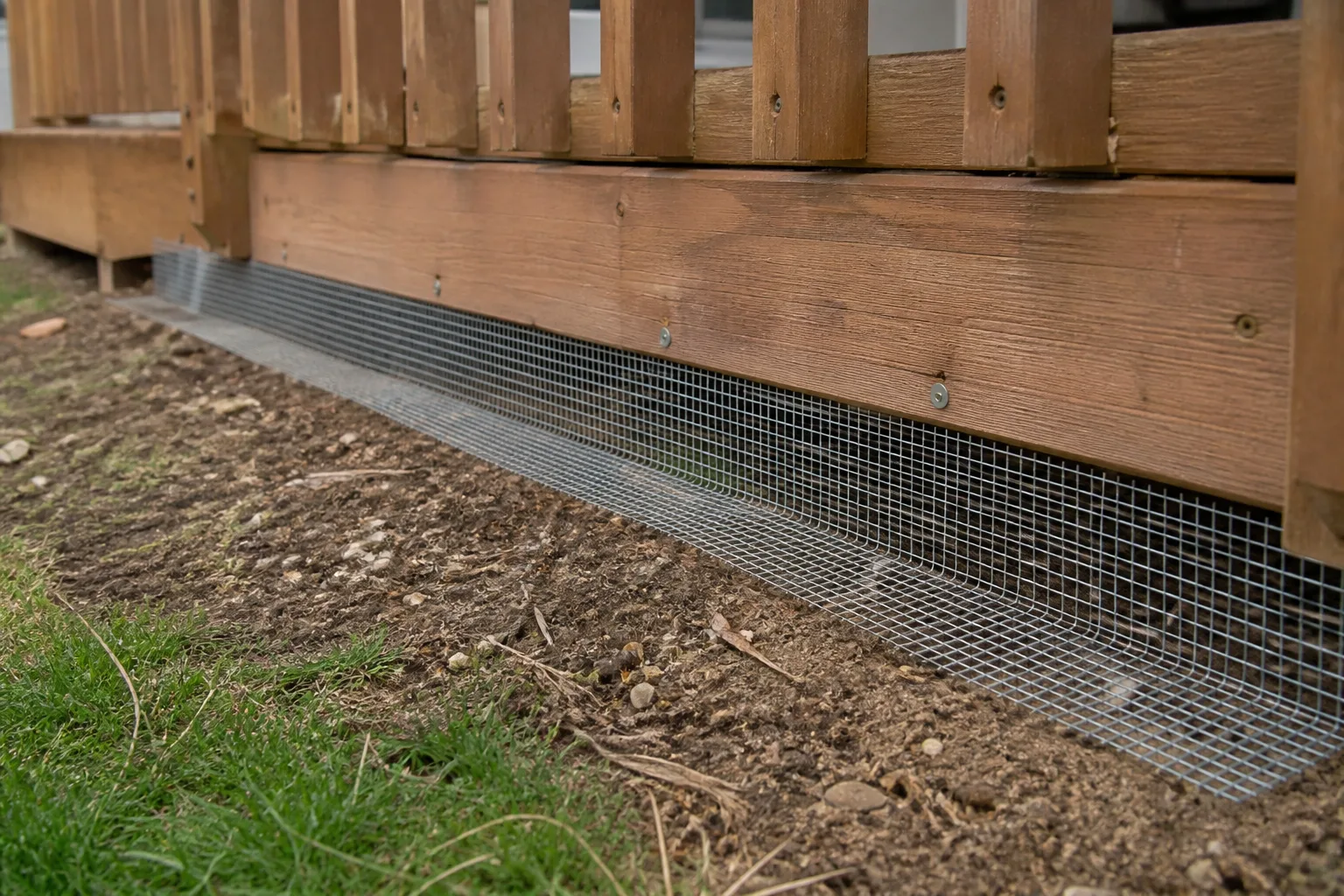
These measurements come from the ICWDM exclusion recommendations, which also notes that some nonvenomous snakes are good climbers. Utah State University Extension likewise recommends rigid mesh or solid sheeting, a buried lower edge, and a bend or outward-facing top. (Utah State University Extension) In regions with large or climbing species, ask a local wildlife specialist to review the design before you fence a high-value area.
Maintain the fence like a system
Inspect the barrier after heavy rain, flooding, construction, and animal digging. Look for lifted mesh, washed-out soil, bent corners, rust, loose staples, and a gate that no longer closes against the ground. Keep grass and vines trimmed on the outside face, and do not lean boards, pots, hoses, or firewood against the fence.
Treat drainage carefully. A swale, culvert, or gap under a retaining wall can become a bypass even when the fence itself is perfect. Do not block water and create foundation damage just to close a gap; instead, use a design that maintains drainage while preserving the barrier. For a small enclosure, daily visual checks are usually more valuable than building a taller fence and forgetting it.
Skip repellents and traps that create new problems
Snake-repellent products are attractive because they promise a fast perimeter without moving a shrub or sealing a gap. The evidence is not that simple. The ICWDM review says research on commercial repellents is lacking or inconsistent for real-world applications, while Utah State University Extension advises against snake repellents and sulfur.
Why mothballs, sulfur, and essential oils disappoint
Do not scatter mothballs outdoors. They are pesticide products intended for specific labeled uses, not a general snake barrier, and placing them around a yard can expose children, pets, and wildlife to chemicals without solving the entry route. Strong-smelling oils, cinnamon, clove, mint, sulfur, and homemade sprays are similarly poor substitutes for habitat management and exclusion. A smell that seems intense to a person does not create a durable, species-proof boundary in sun, wind, and rain.
Avoid sticky traps outdoors. They can catch birds, small mammals, lizards, and other non-target animals, and a trapped snake is still a bite risk for anyone who tries to free it. Do not use plastic bird netting or loose garden mesh where snakes can become entangled. If a product has a legal label for a particular species and setting, follow that label exactly—but do not assume registration equals universal effectiveness.
The safest “natural deterrent” is a sequence: remove subsidized prey, reduce cover beside the house, correct water and drainage problems, seal gaps, and fence only the zone that needs it. That approach takes labor, but each improvement remains useful even when no snake is present.
What to do when you see a snake
Stop and give it room. Bring children and pets indoors or behind a closed barrier, warn other people without crowding the animal, and observe from a safe distance. Do not poke it, throw objects, spray it at close range, corner it, or try to determine whether it is venomous by walking closer.
Most bites happen when people try to catch, kill, or handle a snake. The CDC/NIOSH guidance says not to touch or handle any snake, and Save The Snakes recommends leaving a snake alone, keeping people and pets away, and contacting a local wildlife professional if it will not leave. (Save The Snakes)
If the snake is in an open part of the yard and has a clear path away, time is often the safest removal method. If it is beside a door, under a play structure, in a dog run, or in a place where someone could step on it, call a trained wildlife-control professional or local animal-control service. Take a photo only if you can do so without moving closer.
If the snake is inside a house, garage, or shed
Close interior doors to keep the snake in one area, move people and pets away, and block the bottom of nearby interior doors if you can do so without approaching the animal. Do not try to herd it with a broom. If there is a safe exterior exit that can be opened without passing the snake, a professional may advise leaving it available, but do not create a chase scene.
Call for help when the snake is hidden, the space is tight, the building contains children or pets, or the species is unknown. Do not reach behind appliances, into boxes, beneath a car, or into a wall cavity. Once it is gone, inspect and seal the entry route; removing one snake without correcting the gap leaves the same invitation open.
Long-distance relocation is not a simple kindness. Save The Snakes notes that moving snakes far from their home range can increase mortality, while appropriate short-distance relocation depends on species and local conditions. (Save The Snakes) A trained local handler can decide whether relocation is legal, safe, and appropriate rather than leaving that decision to a frightened homeowner.
Protect children, pets, and yourself during yard work
Create a simple household rule: look first, lift second, never handle. Wear boots and long pants when working in likely snake habitat, use a flashlight around sheds and woodpiles, and keep hands out of holes, dense grass, rock gaps, and spaces beneath decks. The CDC recommends boots and long pants for outdoor work and warns against climbing onto rocks or wood piles where snakes may be hiding. (CDC/NIOSH)
Keep dogs leashed or closely supervised in tall grass, along stone walls, near water, and around brush piles. A fence that keeps a dog in does not necessarily keep a snake out. Teach children to move away and tell an adult rather than touch, chase, or surround a snake. If you live in an area with venomous species, ask your veterinarian and local wildlife agency about region-specific pet precautions; do not rely on internet myths about vaccines or snake identification.
Schedule high-risk jobs for good visibility. Clear brush in small sections, use tools to turn over materials, and have a second adult nearby when moving a large woodpile or dismantling a shed. Snake safety is mostly a habit of controlling surprise, not a contest to prove that an animal is harmless.
If someone is bitten
Treat a suspected snakebite as an emergency, especially when the species is unknown. Move the person away from the snake without approaching it, call emergency services, and do not send someone back to capture or kill the animal. The CDC reports that 7,000–8,000 people in the United States are bitten by venomous snakes each year and that some survivors have lasting injuries, so “the bite looks small” is not a safe reason to wait. (CDC/NIOSH)
While waiting for help, keep the person calm and as still as practical, remove rings, watches, or tight clothing before swelling develops, gently wash the bite with soap and water, and cover it with a clean, dry dressing. If possible, take a photograph from a safe distance for identification, but never delay medical care to do so. Do not apply ice, cut the wound, suck out venom, use a tourniquet, drink alcohol, or drive yourself if symptoms could impair you. The CDC first-aid guidance specifically advises urgent medical attention and warns against attempting to handle the snake, even if it appears dead.
A practical seven-day prevention plan
You do not need to rebuild the landscape in one weekend. Use this sequence so each day reduces a different part of the problem:
- Day 1 — Map encounters. Mark where you saw a snake, shed skin, tracks, prey, dampness, or a gap. Note the time, weather, and nearby cover without disturbing anything.
- Day 2 — Remove food subsidies. Move bird feeders away from the house, store seed and pet food in closed containers, clean spills, secure trash, and remove fallen fruit.
- Day 3 — Correct water problems. Repair leaks, redirect downspouts, adjust irrigation, and dry out damp corridors beside buildings. Decide whether a water feature needs relocation or a clearer edge.
- Day 4 — Reduce shelter near people. Move firewood and boards to raised storage, clear scattered debris, prune ground-touching growth, and thin the edge around steps and play areas.
- Day 5 — Seal structures. Check doors, vents, foundation joints, utility penetrations, crawl spaces, decks, sheds, and coops. Repair the largest safe-to-access gaps first.
- Day 6 — Choose the boundary. If encounters continue in a defined high-use zone, price a properly built exclusion fence and plan around gates, drainage, vegetation, and maintenance.
- Day 7 — Set the safety routine. Share local identification resources, store a flashlight where it is easy to find, choose the wildlife professional you would call, and recheck the yard after rain.
The plan works because it separates prevention from removal. You are not trying to win a single encounter; you are making the next encounter less likely and less dangerous.
Conclusion
To keep snakes out of your yard safely, begin with the conditions that bring them close: unsecured food, rodent habitat, unnecessary dampness, and low, cluttered shelter. Keep high-use areas visible, seal buildings like you would for mice, and reserve exclusion fencing for a defined zone where the cost and maintenance make sense.
Skip mothballs, unproven repellents, glue traps, weapons, and untrained handling. Learn the snakes native to your area, give any sighted snake space, and call a qualified local professional when the animal is in a dangerous location. A safer yard is not a sterile yard; it is a yard designed so people, pets, and wildlife are less likely to collide.