How to Remove Cranberry Stains From Clothes & Carpet
Cranberry juice or sauce on fabric? Use surface-specific steps for clothes, carpet, and upholstery, plus a safe plan for dried stains and delicate items.

Cranberry juice and sauce can leave a vivid red mark, but the safest treatment depends on where the spill landed. A washable cotton napkin can go to the sink; carpet and a sofa cushion cannot. Start by lifting any sauce, blotting liquid with a clean white cloth, and keeping the stain cool. Then choose a method that fits the care label and limits how much moisture reaches the material.
The most important rule is simple: do not dry a stained garment in a hot dryer or use heat on a carpet or cushion before you have checked the result. If color remains, repeat a compatible treatment or stop for professional advice. Heat and aggressive scrubbing can make the next round harder.
Why cranberry stains need a surface-specific plan
Cranberries contain strongly colored plant pigments. A glass of cranberry juice is mostly a water-based spill, while cranberry sauce can leave fruit pieces, pulp, sugar, and sometimes other ingredients on top of the color. A holiday cocktail or dessert may add wine, dairy, or oil, so the red mark may not be the only residue to remove. You do not need to identify the exact pigment before acting; you do need to notice whether the spill is liquid, thick, or mixed with another food.
The surface changes the risk. With a washable shirt or tablecloth, rinsing can carry dissolved color out through the back of the fabric and a later wash can remove what remains. Carpet and upholstery are layered: liquid can travel past the visible fibers into backing, padding, or cushion foam. Over-wetting can create a larger ring or a slow-drying interior, so use small amounts of cleaner and remove as much liquid as you apply.
Fabric construction matters, too. Cotton and many polyester blends often tolerate routine washing, but silk, wool, vintage textiles, unstable dyes, and dry-clean-only garments may be damaged by water or stain remover. A white cloth is useful because it lets you see color transfer; a care label or manufacturer instruction tells you how far to go. If the label is missing or unclear, take the conservative route.
The University of Georgia Cooperative Extension groups fruit, red-vegetable, jam, and jelly marks together in its textile stain guidance. Its instructions emphasize prompt cool-water rinsing, checking the care label, and testing cleaning agents on a hidden area. Those are good first principles, but the exact product and escalation should still match the item in front of you.
First five minutes: lift, blot, and use cool water
If cranberry sauce is sitting on the surface, lift it with a spoon or the dull edge of a butter knife. Hold the tool nearly flat so you do not scrape fibers or push berries into a carpet pile. Pick up the solids before blotting; pressing down on a piece of fruit can grind pigment into the material.
For juice, press a clean white cloth or plain white paper towel onto the spill, then lift it straight up. Move to a dry section each time. Work from the outside edge toward the center so the wet area does not grow. Avoid rubbing in circles, scrubbing with a brush, or dragging a cloth across the stain; friction can spread the mark and distort a fabric surface.
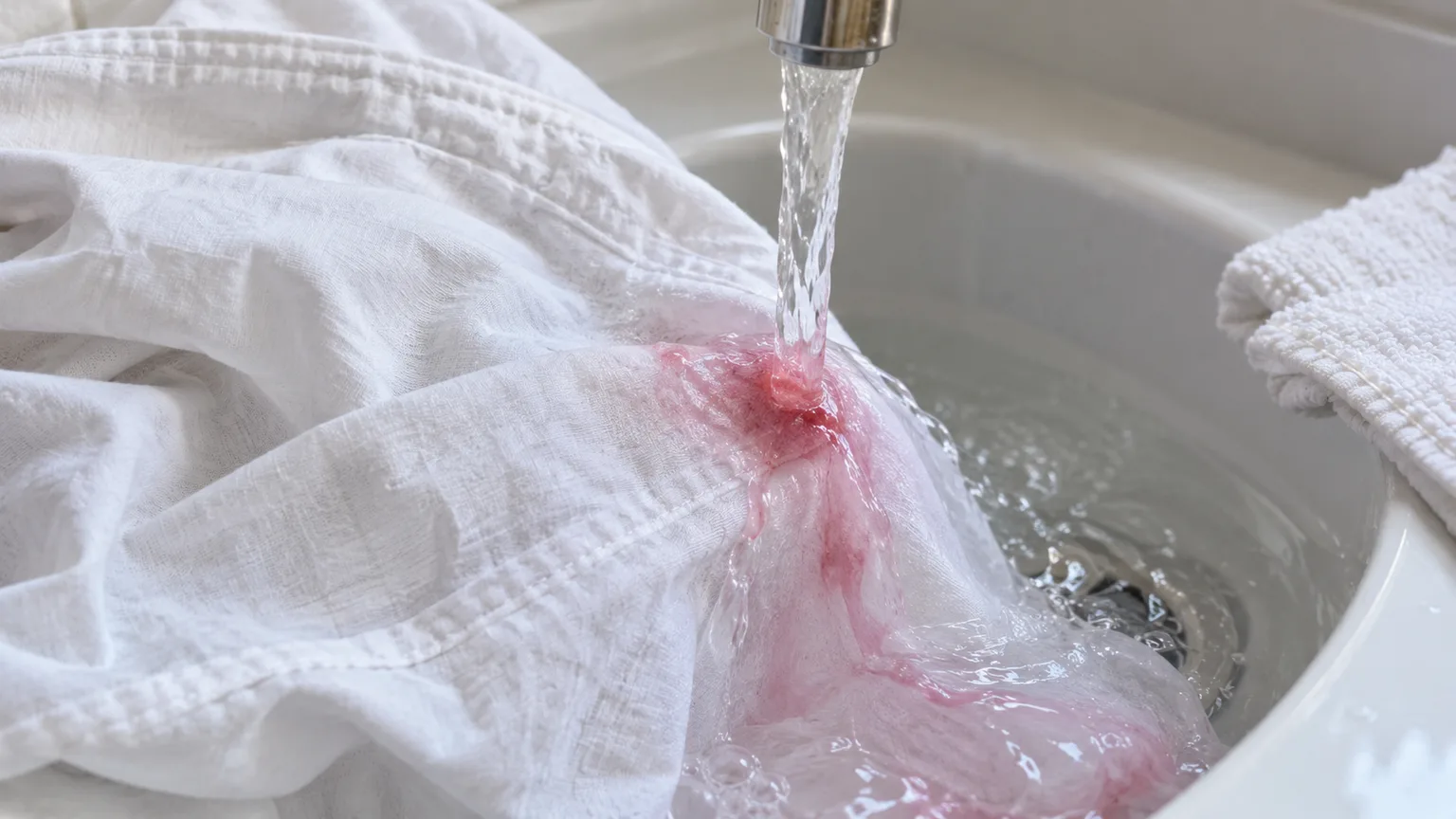
On clothing or removable washable linens, get to a sink and rinse the stain from the back with cool running water. That directs the juice back out through the fabric rather than through the clean side. Keep the water stream gentle on knits and delicate fabrics. If you cannot rinse immediately, continue blotting and place a dry white cloth behind a single-layer item to catch transfer.
On carpet and upholstery, do not pour water onto the stain. Blot with a cloth lightly dampened with cool water, then use a dry towel to absorb it. This limits how far the spill travels. For a large spill, press towels down from the outside inward and replace them as they become wet; do not stand on the carpet or cushion to squeeze liquid through the backing.
Remove cranberry stains from washable clothes and linens
Washable clothes and table linens usually offer the best chance of full removal because you can rinse, pretreat, and wash the whole item. First check the care label. It sets the permitted water temperature, wash cycle, and bleach options; do not assume a white fabric can take chlorine bleach or that a “delicate” item can tolerate a strong stain spray.
Berry-care guidance from Martha Stewart likewise emphasizes blotting, a cool rinse, a hidden-area test, and air-drying while a stain remains. Good Housekeeping’s berry-stain guide also separates fabric types and recommends keeping carpet and upholstery treatment controlled rather than soaking the area. Use those same safeguards even if the cranberry spill seems small.
Lift solids, blot, and flush from the back
After scraping off sauce, hold the stained section under a cool tap with the wrong side facing the water. Let water pass through the back of the stain until it runs clearer. If the fabric is bulky, place the stain over a sink or basin rather than folding it into itself; a fold can transfer the pigment to another part of the garment.
For delicate cloth that cannot tolerate a firm stream, use a trickle or repeatedly press it with a cool, damp white cloth. Do not use a hot kettle or boil water over the mark as a shortcut. Heat may cause shrinkage or damage, and it is not a sensible first treatment when the care label and fiber are unknown. The safe aim is to remove loose color before adding detergent.
Pretreat, wash, and inspect before drying
Apply a small amount of liquid laundry detergent or a fabric-safe stain remover to the remaining mark, following the product label. Gently work it across the stained fibers with your fingertips or a soft cloth, not a stiff brush. Let it sit only for the dwell time listed on the product; longer is not automatically better, especially on dyed fabric.
Wash the item using the temperature and cycle allowed by its care label. A cool flush is the first treatment, not necessarily the required wash temperature. If the label permits a warm wash and the detergent instructions call for it, that may be appropriate after the loose pigment is rinsed away. Avoid adding several boosters at once, because you will not know which product caused fading or residue if the color shifts.
Before the item goes into a dryer, inspect both sides in bright light while it is still damp. A pale pink halo counts as remaining stain. If you see color, pretreat and wash again or move to a compatible color-safe oxygen bleach product only if both the garment label and product label allow it. Do not assume “oxygen” or “color safe” means safe for every dye, trim, elastic, print, or fabric finish; test a hidden seam first.
Air-dry the item until the stain is gone. Sunlight is not a universal stain treatment: direct sun can fade dyed fabric, and heat can complicate assessment. Once the mark has disappeared, dry the garment according to its care label. If the shadow is still visible after a repeated, label-safe attempt, pause rather than adding chlorine bleach or solvent by guesswork.
Treat dried stains and stains that went through the dryer
A dried stain is harder because the fruit residue has had time to dry against the fibers. Rewet it with cool water from the back, blot away what loosens, then apply a compatible liquid detergent or stain remover. Allow the treatment to work for its label-directed time. Wash and air-dry to check; if a faint pink area remains and the care label permits it, a color-safe oxygen bleach soak may be a next step, but use the product’s exact dilution and maximum soak time.
If the garment has already been through the dryer, it is still reasonable to try once more, but set expectations: heat may have made the remaining color more resistant. Do not iron it or run another hot cycle. Rewet, treat, wash, and inspect without heat. Repeat only if the fabric remains unchanged and the cleaner’s directions allow another application. A stain that has also been treated with the wrong bleach or an unknown household mixture may not be safely recoverable at home.
For a tablecloth with a large stain, rinse the whole affected area rather than treating a small dot while the surrounding sauce is still present. If the fabric is washable, place a basin beneath it so the pigmented water does not spread to an unstained panel. Pretreat only after excess sauce and juice are gone, then wash the cloth by its label. Fold or store it only after it is fully dry and the stain has been checked.
Protect silk, wool, and dry-clean-only garments
For a garment labeled dry-clean only, lift solids and blot liquid without rubbing. Do not soak it, pour water through it, or apply household stain removers before checking with a professional cleaner. The face fabric, interfacing, lining, and trim may respond differently, and a wet spot can leave a ring even if the pigment fades.
Silk, wool, vintage pieces, structured jackets, beaded clothing, and garments with unstable dyes deserve the same conservative approach. If the care label allows a water treatment, test an inside seam first and wait for it to dry before treating the visible stain. If the color transfers, the weave changes, or a water mark appears, stop. Tell the cleaner whether the spill was juice, sauce, or a mixed drink and list every product already applied; this helps them choose the next treatment.
Remove cranberry stains from carpet
Carpet cleaning should be controlled, not flooded. The University of Georgia Cooperative Extension’s fruit-stain protocol starts with a mild neutral-detergent solution applied to a clean cloth, includes a white-vinegar pass, and then calls for a clear-water sponge and careful moisture removal. That sequence helps address visible color while limiting cleaner residue that can attract soil later. Use only steps permitted by the carpet maker and patch-test first.
Before using any solution, check the carpet manufacturer’s care instructions and test in a hidden corner. A carpet may be wool, a synthetic blend, or a natural fiber, and the same cleaner may not behave the same way on all of them. If the carpet is valuable, handmade, antique, or made of silk or jute, use only manufacturer-approved steps or call a carpet cleaner.
Blot a fresh spill with a small amount of solution
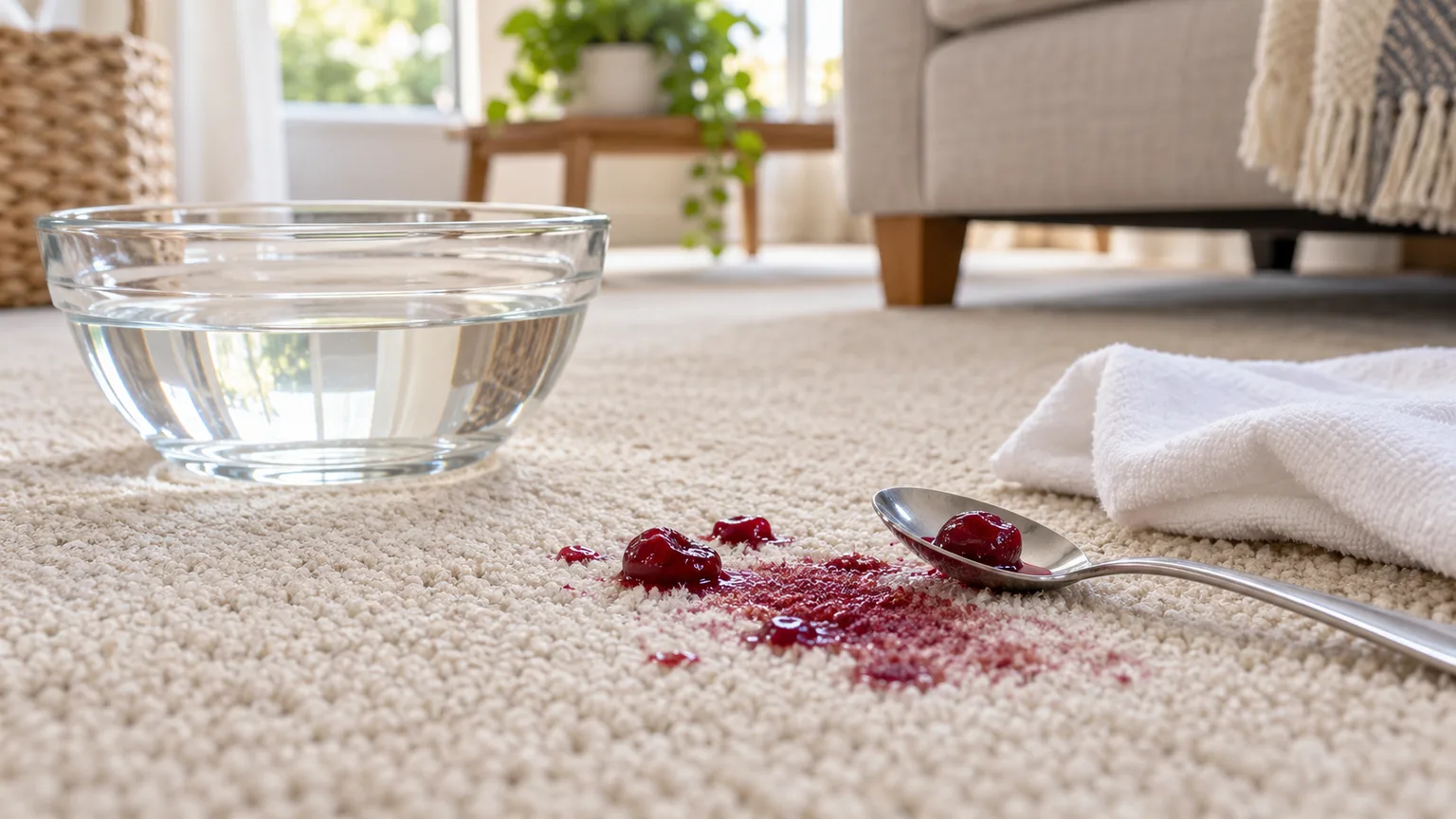
Lift cranberry pieces with a spoon. Blot up juice with a white cloth, pressing down and lifting rather than rubbing. Start outside the visible edge and work toward the middle. If the stain is near a seam or furniture leg, check for hidden liquid and move the furniture only if doing so will not smear the spill.
Mix a mild, neutral detergent with cool water according to the manufacturer’s directions; the UGA textile guide gives a small dilution as a starting point for carpet. Dampen a clean white cloth with the solution, then blot the stain. Do not spray a large amount directly into the carpet. Rotate to a clean cloth area as red pigment transfers, and stop applying solution once the cloth stops picking up color.
Blot the spot with a second cloth lightly dampened with plain water to remove cleaner, then press a dry towel into the pile. UGA recommends removing excess moisture and allowing the carpet to dry thoroughly. Do not leave a wet pad of towels on the spot or use a hair dryer; the goal is to draw liquid up and allow airflow, not push moisture deeper. When dry, gently reset the pile with your fingers or a soft brush if the carpet maker allows it.
Rework a dried spot without flooding the backing
For a dried cranberry mark, first loosen only the surface residue with a cloth dampened in cool water, then blot. Use the same mild solution in small applications. Give each pass time to transfer pigment to the cloth, and rinse the area with a separate barely damp cloth between rounds. Repeated light passes are easier to control than saturating the pile once.
If a dry pink shadow remains after two careful rounds, do not keep escalating through vinegar, alcohol, ammonia, peroxide, and bleach in succession. Residues can react, damage dyes, or remain in the backing. A product formulated and labeled for your carpet fiber may be appropriate, but test it and follow the label exactly. If the stain is large, has spread to the pad, or remains visible after a couple of label-safe attempts, a professional carpet cleaner can extract the spill with equipment designed for carpet rather than adding more liquid at home.
Remove cranberry stains from upholstery
Upholstery needs less liquid than clothing because cushion foam and interior layers can hold what the surface cannot show. A little too much water may move the pigment outward into a ring, and slow drying can leave odor or damage. The University of Georgia Cooperative Extension upholstery protocol uses a mild neutral-detergent solution on a cloth, a vinegar stage, and a clear-water sponge, followed by thorough blotting. It cautions that over-wetting can cause an upholstery finish to migrate and leave a circle. Follow your furniture maker’s instructions and do not assume that every fabric can tolerate the same solution.
Check the care instructions and test first
Look for the manufacturer’s cleaning tag or instructions before applying liquid. Some upholstery can be spot-cleaned with water; some requires a solvent method, and some should only be vacuumed or professionally cleaned. If the tag is missing, the fabric is delicate, or you cannot confirm the recommended method, avoid experimenting on a visible cushion.
Test the proposed cleaner on a hidden area such as the back edge or underside of a cushion. Use the smallest amount that wets the cloth, dab once, then blot with a dry white towel. Let the test area dry fully and check for color transfer, a change in texture, or a water ring. A test that looks fine while wet is not enough; some marks appear only after drying.
Control moisture, rinse residue, and dry the cushion
Lift sauce solids, then blot juice with a dry white cloth. Place a dry towel beneath a removable cushion cover if the construction allows it, so the spill does not transfer to the cushion insert. Do not unzip or remove a cover unless the care label says it is washable; shrinkage can make it impossible to put back.
Apply a small amount of the approved neutral detergent solution to a white cloth, not directly to the upholstery. Dab the outside of the spot first, then the center, turning the cloth frequently. Avoid rubbing or scrubbing the weave. When pigment stops transferring, use a second cloth barely dampened with clean water to lift cleaner residue, then press with a dry towel to wick out moisture. If the treatment has to expand beyond a small spot, clean the whole panel seam-to-seam only when the upholstery maker allows it; a tiny wet circle on an otherwise dry cushion can leave a visible tide line.
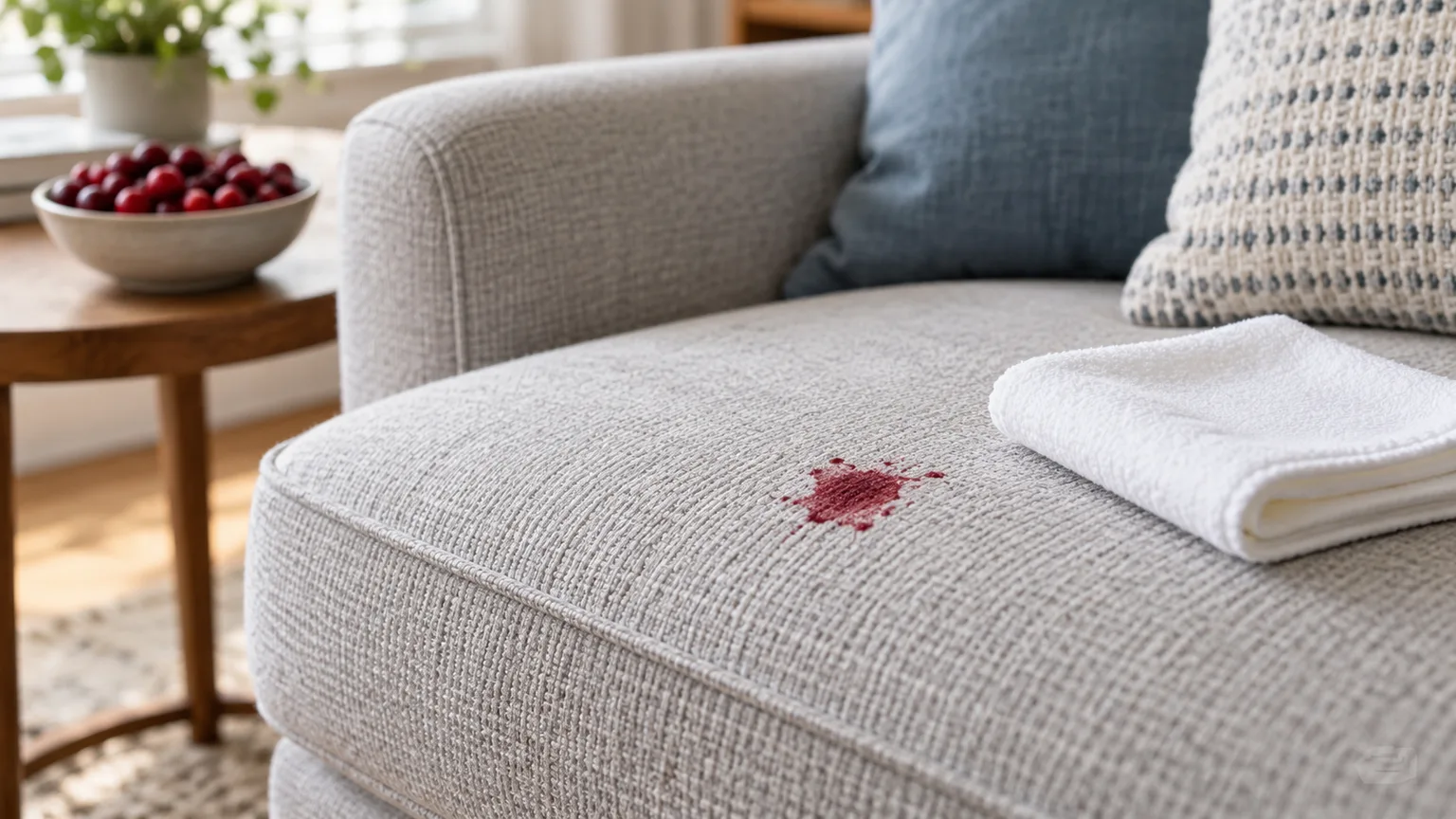
Let the cushion air-dry with good room circulation. If removable, stand it on edge or separate it from the frame when the manufacturer permits, and turn it periodically. Do not aim a heater or hair dryer at the spot, and do not sit on a damp cushion. If the stain remains after one or two careful passes, stop; adding a stronger cleaner may damage the finish or backing before it removes the color.
Choose cleaners without creating a second problem
A liquid laundry detergent or fabric-labeled pretreatment is the practical starting point for washable clothes. It can be applied and rinsed according to its label, while the garment’s own care instructions control wash temperature and bleaching. Use an oxygen-based color-safe product only when the garment and product labels both permit it. Chlorine bleach is a narrower option for some white, bleach-safe garments, not a default for colored fabric or household upholstery.
For carpet and upholstery, choose a mild product approved for the material and apply it to a cloth. The UGA fruit-stain guidance uses a neutral detergent solution for these surfaces and allows diluted white vinegar in its sequence, but vinegar is not necessary for every carpet or fabric. If you use it, follow the cited textile guidance and dilute it where fiber instructions require; do not pour it straight onto the material or mix it with another cleaner.
Avoid treating club soda, salt, baking soda, lemon juice, or rubbing alcohol as guaranteed stain removers. Plain cool water is enough for the initial rinse, and extra pantry ingredients can leave residue or alter a dye. Do not use a product because it is described as natural or gentle; the fabric label and product label matter more than marketing language. Never combine bleach with vinegar, ammonia, or another cleaner. The Centers for Disease Control and Prevention’s bleach guidance says not to mix bleach with ammonia or any other cleaner.
Troubleshoot a pink shadow, ring, or stain that spreads
A faint pink area after washing usually means some pigment remains; it does not necessarily mean the whole treatment failed. If the garment is washable, repeat the detergent pretreatment and wash without heat. If the remaining color is limited and the label allows it, use a compatible oxygen bleach exactly as directed. Stop if the surrounding fabric lightens or the trim changes.
A ring around a carpet or upholstery spot usually points to moisture or residue reaching farther than the visible spill. Blot the edge with a barely damp white cloth, then absorb it with a dry towel. Avoid wetting only the center again, which can strengthen the ring. For upholstery, the manufacturer may recommend cleaning an entire panel to a seam; do that only if the instructions permit it and you can dry it evenly.
If the stain seems to spread while you work, pause and blot with a fresh dry cloth. You may be using too much solution, moving from the outside toward the edge, or rubbing. Reduce the amount of liquid, work inward, and replace the cloth as soon as it takes up color. If the stain transfers color from the material itself, not just cranberry red, stop immediately; that is dye bleeding, not stain removal.
Know when to stop and call a cleaner
Use a professional cleaner for dry-clean-only clothing, silk or vintage fabrics, valuable rugs, unstable dyes, large spills, and upholstery that cannot be wet-cleaned. Also stop if the spot has spread into carpet backing or cushion foam, if an earlier attempt used a strong chemical, or if the treatment changes the fabric’s color or texture. A professional may not be able to remove every old or heat-set stain, but can assess the material and reduce the risk of permanent damage.
Before handing the item over, tell the cleaner what spilled and when, whether it was dried or heat-treated, and which products you used. Do not conceal an earlier application of bleach, ammonia, alcohol, or stain remover. The order matters because a cleaner needs to know what residue could remain on the textile. For a large carpet spill, mention whether the area still feels damp or has an odor; the visible fiber may be dry while the pad below is not.
Conclusion
For cranberry on washable fabric, lift the fruit, blot, flush from the back with cool water, pretreat with a compatible detergent, and inspect before drying. For carpet or upholstery, use a small amount of a material-approved neutral cleaner on a white cloth, blot rather than rub, rinse away residue, and remove moisture promptly.
A stain that remains is a signal to repeat one safe method or stop, not to combine stronger products. Follow the care label, test first, and get professional help for delicate or valuable pieces. You cannot guarantee every old mark will vanish, but this measured sequence gives you a better chance of lifting the color without damaging the item.