15 Best Hydrangea Companion Plants for Shade or Sun
Find 15 hydrangea companion plants matched to shade, sun, moisture, and hydrangea type, plus spacing tips and plants to keep at a distance for easy pairing.
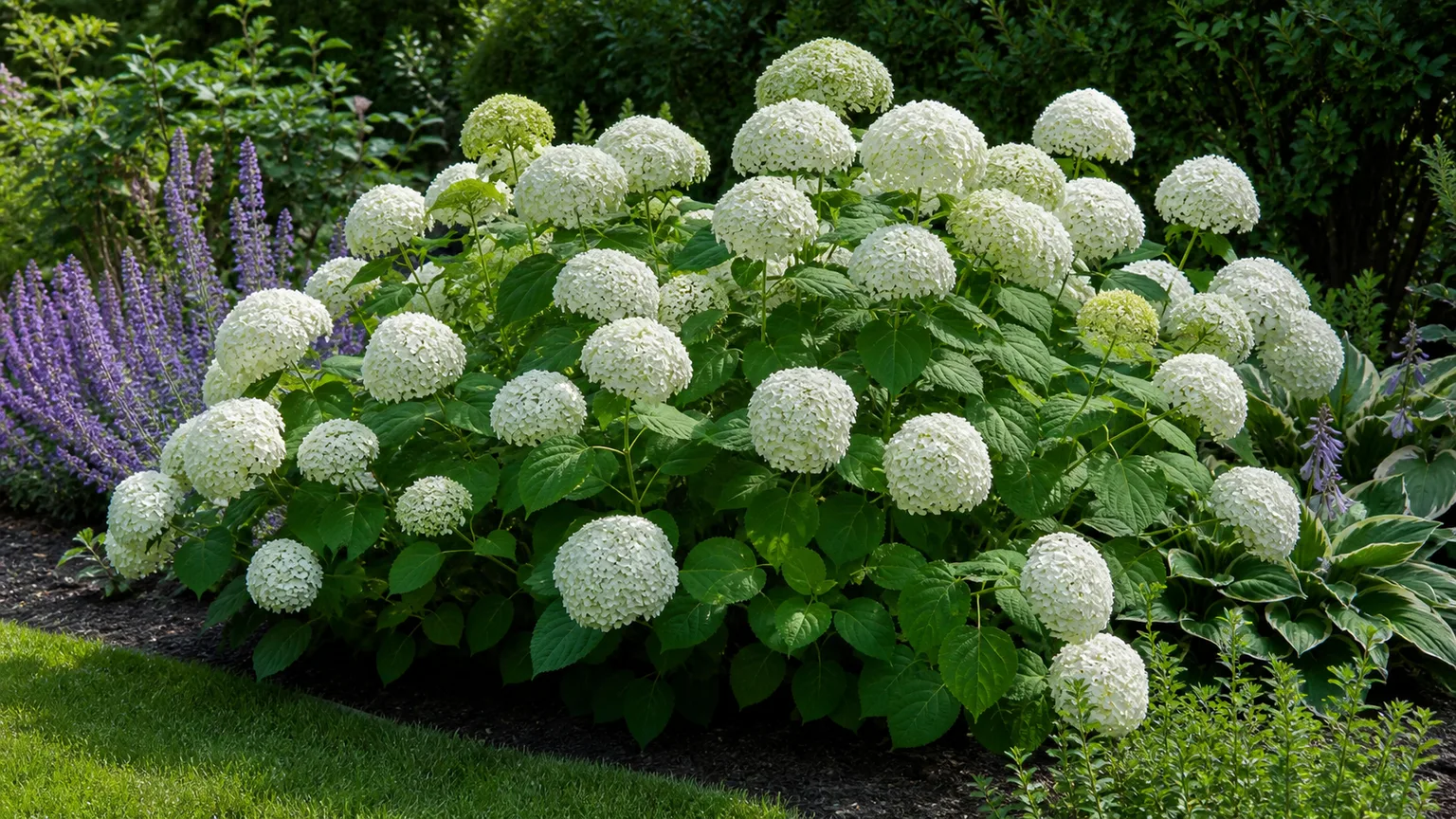
Hydrangeas already bring the big flowers; a good neighbor adds something the shrub cannot provide on its own. That might be winter foliage, a lower layer that softens bare stems, a flower spike that contrasts with a rounded bloom, or color that starts before hydrangea season. The best pairing also shares the site’s light and moisture so you are not forcing two plants with opposite needs into one bed.
The 15 plants below are options, not a shopping list to plant all at once. Some suit a shaded bigleaf hydrangea, while others belong on the brighter edge of a sun-tolerant panicle hydrangea. The distinction matters more than flower color.
What makes a hydrangea companion actually compatible?
Start with the hydrangea you own, not a generic picture of a shrub under dappled light. Bigleaf hydrangeas usually do best with morning sun or filtered light and protection from hot afternoon exposure, while smooth and oakleaf hydrangeas often tolerate partial shade; many panicle hydrangeas can take more sun if their soil does not dry out. The RHS notes that hydrangeas include shrubby and climbing forms with different uses, and the Missouri Botanical Garden’s hydrangea guide shows how light tolerance varies by species and cultivar. The RHS hydrangea guide and Missouri Botanical Garden’s hydrangea guide are useful starting points, but your plant label and local conditions still matter.
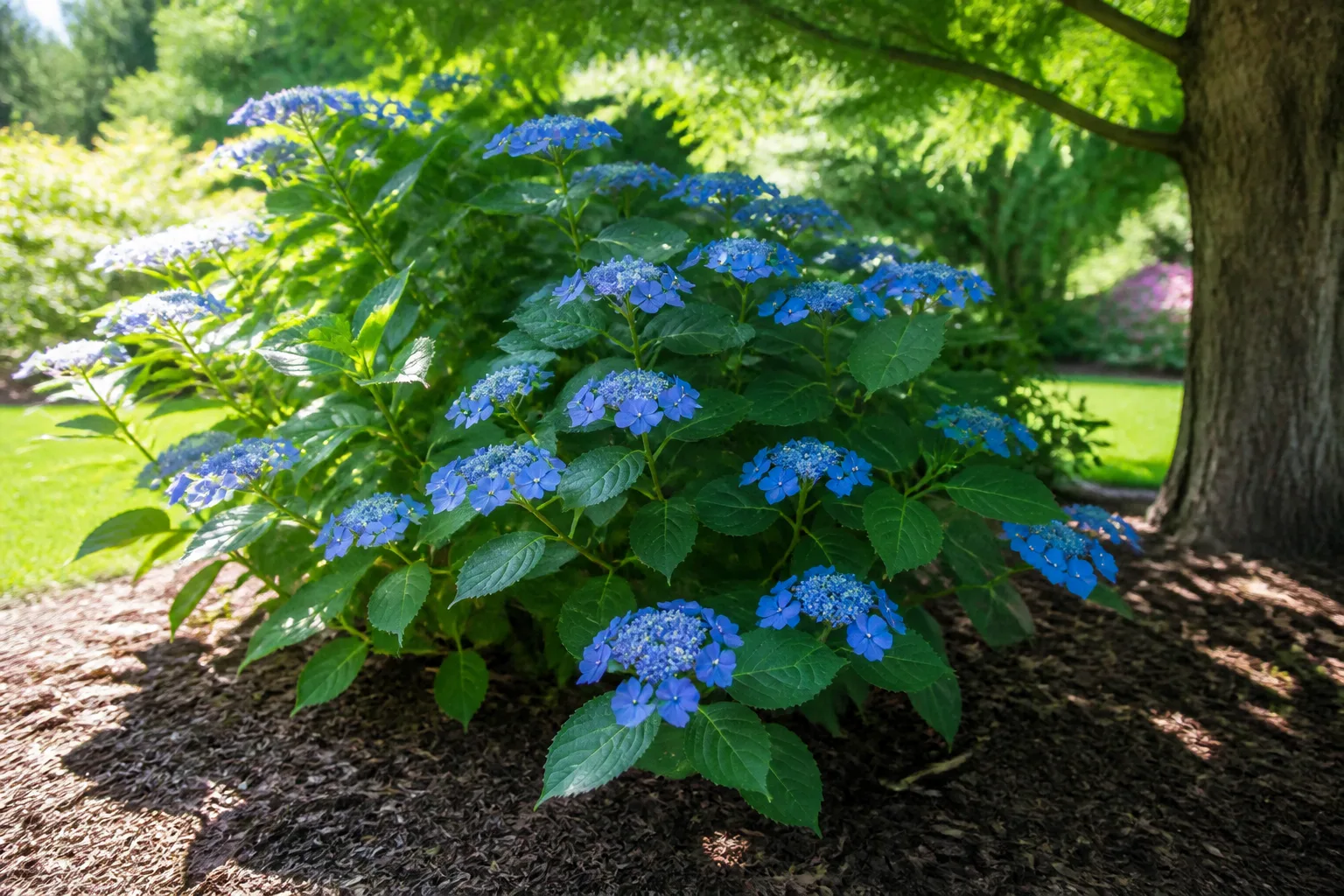
A good companion has at least one practical job: it fills a different height layer, extends interest into another season, repeats a flower color, or creates a clear edge. It should not smother the hydrangea’s crown, block air movement, or need such different watering that one plant is always stressed. Similar care is helpful, but it does not mean the plants will somehow fertilize, protect, or increase the blooms of one another.
That distinction keeps companion planting honest. The RHS Chief Horticulturist Guy Barter explains that companion-planting benefits are not universal; combinations may use space well, support biodiversity, or provide physical structure, but a benefit claimed for one pairing may not appear in every garden. For a hydrangea border, choose compatible conditions and useful design before expecting pest control or better flowering from a neighbor. The RHS overview of companion planting discusses those limits; a garden designer interviewed by Better Homes & Gardens similarly puts matching light and water needs ahead of color alone. Better Homes & Gardens’ hydrangea companion guide offers examples across sunnier and shadier sites.
15 companion plants, grouped by their growing needs
The same border can contain plants with different preferences if they occupy different positions. Place moisture-loving shade plants near a shaded hydrangea, then reserve the sunny outside edge for plants that want brighter light or sharper drainage. These groups make the placement logic clearer than treating every plant as an equally suitable neighbor.
Closest matches for shade and steady moisture
Hostas, selected ferns, coral bells, and cranesbill give a hydrangea a low layer without competing for the same visual role. Plant them around the outside of the root area rather than in a tight ring against the shrub, and leave a route for watering and seasonal cleanup.
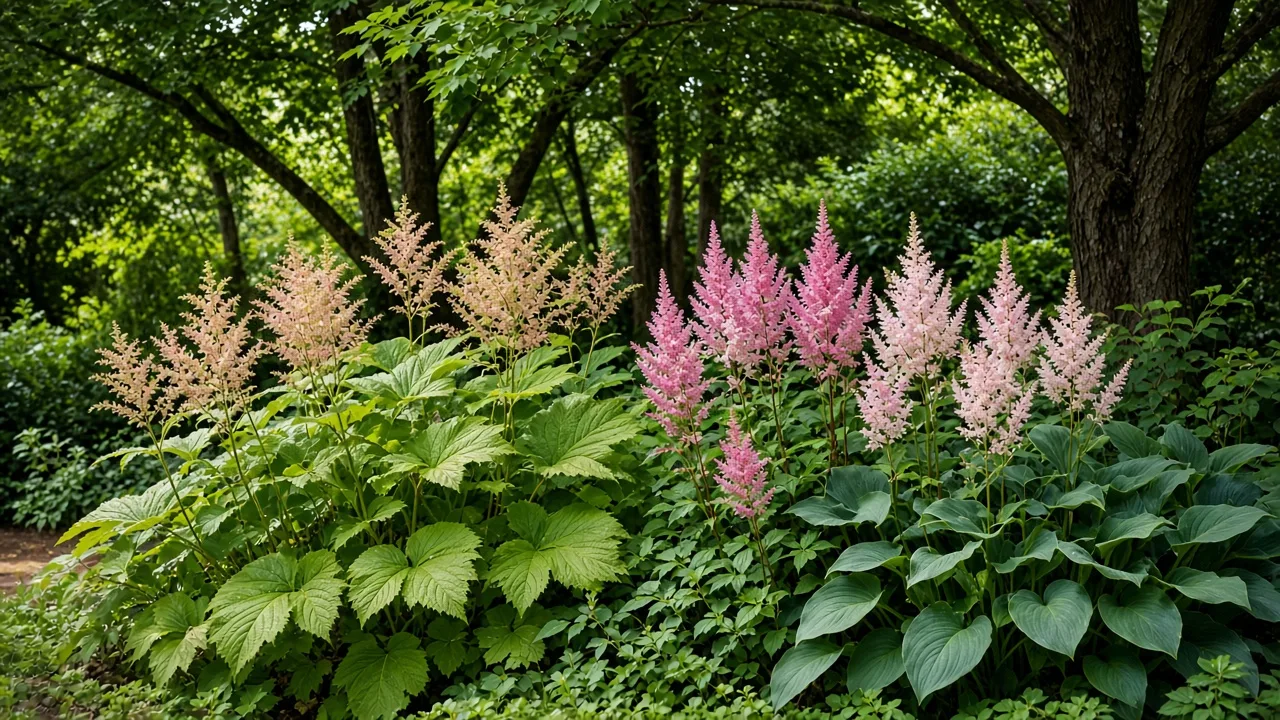
1. Hostas (Hosta spp.) work well as a foliage partner where the hydrangea gets filtered light and the soil stays evenly moist but drains freely. Their broad leaves make the shrub’s smaller leaves and large flower heads stand out, and compact cultivars can edge a bed while wider ones fill a woodland border. Check the label before planting because hosta spread varies dramatically; deer and slugs can also make an otherwise ideal planting a poor choice for a particular yard.
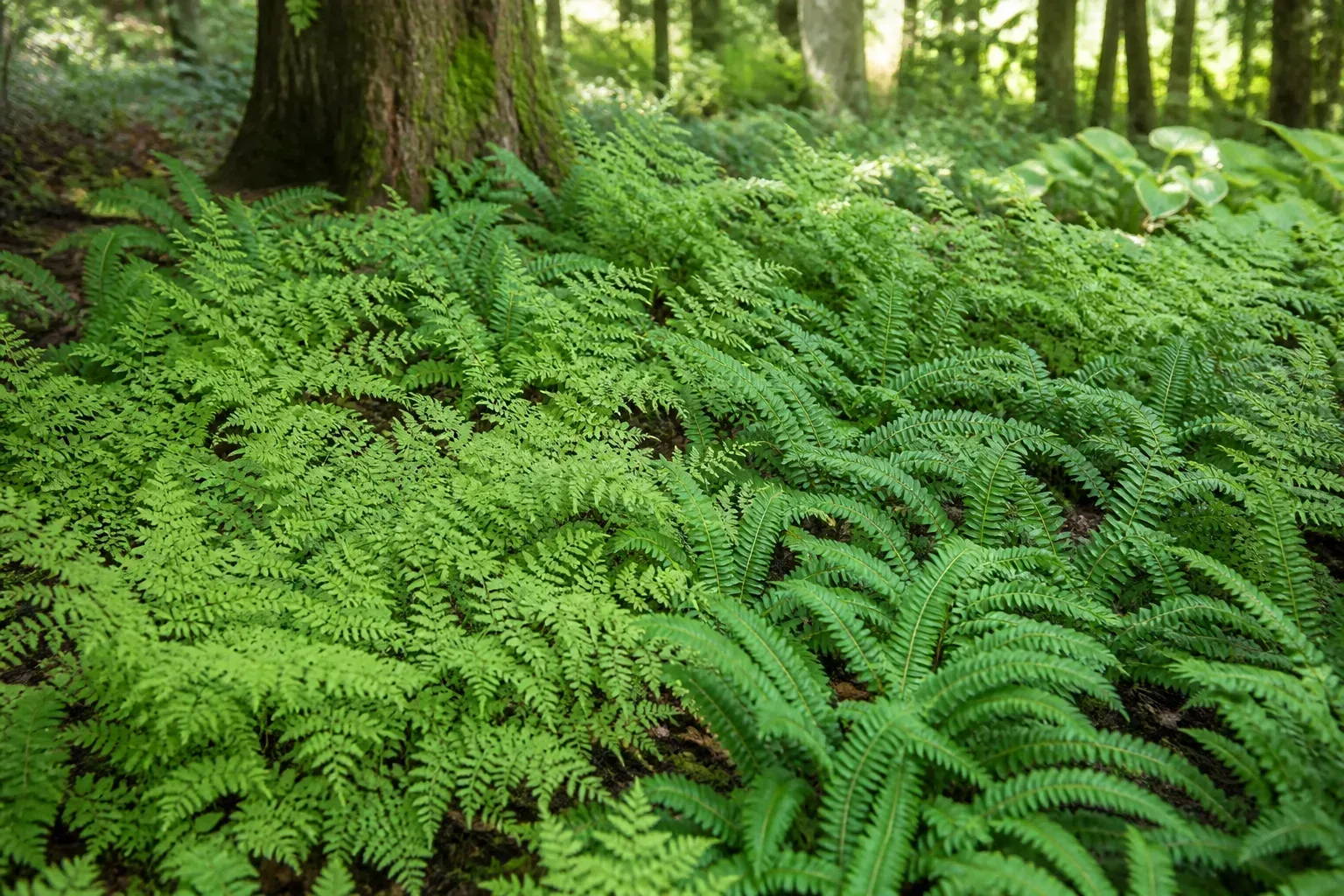
2. Ferns bring a fine, feathery texture that contrasts with hydrangea leaves and keeps a shaded bed looking full after the flowers fade. Lady fern, Christmas fern, and regionally native woodland ferns are more useful candidates than choosing a fern by name alone: match it to your winter climate and the site’s moisture. Ferns still need drainage, so a damp, heavy patch that leaves hydrangea roots waterlogged is not improved by adding more shade plants.
3. Coral bells (Heuchera spp.) add a tidy, low mound and foliage in colors that can echo or contrast with hydrangea blooms. They are a good front-edge choice where soil drains well, but they are not a cure for a boggy bed; winter wet and compacted soil can be harder on them than summer shade. Plant in small groups for a deliberate patch of color, and keep the crown visible rather than burying it in mulch.
4. Hardy cranesbill (Geranium spp.) creates a spreading, flowering edge that can soften the boundary between a hydrangea bed and lawn or path. Many perennial geraniums tolerate sun or part shade, so they can bridge a brighter edge, but the genus is broad and growth habits differ: select a compact clump-former for a small bed rather than a vigorous groundcover that will need regular editing. Use it where you want a low mass, not pressed against the hydrangea stems.
Flowering companions for mixed light
A mix of bloom shapes can make a hydrangea border feel planned rather than crowded. The ideas here range from a sunnier perennial to a shade annual and a tall biennial, so site placement and season length decide whether they fit.
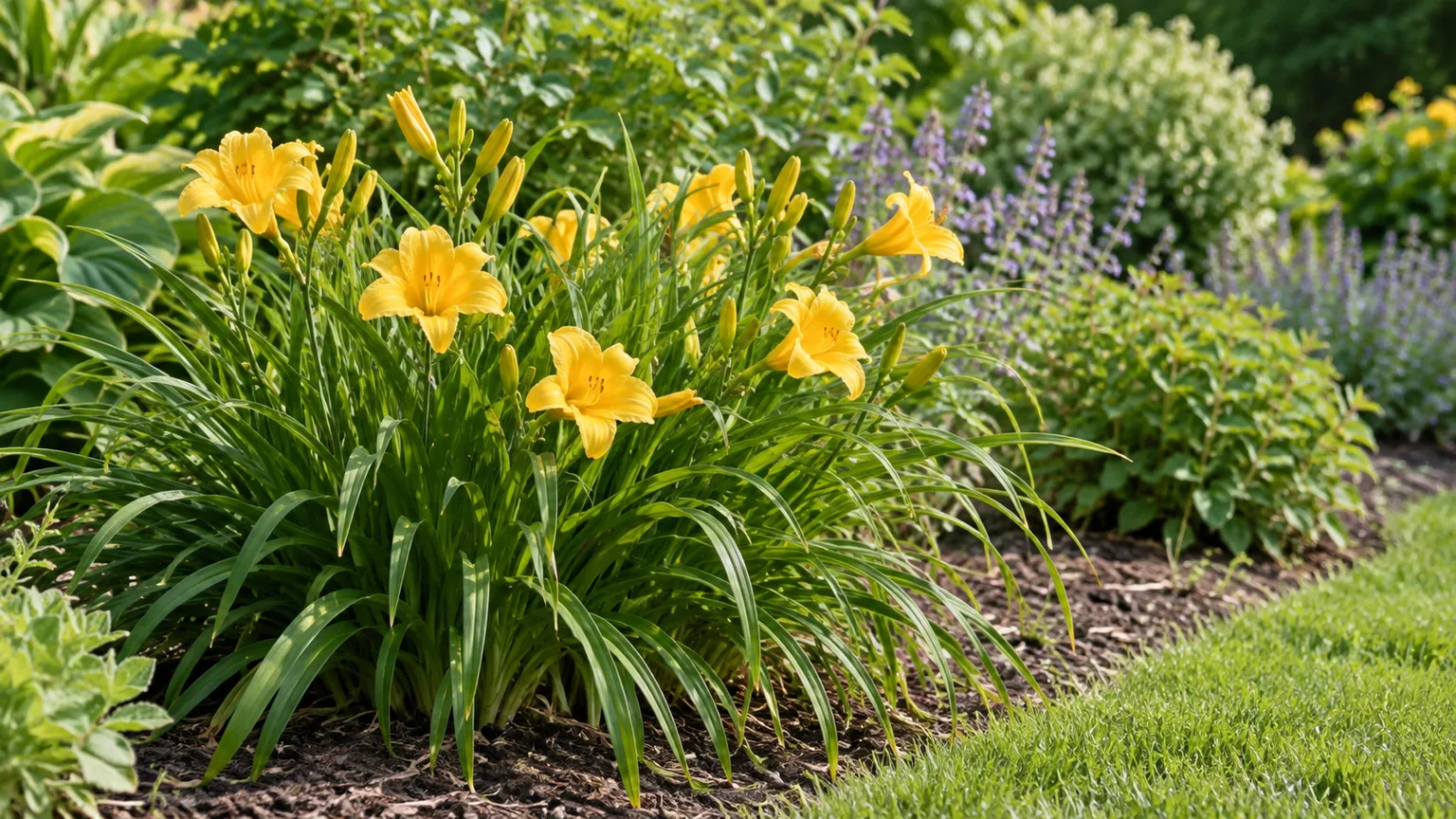
5. Daylilies (Hemerocallis spp.) add strappy leaves and bright flowers that contrast with hydrangea’s broad foliage. They are best on the sunnier side of a panicle hydrangea or where a cultivar tolerates more sun; they are a poor underplanting choice in deep shade simply because the colors look good together. Leave room for the daylily clump to expand, and make sure the soil is not so dry that the hydrangea wilts while the daylily thrives.
6. Begonias (Begonia spp.) are useful seasonal color around a hydrangea in bright shade, especially in a small bed where a permanent perennial would eventually crowd the shrub. Treat them as annual bedding plants unless you have a reliably warm climate and know the species you are planting; many common garden begonias are not winter hardy in cold regions. Set transplants outside after frost danger has passed, keep the soil consistently moist but not soggy, and replace them when cold weather ends the display.
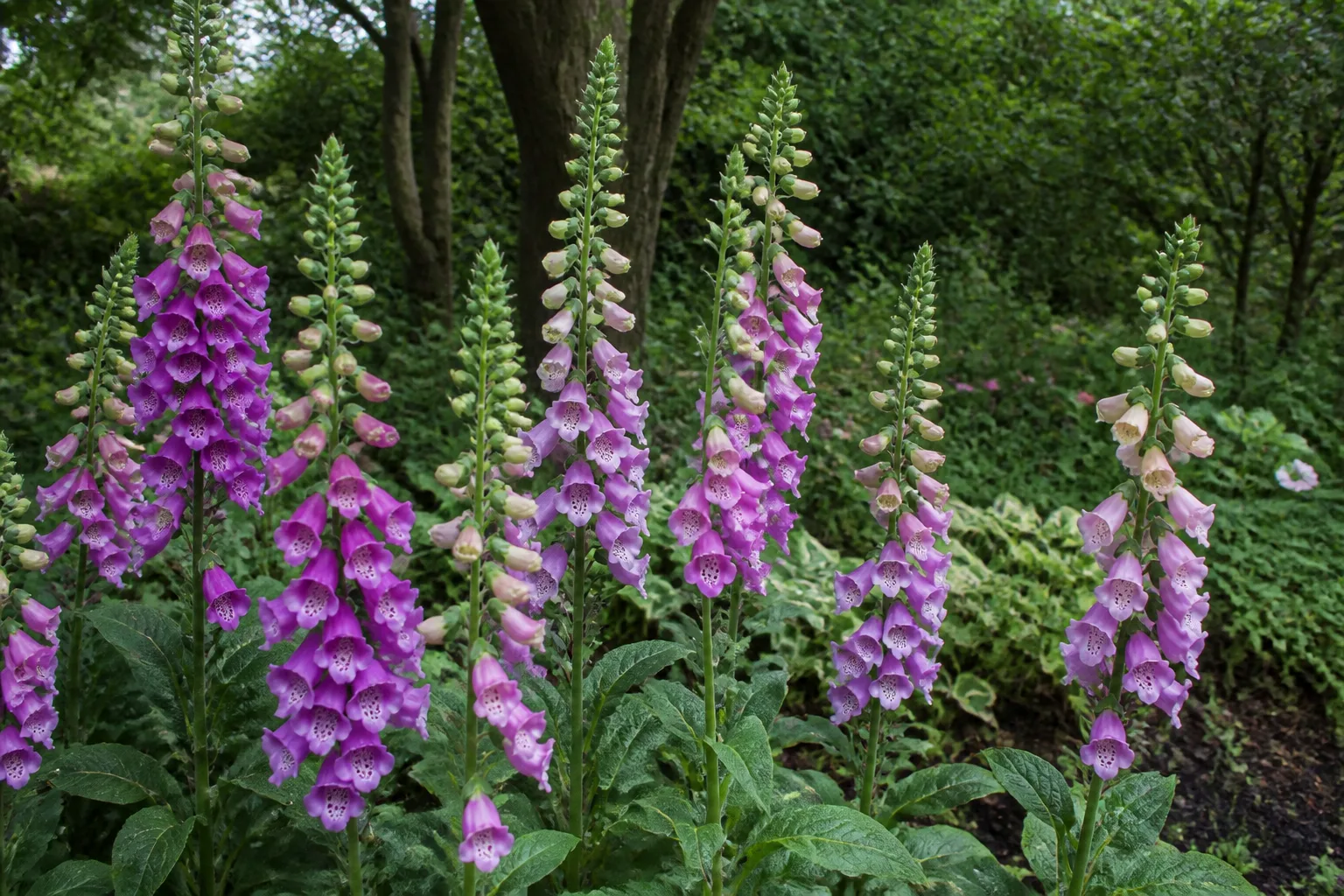
7. Foxgloves (Digitalis purpurea) bring upright flower spikes above the hydrangea’s rounded heads, and they can suit a partly shaded border with evenly moist, well-drained soil. Most are biennial or short-lived and may self-sow, so leave room for seedlings or cut the stalks before seed forms if you want to control their spread. The beauty comes with a serious safety condition: MedlinePlus notes that foxglove’s flowers, leaves, stems, and seeds contain poisonous ingredients, so do not plant it where children may taste or handle it, and seek local poison-control guidance after any ingestion. MedlinePlus’ foxglove poisoning reference describes the ingestion risk.
8. Garden speedwell (Veronica longifolia) gives the border vertical flower spikes in blue, purple, pink, or white. Taller cultivars fit behind or beside a hydrangea where they receive enough sun to flower well; lower forms can edge a brighter bed. Read the plant tag for mature height and light needs rather than assuming every speedwell grows to the same size, and avoid crowding the hydrangea with several tall clumps at once.
Texture plants for sunny edges
Catmint, blue fescue, lamb’s ear, and browallia can add softer foliage, silver color, or a different bloom season. Their water and light needs are not all the same, so use them as outer-edge plants or seasonal accents instead of an automatic planting ring.
9. Catmint (Nepeta spp.) brings gray-green foliage and long-lasting blue-purple flowers to a sunny border. Many catmints prefer full sun and well-drained soil, and established plants handle drier conditions better than a moisture-loving hydrangea; that makes catmint a better neighbor at the sunny outer edge than at the shrub’s base. Choose a compact selection for a narrow space and shear spent flowers if you want to refresh the mound.
10. Blue fescue (Festuca glauca) forms a small blue-gray grass clump that gives hydrangea flowers a crisp color contrast. Its best placement is a bright, well-drained edge, especially beside a panicle hydrangea that receives more sun; it is not a good underplant for a shaded bigleaf hydrangea or a bed kept constantly wet. The clumps are relatively small, but still give each one enough room to keep its rounded form visible instead of disappearing under hydrangea foliage.
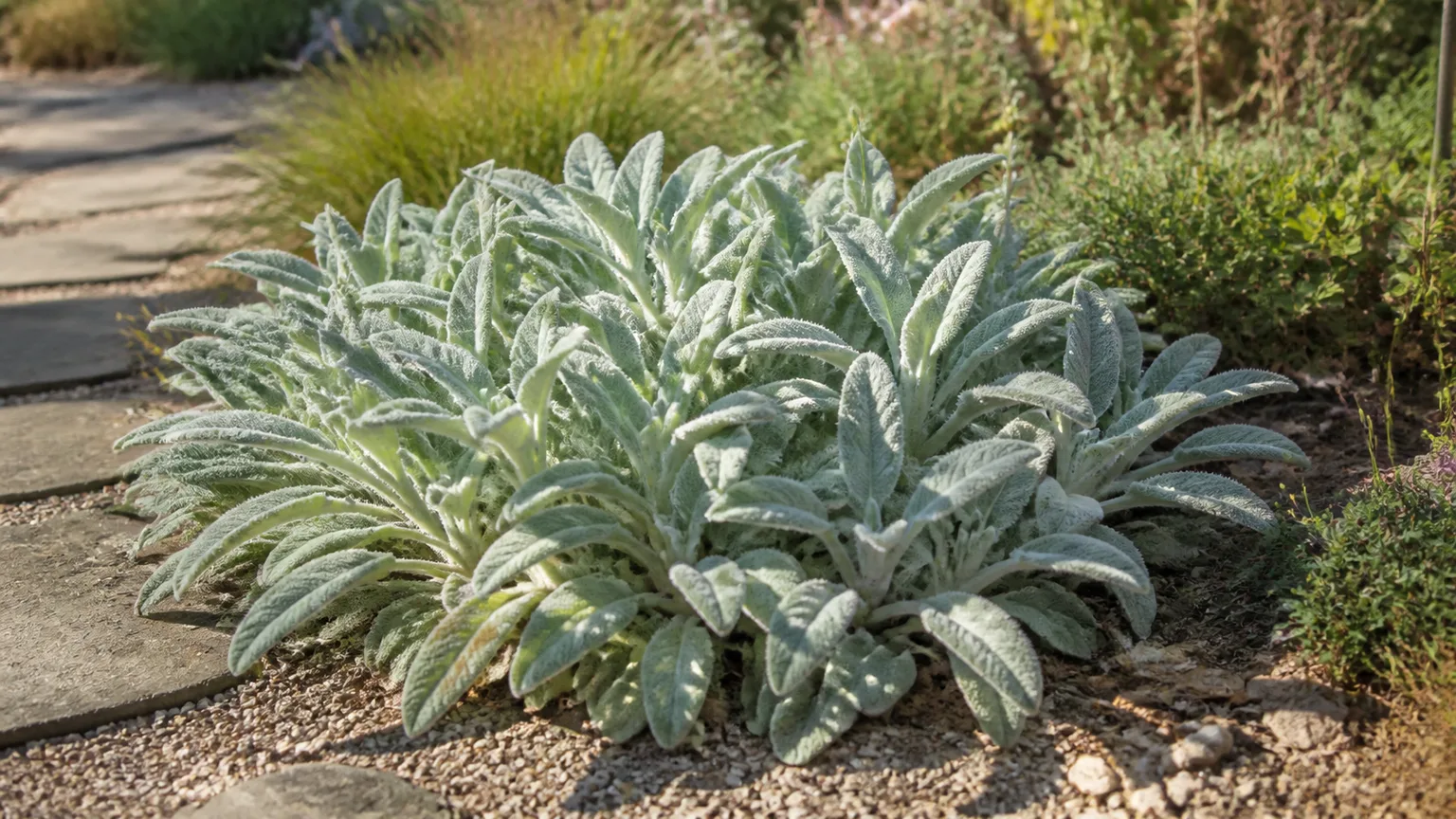
11. Lamb’s ear (Stachys byzantina) contributes soft silver leaves and a low, spreading texture, but its needs are often mismatched with a thirsty hydrangea. It prefers sun and sharply drained soil, and its fuzzy leaves are vulnerable to rot where the crown stays wet or crowded. Use lamb’s ear in a separate sunny pocket near the edge of a mixed border, or skip it if the entire bed is shaded and regularly watered for bigleaf hydrangeas.
12. Browallia (Browallia speciosa) can provide blue, violet, or white summer flowers in warm-weather shade, where a hydrangea bed needs a temporary color layer. In most colder climates, treat it as an annual rather than a hardy perennial, and do not count on it to return next year. It works best as a small seasonal filler in a watered edge, not as a permanent groundcover that must survive winter or compete with mature hydrangea roots.
Shrubs and small trees for a taller backdrop
The woody plants below add scale, but they are not automatically good neighbors just because they can shade a hydrangea. Think of them as background plants to place at mature distances, not as shrubs to tuck against an established hydrangea.
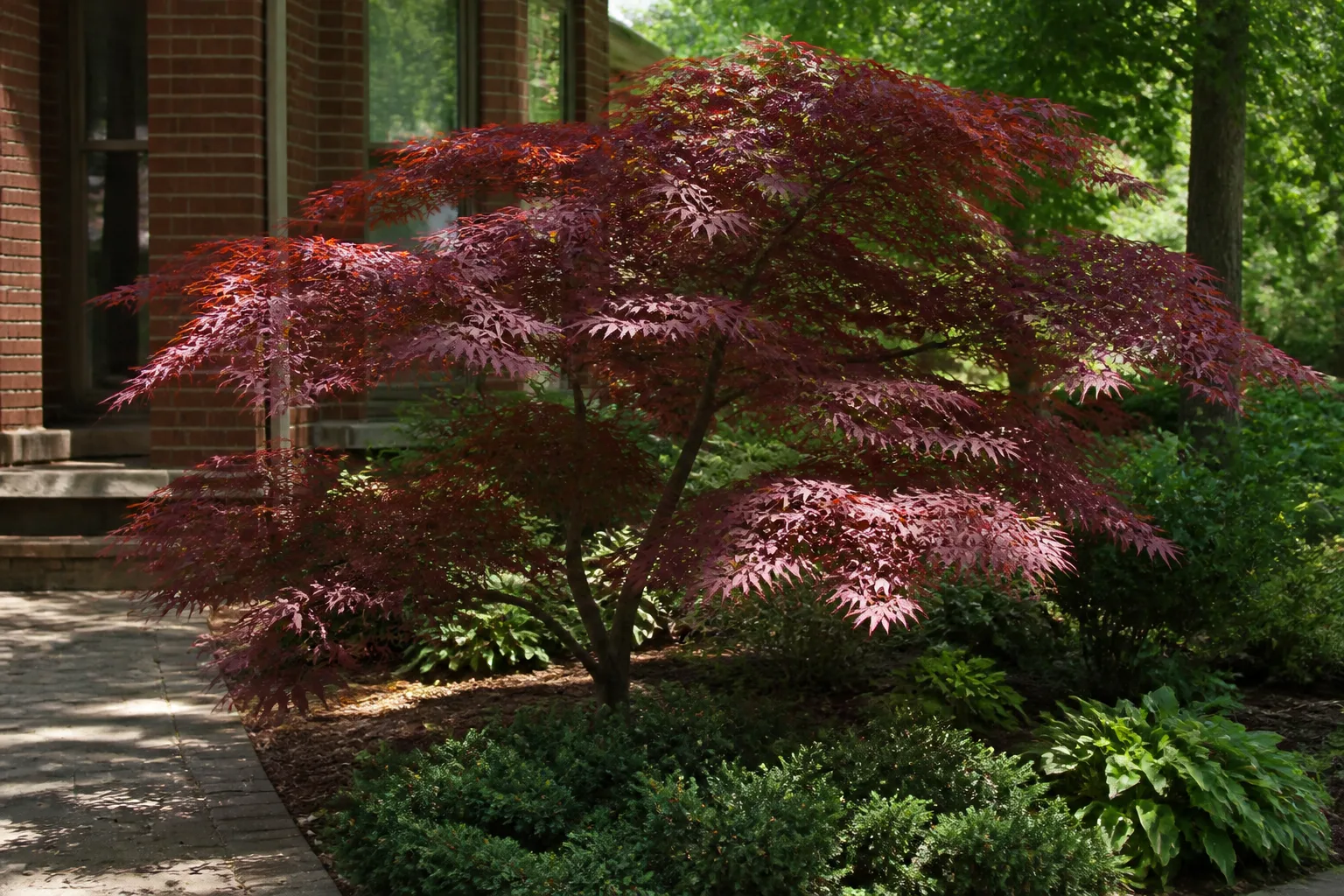
13. Japanese maple (Acer palmatum) offers a fine-leaved canopy, fall color, and a clear change in scale behind a hydrangea. A small, slow-growing cultivar can be useful in a compact design, but “small” depends on its mature spread and local growing conditions; a tree’s roots and canopy can also take water and light from the shrub. Keep it far enough away that both plants can reach their mature form, and use the hydrangea’s actual cultivar width rather than a generic spacing chart.
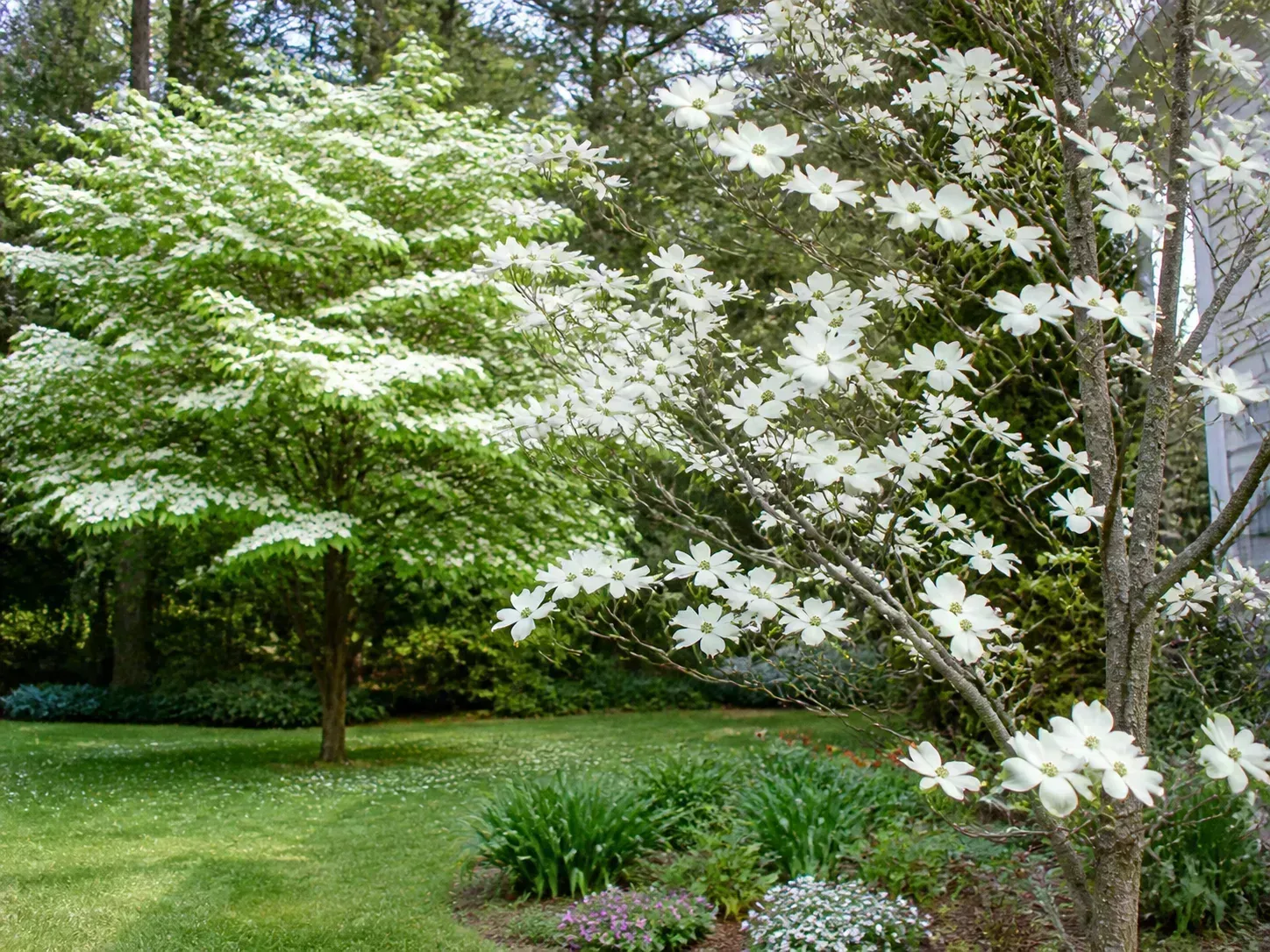
14. Flowering dogwood (Cornus florida) can create a spring-flowering canopy above a hydrangea border and extend interest before summer shrubs bloom. It belongs behind the hydrangea with enough room for its eventual crown and roots, not directly over the shrub where shade, leaf litter, and competition accumulate. The species is not suited to every climate or exposure, so confirm regional hardiness and disease considerations before treating a dogwood as a practical choice.
15. Double Reeves spirea (Spiraea cantoniensis) has arching branches and clusters of white flowers that can complement hydrangea blooms at a different scale. It is a sun-loving shrub that can grow much larger than a small perennial companion, so place it in a brighter, open part of the landscape and check the specific cultivar’s mature dimensions. It should not be planted as a close shade canopy over a hydrangea; the two shrubs need room and may have different watering needs.
What not to plant right beside hydrangeas
The most reliable “avoid” rule is a mismatch, not a blacklist. A sun-loving, drought-tolerant plant such as lavender, catmint, blue fescue, or lamb’s ear can struggle if you keep its root zone wet for a shade-grown hydrangea; the reverse happens when a hydrangea is planted beside companions that need little water in a hot, exposed site. Roses may work in a sunny border with a compatible hydrangea cultivar, but do not assume they are ideal companions for a shade-loving bigleaf shrub just because both produce flowers.
Avoid mismatched sun, water, and soil
Before planting, compare the labels for light, mature size, drainage, and the establishment watering each plant needs. If one label says full sun and dry soil while the hydrangea needs afternoon protection and consistent moisture, place them in separate pockets rather than trying to compromise the entire bed. A path, stone edge, or a few feet of open mulch can be a useful boundary between plants with different irrigation requirements.
Soil pH is another point people sometimes overcomplicate. Flower color in some bigleaf hydrangeas can shift with soil chemistry and aluminum availability, but a companion plant does not directly make the flowers blue or pink; do not add amendments simply because a nearby plant prefers acidic soil. If color control matters, test soil and follow guidance for the specific hydrangea cultivar instead of changing conditions for the whole border.
Give spreading plants and woody roots room
Avoid aggressive groundcovers or overly dense plantings that will need constant digging beside established hydrangea roots. A large maple, dogwood, or fast-growing shrub can make a helpful background only when it has room to mature; planted too close, it can compete for water and make it difficult to prune or inspect the hydrangea. Leave a clear working gap near the woody stems so you can water deeply, remove damaged growth, and see when pests or disease appear.
Match the companion to the hydrangea type
The word “hydrangea” covers several species, not one uniform light requirement. Most classic bigleaf hydrangeas (H. macrophylla) appreciate morning sun and afternoon shade in warm-summer climates, while smooth hydrangeas (H. arborescens) and oakleaf hydrangeas (H. quercifolia) have their own size, shade, and winter traits. Panicle hydrangeas (H. paniculata) usually tolerate more sun than bigleaf forms, although their soil still needs to retain enough moisture to prevent heat stress.
Bigleaf, smooth, oakleaf, and panicle hydrangeas
A shaded planting might begin with hostas, ferns, coral bells, and a compact cranesbill. A sunnier panicle hydrangea can support daylilies, speedwell, catmint, or blue fescue at its edge, provided the plants are not forced into the same small root zone. For an oakleaf hydrangea, account for its mature size and fall foliage before adding a tree or large shrub; a plant that looks modest in a nursery pot may turn into the dominant layer of the bed.
The Missouri Botanical Garden’s hydrangea guide distinguishes species and cultivars by sun exposure, water needs, and mature size, while the RHS notes that climbing hydrangeas serve a different role from shrubby types. Use those plant profiles to confirm the hydrangea’s identity before choosing a companion. Also remember that flower color is not a substitute for species identification: blue flowers do not necessarily mean the plant needs a different companion than a pink one.
Design a hydrangea border in layers
Think from the back of the bed to the front. Place a small tree or large shrub at the back only when there is enough room for its full canopy; use hydrangeas as the middle layer; then add a few low plants or seasonal annuals near the front. In a narrow bed, skip the tree and use a smaller hydrangea cultivar, a compact perennial, or a pot of seasonal color instead of trying to force three mature layers into four feet of space.
A restrained palette also helps. Hydrangea flowers already occupy a large visual area, so choose one or two companion colors and vary shape or foliage texture around them. BBC Gardeners’ World recommends considering plant size and habit, foliage, flower shape, color, and season of interest when combining plants; that approach keeps a border cohesive without requiring every plant to bloom at once. BBC Gardeners’ World guidance on combining plants offers a useful design lens for choosing companions.
Start with mature width, not nursery-pot size
Read the expected width on every label and allow the planting centers to reflect those eventual dimensions. As a starting point, add half of the hydrangea’s mature width to half of the companion’s mature width; that gives the center-to-center distance before any extra room for access or airflow. For example, if a hydrangea is expected to spread four feet and a perennial two feet, start with about three feet between their centers, then adjust for the cultivar, bed shape, and whether the leaves may overlap lightly.
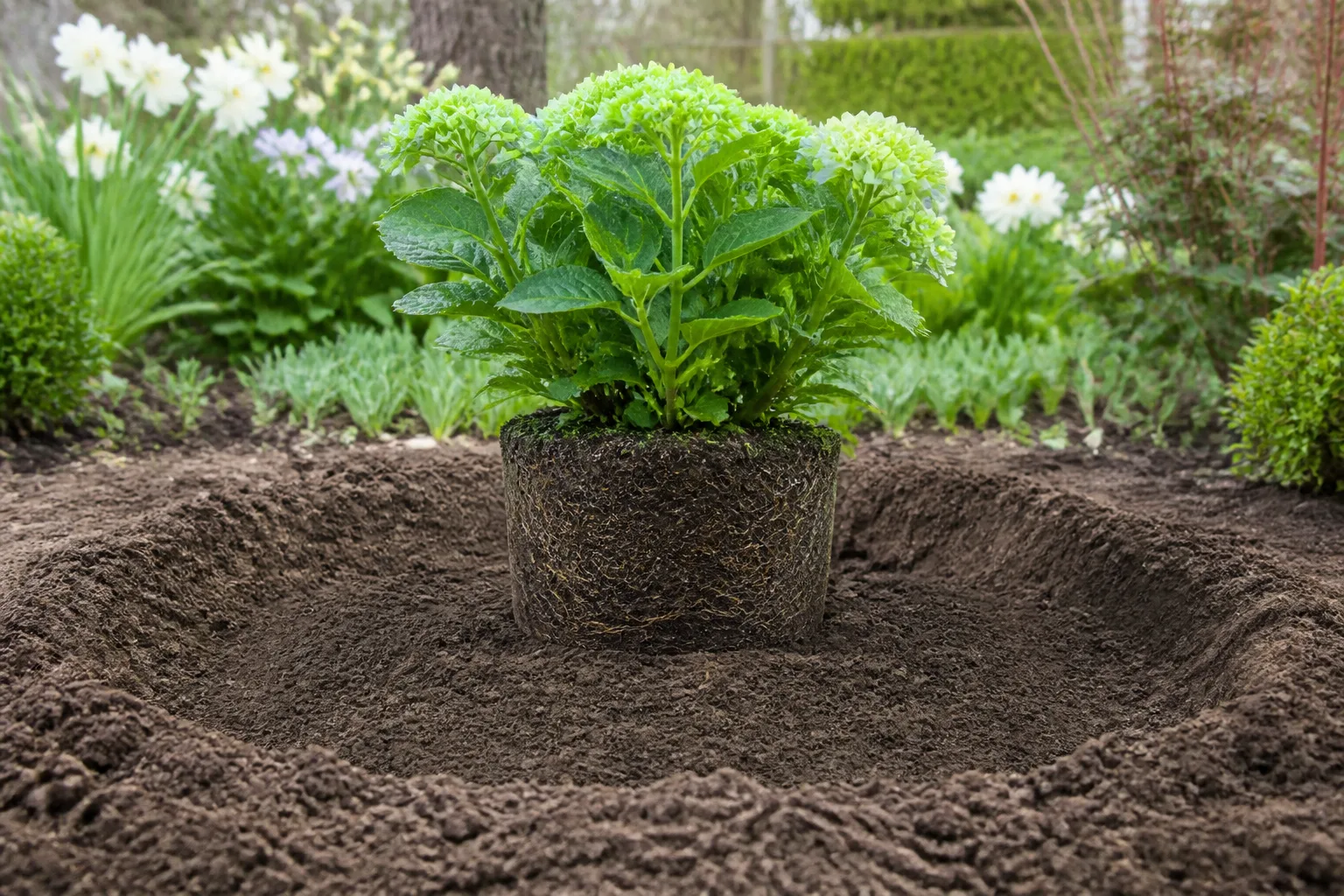
Do not dig planting holes against the hydrangea’s base or slice through its established root zone just to fit one more perennial. When the shrub is already mature, plant new companions near the bed edge or in gaps that do not require heavy root disturbance. A few well-spaced companions usually look cleaner than a full ring of plants that crowd together by their second or third growing season.
Plant and maintain companions without stressing the hydrangea
Planting time is a chance to set up a low-stress border. Spring after hard frost or early fall before the ground freezes gives new plants time to establish in many temperate climates, but local weather and plant hardiness still govern the best window. Water each new root ball thoroughly, then keep checking soil moisture during establishment rather than assuming a companion that likes dry soil should receive the same schedule as the hydrangea.
Water, mulch, and prune according to each plant
Use mulch to conserve moisture and moderate soil temperature, but keep it away from crowns and woody stems. Do not use a deep blanket of mulch to hide spacing problems or bury low-growing plants that need air movement; a moist hydrangea bed can become too wet around coral bells or lamb’s ear if the drainage is poor. After heavy rain, check whether water drains instead of sitting around the roots, then adapt the planting or irrigation before the plants decline.
Prune each plant according to its own growth cycle. Hydrangeas vary in whether they flower on old or new wood, while daylilies, speedwell, and foxglove have different deadheading or seed-setting patterns; cutting everything at once can remove next year’s buds or eliminate useful winter structure. Keep a simple note of each plant’s label and bloom time so you know what is dormant, what should be cut back, and what should be left standing.
A useful border should also remain easy to reach. Leave a path or open pocket where a hose can reach the hydrangea’s root zone, keep tree branches from rubbing against shrub stems, and remove fallen leaves if they bury small perennials. If an annual such as browallia or a begonia is doing well, you can repeat it next season; if it needs constant rescue watering, choose a better-matched perennial instead.
Conclusion
The best hydrangea companion is the plant that fits your hydrangea’s actual light, moisture, and mature size while adding a different layer of interest. Hostas, ferns, coral bells, and cranesbill are strong starting points for a moist, partly shaded bed; daylilies and speedwell can work in brighter spots, while catmint, fescue, and lamb’s ear belong on sunny, well-drained edges. Trees and larger shrubs can add structure when they have room, but close planting turns a pretty pairing into root competition.
Choose two or three plants for the conditions you have, check their mature widths, and leave space around the hydrangea’s base. That simple plan creates a more balanced border and makes watering and upkeep easier without relying on companion-planting claims that every garden cannot prove.