Mold Remediation Cost, Process, and What to Expect
Compare mold remediation costs, see how containment and removal work, and learn how to fix moisture, review estimates, and prevent the problem from returning.
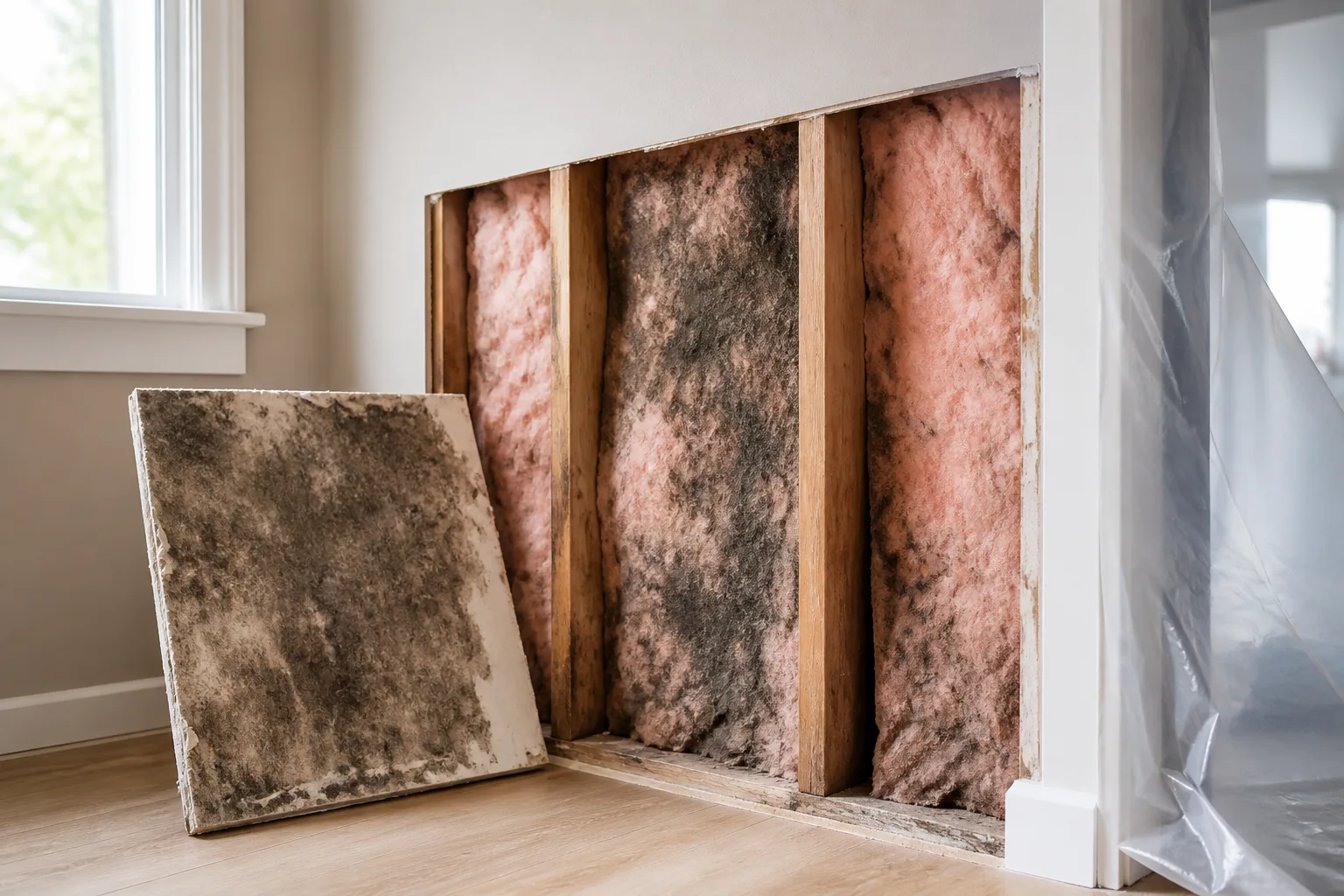
A recurring musty smell, a wet wall, or mold that returns after cleaning usually points to a moisture problem that has not been corrected. The useful goal is not to spray the darkest patch or identify a dramatic-sounding mold species. It is to find how water is getting in, remove growth from affected materials without spreading it, dry the building, and verify that the conditions that fed it have changed.
That distinction explains why a contractor’s quote may include plastic containment, filtration, demolition, disposal, drying, and repairs rather than a single cleaning charge. It also gives you a practical way to judge whether the work is proportionate: every cost should connect to a documented part of the problem or to a defined repair.
Mold Remediation Versus Mold Removal
People use “mold removal” and “mold remediation” interchangeably, but a complete job is broader than wiping away visible spots. Removal describes taking moldy material out or cleaning a surface; remediation describes reducing contamination to a normal condition while correcting the moisture source and limiting spread during the work. No responsible company can promise to remove every mold spore from a home, because spores occur naturally in indoor and outdoor air.
A painted-over stain is not remediation if the drywall underneath remains wet. A disinfectant or fogging treatment is not a substitute for removing porous material that cannot be cleaned, drying the structure, and fixing a leak. Conversely, sound nonporous surfaces or structurally sound framing may be cleanable; whether material can stay depends on what it is, how far growth has spread, and whether it can be dried and cleaned thoroughly.
The CDC’s mold guidance makes the central sequence clear: remove mold and fix the moisture problem. It also explains that mold can grow on drywall, wood, insulation, carpet, and other materials when moisture persists. If either removal or water correction is missing from the plan, the job is incomplete.
First Decision: Small Cleanup or Professional Remediation?
Before you compare bids, note four facts: the visible area, what material is affected, whether the water source is active or known, and whether mold or moisture appears in other rooms or inside an HVAC system. Photograph the area before moving items, and avoid scraping, dry-brushing, or pointing a fan at it; disturbance can move contaminated dust beyond the spot.
A small patch on a hard, washable bathroom surface after a brief condensation problem is a different job from mold behind a wall after a plumbing leak. A persistent odor with no visible growth, soft drywall, staining that spreads, or a wet basement after flooding suggests hidden damage that a quick surface clean will miss. If water is still entering, stop the leak or arrange the repair before paying anyone to treat the visible growth.
Use the 10-Square-Foot Guidepost Carefully
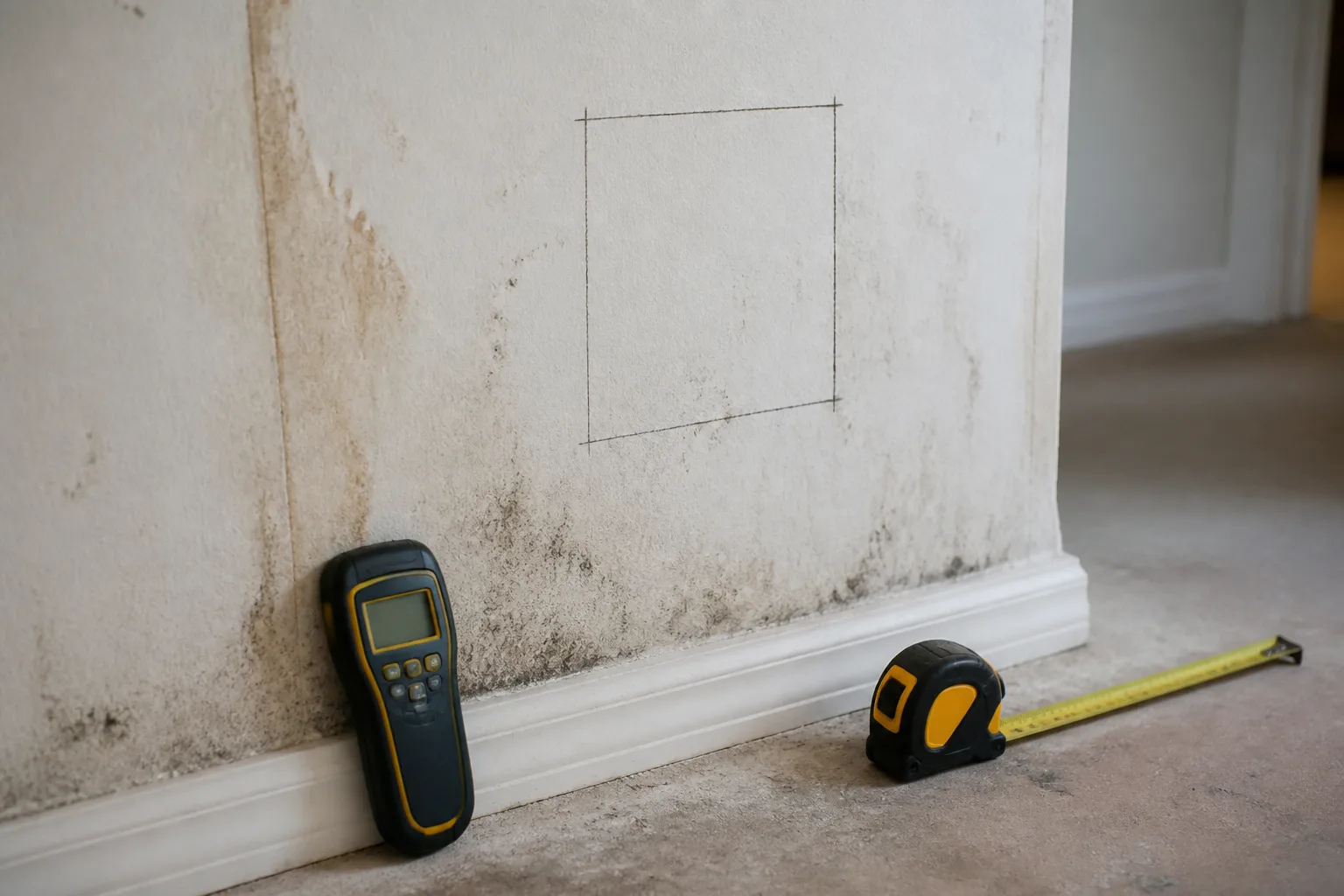
The EPA’s homeowner guidance uses roughly 10 square feet as a practical line for deciding when a homeowner may be able to handle a limited cleanup and when professional help is advisable. Treat it as a screening guide, not a safety guarantee: hidden mold can make a small-looking stain a larger project, and the kind of water and the material matter as much as the visible dimensions. EPA cleanup guidance and the CDC report on mold after flooding both emphasize more caution for extensive growth or substantial water damage.
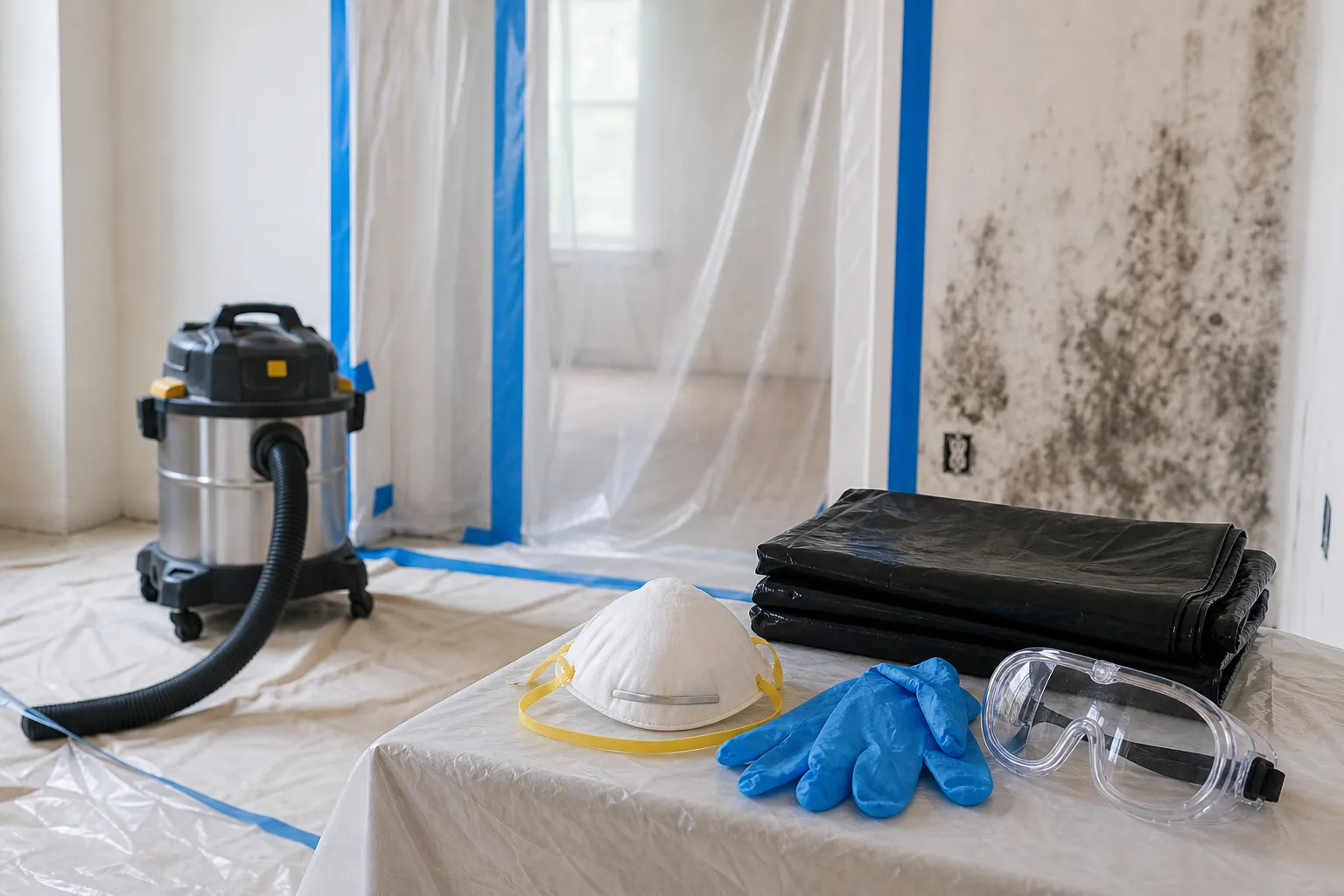
If you do the limited cleanup yourself, follow the cleaner label, keep children and pets away, and do not mix bleach with ammonia or other cleaners. The CDC’s cleanup guide recommends at least an N95 respirator, goggles, and protective gloves for mold cleanup after disasters; larger or more complex work needs a professional’s task-specific controls. Do not assume a mask makes a flooded, contaminated, or medically risky job suitable for DIY.
Situations That Call for a Qualified Professional
Call a remediation professional when the affected area exceeds the EPA guidepost, the source is unclear, the growth is concealed behind finishes, or the project would disturb insulation, drywall, flooring, or extensive belongings. Also get help for mold in or near HVAC equipment, sewage-contaminated water, major flooding, widespread moisture, or damage that may involve structural components. Turning on an affected system or opening walls without a plan can distribute debris or expose hidden wet materials.
Occupants with asthma, mold allergy, chronic lung disease, or a weakened immune system may need to avoid the work area and should seek individualized medical advice about exposure concerns. The CDC notes that damp and moldy environments can cause symptoms in some people and more severe reactions in people with asthma or mold allergy; symptoms are not a way to identify a mold species or diagnose illness. If anyone develops breathing difficulty or another urgent symptom, seek medical care rather than waiting for a remediation appointment.
How Much Does Mold Remediation Cost?
Professional mold remediation is often estimated at $1,200 to $3,750, with a $2,300 average in the March 2026 cost guide from This Old House. That guide also gives a broad $10–$25-per-square-foot estimate and notes that a small project may be several hundred dollars while whole-house work after a major event may run into tens of thousands. These are published consumer estimates, not a national tariff or a quote for your house; local labor, access, materials, and the water source can change the total substantially.
Typical Estimates by Location
The same cost guide reports the following broad ranges by location. They are useful for judging scale, but they are not interchangeable: a small surface patch on bathroom tile costs less than wet drywall behind a vanity, and a crawl space with difficult access can require more labor than its square footage suggests.
| Area | Published estimate range | Why the price can vary |
|---|---|---|
| Bathroom | $500–$1,000 | Surface cleaning versus opening a wall or cabinet after a leak |
| Basement | $500–$3,000 | Size, access, repeated seepage, and contents to move or discard |
| Attic | $1,000–$4,000 | Roof leak history, insulation removal, and tight working space |
| Crawl space | $500–$2,000 | Clearance, access, and whether moisture control is needed |
| HVAC system | $3,000–$10,000 | Which components are affected and whether duct cleaning or repair is required |
| Whole home | $10,000–$30,000 | Extensive flooding, multiple materials, and reconstruction scope |
A square-foot price can be misleading because estimates may count visible growth, the containment zone, or material to be removed differently. Ask the estimator to define what area they measured and whether the quote covers remediation alone or also repairs and replacement. If the quote is far below or above other bids, compare the work descriptions before assuming the number is a bargain or a rip-off.
What Drives a Quote Up or Down
The biggest cost driver is often how much material must be disturbed, not just how many square feet of surface look spotted. Cleaning an accessible, sealed surface takes less time than containing a room, removing wet drywall and insulation, cleaning framing, managing debris, running filtration, and measuring drying progress. Work in a crawl space, attic, duct system, or occupied multi-room home can take longer because access and protection are harder.
Ask whether the estimate separates these items:
- Inspection or assessment, moisture mapping, and any proposed sampling
- Containment materials, air filtration, and protection of adjacent rooms
- Removal and disposal of drywall, insulation, carpet pad, or other unsalvageable items
- Cleaning of surfaces that remain and documented drying or moisture checks
- Plumbing, roof, drainage, or HVAC repairs that stop the source
- Reconstruction, replacement materials, contents cleaning, and temporary lodging
- Post-work inspection or testing, if the project or your agreement requires it
The cost of remediation may not include the work that restores the room. A contractor might remove contaminated drywall but not replace it, or identify a plumbing leak but leave repair to a plumber. Get that boundary in writing before work begins so you can budget the full project rather than compare one all-in proposal with another that covers containment only.
Do You Need a Mold Test Before Cleanup?
Usually, no test is needed to decide whether to remove visible mold. The CDC does not recommend routine mold testing in homes: people respond differently, there is no universal indoor concentration that establishes a safe pass/fail result, and a sample often does not change the practical response—remove visible growth and correct the moisture.
Testing may be useful when it answers a specific question, such as documenting a real-estate dispute, helping an independent assessor define a hidden source, or meeting a written post-remediation verification plan. Before paying for sampling, ask who will collect it, what decision will change based on the result, and what standard will be used to interpret it. A petri dish kit, a single air sample, or a “black mold” label does not tell you how much wet drywall is behind a wall or whether the leak has been fixed.
Color is not a reliable risk test. Mold can appear black, green, white, or another color, and a homeowner cannot identify a species by looking at a patch. Treat visible growth as a moisture and cleanup problem; let a qualified professional determine whether the project’s scope warrants sampling.
What Happens During Professional Mold Remediation?
A well-scoped project normally follows a sequence: assess the moisture and affected materials, isolate the work as needed, remove or clean material appropriately, dry the building, fix the cause, and document completion. The exact containment and equipment should fit the scope; a small isolated issue and a flooded wall cavity do not require identical setups.
Inspection and a Written Work Plan
The assessment should identify visible growth, damp or damaged materials, likely water entry, and adjacent areas that need checking. A contractor may use moisture meters or thermal imaging to guide inspection, but a device reading is a clue to investigate—not a mold test or a diagnosis of the entire wall. If air or surface sampling is proposed, the assessor should explain the specific question it answers.
The written scope should map work areas and materials, state what will be removed versus cleaned, identify how dust and debris will be controlled, and say what drying or completion criteria apply. It should also list work excluded from the bid, such as repairing the roof or plumbing, replacing cabinetry, treating contents, and rebuilding. Ask the contractor to explain any proposed treatment you do not understand, especially an application described as a substitute for removal or moisture repair.
Containment and Protection of Nearby Rooms
For work that could spread dust, crews may isolate the area with plastic barriers, protect doorways and nearby surfaces, and use HEPA-filtered air equipment. Depending on the project, they may maintain negative pressure so air flows from the clean side toward the contained work zone. HVAC openings or equipment near the affected area need a plan so the system does not carry dust into other rooms.
Containment is a control, not a promise that no particle can escape. Ask how workers will enter and exit, where debris will be bagged, what happens to filters, and whether ventilation will discharge outdoors or remain filtered. A scene with a fan blowing from an open moldy wall into a hallway is a reason to ask how the air path is being managed.
Removal, Cleaning, and Waste Handling
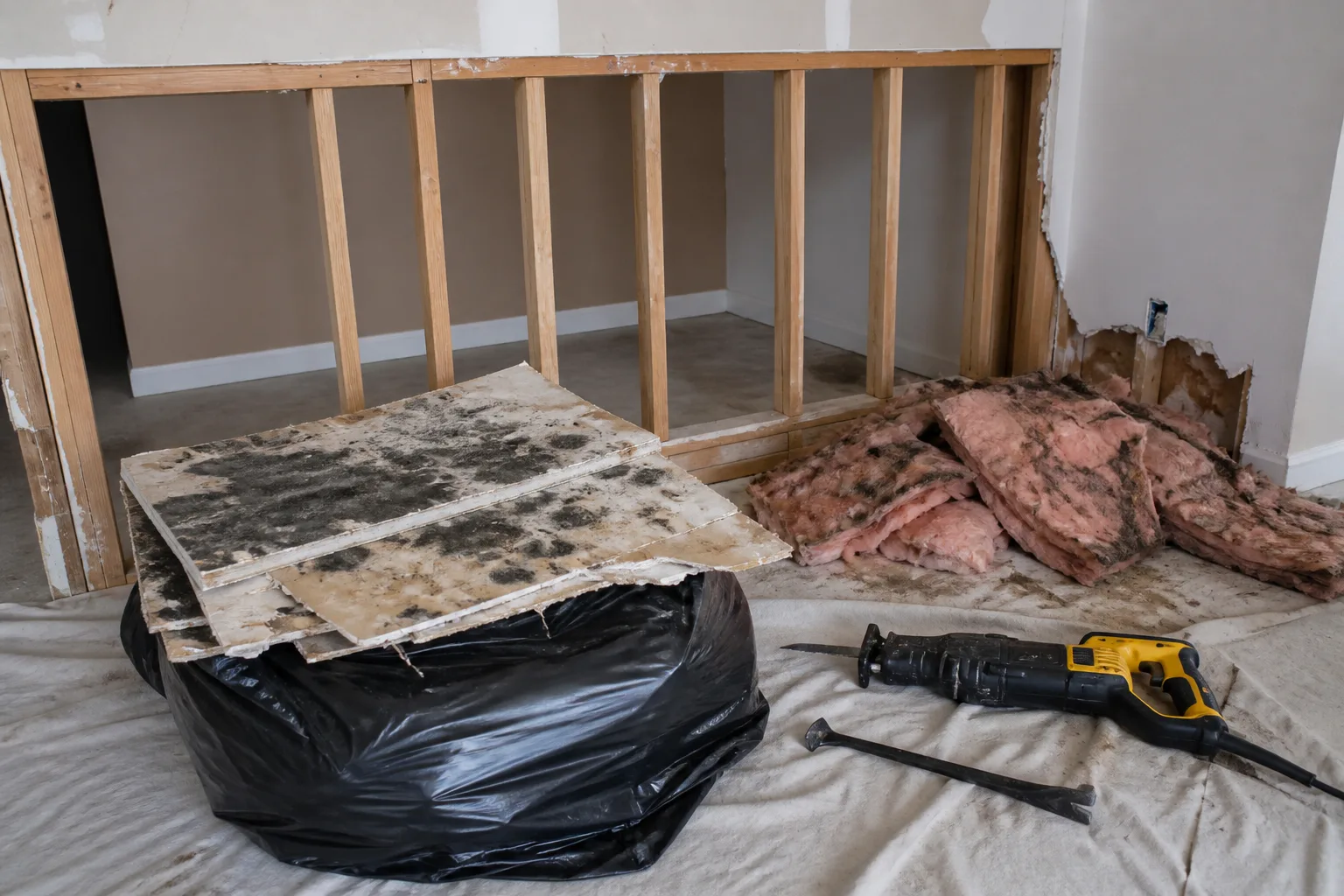
The crew removes porous materials that cannot be reliably cleaned, such as moldy drywall, insulation, or carpet pad, when the assessment shows they are affected. Reusable structural materials may be cleaned rather than discarded if they are sound and can be reached and dried. The work should avoid unnecessary demolition, but stopping at the visible edge of a stain is not a saving if moisture or growth continues behind it.
After removal, surfaces that remain are cleaned with methods appropriate to the material and the scope. HEPA vacuuming can collect fine settled dust after physical cleaning; it does not make a contaminated material clean simply by passing a vacuum over it. Chemical products should be used according to their labels and should not replace removal, drying, or source correction.
Debris should be managed so material does not drag through clean rooms. The Family Handyman’s practical mold-cleanup project highlights isolating affected work, protecting nearby spaces, and handling removed materials deliberately; the appropriate controls depend on whether the job is a limited home cleanup or a larger professional project. Ask the company to describe its debris route and final cleanup rather than accept “we spray it and leave.”
Moisture Correction, Drying, and Rebuilding
Once contaminated material is addressed, the source has to be corrected: a pipe or roof leak repaired, exterior water redirected, a drain or sump problem resolved, or condensation and indoor humidity controlled. These are different repairs and may require a plumber, roofer, HVAC technician, or drainage contractor. If the remediator does not perform that trade work, coordinate the handoff before closing the wall.
Drying comes before sealing or rebuilding. A contractor should identify which materials are being monitored and how they will judge that they are dry enough for repair; avoid accepting a promise based only on the room feeling comfortable. Painting over an active wet area or coating dirty material can hide the evidence without changing the conditions that support growth.
Reconstruction may be a separate contract. Before new drywall, insulation, flooring, or cabinets go in, get confirmation that the water source has been repaired and affected materials are dry. If mold followed recurring basement seepage, for example, replacing a wall finish without correcting drainage or foundation water entry makes the cosmetic work vulnerable to the same failure.
Verification and Decisions About Reoccupancy
At completion, look for the documented result: visible contaminated material removed or cleaned as scoped, no leftover debris, repaired moisture source or a clear repair handoff, and recorded dry readings where relevant. A musty odor returning, damp readings, or new staining is a reason to stop finishing work and investigate rather than paint over it.
Some projects or agreements call for independent post-remediation verification, especially after a large loss, a complex hidden-space project, or a dispute. If testing is part of the plan, specify in advance who will inspect, what the sample and comparison method will be, and what happens if the result does not meet the agreed criteria. No single air sample can certify a home as permanently mold-free; verification is about whether the defined work is complete and the moisture conditions are controlled.
Whether you can remain in the home depends on the location, containment, repair work, and health needs of the people living there. Ask the contractor which areas will be isolated, whether bathrooms or HVAC will be unavailable, and how workers will protect shared hallways. People at higher risk from mold exposure should discuss the plan with a clinician and avoid the work zone; do not treat a contractor’s schedule as medical clearance.
How to Choose a Mold Remediation Contractor
Look for a company that explains the source and scope before selling a treatment. Check any license required where you live, verify insurance, ask about training and references for similar projects, and request a written proposal with the removal, cleaning, containment, drying, disposal, and repair boundaries spelled out. Certification can indicate training, but it is not a substitute for a clear plan or a license where local law requires one.
Compare at least two detailed bids when time and safety allow. They should agree on the affected area and major tasks even if prices differ; ask each company to explain gaps, such as one bid including wall removal while another prices only surface cleaning. A useful contractor welcomes questions about the evidence, moisture source, material decisions, schedule, and what could change the price once a wall is opened.
Be cautious of a company that names a dangerous species by color alone, promises to eliminate every spore, insists that an expensive test is required before any visible growth can be addressed, or proposes fogging and paint as the whole solution. A company that performs both assessment and remediation may still do sound work, but if a large project requires independent clearance, agree on a separate assessor and criteria before remediation begins. Get change orders in writing when hidden damage expands the scope.
Insurance, Belongings, and Staying in the Home
Insurance coverage depends on your policy, the cause of the water, exclusions, endorsements, and how quickly the damage was reported. Contact your insurer or agent early, ask whether inspection or approval is required before demolition, and keep photographs, invoices, moisture records, and contractor reports. Do not delay action on an active leak or an urgent hazard, but document what you can before materials are moved and follow the claim handler’s instructions where practical.
Ask the remediation company what can be cleaned, what must be discarded, and how belongings will be protected. Soft goods exposed to widespread dampness may need specialist cleaning or disposal; electronics, documents, and sentimental items can require separate restoration decisions. If the affected room contains a bed, kitchen equipment, or the home’s only bathroom, discuss temporary arrangements and who pays for them before the crew starts.
A household can sometimes stay in an unaffected part of the home when work is isolated, but a whole-home flood, extensive demolition, contaminated water, or disrupted HVAC may make that impractical. Have the contractor spell out the work zone and daily cleanup plan. If someone is medically vulnerable, plan conservatively with their clinician rather than relying on a general rule about “safe” exposure.
Prevent Mold From Returning
The prevention plan should match the water source that caused this project. Repair plumbing and roof leaks, maintain gutters and drainage, insulate cold surfaces where condensation forms, and make sure bathroom and kitchen exhaust fans actually vent outdoors. After a leak or clean-water spill, remove standing water and dry wet materials promptly; the CDC recommends cleaning and drying a home quickly after flooding and keeping indoor humidity low.
Use a hygrometer if humidity is persistently high, and run an appropriately sized dehumidifier in a damp basement or crawl space. Aim for relative humidity below 50% when feasible, as the CDC’s mold guidance recommends, but do not rely on a dehumidifier to compensate for active seepage or a pipe leak. If the same wall becomes wet every season, fixing the building path for water matters more than adding another cleaner.
Recheck the repaired area after heavy rain, a plumbing repair, or the first humid season. Look for renewed odor, staining, peeling paint, condensation, and damp materials rather than waiting for a large patch to appear. A one-time remediation can solve the current contamination; preventing recurrence depends on keeping the building materials dry.
Conclusion
Mold remediation is worth paying for when the job involves hidden or extensive growth, contaminated materials, HVAC, major water damage, or a household that cannot safely manage exposure. A good project addresses the full chain—moisture source, contained removal or cleaning, drying, and a documented handoff for repairs—rather than selling a chemical treatment as the finish line.
Use cost ranges to frame conversations, then compare written scopes instead of square-foot prices alone. If the area is small and limited to a cleanable surface, the water source is controlled, and no high-risk conditions apply, a careful cleanup may be reasonable; if any of those facts change, ask for a qualified assessment before disturbing the material. The best evidence that the work succeeded is not a dramatic “mold-free” promise but a clean, dry, repaired area with the original moisture problem corrected.



