How to Grow and Care for Italian Cypress
Italian cypress needs sun, drainage, and room to mature. See how to site it, avoid root problems, and protect its natural columnar shape.
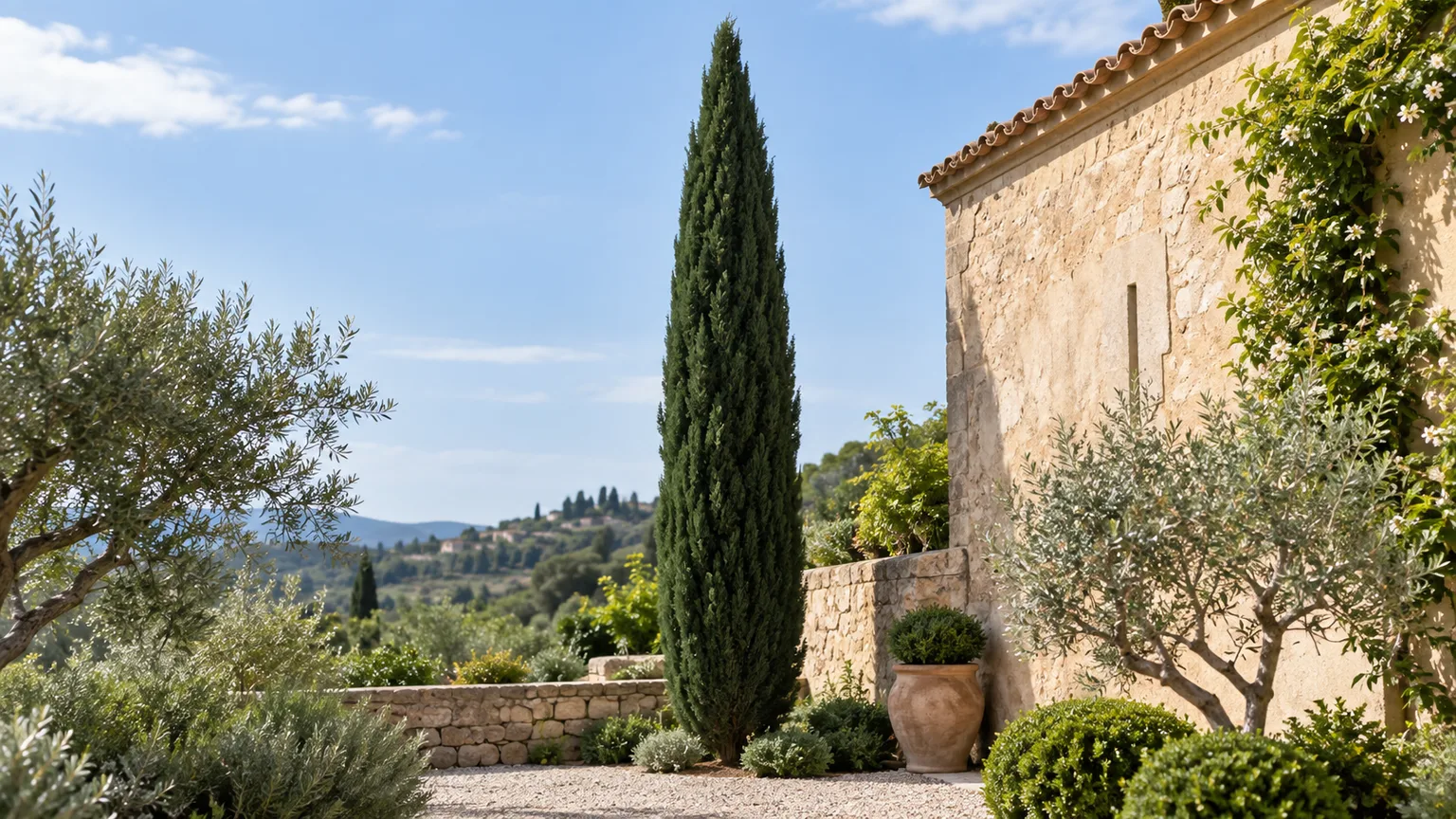
Italian cypress (Cupressus sempervirens) is the tall, narrow evergreen that gives a Mediterranean garden its unmistakable vertical line. Its mature column can be striking beside a gate or along a long approach, but it is a poor fit for a cramped, wet, or shaded yard. A tree that may eventually reach 40 to 70 feet tall cannot be made small by treating it like a hedge.
The reliable formula is simple: choose a cultivar suited to your climate, give it full sun and well-drained soil, water the root ball consistently while it establishes, and leave its natural upright form alone. The details matter because “drought tolerant” describes an established tree, not a new transplant, and cold hardiness ratings do not account for every combination of wind, wet soil, and winter exposure.
Italian Cypress at a Glance
| Feature | What to plan for |
|---|---|
| Botanical name | Cupressus sempervirens |
| Common names | Italian cypress, Mediterranean cypress, pencil pine |
| Form | Evergreen conifer; typically narrow and columnar in garden cultivars |
| Typical mature size | Many columnar selections reach roughly 40–70 feet tall and 3–6 feet wide; cultivar and site can change this substantially |
| Light | Full sun is best; shade can thin or unbalance growth |
| Soil | Well-drained; sandy loam is a dependable fit, though soil texture and pH vary across references |
| Water | Regular deep irrigation during establishment; less supplemental water once roots are established in a suitable site |
| Main risks | Waterlogged roots, cold or drying exposure, mites, bagworms, and cypress canker |
Use that size range as a warning to investigate the plant label, not as a promise that every Italian cypress will finish at exactly those dimensions. NC State Extension lists columnar forms at about 40 to 70 feet tall and 3 to 6 feet wide, while the Missouri Botanical Garden gives a larger spread in its general profile and explains that the familiar narrow nursery form differs from the more open form seen in the species’ native range. Ask for the named cultivar and its expected mature width before you buy.
Check Your Climate Before You Plant
Italian cypress is native to the Mediterranean region and western Asia, where summers are warm and often dry. It performs best in climates that resemble that pattern: long sunny seasons, soil that drains after rain, and winters without prolonged severe cold. Hot weather by itself is not a problem when roots can access water and the site is not persistently humid and wet.
Hardiness references commonly place the tree in USDA Zones 7 through 10. That range is a starting point, not a guarantee. A Zone 7 garden with cold, drying winds and saturated winter soil can be harder on the tree than a sheltered site near the upper end of its listed range; a cultivar’s cold tolerance and the duration of a freeze also matter.
The Missouri Botanical Garden cautions that the tree may struggle in the St. Louis region even though its zone rating extends into Zone 7, while the Royal Horticultural Society notes that cool, drying winds warrant protection.
If your winters routinely bring hard freezes, your summers are humid with frequent rain, or your planting site stays wet, ask a local extension office or experienced nursery to evaluate a specific cultivar. A different narrow evergreen may be a better long-term choice. Italian cypress is most forgiving when the climate and drainage suit it from the start.
Choose a Cultivar for Mature Size
The phrase “Italian cypress” often refers to the tall, fastigiate form sold for formal landscapes. Fastigiate means the branches grow close to vertical, making the tree look much narrower than a typical broad-crowned evergreen. The species also includes more spreading forms, so the common name alone does not tell you what a particular nursery plant will become.
NC State Extension’s plant profile lists ‘Stricta’ as a columnar selection, ‘Glauca’ for a silvery-blue columnar form, ‘Swane’s Golden’ for narrow growth with golden new foliage, and ‘Tiny Tower’ as a slower-growing, smaller form. Cultivar labels and nursery dimensions vary; compare the botanical name, mature width, growth rate, and regional suitability together rather than buying by color alone. A slower cultivar may be a more sensible choice near a house, but it is still a tree, not a permanent miniature.
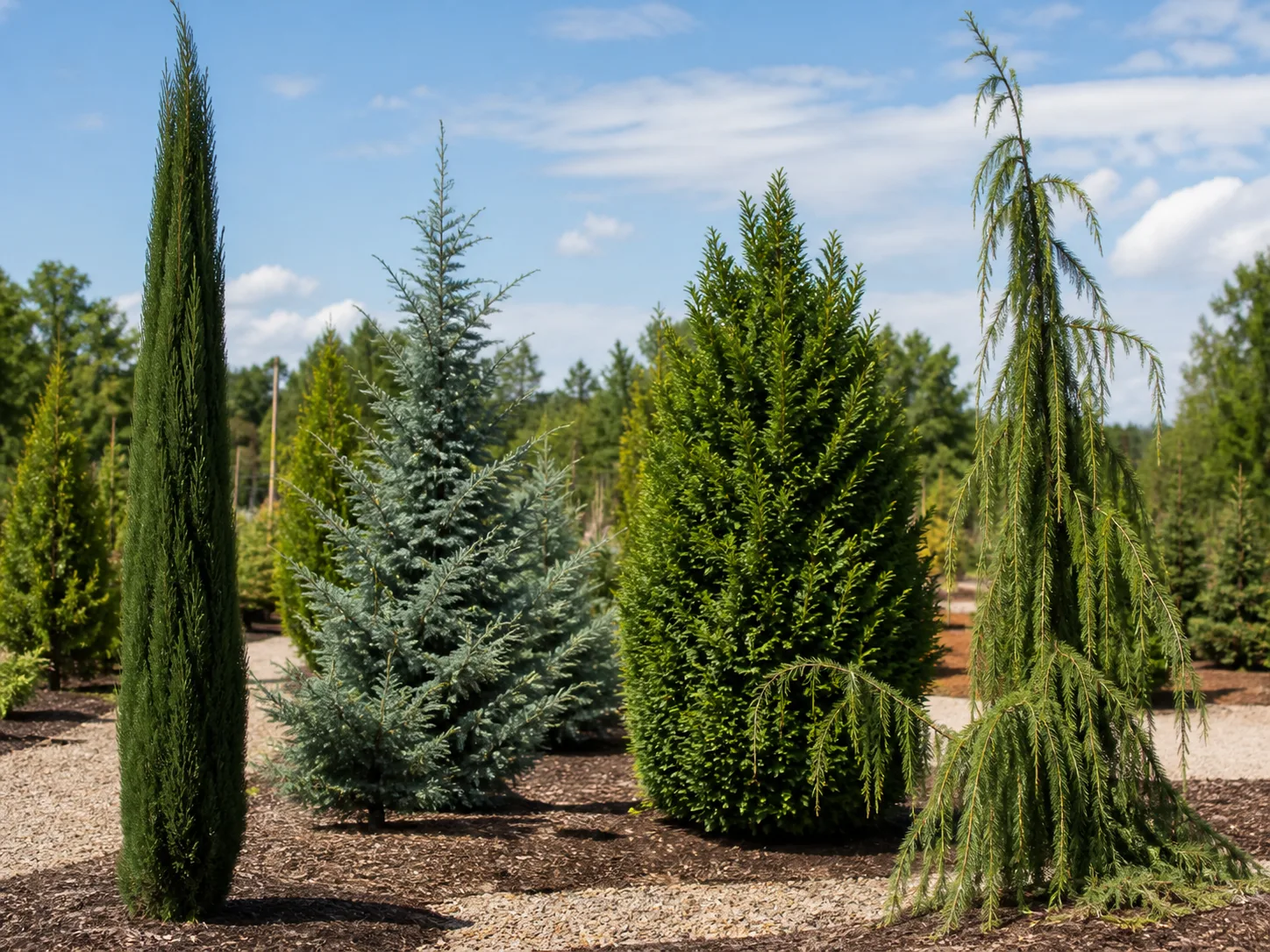
When a seller lists only “Italian cypress,” ask whether the plant is the narrow form and how wide it is expected to grow where you live. If the answer is vague, do not assume the narrowest image in a catalog represents the delivered tree. The broader guide to different cypress trees can help you compare alternatives when your climate or space is marginal.
Pick a Sunny Site With Room Around It
Give Italian cypress at least six hours of direct sunlight when possible. It tolerates some variation, but a tree shaded by a building or another evergreen can develop sparse growth on the dim side, losing the even column that makes it useful as an accent. Before planting, observe the site at different times of day and account for the shade of nearby trees as they mature.
Plan vertically as carefully as you plan the trunk’s distance from a wall. Power lines, roof edges, eaves, gutters, and neighboring windows can turn a handsome young tree into a costly conflict decades later. Keep enough lateral room for the cultivar’s full crown and for a person to reach the tree for inspection; planting trunks tightly against fences makes it difficult to notice pests, prune damaged limbs, or replace irrigation.
For a row, choose spacing from the expected mature width and the look you want. A formal screen that allows separate columns needs more distance than a line intended to touch.
There is no universal spacing figure that fits every cultivar and climate: a label describing a 3-foot spread is not interchangeable with one describing a 6-foot spread, and taller plants can widen with age. Lay out the row with stakes before digging so the eventual crown does not block a path or press against a structure.
Prepare Soil That Drains Freely
Italian cypress can tolerate several soil textures, but excess water around its roots is a recurring cause of decline. The Missouri Botanical Garden recommends well-drained soil, and NC State Extension notes that root rot can occur in poorly drained locations.
Choose a spot where rain drains away instead of collecting at the root flare. A low hollow, compacted fill, or lawn zone that receives frequent irrigation can stay too wet even when the surface looks dry.
Check the site after a heavy rain and inspect the soil several inches down. If it remains muddy or standing water persists into the next day, do not “fix” the hole with gravel at the bottom; that can create a saturated pocket rather than improve drainage. Consider a broad raised planting area only if it can be built without burying the trunk flare, or choose another plant for a chronically wet site.
Do not replace most of the native soil with a rich potting mix or compost in a small hole. A tree’s roots need to expand into the surrounding ground, and a sharply different pocket can hold water or discourage that movement. Loosen compacted soil across a broad area if practical, but keep the planting hole no deeper than the root ball and leave the root flare visible at or slightly above finished grade.
How to Plant Italian Cypress
Plant in a mild period when the soil is workable and the tree is not facing immediate heat or deep cold. Fall planting is often practical in warm regions; spring can be safer where winter is harsh. Gardening Know How favors fall planting, while NC State Extension suggests April or September when transplanting is necessary. The difference reflects climate and local growing seasons, so follow regional nursery or extension advice rather than a single national calendar.
Dig a hole roughly two to three times wider than the root ball, but no deeper. Slide the tree from its container and check whether roots circle tightly around the outside; loosen a modestly matted edge so roots can grow outward.
Set the tree upright with the root flare visible, then backfill with the soil you removed. Press soil in gently to remove large air pockets without stomping it into a hard layer.
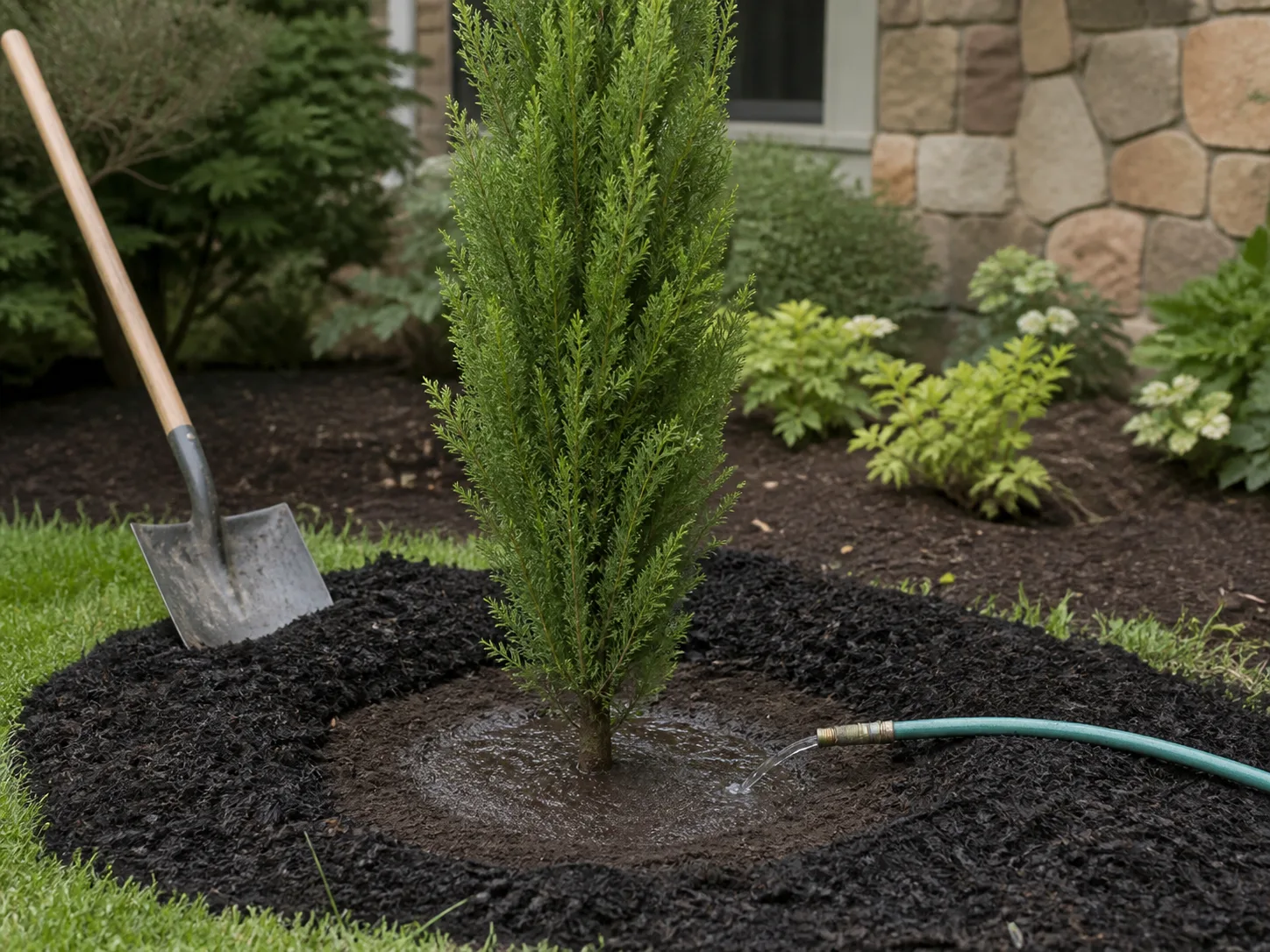
Water slowly after planting so the root ball and adjacent soil are both moist. A shallow basin can help direct water toward the roots, but keep mulch several inches away from the trunk and use a layer around 2 to 3 inches deep rather than a mound. Keep the new tree straight as the soil settles; stake only if the root ball is unstable or the site is exposed, and remove supports once the tree can stand on its own.
Water Deeply While Roots Establish
A newly planted Italian cypress needs more attention than a mature one. For the first growing season—and often into the second—check moisture inside the original root ball and just beyond it.
If that root zone is drying, water slowly enough to wet it thoroughly; if the ground is already moist, wait. Rainfall, heat, wind, soil texture, and tree size all change how quickly the root ball dries, so a fixed weekly schedule can overwater one garden and underwater another.
Water at the soil, not by briefly spraying foliage. A slow hose at the base, a soaker line, or drip irrigation can deliver water where young roots need it.
After watering, check that moisture reached below the surface instead of running off compacted soil. If water pools around the trunk or the soil stays saturated, reduce irrigation and investigate drainage before the foliage turns brown.
Once established, Italian cypress tolerates dry intervals better than many landscape trees, but drought tolerance does not mean it never needs water. A long heat wave, prolonged drought, or root disturbance can still stress a mature specimen. In dry weather, inspect the root zone before watering; a deep soak when soil is dry is more useful than frequent shallow sprinkling that wets only the surface.
Skip Routine Fertilizer Unless a Test Shows a Need
A healthy Italian cypress in suitable soil usually does not need routine feeding. Fertilizer will not correct waterlogged roots, a shaded site, a damaged leader, or a canker, and a quick nitrogen flush can create weak growth that needs more water. NC State Extension recommends against pruning to preserve the tree’s columnar habit and lists it as a low-maintenance plant; its profile does not call for a routine fertilizer program.
If growth is unusually weak across the whole tree, first review light, root-zone moisture, drainage, and recent transplanting. A soil test is a better next step than guessing at a nutrient deficiency from brown foliage.
Apply a nutrient only when the test or a local extension recommendation supports it, and follow the product label for the tree’s root area. Avoid fertilizer stakes placed close to the trunk or heavy doses intended to make the tree grow faster.
Prune Sparingly and Protect the Natural Column
Italian cypress is chosen for its naturally upright outline, so routine shearing is usually unnecessary. The RHS profile says no pruning is required, and NC State Extension advises leaving the tree unpruned to maintain its columnar habit. Remove dead, broken, or clearly diseased branches when needed, but keep cuts small and make them just outside the branch collar rather than flush with the trunk.
Do not top the main leader to stop height. Removing the top can spoil the narrow silhouette, trigger competing leaders, and leave a permanent blunt crown.
Do not shear deeply into brown, leafless interior wood expecting it to fill back in; many conifers do not reliably produce new foliage from old bare branches. If a tree is already too large for its location, consult a certified arborist about options or plan for replacement instead of making repeated severe cuts.
When disease is suspected, prune only during dry weather and clean tools between affected trees. Take a photo of the whole crown and the damaged area before cutting; that record can help an extension diagnostician or arborist see whether dieback was spreading. Leave high branches and large limbs to a professional who can assess access and safety.
Can You Grow Italian Cypress in a Pot?
Yes, especially a smaller cultivar, but a container changes the care routine. The pot limits root space, dries faster than garden soil, can tip in strong wind, and exposes roots to temperature swings. Gardening Know How’s container guide emphasizes drainage, more frequent moisture checks, and periodic repotting or root management; those demands make a pot a useful patio accent, not an effortless way to keep a full-size tree permanently small.
Choose a sturdy outdoor container with several drainage holes and enough weight to remain stable. Use a well-draining container mix, set the tree at the same depth it grew in before, and never leave the pot sitting in a saucer of water.
Check moisture more often during hot, windy weather; water thoroughly when the mix begins drying, then let excess water drain away. Feed only if growth or a soil/container plan justifies it, and use a labeled product at its recommended rate rather than copying a fertilizer formula from another climate.
A container-grown tree may need a larger pot as roots fill the space, or careful root pruning by someone experienced with woody plants. Both operations stress roots, and repeated pruning does not guarantee a healthy mature tree at a chosen height.
Protect the pot from severe winter cold and drying wind while keeping the tree outdoors in bright conditions. If you want a tree that remains small for years with little intervention, select a naturally compact cultivar or a different species.
Propagation: Cuttings or Seed
Italian cypress can be propagated from seed or semihardwood cuttings. A cutting is the more predictable choice when you want to preserve a named cultivar’s narrow shape or foliage color; seedlings can vary and may not resemble the parent selection. The RHS profile lists seed and semihardwood cuttings as propagation methods, while NC State Extension also identifies both seed and stem cutting as options.
Take healthy cuttings from a vigorous, correctly identified parent and root them in a clean, free-draining medium under warm, humid conditions. Keep the medium lightly moist rather than waterlogged and provide bright, indirect light while roots develop. Rooting speed and success vary with season, material, and conditions, so do not treat a fixed number of weeks as a guarantee.
Seeds come from mature cones, but raising a tree from seed is a longer project and the resulting form may not match the familiar narrow cultivar. If the goal is a formal planting with consistent columns, buy plants from a reputable nursery that labels the cultivar. Propagation is most rewarding when you want to experiment or preserve a known parent, not when you need a dependable row by next season.
Seasonal Care in Heat, Cold, Wind, and Rain
In spring, inspect new growth, check irrigation emitters, and look for branches that failed over winter. Do not automatically fertilize or prune for shape. In summer, watch young trees and container specimens more closely because their root zones can dry quickly; water based on soil moisture and rainfall, not on a timer alone.
In autumn, clear fallen debris from the base if it is harboring pests, refresh mulch without touching the trunk, and water before a dry winter only when soil is dry and drains well. During a cold spell, protect a small or newly planted tree from drying wind with a temporary breathable wind screen if needed; do not wrap foliage tightly in plastic. A tree planted beyond the cultivar’s reliable cold range may need more protection than a screen can provide, which is why site selection matters more than last-minute wrapping.
Warm, humid regions require a different emphasis. Avoid overhead irrigation that keeps foliage wet for long periods, give each tree enough spacing for air movement, and do not keep adding water during rainy stretches.
Italian cypress tolerates heat, but hot, humid weather combined with wet roots can encourage stress and disease. Your local conditions—not a Mediterranean photograph—should set the care plan.
Diagnose Brown or Yellow Foliage by Pattern
Brown foliage has several causes, and color alone cannot identify one. First note where it begins: inside the canopy, at branch tips, on one weather-exposed side, or above a specific bark lesion.
Then check soil moisture, look for pests or webbing, and consider recent weather, transplanting, construction, or changes to irrigation. Do not respond to every brown patch with more water or fertilizer.
Drought and transplant stress
Dry roots often produce dull or browning foliage at the tips or across the exposed side of a tree. This is more likely after planting, during a heat wave, or when wind increases water loss. Check the original root ball several inches down; soil outside it can be damp while the nursery root ball itself is dry.
If the root zone is dry, water slowly and reassess after the soil has had time to absorb it. Brown scales will not turn green again, so look for stable live tips and future new growth rather than immediate color change.
Wet soil and root decline
Overwatering and poor drainage can also make foliage yellow, then brown. If the soil remains wet, water pools near the trunk, or decline follows frequent lawn irrigation, adding more water is unlikely to help.
Pause supplemental irrigation, check for a leak or runoff source, and ask a local arborist or extension clinic to assess persistent decline. Root rot cannot be diagnosed from color alone, and digging around a mature tree can cause additional root injury.
Cypress canker and branch dieback
Cypress canker is associated with the fungus Seiridium cardinale, which infects bark and can girdle branches or stems. Affected foliage above a lesion may yellow or brown; sunken bark areas and resin flow are warning signs that deserve closer inspection.
A peer-reviewed study describes resin flow from cankered bark as a major symptom, but a brown branch by itself does not prove canker. Photograph the lesion, avoid moving suspect cuttings through the garden, and ask an arborist or plant diagnostic clinic to confirm the problem before removing large limbs.
Spider mites and bagworms
Spider mites can cause fine stippling, a bronzed look, or delicate webbing on foliage, especially in hot, dry conditions. To check a suspect branch, shake it over white paper and inspect moving specks with a hand lens; the test is a clue, not definitive identification. Gardening Know How’s Italian cypress guide recommends this simple check, and a small confirmed mite population may sometimes be dislodged with a forceful water stream that reaches the affected foliage. Avoid spraying pesticides unless the pest is identified and the product is labeled for the site and plant.
Bagworms are easier to spot as small tapered cases made from silk and bits of foliage hanging from branches. Hand-pick reachable cases and destroy them rather than leaving them on the ground; if the tree is tall or heavily infested, get local extension advice about timing and control. NC State Extension lists mites as a common concern and bagworms as an occasional pest of Italian cypress. Inspect the whole tree, not just the most visible face, before deciding the problem is widespread.
Common Italian Cypress Mistakes to Avoid
The first mistake is buying by the nursery pot rather than by the mature tree. Measure overhead clearance and lateral space, then confirm the cultivar. A five-foot plant can eventually tower above a roofline, and pruning cannot reliably turn it into a small column once it has outgrown its location.
The second is treating drought tolerance as a reason to neglect establishment watering. A newly planted tree has a limited root system; repeated drying during its first seasons can leave permanent gaps or kill branches.
The opposite mistake—watering on a rigid daily schedule—keeps roots short of oxygen in slow-draining soil. Check the actual root zone before you irrigate.
The third is planting too close to a wall or packing a row into a narrow strip. Shade can make foliage sparse on one side, close spacing reduces access and air movement, and roots compete as the trees grow.
The fourth is topping or shearing into old bare growth to control height. Preserve the central leader and natural shape, and choose a compact cultivar before planting if a mature column would be too large.
Finally, avoid diagnosing every brown patch as a disease. Dryness, saturated roots, normal interior shedding, pests, and canker require different responses. Look for a pattern and accompanying evidence first; where dieback progresses or bark lesions appear, get a professional diagnosis rather than applying several treatments at once.
Conclusion
Italian cypress succeeds when its site matches its natural strengths: abundant sun, soil that drains, room for a tall mature column, and enough warmth for the cultivar to overwinter. Choose by botanical name and mature dimensions, plant with the root flare visible, and keep a new tree’s root ball evenly moist while it establishes. Once it is settled, reduce supplemental watering according to rain and soil conditions instead of assuming either constant irrigation or total drought tolerance.
Routine shaping, heavy fertilizer, and automatic watering are rarely helpful. Preserve the upright leader, keep the trunk flare clear, and use foliage patterns, soil moisture, and visible pest or bark signs to investigate browning. If the tree is declining quickly or has canker-like lesions, ask an arborist or extension clinic to identify the cause before you cut or treat it.



