How to Identify and Remove Multiflora Rose Safely
Identify multiflora rose by its fringed leaf stipules, then choose a safe removal method for a seedling, isolated shrub, or dense patch and plan follow-up.
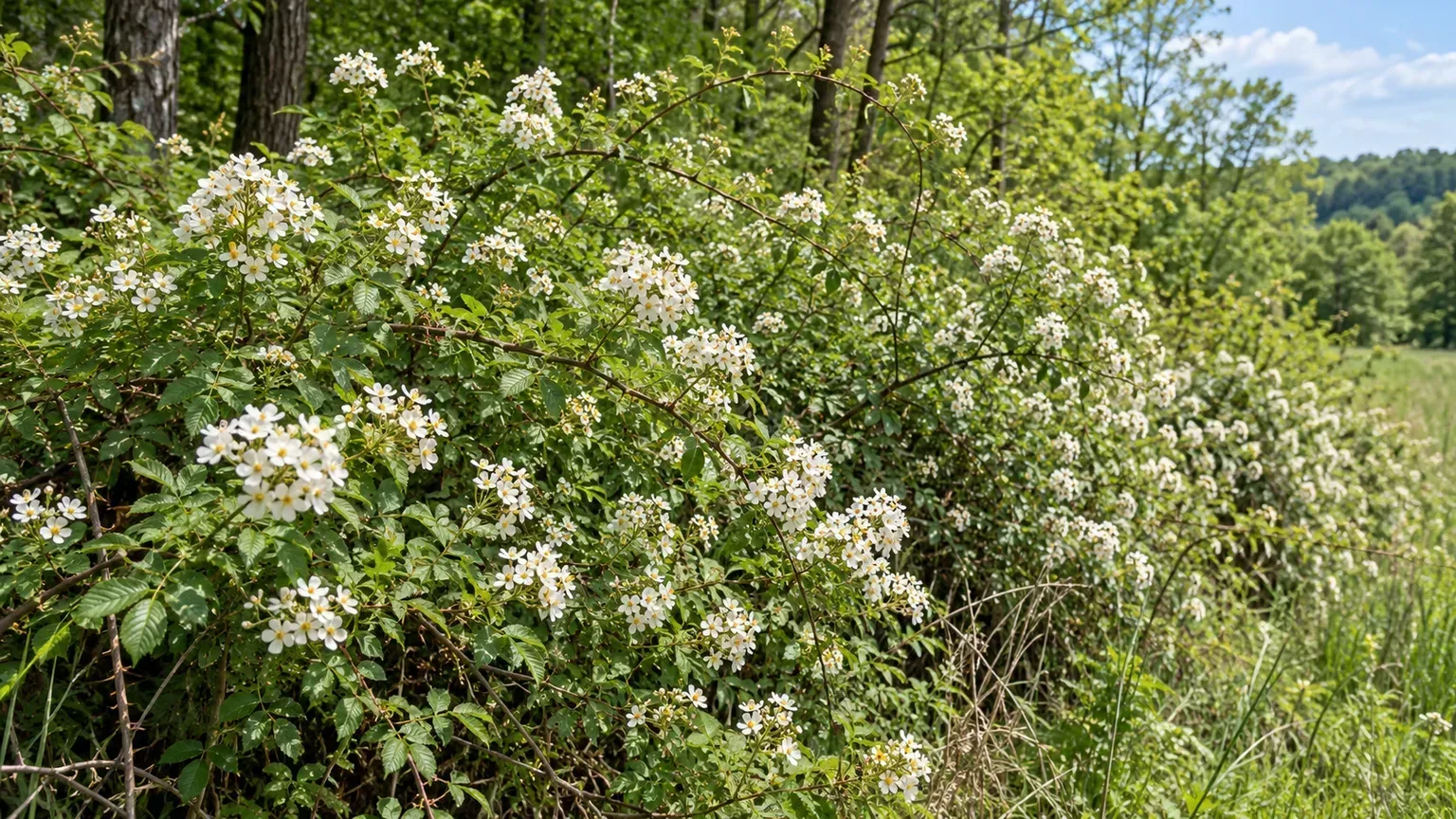
A wild rose with small white flowers and arching thorny canes may be multiflora rose (Rosa multiflora), but flower color alone is not enough to identify it. Check the base of a compound leaf for a fringed, comb-like stipule; that feature is the most useful field clue when you are deciding whether to remove a rose or protect it as a native plant. University of Maryland Extension
Removal depends on scale. You can often dig a small plant while the soil is loose, but cutting a mature shrub at ground level usually leaves a root crown that can resprout. A good plan pairs the right first treatment with thorn-safe handling, containment of any rose hips, and repeat checks for shoots and seedlings.
How to confirm a plant is multiflora rose
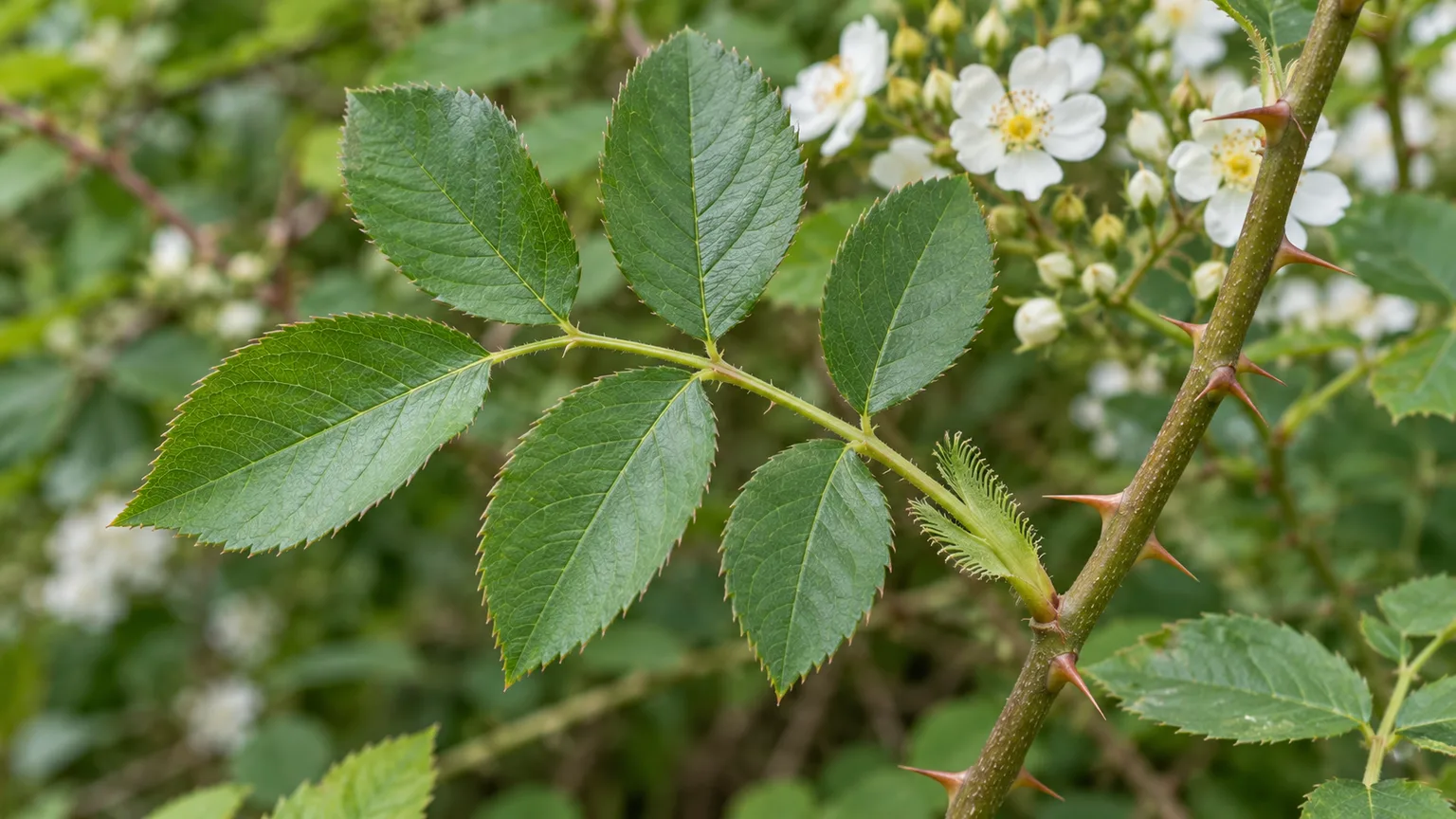
Start with the leaf, not the flower. Multiflora rose has alternate, pinnately compound leaves: a single leaf stalk carries several oval leaflets, usually with finely toothed edges. At the base of that leaf stalk, where it joins the cane, look for a small green stipule with a fringe of narrow projections along its edge. Most other regional rose species lack this conspicuously fringed stipule, which makes it a stronger clue than bloom color or plant size. University of Illinois Extension
Next, check whether the rest of the plant fits. The canes are woody, commonly olive green, and bear sharp, often curved prickles. They arch outward and may climb over nearby vegetation; a cane that touches moist soil can root at its tip and start another rooted section. These traits support the identification, but they are not as decisive by themselves: other roses also have prickles and arching growth.
If the plant has no leaves, flowers, or fruit, do not force an identification from a thorny cane alone. Mark the patch, photograph the stems and any remaining leaf bases, and return when it leafs out—or ask a local extension office or native-plant specialist to confirm it before you remove a plant that may be a native rose.
The three clues to check through the seasons
In spring and early summer, inspect the leaf attachment. White or pale pink flowers occur in clusters, often with five petals per flower, but bloom timing shifts with region and weather. During flowering, follow a leaf stalk to its attachment rather than judging the shrub from a distance; the fringed stipule is easier to see when the plant is fully leafed out. University of Maryland Extension
In summer and fall, look for small rose hips. The fruit forms after flowering, turns red, and can remain into winter. A fruiting plant is a priority for containment because birds and other animals can carry the seeds beyond the shrub. Avoid shaking, dragging, or chipping fruiting canes through the yard.
In winter, use the canes and retained fruit as clues, not proof. A tangled, arching shrub with old hips is suggestive, but you may not be able to inspect the fringed stipule once the leaves have fallen. If identification is uncertain, wait for leaves or flowers instead of clearing a patch on suspicion alone. The cost of a short delay for confirmation is usually lower than removing a valuable native rose by mistake.
Check lookalikes before you dig
Native wild roses can share the same basic outline: prickly stems, compound leaves, and a shrub or climbing habit. In Maryland, for example, native swamp, Carolina, and Virginia roses are among the common species; a native climbing rose can scramble through taller shrubs. Many regional natives have larger pink flowers, while multiflora rose typically has smaller white blooms, but flower color is a supporting clue rather than a stand-alone test. The fringed stipule is more useful. University of Maryland Extension
Blackberries and raspberries can also form thorny thickets with compound leaves. Look for the whole combination: multiflora rose has rose-like prickles and small hips, whereas brambles have different cane structures and aggregate berries. Some brambles have red or purplish canes, but color varies with age and species, so use fruit, leaf arrangement, cane structure, and stipules together.
A simple field check is to inspect several mature leaves from different canes. If the leaf stalks consistently show fringed stipules and the plant also has the expected rose canes, flowers, or hips, the identification is stronger. If those features conflict, pause and get local help; invasive status and native lookalikes vary by region.
Why removal must address roots, hips, and regrowth
Multiflora rose spreads in more than one way. It produces seed inside its hips, and a long-lived seed bank can leave seedlings emerging well after the mature shrub is gone. The USDA Forest Service reports that an individual plant may produce up to 500,000 seeds in a year and that seeds may remain viable in soil for 10 to 20 years; those are reported upper potential and longevity ranges, not a forecast for every shrub or property. USDA Forest Service FEIS
The shrub also regrows from the root crown and surviving root pieces. Its arching canes may layer—root where a tip touches soil—so one tangled-looking plant can contain several rooted points. This is why a single pass with a mower or brush cutter often clears the view without killing the plant.
Think of control as three separate jobs: stop new seed from leaving the site, kill or exhaust the existing root system, and remove new seedlings before they become another shrub. The first treatment can make a visible difference quickly, but those jobs happen on different timelines. A patch with hips needs immediate containment; a cut stump needs a root-killing method or persistent follow-up; and the seed bank requires monitoring beyond the first growing season.
Choose a control method by plant size and site
Before choosing tools, estimate the number of root crowns and note what surrounds them. A single seedling at a garden edge is a different job from a dense patch in a pasture, and either becomes more complicated beside a stream, a native planting, or cultivated roses. If the plant is fruiting, plan how to contain the hips before you start cutting.
| What you have | Practical first choice | What to expect |
|---|---|---|
| One small seedling in workable soil | Dig out the crown and as much root as possible | Quick if the plant is young; inspect for missed roots and seedlings |
| One established shrub near valued plants | Excavate it carefully, or use a labeled cut-stump method | More precise than spraying foliage; root removal or follow-up is still needed |
| Several shrubs in an open area | Stage the work; combine removal with repeated mowing or targeted treatment | One cutting usually suppresses top growth only |
| A large, tangled thicket | Work in sections and consider a qualified land manager | Thorny brush, hidden rooted tips, and non-target plants make the job harder |
| A patch near water or sensitive habitat | Confirm local rules and use only methods and products allowed for that site | Product labels and local requirements may restrict treatment choices |
Do not choose an herbicide by brand reputation or a recipe copied from a different state. Active ingredients, product formulations, labeled sites, and restrictions differ. If you intend to use a chemical method, identify a product whose label includes the target plant or an applicable woody-plant use for your site, then follow that label and local extension guidance exactly.
Remove seedlings and isolated young plants
Digging is most practical while the plant is small enough to expose its crown and roots without wrestling a mass of thorny canes. Moist soil after rain is easier to work than dry, compacted ground. Put on thorn-resistant gloves, long sleeves, sturdy trousers, boots, and eye protection before reaching into the plant; gloves alone do not protect your forearms or eyes from hooked canes.
Loosen the soil around the base with a digging fork or spade, then lift the plant from below the crown rather than pulling hard on the top. Trace and remove any rooted cane tips nearby. If the crown breaks or a substantial root remains, note the spot and check it for shoots; a small root fragment can be enough to produce new growth. Iowa State Extension similarly cautions that viable root system left behind can regrow. Iowa State University Extension
If the plant has hips, gather the fruiting stems first and keep them contained. Put the crown, roots, and canes where they cannot touch soil and reroot; bag them or use a local yard-waste service that accepts invasive brush. Backfill the hole, then revisit it during active growth. Digging works best as a complete removal of a small plant, not as a one-time tug that leaves the crown behind.
Tackle an established shrub with digging or cut-stump treatment
For a solitary shrub with woody canes, start by pulling the longest canes inward so they do not snag neighboring plants or sweep across you. Cut the branches into manageable lengths and stack them in one contained spot. Work from the outside toward the crown, and keep cut canes away from paths where someone might step on a thorn.
If the root crown is accessible, dig around it and remove as much of the crown and root system as practical. This can avoid herbicide, but it is physically demanding and may disturb nearby roots or soil. If the shrub is close to a tree, fence, or established garden, cutting the canes and then treating the stump may be more practical than levering out a large crown.
A cut-stump treatment means cutting stems and applying an appropriately labeled systemic herbicide to the fresh stump as the product label directs. Timing matters because a dry, weathered stump is not the same target as a newly cut surface; some extension recommendations specify treatment soon after cutting. Use only a product labeled for cut-stump application at that site, protect nearby plants, and follow its instructions for the treated stump, personal protective equipment, and disposal. Do not substitute a foliar spray mixture or a remembered concentration for label directions. University of Illinois Extension
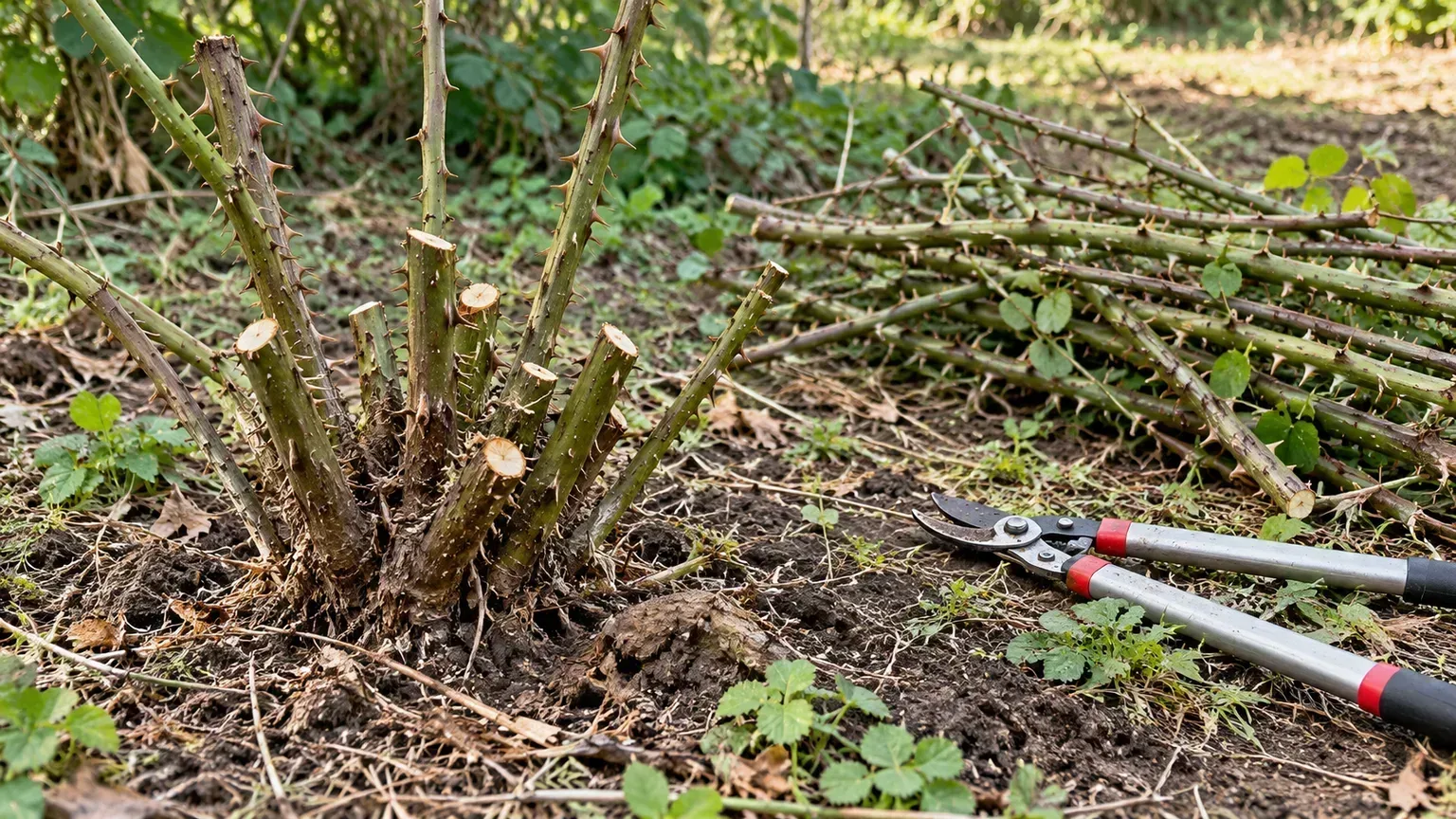
If you choose not to use herbicide, cut the shrub close to the ground and commit to removing every new sprout promptly. Repeatedly removing green regrowth forces the roots to spend stored energy; a single cut does not. Maryland Extension notes that established plants may need repeated cutting through multiple growing seasons, so choose this path only if you can return consistently. University of Maryland Extension
Reduce dense patches with staged cutting or mowing
A dense patch is often safer and easier to handle in sections than as one giant clearing job. Mark the patch boundary, note desirable plants, and make a narrow access lane before cutting a larger block. This lets you see the canes and rooted tips instead of feeding them into a tangled pile. If hips are present, remove or contain fruiting canes before moving brush.
Mowing or brush-cutting can reduce height and keep plants from flowering or fruiting if repeated at the right time, but a single pass rarely kills established multiflora rose. Repeated cutting depletes root reserves only when new shoots are cut before they replenish those reserves; missed canes, inaccessible edges, or long gaps allow the shrub to recover. Iowa State Extension describes multiple mowing passes as necessary and notes that larger pasture infestations may be managed by mowing followed by a later herbicide application. Garden Gate likewise recommends repeated cutting and watching for seedlings over the long term. Iowa State University Extension Garden Gate
Match equipment to the site and the operator’s experience. A mower can throw woody debris, while a brush cutter can send hooked canes whipping back; do not use either where rocks, people, pets, or valued plants are in the danger zone. Large patches near forest edges, streams, or steep ground may call for a trained invasive-plant contractor or land manager who can plan access and restoration as well as cutting.
If you mow to prepare for foliar treatment, do not spray immediately after removing the leaves. Wait until enough healthy regrowth is present for the labeled treatment to reach the plant, and check the product label or extension guidance for the right timing. The plant’s growth stage matters more than a calendar date printed for a different region.
Use foliar or basal-bark herbicide only when it fits
Herbicide can be useful when digging is impractical or repeated mechanical work is not realistic, but the method must match the target and site. Systemic products containing glyphosate or triclopyr are used in some extension recommendations for multiflora rose. Glyphosate is nonselective and can injure any green plant it contacts; products containing triclopyr also affect many broadleaf plants. Neither active ingredient is automatically safe for every location or every application method.
A foliar spot treatment targets leaves on actively growing plants. It can cover many stems quickly, but spray drift is a serious drawback beside native plants, ornamental roses, vegetables, or a water edge. Apply only when the label permits and conditions meet its directions; shield nearby foliage where appropriate and stop if wind or temperature makes drift likely. If the patch has been cut, wait for adequate regrowth rather than spraying bare stumps with a foliar product.
A basal-bark treatment targets the lower stem and root-crown area using a formulation specifically labeled for that method. Some regional recommendations use it when leaves are absent, but a product formulated for foliar use is not interchangeable with one labeled for basal bark. A cut-stump application is another distinct method, applied to fresh cuts. University of Maryland Extension describes systemic treatment on leaves, lower stems, or fresh stumps and reports stronger uptake during midsummer to early fall, while Iowa State discusses other effective seasonal windows and methods. That difference is a reason to match treatment to the product label and local extension advice rather than assume one “best month” applies everywhere. University of Maryland Extension Iowa State University Extension
Do not mix a stronger solution than the label allows or spray every stem in a mixed native thicket for convenience. On small infestations, targeted treatment can reduce exposure of neighboring plants compared with a broad spray, but it still requires correct identification, application, and follow-up. Keep people and pets away according to the product’s label directions, and use a licensed applicator if the site, product, or equipment is beyond your experience.
Can goats help control multiflora rose?
Goats will browse multiflora rose more readily than cattle, and managed grazing can help suppress a large pasture infestation. It is not a one-afternoon cleanup: animals need repeated access or enough time to remove substantial top growth, and plants may resprout from the crown if grazing does not exhaust the roots. Iowa State Extension identifies goats as a useful biological option but emphasizes that plants must be grazed down for the method to be effective. Iowa State University Extension
Use a fencing and rotation plan that protects trees, desirable shrubs, and soil. Goats may strip other vegetation before they eliminate mature rose crowns, so they can create erosion or damage if the site is steep, wet, or planted with sensitive species. For a small backyard shrub, digging or careful cut-stump treatment is usually simpler; for a large pasture, ask a local grazing contractor or extension office whether managed browsing fits the land.
Contain and dispose of thorny canes and hips
Plan the brush pile before cutting. Lay a tarp or other barrier where thorny pieces can be gathered, and carry short bundles rather than dragging long canes across the property. Dragging can snag clothing, injure someone, and leave a stem tip in contact with soil where it may root. Wear protective clothing while loading and unloading, not only while cutting.
Fruiting canes deserve separate attention. Place hips in a bag or container that will not spill, and do not toss them into a compost heap unless your local program confirms that its process destroys viable seed. Avoid dumping brush at a woodland edge, roadside, or vacant lot; that can move viable hips and plant fragments to another site. Follow municipal rules for bagged invasive brush, yard-waste drop-off, or disposal.
Clean soil and plant fragments off boots, tools, mower decks, and trailers before leaving an infested area. This is especially useful when moving equipment between properties or natural areas. If a local invasive-species program gives a more specific disposal instruction, follow that direction because accepted methods vary by county and state.
Protect nearby native and garden plants
Mark plants you want to keep before the first cut. A thorny thicket can hide young native shrubs, spring wildflowers, fence wire, and tree seedlings. If you cannot identify everything under the canopy, open one small inspection window and confirm what is there before clearing more. Preserve native roses unless their identity is clear; removing a desirable wild rose does not improve the site’s plant diversity.
Choose the most selective effective method when the rose is woven through desirable plants. Digging is precise but disturbs soil; cut-stump treatment can limit contact with nearby foliage when used exactly as labeled; foliar spraying is often the least precise option in a mixed planting. Near ponds, streams, wetlands, or drainage ditches, do not use a product unless its label explicitly allows that site and application. Local rules may also restrict work on public land, rights-of-way, or protected habitat.
Leave a route for follow-up before you finish. If new shoots are hidden under a dense layer of brush, you will miss them until they are large. Clear enough to see the crown and surrounding ground, but avoid scalping a slope or removing all vegetation at once if bare soil would erode.
Build a multi-year follow-up plan
After treatment, inspect the crown and patch edges during the growing season. Look for shoots from the original crown, new plants from seed, and cane tips that have rooted outside the area you cleared. Check after rain or mowing too, when new growth may be easier to spot. Remove seedlings while they are small and record where established plants resprout so next year’s check starts in the right place.
For an herbicide treatment, do not assume brown leaves mean the roots are dead. Wait for the product’s expected response period, then check for living shoots and repeat only if the label allows it. For mechanical control, schedule return visits before regrowth has time to flower or set hips; consistency matters more than a dramatic first cut. If a patch is large, map treated sections and dates so you can distinguish a missed plant from a new seedling.
Keep checking for years. The USDA Forest Service describes multiflora rose seeds as potentially viable for 10 to 20 years, although emergence depends on site conditions and the actual seed bank. That does not mean you will see seedlings every year for two decades, but it does explain why follow-up should outlast the first cleanup. USDA Forest Service FEIS
The stopping rule is practical rather than a fixed number of seasons: continue routine checks while seedlings or shoots appear. When repeated inspections find no new growth, keep occasional watch along the former patch edge and where birds may have dropped hips. Follow-up is lighter than the initial removal, and it prevents small escapes from rebuilding the thicket.
Mistakes that cause regrowth or spread
The most common mistake is treating height as the whole problem. Cutting the visible canes removes shade and makes the site look clear, but it does not prove the root crown is dead. Pair cutting with root removal, a properly labeled systemic treatment, or repeated removal of every sprout until the plant stops returning.
Another mistake is starting with a mower before deciding where the hips and brush will go. Fruit can scatter, canes can tangle in equipment, and the operator may spread stem tips around the yard. Contain fruiting sections first and work in manageable strips. Avoid cutting a plant so close to desirable roses that you cannot distinguish their shoots during later checks.
Do not spray a mixed patch on a windy day, use a foliar product on leafless stems, or treat an old stump as if it were fresh. These shortcuts can waste product, injure neighboring plants, or leave roots alive. Do not assume vinegar, salt, household bleach, or a strong homemade spray will kill a woody root system; they can damage soil or nearby plants without providing reliable control.
Finally, do not promise yourself that you will “check next year” and then forget the location. Put the patch on a calendar or map now. A short return visit during the growing season is easier than another major clearing job after canes have grown through surrounding vegetation.
Replant cleared ground with appropriate vegetation
Once the rose is controlled, give desirable plants a chance to occupy the space. Bare disturbed soil invites seedlings from the existing seed bank and seeds carried in from nearby. Where site conditions allow, restore the area with locally appropriate native grasses, groundcovers, or shrubs suited to its light and moisture; a dense, healthy plant layer makes future seedlings easier to see and reduces open ground for colonization.
Choose plants for the actual site rather than buying a generic “native mix.” A wet stream margin, sunny pasture, woodland edge, and dry slope have different species needs. Consult a local native-plant society, extension office, or conservation district for regional recommendations, and avoid spreading soil or mulch that may contain hips or stem pieces.
If you want to plant a native rose, confirm the species and source before buying it. Native roses provide a different landscape option from multiflora rose, but young rose shoots can look similar at first. Keep new plantings labeled and maintain the same identification habit: inspect leaf bases, compare flowers when they appear, and remove only plants you can identify confidently.
Conclusion
The best first test for multiflora rose is the fringed stipule at the base of a compound leaf. Flowers, hips, arching olive-green canes, and prickles add confidence, but confirm a possible native lookalike before digging.
Then fit control to the job: dig a small plant completely, handle an established shrub with root removal or a properly labeled cut-stump method, and manage dense patches in stages. Contain hips, protect nearby plants, and keep returning for regrowth and seedlings; persistent follow-up is what turns an initial clearing into lasting control.



