Hybrid Tea Rose Care: Planting, Pruning, and Rebloom
Learn how to grow hybrid tea roses with the right sun, planting depth, watering, feeding, pruning, winter protection, and disease prevention for your climate.
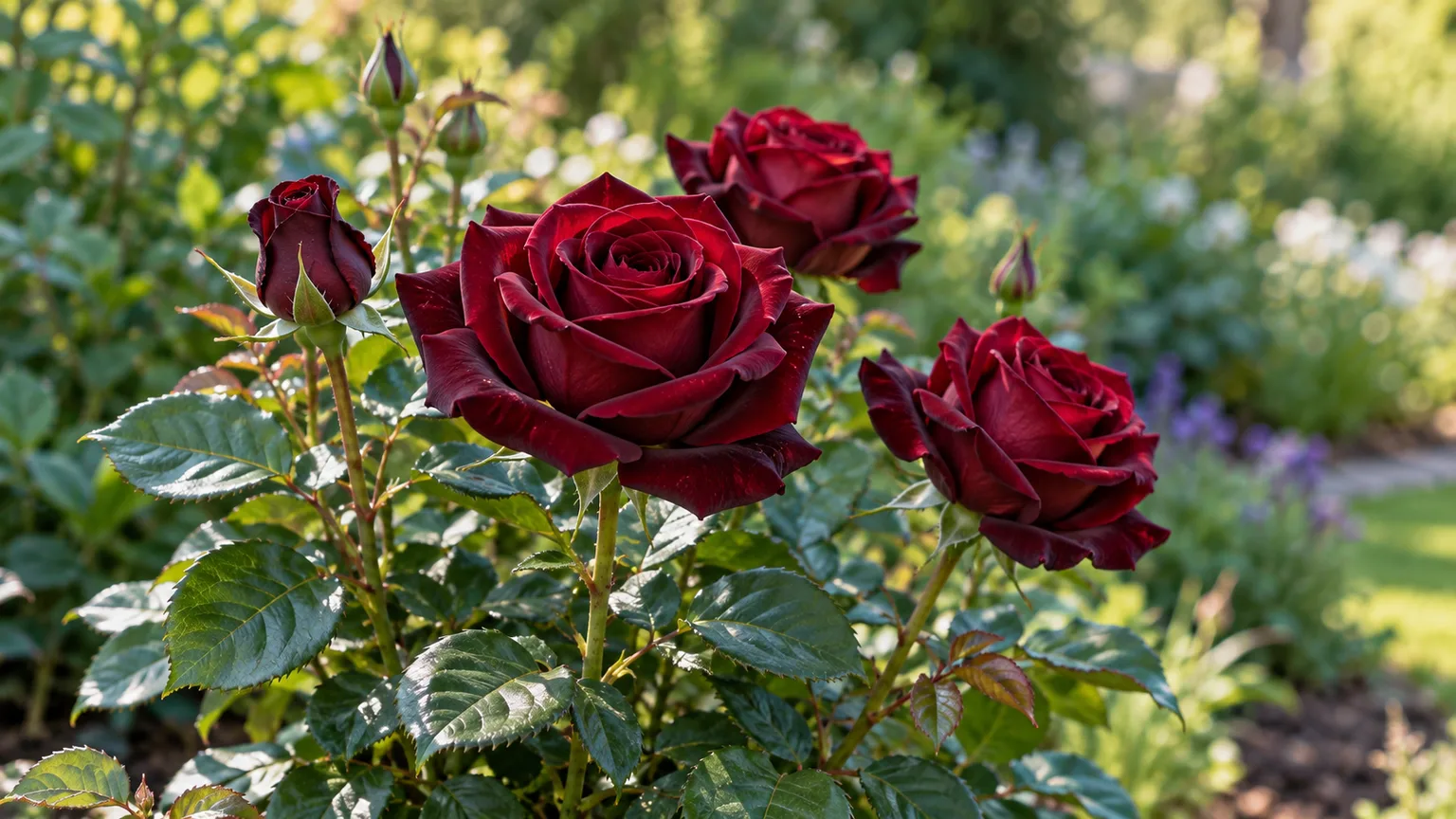
A hybrid tea rose is at its best when its roots stay evenly moist but never waterlogged, its leaves dry quickly after rain, and its long flowering stems get room to grow into the sun. Set those conditions up first; pruning and feeding then become straightforward maintenance instead of repeated attempts to rescue a struggling bush.
The most important choice happens before planting: pick a named cultivar suited to your climate and your tolerance for disease management. “Hybrid tea” tells you about the rose’s flower and growth class, not whether every variety will thrive in your winters, humid summers, or small patio.
What Makes a Hybrid Tea Rose Different
Hybrid tea roses are modern garden roses bred for large, usually high-centered flowers held on long, relatively straight stems. A stem commonly carries one main bloom, sometimes with side buds, which makes the class especially useful for cutting. The class traces to Rosa ‘La France,’ introduced in 1867; the American Rose Society describes the familiar hybrid tea flower as shapely and large, while noting the occasional side buds (American Rose Society).
The difference matters because a garden rose’s class affects how it looks and how you manage it. Floribundas tend to carry clusters for a broad color display; hybrid teas trade that massed effect for individual blooms and stems. Grandifloras bridge the two traits, often combining large blooms with clusters. Some cultivars blur these patterns, so use a nursery’s classification as a guide rather than assuming every stem will carry exactly one flower.
Hybrid teas usually flower in flushes—a strong spring or early-summer display, a pause as the plant grows new flowering shoots, and further rounds later in the season. They are repeat-flowering, not necessarily blooming continuously. Heat, drought, disease, hard pruning at the wrong time, or an immature root system can lengthen the pause between flushes.
Choose a Variety for Your Climate and Goal
Shop by the plant’s documented traits, not flower color alone. Compare mature height and width, winter hardiness, disease resistance, fragrance, repeat-bloom rhythm, and whether the plant is grafted or grown on its own roots. If you want long stems for bouquets, a classic upright hybrid tea may be a good fit; if you want a nearly continuous mass of color with less shaping, a floribunda or shrub rose may suit the bed better.
Hardiness is cultivar-specific. A tag giving a broad zone range is a starting point, not a promise: wind, freeze-thaw cycles, drainage, and the rootstock can all affect survival. Check your local extension or rose society’s recommendations, especially near the cold edge of a variety’s range. In humid regions, look for regional disease-performance information and cultivars selected for resistance. A multi-year LSU AgCenter and American Rose Society project evaluated named hybrid teas for black-spot susceptibility and overall garden quality, a useful reminder that performance differs within the class (LSU AgCenter).
Also decide whether you want the plant for display, fragrance, or cutting. Some varieties make spectacular flowers but have little scent; others are strongly fragrant yet more vulnerable to weather damage. If you are choosing between two equally appealing roses, favor the one with documented success nearby over a famous cultivar that needs more protection than your site can provide.
Find Sun and Give Roots Room
Give a hybrid tea rose at least six hours of direct sun a day; more morning sun usually means better flowering and faster-drying leaves. Iowa State University Extension notes that shaded roses bloom less and can be more prone to diseases such as powdery mildew (Iowa State University Extension). In a very hot climate, afternoon shade can reduce heat stress, but a site that is shaded for most of the day often produces lanky growth and few flowers.
Look beyond the sun map. Avoid a low pocket where water pools, the root zone of a large tree, or a narrow space enclosed by walls and shrubs. Roses benefit from air movement, but they should not be exposed to constant drying wind. Check the cultivar’s mature width and give it enough room that mature foliage does not press against a fence or neighboring rose; tight spacing makes inspection, pruning, and disease cleanup harder.
If you are unsure about drainage, dig a test hole and fill it with water after rain has stopped. Water that remains for much of the day signals a site that needs correction before you plant: choose a raised bed or a better-drained location rather than trying to fix a persistently waterlogged hole with a little compost. Roses need moisture, but roots need oxygen too.
Prepare Soil and Plant at the Right Depth
Aim for fertile soil that holds moisture without staying saturated. A soil test is more useful than guessing at pH or adding a bag of amendments; it can flag nutrient problems before you spend on fertilizer. Work compost through a broad bed when the soil is poor, but avoid creating a tiny, exceptionally rich pocket inside dense clay. That sharp difference can keep roots circling the amended hole instead of exploring the surrounding soil.
The graft union (also called the bud union) is the swollen junction where the named rose was joined to its rootstock. Recommendations for its depth vary by region because the union is a vulnerable point in cold winters. Illinois Extension places it at soil level while planting, expecting the loose soil to settle until the union is about 1–2 inches below grade in northern climates; Colorado State Extension advises 2–4 inches below the soil line for its colder conditions (Illinois Extension planting guide, Colorado State University Extension). Rose writer Paul Zimmerman makes a broader case for burying graft unions to reduce wind-rock and give the plant a more stable base (Fine Gardening). These recommendations emphasize different risks; use your nursery’s instructions and local extension guidance for your climate rather than treating one measurement as universal.
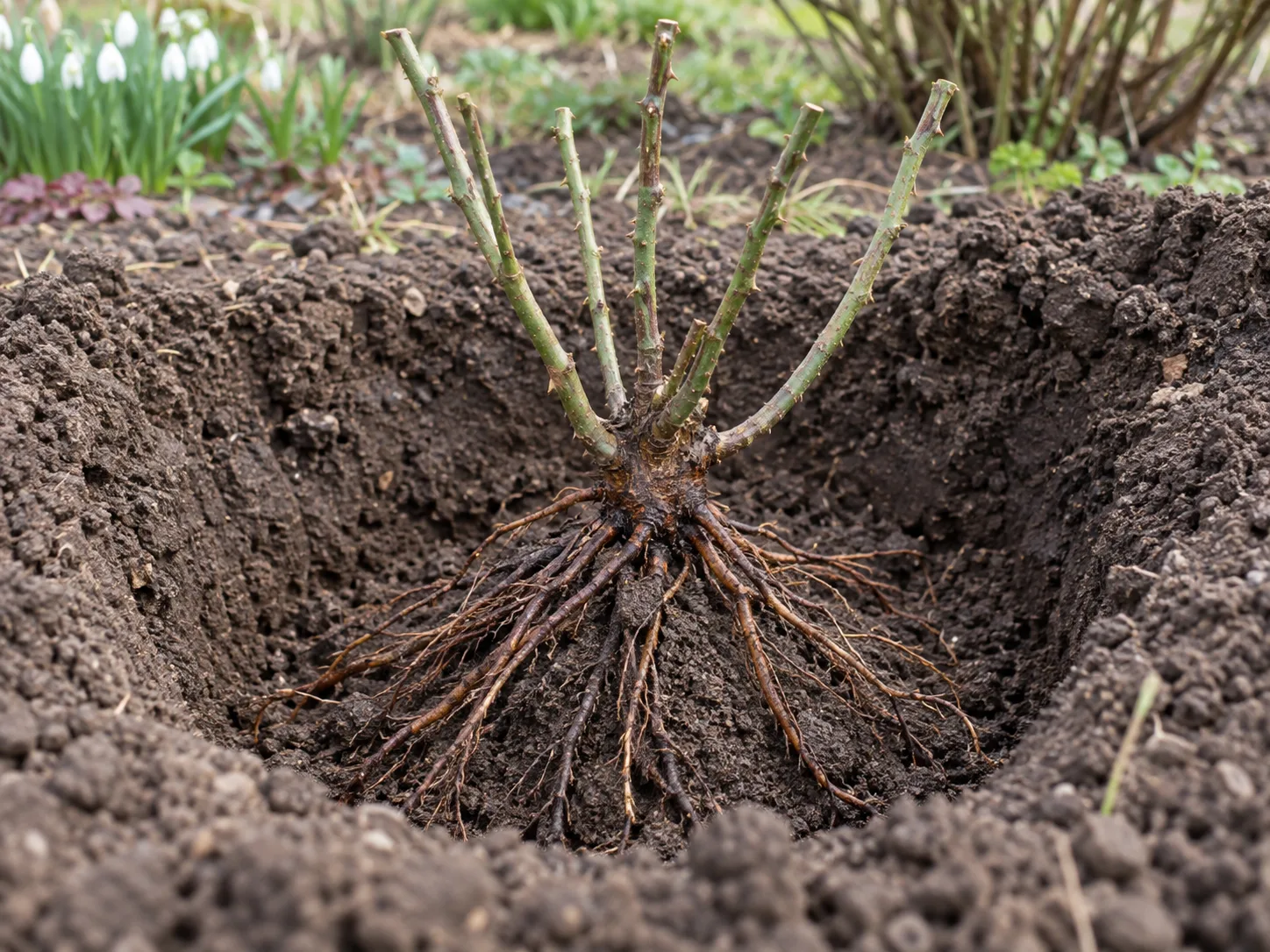
Set the rose at the recommended depth, spread bare roots outward over a small mound, and backfill with the prepared soil. Water as you fill so soil settles around the roots; firm it gently with your hands, not by stomping and compacting the bed. Finish with mulch to slow evaporation, leaving a small clear collar around the stems. For roses grown on their own roots there is no graft union to position.
Adjust Planting for Bare-Root vs. Container Roses
Plant bare-root roses while dormant as soon as the soil can be worked and before warm weather dries the canes. Keep roots moist while unpacking; if they have dried during shipping, rehydrate them according to the supplier or local extension guidance. Trim broken roots, dig a hole wide enough to spread the roots without bending them sharply, and position the graft according to your regional guidance. Do not leave bare roots exposed in sun or wind while you prepare the planting hole.
For a container-grown rose, water the pot first, slide the root ball out, and inspect the outer roots. Loosen or make a few vertical cuts through dense circling roots so new roots can move into garden soil; Illinois Extension warns that an uncorrected root-bound ball may keep growing around itself instead of spreading outward (Illinois Extension). Plant the rose at the depth appropriate for its graft and climate, then soak the root zone thoroughly. A newly planted rose needs closer moisture checks than one that has been established for several seasons.
Water Deeply Without Keeping Foliage Wet
Water according to the soil, not a fixed weekly calendar. During hot, dry weather an established hybrid tea may need a thorough soak roughly every week to ten days in some soils, while sandy ground, a windy exposure, a heat wave, or a container may require water sooner. Rainfall counts. Iowa State Extension recommends deep watering during hot, dry weather and notes that frequency depends on weather and soil; water at the base when possible so leaves dry promptly (Iowa State University Extension).
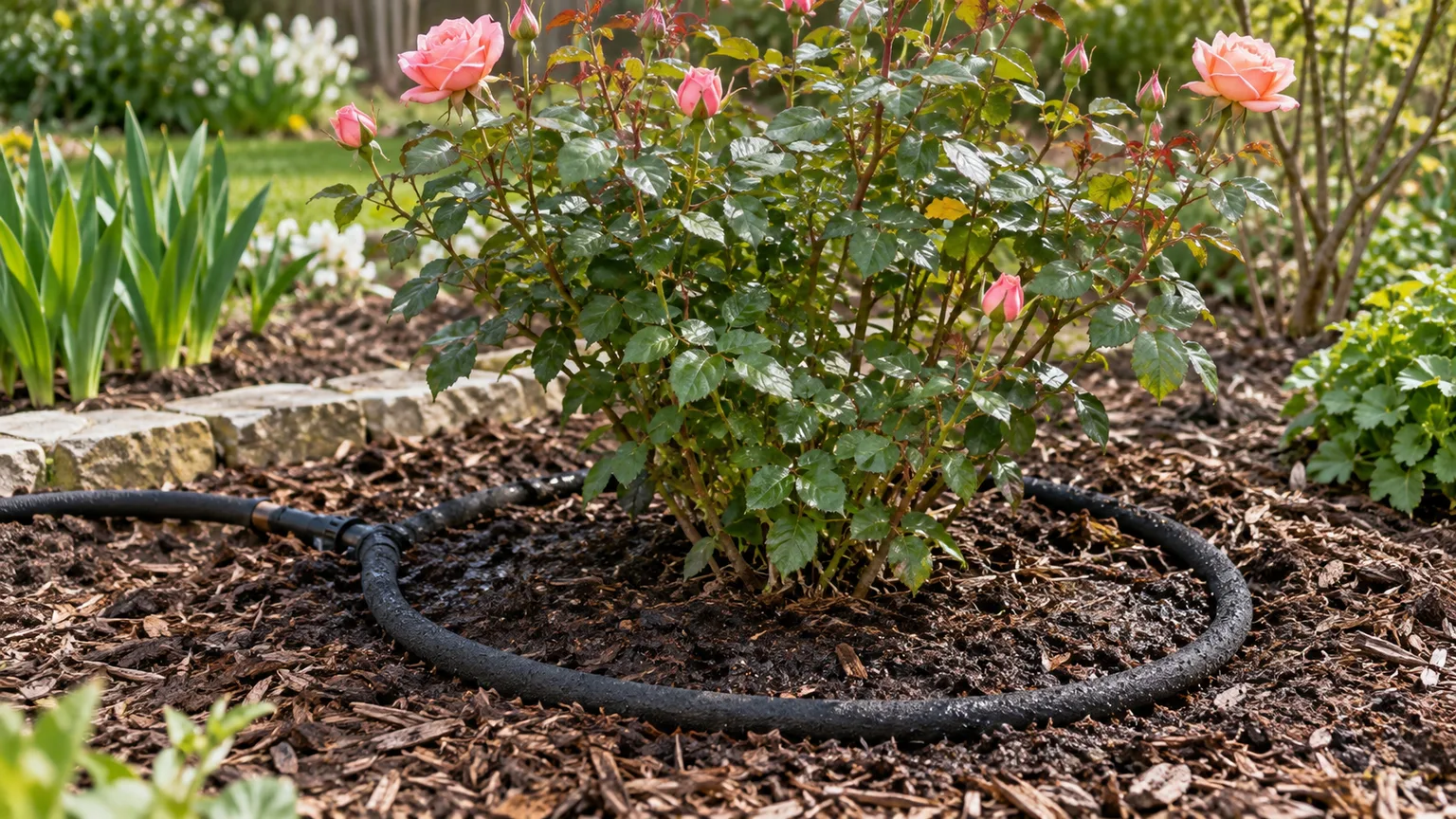
Push a finger or trowel into the root zone before watering. If the soil is damp several inches down, wait; if it is dry at that depth and the plant is not recovering overnight, water slowly around the root area until the soil is wet below the surface. A soaker hose or drip line makes this easier and avoids splashing soil onto foliage. If you must use a sprinkler, water early enough for the leaves to dry during the day rather than leaving them wet through a cool night.
New roses need frequent checks while roots establish, but daily shallow sprinkles encourage roots to stay near the surface and often fail to wet the full root ball. In containers, the small soil volume dries faster; water until excess runs from the drainage holes, then empty the saucer. A wilting rose in soggy soil is not asking for more water—check drainage before adding any.
Feed for Repeat Bloom, Not Soft Growth
Start with the soil test and the fertilizer label. Established hybrid teas are relatively heavy feeders compared with many low-maintenance landscape roses, but more fertilizer does not automatically mean more flowers. Too much nitrogen can produce lush, soft stems and foliage, increase disease pressure, and delay the hardening-off that helps a rose enter winter safely.
In many climates, gardeners feed as spring growth begins, then again after the first flush if the product instructions and plant condition call for it. Some extension schedules use two or three light applications for modern roses, while controlled-release products are applied on a different timetable. Those schedules are not interchangeable: follow the exact label rate, keep granules off the canes, and water them in. Iowa State recommends two or three applications for modern roses and cautions against late-season feeding that stimulates tender growth (Iowa State University Extension).
Do not feed a newly planted or drought-stressed rose as a reflex. Let it establish, keep moisture consistent, and diagnose yellowing or weak growth before reaching for a supplement. A soil test is also a better response to suspected iron or magnesium deficiency than adding Epsom salts or iron without evidence.
Prune in Spring and Deadhead Through Summer
For a hybrid tea, do the main structural pruning in late winter or early spring as growth starts to resume, after the most damaging cold has passed in your area. That timing lets you distinguish live wood from winter injury. The RHS recommends pruning as growth is resuming and waiting later in colder regions; a fixed calendar date does not travel well between climates (RHS hybrid tea pruning guide).
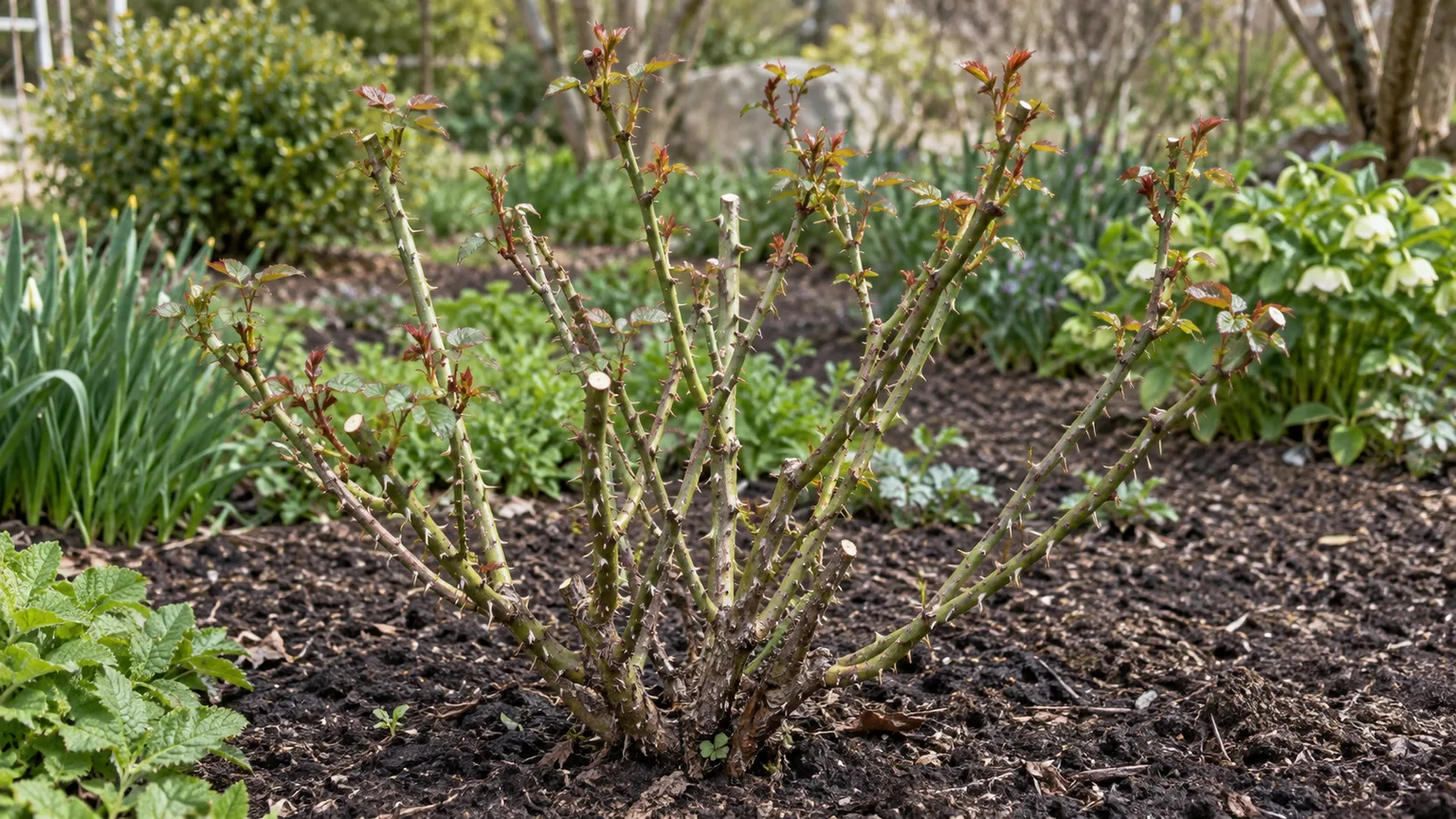
Begin with dead, broken, diseased, rubbing, and inward-growing canes. Remove very weak growth and old stems that crowd the center, then keep a handful of healthy, well-spaced canes that can support new shoots. Hybrid teas generally respond to a firmer spring prune than many shrub roses, but the exact finished height depends on cultivar vigor, winter damage, and whether you prefer long cutting stems or a more compact plant. If a cane is green and healthy, do not cut it low solely to make all stems match.
During the flowering season, remove spent blooms to encourage another flush and keep the plant tidy. Follow the flower stem down to a strong leaf node rather than clipping only the petals. On a newly planted rose, preserve more foliage so it can build roots and energy; on an established rose, a deeper cut can support a longer stem for a vase. Stop deadheading toward the end of the growing season where your climate needs the plant to slow down and prepare for winter; local extension timing varies.
Make a Clean Cut Above a Bud
Use sharp bypass pruners and clean them before you start, especially if you are removing diseased growth. Make the cut about a quarter inch above a healthy, outward-facing bud, angled slightly away from it. This encourages new growth to point away from the crowded center and prevents a long stub from dying back. Iowa State and the RHS both recommend cutting near an outward-facing bud for modern bush roses (Iowa State University Extension, RHS).
When deadheading, do not automatically remove half of every cane. The cut point can change how long the next flowering stem grows, and an immature plant may be slowed if too much leafy growth is removed. If your main goal is exhibition-length flowers, follow the advice for your cultivar and local rose society; for an ordinary garden shrub, prioritize clean cuts, outward growth, and an airy center over a rigid number of buds.
Keep Leaves Healthy: Prevention First
The most reliable disease strategy starts before any spray: choose a suitable cultivar, give it sun and airflow, avoid waterlogged soil, water near the ground, and remove fallen infected leaves. These steps reduce the conditions that let common rose diseases spread. Illinois Extension likewise lists site selection, soil preparation, drainage, spacing, cultivar choice, and maintenance as the base of a rose pest-management program (Illinois Extension).
Inspect both sides of leaves and the newest growth at least once a week during active growth. A few insects are not automatically an emergency; identify the pest and note whether the plant is actually losing vigor or flowers. Avoid routine broad-spectrum pesticide use, which can kill beneficial insects and may worsen mite problems by disrupting predators. If you use a pesticide, confirm the target is on the current label, follow all directions, and check local guidance because approved products and recommendations change.
Black Spot, Powdery Mildew, and Rust
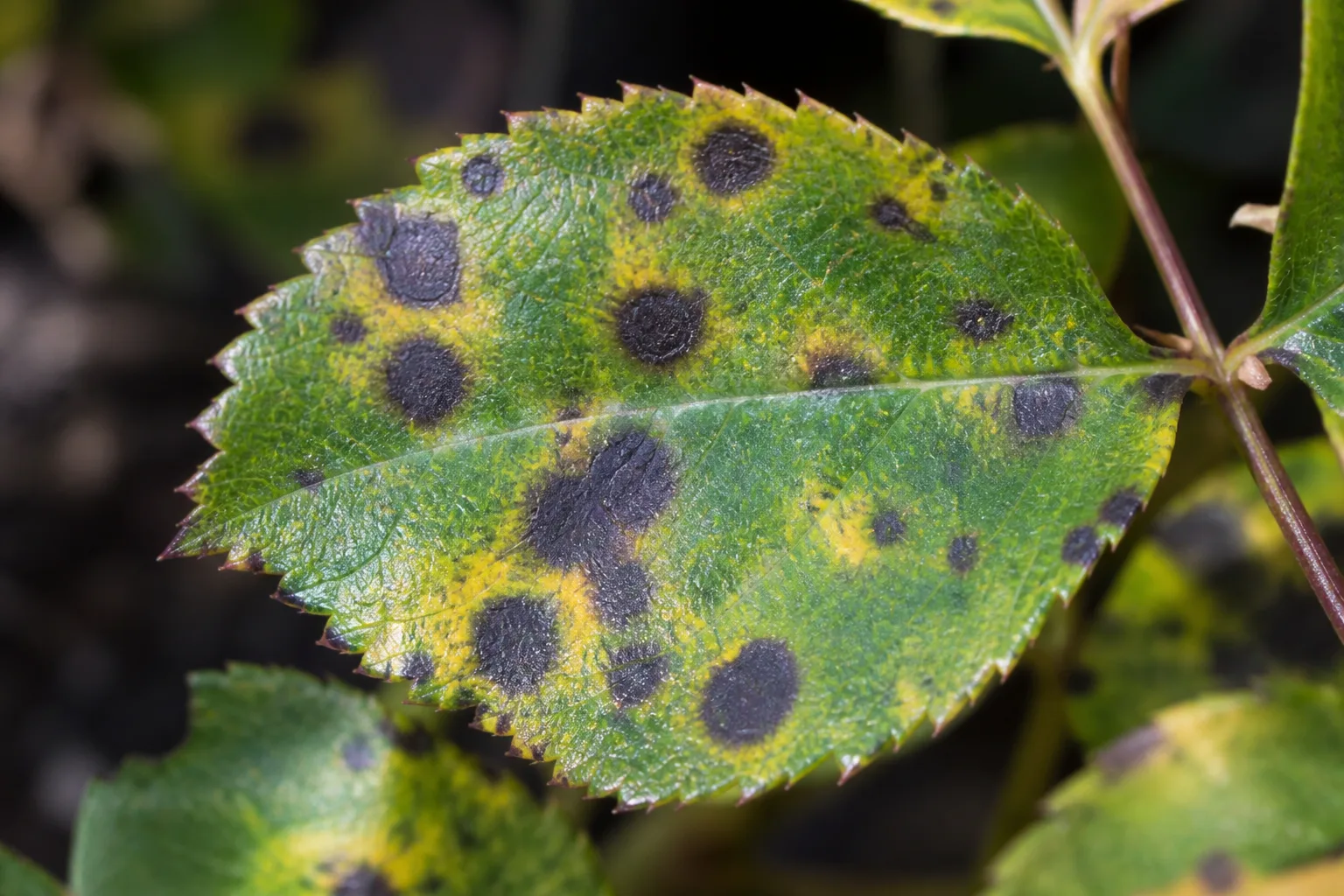
Black spot begins as dark, often fringed spots on leaves, commonly starting low on the bush; affected leaves yellow and drop. Rake and discard infected leaves rather than leaving them under the plant, and prune out badly affected material in dry weather. Penn State Extension describes the characteristic dark lesions and recommends keeping leaf surfaces dry as part of disease management (Penn State Extension). A resistant cultivar and cleaner airflow can make a larger difference than repeatedly treating a poorly sited rose.
Powdery mildew looks like a white, dusty coating on young leaves or buds and can distort tender growth. Rose rust may appear as orange, powdery pustules, often on leaf undersides, with yellowing above. Those diseases are not fixed by extra fertilizer; remove fallen debris, improve airflow, avoid overhead watering late in the day, and seek a local diagnosis if symptoms keep returning. Fungicide decisions should be preventive and based on local disease pressure and the product label; they will not restore leaves already damaged.
Aphids, Mites, and Japanese Beetles
Aphids cluster on soft tips and buds, where they suck sap and leave sticky honeydew. A strong stream of water can dislodge a small colony; avoid crushing every beneficial insect you find while inspecting. Spider mites are tiny and more likely during hot, dry weather; stippled or bronzed leaves and fine webbing are clues. Washing leaf undersides can reduce a small mite population, but first make sure the plant can dry quickly afterward.
Japanese beetles chew irregular holes in leaves and petals and may skeletonize foliage when numbers are high. Hand-pick them into soapy water early in the day if the damage is limited, and avoid attracting more beetles by leaving crushed beetles on the plant. Rose sawfly larvae can also skeletonize leaf tissue; their damage is sometimes mistaken for a fungal problem. Illinois Extension distinguishes these feeding patterns and notes that some leaf-cutter-bee holes are cosmetic and do not justify control (Illinois Extension pest guide).
Grow Hybrid Tea Roses in Containers
You can grow a hybrid tea in a pot if you choose a compact variety and accept more frequent watering and winter care. Use the largest stable container you can manage—roughly 18 inches or more across is a practical starting point for many full-size roses, not a maximum—and make sure it has several unobstructed drainage holes. A small nursery pot may work temporarily, but it dries quickly and restricts a mature plant’s roots.
Fill the pot with a high-quality outdoor container mix that drains well; garden soil alone tends to compact in a pot. Position the rose according to the instructions for its graft and climate, and set the container where it receives ample sun with enough airflow. Check moisture more often during hot, windy weather, and feed conservatively because nutrients leach from containers with repeated watering. If the root ball fills the pot, move up one size or refresh the mix rather than letting it become a dense, circling mass.
Container roots are exposed to colder temperatures than roots in the ground. In cold climates, the safest plan may be to sink the pot into the ground for winter, move it to an unheated protected place, or insulate the pot while keeping it cold and dormant. A warm living room is usually a poor winter location for a deciduous rose that needs its outdoor seasonal cycle.
Protect Grafted Roses Through Winter
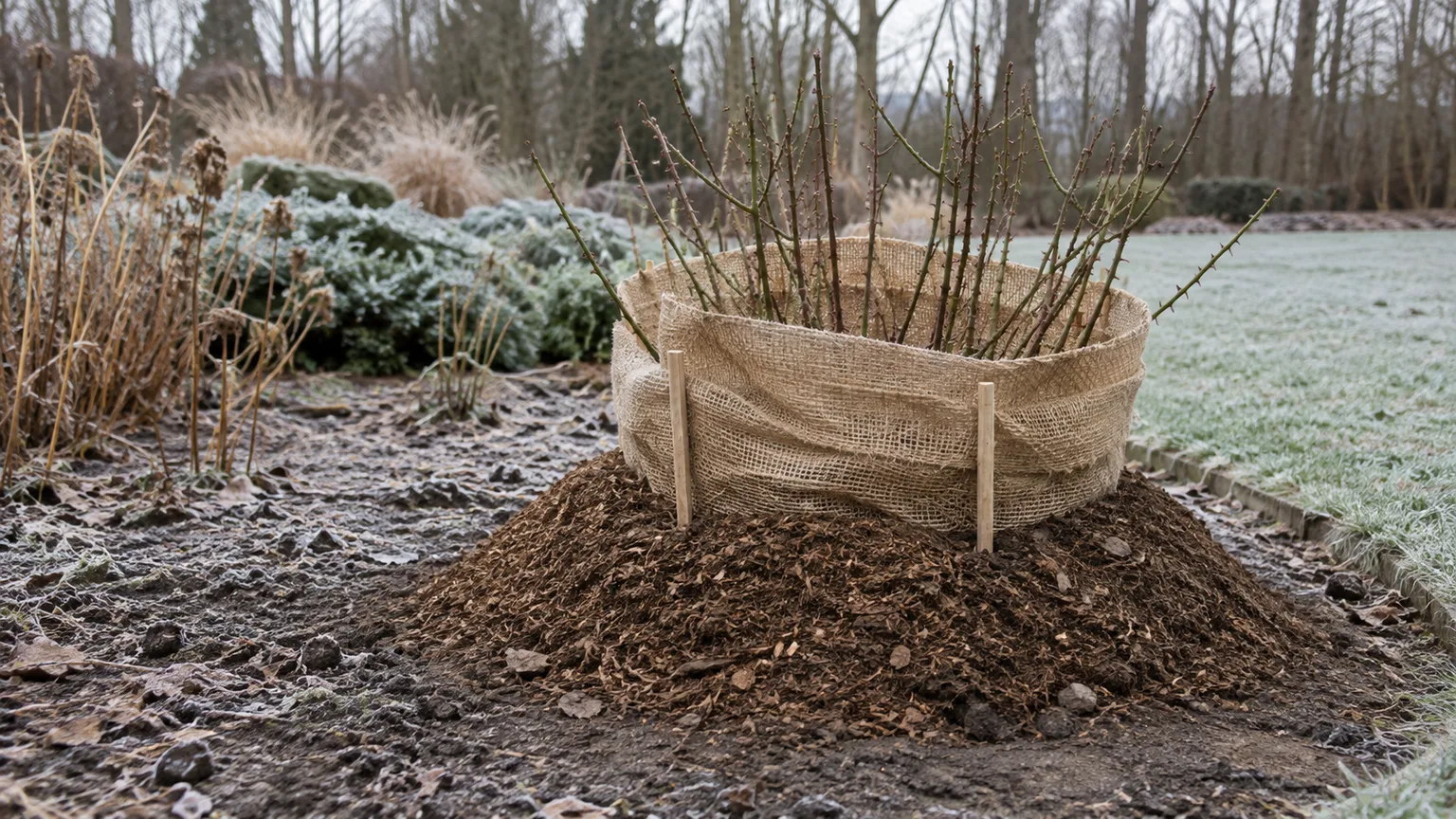
Winter preparation should protect the vulnerable graft and prevent repeated freeze-thaw cycles without wrapping a rose too early. Keep watering during dry autumn weather until the ground freezes, but stop feeding in time for growth to harden. Clean up diseased leaves and canes after the plant has begun dormancy. In colder regions, gardeners often mound loose soil or another well-drained insulating material over the base once the plant is dormant and hard freezes have arrived; the exact method depends on local winter severity.
Illinois Extension advises waiting until hard frost and leaf fall before hilling, then mounding well-drained soil around the plant; it warns that poor drainage can be more damaging than cold alone (Illinois Extension winter-care guidance). Bring mound soil from elsewhere rather than scraping it from the rose’s own root zone. In milder climates, a thick winter cone may be unnecessary and can keep the plant too wet. Remove or pull back protection gradually in spring as severe cold recedes, then prune out confirmed winter-killed wood.
Propagate: Cuttings vs. Seed
Softwood or semi-ripe stem cuttings can produce a rose on its own roots, but success depends on freshness, humidity, warmth, and cultivar. Take a healthy, nonflowering or recently flowered stem, remove the lower leaves, and place the cut end in a clean, moist propagation medium. Cover it loosely to retain humidity while keeping the leaves from sitting wet, and place it in bright shade rather than hot direct sun. Arkansas Extension describes a similar covered-cutting method and cautions against exposing tender cuttings to strong sun (University of Arkansas Division of Agriculture).
Expect cuttings to be slower or less reliable than purchasing a plant, and remember that an own-root cutting will not inherit the hardiness advantages of a separate rootstock. Seeds are a different project: a hybrid’s seedlings generally do not come true to the parent, so seed is for experimentation rather than making a clone of a named rose. If an exact cultivar matters, buy it from a reputable nursery or learn the local rules for vegetative propagation of protected varieties.
Troubleshoot Weak Growth and Missing Flowers
When a rose makes leaves but few buds, check the site and plant before changing fertilizer. Count direct-sun hours, inspect how quickly water drains, and look for black spot or mites reducing healthy foliage. Then check whether the rose is recently planted or was pruned severely; both can redirect energy toward roots and stems before a strong bloom cycle returns.
If the rose is vigorous but stays flowerless, review the pruning date and cut severity. A hard prune after growth has already started can remove developing flowering shoots; constant clipping of new stems can keep the plant from reaching its next flush. Too much nitrogen can produce leafy growth at the expense of balanced flowering, while drought or waterlogged soil can interrupt bud development. Correct one likely cause at a time, then give the plant several weeks to respond rather than stacking fertilizer, iron, and pesticides together.
A sudden spray of vigorous shoots from below the graft may be rootstock suckers. Trace the shoot to its point of origin: remove a true sucker at the root or union rather than simply clipping the visible tip, and do not mistake a healthy basal cane from above the graft for a sucker. If the original grafted top has died and only rootstock remains, the rose may no longer be the named cultivar you purchased.
Conclusion: Match the Rose to the Site
Hybrid tea roses reward a gardener who starts with a locally successful cultivar, gives it sun and drainage, and follows the season rather than the calendar. Plant the graft at a climate-appropriate depth, water the root zone when it begins to dry, feed only as needed, prune as growth resumes, and keep leaves clean and airy. Those habits create better repeat bloom and reduce the pressure to rescue a rose with unnecessary products.
If your site is persistently damp, deeply shaded, extremely cold, or too small for an upright rose, choose a better-matched cultivar or a different rose class before planting. A rose suited to the place will usually be easier to care for than one chosen for a picture-perfect bloom alone.



