16 Types of Ivy Plants to Grow Indoors and Care For
Compare 16 indoor ivy plants by leaf shape, growth habit, and light needs, then learn how to water, prune, and protect the right one for your home.
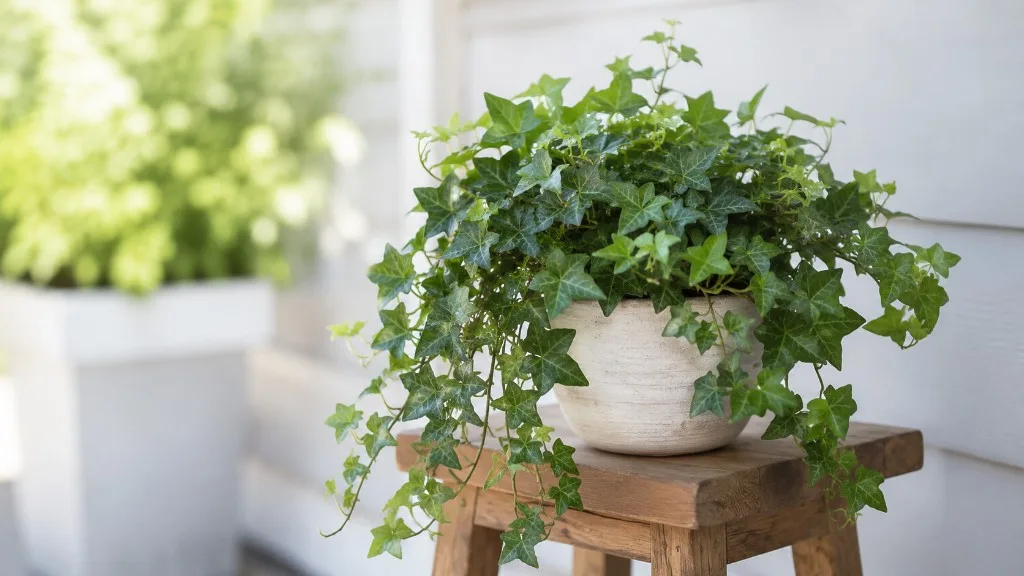
First, identify what “ivy” means
“Ivy” is a common name, not a promise that every plant on the shelf belongs to the same genus. The classic climbing ivies are Hedera species: woody vines with lobed juvenile leaves, and many can cling to a support with small roots along their stems. Swedish ivy (Plectranthus verticillatus) and grape ivy (Cissus alata) are unrelated plants that earn the name through their trailing growth; neither behaves like a wall-climbing Hedera. The RHS indoor ivy guide focuses on Hedera helix, while NC State Extension identifies grape ivy as Cissus alata.
That distinction changes what you should expect. A Hedera may climb a hoop or trail from a basket, Swedish ivy grows as a soft, scalloped-leaf cascade, and grape ivy has compound leaflets and tendrils. A retailer’s common name can be loose, so look for the botanical name on the tag when you compare care or check pet safety. Catalog descriptions also often quote outdoor vine lengths; a houseplant’s stems can be pruned, and those figures do not predict the size it will reach in your room.
16 ivy plants you can grow indoors
The profiles below prioritize leaf character, growth habit, and fit for an indoor display. Cultivar names matter: a gold-edged cultivar may need a brighter spot to keep its color than a plain green form, while a vigorous large-leaved ivy needs more space and regular trimming. Even within one cultivar, light, temperature, pot size, and pruning change how full or long a plant becomes. The RHS notes the range of leaf shapes and variegation among houseplant ivy cultivars.
English ivy and compact cultivars
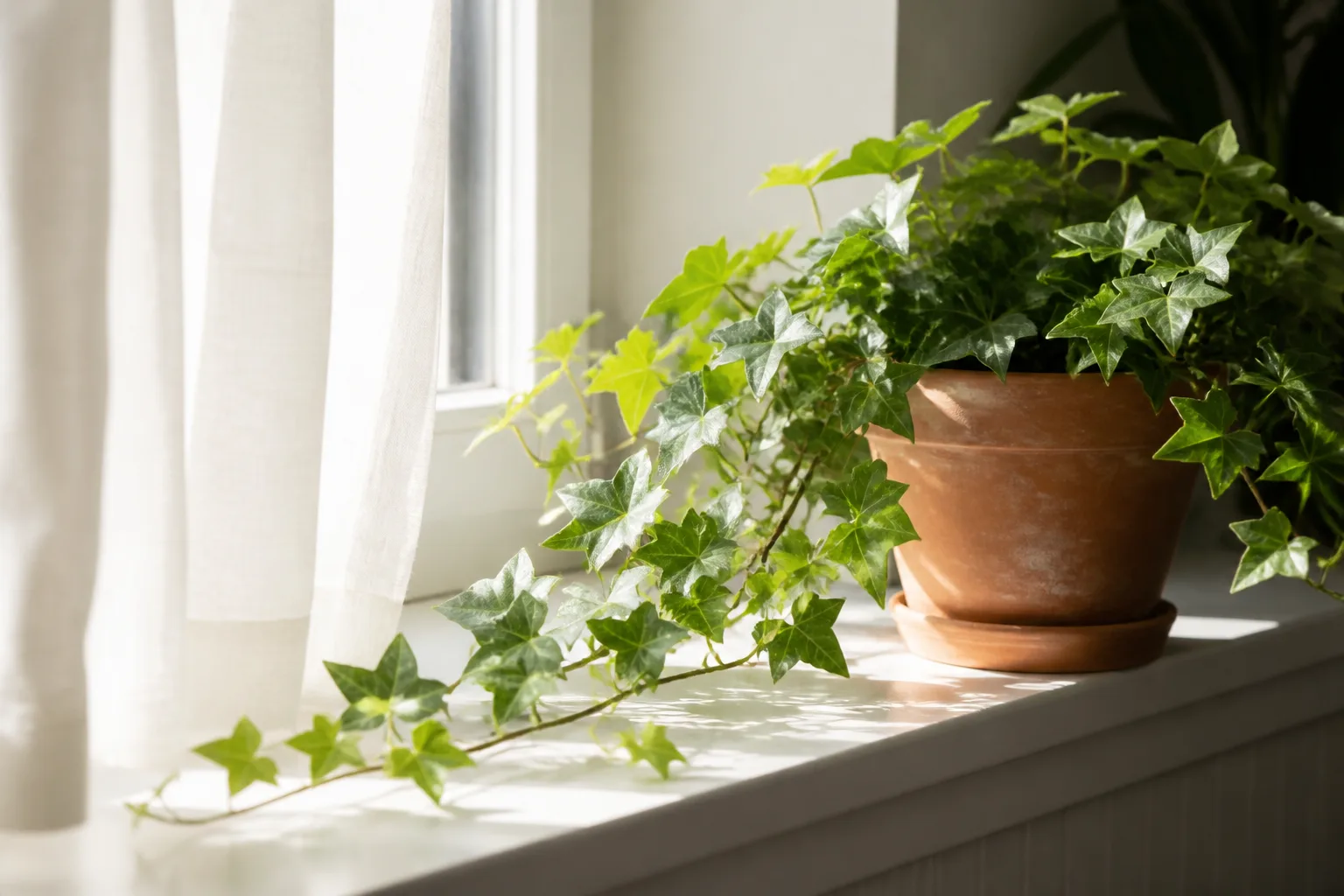
English ivy (Hedera helix) is the familiar, small-lobed vine sold in green and variegated forms. It is easy to trail over a shelf or train around a hoop, and its stems root readily at nodes. Indoors, it is more demanding than its reputation suggests: give it a bright room, avoid hot dry air, and keep checking for mites rather than treating “shade tolerant” as “happy in a dark corner.”
‘Yellow Ripple’ is a smaller English ivy with finely pointed, blue-green leaves edged in yellow. Its delicate pattern reads best close up, so use it in a small hanging pot or on a shelf where the foliage is at eye level. It is a good pick if you want a compact-looking vine, though a small-leaved cultivar still needs periodic pinching to keep the pot looking full.
‘Gold Dust’ has little green leaves speckled with gold, giving a subtler effect than broad cream margins. It suits a tabletop planter or narrow shelf where a large, vigorous ivy would be cumbersome. Keep it in brighter indirect light than a solid-green ivy; if new leaves lose their flecks or the stems stretch toward the window, move it gradually closer to light.
‘Needlepoint’ is recognized by narrow, sharply pointed lobes that make the leaves look finer than those of standard English ivy. It works where you want a crisp, small-scale texture rather than broad leaves. Its appearance can be confused with other small-leaved ivy cultivars at a glance, so check that the nursery label gives the cultivar name instead of relying on the photo alone.
‘Asterisk’ has star-like, deeply lobed foliage and a spreading, often less strictly upright look. Let it spill across a wide shelf or the rim of a hanging container, then shorten stems that begin to look sparse. Its unusual outline is the main attraction; it still follows the same basic Hedera care pattern as other English ivy cultivars.
Variegated English ivy
‘Glacier’ pairs dark green centers with pale, creamy margins on small, pointed leaves. It adds contrast without the large foliage of some other ivies, but pale sections contain less chlorophyll, so give it stronger indirect light than you would a plain-green plant. If the white areas gradually turn green and the stems lengthen, increase light before adding fertilizer.
‘Goldchild’ has yellow-gold edges around green leaves, with the color showing more clearly in a well-lit position. A hanging basket near a bright window lets its trailing stems and margins show without placing it in harsh midday sun. This cultivar is a sensible choice if you want a recognizable variegated ivy but can offer a brighter spot than a shaded hallway.
‘Anne Marie’ is a compact English ivy selection with gray-green leaves bordered in cream. The softer contrast suits a small pot or a mixed foliage display, and the leaf edges are easiest to keep distinct in bright, indirect light. Give its stems room to trail; if the center of the pot thins, shorten a few longer vines and root the cuttings back into the same container.
Algerian ivy and Marengo
Algerian ivy (Hedera algeriensis) has broader, glossy, three- to five-lobed leaves than many miniature English cultivars. It can make a fast, lush hanging plant, but that vigor is a trade-off in a small home: plan to trim it and keep it away from walls or furniture it might cling to. Give it a bright, indirect location and confirm the species on the label, since common names for large-leaved ivies can overlap.
‘Gloire de Marengo’, often sold as Marengo ivy, is a variegated Algerian ivy with mottled green leaves and cream-to-yellow margins. It gives a room a bolder pattern than ‘Glacier’ and needs enough indirect light to hold that pattern. Because its leaves and stems occupy more space, use a basket or sturdy shelf with room for growth instead of squeezing it into a tiny decorative pot. Epic Gardening also identifies ‘Gloire de Marengo’ as a variegated Hedera algeriensis.
Atlantic ivy cultivars
Atlantic or Irish ivy (Hedera hibernica) ‘Rona’ is grown for cream-and-green mottling on its young leaves; the foliage becomes greener as it matures. Its broad, shiny leaves make it look fuller quickly, so keep a little space around the pot and pinch back the ends when the plant outgrows its display. The RHS profile describes ‘Rona’ as a broad, self-clinging ivy with creamy, green-speckled new foliage, while its growing guide treats H. hibernica as a distinct ivy species.
‘Latina’ is another Atlantic ivy selection, with dark green, star-shaped foliage and gold-toned central markings. It is a stronger visual accent than a plain green ivy and is best placed where those details get a close look. As with other variegated Hedera, choose bright indirect light, but check the leaves for scorching if direct sun reaches the window for long periods.
Larger-leaved Persian and Himalayan ivy
Persian ivy (Hedera colchica) ‘Dendroides’ is the choice here for a larger, glossy leaf with a more substantial presence. It is less suited to a cramped windowsill than compact English ivy: provide a roomy hanging basket or train it on a frame, and prune before the stems tangle. The RHS distinguishes Persian ivy from common ivy and notes it as an option where soils are acidic outdoors; for a houseplant, the practical point is its bigger foliage and space requirement.
Himalayan ivy (Hedera nepalensis) has a five-pointed leaf, often with a longer, narrower middle point than the side lobes. Use the nursery’s scientific label to confirm it; photographs of young ivy can be difficult to distinguish, and labels are more reliable than a common name. Epic Gardening describes this five-pointed leaf shape. It is an interesting collector’s choice for a trailing display, while its basic needs remain those of a Hedera: bright indirect light, a draining mix, and a trim when stems sprawl.
Swedish ivy and grape ivy lookalikes
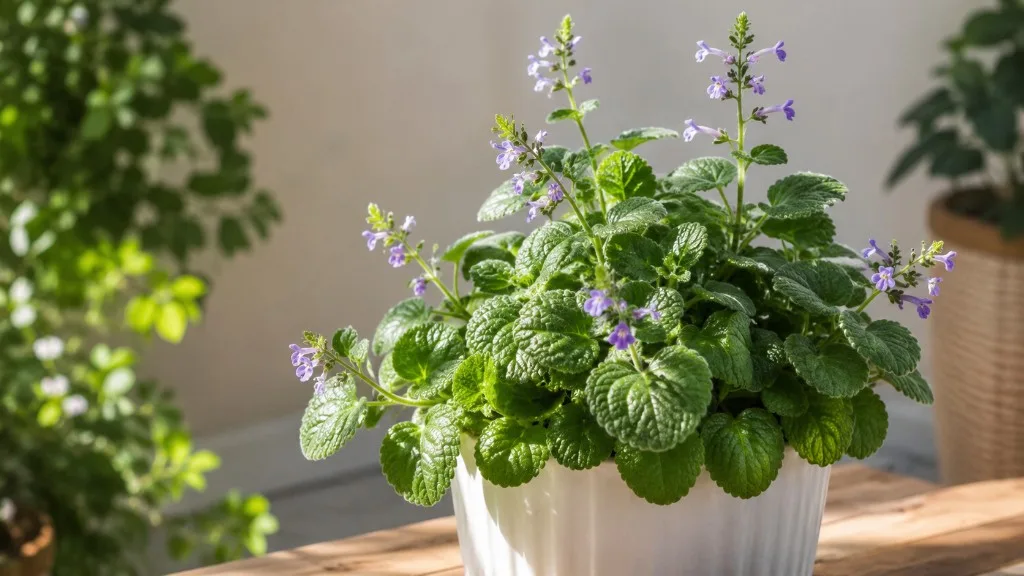
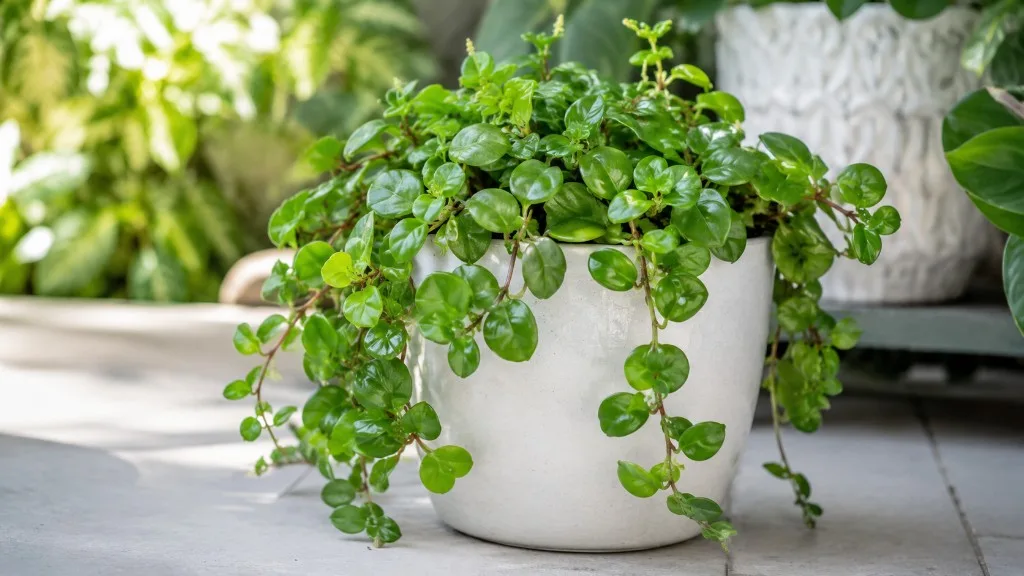
Swedish ivy (Plectranthus verticillatus) is not a true ivy and does not climb walls. Its rounded, scalloped leaves and fleshy trailing stems create a softer, fuller cascade; some forms also produce small flower spikes. Epic Gardening describes it as a South African plectranthus rather than a true ivy. It generally suits a warm home better than English ivy, with bright indirect light and a potting mix that drains between waterings.
Grape ivy (Cissus alata), sometimes labeled with the older name Cissus rhombifolia, has glossy leaflets with toothed edges and tendrils rather than Hedera’s lobed single leaves. NC State Extension describes it as a subtropical vine suitable for a hanging basket or trellis, grown in bright but indirect light. Gardeners’ Path’s grape ivy guide also emphasizes a fast-draining mix and letting the surface dry between waterings. Choose it if you want a leafy cascade but do not need an ivy that clings to a support.
Choose an ivy by light, space, and growth habit
Start with the place the plant will live, not the cultivar photo. A bright room with indirect light can support most of these choices; in a dim room, solid-green English ivy or grape ivy may tolerate the conditions better than heavily variegated forms, but no trailing vine will stay dense indefinitely in a genuinely dark corner. For a shaded shelf, choose a compact form and keep it close enough to a window that the leaves receive usable daylight.
| If you want… | Consider… | Trade-off to plan for |
|---|---|---|
| A classic ivy for a hoop or hanging pot | English ivy, ‘Needlepoint’, ‘Glacier’ | Hedera appreciates cool, bright conditions and needs mite checks in dry rooms |
| A small-scale green-and-gold pattern | ‘Yellow Ripple’ or ‘Gold Dust’ | Variegation fades when light is too low |
| Cream or yellow margins | ‘Glacier’, ‘Goldchild’, ‘Anne Marie’, or ‘Gloire de Marengo’ | These need a brighter indirect spot than solid-green foliage |
| A fuller, larger-leaved cascade | Algerian, Atlantic, or Persian ivy | Bigger, more vigorous leaves take room and need shaping |
| A trailing plant that is not a wall-climber | Swedish ivy or grape ivy | These are different genera and have different light, temperature, and safety profiles |
If you have pets or small children, identify the plant before you buy it and place it accordingly. “Ivy” on a shelf tag is not enough to make a toxicity decision. If you want a low-maintenance plant and your home is warm, dry, and dim, a true English ivy may be a frustrating match; consider a Swedish or grape ivy only after checking the exact plant’s care and safety information.
Indoor ivy care that works across types
The best indoor routine is a set of checks, not a weekly schedule. A plant near a sunny window uses water faster than the same cultivar in a cool room; a small nursery pot dries faster than a large glazed cachepot. Use the plant’s leaves and potting mix as feedback, then adjust one factor at a time.
Give vines enough light
Bright, indirect light is the dependable starting point for indoor Hedera. Put the plant near a bright window where the sun does not bake the leaves through the glass; a sheer curtain can soften a strong exposure. The RHS recommends indirect or low light for indoor ivy and notes that variegated forms may turn greener when light is inadequate. In practice, low-light tolerance means a plant may persist, not that it will make compact, colorful growth in a dark room.
Watch new growth rather than judging only older leaves. Long gaps between leaves, smaller foliage, or a plant leaning toward one side point to insufficient light; faded or scorched patches on the window-facing side suggest too much direct sun. Move the pot in small steps over a week or two so the leaves can adjust, and rotate it occasionally if growth is strongly one-sided. Variegated cultivars usually need the brighter position of the two.
Water when the mix is ready
Check the soil with a finger before you water. When the upper couple of centimeters feel dry, water slowly until excess drains from the bottom, then empty the saucer or decorative pot. Do not leave the root ball sitting in water: a persistently wet mix excludes air and can lead to root loss. The RHS indoor guide likewise advises letting the surface dry a little and removing water from the outer pot.
Avoid both extremes. A very dry root ball can pull away from the pot and shed leaves, while watering again before the mix has begun to dry can make healthy-looking foliage yellow and soft. Swedish ivy and grape ivy appreciate drying between waterings, but do not let them wilt repeatedly; Hedera should not be left bone-dry for a long stretch either. As days shorten or rooms cool, expect the mix to dry more slowly and check less often.
Keep roots airy and feed lightly
Use a standard houseplant mix amended with perlite or fine bark if it stays wet for too long. The pot needs drainage holes; pebbles at the bottom of a pot do not replace them. Repot only when roots circle densely, emerge from the drainage holes, or the mix has compacted and drains poorly. Move up one pot size rather than giving a small root ball a deep volume of wet soil.
Feed only while the plant is actively growing, using a balanced houseplant fertilizer at the label rate or a more dilute dose if you are cautious. English ivy is not a heavy feeder; the RHS says it generally does not need feeding unless deficiency appears. A fresh bag of potting mix may already contain nutrients, and fertilizer will not fix poor light, soggy roots, or pest damage. Skip feeding a stressed plant until you correct its growing conditions.
Keep leaves away from hot radiators, heating vents, and cold drafts. English ivy tends to fare better in cooler indoor conditions than a tropical houseplant, while Swedish ivy prefers normal warm room temperatures. If winter air is very dry and mites keep returning, a room humidifier can raise ambient humidity more reliably than misting; also give the foliage enough space for air to move between stems.
Prune, train, and root cuttings
Pruning is the easiest way to keep an ivy sized for a home. Use clean scissors and shorten a long stem just above a leaf node; this keeps the cut tidy and encourages a fuller outline. Pinch the soft tips of a young Swedish ivy if you want it to branch, or weave a Hedera gently around a hoop. Do not let an indoor Hedera attach directly to painted walls or delicate wood, where its clinging roots can leave marks.
Turn healthy trimmings into new plants. Cut a few sections that each include a node and one or two leaves, remove any leaf that would sit under water or in the mix, and place the node in water or a lightly moist, airy potting medium. Keep cuttings in bright indirect light and replace water when it clouds; in soil, keep the medium lightly damp rather than saturated. Once roots have branched and are a few centimeters long, pot the cuttings together or tuck them around the parent plant to make a sparse basket look fuller. The RHS recommends stem sections with leaves in well-drained medium for ivy propagation, while Epic Gardening outlines pruning as a way to create cuttings and denser growth.
Diagnose common indoor ivy problems
If a plant declines, inspect the underside of several leaves and check the root zone before reaching for fertilizer or pesticide. Spider mites often leave fine stippling, dull foliage, and delicate webbing; isolate the plant, rinse both sides of leaves, and repeat inspection over the next week. A dry room, weak growth, and crowded foliage can make mite problems harder to control, so improve the conditions as well as removing visible pests.
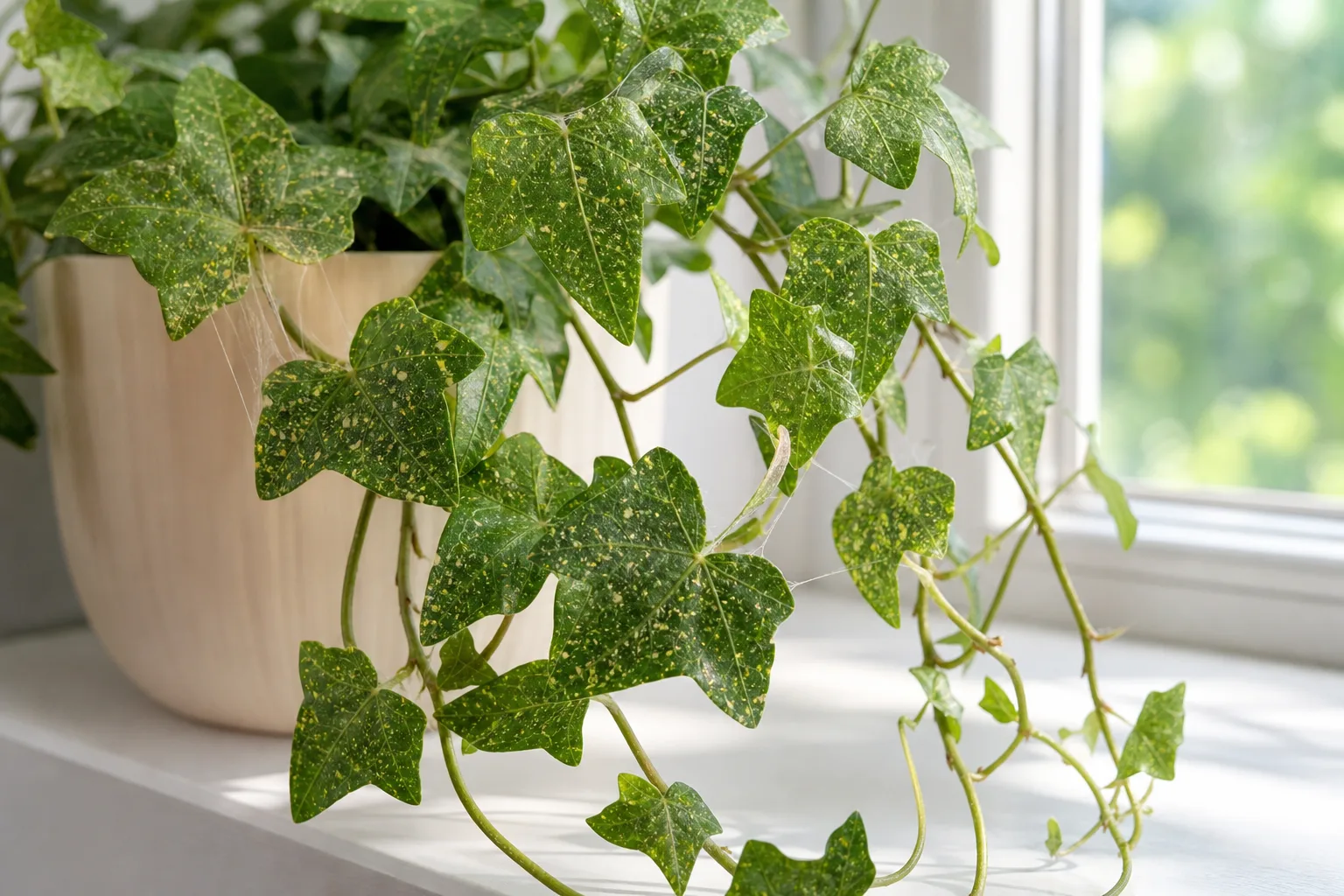
Yellow leaves do not have one cause. If the mix is wet and the stems feel soft, pause watering and check whether the pot drains; if it is dry far below the surface, water thoroughly and then reassess. A few older leaves dropping after a move may be adjustment, but continuing leaf loss calls for checking light, temperature, and the moisture in the center of the root ball. If the plant has long bare gaps between leaves, improve light and trim the weakest stems instead of trying to force quick growth with extra fertilizer.
Brown, crisp edges can follow dry soil, hot sun, or dry air. First check whether the pot has dried excessively or sits over a heating vent; do not assume that one symptom proves a single cause. Prune damaged leaves only after fixing the condition that produced them. For Hedera, avoid handling sap with bare hands if your skin is sensitive, and wash tools after pruning.
Keep ivy safe around pets and children
The word “ivy” is not a safety category. The ASPCA lists English ivy (Hedera helix) as toxic to cats, dogs, and horses, with foliage more toxic than berries and ingestion associated with vomiting, abdominal pain, excess salivation, and diarrhea. The same page includes cultivar names such as ‘Glacier’ and ‘Needlepoint’ among English ivy’s common names. NC State Extension also describes English ivy as poisonous to people and notes that its sap can cause contact irritation, so wear gloves when pruning if you are sensitive and wash exposed skin.
Do not assume that every plant sold as Swedish, grape, Persian, or “ivy” has the same toxicity profile; check the exact botanical name in a reliable pet-poison database and ask a veterinarian if you are unsure. Keep a plant with an uncertain label out of reach of pets and young children. If an animal eats English ivy, contact your veterinarian or the ASPCA Animal Poison Control Center promptly rather than waiting for symptoms or trying a home treatment. The NC State English ivy profile flags the species as invasive in parts of its range, and the Washington State Noxious Weed Control Board lists English ivy among its noxious weeds; check local invasive-plant guidance before planting a houseplant outside or discarding cuttings outdoors.
Conclusion
The best ivy for your home depends on more than leaf color. Choose a true Hedera if you want the classic lobed vine and can provide bright indirect light, room to trail, and regular trimming; choose Swedish or grape ivy when you prefer a softer cascade and are prepared for their different needs. Read the botanical label, check the plant’s light where it will actually sit, and match watering to the soil rather than the calendar. With that small amount of planning, an indoor ivy can stay full and manageable without turning into a recurring rescue project.