15 Dieffenbachia Varieties to Grow at Home Indoors
Compare 15 dieffenbachia varieties by leaf pattern, mature size, and room fit, then learn how to keep the foliage colorful and handle this toxic plant safely.
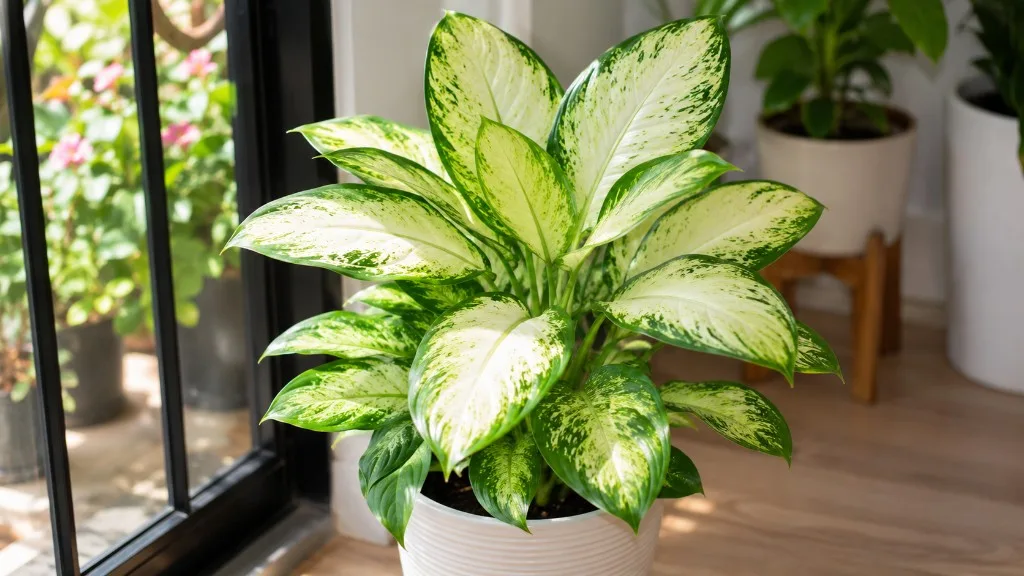
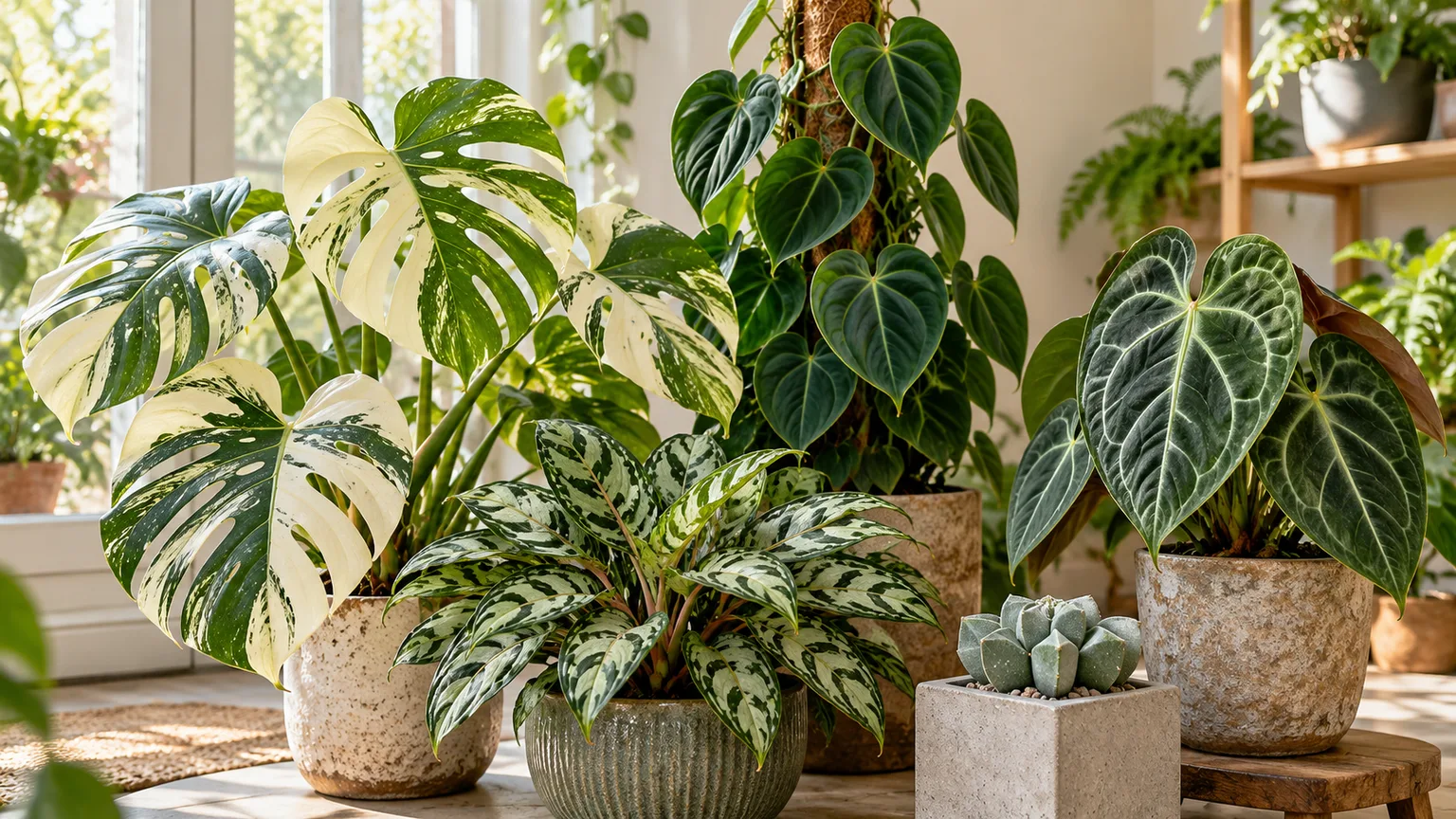
Dieffenbachia earns its common name, dumb cane, from the irritating sap inside its stems and leaves. It also earns a place in houseplant collections for a different reason: the foliage ranges from green leaves dusted with silver to broad cream centers framed by dark margins. The choice is less about finding one universally “best” plant and more about matching a pattern and mature footprint to your room.
The names on nursery tags can complicate that choice. Some describe a cultivar, some use older botanical names, and a few selections are sold under more than one spelling. Below, you’ll find fifteen recognizable options, what sets each apart, and the limits to keep in mind when you compare a young plant with a mature reference photo.
Quick picks by room, pattern, and size
| If you want… | Start with… | What to check before buying |
|---|---|---|
| A compact, bright pattern | ‘Camille’ or ‘Compacta’ | Confirm the plant is bushy and has more than one healthy leaf; compact does not mean pet-safe. |
| More green than cream | ‘Carina’ or ‘Exotica’ | Look for the speckles or green margins that distinguish the selection from a mostly pale-leaved plant. |
| A dramatic floor plant | ‘Snow,’ ‘Tropic Snow,’ or ‘Mary’ | Check the ceiling clearance and pot stability; mature plants can become tall and top-heavy. |
| A darker, speckled look | ‘Reflector’ | Ask for a cultivar label and compare the actual plant, since photos can exaggerate its iridescence. |
| A broad, soft-toned focal point | ‘Tropic Marianne’ | Judge the full leaf width, not only the height of the young specimen. |
Use this as a shortlist, not a promise about adult dimensions. Indoor plants grow at different rates depending on light, age, pot size, and pruning, and a retailer’s “compact” description may refer to a young plant rather than a permanent maximum.
How to choose a dieffenbachia cultivar
Start with where the pot will stand, not with a leaf photograph. A dieffenbachia that will sit on a sturdy plant stand in a bright room can be a good match even if it eventually reaches several feet; the same plant may be awkward on a narrow shelf or in a dim corner. Leave room around the leaves so they are not bent by a wall or brushed every time someone passes.
The genus includes plants with broad cream-and-green foliage and others with darker, more speckled leaves. North Carolina State Extension describes dieffenbachia as an upright, broadleaf evergreen with cream, white, or yellow patterning, and notes that formerly used names such as D. amoena and D. maculata are now placed under D. seguine in its plant profile (NC State Extension). That taxonomic consolidation is one reason a plant label may not look identical to the name in another catalogue.
Match mature height and spread to the spot
A nursery pot tells you little about the space an established plant may occupy. NC State gives a broad range of roughly 3 to 8 feet tall and 2 to 3 feet wide for dieffenbachia, while other grower references describe selections that stay smaller. Treat any cultivar-specific height as a planning estimate rather than a guaranteed ceiling; indoor light, the age of the cane, pot restriction, and pruning all affect the final shape.
If you have only a small table, shortlist genuinely compact selections such as ‘Compacta’ and ‘Camille,’ then measure the available width as well as height. If you want a floor plant, think about the plant’s center of gravity: a tall cane with a heavy crown needs a stable pot and a place where it will not be knocked over. You can prune an overgrown plant, but cutting a toxic plant requires preparation and safe disposal.
Let the leaf pattern guide your light expectations
Variegation describes areas of different color on a leaf; it is not a separate care requirement that can be solved by putting every pale cultivar directly beside a sunny window. Brighter indirect light helps many patterned selections maintain a compact shape and visible contrast, but strong midday sun through glass can scorch leaves. At the other extreme, a dark corner may keep a tolerant plant alive while slowing growth and making new leaves smaller or less distinct.
Look at the room’s light at the plant’s actual height and over the course of the day. A sheer curtain, a few feet back from an unobstructed window, or a bright room with no direct beam can provide a safer starting point than a narrow strip of hot sunlight. A mostly green selection may be more forgiving of a lower-light location than a very pale one, but “tolerates low light” does not mean “thrives without usable light.”
15 dieffenbachia varieties to know
These profiles focus on leaf pattern and habit—the traits you can use to compare plants at a garden center. Costa Farms’ cultivar guide and horticulture-reviewed coverage from Epic Gardening show how the same genus includes compact, tall, speckled, and broad-leaved forms (Costa Farms; Epic Gardening). Names and exact patterns can vary between growers, so use a plant’s label and visible features together.
Best for compact spaces
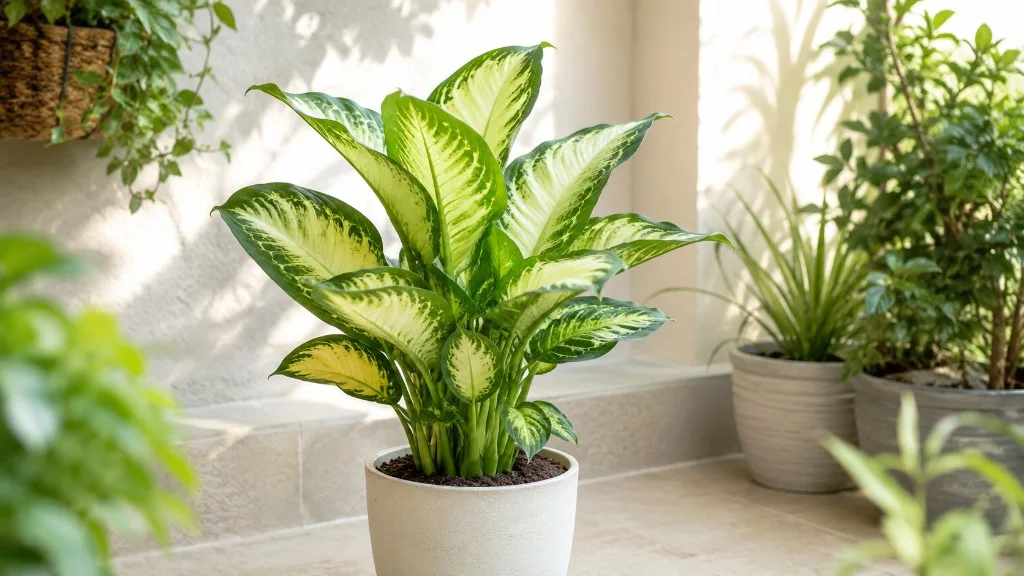
1. ‘Camille’ — This familiar selection is easy to recognize by the broad, creamy yellow to ivory center of each leaf and its dark green outer edge. It is often sold as a smaller, bushy plant, commonly around 2 to 3 feet in indoor growing references, which makes it easier to place than a full-size cane. The pattern can look lighter as leaves mature, and an undersized starter may not show the same contrast as a full, established specimen.
2. ‘Compacta’ — The name points to its more manageable habit, while the foliage adds another distinguishing mark: cream or pale yellow centers heavily flecked with green. It is a useful candidate for a side table or plant stand when you want a patterned plant without immediately reserving a large floor footprint. Check the actual plant rather than trusting the label alone; a crowded, stretched specimen may have lost its compact outline because it spent too long in weak light.
3. ‘Exotica’ — Compared with the strongly pale center of ‘Camille,’ ‘Exotica’ usually reads greener overall, with creamy markings and a narrower green border. That balance makes it a good middle ground if you like variegation but do not want a leaf that appears almost white from across the room. Retailers may also use an older botanical name such as D. maculata on a label; that does not necessarily mean you have a different kind of plant.
4. ‘Sarah’ — ‘Sarah’ has a fuller, bushier look, with dark green leaves developing softer green markings that fade toward a pale center. It suits someone who wants layered foliage rather than a single, high-contrast stripe. A dense outline is most attractive when the plant receives even, useful light; turn the pot occasionally if the leaves keep leaning toward the window.
High-contrast and heavily patterned leaves
5. ‘Carina’ — ‘Carina’ tends to carry more green than the cream-centered selections, with light green speckles scattered across medium-green leaves and darker marks adding depth. Its larger, fuller appearance can help fill an open corner without relying on a mostly white leaf pattern. When comparing two plants, look across several mature leaves: one unusually pale new leaf is not enough to identify a cultivar.
6. ‘Delilah’ — The appeal of ‘Delilah’ is its light, creamy foliage framed and flecked with dark green. That strong contrast reads clearly in a room, but a young plant can look less dramatic until its leaves open fully. Because pale leaf tissue has less green area than a dark leaf, choose a bright indirect-light position and let the plant settle there before deciding that its pattern is disappointing.
7. ‘Mary’ — ‘Mary’ has light green leaves with a generous scatter of darker green and creamy marks, so the overall effect is busy but not as stark as a cream-centered cultivar. Grower descriptions often call it faster-growing than some other selections. Give it enough floor or stand space to expand, and keep the newest leaves away from traffic; large blades can crease or tear if they repeatedly catch on a doorway or furniture.
8. ‘Sparkles’ (also sold as ‘Sparkle’) — This selection is a good choice when you want a balanced mix of green, cream, and yellow rather than one dominant color. The broad leaves can show a mixture of fine speckles and larger patches, which makes the plant look different from one leaf to the next. Since the spelling on retail labels varies, verify that the foliage—not just the name—matches the kind of pattern you want.
9. ‘Star Bright’ — Narrower leaves and a lighter golden-green ground color distinguish ‘Star Bright’ from the wider, cream-heavy types. Dark green splashes create contrast without turning the whole leaf into a pale surface. It works well when you want a more upright, less broad silhouette, but do not tuck it into a poorly lit corner just because its foliage appears light; new growth still needs usable indirect light to stay sturdy.
Larger, classic foliage plants
10. ‘Snow’ — The selection sold as ‘Snow’ is typically described as a larger dieffenbachia with dark green leaves scattered with silver-green and creamy-white marks. The speckling gives it a cooler, more mottled appearance than the broad pale centers of ‘Camille.’ Plan for a floor position rather than assuming the compact plant in a small shop pot has reached its final size, and confirm the label because “Snow” is easily confused with “Tropic Snow.”
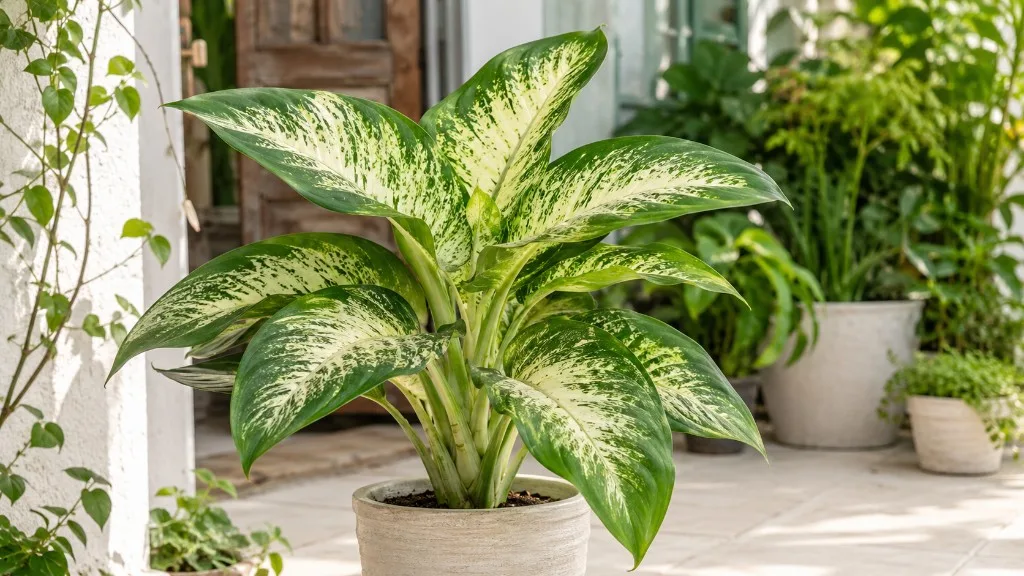
11. ‘Tropic Snow’ — ‘Tropic Snow’ is a familiar, large-leaved selection with a pale cream-to-green center and darker green edges. Its mature leaves can become impressively broad, and established plants may grow much taller than a tabletop specimen. The name is not always used consistently across plant databases and retail tags, so compare the actual leaf pattern and ask the seller which cultivar is on the label before buying it as a specific selection.
12. ‘Tropic Marianne’ — The oblong leaves of ‘Tropic Marianne’ can be unusually broad, with creamy white and green markings that give a mature plant a dense, layered look. It is not always the tallest option, but its leaf spread can make it feel large in a small room. Measure the width of the intended location and leave a margin for new leaves to open; a plant that fits only when its foliage is squeezed against the wall will not stay attractive for long.
Unusual texture and mature color
13. ‘Reflector’ — Deep green leaves sprinkled with lime, yellow, or lighter green marks make ‘Reflector’ stand out from the mostly cream-centered group. Under bright filtered light, the pattern can look almost reflective, but that effect is a color impression rather than a glossy surface that needs polishing. Its availability has become less unusual than its collector reputation suggests, so compare a current plant in person and avoid paying a premium based only on an old “rare plant” listing.
14. ‘Tiki’ (sometimes ‘Tropical Tiki’) — ‘Tiki’ is the one to look for if leaf texture matters as much as color. Its broad, pointed foliage may have wavier or ruffled edges, with gray-green, silver, and cream marks across a darker background. A grower may use “Tropical Tiki” on the tag; that label variation is another reason to take a photo of the plant and save its nursery name rather than relying on memory.
15. ‘Triumph’ — ‘Triumph’ is recognized by light green leaves with dark green margins and a pronounced white midrib. The cleaner, more graphic pattern is a departure from selections covered in irregular dots, and it gives the plant a structured look even when individual leaves are large. Costa Farms includes it among its houseplant selections; use that visual description as a buying cue, but treat the name on any particular plant as a claim to verify with its grower.
Why names and size labels vary
A cultivar is a selected cultivated form, while a species is a botanical grouping. In commerce, the two can blur: older names may persist on tags, a common name may be used for several species, and a seller might use a cultivar label that another reference does not recognize in exactly the same way. NC State Extension notes that several formerly used botanical names for common cultivated dumb canes are now placed under Dieffenbachia seguine. That does not make every old label useless; it does mean you should not infer a plant’s full lineage from one nursery tag.
The pair most likely to cause confusion here is ‘Snow’ and ‘Tropic Snow.’ Grower references describe both as large plants with pale and green markings, but that resemblance is not proof that their names are interchangeable. If the distinction matters to you, request the supplier’s cultivar name and a photo of the parent stock; if you simply want the look, buy the individual plant whose mature leaves you prefer.
Size descriptions also depend on where and how a plant is grown. A selection may be compact in a young retail pot, then grow into a floor plant over several seasons; repeated pruning can keep a plant shorter but changes its shape. Think in ranges and keep enough room for the leaves to open, rather than choosing a cultivar based on one exact height printed in a listing.
Keep variegation attractive indoors
The pattern is built into the plant, but the environment affects how clearly it shows and how well the plant grows. The aim is steady growth with unscorched leaves—not the brightest possible location or constant moisture. A healthy green margin and a pale center are features of many selections; the same yellow color can also be a warning sign if it appears with limp stems, soft roots, or soil that stays wet.
Give leaves bright, indirect light
Place dieffenbachia near a bright window where direct sun is filtered by a sheer curtain or does not hit the leaves for long periods. A few feet back from a bright east- or west-facing window can work, though the right distance depends on the glass, season, and room. If the plant grows toward one side, rotate the pot a quarter turn every week or two so new growth develops more evenly.
Low light can slow growth and soften the contrast of some patterned leaves; direct sun can bleach or scorch exposed areas. Move a struggling plant gradually rather than shifting it from a dark corner into harsh noon sun in one step. Costa Farms notes that dieffenbachia can tolerate lower-light spots, while general growing guidance from Gardening Know How emphasizes that lower light can also slow growth. Use that tolerance as flexibility, not as a substitute for a bright room.
Water for the pot and season
Check the soil before watering instead of following a weekly calendar. Let the top inch or so dry, then water thoroughly until excess runs from the drainage holes; empty the saucer so the roots do not sit in water. A smaller plant in a warm, bright room may use water faster than a large plant in winter or a low-light room, so the interval changes with the conditions.
Use a loose, well-draining potting mix and a container with open drainage. Root rot is more likely when the mix stays soggy than when the surface briefly dries between waterings; if the plant is yellowing and the pot feels heavy for days, check the roots and soil before adding fertilizer. NC State Extension and Costa Farms’ dieffenbachia guide both emphasize indirect light and avoiding prolonged wet soil. Clean leaves with a damp cloth if dust builds up, but do not use leaf shine products that can leave a coating.
Handle dieffenbachia sap and household safety
Every selection in this group should be treated as toxic. The ASPCA lists dieffenbachia as toxic to cats and dogs, with insoluble calcium oxalates and a proteolytic enzyme as toxic principles; its listed signs include oral irritation, burning and swelling of the mouth, tongue, and lips, drooling, vomiting, and difficulty swallowing (ASPCA Animal Poison Control). NC State Extension also warns that the plant can harm children and pets and that sap may irritate skin.
Place the pot where children and animals cannot reach or chew it, and account for fallen leaves as well as the plant itself. A high shelf is not automatically safe for a climbing cat or a child who can pull the pot down. If you cannot reliably keep the plant separated from a curious pet or young child, choose a different houseplant.
Wear gloves when pruning, repotting, or handling broken stems; long sleeves and eye protection are sensible when a large cane is being cut. Keep sap away from skin, eyes, and mouth, then wash your hands and tools with soap and water. Bag discarded foliage and keep cuttings out of reach—do not leave them on a potting bench where an animal can investigate.
If a person or pet chews the plant, remove visible plant pieces without putting yourself at risk and contact a poison-control service or veterinarian for case-specific instructions. Do not induce vomiting unless a qualified professional tells you to. Trouble swallowing, significant swelling, or any breathing difficulty calls for urgent medical or veterinary attention.
Conclusion
Choose a dieffenbachia by the mature footprint you can accommodate and the pattern you genuinely like, then confirm the label against the plant’s leaves. ‘Compacta’ and ‘Camille’ are reasonable starting points for a smaller display, while ‘Snow,’ ‘Tropic Snow,’ and ‘Mary’ deserve more room; ‘Reflector’ and ‘Tiki’ offer less conventional patterns. Those descriptions are guides, not guarantees, because labels and mature size vary.
Give the plant bright indirect light, water only after checking the mix, and be realistic about how much space the leaves will occupy. Most of all, treat every dieffenbachia cultivar as toxic and keep it out of reach of children and pets. A beautiful plant is a good choice only when its placement works for everyone who shares the room.