Deer Mouse Dangers and Safe Ways to Control Them
Learn the real dangers of deer mice, how hantavirus and Lyme disease are connected, and how to identify, clean, exclude, and control them safely.
Deer mice are small, wild rodents that can look harmless as they move through a shed, woodpile, or garden edge. The danger is not that every deer mouse is infected or that a single sighting proves an infestation. The concern is that some deer mice can carry pathogens, and their urine, droppings, saliva, nesting material, and ectoparasites can create an exposure risk when people disturb them carelessly.
If you find one, the safest response is calm and sequential: keep people and pets away, do not sweep or vacuum waste, inspect for entry points, and follow public-health cleanup guidance before trapping or moving anything. The Centers for Disease Control and Prevention’s HPS overview says the most common hantavirus associated with Hantavirus Pulmonary Syndrome (HPS) in the United States is spread by deer mice, while disease risk from Lyme disease follows a different mouse-tick pathway. Knowing that difference helps you act without either minimizing the problem or treating every mouse as an emergency.
Why deer mice matter around homes and gardens
Deer mice (Peromyscus maniculatus) are native wildlife, not a household species that can be identified reliably from one glance at a dark corner. They are common in rural, wooded, grassy, and agricultural settings and may use sheds, cabins, garages, crawl spaces, attics, vehicles, and other quiet structures for shelter. They are mostly active at night, build nests from fibrous material, and cache seeds or nuts near cover.
Their presence matters when outdoor habitat meets a building. A brush pile beside a shed, spilled birdseed under a feeder, an open garage door, or a gap under a door can provide the combination of shelter and food that turns an occasional visitor into repeated activity. Gardening Know How’s garden-mouse guidance notes that outdoor cleanup and exclusion should come before control products, while UC IPM’s deer-mouse notes emphasize that habitat modification may reduce local pressure but cannot eliminate a wild mouse population.
The key distinction: mouse presence is not proof of infection
A deer mouse is a potential host for a pathogen, not a visible diagnosis. You cannot tell whether an individual mouse carries hantavirus by looking at its coat, and you should not catch or handle it to confirm the species. Droppings and nests can also look similar to those left by house mice, so the practical safety rule is to treat rodent waste as potentially contaminated until it has been cleaned according to public-health guidance.
The risk of illness after an encounter is not automatic, and hantavirus infections are rare. Still, the consequences of HPS can be severe, which is why prevention focuses on avoiding aerosolized dust and keeping rodents out of occupied spaces. This is a case where a short, careful cleanup is more protective than a dramatic response.
How to recognize a deer mouse without handling it
The best clues are a brown-to-gray back, a white belly and feet, large eyes and ears, and a furry tail with a darker top and pale underside. UC IPM calls the bicolored tail the easiest feature for distinguishing a deer mouse from a house mouse, while Utah State University Extension’s identification guide describes an adult as about 6 inches long including the tail. Color and size vary, so use these traits as clues rather than a guarantee.
A deer mouse is also more likely than a house mouse to be associated with wooded edges, fields, brush, and seed-rich outdoor cover. That does not mean a deer mouse cannot enter a city home or that every mouse near a garden is a deer mouse. Location helps you decide where to inspect, but it does not replace exclusion and safe handling.
Deer mouse versus house mouse: useful clues and limits
House mice tend to have a mostly uniform gray-brown coat and a tail that appears less furry. Deer mice have a sharper white underside and a visibly two-toned, furry tail. A cache of acorns, seeds, or nuts near a nest can also point toward deer mouse activity because deer mice have a strong tendency to store food.
Do not use droppings as a species test. UC IPM says the nests, droppings, and other marks of deer mice and house mice can be similar, and a photograph of a dropping is not a reliable way to decide which animal left it. If the distinction affects a treatment choice, ask a licensed pest professional or local extension office; do not lift a nest, open a wall, or handle a live mouse for a closer look.
Where deer mice live and why they enter structures
Deer mice spend the day in refuges such as tree hollows, stumps, rock or log cover, dense vegetation, and abandoned nests. Their nests may contain leaves, stems, roots, fur, feathers, or shredded fabric. In cold or severe weather, they may move toward buildings, especially structures that are seldom occupied and contain undisturbed storage, insulation, or bedding material.
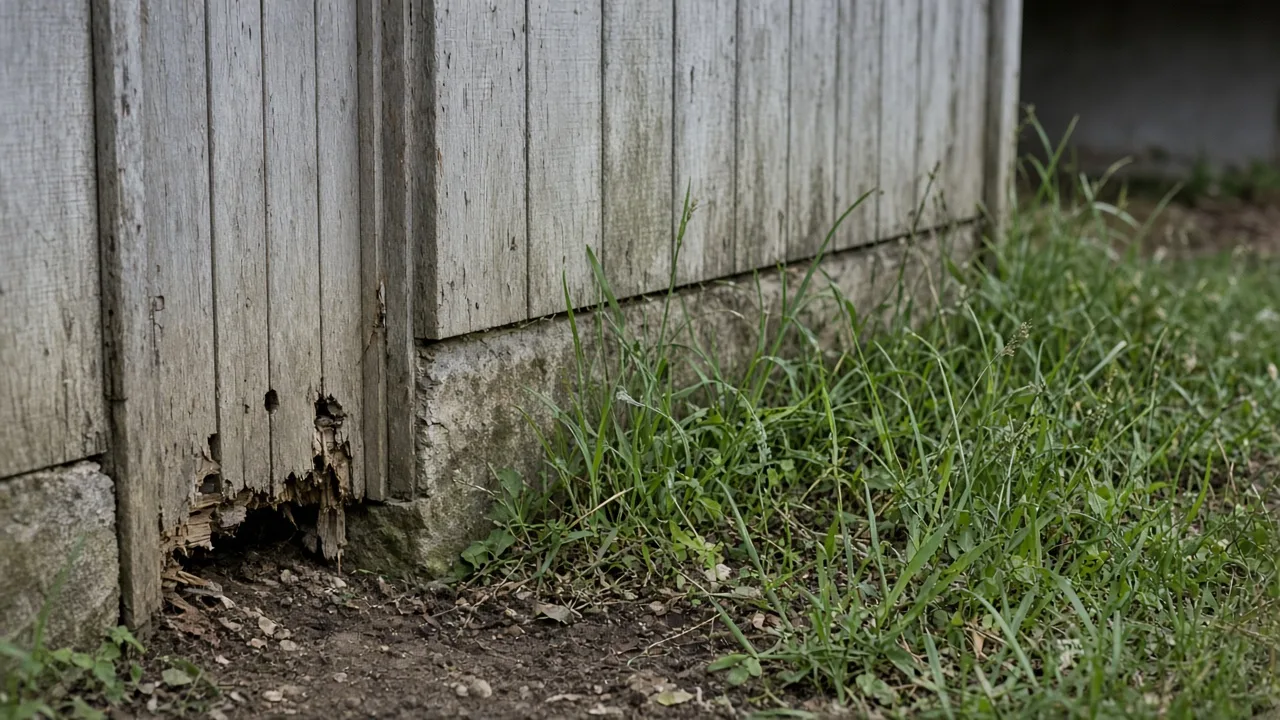
The first places to inspect are not the middle of a room. Look at the edge where a wall meets a floor, the underside of a garage door, door thresholds, utility penetrations, vents, crawl-space openings, attic screens, foundation cracks, and the gaps around pipes and cables. The CDC’s wild-rodent control guidance recommends sealing holes and gaps around the home, and UC IPM advises sealing openings larger than 1/4 inch with metal or concrete rather than relying on materials rodents can gnaw through.
Health risks linked to deer mice
The main health concern in the United States is rodent-borne exposure, especially when contaminated material becomes airborne. Rodents can also contaminate food and surfaces, carry fleas or ticks, and bite or scratch when handled. A healthy-looking animal does not rule out infection; the CDC notes that many rodent-borne diseases do not cause obvious illness in the rodent.
Hantavirus and Hantavirus Pulmonary Syndrome
Deer mice are the principal reservoir for Sin Nombre virus, the hantavirus that causes most HPS cases in the United States. People can be exposed when they breathe air contaminated by urine, feces, saliva, or nesting material, or when they touch contaminated material and then touch their eyes, nose, or mouth. CDC’s hantavirus information explains why disturbing a dry nest or sweeping droppings is risky: it can put contaminated particles into the air.
HPS often begins with nonspecific symptoms such as fatigue, fever, headache, muscle aches, nausea, or stomach upset. The illness can progress quickly to coughing, shortness of breath, chest tightness, and fluid in the lungs. CDC guidance says symptoms usually begin 1 to 8 weeks after contact with an infected rodent; if you develop a compatible illness after rodent exposure, seek medical care promptly and tell the clinician about the exposure rather than waiting to see whether it behaves like ordinary flu.
Hantavirus is serious, but a serious disease is not the same as a reason to panic over every mouse sighting. The practical risk reduction is straightforward: exclude rodents, avoid contact with waste and nests, ventilate closed structures before cleaning, wet contaminated material with disinfectant, and use a professional for heavy or complex contamination.
Lyme disease is an indirect tick connection
Deer mice do not give people Lyme disease by being touched. Lyme disease is caused by Borrelia burgdorferi and is transmitted through the bite of an infected blacklegged tick, as Cornell University College of Veterinary Medicine explains. In the wild, Peromyscus mice can be important hosts that infect immature ticks, which may later transmit the bacterium to people or animals; University of South Florida research coverage describes that mouse-tick cycle without implying that a mouse bite or touch transmits Lyme disease.
That distinction changes the response. Do not try to remove every mouse from a property as a substitute for tick precautions, and do not assume a mouse sighting means a person has Lyme disease. Wear long pants in brushy areas, use an appropriate tick repellent according to its label, check clothing and skin after outdoor activity, and remove attached ticks promptly using established health guidance.
Other reasons to avoid contact
Hantavirus and Lyme disease are not the only reasons to avoid handling wild mice. Rodents can contaminate food and storage materials, damage wiring and insulation, and carry fleas, mites, or ticks. Cats and dogs may bring a dead or injured rodent indoors even though pets are not known to become infected with hantavirus in the United States, according to CDC clinical guidance.
These risks do not mean you need to sterilize a garden or remove every log that supports wildlife. They do mean that a nest inside a bedroom wall, a dead mouse in a ventilation system, or droppings on food-storage shelves deserves a more careful response than a mouse seen outdoors at the edge of a field.
Signs that a deer mouse is using a building
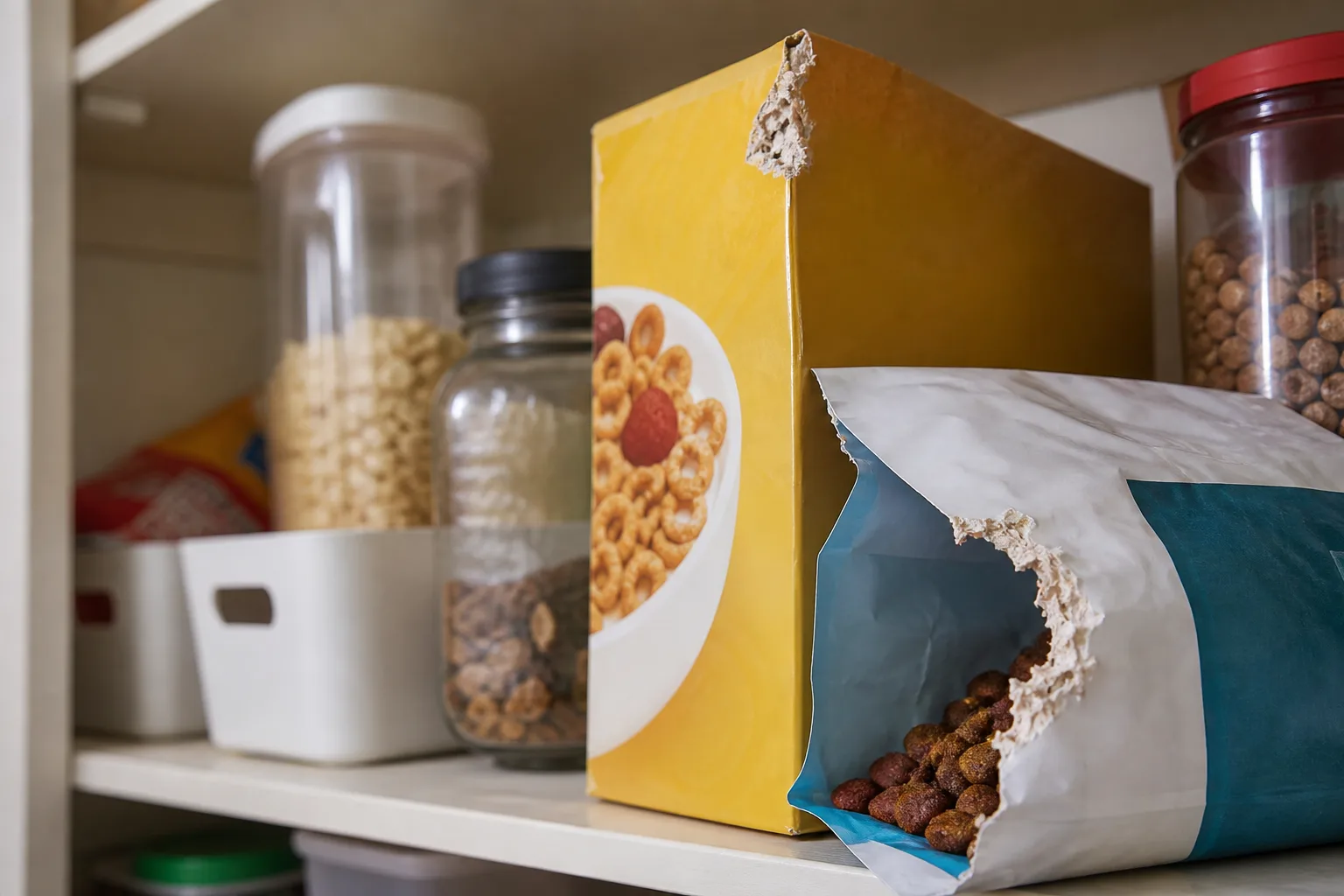
Look for several signs together rather than treating one clue as proof. Small, pointed droppings in drawers, cabinets, storage boxes, along walls, or near food suggest rodent activity, but they do not identify the species. Gnaw marks on cardboard, seed packets, pet-food bags, insulation, or wiring add weight to the diagnosis, especially when new marks appear after an area is cleaned.
Other clues include a musky urine odor, shredded paper or fabric, a nest in a quiet void, nighttime scurrying, and small caches of seeds or nuts. A useful monitoring trick is to clean a hard surface safely and then inspect it again later; the CDC’s rodent-control page notes that fresh droppings after cleaning suggest active rodent presence. Never create a test by spreading flour, disturbing a nest, or setting an unprotected trap where children or pets can reach it.
Daytime activity is not a reliable species test, but it can be a warning that rodents are under pressure or that activity is substantial. Treat repeated sounds, fresh waste, and damaged food as reasons to inspect and act. If the signs are inside walls, above a ceiling, or near a heating and cooling system, escalate rather than opening the structure yourself.
What to do in the first 24 hours
Start by closing the room or structure to children and pets. Do not sweep, vacuum, blow, or dry-brush droppings, urine, nests, or a dead mouse, and do not pick up a live mouse or nest to move it outdoors. If food packaging has been chewed or contaminated, set it aside for disposal rather than trying to wipe the outside and use the contents.
If the space is a closed cabin, shed, garage, or outbuilding, open doors and windows and leave the area for at least 30 minutes before beginning cleanup, following the CDC’s hantavirus prevention guidance. While you wait, contact a local health department or licensed pest professional if there is heavy contamination, a strong infestation, contaminated insulation, an air-duct concern, or a room that cannot be ventilated safely.
Next, photograph entry points and signs from a safe distance, then plan exclusion after the active problem is controlled. Sealing the wrong opening while a mouse is still inside can force it deeper into a wall or living area. The order is inspect, protect, control, clean, seal, and monitor—not seal blindly, then disturb the nest while searching for the animal.
Safe cleanup after droppings, nests, or a dead mouse
For a small, accessible amount of rodent waste, use the current CDC cleanup guidance as the controlling procedure. Wear rubber or plastic gloves. Prepare an EPA-registered disinfectant labeled for the job, or make a fresh bleach solution by mixing 1.5 cups of household bleach with 1 gallon of water, which is 1 part bleach to 9 parts water; never mix bleach with other cleaners.
Spray droppings and urine until they are very wet and let the disinfectant soak for 5 minutes or for the contact time on the product label. Pick up the material with paper towels, put the waste in a covered garbage can, then mop or sponge the hard surface with disinfectant. Wash gloved hands before removing the gloves, remove them, and wash bare hands with soap and warm water.
Treat a nest or dead mouse with the same wet-first principle. Spray the nest, carcass, surrounding area, and—if you are reusing it—the trap; let the disinfectant work, then place the material and used trap in a plastic bag. Tie that bag, place it inside a second bag, tie the second bag, and dispose of it in a covered outdoor garbage container or according to local health-department instructions.
Do not use a household vacuum as a shortcut after spraying. The sequence matters because vacuuming or sweeping before disinfection can aerosolize contaminated particles. Clothing and bedding should be laundered with hot water and detergent; porous or contaminated insulation, carpets, ducts, and upholstered items may need specialized handling rather than a quick wipe.
When cleanup is beyond a DIY job
Call a professional when the building has a heavy infestation, an enclosed crawl space or attic is full of waste, insulation is contaminated, rodents entered air ducts, or the cleanup would require a respirator and specialized protective equipment. CDC guidance recommends professional help for rodent evidence in heating and cooling ventilation systems, and heavy infestations require more than household gloves and a spray bottle.
Medical escalation is separate from pest escalation. If you have fever, severe muscle aches, fatigue, cough, shortness of breath, or chest tightness after a plausible rodent exposure, seek prompt medical care and state exactly when and where the exposure occurred. If you were bitten or scratched, wash the injury and contact a clinician or local health authority for situation-specific advice.
A prevention plan that works from outside in
The strongest deer mouse prevention plan combines exclusion, sanitation, and habitat management. No single scent, plant, gadget, or predator can create a mouse-proof yard. Work on the building first, then remove easy food sources, then change shelter immediately beside the structure, and finally monitor for new signs.
Seal openings and fix doors, vents, and utilities
Walk the exterior in daylight and again with a flashlight. Check foundation joints, siding corners, roof and attic vents, crawl-space screens, garage doors, pipe and cable penetrations, dryer vents, chimney openings, and door thresholds. Install tight-fitting door sweeps and repair damaged screens; use metal mesh, hardware cloth, mortar, or other rodent-resistant materials where a gnawable foam or plastic patch would fail.
Pay special attention to buildings that sit unused. Close garage and shed doors, keep cabin windows screened, and inspect vehicles or campers that have been stored for long periods. Exclusion works best when paired with monitoring: after sealing, check the same edges for new droppings, gnaw marks, or rub marks instead of assuming the first repair solved every route.
Remove food and shelter without stripping habitat
Store birdseed, livestock feed, pet food, and dry goods in hard-sided containers with tight lids. Clean spilled seed beneath feeders, take garbage out regularly, and do not leave pet food outdoors overnight. Move firewood, brush piles, dense weeds, and stored materials away from the building while preserving safe, intentional habitat elsewhere in the yard.
Mulch is a trade-off rather than a ban. Gardening Know How’s mulch guidance points out that straw, leaves, and wood chips provide useful garden benefits but can also create cover for rodents when applied too thickly or left in excess. Keep mulch at the depth plants need, pull it away from trunks and siding, trim vegetation that touches the structure, and use a clear inspection strip along foundations, doors, and vents.
Bird-friendly gardening also needs placement logic. Feeders can support songbirds while spilling seed beneath them, so place feeders away from doors and foundations, use a catch tray or low-waste seed, and clean the feeding area. The goal is not to remove all wildlife; it is to stop turning the building edge into a dependable food-and-shelter corridor.
Traps, bait, and professional control
For a small indoor infestation, snap traps are generally more predictable than improvised live-capture setups. Utah State University Extension recommends placing snap traps with the trigger toward a wall or baseboard, and UC IPM notes that traps should be spaced close enough to cover the active area. Use a small amount of fresh bait, keep traps away from children and pets, and check them frequently so a captured animal does not remain in place.
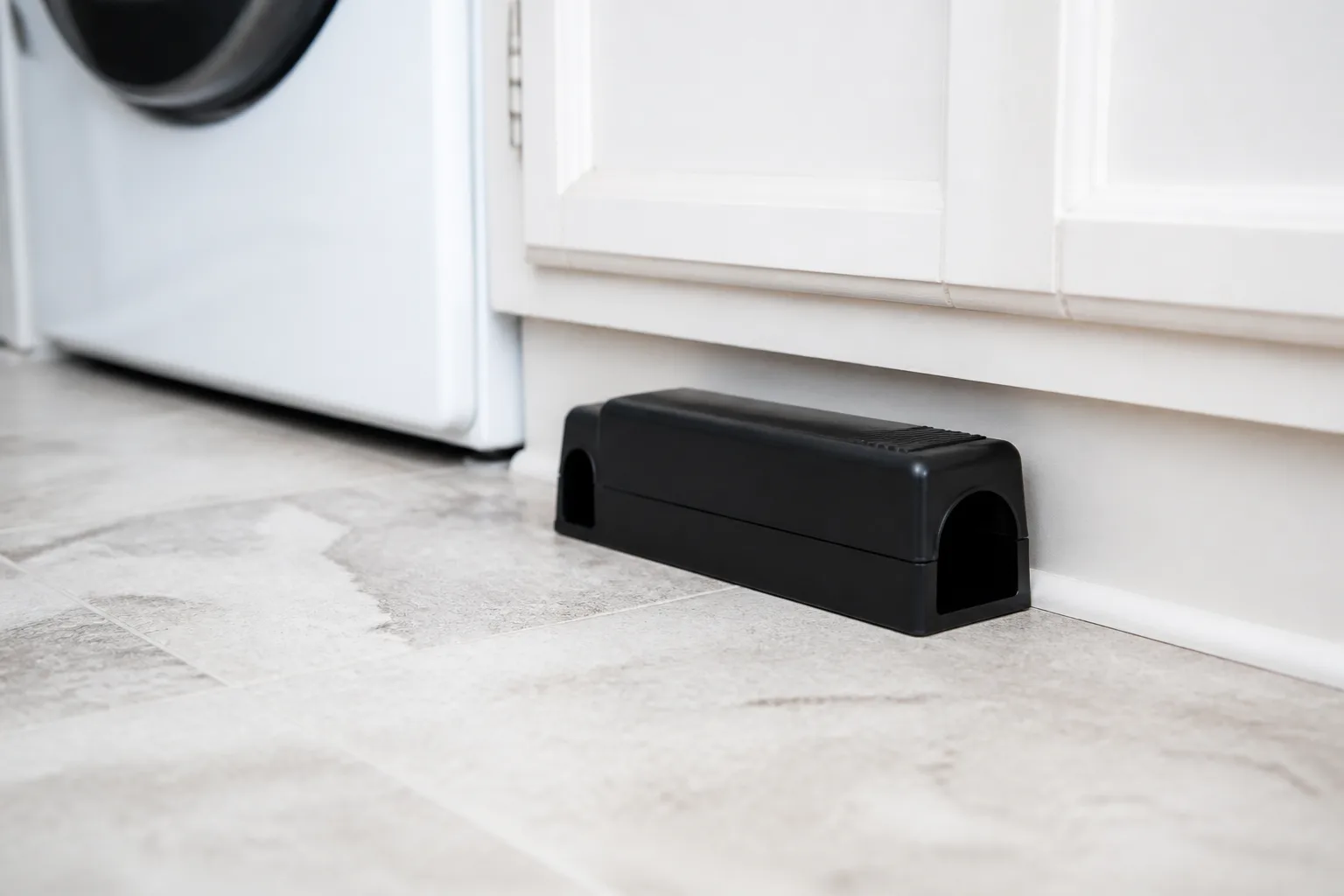
Do not choose a product simply because its package says “mouse.” UC IPM warns that product registrations and labels can differ by species and setting; in its residential guidance for deer mice, traps, exclusion, and habitat modification are the appropriate foundation, while rodenticides labeled only for house mice and rats should not be repurposed for deer mice. If you are considering any bait, read the current label, use only a tamper-resistant station where allowed, protect pets and wildlife, and follow local rules.
Poison can create a second problem when a rodent dies inside a wall, ceiling, vehicle, or crawl space. It also creates primary and secondary exposure risks for pets and wildlife that eat bait or a poisoned carcass. Those trade-offs are why a licensed professional is the better option for a large, repeated, or inaccessible infestation.
Why repellents and glue boards disappoint
Ultrasonic devices, electromagnetic gadgets, strong scents, and scattered “repellent” plants are not a reliable exclusion plan. UC IPM reports that commercial frightening devices and chemical repellents are not sufficiently effective to justify their expense, and Utah State University Extension cautions against claims for high-pitched or electromagnetic devices. A scent may change an animal’s movement briefly, but it cannot repair a door gap or remove a food cache.
Glue boards are especially poor choices for deer mice because a trapped animal may urinate and defecate while struggling, increasing the chance of contact with contaminated material. Live traps create their own handling and release problem and can become contaminated with feces and urine. If humane capture is important to you, discuss species-appropriate options with a licensed wildlife professional rather than improvising with a trap you cannot safely check, disinfect, and legally use.
Conclusion
The dangers of the deer mouse are real but specific. The most important risk is exposure to rodent waste, nesting material, or contaminated dust, especially in a closed structure where a person sweeps or vacuums before wetting the material with disinfectant. Lyme disease is a separate, indirect concern involving infected blacklegged ticks and mouse hosts, not a disease transmitted by touching a deer mouse.
Your best long-term plan is simple: keep mice out of occupied structures, secure food, reduce shelter beside buildings, monitor for fresh signs, and use traps or a licensed professional when needed. If you find droppings or a nest, slow down and use the CDC cleanup sequence. If illness follows a plausible exposure, tell a healthcare provider promptly. The careful response—rather than panic or casual cleanup—does the most to protect people, pets, and the surrounding garden.