Peperomia Hope Care: What Keeps It Full?
Learn Peperomia Hope care with a practical light, watering, soil, and propagation routine, plus fixes for leggy stems, root trouble, and common pests.
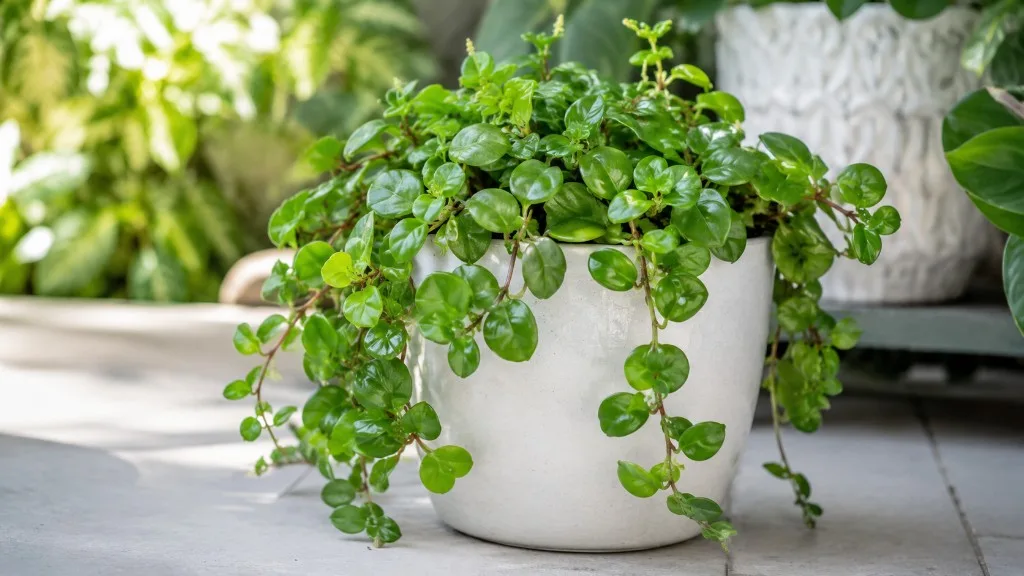
Peperomia Hope is a compact trailing houseplant with plump, rounded leaves and stems that look especially good draped over a shelf or hanging basket. It is forgiving when you miss a watering, but that resilience can mislead growers into keeping its small root system wet for too long.
The best routine is simple: give it bright filtered light, use a loose mix in a pot with drainage, and let the root zone partly dry before watering again. The details that matter most are the plant’s actual growth and the conditions in your room, not a universal weekly schedule.
Start with the plant you actually bought
Recognize the trailing hybrid—and common lookalikes
Peperomia Hope is sold as a small-leaved, trailing peperomia, typically with rounded green leaves carried in clusters along slender stems. The Royal Horticultural Society’s profile of Peperomia ‘Hope’ describes an evergreen trailing perennial with succulent stems and fleshy leaves; it lists hanging baskets and shelves as useful display positions. The plant is generally grown for foliage rather than showy flowers.
Plant labels are not always consistent. RHS treats the plant as Peperomia ‘Hope’, while many growers and retailers also use Peperomia tetraphylla ‘Hope’; Epic Gardening’s cultivar guide describes it as a hybrid of P. deppeana and P. quadrifolia. Names can vary across nurseries, so check the label and compare the growth habit and leaf clusters instead of relying on a common name alone.
That distinction matters when you look up advice. Peperomia is a large genus with different leaf shapes and growth habits, and care details for an upright baby rubber plant or a striped watermelon peperomia may not map perfectly onto a fine-stemmed trailing Hope. Use broad genus advice for the basics, but favor sources that identify Hope or the closest matching cultivar when a claim is very specific.
Give Peperomia Hope bright, filtered light
Place the plant where it receives strong indirect light for much of the day. A spot near an east-facing window often provides gentle morning brightness; near a brighter south- or west-facing window, move it back from the glass or filter direct rays with a sheer curtain. The RHS peperomia-growing guide notes that summer sun can scorch foliage while weaker winter light can be helpful.
It can survive in a darker room, but survival and attractive growth are different goals. In low light, stems often lengthen between leaves, new growth may become smaller, and the plant can lean toward a window; brightening the position helps new growth stay denser, although old stretched sections will not shorten again. Rotate the pot occasionally so the trailing canopy does not grow heavily in one direction.
Read stretching and scorch as different signals
Long bare gaps between leaves point toward inadequate light more often than overwatering, especially when the leaves remain firm and the mix dries normally. Move the plant closer to filtered light over several days rather than placing it in strong noon sun at once; a sudden change can add sunburn to the existing problem. A modest grow light can help in a windowless or very shaded room, but it should supplement a realistic location rather than be treated as a substitute for any observation of the plant.
Pale, faded, or sharply tan patches on the window-facing side suggest direct-sun injury. In that case, move the plant slightly back or add a curtain and leave the watering routine alone unless the mix also stays wet or becomes extremely dry. Changing both light and watering at once makes it harder to tell which adjustment helped.
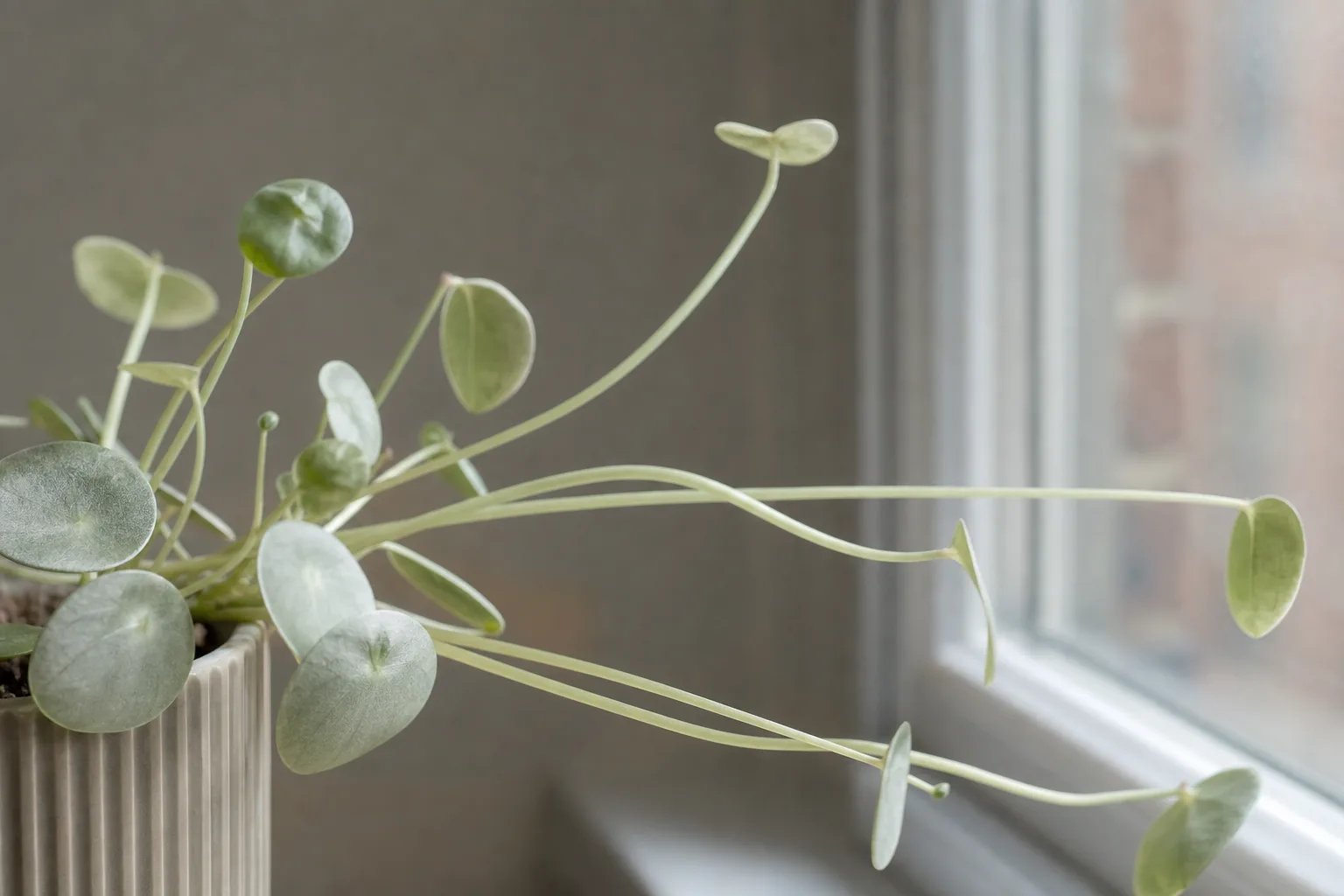
Water after the mix partly dries
Peperomia Hope stores some water in its fleshy leaves and stems, so it tolerates a short dry spell better than a persistently soggy root zone. Water when the upper layer of mix has dried and the pot feels lighter, then water thoroughly until excess drains through the holes. Empty the saucer or decorative cachepot after drainage; do not let the pot sit in runoff.
The RHS cultivar profile recommends moderate watering in summer and less in winter, while Epic Gardening’s care guide describes letting the upper inch dry between drinks. Together, those points support a dry-down check rather than watering by the day of the week. A warm, bright room may use water faster than a cool winter corner, even when both plants are Peperomia Hope.
If you are unsure, check before you pour. Push a clean finger into the mix near the edge of the pot, or compare the weight of a recently watered pot with one that has dried; the surface can feel dry while deeper mix is still damp. In a small pot, water when the upper portion has dried and the lower root area is no longer wet; avoid letting the whole root ball remain bone-dry for extended periods during active growth.
Check the root zone, not just a calendar
Watering frequency changes with light, temperature, container size, the mix, and season. A small terracotta pot in a bright window may dry quickly; a large plastic pot in a dim room can stay damp much longer. If you notice yourself watering more often, first check whether the plant has filled its pot or the mix has become compacted rather than automatically moving to a bigger container.
Water from the top until the full root zone is wetted, then let it drain. A few splashes on the surface can leave lower roots dry while keeping the stem base constantly damp, and routine misting does not replace root watering. If the medium has become hydrophobic and water runs down the sides, soak the pot briefly from below, then let it drain completely before returning it to its cachepot.
Use room-temperature water when convenient, especially if your tap water is very cold. The RHS notes that peperomias can be sensitive to fluoride in tap water, which may contribute to brown leaf tips; if that pattern persists despite sound watering and light, try rainwater or filtered water and compare new growth. Tip browning has multiple possible causes, so water quality is one clue rather than a diagnosis by itself.
Build a breathable mix and choose a modest pot
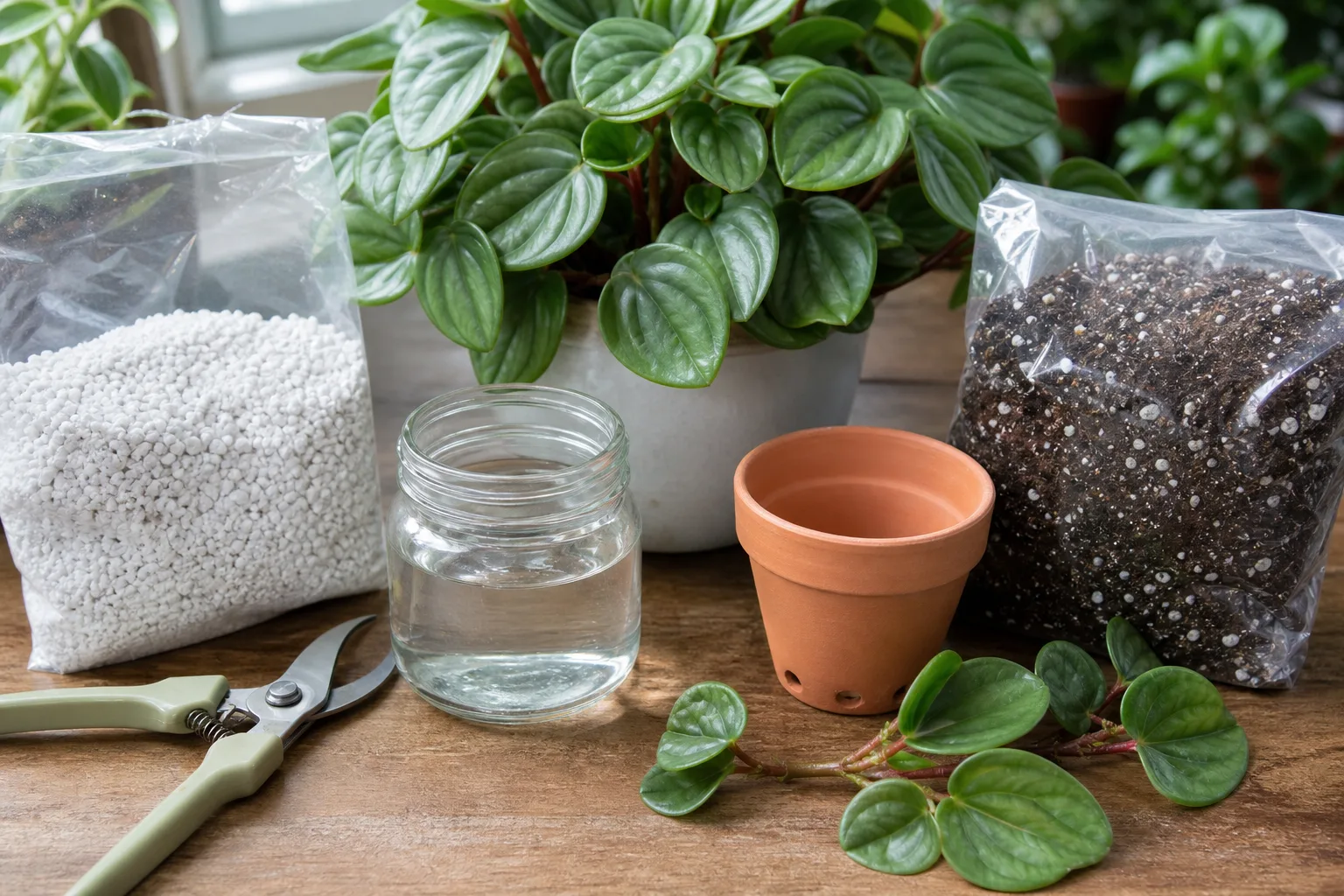
The goal is a mix that holds a little moisture but lets air reach the roots after watering. Start with two parts quality indoor potting mix and one part perlite, then add a small portion of fine orchid bark if your room is cool or the mix stays wet for too long. The RHS’s broader peperomia guidance also describes a loose, free-draining mix, while BHG’s peperomia guide warns that saturated, poorly drained soil can lead to root rot.
You do not need to chase an exact soil pH for a healthy houseplant. A bagged mix that remains airy, a drainage hole, and a pot that is not oversized are more useful controls than adding amendments to hit a number. Avoid dense garden soil and do not put stones in the bottom of a pot as a fix for poor drainage; they reduce the useful depth of the root zone without making a blocked container drain.
Choose a container only slightly wider than the root ball, with at least one open drainage hole. A very large pot surrounds the small root system with extra mix that can stay wet long after the roots have used the water, raising the risk of root decline. A hanging planter is fine if it drains freely and you can remove or empty the inner pot when watering.
Repot when roots or soil condition say it’s time
Peperomia Hope grows at a moderate pace and does not need frequent repotting just because a calendar year has passed. The RHS peperomia guide suggests repotting in spring when roots have densely filled a container or begin emerging through the drainage holes; the same signs are more useful than a fixed schedule for this cultivar. A plant that dries unusually fast, becomes unstable, or has a mix that no longer absorbs water evenly may also need inspection.
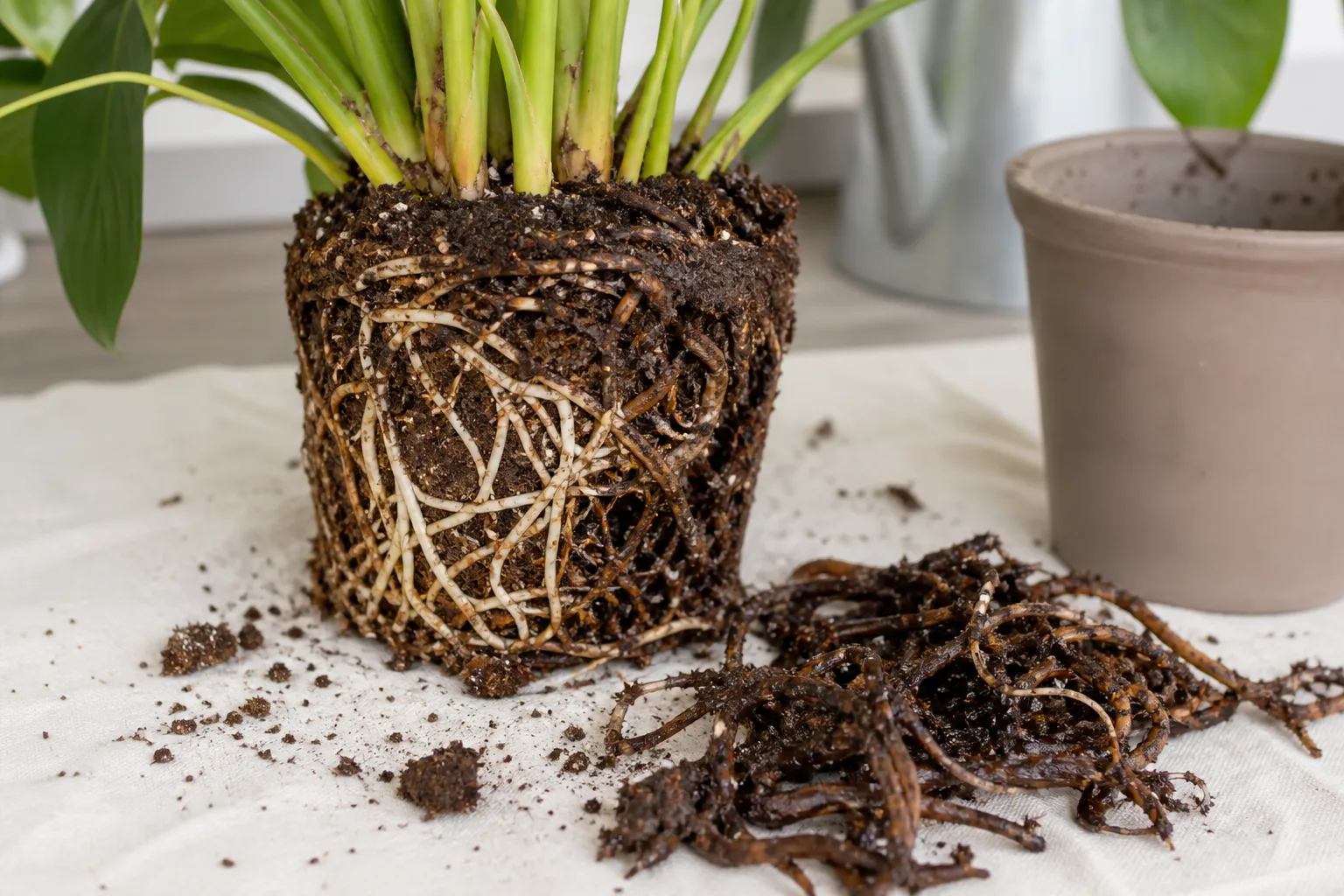
When you do repot, move up only one pot size and keep the crown at the same height in fresh mix. Loosen the outer roots gently instead of combing the entire root ball bare, because fine roots can break during unnecessary handling. After repotting, water once to settle the mix, drain thoroughly, and give the plant bright indirect light while it adjusts.
Keep warmth steady and humidity reasonable
Peperomia Hope prefers ordinary warm indoor conditions and should be protected from cold drafts, open winter windows, and sudden temperature swings. The RHS lists it as a houseplant for sheltered indoor or conservatory growing; Epic Gardening places its comfortable range around 65–75°F, while the broader RHS peperomia guidance allows a warm room of roughly 65–86°F. A stable room temperature is more important than hitting one perfect number.
Average household humidity is usually adequate. The fleshy leaves are not a signal that the plant needs a constantly wet leaf surface, and Epic Gardening cautions that misting Peperomia Hope’s leaves and stems can encourage rot. If winter heating makes the air very dry and the plant shows persistent crisp edges despite correct watering, a small humidifier near the group of plants is a more controllable option than daily spraying.
Treat the plant as an indoor tropical, not a frost-hardy patio perennial. If you move it outside in warm weather, wait until nights are reliably mild, place it in sheltered shade, and acclimate it gradually; strong sun and wind can damage the leaves. Bring it inside before temperatures drop, and check the stems for hitchhiking pests before it rejoins other houseplants.
Feed lightly, prune to shape, and treat flowers as optional
A balanced liquid houseplant fertilizer can support active growth from spring through summer. Follow the product label, and if the plant is small or the mix already contains fertilizer, begin at the lower end of the labeled rate; extra feed will not compensate for poor light or wet roots. The RHS profile recommends monthly balanced feeding during the growing season, then less intervention in winter when growth slows.
Do not fertilize a completely dry root ball or a plant that is actively declining. Water first if the mix is dry, and pause feeding if leaves are yellowing while the soil stays wet, roots are damaged, or growth has stalled in winter. Resume only after the cause is corrected and new growth shows that the plant has recovered.
Pruning is optional and mainly controls shape. Use clean scissors to shorten an overlong stem just above a leaf node; side shoots may emerge near the cut, and the removed healthy section can become a cutting. Small greenish flower spikes are normal for peperomias, though they are not the main ornamental feature; remove them if you dislike their appearance, but there is no need to cut them off for the plant’s health.
Propagate Peperomia Hope with stem cuttings
Stem cuttings are the most dependable way to make another trailing Hope. The RHS recommends propagating peperomias in spring and summer, and Epic Gardening’s guide to Hope describes using a clean cutting that includes a stem node, the point where leaves attach and roots can form. Start with a healthy, actively growing plant rather than one already weakened by rot or pests.
Use clean scissors or pruners and cut a piece with at least one or two nodes and a few firm leaves. Remove leaves from the portion that will sit below water or inside the mix, but leave enough foliage above the medium to keep the cutting photosynthesizing. A cutting with no node may stay green for a while without producing a new rooted plant.
Root a cutting in water
Set the lower node in a clean glass with enough water to cover it, keeping leaves above the water line. Place the glass in bright indirect light, away from direct sun that can heat the water, and replace the water if it becomes cloudy or develops an odor. Check the cutting every few days rather than tugging at it; new roots are delicate.
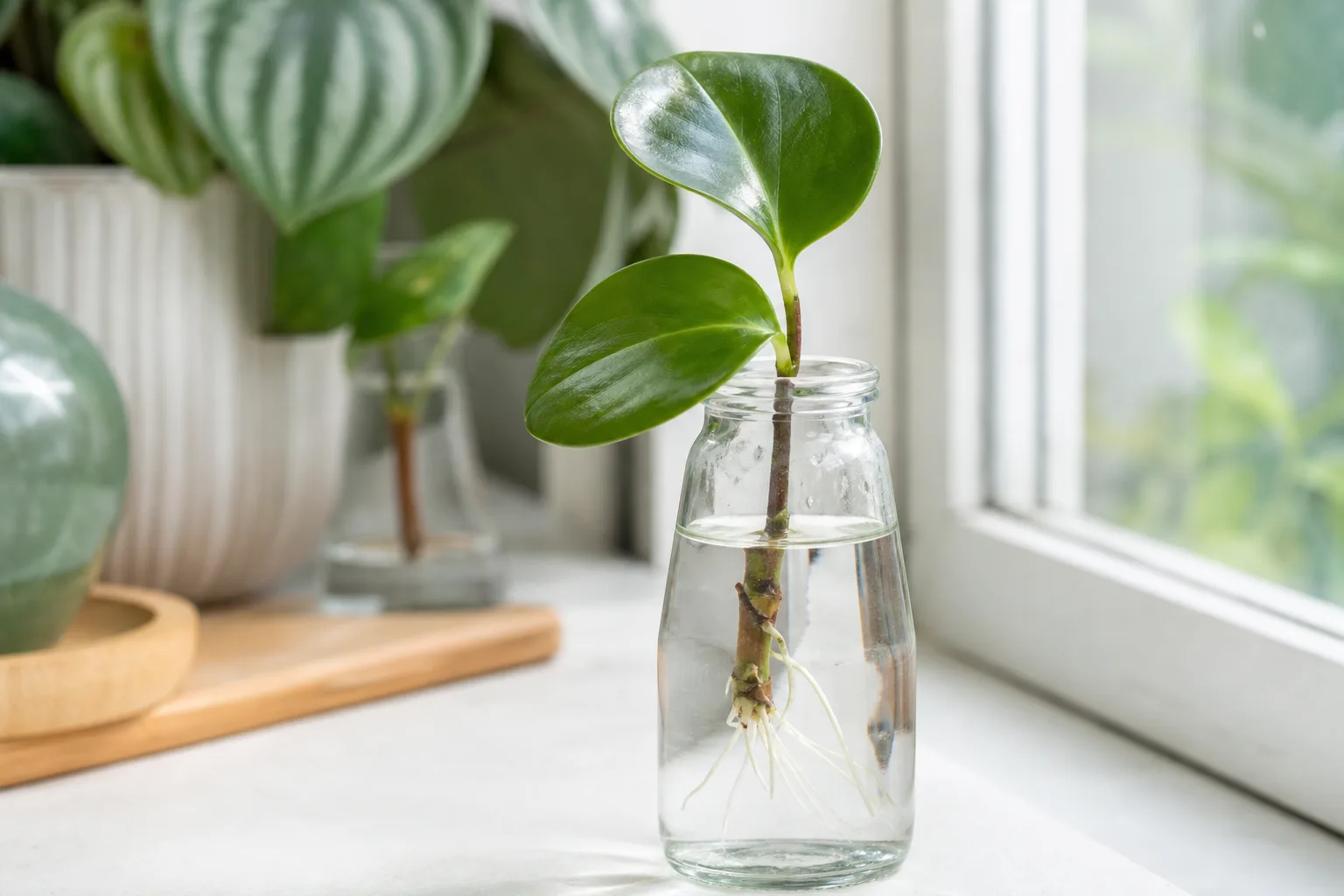
Once several roots are visible and long enough to handle, move the cutting into a small pot of lightly moist, airy mix. The general BHG guide to propagating houseplants also cautions against leaving water-rooted cuttings in water after they are ready for soil.
Water the new pot thoroughly once, allow it to drain, and then use the same dry-down cues as you would for a mature plant. A water-rooted cutting may take time to adjust to soil, so do not keep the mix saturated to compensate for the transition.
Root cuttings in potting mix
For direct-to-mix propagation, insert the lowest node into a small pot of pre-moistened, well-draining mix and firm the medium gently around the stem. Keep it evenly but lightly moist—not waterlogged—and place it in bright indirect light. A clear cover can reduce moisture loss in a dry room, but it must not press on the leaves and should be opened regularly so stagnant, wet air does not collect around the cutting.
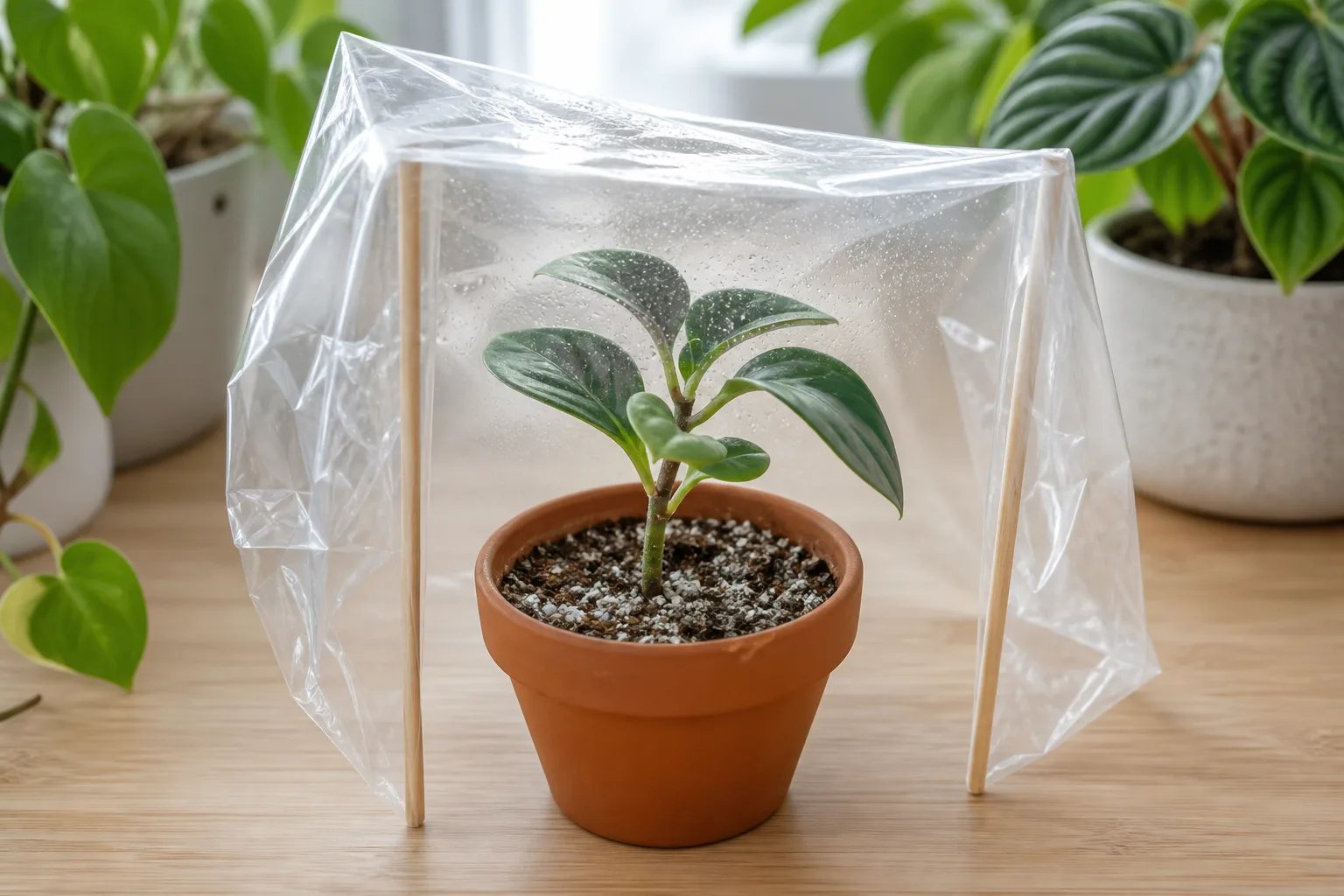
Look for new leaf growth and gentle resistance when you tug very lightly near the base; those clues suggest roots are developing, though timing varies with season and room conditions. Once the cutting is established, remove any cover and let the medium dry somewhat farther between waterings. To make a fuller basket, root several cuttings and plant them together after they have roots rather than burying a handful of unrooted stems in the mother plant’s pot.
Diagnose common problems before changing care
Many Peperomia Hope problems look similar at first. A yellow leaf can follow old age, root stress, direct sun, or an inconsistent watering pattern, so check the whole setup before making a correction. Note where the change appears, whether the soil is wet or dry, how quickly the pot loses weight, and whether the affected leaves are firm, soft, or crisp.
Inspect a new plant closely before placing it near a collection. Look at stem joints, leaf undersides, and the soil surface for cottony mealybugs, scale bumps, fine webbing, or small flying insects; the RHS profile lists mealybugs as a possible pest, and BHG also advises monitoring peperomias for common houseplant pests. Isolate an affected plant first so you can check nearby pots and avoid spreading pests through shared tools or water.
Distinguish wet-root decline from thirst
Overwatering is not just “too much water at once”; it usually means roots stay in a wet, oxygen-poor mix for too long. Yellowing lower leaves, soft stems near the soil, a sour smell, or mix that remains damp for many days make root stress more likely than simple thirst. If several clues point that way, unpot the plant carefully and inspect the roots rather than adding fertilizer or watering again.
Healthy roots are firm, while rotten roots are often brown or black, soft, and easy to pull apart. Trim only the clearly damaged parts with a clean tool, discard the sour saturated medium, and repot what remains in a clean, appropriately sized container with fresh airy mix; if most roots have collapsed, take healthy stem cuttings as a backup. Afterward, wait until the medium begins to dry before watering again, and correct the underlying cause such as a blocked hole, oversized pot, or compacted soil.
Thirst usually presents differently: the mix is dry through much of the pot, the container is light, and leaves may feel less firm rather than mushy. Water fully and let it drain, then observe whether the leaves recover over the next day or two. If the soil is still moist, do not use drooping alone as a reason to water; cold roots or damage can also reduce turgor.
Correct light stress, brown tips, and pests
Sparse, stretched stems with healthy firm leaves usually need more light, not more fertilizer. Move the plant to a brighter filtered position and wait for the next few growth points to show whether spacing improves; old internodes will remain long. If leaves instead have pale scorch patches, reduce direct sun and keep the root zone consistent while damaged foliage is replaced naturally.
Brown tips deserve a short investigation rather than an immediate diagnosis. Check whether the plant is close to a hot window or radiator, whether the mix swings from very dry to soaking wet, whether fertilizer salts have accumulated, and whether your water supply contains fluoride; the RHS guide notes fluoride sensitivity among peperomias. Change one likely cause at a time and judge the result from new leaves, since already-brown tissue will not turn green again.
For pests, isolate the pot, remove visible insects with a damp cloth or rinse, and inspect it again over the following weeks. If you use an insecticidal soap or another labeled houseplant treatment, follow its label for the plant, room, and repeat interval, and test a small area first if the foliage is delicate. Do not mix treatments or apply a product more often than directed.
Pet households should also verify the exact plant name. The ASPCA listing for “Trailing Peperomia” identifies Peperomia prostata as non-toxic to cats and dogs, but that entry names a different species from the Hope cultivar; it is not a blanket certification for every plant sold under a peperomia label. When pet safety is decisive, confirm the botanical identification with the seller and check the exact species with an authoritative veterinary or poison-control resource.
Adjust care as the seasons change
Use seasonal change to adjust how often you check the pot, not to impose a rigid watering timetable. In spring and summer, brighter light and active growth usually mean faster dry-down; check the soil more often and feed lightly if the plant is making healthy new leaves. If it sits in a cooler, dimmer room, it may use water slowly even in July.
As autumn and winter bring shorter days, move the plant into the brightest indirect light available and give it more time between waterings if the root zone stays damp longer. Pause fertilizer when growth slows, keep the foliage away from cold glass and heating vents, and avoid repotting unless there is a genuine root or mix problem. A winter watering interval may be longer than a summer one, but the dry-down test still decides.
| Season | What to check | Routine adjustment |
|---|---|---|
| Spring | New growth and roots filling the pot | Resume modest feeding; propagate or repot if needed |
| Summer | Direct sun, heat, and pot dry-down | Filter harsh afternoon rays; water when the mix partly dries |
| Fall | Slower growth and changing light | Reduce feeding and check moisture before each watering |
| Winter | Cold drafts and slow evaporation | Use the brightest suitable window and water more sparingly |
Conclusion: make a forgiving routine repeatable
Peperomia Hope does best when its fleshy leaves are paired with bright filtered light and roots that can breathe between waterings. A modest pot, airy mix, stable warmth, light seasonal feeding, and occasional pruning are enough for a healthy trailing plant; high humidity and elaborate equipment are not prerequisites in most homes.
When the plant changes, read the pattern before reaching for a remedy. Wet soil and soft stems point you toward roots and drainage, stretched growth toward light, and brown tips toward a few possible stressors; checking one condition at a time makes the next step clearer. With that routine, Peperomia Hope can be an easy plant to keep and a straightforward one to propagate.