24 Winter-Friendly Plants for Cold-Weather Gardens
Explore 24 cold-tolerant flowers, groundcovers, shrubs, and ferns, with honest notes on winter foliage, hardiness, site needs, and mild-climate limits.
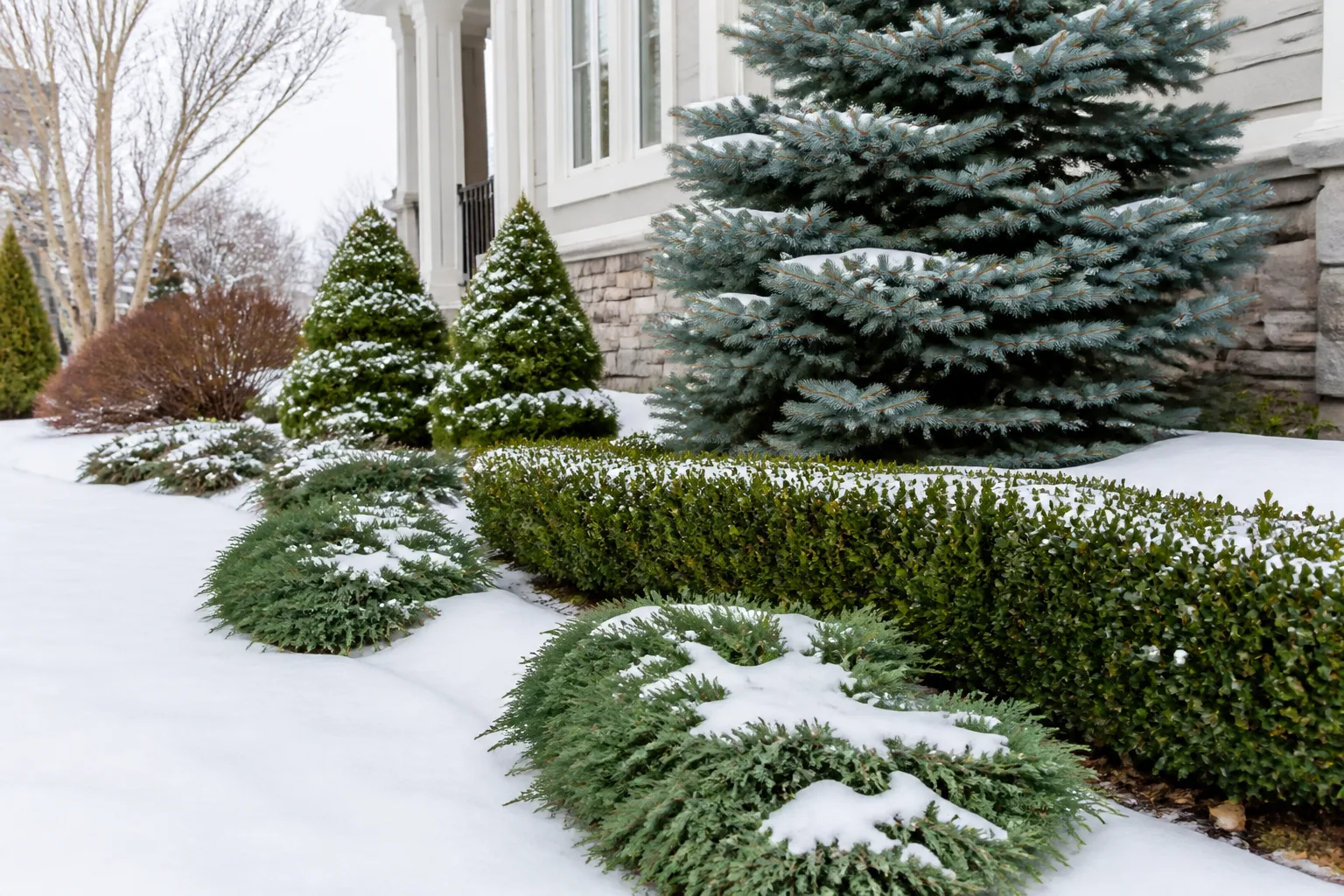
A plant can survive a cold winter without looking green or flowering through it. That distinction matters when you are planning a winter garden: some plants keep foliage, some rest underground and return in spring, and others flower only during a mild spell or in a comparatively warm region. The 24 choices below cover all three roles, with notes on where each one fits and where it can disappoint.
Start with your winter, not the plant list. Check the expected hardiness range for the exact species or cultivar, then match it to your soil, light, wind exposure, and drainage. A plant that is hardy in a dry, sheltered garden may struggle in a wet bed that repeatedly freezes and thaws. In pots, roots face colder air on more sides than they would in the ground, so a plant’s in-ground hardiness rating is not a guarantee of container survival.
What “winter-friendly” really means
A plant can be “winter-friendly” in several ways. Evergreens hold leaves or needles; semi-evergreens may lose foliage in a severe winter; herbaceous perennials disappear and return from their roots; and winter bloomers open flowers during a mild spell. A dormant snowdrop can be cold-hardy even when it is invisible through much of winter.
The USDA Plant Hardiness Zone Map estimates whether a perennial or woody plant can survive the average annual extreme minimum temperature in a location. Its 2023 edition uses 30-year weather data and 10-degree zones with 5-degree half-zones, but it cannot predict every cold snap, summer heat, wind, or soil condition. Use it as a first filter, then check the exact variety (USDA Agricultural Research Service). A sheltered courtyard, snow cover, or wall can buffer exposure; an open slope can intensify it. Penn State Extension recommends matching plants to the site and choosing seasonal effects such as foliage, berries, branches, and texture (Penn State Extension).
Check your zone and garden conditions before choosing
Before buying, note the bed’s winter sun, standing water, wind, road salt, and roof runoff. A deciduous tree may shade a bed in summer but let in winter light. Then decide whether you want foliage, flowers, or structure. Winter flowering may mean only a mild-weather window; in colder regions, many “winter bloomers” are early-spring plants.
Labels can conceal an important difference: a plant may survive while losing leaves, flower buds, or stems. That variation is greater near the cold edge of its range, and cultivar matters. Cold-climate design also relies on form and foliage, not continuous flowers; Northern Gardener describes winter interest as a mix of shapes and textures (Northern Gardener). Better Homes & Gardens also notes that the winter-flowering palette broadens in warmer southern regions, reinforcing why local climate matters (winter-flowering plant guide, cold-hardy perennial guide).
24 plants for winter gardens
The plants are grouped by their most useful winter role. Many bloom outside deep winter or keep foliage only in some climates. Use the notes to choose plants for the job you need, rather than expecting every selection to stay green and flower during the same weeks.
1. Flowers that bridge winter and spring
These selections bring buds, flowers, or early-season color to mild stretches, but flowering dates shift with latitude, snow cover, and exposure. In the coldest regions, think of them as early-spring plants that tolerate winter, not as guaranteed midwinter blooms.
1. Camellia (Camellia spp.) — Camellias provide glossy evergreen leaves and showy flowers in fall, winter, or spring, depending on species and cultivar. They are best treated as choices for mild-winter gardens or sheltered sites, not as universal cold-climate plants. NC State lists Camellia sasanqua for roughly zones 7a–9b and advises shelter from winter winds and cold. Give it acidic to neutral, well-drained soil and protect flower buds from exposure; colder winters can injure buds or the shrub itself (NC State Extension Plant Toolbox).
2. Hardy cyclamen (Cyclamen coum) — Choose the hardy species C. coum for a woodland edge, rock garden, or shaded bed where its small flowers can appear in late winter or early spring. It rests during part of the year, so mark the planting rather than disturbing the soil when it vanishes. It needs sharply drained soil and usually performs best where summers are not excessively hot and wet. Do not confuse hardy outdoor cyclamen with florist’s cyclamen, which is generally grown as a houseplant. Cyclamen species are toxic to pets if eaten; check the ASPCA entry and keep bulbs and plants out of reach (ASPCA Animal Poison Control).
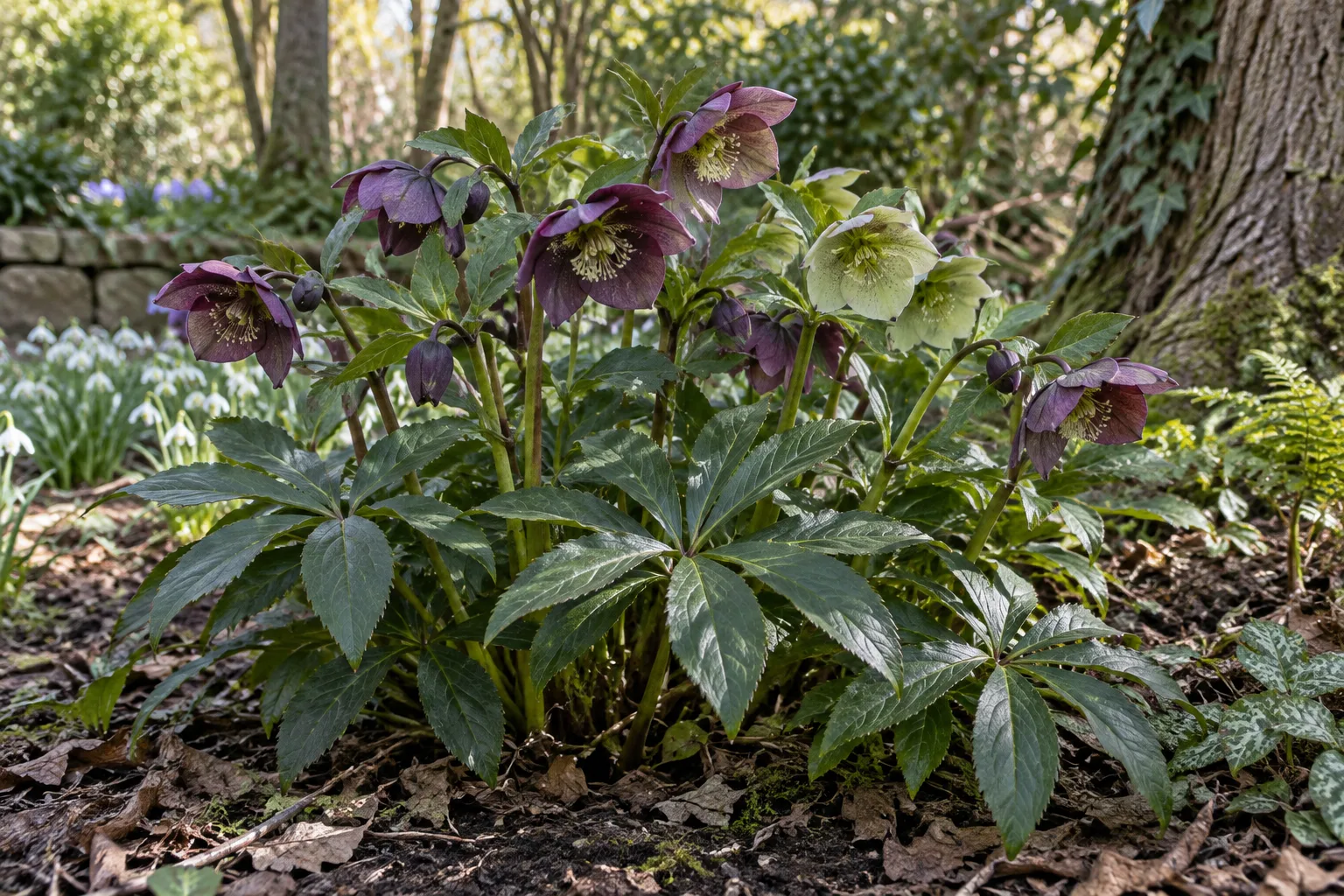
3. Hellebore (Helleborus spp.) — Hellebores are dependable shade perennials whose nodding flowers often open in late winter or early spring. Their foliage can remain evergreen in mild areas but may be damaged or die back during severe cold, then regrow. Site them in part shade with organic, well-drained soil; avoid a low spot that stays saturated in winter. NC State notes that Lenten rose may be evergreen in warmer climates and deciduous in colder ones. Hellebores are toxic if ingested and may irritate skin, so do not let children or pets chew them and wear gloves if you are sensitive to plant sap (NC State Extension Plant Toolbox).
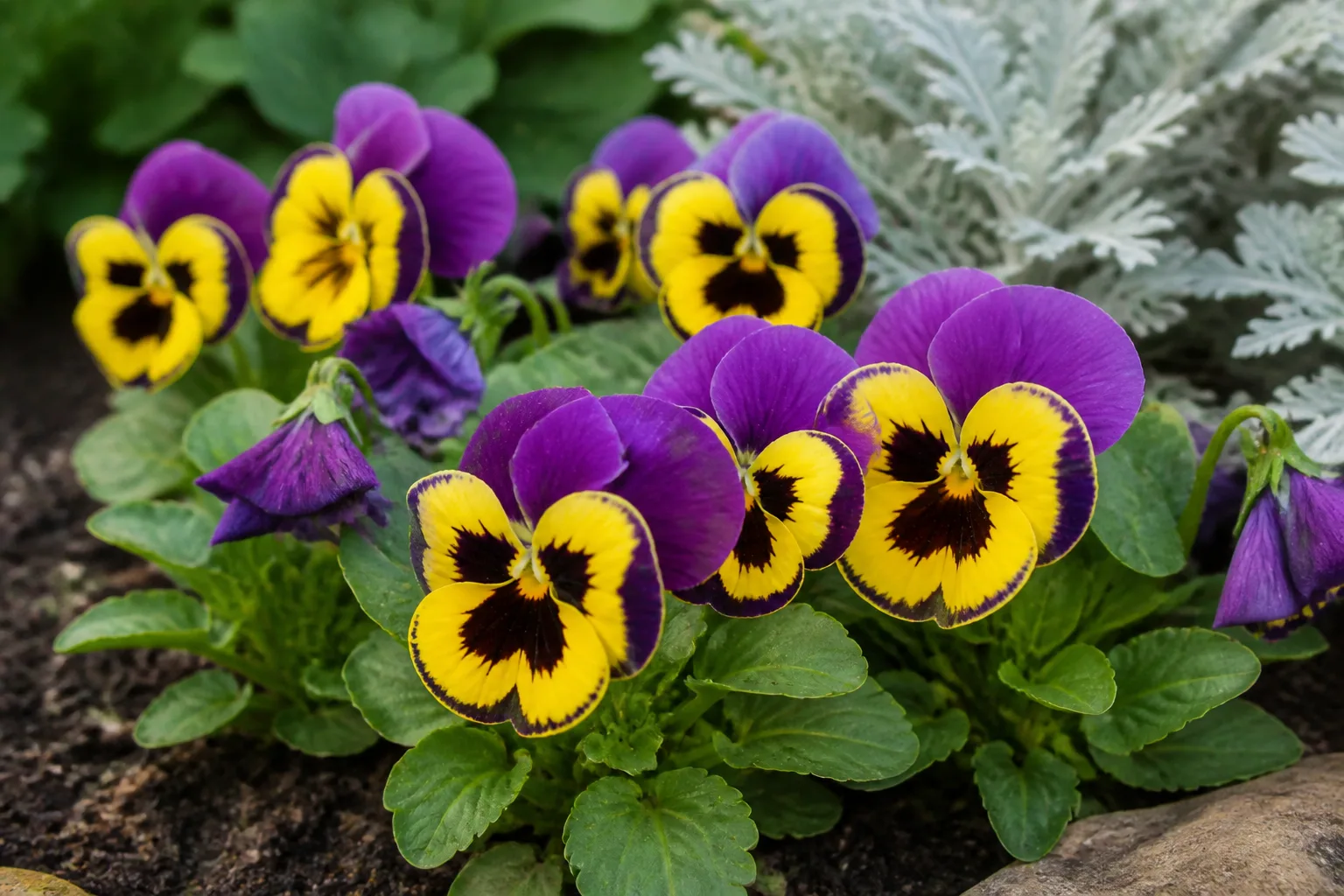
4. Winter pansy (Viola × wittrockiana) — Pansies are cool-season bedding plants that tolerate frost and can flower through stretches of mild weather. They are usually grown as annuals, so their ability to survive a hard winter depends on cultivar, drainage, and local climate. Flowers may pause during a freeze and return when temperatures rise. Plant them in sun to part shade in soil that drains well, and use them for containers or bed edges where you can enjoy their color up close. In colder areas, treat them as fall-to-spring annuals, not permanent perennials.
5. Primrose (Primula vulgaris) — Primroses add early spring color in cool, lightly shaded beds. They prefer humus-rich soil that stays evenly moist but does not become waterlogged; prolonged summer heat can shorten their life, especially in warmer regions. NC State recommends afternoon shade in hot climates and consistent moisture with good drainage. Plant them where spring flowers are visible, and avoid burying the crown under a thick winter mulch. They are a better fit for cool-season display than for year-round evergreen foliage (NC State Extension Plant Toolbox).
6. Snowdrops (Galanthus nivalis) — Snowdrops are small bulbs that can push flowers through late-winter soil or snow, then go dormant after spring. Plant bulbs in fall in a spot with spring sun and summer shade, such as beneath deciduous trees. They dislike hot, humid summers and can decline at the warm edge of their range. Let leaves yellow naturally after flowering so the bulbs can replenish; do not mow or cut the foliage while it is green. The bulbs are toxic if eaten in quantity, so mark their location and keep them away from children and pets who might dig or chew (NC State Extension Plant Toolbox). They are a seasonal flowering layer, not a groundcover that remains visible all year.
7. Rock cress (Aubrieta spp.) — Rock cress makes a low mat for sunny walls, rock gardens, and the front of a well-drained border. It produces a strong flush of spring flowers and may retain some foliage in mild winters, but foliage persistence is climate-dependent. Drainage is essential: a wet, cold crown is more likely to fail than a dry, rocky planting. Trim lightly after the main bloom if the mat becomes untidy, but avoid cutting into old woody growth. Use it as an edging plant where water can escape quickly.
8. Hepatica (Hepatica spp.) — Hepatica is a slow, small woodland perennial for dappled shade and humus-rich soil. Its flowers can open in early spring, sometimes before many other woodland plants emerge. Leaves may persist through mild winters but can look bronzed or ragged after cold spells. It is not a fast filler; let a colony establish and keep the surrounding soil from drying during its active season. Choose it for a quiet woodland corner rather than a high-traffic bed that will be dug or raked frequently.
9. Heath and heather (Erica and Calluna spp.) — These low shrubs bring fine evergreen or semi-evergreen foliage and, depending on species and cultivar, flowers from winter into spring or in other seasons. Winter-flowering Erica carnea is generally the more reliable choice for cold-season bloom; many Calluna vulgaris cultivars flower in summer or fall instead. Both need acidic, well-drained soil and sun. A common mistake is to plant them in heavy, alkaline soil and assume their cold tolerance will compensate. Check the cultivar’s bloom season and hardiness before buying.
2. Low perennials and groundcovers
Groundcovers help a winter garden feel planted even when flowering perennials are asleep. Their performance depends on drainage and local cold: “evergreen” may mean persistent foliage in one region and seasonal dieback in another.
10. Bergenia (Bergenia spp.) — Bergenia’s broad, leathery leaves add substance to part-shade borders, and some cultivars turn red or bronze in cold weather. Foliage can be evergreen or semi-evergreen depending on winter severity; cold damage does not necessarily mean the crown is dead. Give it moisture-retentive but well-drained soil and enough room for its large leaves. Remove only leaves that have collapsed or rotted in spring. It works well as a textural contrast beside fine-leaved bulbs and ferns.
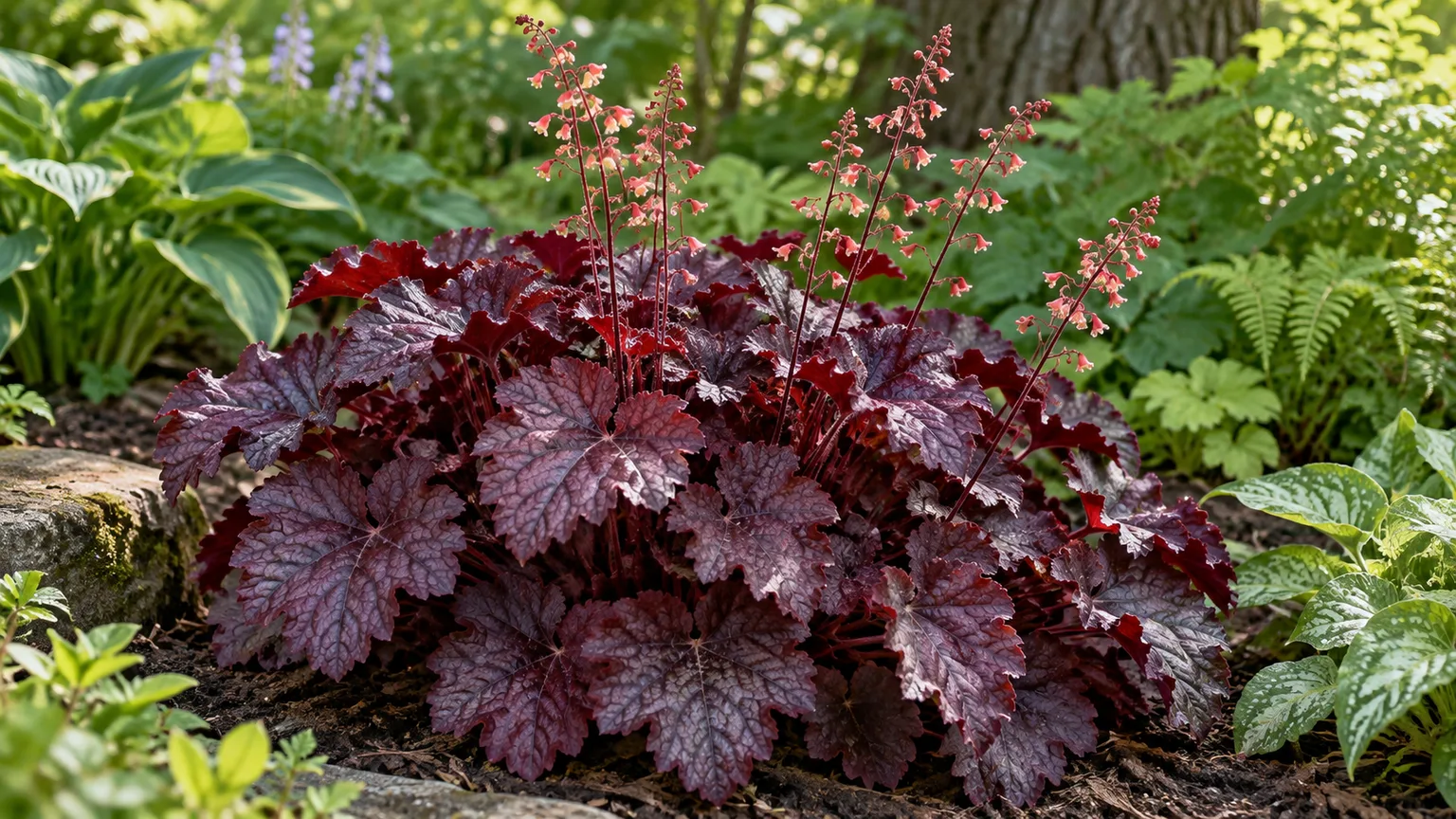
11. Coral bells (Heuchera spp.) — Coral bells are grown mainly for colored foliage, which may persist through winter in milder locations and become tattered or dormant in colder ones. Cultivars differ considerably, so select one recommended for your region rather than judging by a nursery photo. Plant with the crown at or slightly above soil level in well-drained soil; repeated freezing and thawing can heave shallow crowns. They suit part shade, though leaf color and cultivar preferences vary. Use them in small groups near paths where foliage can be seen.
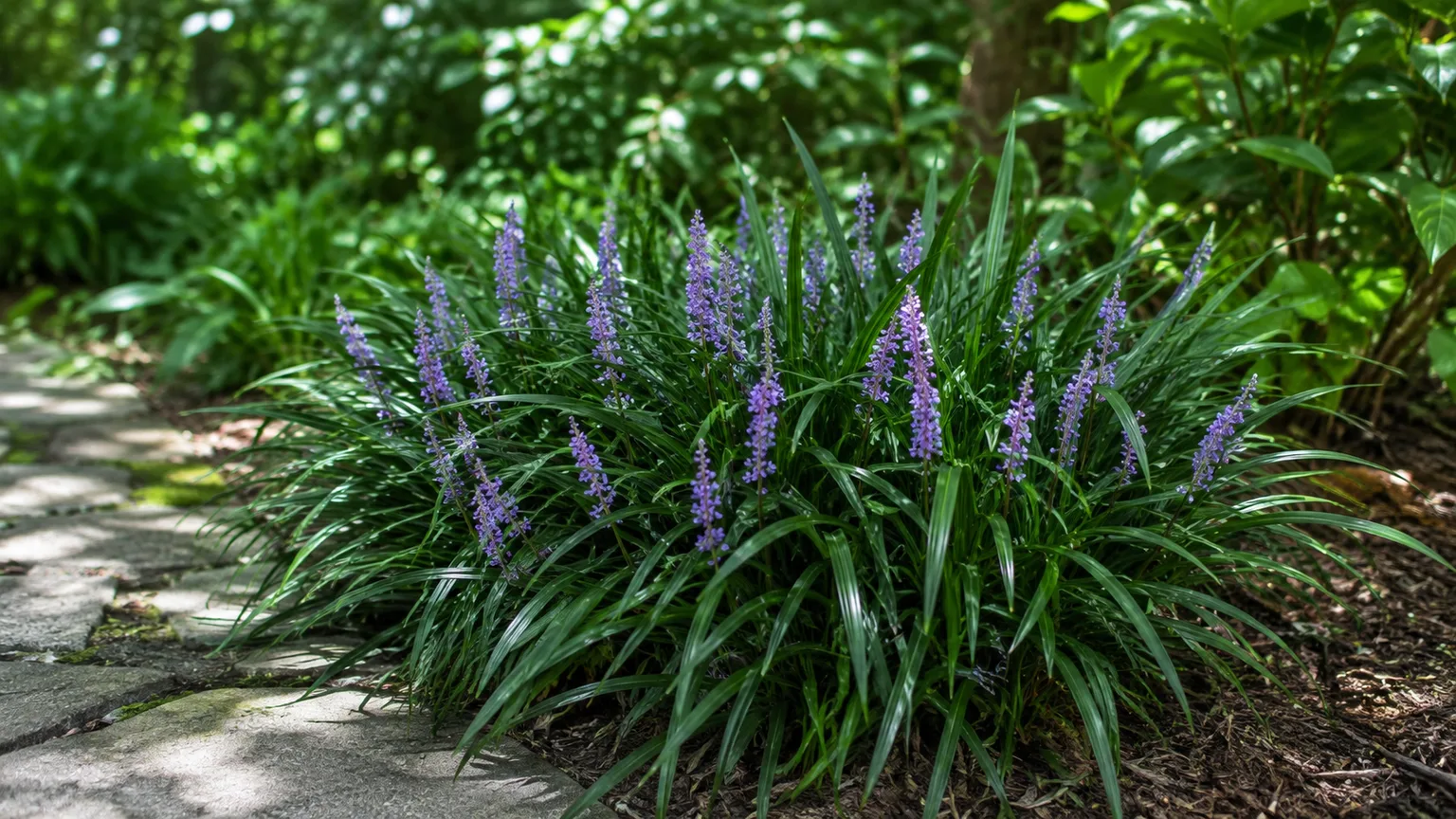
12. Liriope (Liriope muscari) — Liriope forms a grassy-looking clump with evergreen or semi-evergreen leaves in warmer regions and late-summer flower spikes. It can die back or look ragged in colder winters, then return from the crown if the site is suitable. Choose it for a mild-climate border or shaded foundation planting rather than promising green foliage in the coldest gardens. Give it space to spread and trim old leaves in late winter before new growth emerges. It tolerates shade but flowers more in brighter conditions.
13. Allegheny pachysandra (Pachysandra procumbens) — This southeastern North American native is a slower, woodland alternative to Japanese pachysandra. It spreads by short rhizomes through rich, shaded soil and may stay evergreen or semi-evergreen in warmer parts of its range; colder sites can lose some foliage. Its modest spring flowers are a bonus, not the main winter feature. Water during establishment, then avoid keeping the bed soggy. It is a good option for naturalistic shade where a slower-growing groundcover is welcome.
14. Archer’s Gold thyme (Thymus ‘Archer’s Gold’) — This compact golden thyme is valued for its aromatic foliage and low habit in a sunny, sharply drained spot. It can keep color through mild winters but may bronze, thin, or suffer in wet cold soil. Treat drainage as the key requirement: a raised rock garden or gravelly border is safer than a damp clay bed. Trim lightly after flowering to preserve a compact mound, and avoid cutting hard into old woody stems. The winter display is foliage color, not winter flowers.
15. Angelina stonecrop (Petrosedum rupestre ‘Angelina’, syn. Sedum rupestre) — Angelina’s needlelike succulent leaves can turn gold, orange, or bronze as temperatures fall. It is a low, spreading plant for full sun and fast drainage, not for shade or wet winter soil. Persistent ice or soggy roots can cause rot even when the plant is cold-hardy. Use it in a rock garden, wall, or raised bed where water moves away from the crown. Leave some stems through winter for texture and trim damaged growth in spring.
16. Wintergreen (Gaultheria procumbens) — Wintergreen is an eastern North American woodland groundcover with glossy evergreen leaves and red berries. NC State lists it for zones 3a–7b and notes its preference for acidic, moist but well-drained soil and shade. It is a strong candidate for cool woodland gardens, but it may struggle in hot, humid conditions or alkaline soil. Plant several together for a clearer groundcover effect and avoid disturbing the shallow roots. The berries are ornamental; do not assume they are safe to eat unless identified and confirmed for that use (NC State Extension Plant Toolbox).
17. Green and gold (Chrysogonum virginianum) — This low eastern North American perennial spreads through part-shade beds and produces yellow flowers in spring, with later sporadic bloom in some conditions. Its foliage can be semi-evergreen where winters are not too harsh; severe cold may remove the leaves without killing the roots. It appreciates humus-rich soil and regular moisture during establishment. Use it as a naturalistic groundcover under trees, but leave room for gradual spread and check whether the selected form is native to your area.
18. Golden ragwort (Packera aurea) — Golden ragwort forms a leafy colony in moist, shaded areas and sends up bright yellow flowers in spring. Its basal foliage often persists through winter in milder parts of its eastern North American range, but the leaves may flatten or bronze. It spreads readily by rhizomes and seed, making it useful for a larger woodland patch but too assertive for a tiny formal border. Keep it in a contained or naturalized area if you do not want it to mingle with slower plants.
19. Blue-eyed grass (Sisyrinchium angustifolium) — Despite its name, blue-eyed grass is an iris relative, not a true grass. It produces small blue-violet flowers in spring and early summer above narrow leaves. It is cold-hardy in suitable regions, but winter foliage can be reduced or disappear; choose it for seasonal flowers and fine texture, not guaranteed evergreen cover. It grows in sun to part shade and tolerates a range of soils as long as the planting is not continuously waterlogged. Pair it with low groundcovers that can fill the gaps when it rests.
3. Evergreen shrubs, vines, and ferns
Woody plants and ferns can give a winter bed its structure. Confirm mature width before planting: a shrub that fits beside a walkway as a young plant may eventually block it or require pruning that removes flower buds.
20. Bearberry (Arctostaphylos uva-ursi) — Bearberry is a low, woody evergreen groundcover for open, sunny sites with acidic, sandy, or rocky soil. NC State lists it for zones 3a–7b and notes that winter foliage can bronze; it also cautions that hot, humid eastern conditions can be difficult. It is not a good choice for rich, wet garden soil. Give it room to spread, avoid heavy fertilizing, and use it where its slow, close-to-the-ground habit can knit a dry slope or rock garden together (NC State Extension Plant Toolbox).
21. Christmas fern (Polystichum acrostichoides) — This eastern North American native fern keeps its sterile fronds green through winter in many of its growing regions. It suits part to full shade and organically rich soil that drains well; a wet crown can rot. The arching fronds provide structure beneath shrubs and on woodland slopes, but they are not a substitute for a lawn-like groundcover. Leave healthy foliage through winter, then remove damaged fronds as new growth begins. Its evergreen appearance is most reliable where the site is sheltered from drying wind.
22. Carolina jessamine (Gelsemium sempervirens) — This evergreen twining vine brings yellow flowers in late winter or spring in mild parts of the Southeast. It is a regional choice for sheltered warm climates, not a reliable option for severe northern winters. Give it sun to part shade, a sturdy support, and room to climb; protect it from harsh exposure at the cold edge of its range. NC State flags all parts as poisonous to humans, so do not plant it where children or pets may chew leaves, flowers, or stems (NC State Extension Plant Toolbox).
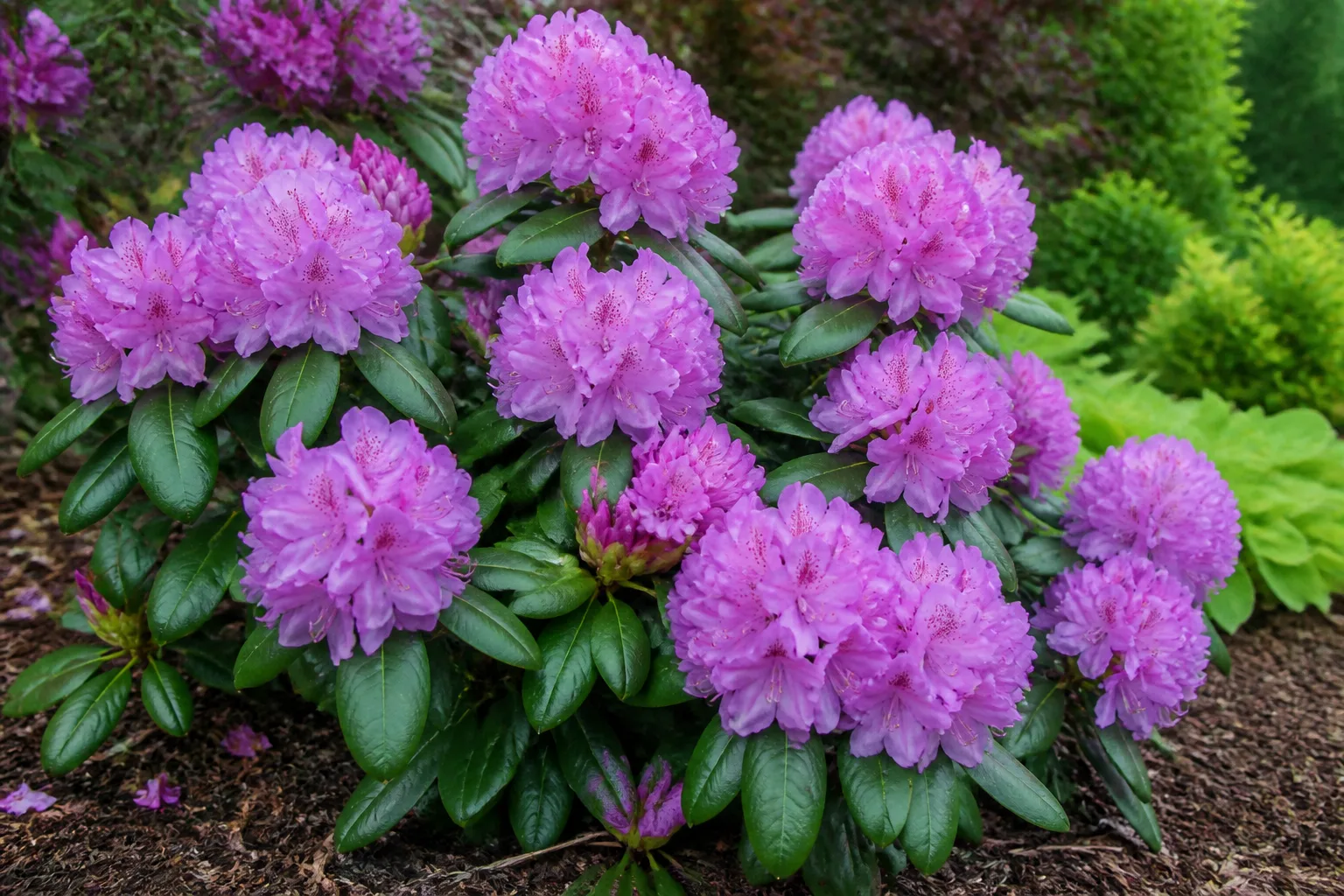
23. Rhododendron (Rhododendron spp.) — Rhododendrons range from evergreen to deciduous, and their hardiness, size, and flowering time vary widely by species and cultivar. Select a variety proven locally, plant it in acidic soil with good drainage, and provide dappled shade or protection from drying winter wind. NC State notes that poor drainage can lead to root problems and that the genus includes plants toxic to pets. Broadleaf evergreens can curl leaves in cold weather; that is a protective response, but persistent browning or broken buds can indicate winter injury (NC State Extension Plant Toolbox).
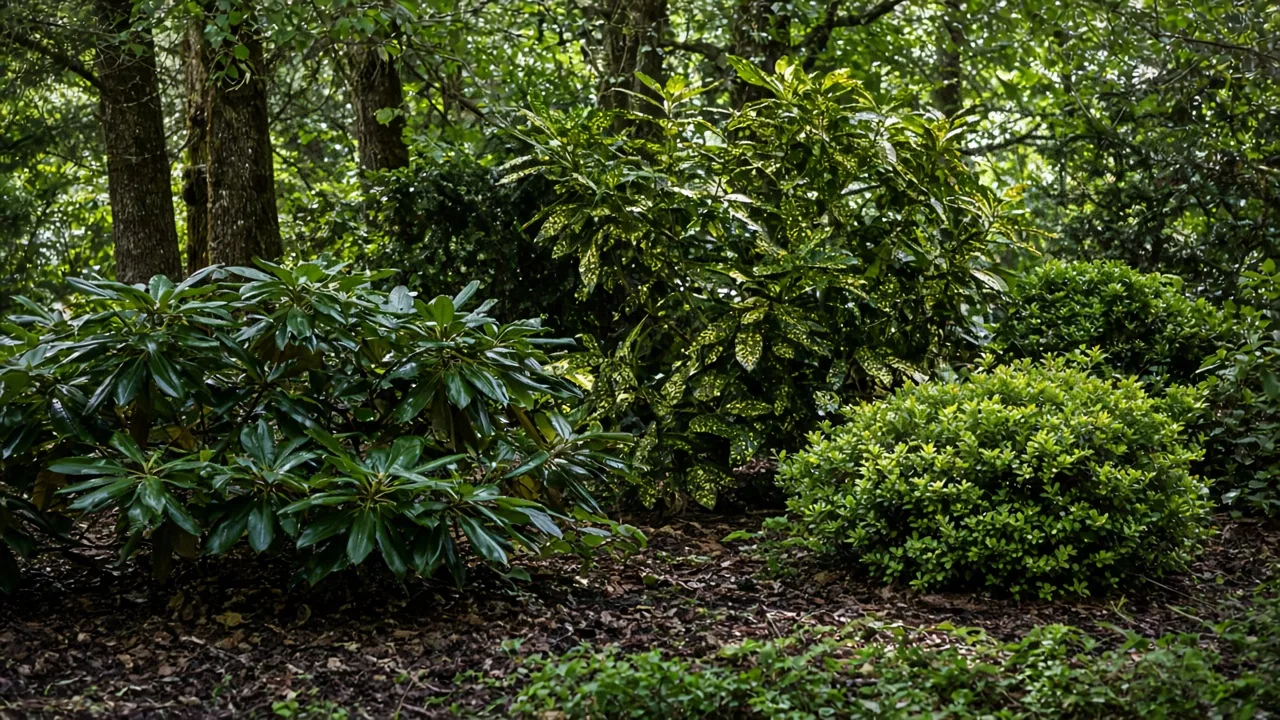
24. Mountain laurel (Kalmia latifolia) — Mountain laurel is an eastern North American evergreen shrub with spring flowers and year-round leathery foliage. It grows best in acidic, humus-rich, well-drained soil with partial shade and protection from harsh wind. It dislikes heavy, wet soil despite its woodland associations. Mature plants can become broad, so allow space rather than relying on frequent shearing. All parts are poisonous if eaten, making this a poor choice where pets or young children have unsupervised access. NC State provides regional growing guidance and flags the plant’s high toxicity (NC State Extension Plant Toolbox).
Choose plants by the winter job you need
For flowers in the cold season
For flowers during cold spells, consider winter pansies, hardy cyclamen, hellebores, Erica carnea, or—only in a mild climate—camellias. Timing is local: a sheltered southern garden may see flowers weeks before a colder one. Snowdrops and primroses are better thought of as early-spring bloomers. Combine bulbs and perennials for a longer sequence, and let their leaves yellow naturally after flowering.
For living groundcover and foliage
For sunny, dry beds, look at bearberry, Angelina stonecrop, or rock cress. For woodland shade, consider wintergreen or Christmas fern; bergenia and coral bells add broad leaves where drainage is good and exposure is moderate. None stays green everywhere. Repeat a few textures in drifts, leave room for mature spread, and expect some plants to go dormant.
For shade and woodland beds
Hellebores, snowdrops, primroses, hepatica, Allegheny pachysandra, wintergreen, golden ragwort, and Christmas fern suit different shaded sites. Match soil to the plant: some need acidity, others even moisture, and dry shade under a mature tree differs from moist woodland soil. Water new plants as they establish and avoid burying bulbs under heavy leaf piles. Check regional native-plant lists because several species are native only to particular areas.
Help new plants through their first winter
New plants are more vulnerable than established ones because their roots have not spread into surrounding soil. Even a plant rated hardy for your zone may fail after late planting, drought, saturated soil, or repeated heaving. Focus on root establishment and reducing avoidable stress.
Planting time and root establishment
Plant in spring or early fall when soil is workable and roots have time to grow before heat or deep cold. Follow local timing guidance, and avoid frozen or saturated ground. Water to settle soil, then apply a modest layer of mulch away from crowns and trunks. Avoid dividing fragile perennials just before freeze-up. If a plant arrives too late, keep it in a protected unheated space or postpone planting rather than leaving its root ball exposed in a decorative pot.
Water, drainage, and freeze-thaw
Water evergreens during dry autumn weather before soil freezes; leaves continue losing moisture when roots cannot replace it. Do not leave the bed waterlogged. Drainage is crucial for wintergreen, camellias, rhododendrons, and rock-garden plants. Loose mulch after the soil cools can moderate freeze-thaw swings. If a crown is heaved, wait until the soil is workable, press the roots into contact with it, and water in.
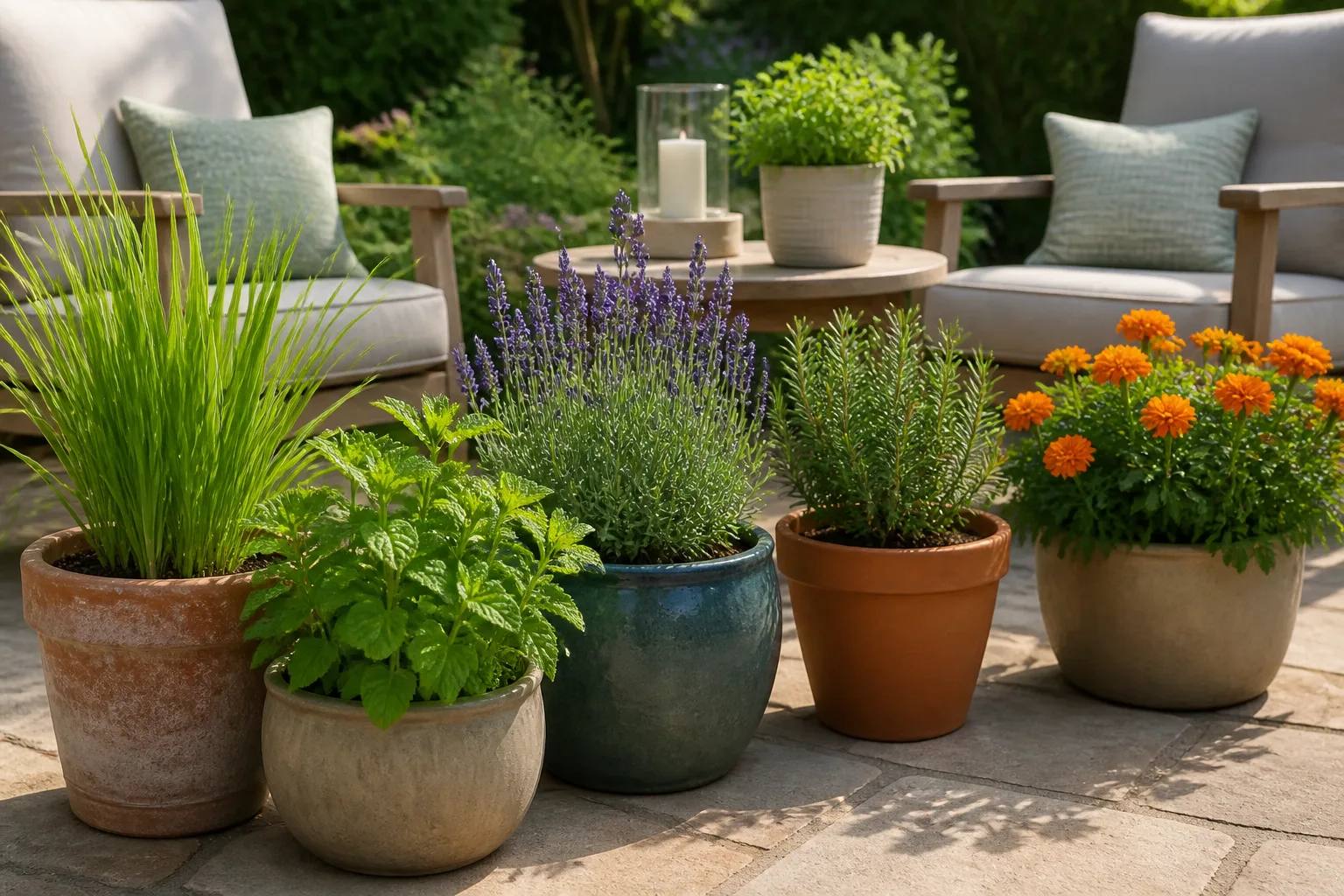
Container roots face colder air on more sides than in-ground roots. Choose a pot with drainage, group pots near a sheltered wall, and insulate them or move them to a protected unheated place. Use a more conservative hardiness margin than for the same plant in the ground.
Wind, salt, and heavy snow
Cold wind dries evergreen leaves and can damage flower buds. A fence or hedge can shelter plants, but avoid placing them against a hot wall where swings may trigger premature growth. Keep salt-sensitive plants away from road spray and plowed snow. Do not knock ice off frozen branches; remove loose snow only when it can be brushed away without bending stems. Use burlap screens for wind or salt exposure, then remove them before they trap heat or moisture.
Common limits to plan around
A winter planting fails most often because a plant was chosen for the picture on its tag rather than for the actual site. Check the plant’s mature size, exact cultivar hardiness, moisture needs, and whether it keeps foliage in your climate. If your yard has several different microclimates, use the sheltered spots for borderline shrubs and reserve exposed areas for plants adapted to them.
Mild-winter plants need the right climate
Camellias and Carolina jessamine are attractive winter choices in suitable southern and mild-winter climates, but their inclusion on a winter list does not make them universally cold-hardy. Liriope, some rhododendrons, and several winter-blooming heathers also vary by cultivar and region. If a plant is at or beyond the cold edge of its recommended range, expect injury or choose a more dependable local substitute. A protected wall can improve the odds, but it does not turn a tender plant into a reliably hardy one.
Also separate “survived” from “performed well.” A shrub may live after a winter yet lose flower buds; a semi-evergreen perennial may regrow after its leaves die back; a bulb may bloom beautifully in spring while offering no winter structure. Decide which outcome matters most before buying.
Check pet safety before planting
Some common winter-garden plants are toxic if eaten. The ASPCA lists cyclamen as toxic to dogs, cats, and horses. NC State reports low toxicity if snowdrop bulbs are eaten in quantity and flags Carolina jessamine as high-severity poisonous; it also flags hellebores, rhododendrons, and mountain laurel (snowdrop profile, Carolina jessamine profile). Do not assume that berries, bulbs, or fallen leaves are harmless. Check the exact botanical name in a veterinary or poison-control reference before planting where an animal can graze, and contact a veterinarian or animal poison-control service if ingestion occurs. Toxicity ratings concern ingestion and do not mean every contact causes harm, but they are a reason to place plants thoughtfully.
Build a reliable winter palette
A durable winter garden combines dependable foliage, plants that supply seasonal flowers or berries, and perennials or bulbs that return after dormancy. Repeat a small palette suited to the site rather than trying to keep every bed evergreen. Contrasting leaf shapes, tree forms, seedheads, and hardscape provide structure when flowers are absent.
For a sunny dry bed, consider bearberry, Angelina stonecrop, or rock cress. For acidic woodland shade, look at wintergreen, Christmas fern, hellebore, or a locally hardy rhododendron. In mild-winter areas, camellia or Carolina jessamine may add flowers; pansies can supply seasonal color. Verify the soil and cultivar needs before combining plants.
Before buying, write down what should remain visible in January, what will rest until spring, and what needs first-year protection. When those expectations match each plant’s role, the garden can feel intentional even while flowers are scarce.
Conclusion
The best winter-friendly plants are the ones that match your climate and the look you want. Some, such as wintergreen, bearberry, and Christmas fern, can hold foliage through cold weather in suitable sites. Others, including snowdrops, hellebores, and primroses, survive winter and bring color later. Camellias and Carolina jessamine belong in climates mild enough for their species or cultivars.
Use the USDA zone map as an initial filter, then check the exact plant, soil, drainage, wind, and container exposure. Establish new plants before the ground freezes, water evergreens during dry autumn weather, and protect roots from wet soil and repeated heaving. With those conditions right, a mix of evergreen structure, dormant perennials, and early flowers can carry a garden through winter and into spring.