Peach Tree Leaves Turning Yellow: 8 Causes and Fixes
Peach tree leaves turning yellow? Use leaf age, vein color, spots, soil moisture, and season to tell normal fall color from a problem, then choose a first check.
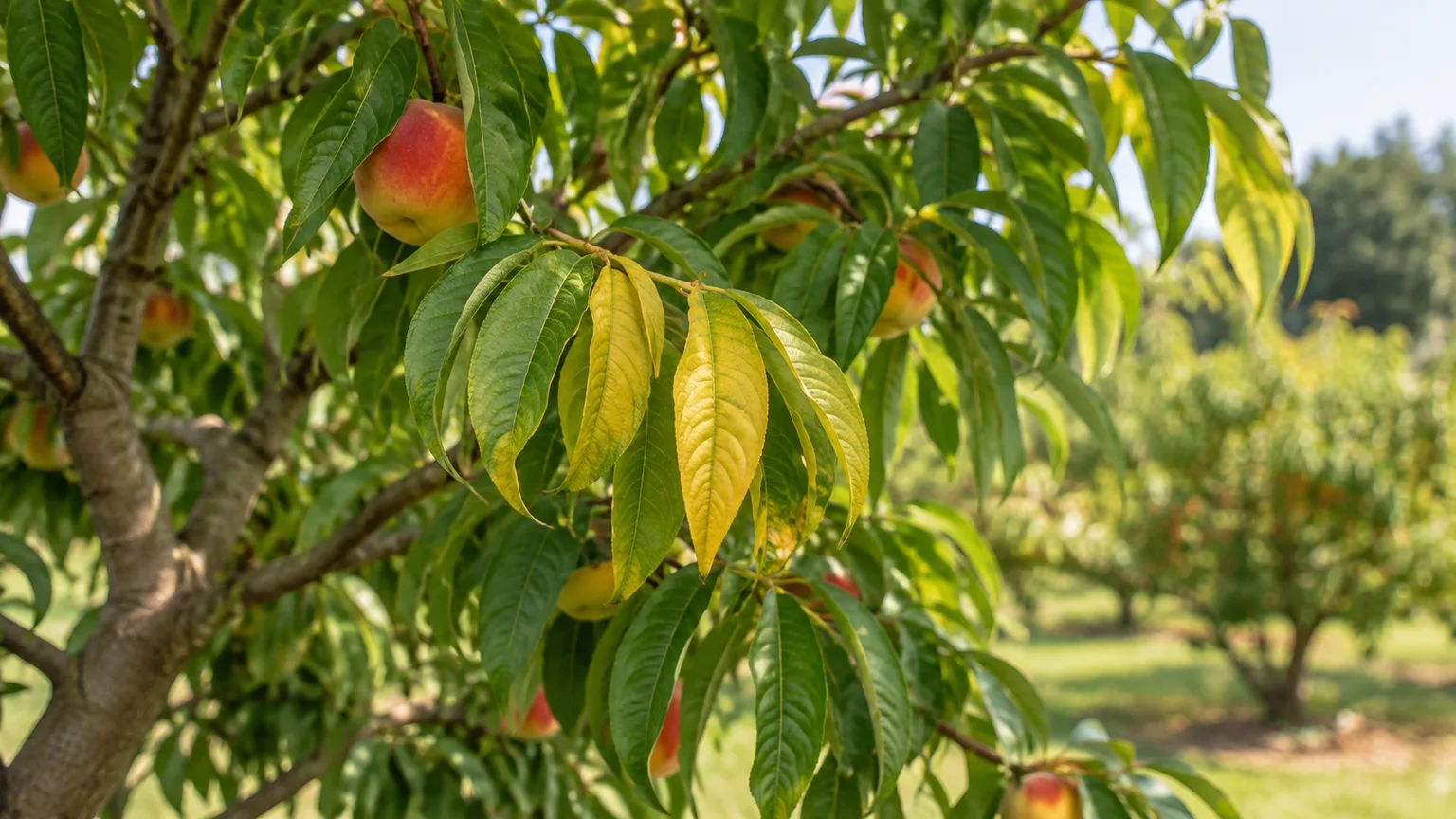
Yellow leaves are a symptom, not a diagnosis. On a peach tree, the cause may be normal autumn leaf drop, dry soil, roots starved of oxygen, unavailable iron, a spring disease, or insects feeding on the foliage. The most useful clues are when the color changed, which leaves changed first, what the leaf surface looks like, and how wet the soil is below the mulch.
Before adding fertilizer or spraying, take a few minutes to compare those clues. A seasonal color change usually needs no treatment; chlorosis with green veins calls for a soil and root-zone check; puckered spring leaves point toward leaf curl; and red spots with holes suggest a leaf disease. Matching the pattern to the cause keeps a stressed tree from receiving a treatment that cannot help it.
Start With the Pattern, Not a Spray
Look at both the whole tree and several affected leaves. Note whether yellowing is limited to the interior or lower canopy, whether it affects old or newly opened leaves, and whether the yellow is even, between green veins, or surrounding spots. Also record recent rain, watering, heat, and any changes such as a new irrigation line or a lawn treatment near the tree.
Peach leaves are long and narrow, and healthy growth stays green through the growing season. Compare affected leaves with unaffected leaves on the same tree rather than with another cultivar; a difference across varieties can make a normal leaf look suspicious.
A Quick Triage Before You Change Care
Use this sequence before you choose a fix. One clue alone rarely proves the cause, but two or three clues that agree can narrow the problem quickly.
| What you notice | More likely explanation | First check |
|---|---|---|
| Color changes across the canopy in autumn, then leaves drop | Normal seasonal senescence | Compare timing with local fall weather |
| Newest leaves yellow between green veins | Iron chlorosis or another nutrient-uptake issue | Check drainage and request a soil test |
| Older leaves turn evenly pale; new growth is weak | Nitrogen shortage, root stress, or normal aging | Check soil moisture and soil-test results |
| Leaves pucker, thicken, or redden as they emerge in a cool, wet spring | Peach leaf curl | Look for distortion on the newest leaves |
| Small red-purple spots develop pale centers or holes | Shot hole or bacterial spot | Photograph both leaf surfaces and ask local extension |
| Soil is dry several inches down, with wilt or crispy edges | Drought stress | Check moisture at the drip line |
| Soil stays wet and the tree has sparse growth or dieback | Poor drainage or root decline | Inspect the low area and root collar |
The same tree can have more than one problem. For example, peach leaf curl may cause early leaf loss, while a dry spell then stresses the replacement foliage. Treat the strongest visible cause first and avoid changing several inputs at once, so you can tell whether the correction worked.
Eight Causes of Yellow Peach Leaves
1. Normal Autumn Color or Leaf Aging
Peach trees are deciduous, so their leaves normally change color and fall as the tree enters dormancy. Yellow, orange, or reddish foliage in autumn is part of that cycle, especially when nights cool and days shorten. A few of the oldest leaves may also yellow and drop as they age, but widespread leaf loss during the growing season is not routine.
The timing and spread matter. If the entire tree colors in fall and the shoots remain firm, you usually do not need to fertilize, increase watering, or spray. If new leaves are yellowing in spring or summer, leaves fall while the tree is actively growing, or branches thin unevenly, treat it as a separate stress signal. Davey Tree’s seasonal guidance likewise distinguishes healthy late-fall leaf drop from discolored foliage outside the normal fall window (Davey Tree).
What to do: Let seasonal leaves fall naturally and rake them if they are diseased. Do not strip green leaves just to tidy the tree; they are still feeding it. Recheck the tree when it leafs out next spring, and pay attention to whether the same branches or leaf ages turn yellow again.
2. Too Little Sun or an Overcrowded Canopy
Peaches grow best in a sunny, open site. When a tree is crowded by a building, fence, or taller tree, or its own canopy has become dense, interior leaves may receive too little light and gradually yellow and drop. Shade also slows drying after rain, which can make it harder to separate a light problem from disease or excess moisture.
Look for a pattern rather than assuming any yellow leaf means the tree needs more sun. A few interior leaves under a healthy green outer canopy suggest self-shading; yellowing across the exposed tips or one entire side may point elsewhere. If the tree has grown into shade, moving a mature peach is rarely practical, so first decide whether the obstruction can be reduced safely.
What to do: Keep nearby weeds and suckers from competing with the tree and use the locally recommended peach pruning period to maintain an open canopy. Do not cut large limbs in the middle of the growing season just to chase a yellow leaf; major pruning wounds and excessive canopy removal can add stress. If the planting site is permanently shaded and fruiting is poor, ask a local extension office whether a replacement site or smaller tree is the better long-term choice.
3. Drought or Erratic Watering
A peach tree can yellow when the root zone dries faster than new roots can supply water. This is most likely during hot, windy weather, after a long rain-free stretch, or with a young tree whose roots have not spread beyond its original planting area. Leaves may droop or curl, yellow at the margins, then turn brown and fall; a dry surface alone does not prove the whole root zone is dry.
Check soil several inches down near the drip line, where rain from the canopy naturally falls and many feeder roots are active. A long screwdriver that enters moist soil easily but resists dry, compacted ground can be a rough field check; a soil probe is more informative. University of Wisconsin–Madison Extension uses about one inch of water per week during dry periods as a general peach-tree guideline, but rainfall, soil texture, tree size, temperature, and drainage change the amount a particular tree needs (UW–Madison Extension).
What to do: If the soil is dry at root depth, water slowly over the root zone rather than pouring a short burst beside the trunk. Recheck before watering again, especially in clay soil or after rain. A 2- to 3-inch layer of organic mulch can reduce evaporation, but keep it several inches away from the trunk so bark stays dry and visible.
4. Waterlogged Soil and Root Decline
Peach roots need oxygen as well as water. When soil remains saturated after rain or repeated irrigation, air is displaced from the pore spaces; roots can stop functioning or become infected with root and crown rot. The canopy may look drought-stressed even though the ground is wet: leaves yellow, remain small, growth slows, and branches may thin or die back. Gumming, dark damaged bark at the soil line, or declining roots make the problem more serious.
This is why watering more is a risky response to a yellow, wilted tree. Clemson Cooperative Extension describes stone-fruit root and crown rot as most severe in poorly drained areas and notes that the leaves can become sparse, small, and yellow as the disease progresses (Clemson Cooperative Extension). Compacted clay, a low planting spot, a buried root collar, a leaking emitter, or a downspout can all keep one side of the root zone wet.
What to do: Pause irrigation while the soil is saturated and trace where the extra water comes from. Redirect a downspout or repair a leak; do not pile soil or mulch against the trunk. A mature tree with continuing dieback or a soft, dark crown needs a local diagnosis because root rot cannot be corrected by a quick surface treatment. For a new planting in a poorly drained site, choose a better location or follow local advice on a raised planting bed rather than trying to mask the drainage problem with more fertilizer.
5. Iron or Manganese Lockout
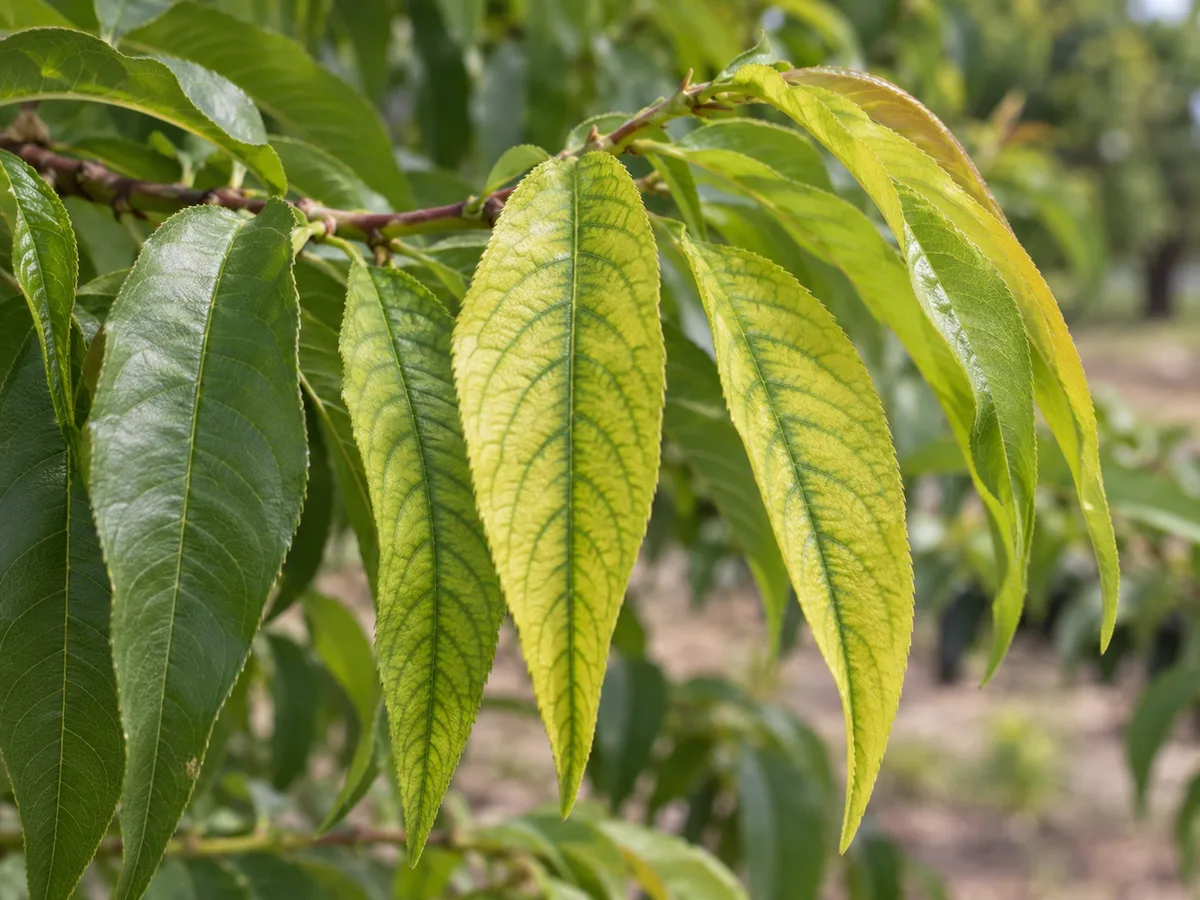
If the youngest leaves turn yellow while their veins remain green, suspect interveinal chlorosis rather than a general lack of water. Iron is needed to make chlorophyll, but an iron-pattern leaf does not automatically mean the soil contains too little iron. High soil pH can make iron difficult for roots to absorb, and waterlogged, compacted, or otherwise damaged roots can create a similar nutrient-uptake problem.
Utah State University Extension documents this pattern on peach and other fruit trees: yellow tissue between green veins, most noticeable on new growth, sometimes followed by marginal browning. In the alkaline soils and irrigation water common in parts of Utah, iron may be present but unavailable; prolonged spring wetness can make the problem worse (USU Extension: Iron Chlorosis in Fruit). Colorado State University also lists peach among trees that can develop iron chlorosis and cautions that foliar sprays are temporary and soil treatments vary with alkalinity (Colorado State University Extension).
Manganese or magnesium problems can also create interveinal yellowing. Leaf age helps: iron symptoms usually begin on the youngest leaves, while manganese or magnesium symptoms more often begin on older leaves. The RHS explains that these patterns overlap, which is why a photo alone cannot identify the missing nutrient with confidence (RHS).
What to do: Check drainage first, then request a soil test that includes pH and nutrients before adding iron, manganese, sulfur, or fertilizer. A foliar iron product may temporarily green treated leaves, but it will not fix an underlying alkaline soil or damaged roots, and sprays can mark fruit. Avoid drilling the trunk for a DIY iron injection or making large pH changes without local soil guidance.
6. Nitrogen Shortage or Another Nutrient Imbalance
Nitrogen shortage more often causes a general pale-green or yellow color on older leaves first, with weak extension growth and a smaller canopy. That differs from iron chlorosis, where the newest leaves are more likely to yellow between green veins. However, older-leaf yellowing can also reflect normal aging, a heavy fruit crop, root stress, or waterlogged soil, so the color by itself is not a reason to feed the tree.
Use the tree’s growth history and a soil test before applying fertilizer. If the entire canopy is pale and annual shoots are short, a nutrient shortage becomes more plausible; if only one limb is affected, look for root, trunk, or branch damage. Recent fertilizing, lawn fertilizer washing toward the tree, or repeated manure applications can create excess salts or nutrient imbalances rather than solve a deficit.
What to do: Follow your local extension’s peach fertilizing schedule and use only the rate it recommends for the tree’s age and growth. Avoid late-season nitrogen when new growth would not have time to harden before winter; Wisconsin guidance, for example, warns against fertilizing after August 1 in its regional climate. That date is not universal, so use your region’s timing. The RHS summary of nutrient patterns is useful for screening, but a soil or tissue test is the better basis for correcting an uncertain deficiency.
7. Peach Leaf Curl, Shot Hole, and Other Leaf Disease
Disease is more likely when yellowing comes with a distinctive change in leaf shape or spots. Peach leaf curl appears on young leaves in spring: affected leaves thicken, pucker, twist, and often develop red or purple patches before turning yellow and dropping. The fungus Taphrina deformans infects emerging leaves during cool, wet weather; once the distortion is visible, a spray cannot repair those leaves.
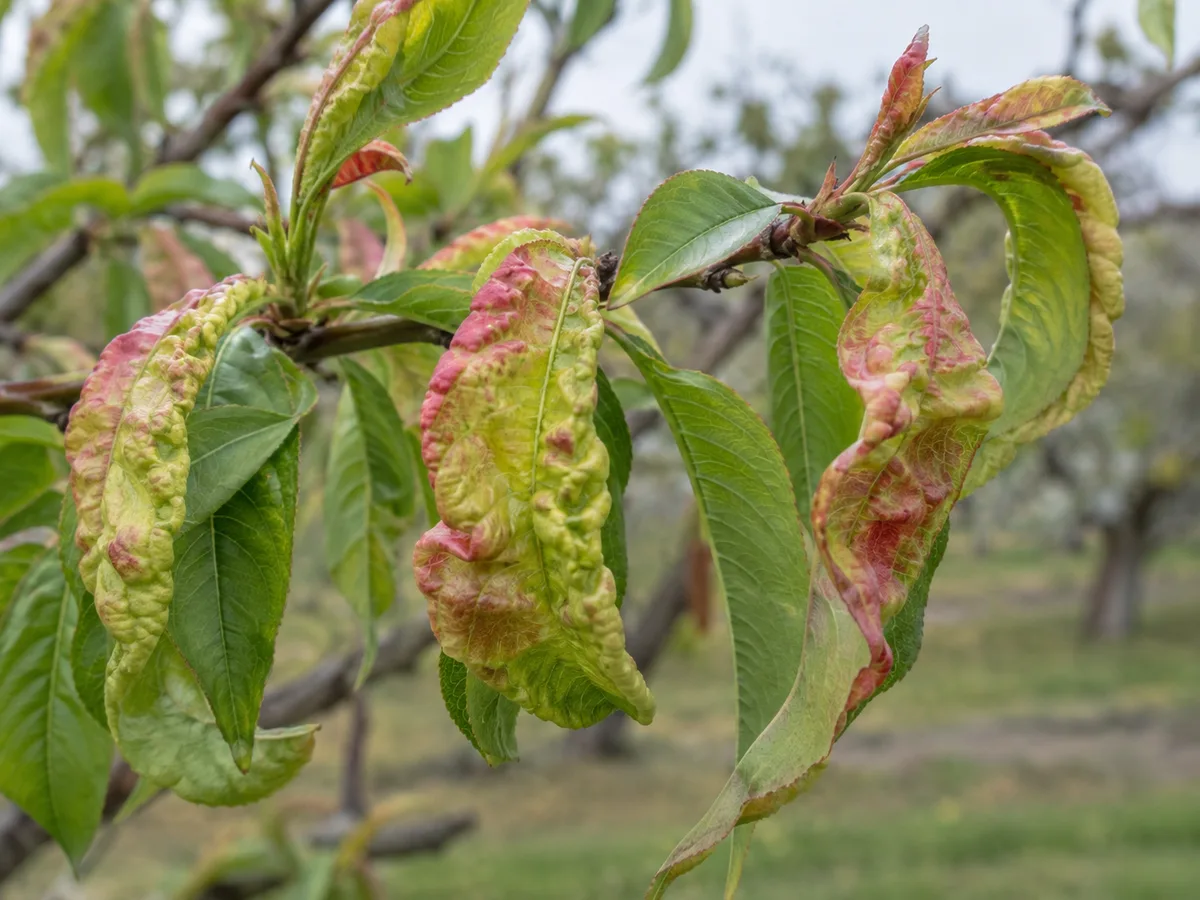
University of Wisconsin–Madison Extension notes that severe leaf curl can reduce vigor and fruit quality, especially if early leaf loss is followed by drought stress. Prevention is timed while the tree is dormant: a product labeled for peach leaf curl is applied after leaf fall or before buds begin to swell, according to local guidance and the label. Do not spray open leaves in an attempt to cure symptoms that are already present (UW–Madison Extension). Epic Gardening’s practical overview also emphasizes that a cool, wet spring encourages infection and that prevention belongs in the dormant-season window (Epic Gardening).
Shot hole and bacterial spot can start as small red-purple or brown lesions. As tissue in the center dies and falls out, the leaf looks as if it has been punctured; nearby yellowing and premature drop can follow. Clemson Cooperative Extension describes bacterial spot as small reddish-purple lesions that may develop white centers and a ragged, shot-hole appearance, while Washington State University Hortsense describes shothole lesions with pale centers that can drop out in warm weather (Clemson Cooperative Extension; WSU Hortsense). The two conditions can look alike, and fungal and bacterial problems do not always share the same treatment.
What to do: Photograph a few leaves from both sides and include the whole branch before removing anything. Do not apply a generic copper or household fungicide based on yellowing alone; treatment depends on the diagnosis, timing, product label, and local rules for edible fruit trees. For leaf curl, plan prevention before bud break next season; for suspicious spots or rapid defoliation, ask your extension office to confirm whether the cause is fungal, bacterial, or something else.
8. Aphids, Mites, and Other Sap-Feeding Pests
Aphids cluster on tender shoots and leaf undersides. Their feeding can distort young leaves and produce sticky honeydew; a dark sooty film may grow on the honeydew. Spider mites are much smaller and cause fine pale stippling or bronzing, often with faint webbing under leaves when numbers are high. These patterns differ from the clean green-vein network of iron chlorosis and from the thick, puckered leaves of peach leaf curl.
Inspect the undersides of several yellowing leaves, not just the easy-to-reach outer canopy. A hand lens helps with mites, while aphids may be visible as groups of soft-bodied insects or white cast skins. If yellowing is paired with gum or sawdust-like frass at the trunk base, inspect the trunk and root collar; a borer or trunk injury is a different problem from insects feeding on leaves. Davey Tree describes aphid feeding as a cause of curling, yellowing, and sticky honeydew on peach foliage (Davey Tree).
What to do: For a small aphid colony, a firm but controlled stream of water can knock insects from shoots without coating the tree in pesticide. Preserve beneficial insects and avoid broad-spectrum sprays unless an identified pest and local recommendation justify them. If a labeled soap, oil, or other pesticide is considered, follow the product label exactly, including crop, temperature, coverage, and harvest intervals; never treat a peach tree in heat or bloom based on a guess.
A Step-by-Step Diagnosis That Avoids Guesswork
A useful diagnosis combines pattern and conditions. Photograph a yellowing branch and the entire canopy, then answer these questions in order:
- What season is it? Uniform color change in autumn is different from new leaves fading in a wet spring or a sudden midsummer canopy decline.
- Which leaves changed first? New growth with green veins suggests iron uptake trouble; older leaves fading evenly can indicate nitrogen shortage, aging, or root stress.
- What else is on the leaf? Puckering, red patches, holes, stippling, webbing, honeydew, or brown margins each narrow the possibilities.
- What is happening at root depth? Check soil below the surface in several places near the drip line. Dry soil supports a drought diagnosis; persistently saturated soil raises concern about oxygen loss and root decline.
- Is the pattern local or whole-tree? One side may track shade, root damage, or a localized wet spot. Similar yellowing across nearby trees may point to a shared soil, irrigation, weather, or herbicide issue.
How to Take a Useful Sample or Soil Test
If the cause remains unclear, do not send only one yellow leaf and expect a definitive answer. A county extension office or diagnostic lab may want leaves showing early symptoms, healthy leaves for comparison, photos of the whole tree, and notes on the cultivar, age, soil drainage, watering, fertilizer, and the timing of symptoms. Call first, because sample size, packaging, and the best time to collect vary by lab and diagnosis.
For suspected chlorosis, use a soil test that measures pH and relevant nutrients rather than a cheap color chart or a random iron supplement. For spots, distortion, cankers, or branch dieback, ask whether the service accepts plant-disease samples and whether a fresh sample is needed. A lab result can separate nutrient availability from disease and root problems, which often call for very different actions.
Fix the Conditions and Give the Tree Time
Start with the least disruptive correction that matches the evidence. If the soil is dry, water deeply and then recheck; if it is saturated, stop irrigation and trace the drainage problem; if leaves show disease patterns, identify the disease before choosing a product. Avoid combining fertilizer, pesticide, heavy pruning, and extra watering in the same week, because that makes the result hard to interpret and can add stress.
Yellow leaves rarely turn green again once tissue has lost chlorophyll or been damaged by disease. Judge recovery by the next flush of leaves and by whether fresh yellowing stops, not by expecting old leaves to reverse color overnight. Keep the root zone evenly moist but not waterlogged, keep mulch off the trunk, and remove diseased fallen leaves where sanitation is recommended. If the tree has already lost many leaves, protect it from drought and avoid pushing late-season tender growth.
When to Ask for Local Extension or an Arborist
Contact your county extension office when yellowing spreads quickly, the leaf pattern is unclear, several trees show the same symptoms, or disease treatment would involve spraying an edible crop. Send photographs before pruning or spraying, including the whole canopy, leaf tops and undersides, the trunk base, and the soil around the drip line. For possible leaf curl, timing matters, so ask before buds swell rather than waiting until the next set of distorted leaves appears.
Get an arborist to assess a mature tree with major limb dieback, a cracked or decaying trunk, a large canker, or visible root-collar damage. A tree with crown or root rot may decline despite changes in watering, and a professional can assess whether it is safe and practical to preserve. Do not try to correct a deep drainage problem by repeatedly adding surface fertilizer or drilling treatments into the trunk.
Conclusion
Start with the season, the age and pattern of affected leaves, and soil moisture below the surface. Fall color may be normal; green veins in yellow new leaves suggest chlorosis; puckering or red spots point toward disease; and dry or saturated soil calls for opposite watering decisions. Test before feeding or spraying, correct the root-zone condition you can verify, and ask local extension for help when symptoms spread or diagnosis remains uncertain.



